 Richard van Hooijdonk

AI & the future of financial services
AI stops suspicious payments and settles claims in minutes. Soon AI agents will manage customers' money, and money itself will carry out agreements. How far the sector gets depends on the people leading it into the future.
Choose your sector
Every keynote is tailored to a sector. Choose yours.
 Healthcare
 Government
 Defence
 Policing and security
 Smart cities
 Construction
 Mobility
 Industry 4.0
 Energy and utilities
 Logistics
 Retail
 Wholesale
 Hospitality, tourism and leisure
 Agriculture
 Financial servicesYou are viewing
 Legal
 Accountancy and advisory
 Education
 Media and entertainment
 Telecoms and connectivity
Is your sector not listed? We tailor the keynote to your audience. Tell us about your audience
AI is changing how money moves, who decides and where trust is built.
AI is changing how financial institutions advise customers, assess applications and protect against fraud; futurist and trend watcher Richard van Hooijdonk covers what is happening now and over the coming years. This keynote shows what AI already does, how the sector is developing with AI and new technology, and how decisions stay explainable to customers and regulators. In finance, AI has been doing the sums for years. It stops suspicious payments, filters money-laundering alerts, estimates damage from a photo and builds investment portfolios. AI agents prepare mortgage files, and the first ones already pay in online shops on customers' behalf. Further ahead lies a different sector: agents that move a household's savings to a better rate every day, digital payments that go through automatically once agreed conditions are met, insurers that earn from damage that never happens, and machines for which agents arrange payments, credit and cover. You also face questions about people's work: what the adviser will do, how a sector built on careful judgement renews itself, and how you keep the customer's trust. The keynote shows what works today and sketches scenarios for the next five to fifteen years. Does your organisation know what to do when the request for money comes not from the customer, but from the customer's agent?
AI in financial services
What AI already does today in payments, lending, insurance and investment.
- 01

The digital banking assistant
An assistant in the app answers questions, spots what looks wrong and prepares the next step itself, at any hour of the day.
Connected to the account, a digital banking assistant in the app shows how much the energy bill has gone up this month, blocks a lost card or explains what a rate review means for the mortgage. At large banks, these assistants hold millions of conversations a month. More interesting is that the assistant notices what is out of the ordinary. It sees a payment taken twice and starts the refund, or flags a rising fixed cost and lines up a cheaper alternative that the customer only has to confirm. Complex questions and customers in payment difficulty go to an employee. Because the assistant handles the everyday tasks, staff have more time for conversations that need personal attention.
- 02
AI agents at banks and insurers
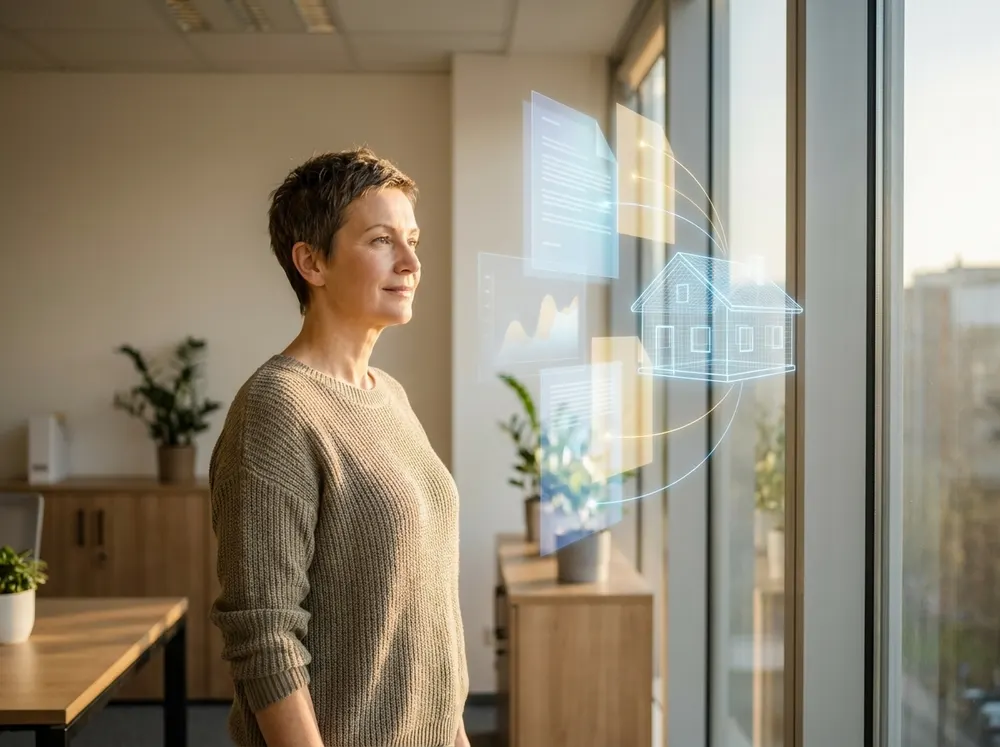
AI agents gather and check data for mortgage applications and claims. The underwriter receives a file with discrepancies already investigated.
An AI agent is software that works through the steps of a task by itself, until the task is done. For a mortgage application, it retrieves the payslip and the valuation report, checks that the figures match, calculates the maximum loan and prepares a file for the underwriter. At an insurer, an agent organises a claim, asks for missing photos and proposes a payout. The first agents already support mortgage assessments; other uses are still in trials. An employee reviews the proposal and decides. In future, an agent could guide the whole process from application to payment, referring only the exceptions to a person.
- 03

Credit that is ready and waiting
With the customer's consent, AI follows cash flow and payment behaviour, so credit can be assessed before the customer applies.
A credit application used to be a snapshot: forms, payslips, annual accounts and days of waiting. AI turns assessment into an ongoing process. With the customer's consent, a model follows the cash flow in the current account, fixed costs paid on time and a business's turnover. A bank can then set a credit limit in advance, and the customer sees an offer in the app based on a prior assessment. First-time borrowers and entrepreneurs without a long credit history are judged on their current income and payment behaviour. On platforms, eligibility for business finance is already reassessed every day. In future, the credit limit could move with the cash flow all the time, so the credit is there the moment it is needed.
- 04
The claim that settles itself
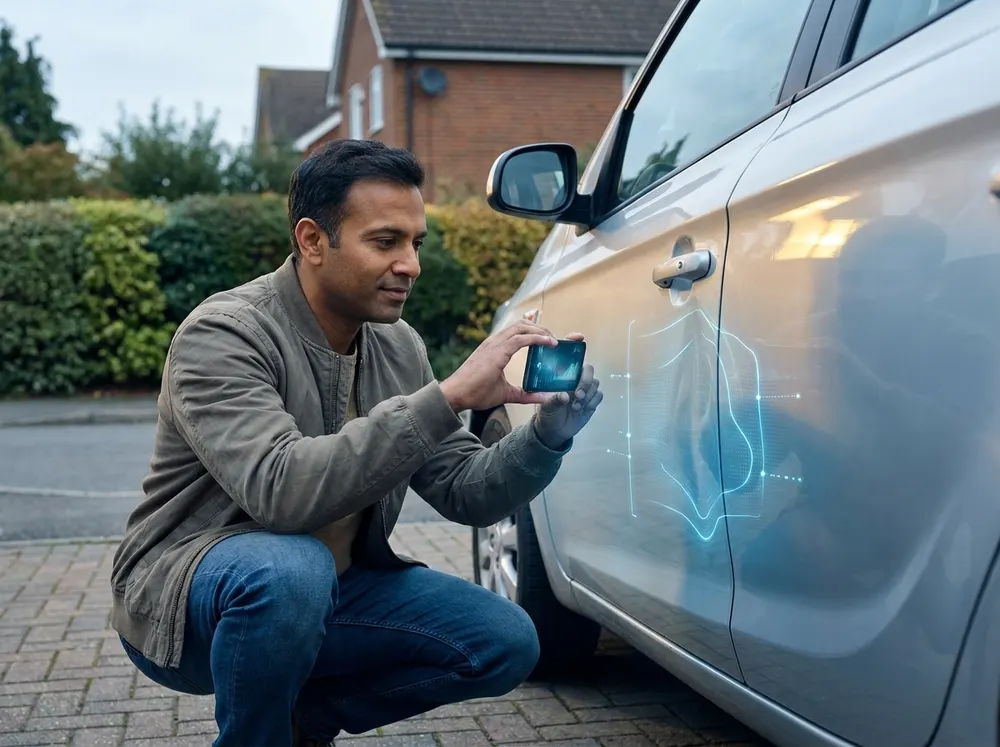
Simple claims are paid within minutes: AI reads damage photos and documents and estimates the damage. Complex cases go to an expert.
AI now does much of what used to take days of manual work. Image recognition estimates the damage to a car door or a ceiling with a leak from photos, a language model reads the repairer's quote and sets it against the policy terms, and a fraud model checks whether the same photo has been submitted before. A simple claim, such as a broken window or a damaged phone, is sometimes paid out within minutes. Doubtful cases, large losses and claims with signs of fraud go to a claims handler or loss adjuster, who has the final say. Soon the claim will start before the customer calls: a sensor in the house reports a leak, or a measured value triggers the payout automatically.
- 05

Investing with algorithms
Robo-advice and AI models build portfolios, rebalance automatically and match them to goals and appetite for risk.
After a sharp rise in share prices, a robo-adviser automatically sells part of the shares to restore the agreed balance with bonds, in line with the investor's goal, time horizon and appetite for risk. Someone with a few hundred euros can invest with a fixed strategy, for a fraction of the cost of a personal manager. Professional investors, meanwhile, have AI run thousands of market scenarios: what an interest-rate shock, an energy crisis or a trade conflict means for every position in the portfolio, and which positions are vulnerable together. In time, that computing power could reach every saver, with an assistant that keeps checking whether the portfolio still fits the customer's life.
- 06

AI against money laundering
AI helps assess money-laundering and sanctions signals and cut false alerts, so analysts can focus their investigations.
Older systems for checking money laundering and sanctions mostly rely on fixed rules and produce many alerts that turn out to be false on investigation. AI can recognise more complex patterns: a network of accounts passing money round in circles, or a company whose turnover differs sharply from its peers. That can reduce false alerts and bring real signals to light sooner. The analyst then spends time investigating rather than clicking alerts away. The first AI agents now also prepare the investigation itself: they gather transactions, public sources and earlier reports and put together a file. The analyst starts with a substantiated file, in which transactions and the parties involved are already linked.
- 07

Products tested against new rules
Before new rules take effect, you see the possible impact per product: AI compares the regulation with products and policies.
Every year a bank or insurer receives hundreds of pages of new rules, guidelines and supervisory expectations. The question is always the same: what does this mean for our products, processes and contracts? AI compares a new rule with product terms, policies, process descriptions and existing contracts, and identifies the problems for each product. Then it works out the consequences: how many customers need different information, which policies need an amended clause, what a new capital requirement costs. Compliance receives a proposal for the change before the rule comes into force. Further ahead lies regulation published in a form that systems can read and test directly.
- 08
 In pilots
Your pension, explained
As pension systems change, AI explains in plain language what each member's pension savings and choices mean for them.
A digital pension assistant explains what pension rules and choices mean for one member's income. Linked to that member's data and a calculation module, it works through personal scenarios, which is especially valuable where pension systems are being rebuilt. A member asks what happens if he works one day a week less, or what becomes of the partner's pension after a divorce, and gets an answer in plain language, with his own figures. Pension providers are trialling such assistants now. Further ahead, the question itself changes. As more and more people reach a hundred, the assistant works out for each member how long their savings must last, and how they combine work, care and benefits.
- 09
 In pilots
The bank as personal CFO
AI forecasts the cash flow of households and businesses and suggests when it pays to save, borrow or move money.
Banks want to act as a finance director for every customer. Using income, fixed costs and previous years, AI forecasts how the balance will develop over the coming months. In October, a household gets a nudge that the annual energy bill and the car insurance both fall due in January, with a suggestion to set something aside now. An entrepreneur sees that a large client usually pays late and is offered temporary credit in advance. An assistant that makes proposals and, with the customer's consent, carries them out is now being trialled. The bank moves from the place where money is kept to the place where people think about money.
- 10

Payments by AI agents
AI agents buy and pay within the customer's instructions. Banks and payment networks check that the agent is authorised to do so.
With agent payments, a customer allows an AI agent to pay on their behalf. That gives banks and payment companies a new question: how do you know the customer has authorised the agent to make that payment? The answer is a digital mandate. The customer records what the agent may buy, from whom and up to what amount, and the bank or payment network checks every payment against it. Payment networks support the first real agent payments in online shops and are testing further uses, including business purchasing. The customer who presses the button makes way for agents that decide on their behalf, within limits the customer has set.
- 11

Paying with your body
A face, fingerprint or palm scan confirms who is paying, on the phone or at the till. AI checks that a real person is there.
At some tills, a palm or face scan is now enough to draw on a linked account, with no phone or bank card. AI compares the scan with the stored template and helps check that it comes from a person who is actually present, not from a photo, a mask or a fabricated image. This is called liveness detection. On the phone, paying with a fingerprint or face scan is already normal for many people; at the till it is moving from trial to daily practice, in shops, stadiums and staff canteens. The body becomes the bank card, and the customer no longer needs to carry anything.
- 12

Spotting fraud in real time
AI assesses payments in milliseconds for unusual behaviour and can stop a suspicious transaction before the money is gone.
At the moment a customer pays, before the money changes accounts, AI compares the transaction with the customer's usual behaviour: the amount, the time, the device, the recipient and even typing speed. If a payment differs sharply, the system stops it or asks for extra confirmation, within milliseconds. AI learns from millions of earlier transactions and also recognises connections outside the set rules, sometimes at the very first attempt with a new type of fraud. What comes next is a shared picture. Banks and telecoms companies share fraud signals in real time, so a fraudster stopped at one bank is recognised at the next.
The future of financial services
Where money, payments and insurance could stand in five to fifteen years, with AI as the engine.
- 13
 Future scenario
Money that hunts for interest
A household's AI agent could move its savings every day to an account with a better rate. Customer loyalty becomes a matter of seconds.
AI agents already pay in online shops; managing the whole household budget comes next. By 2040, perhaps: every morning, a family's agent compares interest, terms and conditions, spreads the savings across suitable accounts, refinances the mortgage when rates fall and cancels a duplicate insurance policy. For banks, a quiet buffer disappears: savings that stayed put for years out of habit. Savings become a market that is shared out again every day, and a bank with a slightly better offer can win or lose thousands of customers in a single morning. Banks will then compete for the favour of an algorithm.
- 14
 Future scenario
Money that moves day and night
Around 2040, money, securities and collateral move worldwide, day and night, in one transaction. Banks supply liquidity to a market that never closes.
With programmable payments, the payment infrastructure itself carries out agreements laid down in advance. The building blocks are in place: tokenised bank deposits, euro stablecoins under European rules and central bank trials of settlement in central bank money. The European Central Bank will start a pilot of the digital euro in 2027. The scenario for 2040: money, securities and collateral sit in linked registers and move day and night, across continents. At three in the morning, a company's treasury agent shifts collateral to another continent, and a loan is granted, secured and settled in the same second. Estimates for tokenised assets range from a few to tens of trillions of dollars. Banks then earn from providing liquidity to a market that never closes.
- 15
 Future scenario
The insurer that prevents damage
An insurer could start earning from damage that never happens. Sensors and AI see leaks, fires and breakdowns coming and step in.
Leak detectors that shut off the main water supply themselves, and boxes that measure driving behaviour, already exist. What changes next is the business model. Picture 2040: a home insurance policy is a subscription to a safe house. Sensors measure humidity, temperature and electricity use, AI recognises the pattern of a leaking pipe or an overheating inverter, and an engineer is at the door before the occupant notices anything. For businesses, the insurer monitors cold stores, machines and roofs. Consultancies have described this shift for years: from paying out after damage to predicting and preventing it. The premium becomes the price of certainty, and a year without a claim is no longer a stroke of luck, but the product.
- 16
 Future scenario
A private banker for everyone
Every saver and investor gets from AI what mainly wealthy clients get now: a personal strategy, attention to tax and private markets.
Wealth management with a personal strategy, attention to tax and access to private equity and infrastructure was long reserved for wealthy clients. AI and tokens can remove that barrier. Looking ahead to 2040: for someone who puts in two hundred euros a month, an AI wealth manager builds a portfolio that suits their life, their pension and their values, and uses tokens to invest small sums in a wind farm or a fund for unlisted companies. The EU has already lowered the threshold for private investors in long-term funds. Meanwhile, over the next twenty years, tens of trillions of dollars will pass to a generation used to investing digitally. The human banker becomes the guide for life's big questions.
- 17
 In pilots
Ahead of money worries
AI sees payment problems coming before a customer gets stuck. The bank can then help in time instead of collecting debts afterwards.
A missed rent payment rarely comes out of nowhere. Income that falls short, fixed costs that rise, an overdraft that lasts longer each time: in payment data, such signals are often visible months ahead. AI can recognise these patterns, with the customer's consent and within privacy rules. The bank then gets in touch before arrears build up, with a payment plan, budgeting help or a referral to debt advice. For the customer, that saves stress and costs; for the bank, write-offs and collection work. Banks and housing associations already work with this kind of early warning; AI makes it more precise and faster. The employee decides and has the conversation.
- 18
 Future scenario
Customers without a body
AI agents apply for credit and adjust cover on behalf of machines, based on what those machines earn and use.
Payment networks already link payment tokens to authorised AI agents, and there is insurance against errors made by AI models. Picture 2040: a fleet of delivery robots earns from jobs, and an agent uses that income to pay for power, maintenance and loan repayments. That agent applies for credit on the owner's behalf based on expected earnings per trip, and adjusts the insurance to the fleet's use, week by week or day by day. For the lender, what counts is the earning power of thousands of machines acting independently. Insurance cover adjusts to the fleet's overall performance and claims. Agents then handle almost all day-to-day contact with the bank; people and businesses remain the account holders.
- 19
 Future scenario
The invisible bank
In time, AI agents keep combining finance and cover from several providers. Banks compete with their balance sheets, out of sight.
Lending, payments and insurance are already built into other services, from buy now, pay later in an online shop to credit inside accounting software. The EU proposal for open finance could make more financial data shareable with consent. In a 2040 scenario, AI agents combine that data with live orders and keep spreading the financing across several capital providers. For every machine or invoice, a suitable mix of credit, insurance and price hedging emerges, moving with the business. Behind one screen, banks, insurers and investors work together without the customer seeing them. Banks then face a choice between two roles: the brand the customer knows, or the balance sheet that thousands of services run on.
- 20
 Future scenario
Supervision in real time
The regulator could look straight into banks' data flows. Quarterly reports give way to continuous supervision.
Banks and insurers now send regulators piles of reports, monthly or quarterly, which are sometimes out of date by the time they arrive. Central banks and regulators are experimenting with data-driven supervision and with rules written as computer code. By 2040, the regulator could read standardised data directly, AI could spot a liquidity problem or a build-up of risky loans in days rather than months, and a stress test could run every night. For institutions, much of the reporting work falls away. Something else disappears too: the gap between a problem arising and the regulator seeing it. Conversations with the regulator then turn to looking ahead rather than accounting for the past.
- 21
 Future scenario
Quantum computing for risk
Around 2040, quantum computers could make risk simulations possible that now take too much computing time. Banks are already testing them in trading.
Quantum computers could greatly speed up certain financial calculations. In a 2025 trial, a hybrid quantum method improved the prediction of whether bond orders would be filled by up to 34 per cent, compared with the classical methods in use. One technology supplier is aiming for a fault-tolerant quantum computer in 2029. The scenario for 2040: banks run risk simulations on such machines that now take days of computing time, and insurers model climate damage and investment losses in a single calculation. Whether that brings an advantage differs per task. Where it works, it changes which risks an institution can still price accurately, and computing power becomes an edge in trading.
AI widens what people in finance can do for their customers. A culture where care and curiosity go together gives those possibilities room to grow.
Richard van Hooijdonk
The financial organisation of the future
What AI asks of roles, teams, leadership and culture at banks, insurers and pension funds.
- 22

The AI-first organisation
AI checks documents, does the calculations and predicts risks. Advisers and claims handlers judge the outcomes and talk to customers.
An AI-first bank or insurer uses AI for the work people need not do: checking documents, doing the calculations and also the predictive work behind every application, claim or customer question. An AI agent prepares a proposal. An employee discusses with the customer what a change in income, job or family means. People form a judgement, make choices and build trust; AI calculates how things might develop. One scenario for 2040: most applications are handled without any human step, while the number of real conversations with customers actually grows.
- 23

New roles in finance
Model validation and oversight of AI agents, and later agent bankers, climate risk designers and custodians of tokens and smart contracts.
When AI checks documents, filters alerts and prepares files, the work shifts. The middle office needs less manual work, and new specialisms appear. Model validators test whether a credit or pricing model does what it promises, and people are needed to set up AI agents, watch their limits and step in when something goes wrong. Further ahead come roles that barely exist today. The agent banker manages the relationship with the agents of large business clients. The climate risk designer builds policies and loans around a changing climate. And a custodian of tokens and smart contracts looks after money that carries its own rules. On the customer side, demand grows for advisers who handle life's complicated questions.
- 24

Adviser and AI at one desk
AI prepares the mortgage or pension meeting and runs the numbers. The adviser weighs what the customer really wants and can afford.
Before the meeting, AI gathers the customer's details and works through scenarios: with and without extra repayments, with a fixed or a variable rate. During the meeting, AI calculates new options as soon as the customer mentions a different choice, and shows what they mean for income and outgoings. The adviser can keep their attention on the people at the table: on the doubts of a couple buying their first home, or on an entrepreneur whose pension is tied up in the business. Soon the customer will bring their own financial AI agent to the meeting, and adviser, customer and two agents will work out the options together.
- 25

Leadership in finance
Leaders at financial institutions take the initiative on AI and get their teams enthusiastic about building the future of the sector together.
Leaders in finance take the initiative on AI and new technology while protecting customers' trust. They describe the organisation's future clearly enough for employees to explain it to others. They show the curiosity and commitment they want to see in their people, and get them involved in building it. Employees get room to bring in ideas and help decide how the organisation develops. That is how leaders and their teams build the bank, the insurer and the pension fund of tomorrow.
- 26

The future academy
In their own future academy, employees practise with AI and new technology on real cases. The organisation decides which knowledge it needs first.
In a future academy, employees practise with the AI and new technology that are changing their work. Organisations build such an academy themselves because they do not want to wait for training programmes to catch up. Those who have worked there for years learn to judge what AI and AI agents do. Newcomers practise straight away with the systems the organisation uses. Experienced colleagues pass on their knowledge to the generation that will work with agents.
- 27

Growing with an ecosystem
Start-ups, scientists, partners, governments and sometimes even competitors work together worldwide on innovation and shared problems.
Start-ups, tech companies, scientists and partners on different continents develop the service the customer sees together. Organisations also work with parties they meet in the market as competitors, for example to recognise patterns that are not visible in their own data. With scientists they test what AI can do reliably, and with governments they work on shared facilities, such as a digital identity. New services reach the market faster as a result. The quality of that ecosystem increasingly determines the quality of the service.
- 28

A firm with a thousand AI agents
In time, a small team and thousands of AI agents will serve millions of customers. People's work shifts to designing, choosing and overseeing.
An organisation runs on processes: assessing an application, carrying out an instruction, running a check, handling a complaint. When AI agents can carry those processes from start to finish, the question of how many people an organisation needs changes. Digital players already serve millions of customers with far fewer employees per customer than traditional organisations. The scenario for 2040: an organisation with a small team and thousands of agents. The people design the products, decide how much risk the organisation takes and hold the conversations in which trust is at stake. Agents do the routine work and check each other's results; people judge the exceptions and keep oversight.
- 29

Leaders of people and AI agents
When part of the team consists of AI agents, leaders also direct work that no person does. Accountability and attention take a new form.
In the financial sector, leadership has always meant accountability too: who decided this, and why? When AI agents assess files, check payments and speak to customers, a leader will manage a team of which part is not human. A team leader decides which decisions an agent may take alone, looks at the outcomes of thousands of cases rather than ten files, and remains answerable for every decision the team makes. At the same time, the human part of the team needs more attention. People who see their profession changing want to know where their judgement still counts. Leaders of people and agents make that visible every day.
The other side responsibility and risk
Clean data, fair decisions about money and criminals who use AI to impersonate the bank.
- 30

Data as the foundation
AI works when data from every part of the organisation is available, reliable and connected: the foundation of the AI-first financial institution.
The AI-first financial institution lets AI predict, plan and advise across departments. That only works when the data from every part of the organisation is available, reliable and connected. Often it sits in separate systems, with their own codes and definitions, and one department does not know what another records. Missing data can lead to wrong answers, and an AI agent that takes over a task then lacks important information. Connected, consistent and up-to-date data is therefore the foundation on which AI can work across the whole organisation. That includes agreeing who may use which data, and for what.
- 31

Financial crime
Criminals want access to accounts and customer data. AI helps them with phishing, cloned voices, ransomware and fake identities.
Financial institutions hold what criminals want most: money and the data needed to reach it. With AI, criminals write personalised phishing messages, imitate voices and fabricate images for false identities. Ransomware and hacks target payment systems and customer data. At an international engineering firm in 2024, an employee transferred around 25 million dollars after a video call in which the chief financial officer and colleagues turned out to be deepfakes. The same voice technology that gives a bank its voice assistant hands a fraudster the voice of someone the customer trusts. As AI use grows, good security underpins trust, and banks also use AI against financial crime.
- 32

AI agents that get it wrong
An AI agent acting for thousands of customers repeats a mistake thousands of times in seconds.
A mistake in a single file usually stays limited to one customer. An AI agent acting for thousands of customers at once repeats the same mistake thousands of times in seconds: a wrong rate in a price table, a misread rule, payments to the wrong account. Agents can also be misled by hidden instructions in a document or website they read. The more the agents of customers and banks deal with each other, the faster such a mistake spreads beyond the institution. When agents work together, it can be hard to establish which party caused the error and is liable for it. A small flaw in the set-up can become a problem for thousands of customers in a single afternoon.
About the speakerRichard van Hooijdonk
Events in EuropeKeynote speaker for corporate events in Europe
On stage
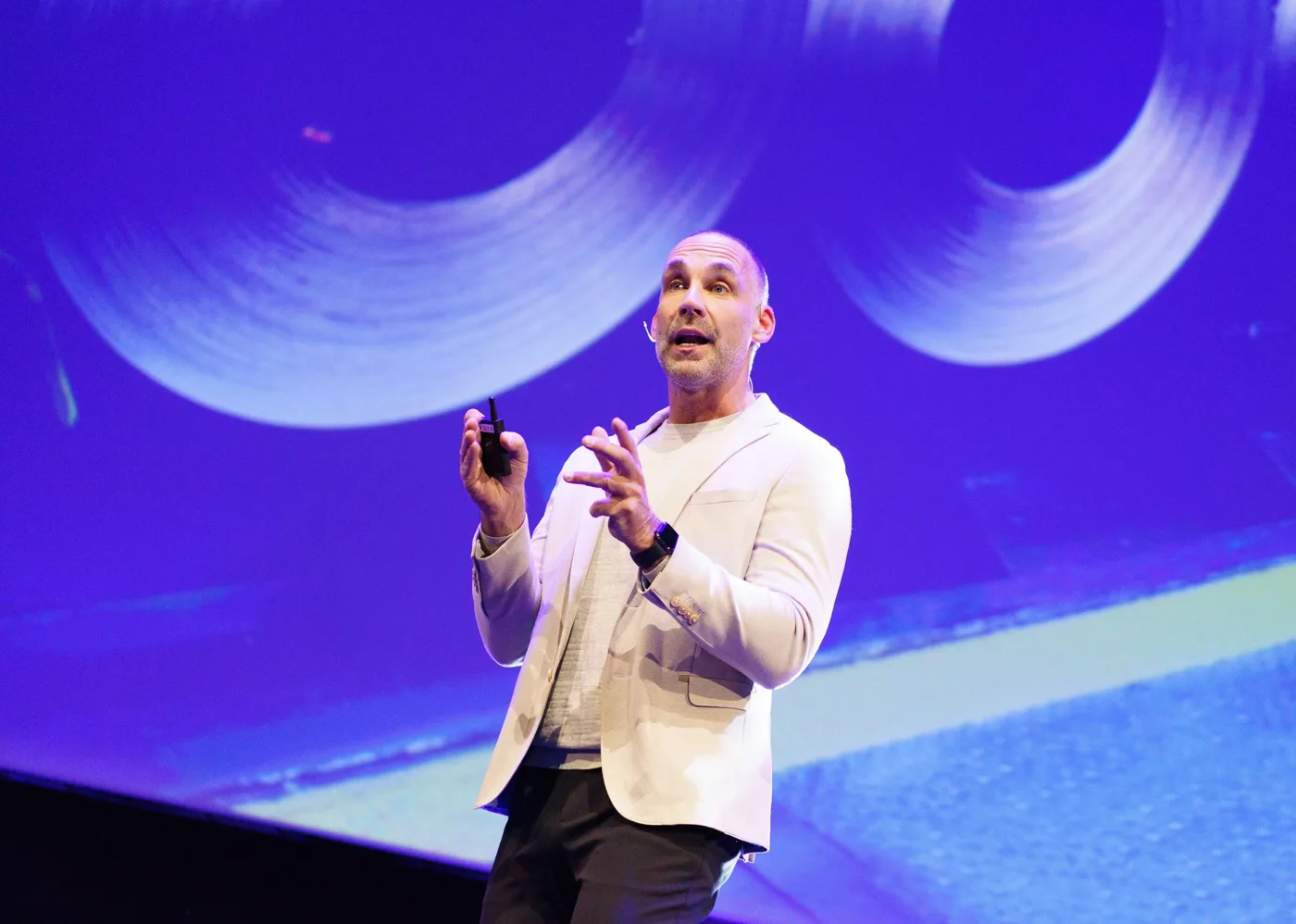
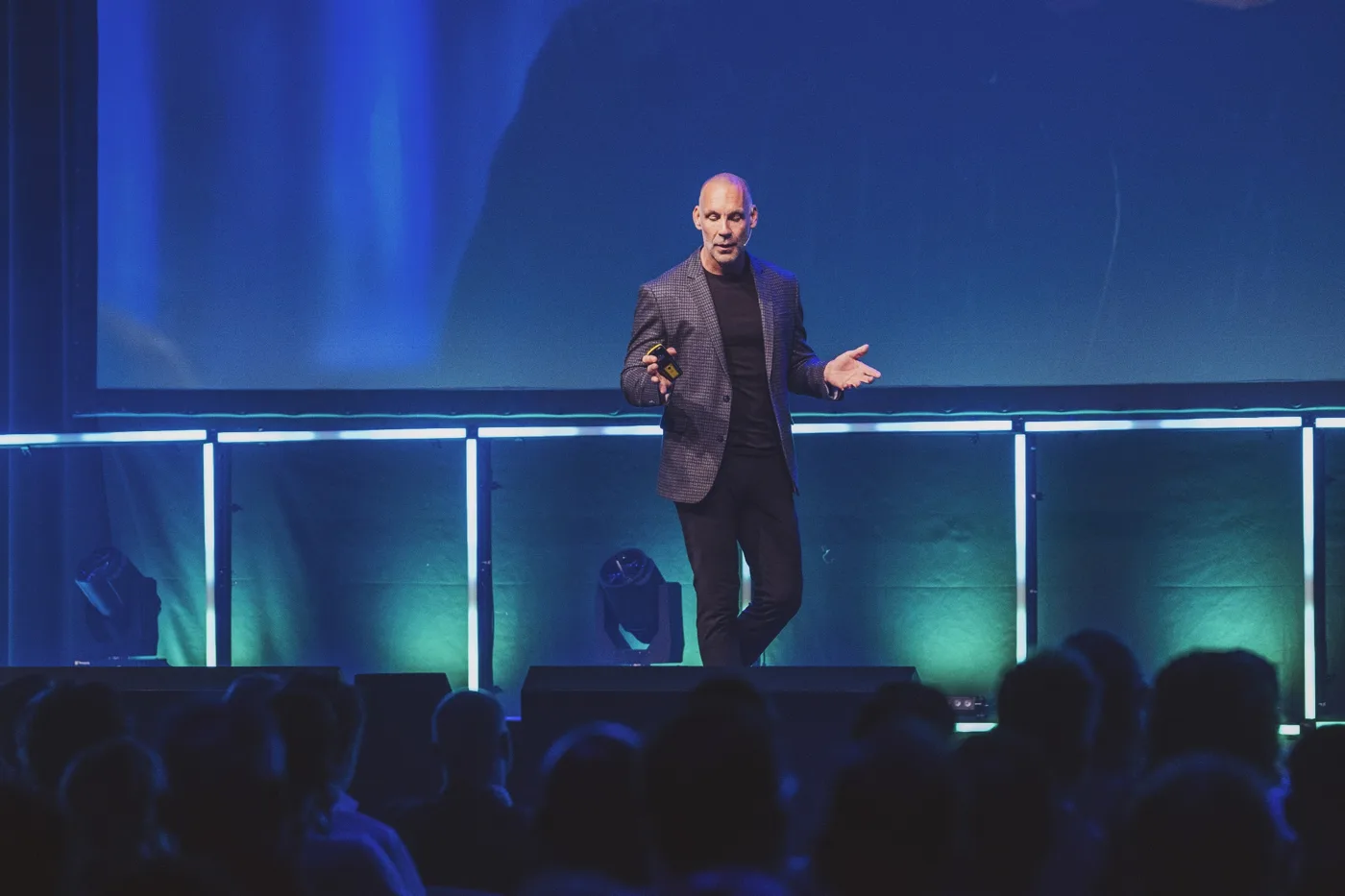
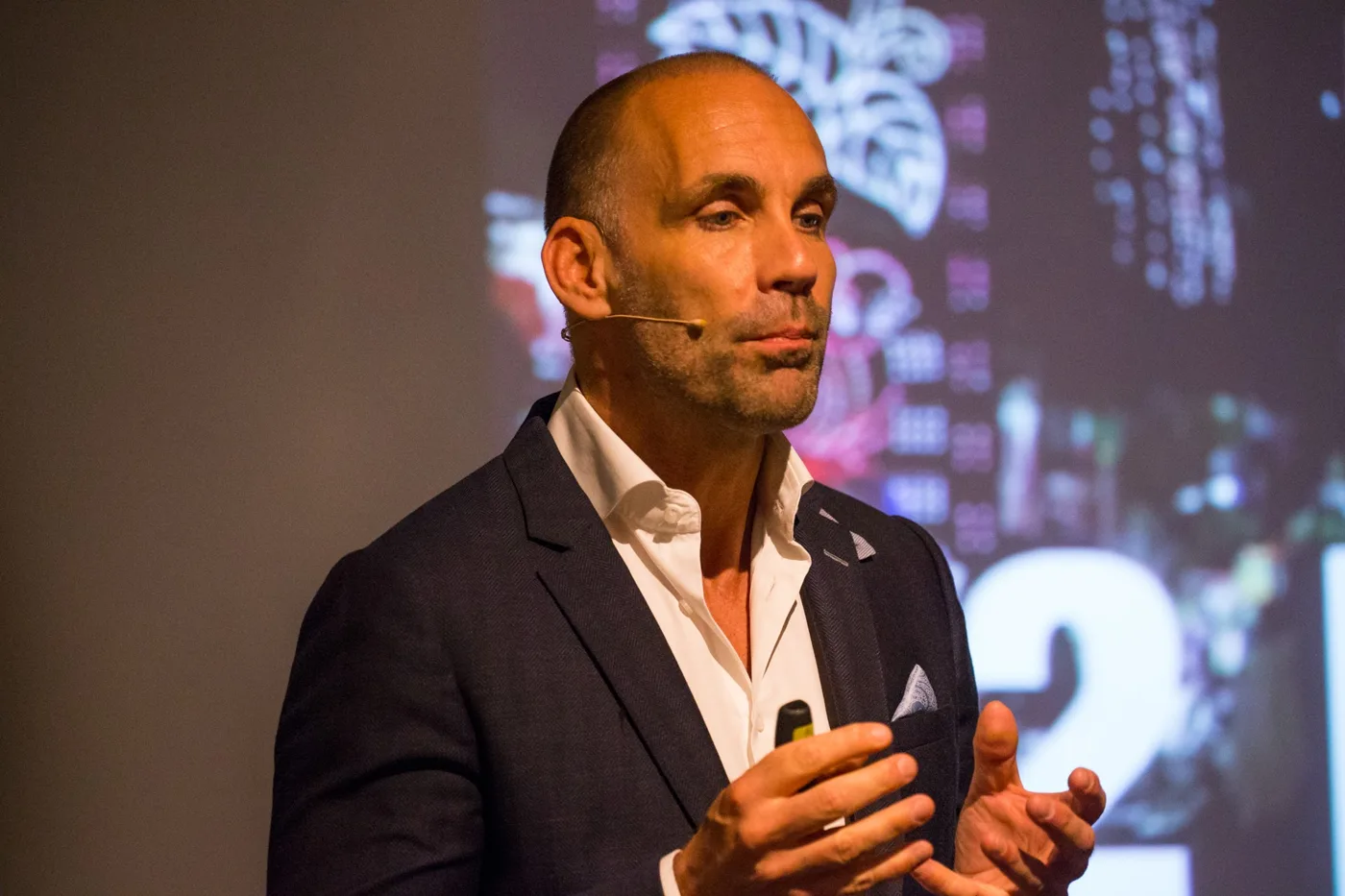
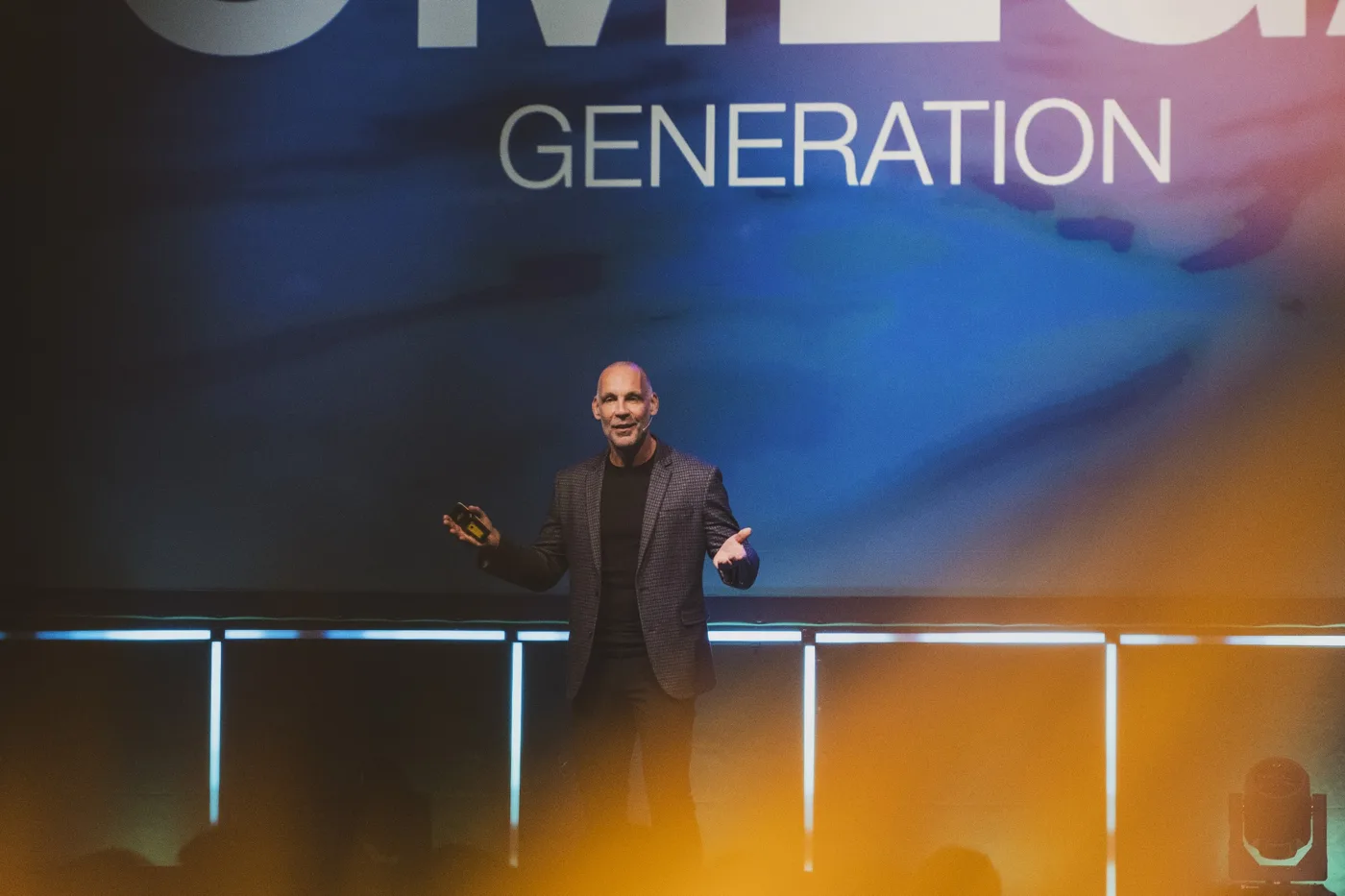
A packed conference hall, a televised panel discussion, a police summit in Dubai.






A selection of over 400 clients















What clients say

“A dazzling journey through new technology. The enthusiasm and energy during his presentation, combined with the visuals, provided a successful kick-off to our event.”Read the full review →

“Richard delivered an excellent presentation for the key clients we invited to Innovation Runway 2026. Engaging, interesting content, and thought-provoking statements made his presentation perfectly suited for our top relations.”Read the full review →

“An impressive and noteworthy presentation for our employees and customers. The rate at which change is happening, which you eloquently brought across in your energetic speech, requires a disruptive approach. To be continued!”Read the full review →

“You gave us all honest, inspired and entertaining insights. Your performance was highly appreciated by the conference participants and EU members.”Read the full review →
“With your presentation you awakened the customs organisation. At the end of the day it turned out that your presentation had made the biggest impression. You made sure the issues were put on Strategic Management’s radar.”Read the full review →
How a booking works
Your request
Use the form, or get in touch by phone, email or WhatsApp. A few lines are enough to get started.
We get in touch
We'd like to hear what your event looks like, who'll be in the audience and which themes interest you.
A written proposal
Covering the topic, format (on location or online), length (30, 45, 60 minutes or longer) and fee, so you can talk it over with your colleagues.
Getting to know Richard
Next, we'll find a time for the two of you to talk and brainstorm the keynote, the topics and the format. There's no charge for this.
Frequently asked questions
Who is this keynote for?
Banks, insurers, pension funds and pension administrators, asset managers, payment companies, intermediaries, industry bodies and financial conferences. The audience often mixes the board, risk and compliance, IT, customer service, advisers and underwriters; the keynote is made for exactly that mix. It also works for events for staff, clients and business partners.
What will the audience take away?
An up-to-date picture of what AI already does in payments, lending, insurance, investment and pensions, and scenarios for the next five to fifteen years: AI agents managing customers' money, programmable money, insurers that prevent damage and supervision in real time. What that means for roles, teams, leadership and culture. And a clear view of the risks, so the conversation afterwards is about choices rather than hype.
Does the keynote also cover our own organisation?
Yes, and that is often the main focus: what the adviser and the underwriter do when AI prepares the file, how teams of people and AI agents work together, and how a sector built on careful judgement learns to experiment. Roles, leadership, culture and training each get their own part of the keynote.
Does the keynote cover the risks of AI in the financial sector?
Yes, always. Cloned voices, fake executives on a video call, synthetic identities, phishing that convincingly copies the language and look of real bank messages, and models that make unfair decisions on credit or premiums: that other side has its own place in every keynote for the financial sector.
Does a keynote on AI suit a sector with this much supervision?
That is exactly where it belongs. The keynote shows what institutions already do within the existing rules, what the European AI Act and the rules on digital operational resilience require, and how institutions innovate without losing the trust of customers and regulators. Not legal advice, but a clear picture of the choices.
Is the keynote tailored to our organisation?
Yes. Beforehand there is an introductory call about your audience, the purpose of the event and what is going on in your organisation. A pension administrator gets different examples from a payment company or a general insurer.
How long is the keynote, and can it be in English or online?
30, 45 or 60 minutes, and longer if you wish, with time for questions from the audience, in Dutch or English, in person or online. For more than a keynote, there are masterclasses, boardroom sessions for executives, board members and managers, and workshops for all employees.
How much does a keynote on AI in the financial sector cost?
Fees for international keynotes are on request. Ask for a proposal and you will hear from us within an hour on working days.
Interested in a keynote on AI in financial services?
Tell us in a few sentences about your event and who will be in the audience, and let us know the date.
Prefer to speak to us directly? Call 085 303 0792 · email talks@vanhooijdonk.com · send a WhatsApp message