 Richard van Hooijdonk

AI & the future of education
AI gives children and students an explanation tailored to them, at any hour of the day. Each of them can have a personal tutor, and a learning companion can grow with them for life. What that delivers depends on the teacher in the classroom and the culture of the school.
Choose your sector
Every keynote is tailored to a sector. Choose yours.
 Healthcare
 Government
 Defence
 Policing and security
 Smart cities
 Construction
 Mobility
 Industry 4.0
 Energy and utilities
 Logistics
 Retail
 Wholesale
 Hospitality, tourism and leisure
 Agriculture
 Financial services
 Legal
 Accountancy and advisory
 EducationYou are viewing
 Media and entertainment
 Telecoms and connectivity
Is your sector not listed? We tailor the keynote to your audience. Tell us about your audience
AI makes it possible to adapt teaching to every pupil. At the same time, it changes what we learn, how we learn and how teachers prepare young people for the world ahead.
In this keynote, trend watcher and futurist Richard van Hooijdonk sets out which work AI can take over or support in education, and which part remains the teacher's. He also shows what children and students will need to learn, and the role only education can play in preparing them for what comes next. Schools face teacher shortages and heavy workloads, while pupils carry AI on their phones long before the school has a policy for it. AI can make learning more personal and give teachers time back. An AI tutor explains and asks questions, adaptive platforms pick the next exercise, language models help with lesson preparation, and read-aloud software and translation let more children and students take full part. Adaptive learning and AI-made teaching material are already in use, and AI agents for student services are being trialled. Further ahead lies a different kind of education: a tutor for every child on earth, a learning companion that follows you through life, exams that merge into learning itself and lessons in worlds that AI builds in seconds. The keynote shows what works today and sketches scenarios for the next five to fifteen years. The technology is already here; time, training and new agreements decide how quickly schools put it to use. Which part of the teaching at your school could already work differently next term?
AI in education
What AI already does today in the classroom, the lecture hall and the back office.
- 01

The AI tutor
An AI tutor answers with a question instead of the solution. Next comes a tutor that looks at the exercise book and spots the mistake.
An AI tutor is a language model set up to teach rather than to answer. It asks what the pupil already knows, offers a hint, shows an intermediate step and then waits. The thinking stays with the pupil, and that is where the learning happens. In a controlled trial in a large physics course, students working with such a tutor learned more than twice as much, in less time, as in a class built on active learning. Large language models now have a learning mode of their own, and they can already speak and use a camera to see what a pupil is working on. The next step is a tutor that uses this as a teacher would: it sees the arithmetic slip in a pupil's exercise book and responds with a question before the mistake becomes a habit.
- 02

Adaptive learning
Platforms choose exercises based on mistakes. The next step is to predict which later topics may prove difficult and plan revision accordingly.
While pupils practise, adaptive platforms record which mistakes keep coming back and how long each exercise takes, and choose the next exercise accordingly. Over weeks and months, the teacher builds up a picture that also includes pupils whose passing marks hide their difficulties. The next step is for that information to reach beyond today's topic. A gap in fractions sometimes only shows up in algebra. The platform estimates earlier which topics further on may prove difficult and adjusts the revision to match. Today's exercise then doubles as preparation for next year's material.
- 03

Teaching material made with AI
Teachers use AI to build lessons and simulations at three levels. Next: material that adapts during the lesson to whatever went wrong.
Lesson preparation takes up much of teachers' time outside lessons, and AI now does far more than write a first draft. A teacher describes the aim and the group, and receives a lesson with exercises, a case from the pupils' own surroundings and a short simulation, at three levels. Linked to the class's results, the material concentrates on what pupils have not yet mastered. In a large survey of teachers, weekly AI users estimated their combined time savings across various teaching tasks at almost six hours a week on average. Future material could adapt while the lesson is running, using the mistakes of the first half hour to shape the exercises in the second.
- 04
 In pilots
AI agents for school and student
AI agents answer queries and handle enrolments. Next: an AI agent that guides a student from application to graduation.
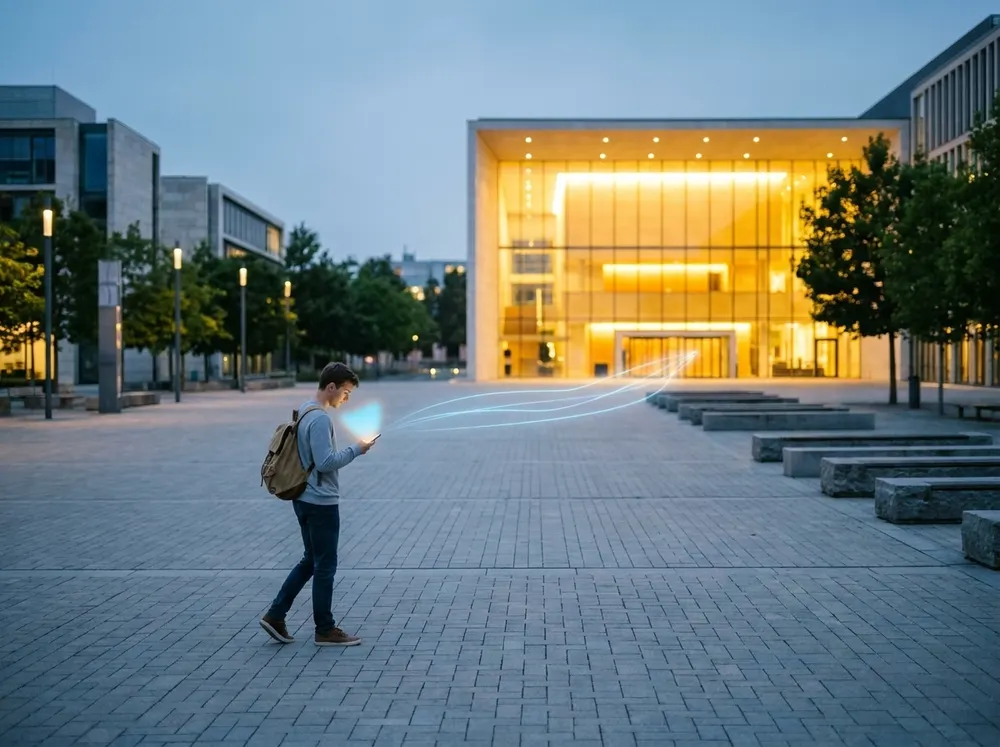
Much of the time in education goes on administration and questions that come back every term. When is the resit? Which documents are still missing for enrolment? An AI agent with access to the student system and knowledge of the regulations answers those questions day and night and handles simple requests itself: looking up records, filling in a form, booking an appointment. Universities and colleges are trialling such assistants for student services, and schools let AI help with the timetable. Staff deal with the exceptions. The next step is an AI agent that guides a student through the whole programme, from application to graduation, and sees for itself when a resit, an exemption or a different module would help them forward.
- 05
AI literacy as a subject
Children and students learn how AI works and think critically about it: they check what AI shows them and where it comes from.
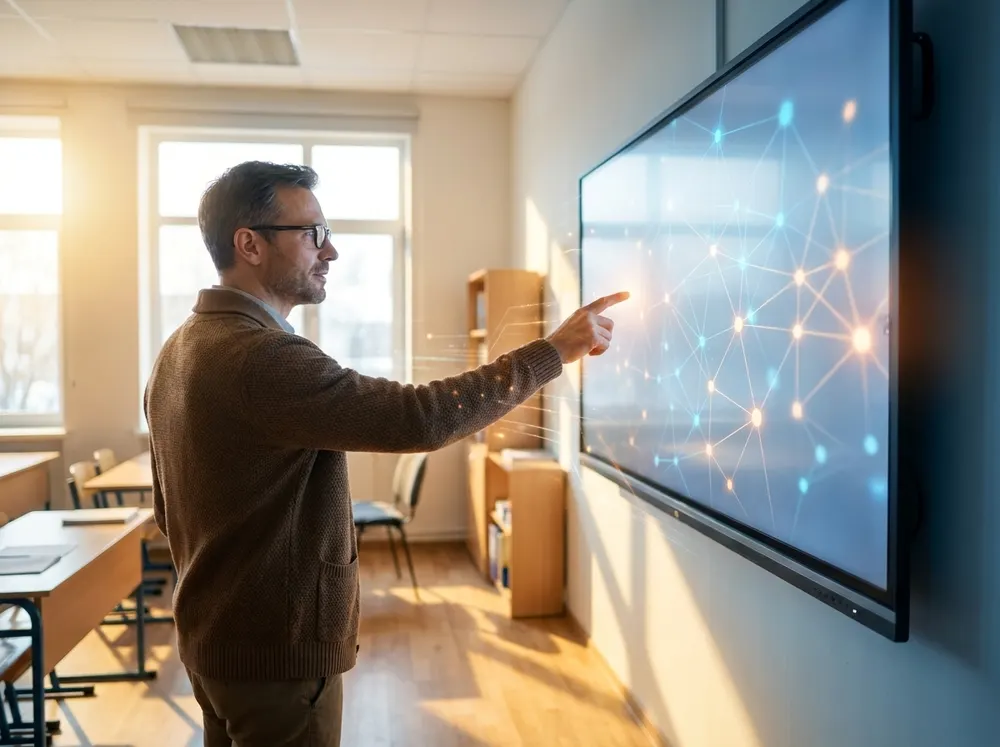
AI literacy is the ability to understand AI, use it critically and grasp what follows from it. Critical thinking sits at its core. A language model predicts words and can therefore write convincing nonsense; a photo, video or voice may be fabricated. So a child or student learns to ask questions: is this right, where does it come from, who gains from it, and what does another source say? UNESCO has drawn up frameworks for what pupils, students and teachers should be able to do, and governments are adding AI literacy to the curriculum. The European AI Act requires organisations that use AI, schools included, to take steps to support the AI literacy of their staff. The OECD will measure AI literacy in its 2029 PISA study.
- 06
Everyone can take part
AI reads aloud, translates and simplifies texts. In development: sign language that AI translates live, in both directions.
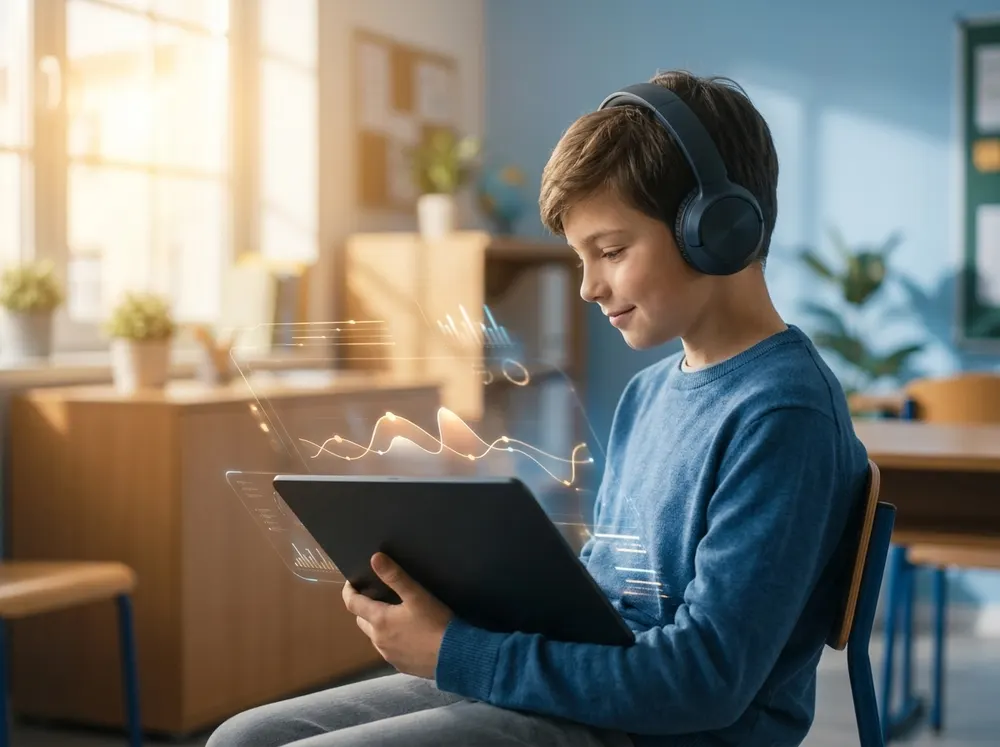
A newly arrived pupil reads the same source as the rest of the class, with the instructions in their mother tongue alongside. A student who is hard of hearing follows the discussion through live subtitles, a blind student has a graph described, and a pupil with dyslexia has the test read aloud in a natural voice. AI builds that support into the teaching material itself: a text gets several reading levels, an image a description, a spoken explanation a written version. The whole class works on the same assignment, each with their own way into the material. The next step is sign language. Researchers are working on AI that translates sign language live, in both directions, so that a deaf pupil and a hearing classmate can talk to each other directly.
- 07

Spotting study problems early
From attendance and results, AI estimates the risk of dropping out, so a personal tutor can start the conversation in time.
A student still passes, but hands work in later and later, misses lectures and logs in to the learning platform less often. On their own, such signals say little; together they form a pattern that becomes visible before the grades drop. A predictive model learns from earlier years which combinations of signals often come before a student drops out. Students with a raised risk appear on a list for their personal tutor, who gets in touch, asks how things are going and looks at what would help: extra tuition, an adjusted study plan, support with money worries. The model gives a probability, not a certainty. The conversation that follows is what makes the difference.
- 08
 In pilots
Learning in VR and AR
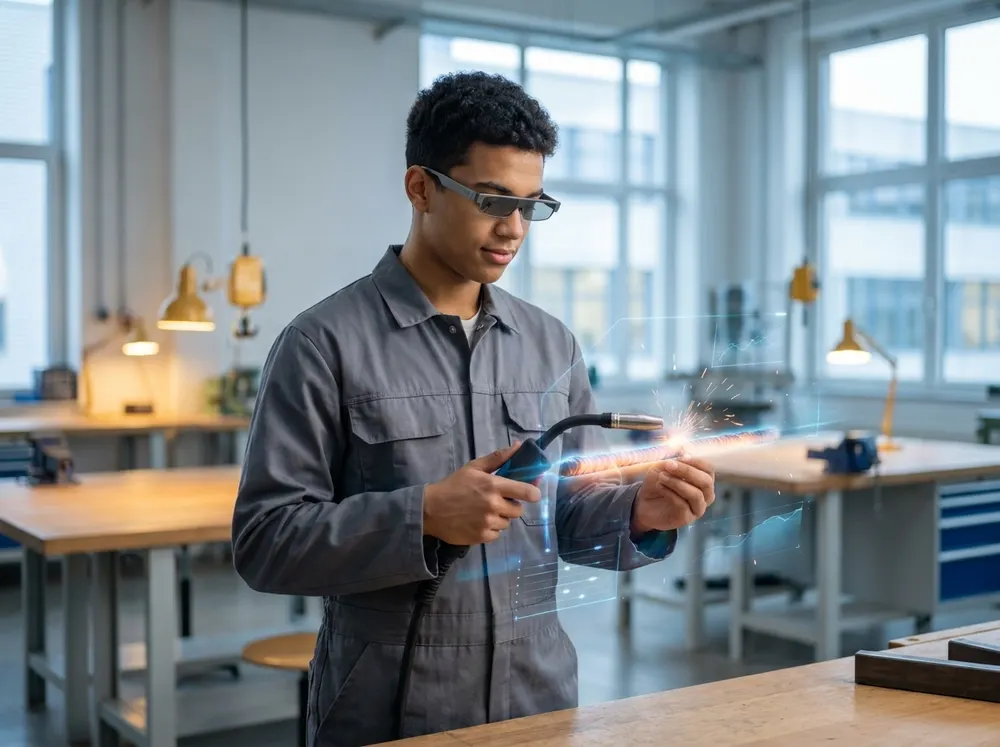
Pupils and students explore a cell, practise welding or rehearse a difficult conversation. AI makes the simulation harder or easier.
A biology pupil walks through a cell, a vocational student practises welding without wasting material, a nursing student breaks bad news to a virtual patient. AI makes these simulations smarter. It steers how the virtual people behave, responds to what the student says and adjusts the difficulty: more time pressure for those who are doing well, more help for those who get stuck. Afterwards the student gets feedback on what they did. Meanwhile the headsets are becoming lighter and flatter, and fit more easily into an ordinary classroom.
- 09
Skills for the future
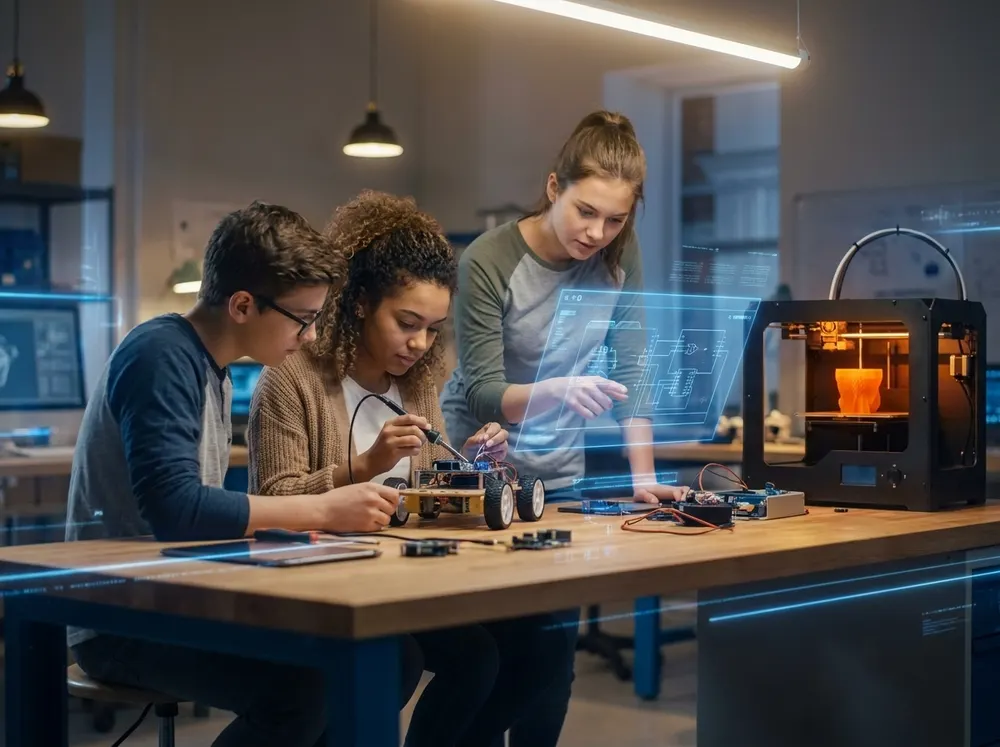
Employers expect around 39 per cent of core skills to change by 2030 (WEF). Schools shift from recalling facts to investigating and creating.
The future of education
Where learning and teaching could stand in five to fifteen years, with AI as the engine.
- 10
 Future scenario
A learning companion for life
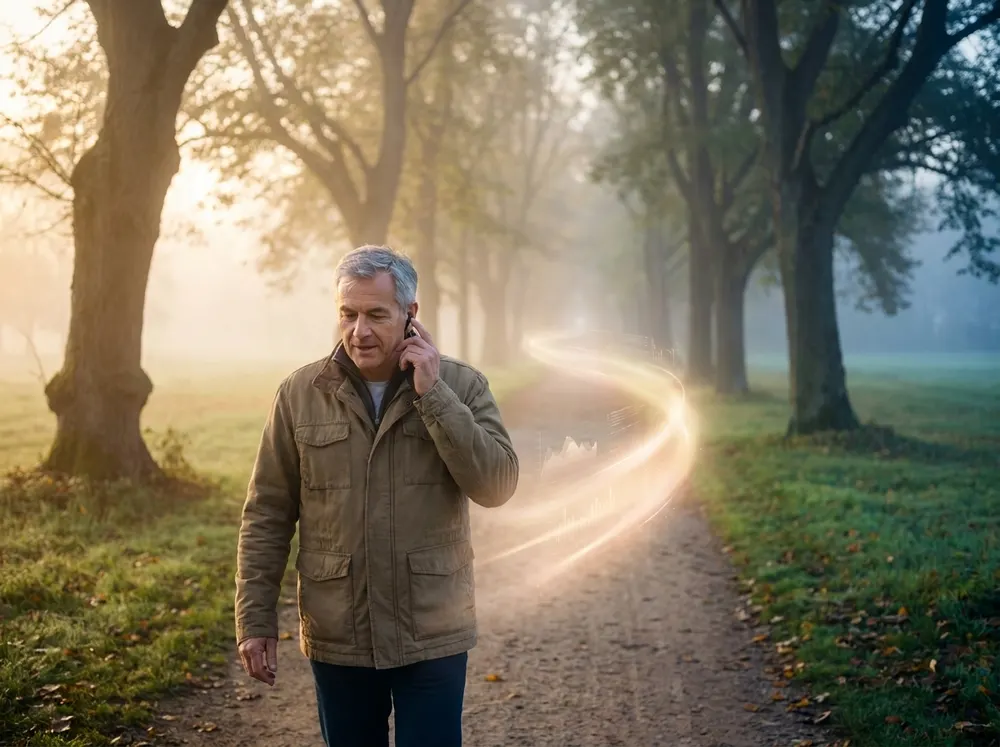
One AI learning companion will grow with you, from primary school into retirement. It knows your learning history and sees what you need next.
AI already helps working people choose a learning path. The next step is a learning companion that grows with you. The scenario for 2040: it knows which explanation worked for you in your first year of secondary school, which course you took in your first job and which skills your field will demand in five years' time. The companion suggests what to learn, when and from whom, in blocks of a few hours alongside your job, and practises with you until it sticks. A career becomes an alternation of working and learning, without anyone having to go back to school for years. Training providers then compete for fifty-year-olds returning for their next round of learning.
- 11
 Future scenario
Beyond formal qualifications
A living profile shows what you can do, updated with every project and every course. Your formal qualifications become entries in that profile.
A formal qualification records what someone could do at one moment, and for many working people that moment lies twenty years back. Digital certificates that are genuine and verifiable already exist. EU member states must make a digital identity wallet available to citizens by the end of 2026, and it can also hold diplomas. The scenario for 2040: every completed project, every work placement and every short course adds verified evidence to a personal profile. AI reads that profile, sees which combination of skills someone has and matches it to work that did not exist when they graduated. Employers select more often on proven skills than on a title. For schools and universities, the value shifts from the certificate to what their students can demonstrably do.
- 12
 Future scenario
The test that disappears
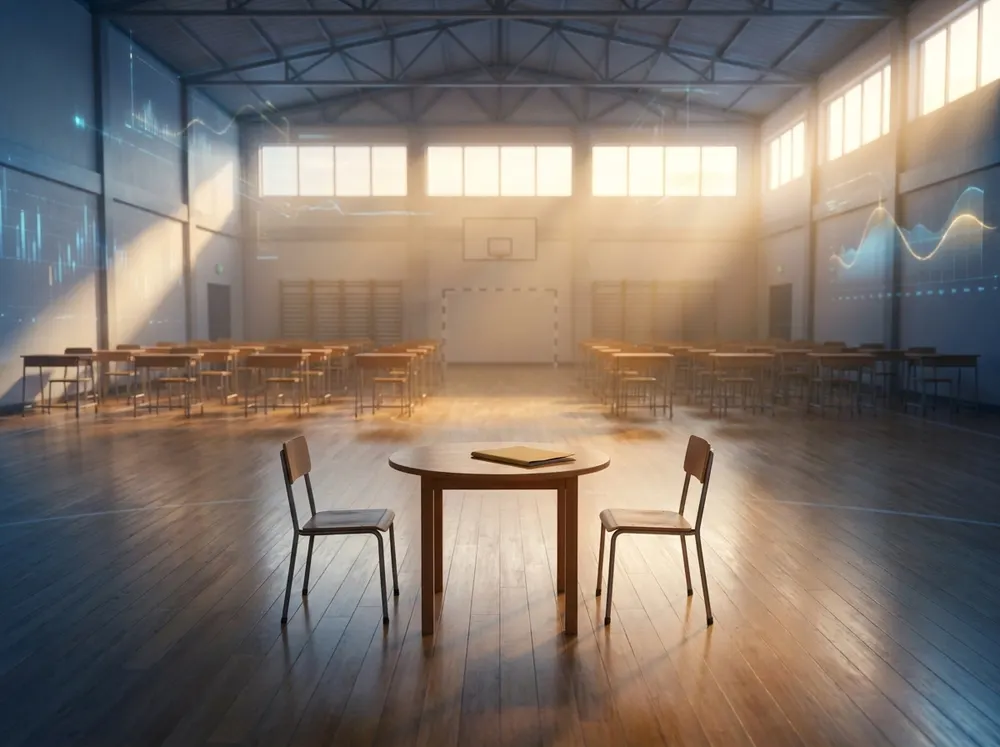
By around 2040, AI could assess pupils and students as they learn. The final exam becomes a discussion of what they have already shown.
Tests are already changing, because a language model can write an essay. The next step goes further. Researchers are working on assessment built into learning itself: during a simulation, a project or a conversation with a tutor, AI records how a pupil reasons, where they hesitate and what they solve. The scenario for 2040: a pupil builds up a portfolio of evidence over several years, and the final exam is no longer a day in a sports hall but a conversation with an examiner about that portfolio and what the pupil learned from it. The test then measures development rather than a snapshot. The diploma rests on what a pupil has shown over years and in very different situations.
- 13
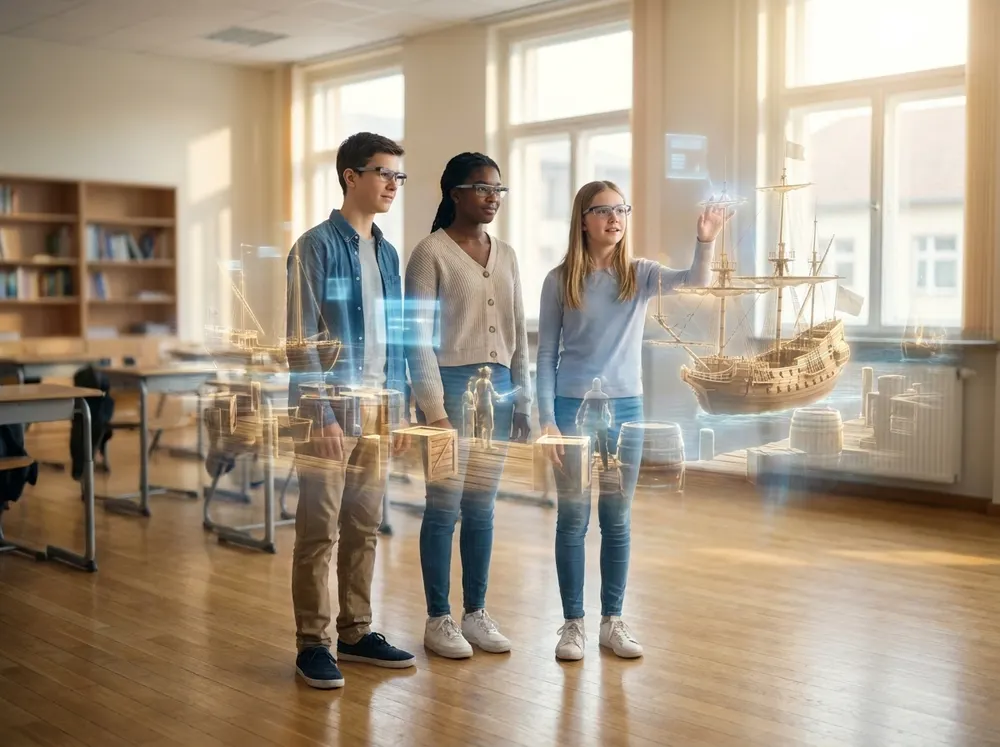 Future scenario
Learning in worlds AI builds
In time, a teacher asks for a harbour in 1650 or a working cell, and AI builds it in seconds. The class walks through it wearing glasses.
World models simulate how an environment changes and responds to actions. Some turn a short description into an interactive world that stays coherent for a few minutes. Experts and historical figures already appear in classrooms as holograms or AI avatars. The scenario for 2040: a history teacher describes a harbour in 1650, and the class walks through it wearing light, flat glasses, talks to a merchant and watches the price of pepper rise when a ship goes down. A medical student shrinks to the size of a blood vessel. A vocational student traces a fault in a wind turbine that has not yet been built. Teaching material becomes a place you visit, and every lesson can be a school trip without the coach.
- 14
 Future scenario
Studying with an AI research team
A student can use AI agents for research that now takes a whole team, from literature review to experiment in a robot lab.
AI systems already propose hypotheses in biomedical research, and in 2025 a paper written entirely by AI passed peer review at a scientific workshop. Laboratories where robots carry out experiments on their own exist on a small scale. By 2040, a master's student could lead a team of AI agents. One searches thousands of papers, another proposes an experimental design, a third runs the experiment in an automated lab and analyses the result. The student chooses the question, judges what holds up and defends the conclusion. A dissertation could then contain a real discovery. The university trains students to lead a research team in which most members are AI agents.
- 15
 Future scenario
Learning in 2040
Brain signals, sensors and AI could tune learning to attention and memory. Some may be possible by 2040; some remains science fiction.
Neurotechnology measures or influences brain activity. In clinical trials, people with paralysis already control a computer through a brain implant. For learning, wearable sensors are more interesting: light headbands or earbuds with which researchers link patterns in brain activity to attention and fatigue. By 2040, an adult learning a difficult subject could see when their concentration starts to slip, while their tutor times the revision to how their memory works. The tutor then responds to signals the learner has not yet noticed. Uploading knowledge straight into the brain remains science fiction.
AI makes a tailored learning path possible for anyone who wants to learn. Whether education makes use of that opportunity depends on people, and on a culture that leaves room to learn and experiment.
Richard van Hooijdonk
The education organisation of the future
What AI asks of roles, teams, leadership and culture in schools, colleges and universities.
- 16
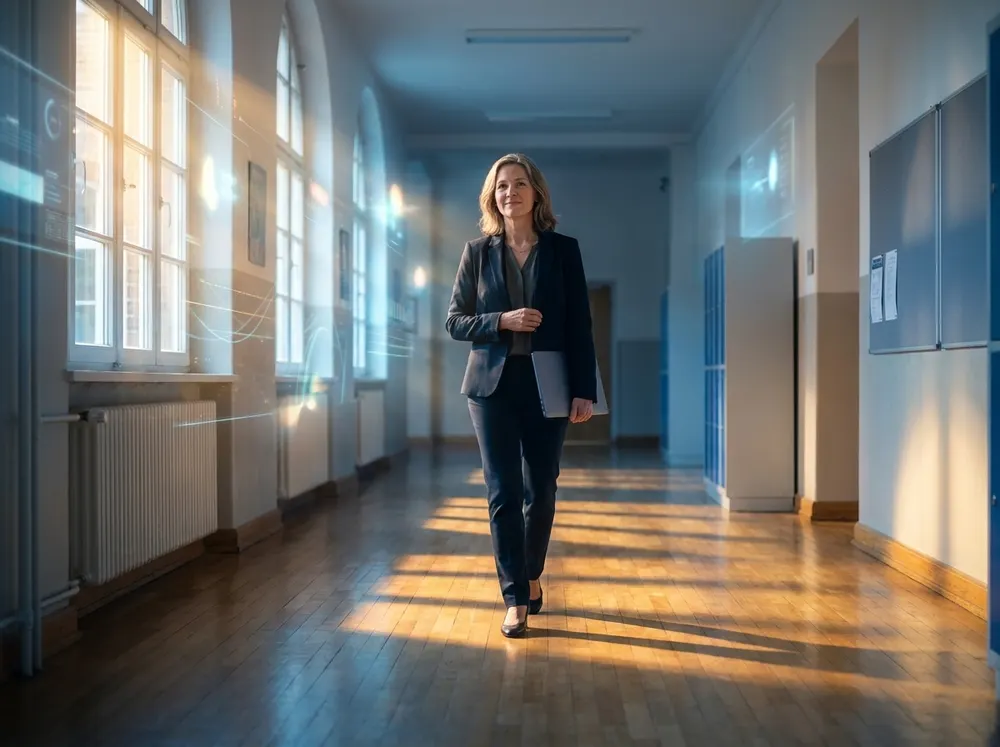
The AI-first organisation
AI takes over administration, timetables and predictive work. Teachers and other staff concentrate on teaching and guiding students.
- 17

New roles in education
New roles join learning coaches and AI coordinators: learning architects, companion supervisors and world builders who create virtual lessons.
When AI joins the work, what teachers and support staff do changes. Learning coaches, instructional designers, teacher-researchers and AI coordinators already work in many schools. AI will change what some roles involve and make others far more prominent. The learning architect designs learning routes across schools and employers, so that a vocational student can carry on learning with an employer without a detour. The learning companion supervisor keeps an eye on what AI recommends to a pupil, and steps in when a recommendation does not fit what that pupil needs. The world builder creates simulations and virtual worlds for a subject, from a historic harbour to an operating theatre. Timetablers and administrative staff get different work too, with less data entry and more investigating.
- 18
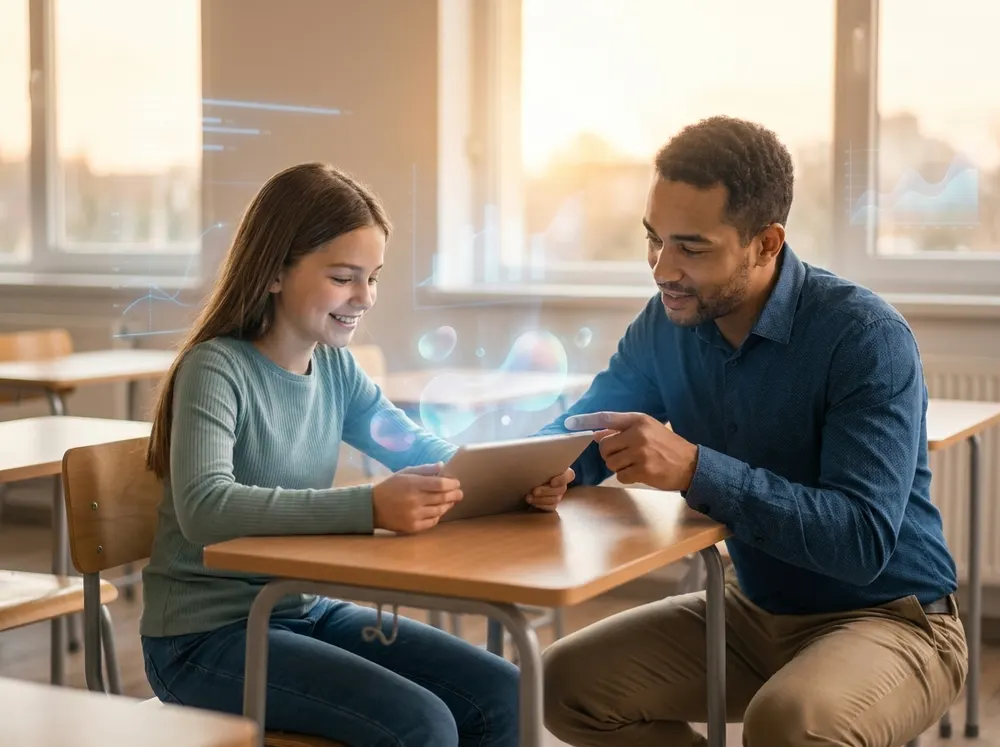
Teacher and AI in one classroom
AI drills, repeats and analyses; the teacher judges and motivates. In time, they will see each morning which three pupils need attention that day.
A classroom where teacher and AI work together divides the work according to who is good at what. People are good at the human side: judging, choosing, motivating a pupil. AI takes the repetitive and the deeply analytical work: it sets practice, explains the same topic a fifth time in a different way and spots, across thirty pupils' answers, which misunderstanding keeps returning. The teacher sees what AI does not: the pupil having a hard week at home, the group that is not working well together, the talent nobody had noticed yet. The picture for 2030: at the start of the lesson, the system shows the teacher which three pupils need their attention today, and why. How to respond remains the teacher's call.
- 19

Leadership in education
School leaders take the initiative on AI and new technology, and motivate teachers to build the school of tomorrow together.
School leaders lead the way with AI and new technology, even when not everything is settled. They sketch a picture of the future that a teacher of eight-year-olds and a university lecturer can both understand: where the school uses AI, and where it deliberately chooses not to. They start with small, visible steps, in one department or one programme, and show what works. Teachers get room to experiment and to bring colleagues along. That is how leaders get their people building the school of tomorrow together.
- 20
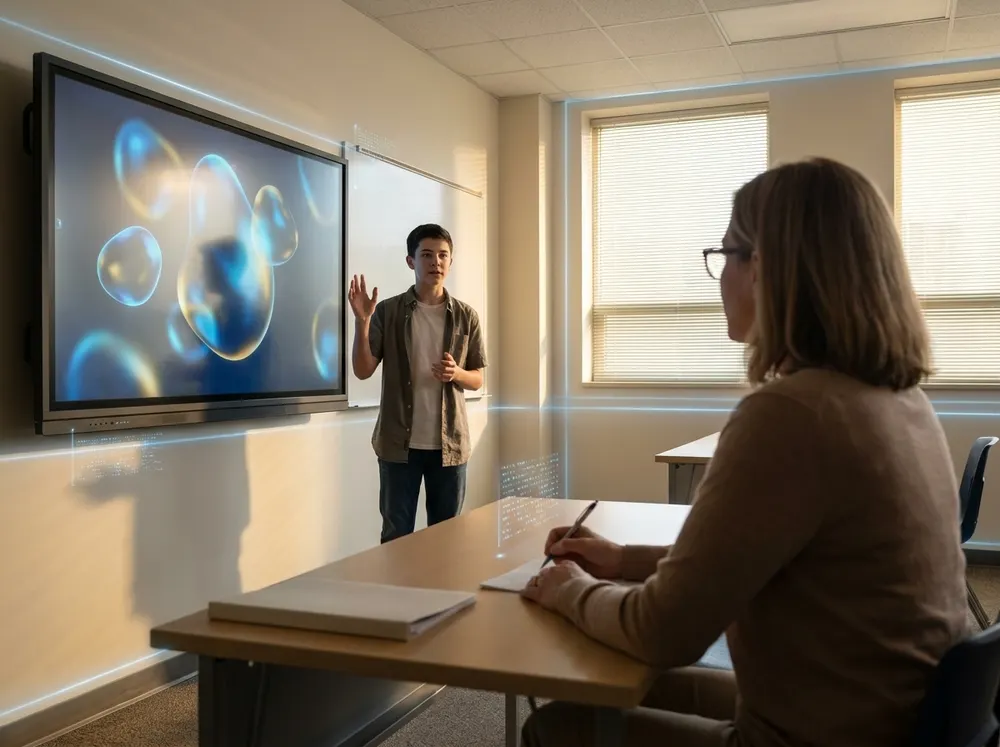
Discovering AI together
After the ban comes discovery: pupils, students and teachers explore how AI changes learning, and sometimes the class teaches the teacher.
- 21
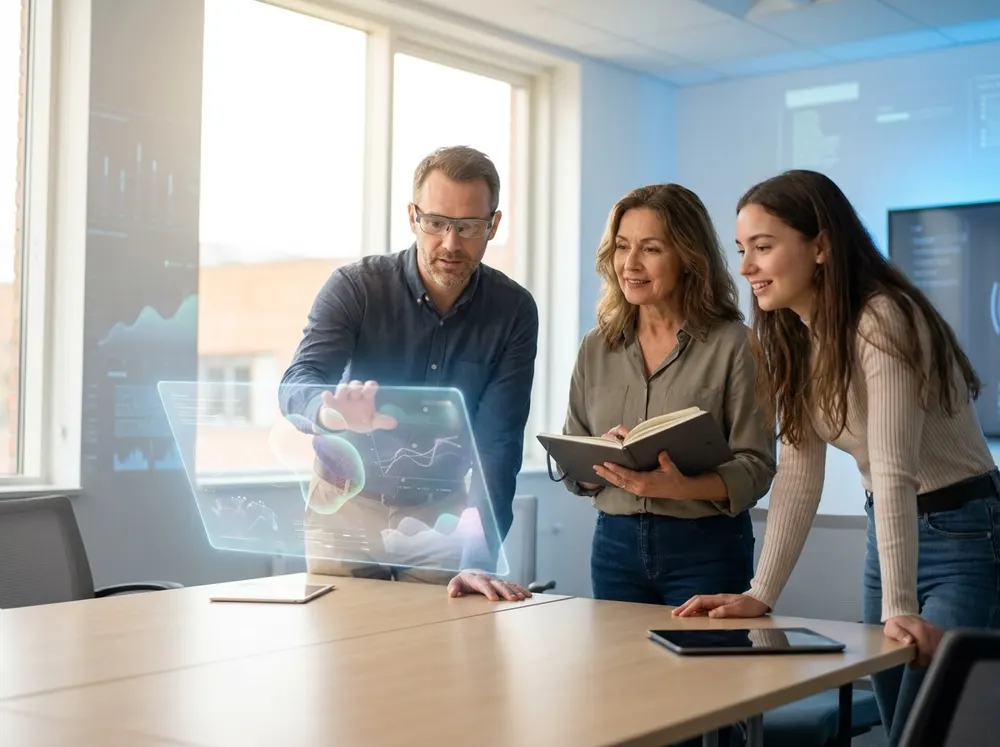
The future academy
Schools train their own people. What teachers discover in class with AI and new technology becomes course material in their own future academy.
- 22
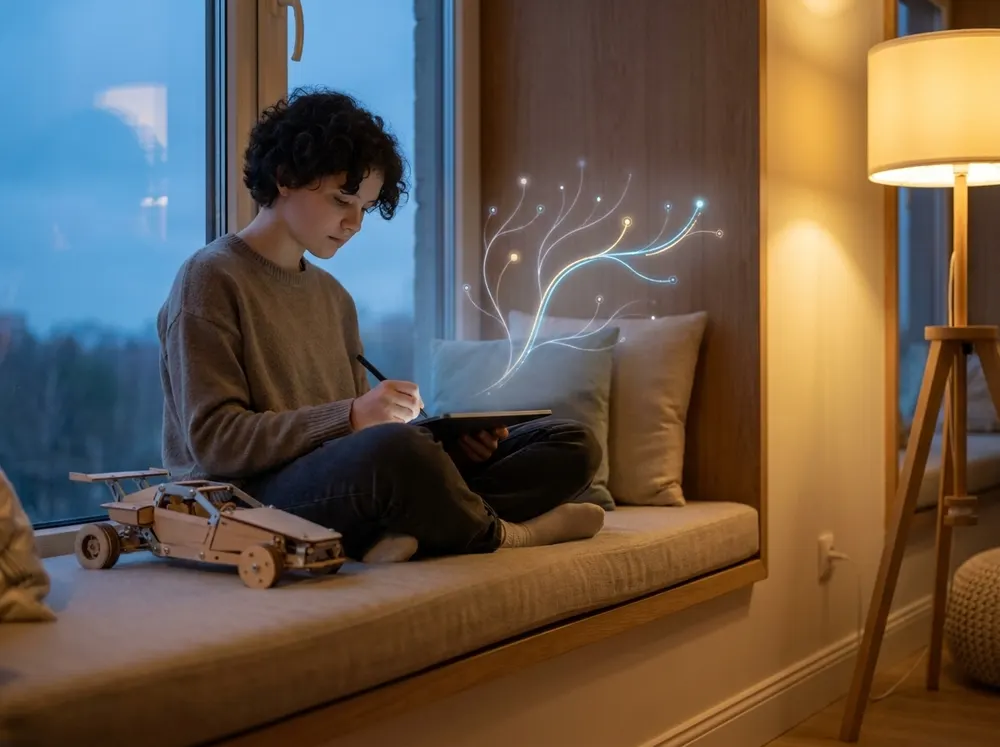
The pupil as designer
With AI, pupils and students will design their own learning routes and projects. The teacher follows how their choices add up to the learning goals.
- 23

Growing with an ecosystem
Organisations, start-ups, scientists and governments design the work of tomorrow together, and learn from front-runners around the world.
The other side responsibility and risk
Learning data, and criminals who turn AI against children, students and schools.
- 24

Data as the foundation
AI works when data from every part of the organisation is available, reliable and connected. That is the foundation of the AI-first institution.
- 25

Crime around the school
Children and students need to recognise when things go wrong online and with AI: a cloned voice, a fake photo or a false login page.
Schools and universities are a target for criminals: they hold large amounts of personal data and valuable research. AI makes it easier for criminals to get at both. Ransomware shuts down entire institutions, phishing messages arrive without a single spelling mistake and a voice clone of a head teacher can be made from a short recording. Children and students are targets themselves, from scams using a cloned voice to fake nude images that classmates make with "nudify" apps. The same image generation that helps a child or student illustrate a project helps a classmate make a humiliating fake photo. That is why children and students need to recognise when things go wrong online and with AI. And in the AI era, good security belongs in every school.
About the speakerRichard van Hooijdonk
Events in EuropeKeynote speaker for corporate events in Europe
On stage
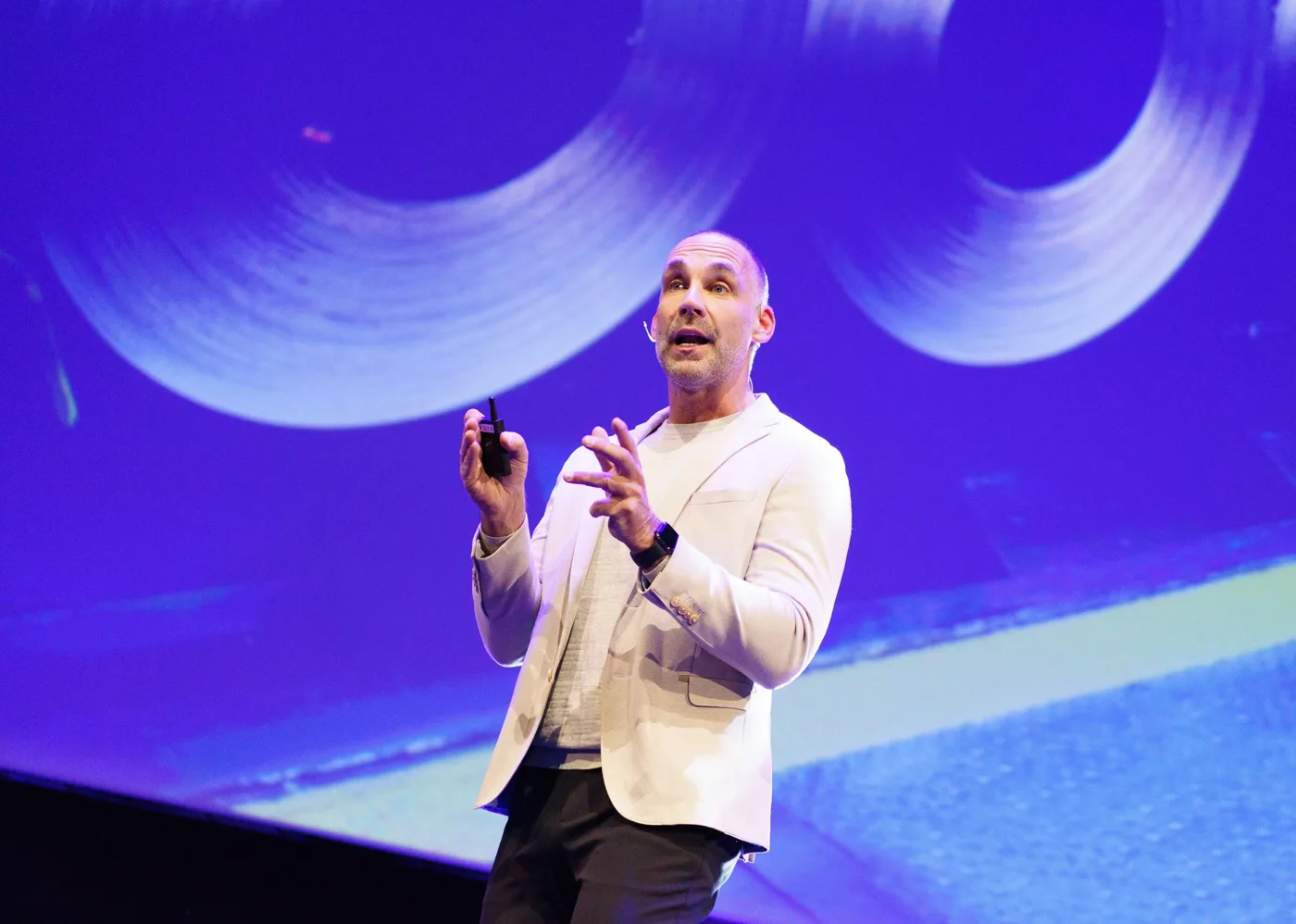
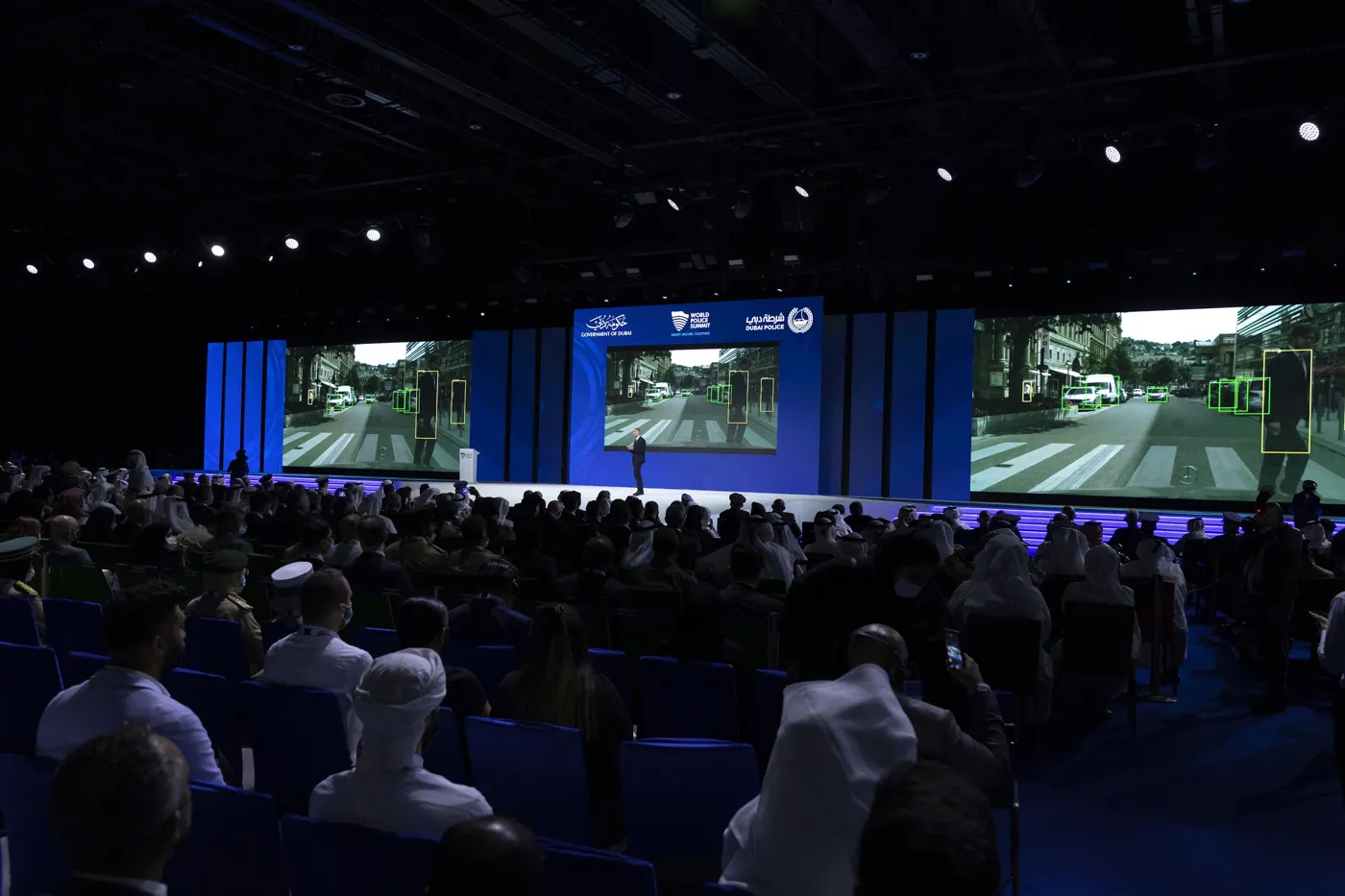
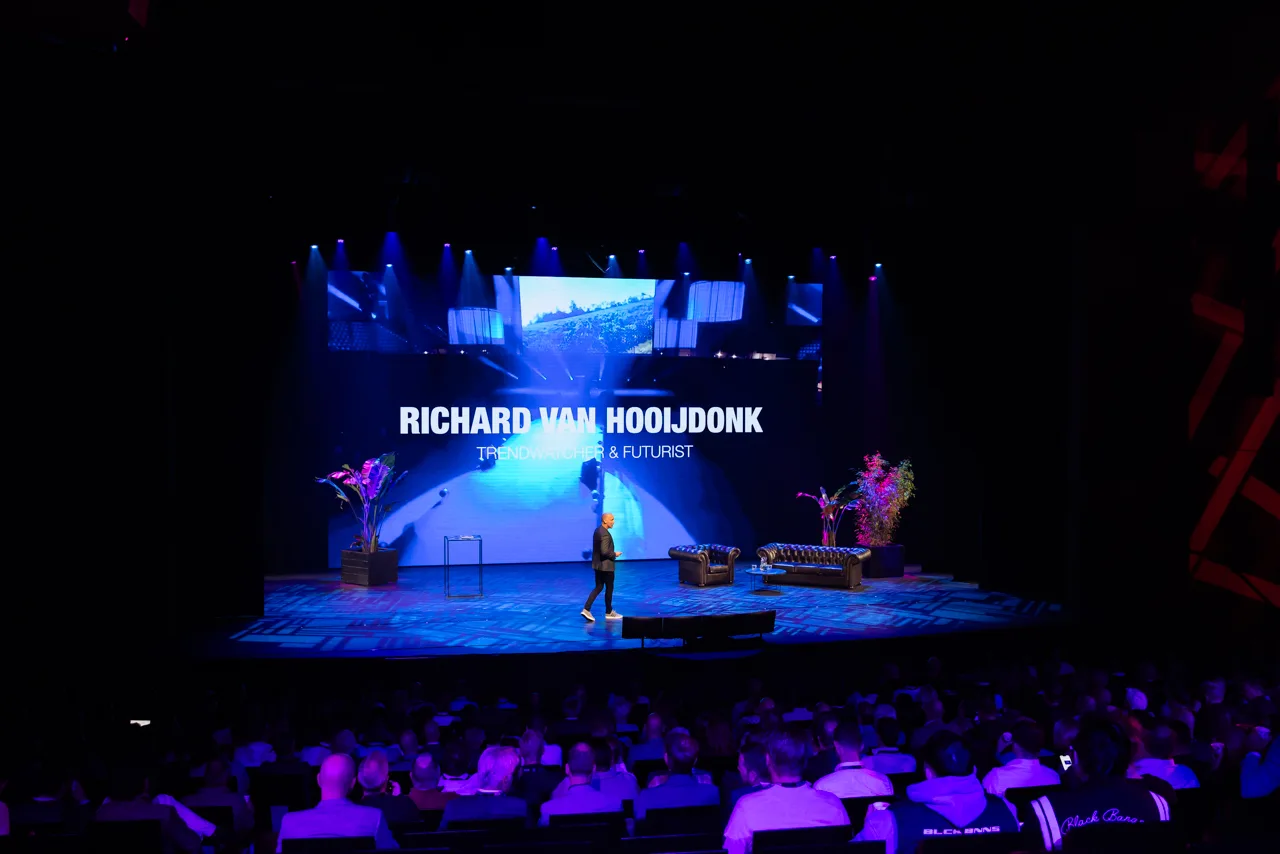
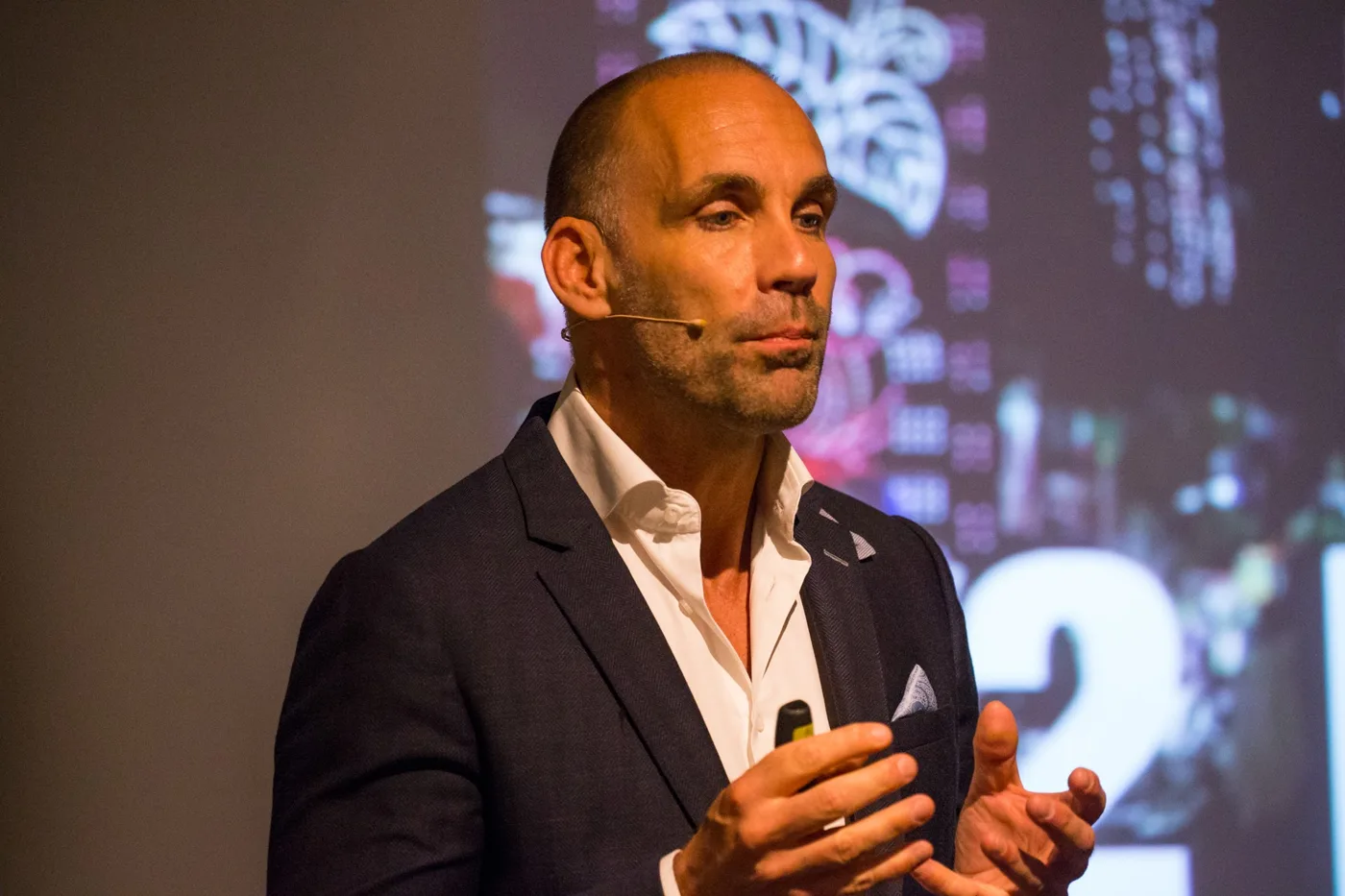
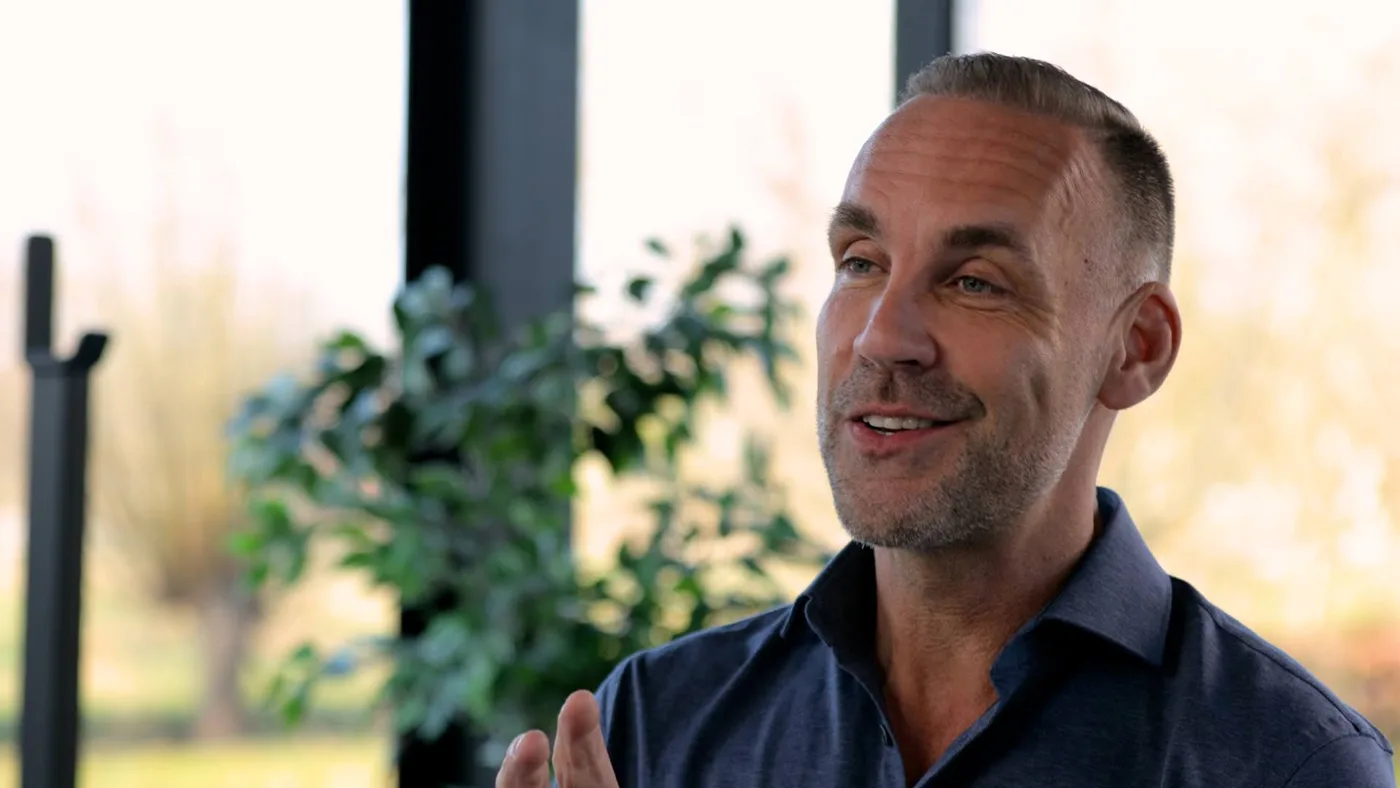
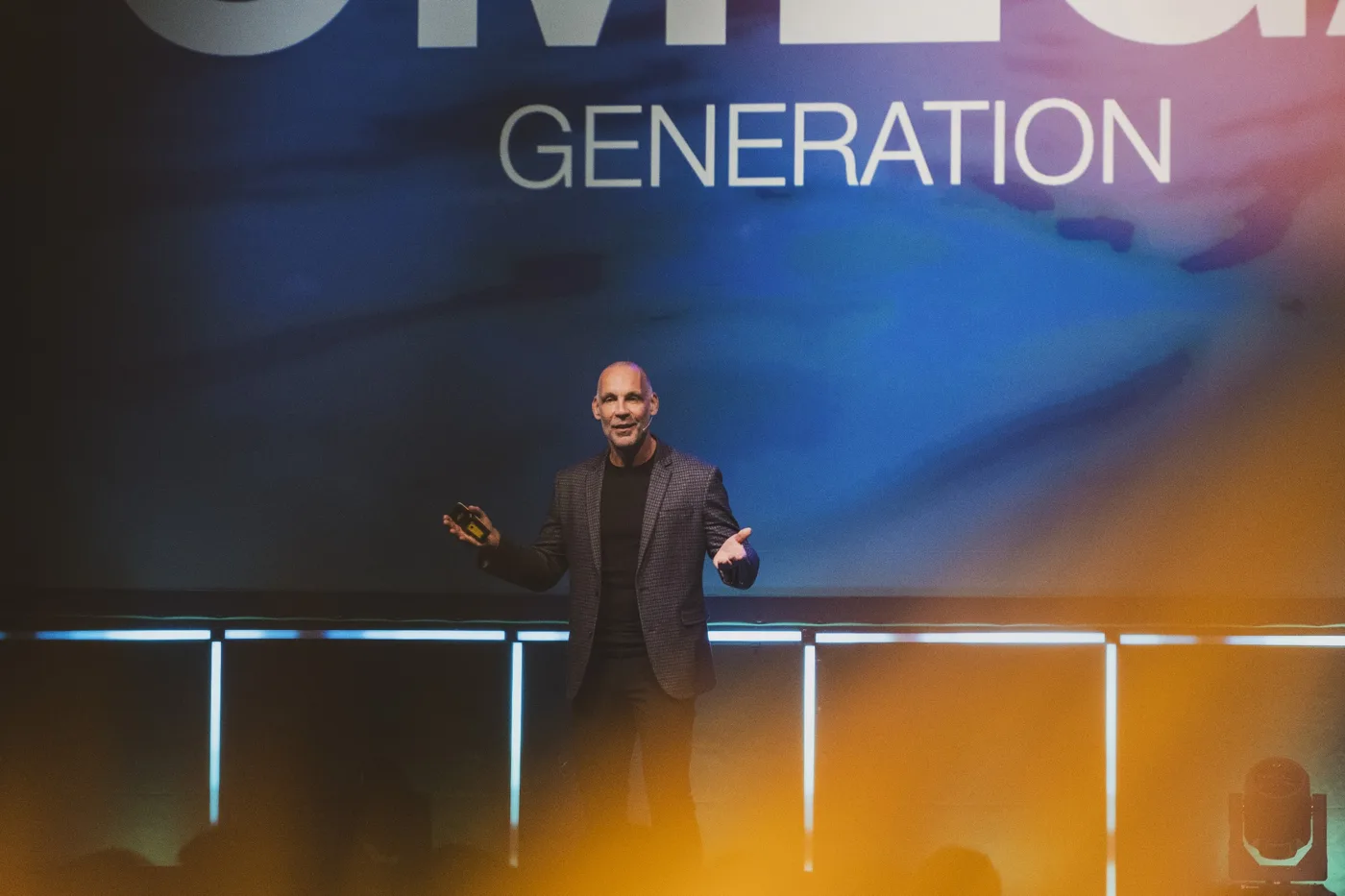
A packed conference hall, a televised panel discussion, a police summit in Dubai.





A selection of over 400 clients















What clients say
“We thank you once again for your inspiring contribution as the kickoff of the module. We found your lecture very valuable. The inspiration and answers to the questions have given the participants much to think about. As a result of this Top Defence Leadership Programme, we expect several new initiatives to emerge. And that is thanks in part to your inspiring kickoff.”Read the full review →

“You gave us all honest, inspired and entertaining insights. Your performance was highly appreciated by the conference participants and EU members.”Read the full review →

“An impressive and noteworthy presentation for our employees and customers. The rate at which change is happening, which you eloquently brought across in your energetic speech, requires a disruptive approach. To be continued!”Read the full review →

“A dazzling journey through new technology. The enthusiasm and energy during his presentation, combined with the visuals, provided a successful kick-off to our event.”Read the full review →
“Great keynote that really opened our eyes. Sparkling and energetic, from beginning to end. Thanks Richard, for showing us this different view of the fitness market and its future.”Read the full review →
How a booking works
Your request
Use the form, or get in touch by phone, email or WhatsApp. A few lines are enough to get started.
We get in touch
We'd like to hear what your event looks like, who'll be in the audience and which themes interest you.
A written proposal
Covering the topic, format (on location or online), length (30, 45, 60 minutes or longer) and fee, so you can talk it over with your colleagues.
Getting to know Richard
Next, we'll find a time for the two of you to talk and brainstorm the keynote, the topics and the format. There's no charge for this.
Frequently asked questions
Who is this keynote for?
School boards and head teachers, teams of teachers and lecturers, universities and colleges, vocational institutions, teacher training programmes, the training and HR departments of companies, sector bodies, governments and conferences on the future of education. The audience often brings governors, teachers, support staff and sometimes students together; the keynote is made for that mix. It also works for events for staff, students, parents and partners.
What will the audience take away?
An up-to-date picture of what AI and new technology already do in the classroom, the lecture hall and the back office, and scenarios for the next five to fifteen years: a tutor for every child, exams that merge into learning and a skills profile that complements the diploma. What this means for roles, teams, leadership and culture. And a clear view of learning data and safety, so that the conversation afterwards is about choices, not hype or fear.
Does the keynote also cover our own organisation?
Yes, and that is often where the emphasis lies: how a school or institution learns to work with AI, which new roles emerge, how teachers get the time to keep learning and what that asks of the people in charge. Roles, teams of people and AI, leadership, culture and learning each get their own part of the keynote.
Does the keynote also cover the risks?
Yes, always. Deepfakes of children, students and teachers, fraud with fake students, unauthorised AI help in exams, ransomware and the question of who holds your pupils' and students' data: that other side has its own place in every education keynote, with examples of how AI itself helps to detect fraud and attacks.
Is it about primary, secondary or higher education?
All of them: primary and secondary schools, vocational education, universities of applied sciences and research universities, and corporate training. The emphasis follows the audience: a training day for a primary school board gets different examples from a conference of universities or a meeting of training managers.
Is the keynote tailored to our school or institution?
Yes. Beforehand there is an introductory call about the audience, the purpose of the event and what is going on in your organisation. A board deciding on its approach to AI gets different examples from a team that starts using AI in lessons next week.
How long is the keynote, and can it be in English or online?
30, 45 or 60 minutes, and longer if you wish, with time for questions from the audience, in Dutch or English, in person or online. For more than a keynote, there are masterclasses, boardroom sessions for governors and senior leaders, and workshops for all staff.
How much does a keynote on education cost?
Fees for international keynotes are on request. Ask for a proposal and you will hear from us within an hour on working days.
Interested in a keynote for your education event?
Tell us a little about your event and who will be in the audience, and let us know the date.
Prefer to speak to us directly? Call 085 303 0792 · email talks@vanhooijdonk.com · send a WhatsApp message