 Richard van Hooijdonk
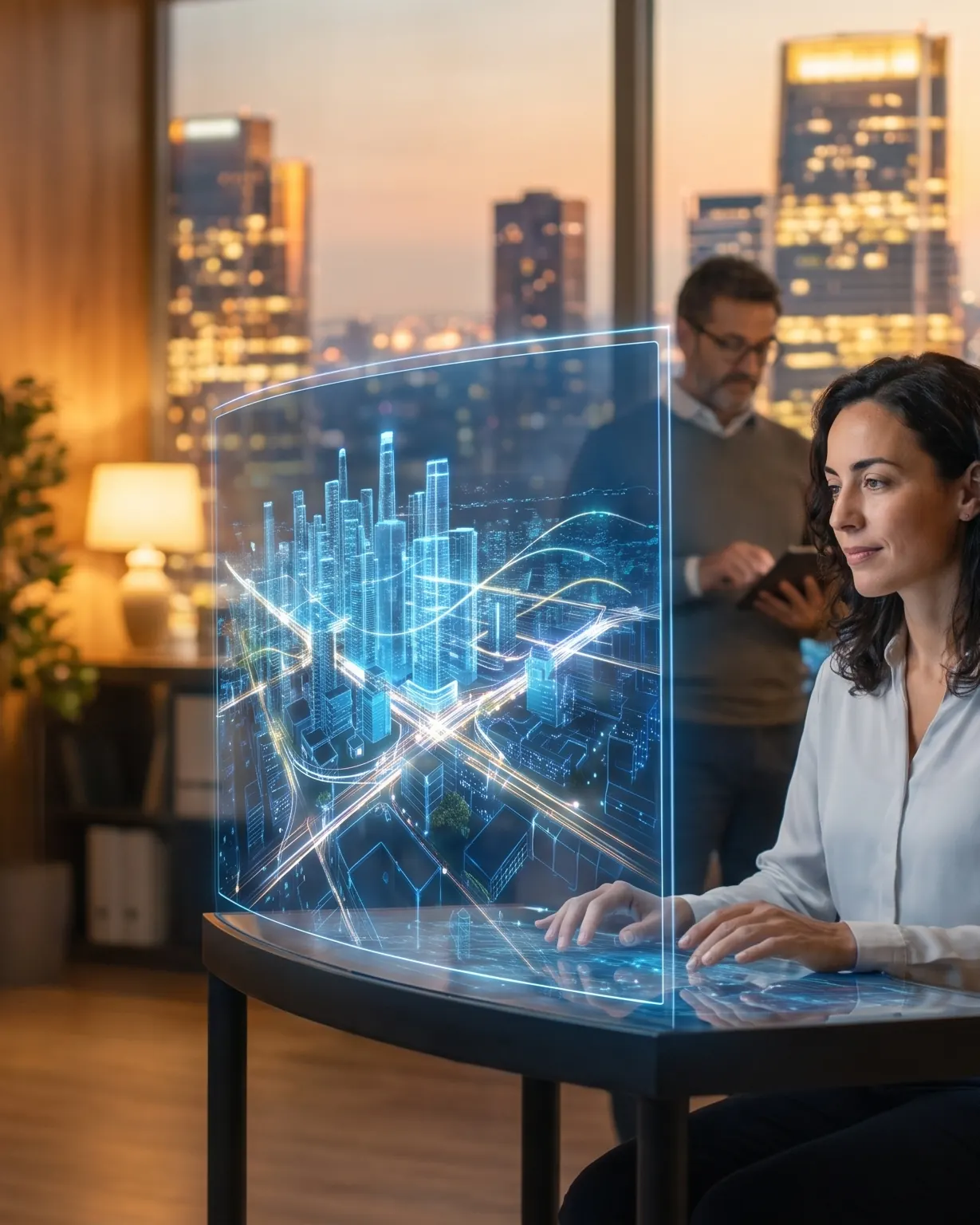
AI & the future of the smart city
A city that prepares for the heatwave, stores water for the dry weeks and sees the crowds coming before everything grinds to a halt. AI helps keep the city liveable. Residents and those who govern decide together how it grows.
Choose your sector
Every keynote is tailored to a sector. Choose yours.
 Healthcare
 Government
 Defence
 Policing and security
 Smart citiesYou are viewing
 Construction
 Mobility
 Industry 4.0
 Energy and utilities
 Logistics
 Retail
 Wholesale
 Hospitality, tourism and leisure
 Agriculture
 Financial services
 Legal
 Accountancy and advisory
 Education
 Media and entertainment
 Telecoms and connectivity
Is your sector not listed? We tailor the keynote to your audience. Tell us about your audience
More residents, hotter summers, wet winters and a power grid at capacity. How does AI help keep a city liveable when everything competes for space at once?
In this keynote, trend watcher and futurist Richard van Hooijdonk explores how AI makes the city of the future smarter and helps it adapt to what its residents need. A city that measures itself can act sooner: before the street floods, the square fills up or a pipe bursts. With AI, traffic lights respond to actual traffic, cameras on vehicles spot holes in the road, and a digital twin shows a city how a new district will spread shade, wind and heat. The next step goes further: waste collected and sorted without a driver, fleets of robots maintaining the streets, districts where homes, factories and hospitals manage their energy together. According to the United Nations, around two thirds of the world's population is expected to live in urban areas by 2050. Technology is only half the story. City departments will work together differently, leaders will make different decisions, and the relationship between a city and its residents shifts. The keynote shows what works now, what is coming and what is still a long way off. Some of these solutions already run in European cities; the task is to move them out of the pilot and into everyday practice.
AI in the smart city
What AI already does on the street, in the traffic control centre and in running the city.
- 01
Traffic that runs itself
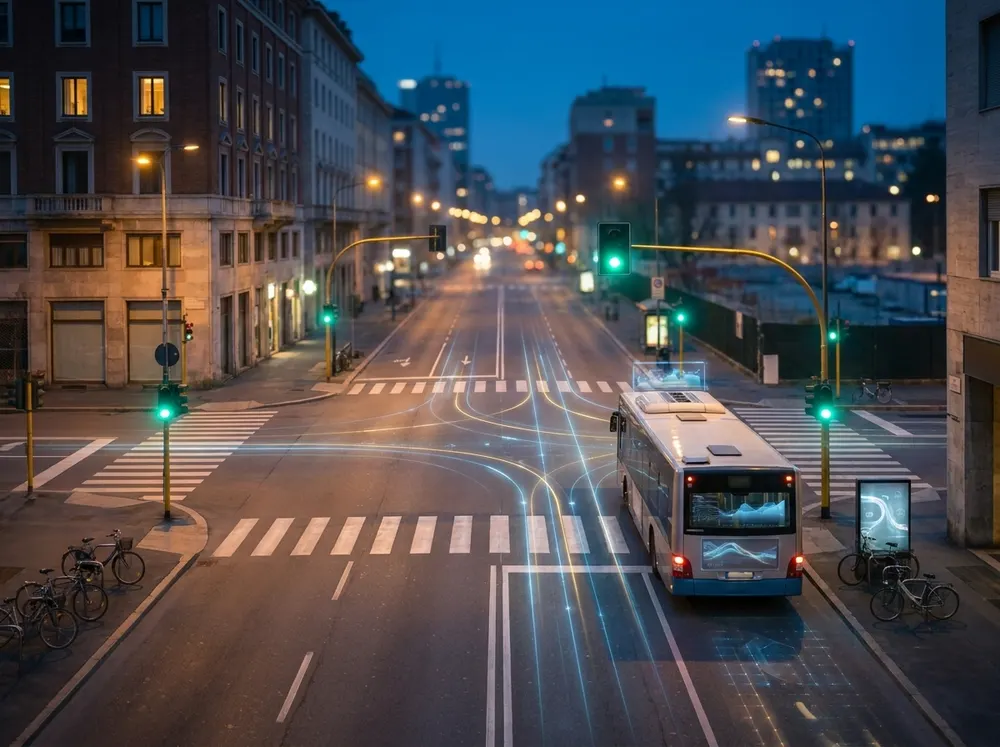
AI matches traffic lights to actual traffic. The next step: lights that help stop congestion before it starts.
An ordinary traffic light runs on fixed timings or reacts to a loop in the road surface. A smart traffic light looks further. Cameras and sensors count cars, cyclists and pedestrians, and AI works out how long each direction stays green at every junction. Junctions coordinate with each other, so traffic does not grind to a halt at every light. An approaching bus, an ambulance or a group of cyclists in the rain can get green sooner. In a trial in a medium-sized city, travel times across the participating junctions fell by about a quarter. Next comes a network of lights that exchanges data with buses and connected cars, and predicts a jam before it forms.
- 02
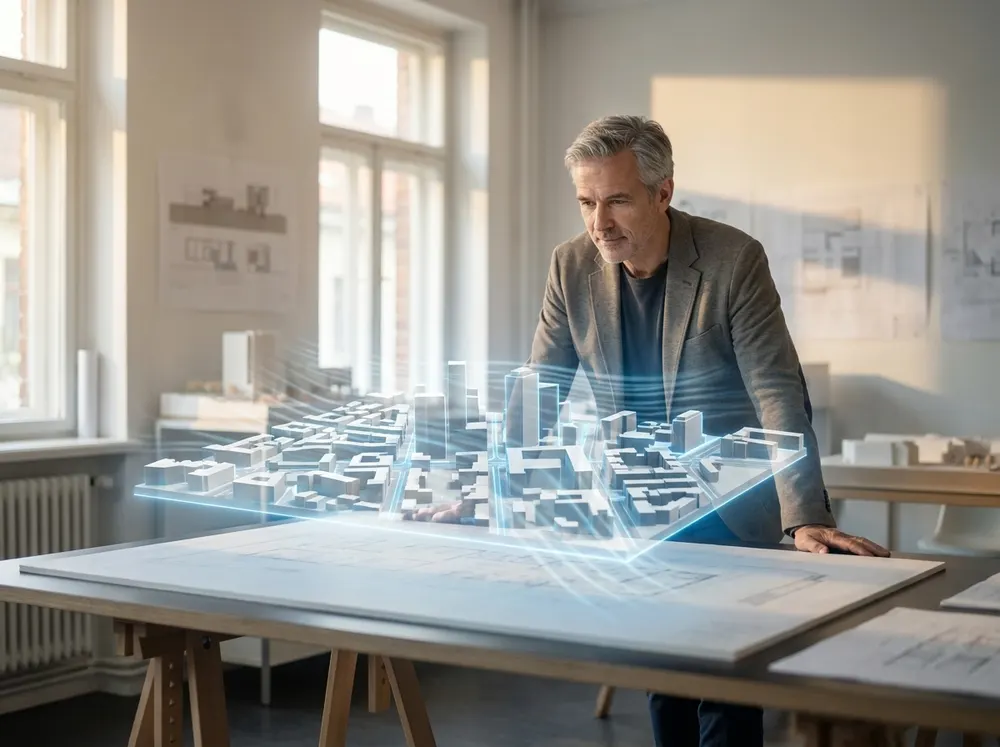
The city's digital twin
A virtual model of streets, pipes and buildings. AI tests interventions and produces design options for a neighbourhood.
A digital twin is a virtual model of the city, fed with up-to-date data: buildings, roads, trees, pipes, traffic and weather. Whatever you change in the model can be tested before it happens in the real city. A planner places a new residential tower on a plot and immediately sees the shadow it casts on the square, how the wind moves down the street and where it will get hot in summer. Within the city's requirements, AI drafts dozens of options for a neighbourhood, with more greenery, less heat or more homes. The next step is a digital twin that runs live alongside the city's sensors and explores how the city could develop under different assumptions.
- 03
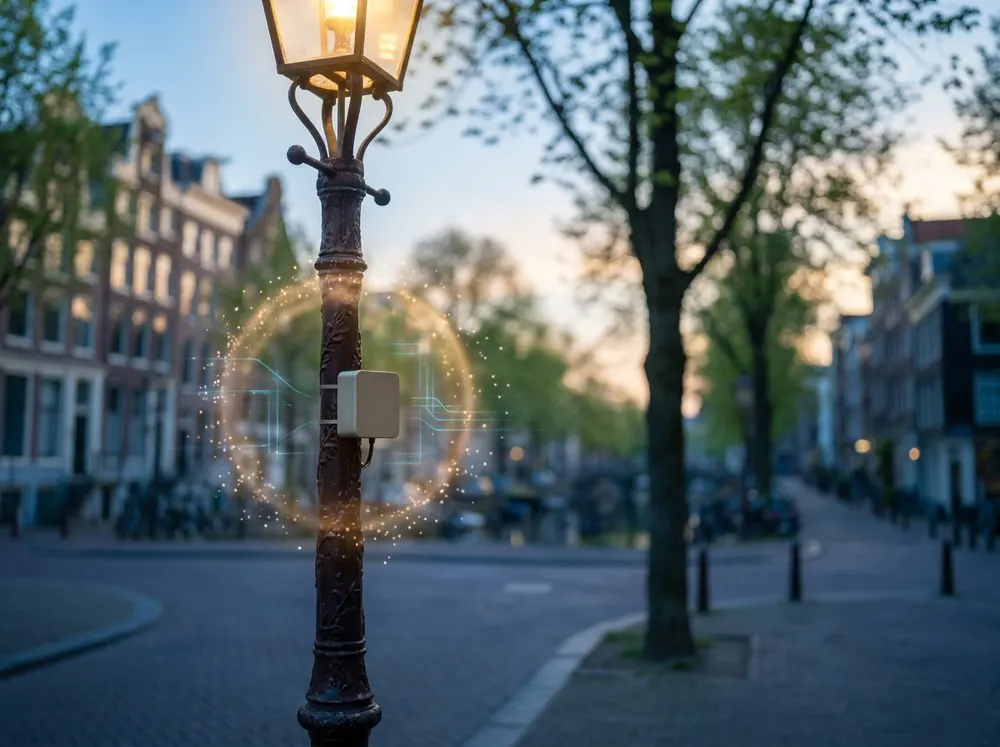
Sensors in public space
Sensors measure air, noise and footfall. AI combines the readings with other data to predict heat.
Sensors on lampposts, façades and bridges measure particulate matter, nitrogen dioxide, noise, temperature or the number of people walking past. Together, thousands of these readings show changes street by street and hour by hour, including between larger measurement campaigns. Increasingly, the AI sits inside the device itself. A smart camera can count pedestrians and pass on only the number, without storing any images. The city sees where it is busy without knowing who walked there. The move from measuring to predicting has already happened: AI combines the readings with the weather forecast, traffic data and the events calendar, and predicts which streets will be too hot, too polluted or too crowded tomorrow.
- 04
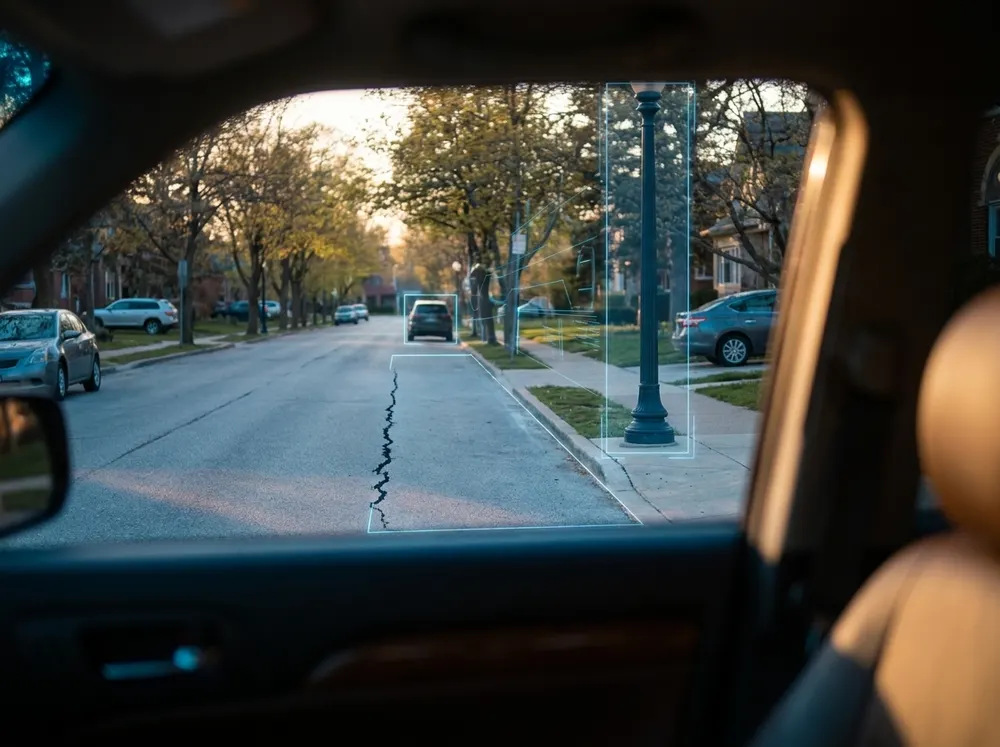
Monitoring with cameras and AI
Cameras on vehicles help spot damage to roads and pavements. AI estimates where a leaking pipe is most likely.
A camera on a refuse truck or delivery van that already drives through the city collects images of roads, pavements, lighting and street furniture between inspection rounds. Image recognition picks out cracks in the asphalt, loose paving stones, faded road markings and damaged lampposts, and plots them on a map with their location. For pipes, AI uses other data: age, material, soil and pressure readings. From these it estimates where a leak is most likely, so the operator can plan maintenance before a pipe fails. The next step closes the loop from spotting to fixing: the images will become the basis for a repair order to a crew or a repair robot.
- 05
 In pilots
The AI agent for public space
An AI agent handles reports. Image recognition can flag damage and start a repair order through a linked maintenance system.
An AI agent is AI that takes the steps needed to complete a task by itself. When someone reports a fallen tree, an overflowing bin or broken play equipment, it can ask follow-up questions where details are missing, log the report with a photo and location, and pass it to the crew responsible. With access to the city's systems, it keeps the person who reported it up to date. It will not stop there. Image recognition can already flag damage itself and start a repair order through a linked maintenance system. The agent will connect reports, detection and crew planning into one chain. A dangerous situation or an angry neighbour remains a job for a member of staff.
- 06
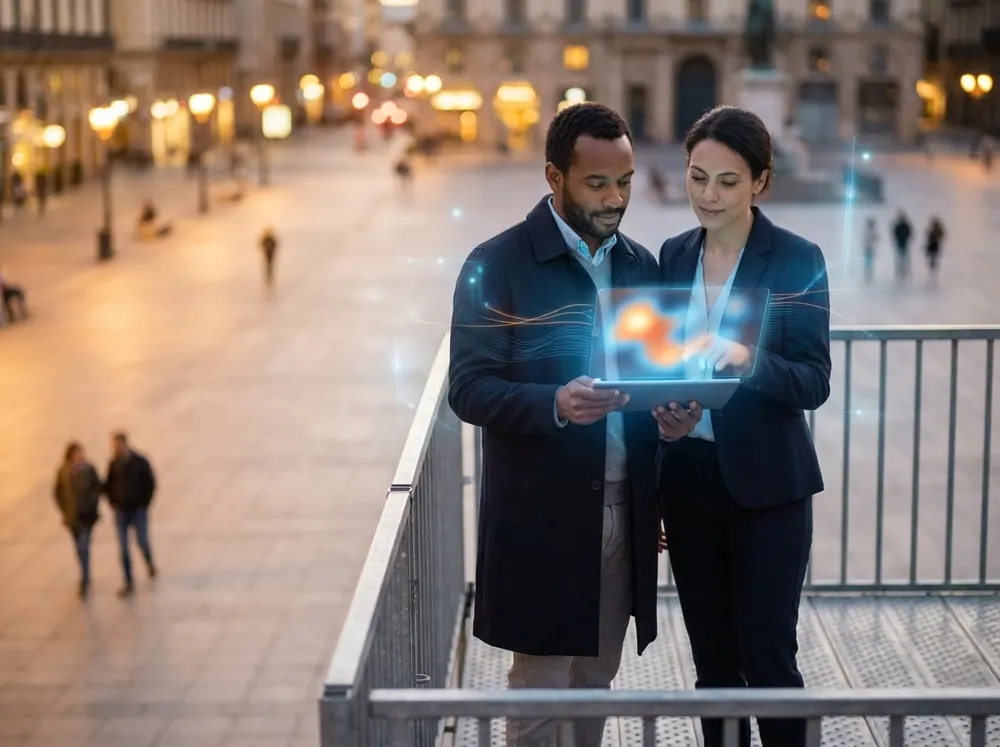
Predicting and steering crowds
AI predicts crowds in the city centre and at events, so visitor flows can be redirected in good time.
With the right data, crowds can be predicted well. Counts from sensors and cameras, ticket sales, the weather, public transport and past events together form a pattern. AI learns from it how full a square, a shopping street or a station area will be in an hour or a day. Whoever manages visitor flows can then see in advance where space will run short and adjust: reroute people, open an extra entrance or direct visitors to a quieter spot through an app. Anonymous counts are enough for this. Linked to a traffic model, AI also tests choices for the city: how a new events venue or a closed bridge would shift visitor flows in the city centre.
- 07
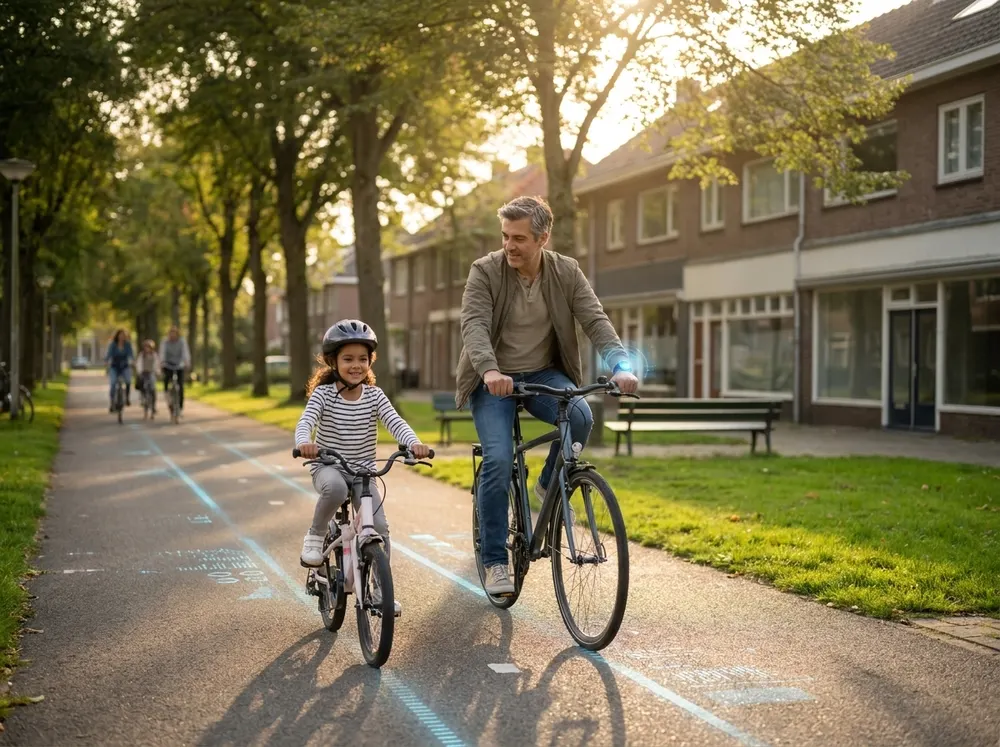 In pilots
The 15-minute city
Amenities within walking and cycling distance. AI helps work out where extra amenities and shared transport points are needed.
The idea of the 15-minute city is that you can reach what you need every day within a quarter of an hour on foot or by bike: school, GP, supermarket, park, and work or a place to work. That calls for a different way of planning, with the neighbourhood as the starting point. AI helps show where things are missing. It combines data on amenities, population, routes and travel behaviour into a map of which neighbourhoods fall short, and where. Then it calculates where a new amenity, a cycle link or a hub with shared bikes and charging points would help many people. An urban planning ideal becomes something you can measure, neighbourhood by neighbourhood.
The future of the smart city
Where the city could be in five to fifteen years, with AI as the engine.
- 08
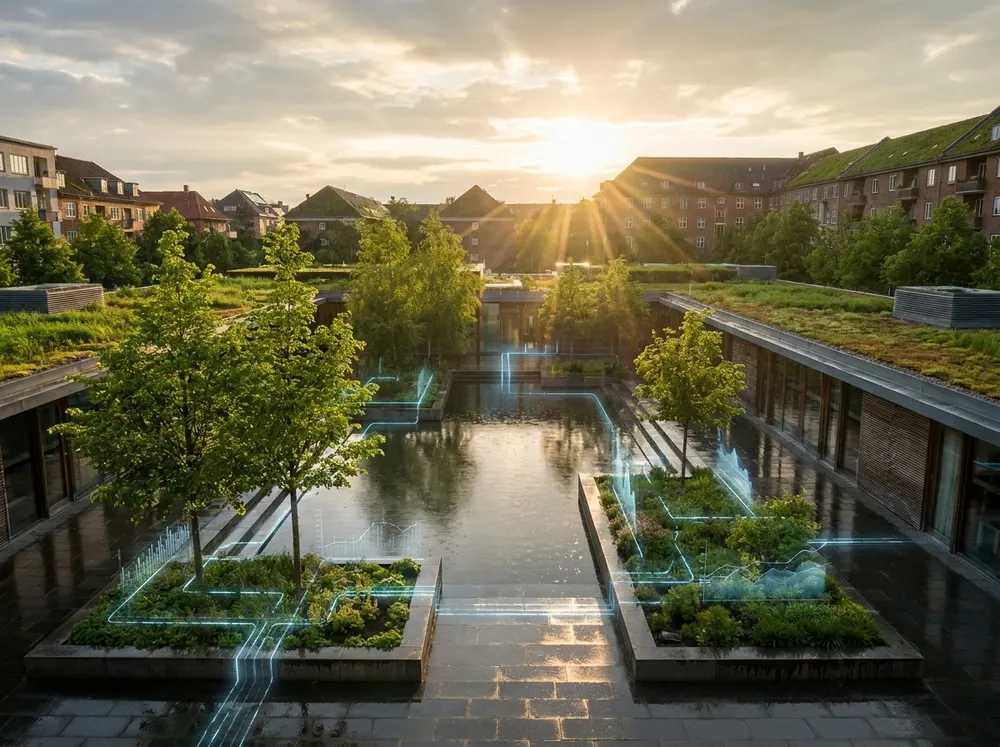 Future scenario
The climate-resilient city
By 2040, AI could manage the water of an entire city: clearing space for the downpour, and keeping that same water for the dry weeks.
A climate-resilient city can cope with heat, drought and heavy rain. Smart water buffers that respond to the weather forecast are already being tested. By 2040, AI could manage the water of an entire city, from roofs and squares to parks and underground storage. The system keeps calculating possible weather patterns and sees where water will be needed. Before a cloudburst, it clears storage space where it will be needed; in a dry week, it distributes the stored water to trees and other greenery. With every downpour, the model learns how the city really responds. Climate scientists expect more frequent heavy rain and heatwaves. The same storage then helps all year round, against flooding and against drought.
- 09
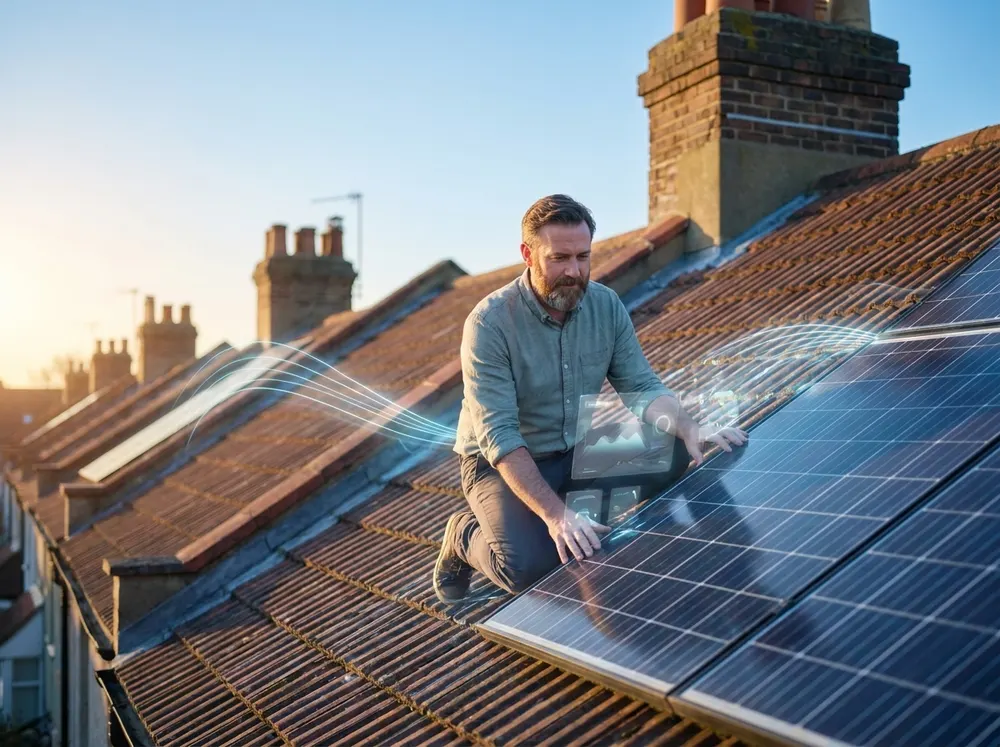 Future scenario
Energy in the neighbourhood
Around 2040, neighbourhoods could manage their energy together. AI links homes, factories, hospitals and schools into one whole.
In an energy community, residents, schools, businesses, factories, hospitals and other institutions in a neighbourhood organise their energy together: they generate, store and share it. The European Union already gives such communities a place in its energy rules, and automated energy management is being trialled. By 2040, AI could make such a neighbourhood work as one. It calculates how a factory's waste heat, the batteries in schools and homes, and the flexible demand of cold stores and heat pumps complement each other, even on days with little sun and wind, and it coordinates with other neighbourhoods. A neighbourhood then changes from a collection of separate connections into a small power station.
- 10
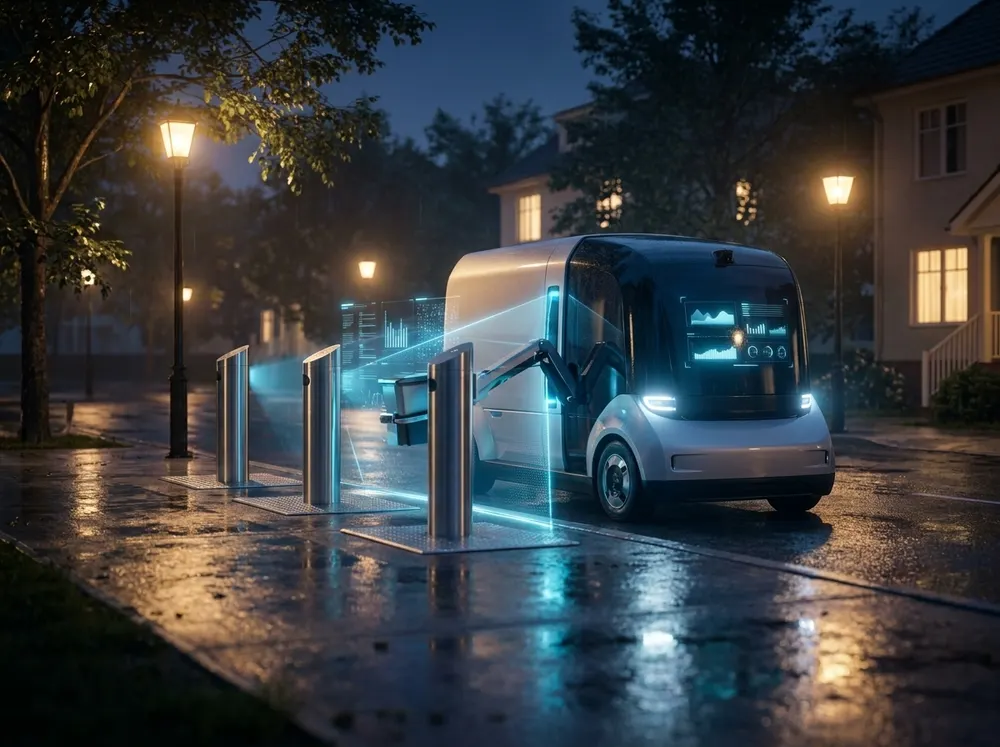 Future scenario
Waste that collects itself
Underground pipes, self-driving refuse trucks and sorting robots could together form a largely autonomous waste chain.
Much waste is still collected by refuse trucks with a driver and loaders. In some neighbourhoods, a network of underground pipes already sucks waste from the disposal point to a central collection site, with no truck in the street. Self-driving sweepers and refuse trucks run in test areas, and sorting robots use image recognition to pick out plastic, metal and paper on the belt. In ten to fifteen years, collection could be largely autonomous. An electric truck drives itself at night past bins that report they are full, while AI matches the separated streams to processors that reuse them. The street gets quieter, and waste becomes a flow of raw materials the city can steer.
- 11
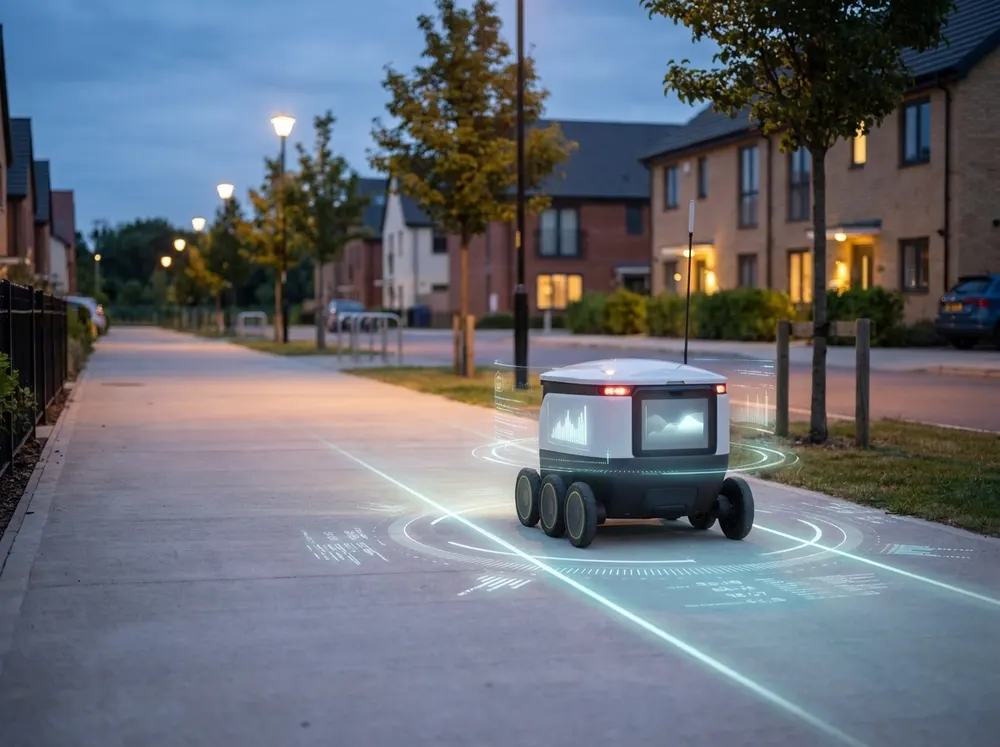 Future scenario
Robots in public space
Robots already carry out repairs in trials. Around 2040, whole fleets could find damage and do minor maintenance, often at night.
Robots in public space already deliver parcels and inspect sewers and the insides of bridges, often in test areas. Repair is being trialled too: robots find cracks in the asphalt and seal them. In laboratories, scientists are studying how drones could apply material for construction and repair. AI processes camera images, radar and maps, so a robot recognises a pedestrian, a wheelchair or a dog and changes its route. Around 2040, a fleet of these machines could move through the city at night: sealing cracks, cleaning drains, checking lampposts. Small defects are then found and fixed between inspection rounds, before they grow.
- 12
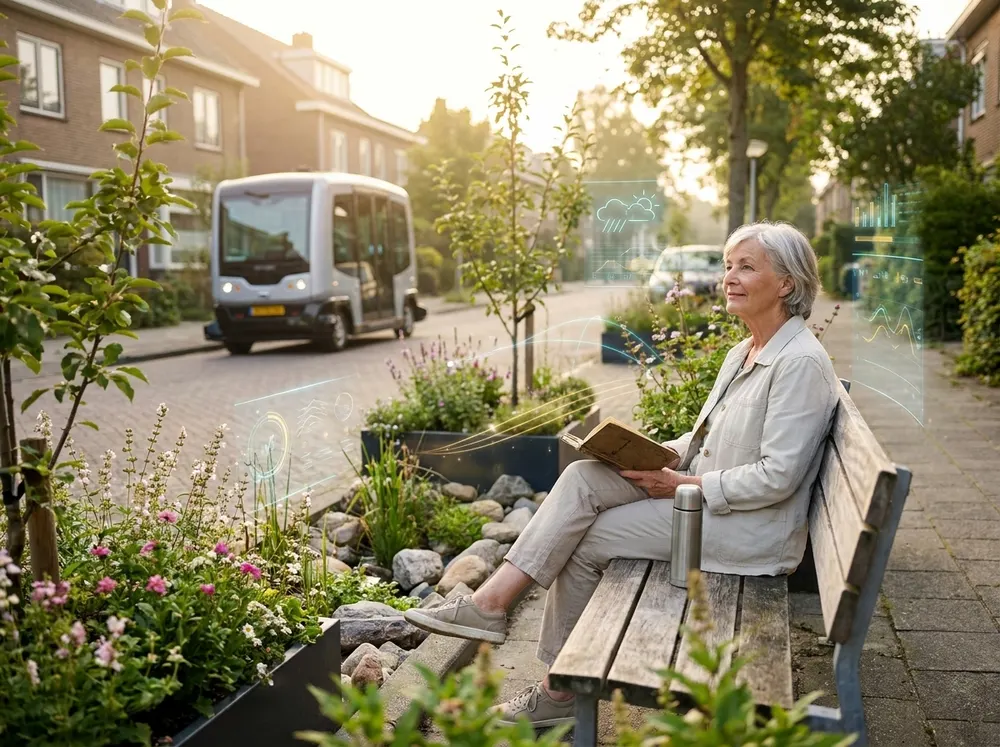 Future scenario
Streets without parked cars
If shared self-driving vehicles replace private cars, parking space is freed up. AI works out what a street could become.
The average car stands still for most of the day, and in many streets parking takes up a good share of the space. In a number of cities, self-driving taxis already carry paying passengers with no one at the wheel. In a simulation by the OECD's International Transport Forum, a fleet of shared self-driving vehicles made the same trips with a fraction of the number of cars, and on-street parking could disappear. Public transport remained the backbone in that simulation. If shared vehicles replace many private cars in ten to fifteen years, a great deal of space could open up in the city. AI works out where pick-up points and loading bays should go, and what the rest becomes: a garden, a play area, a water buffer or housing.
- 13
 Future scenario
The circular city
Material data turns buildings into a searchable stockpile. AI matches materials recovered in demolition to building work elsewhere.
In a circular city, materials are reused for as long as possible, and every building is also a stockpile: beams, bricks, window frames and steel. According to the European Commission, construction uses about half of all raw materials extracted in the European Union. The EU is working on digital passports for construction products, recording what a product contains. In ten to fifteen years, a city could have an up-to-date picture of what its buildings contain. AI also estimates what older buildings contain, from drawings, scans and the year of construction, and matches materials recovered in demolition to nearby projects that need them. The city becomes its own mine.
- 14
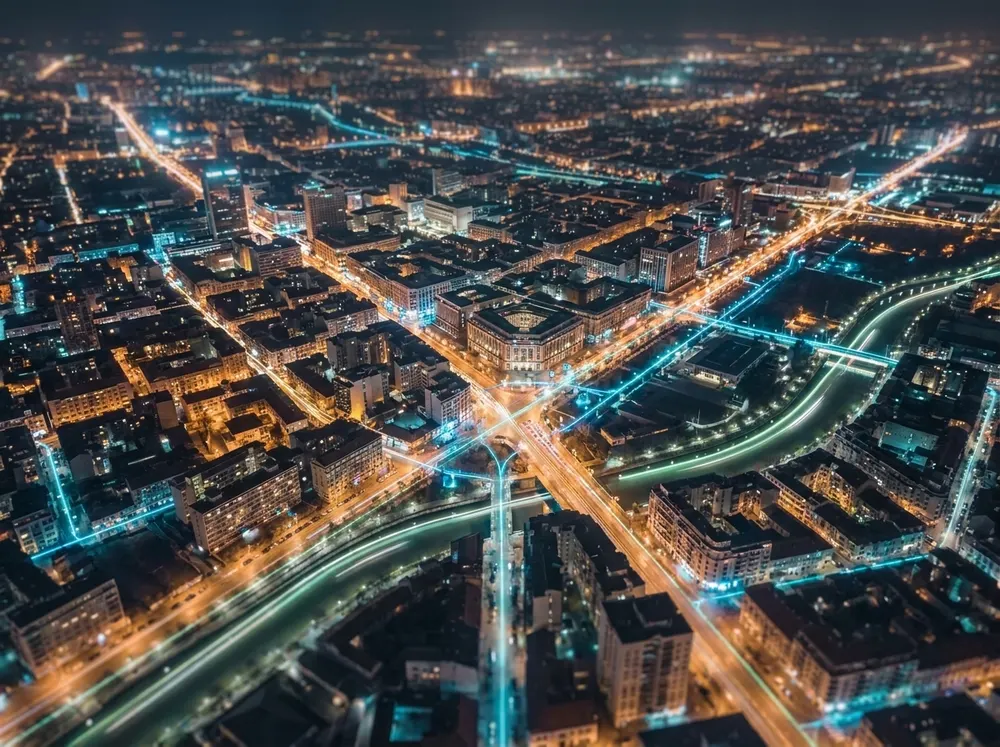 Future scenario
The city as an operating system
Traffic, energy, water and safety on one platform. AI runs the city within limits that people set in advance and in public.
In this scenario, the city works like a computer with a single operating system. Traffic, energy, water, waste and safety are often managed separately today. Through one shared platform, they exchange data and act together. When a heatwave looms, the platform cools public buildings in advance and shifts other power demand to avoid a peak. When a main road is cut off, it adjusts the traffic lights, suggests other bus routes and alerts the emergency services. The digital twin becomes a control room that watches in real time. AI acts within limits that people set in advance and in public. Around 2040, such a city could have several services respond at once to a single disruption.
With AI, a city can develop in ways you can barely imagine today. How much of that residents notice depends on the people who dare to work across the boundaries of their own department.
Richard van Hooijdonk
The city of the future
What AI asks of roles, teams, leaders and culture in the city.
- 15
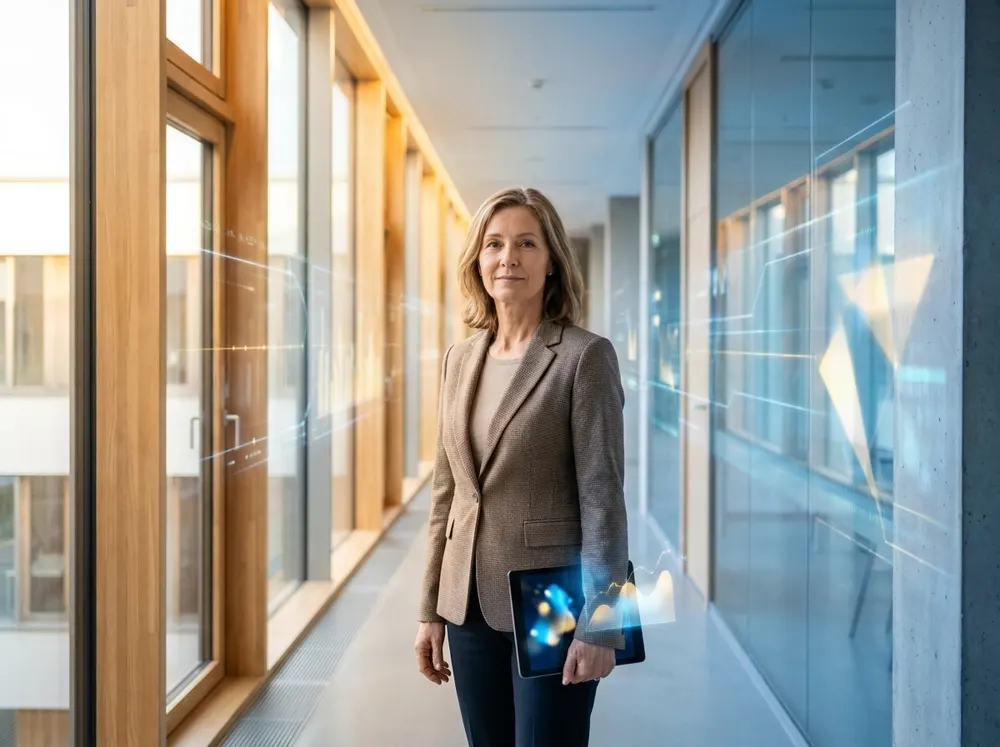
The AI-first organisation
In the city, all repetitive and predictable tasks go to AI. Staff work for residents and neighbourhoods, weigh things up and use their judgement.
In an AI-first city, all repetitive and predictable tasks go to AI and AI agents. They work with data from records, applications and sensors. Much of this happens behind the scenes: processing invoices, sorting applications for permits and events, planning maintenance of roads and pumping stations, and predicting demand for public services. Staff work for residents and neighbourhoods, weigh things up and use their judgement, for example on a neighbourhood's concerns, a dispute between residents or the choice between a parking space and a tree. Many municipalities still use AI for separate tasks. How much time is freed up for residents depends on how the municipality redistributes the work.
- 16

New roles in the city
By 2040, directors of AI agents, scenario designers and keepers of the live digital twin could play a large part in the city.
Data analysts and privacy advisers already work for cities. In a scenario for 2040, roles that have no name yet could take on a larger share of the city's work. The director of AI agents mediates when the city's agents pursue conflicting goals: the agent for traffic flow wants a junction to stay green longer, while the agent for air quality wants to divert the traffic. The scenario designer builds the futures in the digital twin that the city's leaders choose between, from a heatwave to a new district. The keeper of the live digital twin makes sure traffic, greenery, water and sewers in the model show the same city as the street. City staff shift from carrying out tasks to coordinating the work and weighing up options.
- 17
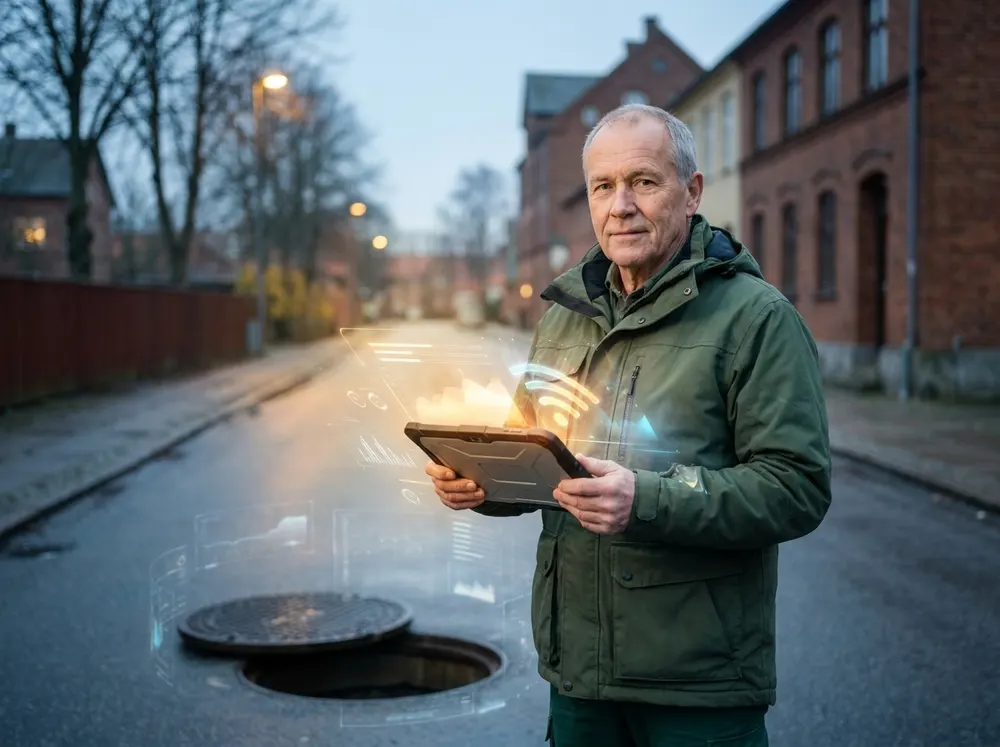
People and AI running the city
AI spots anomalies and estimates where problems may arise. People assess the situation, talk to residents and make the choices.
In city management, people and AI increasingly work as one team. The system keeps an eye on thousands of reports, readings and camera images at once and sees what is out of the ordinary: a drain that overflows more often than normal, a square that gets too crowded every Friday evening. The neighbourhood manager and the enforcement officer go and look on site, talk to residents and look for the underlying cause. AI that predicts flood risk street by street is already being tested. The next step is a team in which AI pulls together signals from the whole city and calculates ahead where the pressure points will be. People then gain more time for residents and decisions.
- 18
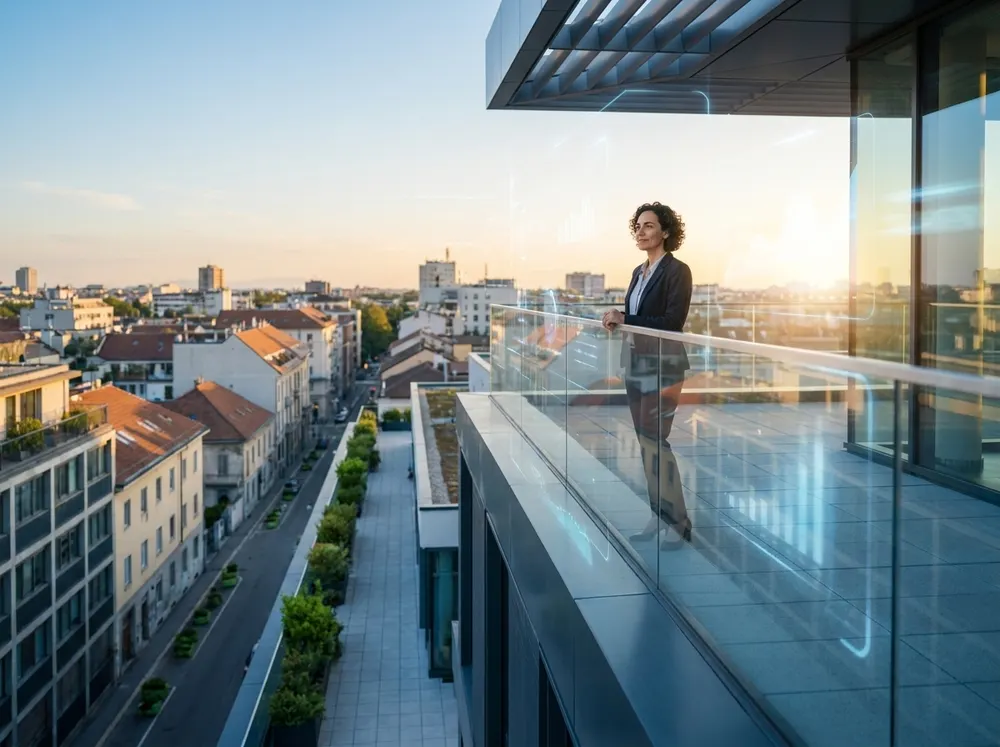
Leaders of the smart city
City leaders take the initiative on AI and new technology, and inspire staff and residents to build tomorrow's city together.
Anyone who leads a city or a city service today is also leading towards the city of the future. That takes initiative: starting with AI and new technology yourself, one street or one service at a time, even before everything is settled. It also takes a picture of the city in twenty years that speaks to staff and residents, so they want to contribute. Leaders give staff and residents room to put forward ideas and help build, and make visible what happens with those contributions. That is how those who govern, staff and residents build tomorrow's city together.
- 19

The future academy
Municipalities do not wait for schools and universities: in their own future academy, staff and leaders learn to work with AI and new technology.
An organisation with its own future academy trains its people alongside regular education, because the knowledge is needed before new graduates can supply it. Current staff learn to work with AI, data, AI agents and other new technology. New colleagues start with the applications the organisation uses. Leaders practise decisions about dividing the work and overseeing AI. The academy changes as the technology does.
- 20
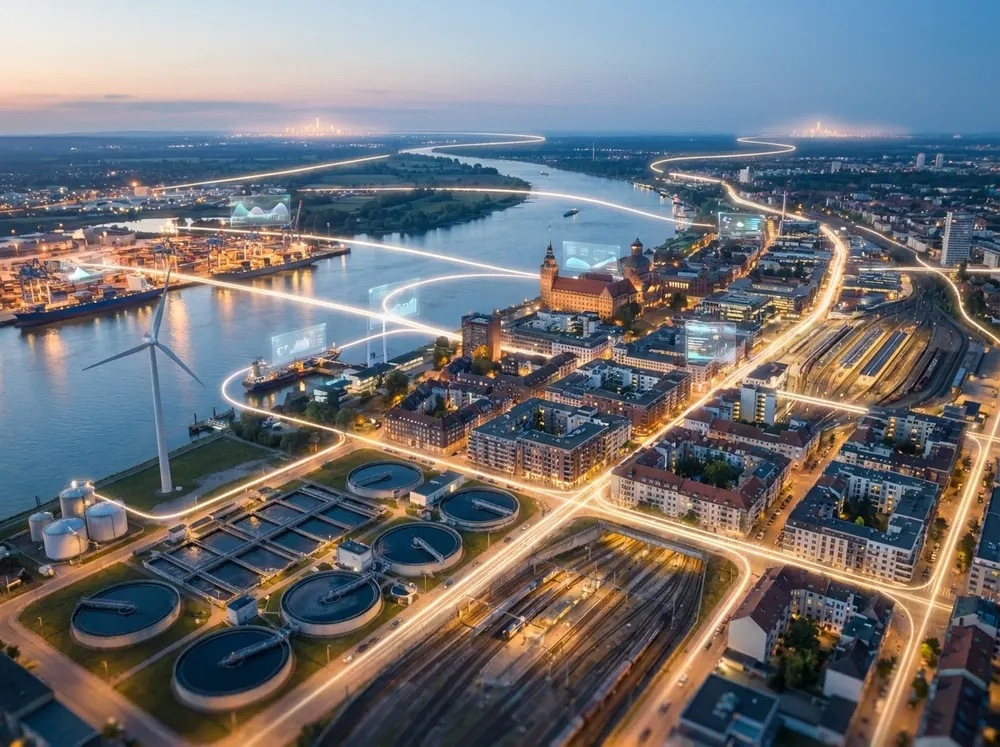
Growing with an ecosystem
Organisations around the world share models and lessons. With start-ups, scientists, partners and governments, they develop applications together.
An organisation does not get smart on its own. Start-ups build new services, scientists develop models, partners bring complementary knowledge and governments offer room to test. Together they form an ecosystem, and how well it works determines how fast an organisation renews itself. Organisations all over the world are working on the same questions, and some are already exploring how to link their models and digital twins. An approach that works elsewhere can then be modelled first, before it is trialled locally.
The other side responsibility and risk
Data, privacy and crime: what is at stake in the smart city.
- 21
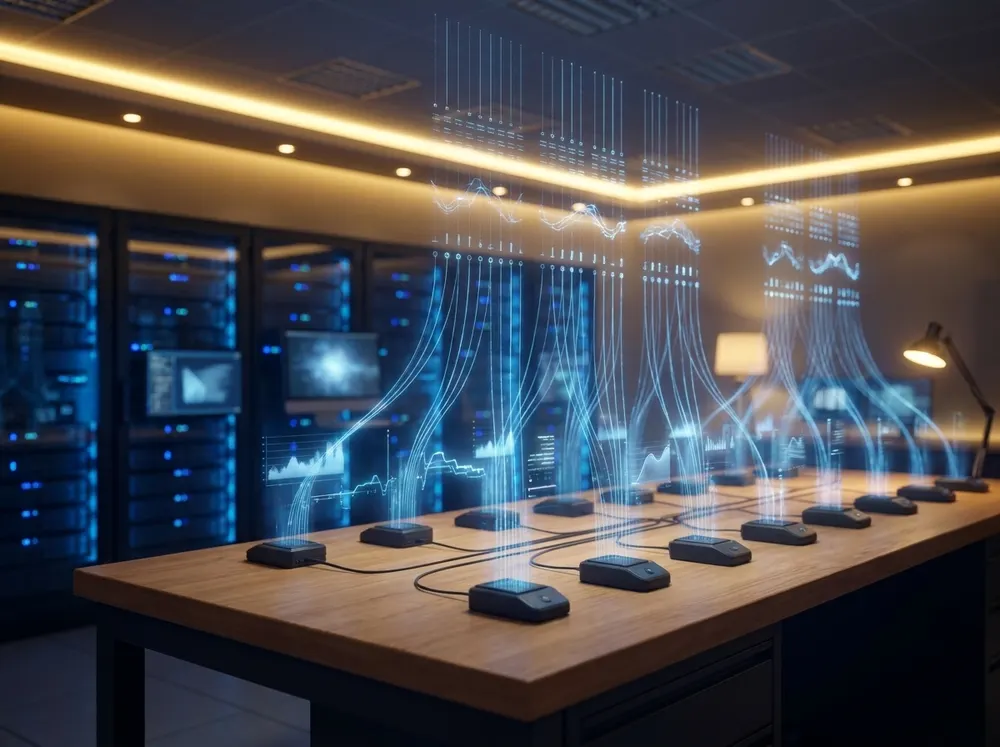
Data as the foundation
AI only works when data from every part of the organisation is available, reliable and connected. That is the foundation of the AI-first city.
The AI-first city lets AI predict, plan and advise across departments. That only works when data from every department is available, reliable and connected. Often it sits in separate systems, with their own codes and definitions, and one department does not know what another records. Missing data can lead to wrong answers, and an AI agent that takes over a task then lacks important information. Linked, consistent and up-to-date data is therefore the foundation on which AI can work across the whole organisation. That includes clear rules on who may use which data, and for what.
- 22
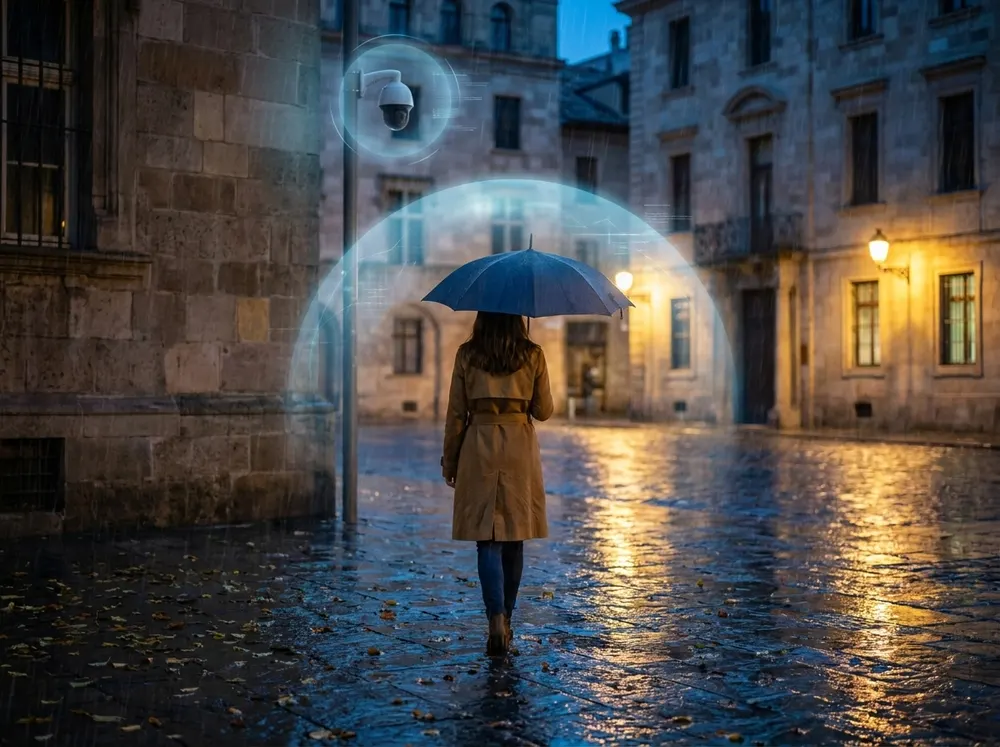
Privacy in the smart city
Residents want to know what is being measured: privacy by design, an algorithm register and clear limits on cameras.
A smart city measures a lot, and residents want to know what. Privacy by design means building a system so that it collects as little personal data as possible: a camera that only counts, a sensor that does not track phones, data that disappears after a short time. More and more cities keep a public algorithm register. The EU AI Act in principle prohibits real-time remote biometric identification, such as facial recognition, in publicly accessible spaces for law enforcement, with strictly defined exceptions. As the city links more sources together, a new risk grows. Data that reveals little on its own can, combined, expose someone's daily routine, and with it raise the chance of identification and profiling.
- 23
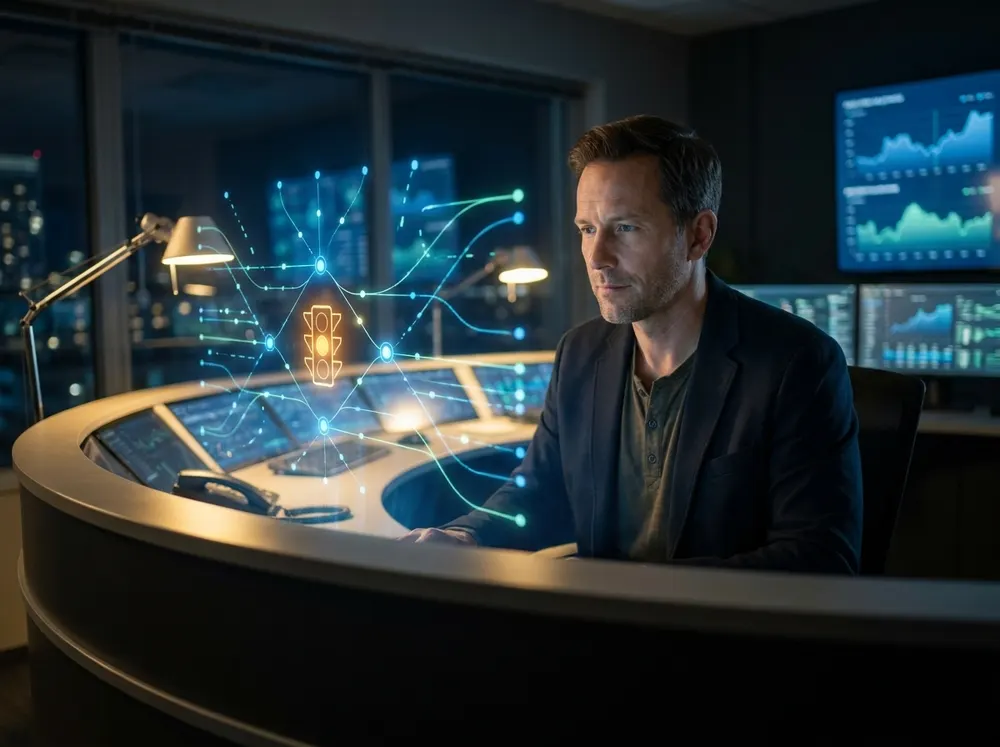
Cybercrime in the city
AI brings the city's data and systems closer within reach of criminals: through ransomware, hacking and cloned voices.
A smart city runs on connected systems and valuable data, and AI makes it easier for criminals to get at them. They use it to write convincing phishing messages and to call staff with the cloned voice of a leader. Ransomware can bring a municipality's services to a standstill for weeks. Traffic control systems, pumping stations, cameras and charging points are connected to a network, and some run on old software. A stolen staff account can give access to personal data or internal documents. Attacks on systems that control public services can also disrupt daily life in the city. The same AI that helps a security specialist find vulnerabilities helps an attacker look for whatever is still open. Good security thus becomes a permanent part of the city itself.
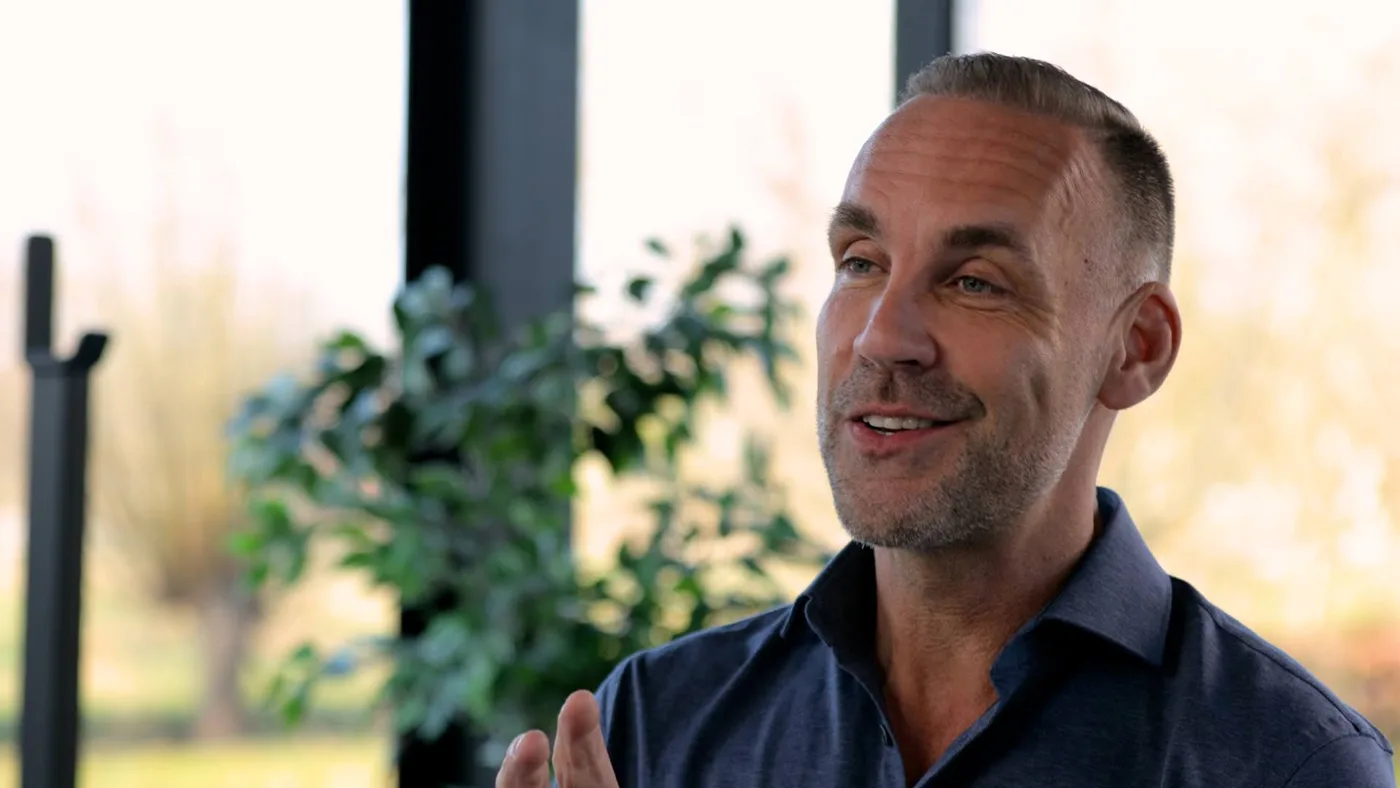
About the speakerRichard van Hooijdonk
Events in EuropeKeynote speaker for corporate events in Europe
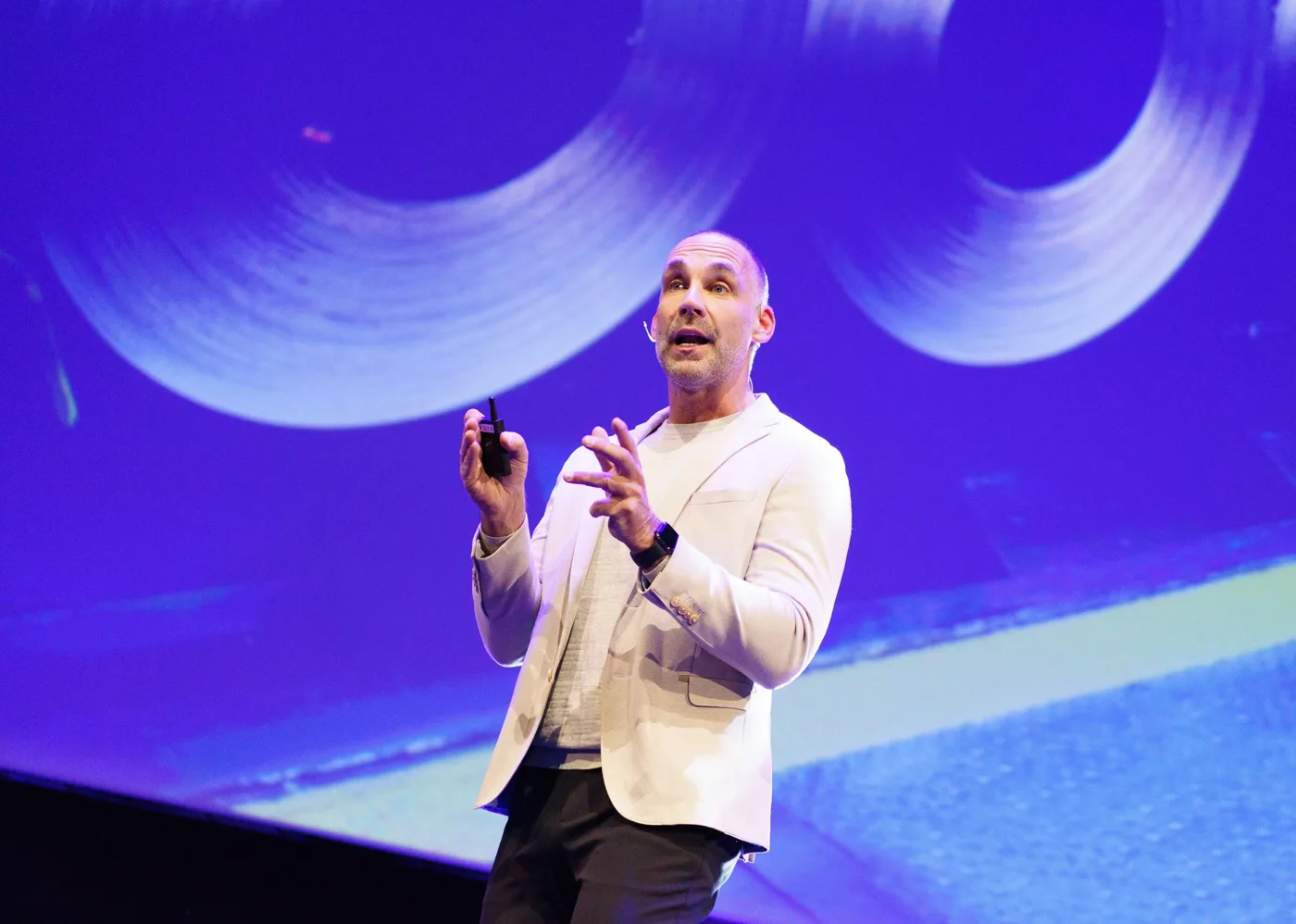
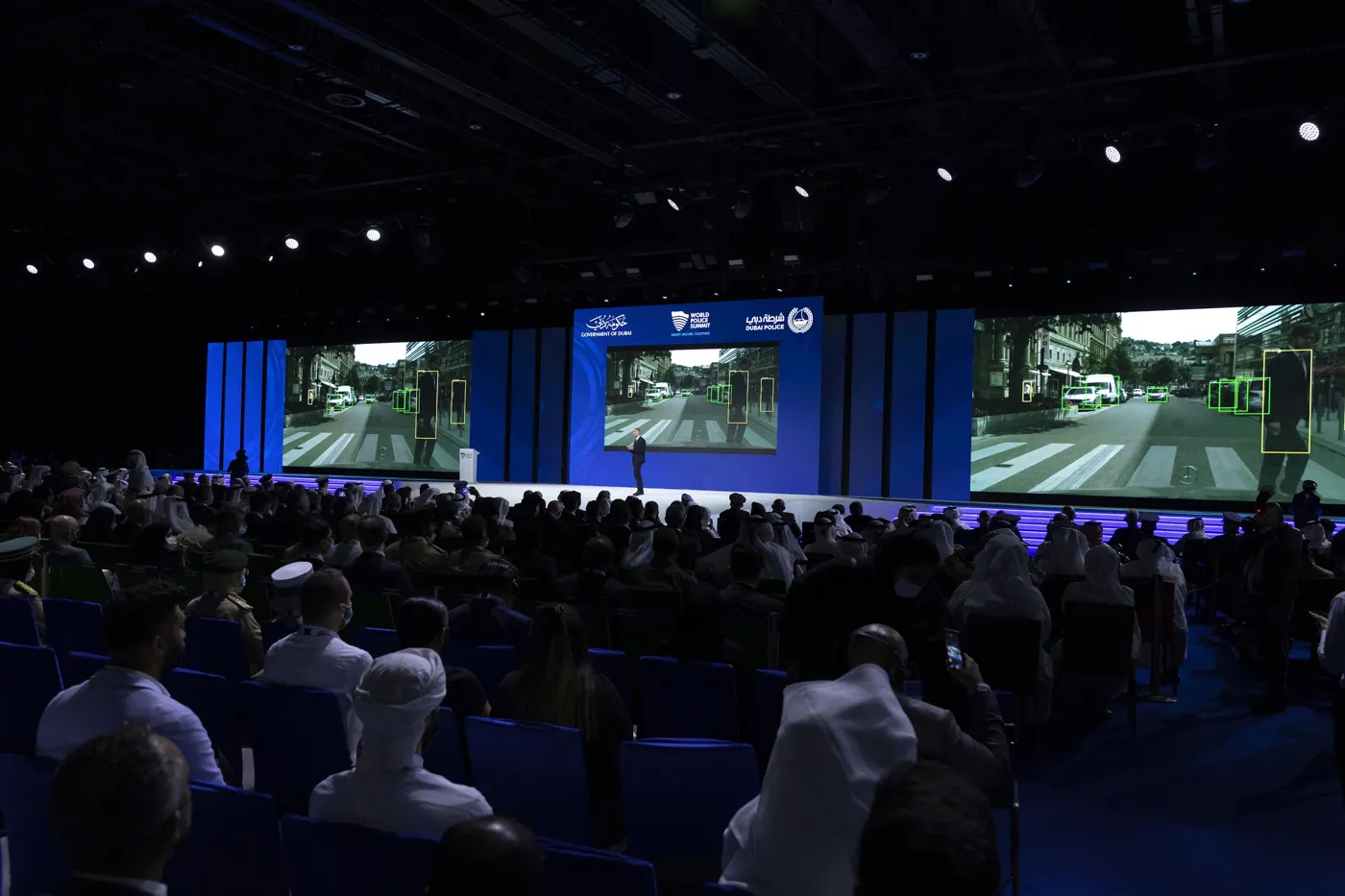
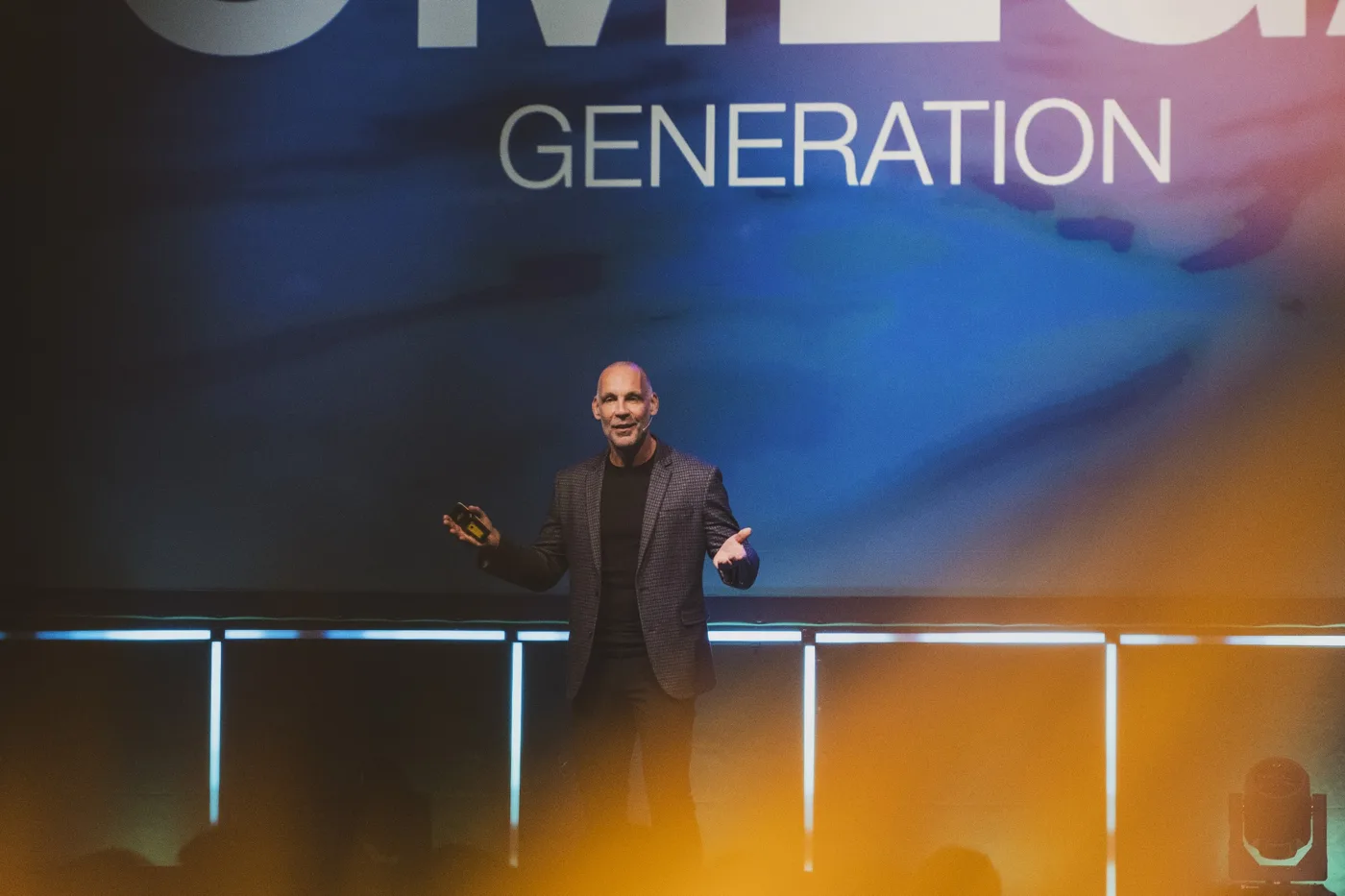
On stage
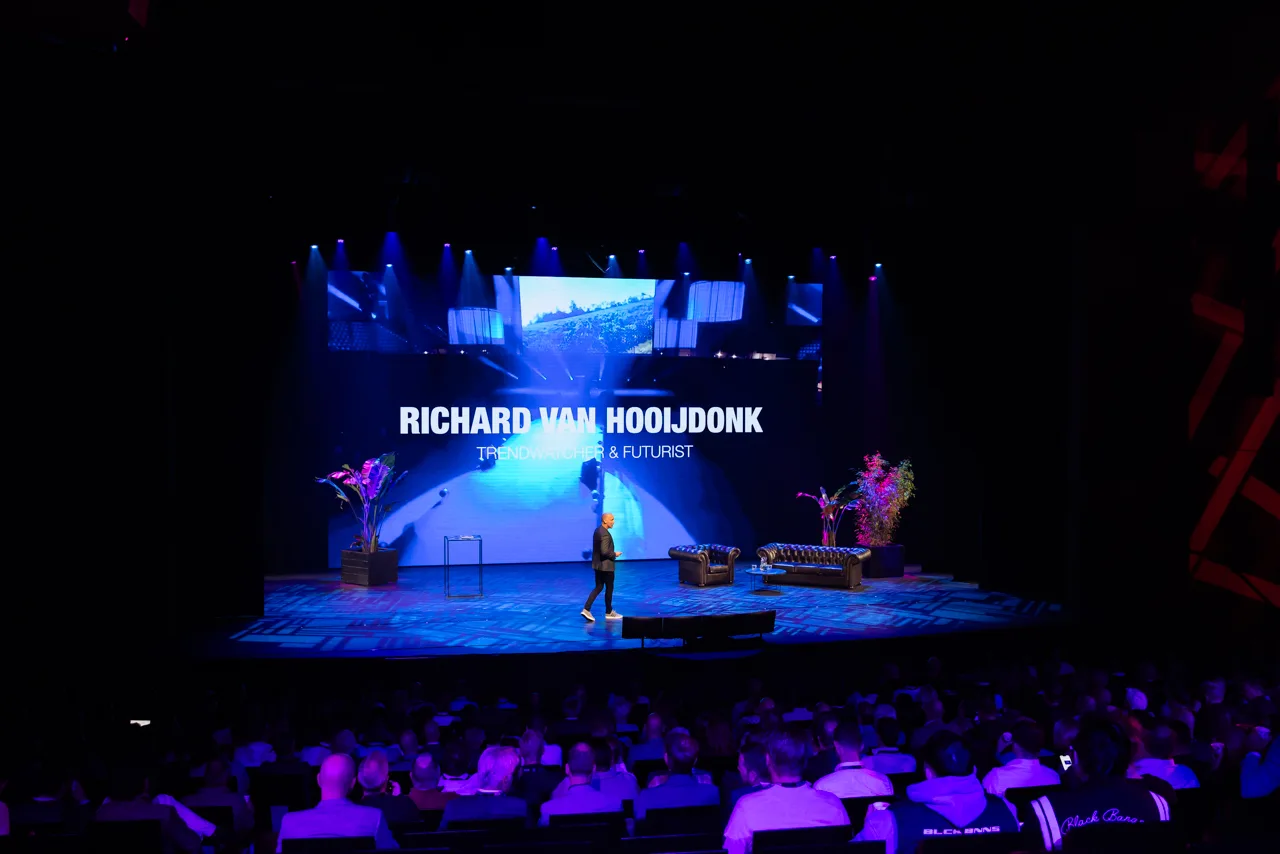
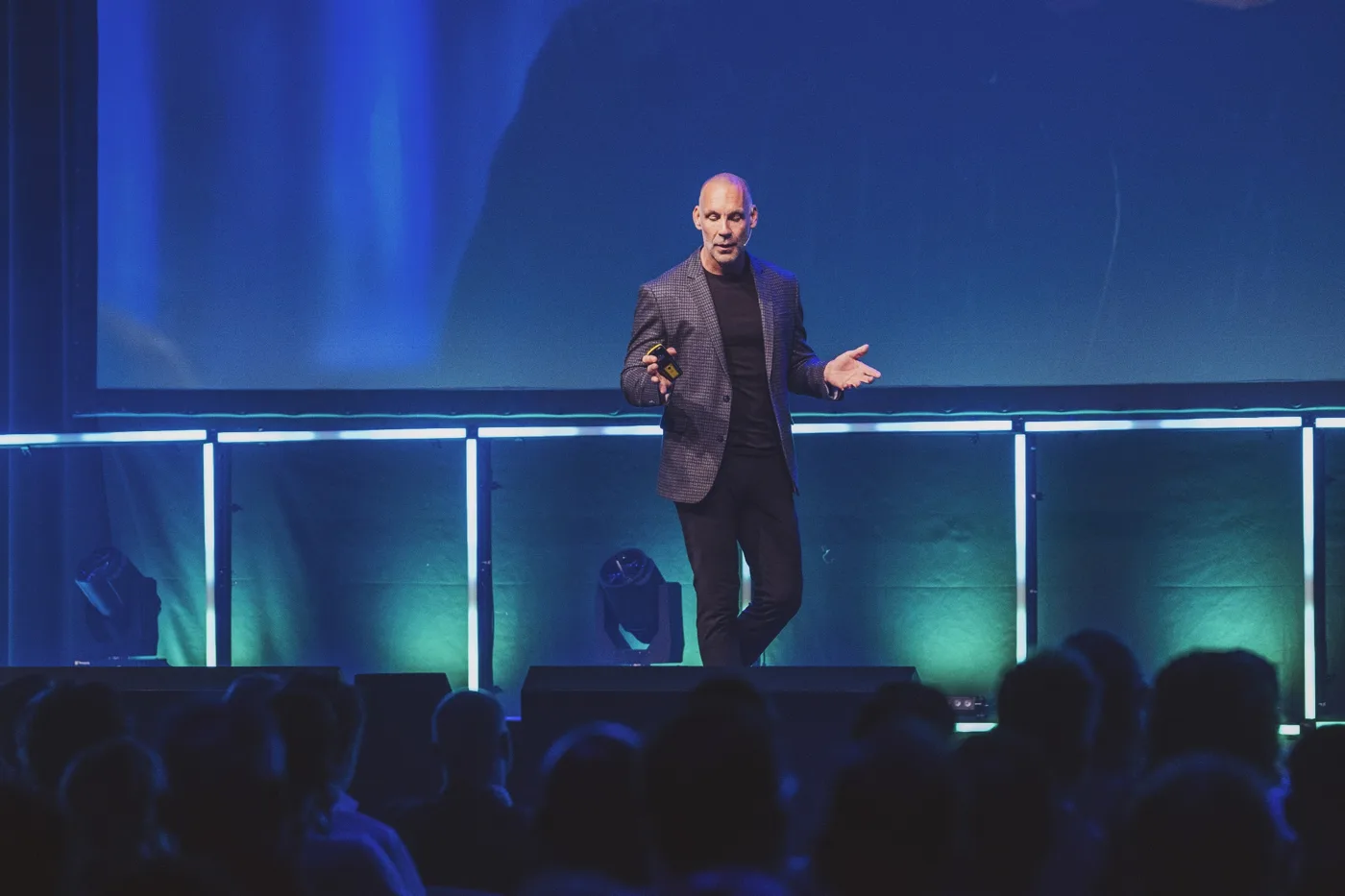
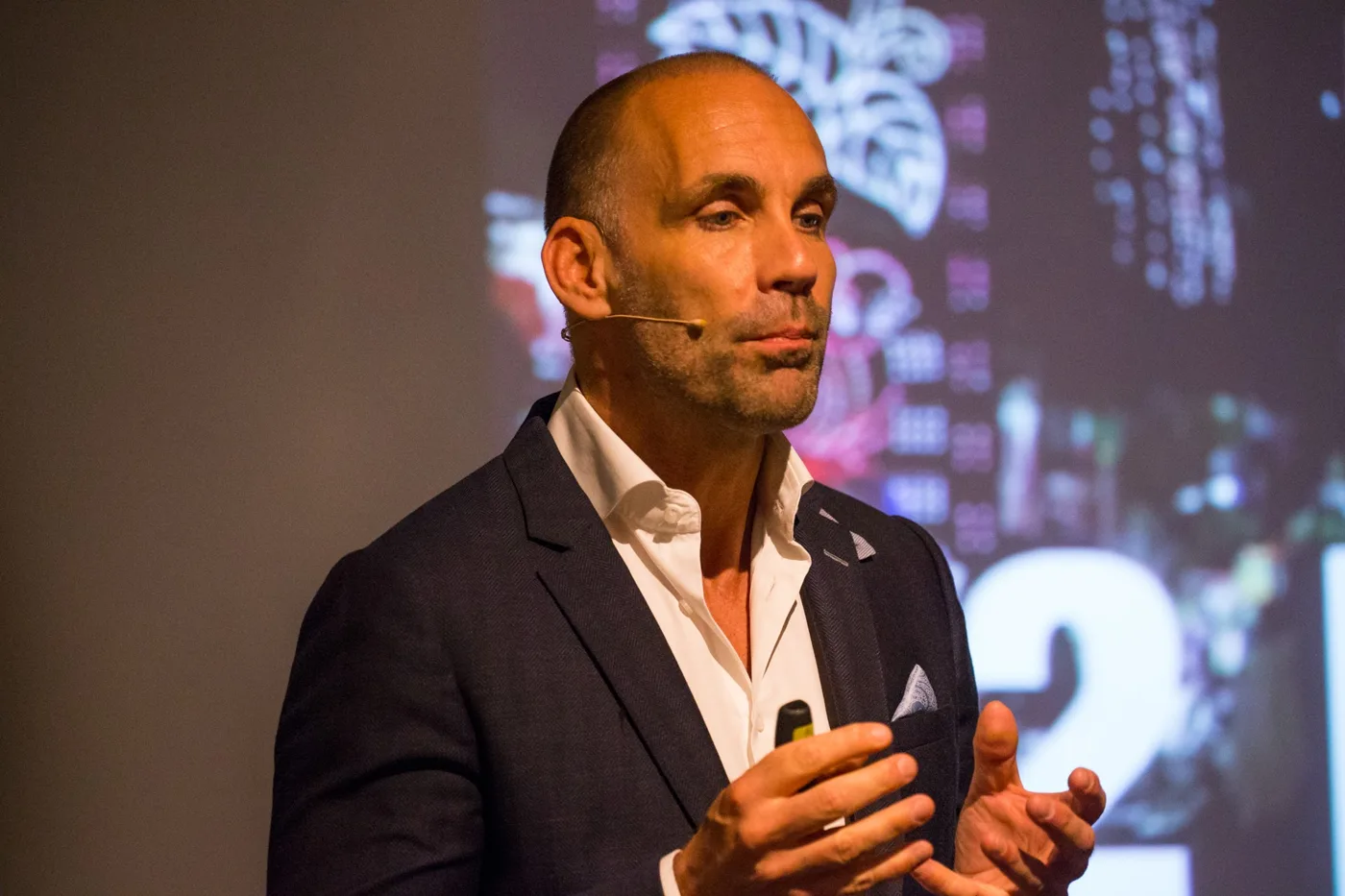
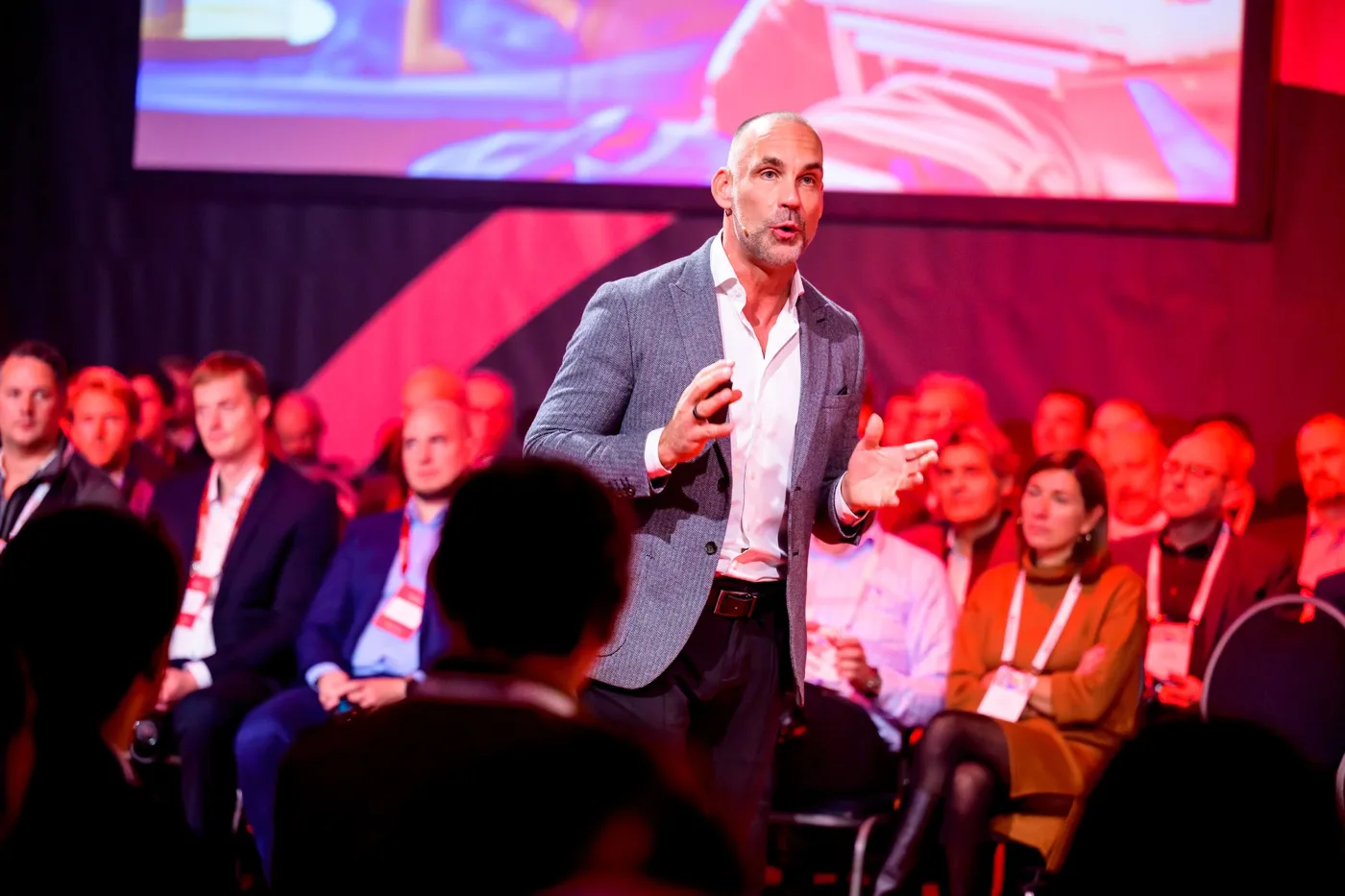
A packed conference hall, a televised panel discussion, a police summit in Dubai.



A selection of over 400 clients















What clients say

“You gave us all honest, inspired and entertaining insights. Your performance was highly appreciated by the conference participants and EU members.”Read the full review →

“An impressive and noteworthy presentation for our employees and customers. The rate at which change is happening, which you eloquently brought across in your energetic speech, requires a disruptive approach. To be continued!”Read the full review →

“Richard delivered an excellent presentation for the key clients we invited to Innovation Runway 2026. Engaging, interesting content, and thought-provoking statements made his presentation perfectly suited for our top relations.”Read the full review →
“With your presentation you awakened the customs organisation. At the end of the day it turned out that your presentation had made the biggest impression. You made sure the issues were put on Strategic Management’s radar.”Read the full review →

“A dazzling journey through new technology. The enthusiasm and energy during his presentation, combined with the visuals, provided a successful kick-off to our event.”Read the full review →
How a booking works
Your request
Use the form, or get in touch by phone, email or WhatsApp. A few lines are enough to get started.
We get in touch
We'd like to hear what your event looks like, who'll be in the audience and which themes interest you.
A written proposal
Covering the topic, format (on location or online), length (30, 45, 60 minutes or longer) and fee, so you can talk it over with your colleagues.
Getting to know Richard
Next, we'll find a time for the two of you to talk and brainstorm the keynote, the topics and the format. There's no charge for this.
Frequently asked questions
Who is this keynote for?
For cities and regions, provincial authorities, water boards, grid operators, transport operators, housing associations, developers, urban technology companies and smart city conferences. The audience often mixes elected officials, city managers, planners, IT specialists and entrepreneurs; the keynote is built for exactly that mix. It also works for events for staff, residents and partners.
What will the audience take away?
An up-to-date picture of what AI and new technology already do in the city and what is coming over the next five to fifteen years, with examples from the Netherlands and abroad. What that means for roles, teams, leaders and culture in the city. And a clear view of privacy and security, so the conversation afterwards is about choices, not hype or fear.
Does the keynote also cover how the city itself is organised?
Yes, and that is often where the emphasis lies: how departments for traffic, greenery, water and social services learn to work together around the same data, which new roles emerge and what that asks of leaders. Roles, teams of people and AI, leadership, culture and learning each get their own part of the keynote.
Does the keynote cover the risks of the smart city?
Yes, always. Hacked traffic lights and pumping stations, ransomware in town halls, cameras that see more than they need to and data that gives a distorted picture: that other side has its own place in every smart city keynote.
How does the keynote deal with privacy and the EU AI Act?
The rules come up where they affect the city: what is and is not allowed with cameras in public space, how an algorithm register shows which systems a city uses and how privacy by design works. No legal seminar, but a clear explanation of what the rules require of a city.
Is the keynote tailored to our city or organisation?
Yes. Beforehand there is an introductory call about the audience, the purpose of the event and what is happening in your city. A room of elected officials gets different examples from a conference of traffic engineers or grid operators.
How long is the keynote, and can it be in English or online?
30, 45 or 60 minutes, and longer if you wish, with time for questions from the audience, in English or Dutch, in person or online. For more than a keynote, there are masterclasses, boardroom sessions for elected officials, directors and managers, and workshops for all staff.
How much does a keynote on the smart city cost?
Fees for international keynotes are on request. Ask for a proposal and you will hear from us within an hour on working days.
Interested in a keynote for your smart city event?
Tell us in a few sentences about your event and who will be in the audience, and let us know the date.
Prefer to speak to us directly? Call 085 303 0792 · email talks@vanhooijdonk.com · send a WhatsApp message