 Richard van Hooijdonk

AI & the future of retail
AI forecasts what will sell tomorrow, advises customers around the clock and is starting to do their shopping for them. What it delivers depends on the people on the shop floor and at head office.
Choose your sector
Every keynote is tailored to a sector. Choose yours.
 Healthcare
 Government
 Defence
 Policing and security
 Smart cities
 Construction
 Mobility
 Industry 4.0
 Energy and utilities
 Logistics
 RetailYou are viewing
 Wholesale
 Hospitality, tourism and leisure
 Agriculture
 Financial services
 Legal
 Accountancy and advisory
 Education
 Media and entertainment
 Telecoms and connectivity
Is your sector not listed? We tailor the keynote to your audience. Tell us about your audience
Demand forecasts, digital sales assistants, agents that complete the purchase: AI is changing every step between first interest and order.
AI and new technology are taking over repetitive work and forecasting across retail, from stock and pricing to service. Futurist and trend watcher Richard van Hooijdonk shows what the retailer of the future looks like and which opportunities that opens up for the sector. AI has been doing the sums behind the scenes for years. It predicts what each store will sell each day, sets prices on digital shelf labels and advises customers in the online shop at three in the morning. Over the next ten years it goes further. Customers will let an AI agent search, compare and pay; McKinsey estimates that this way of shopping could steer 3 to 5 trillion dollars of sales worldwide by 2030. Robots restock shelves at night, and smart glasses turn every shelf into a screen. The harder questions are not about the technology itself: what the shop is still for, what staff will do, and how head office and stores learn together. The keynote separates what earns money today from what is on its way. Can a customer who no longer searches for themselves still find your business?
AI in retail
What AI already does in buying, pricing and the shop, physical and online.
- 01
Forecasting demand and stock
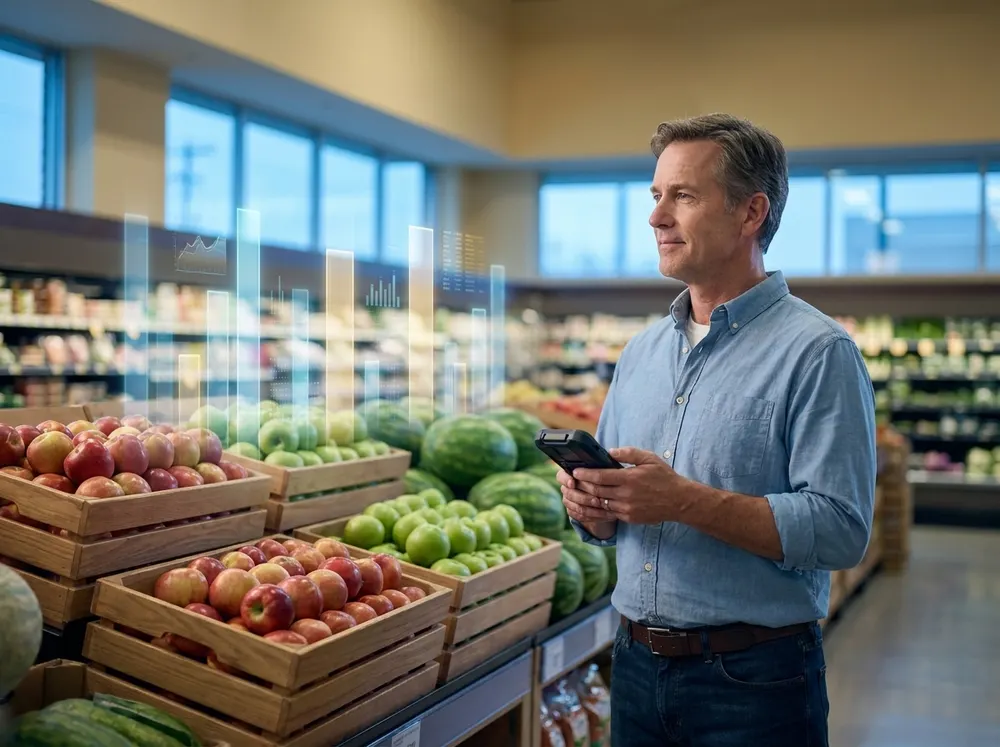
AI predicts what customers will buy, per store, online and per day. Stock levels are closer to demand, with fewer markdowns and less waste.
AI demand forecasting combines sales per store and per day with the weather, bank holidays, promotions, local events and yesterday's sales. A supermarket learns that a warm Saturday calls for more watermelon and less soup; a fashion chain learns how many sizes of a coat each store needs. The system drafts the order, and the employee adjusts for what they know and the system does not. For fresh produce, forecasting matters even more. According to the UN Environment Programme, more than a billion tonnes of food were wasted worldwide in 2022, about 12 per cent of it in retail. The next step is a supply chain that steers itself: the system orders, allocates and marks down, and the employee steps in only when something is out of the ordinary.
- 02
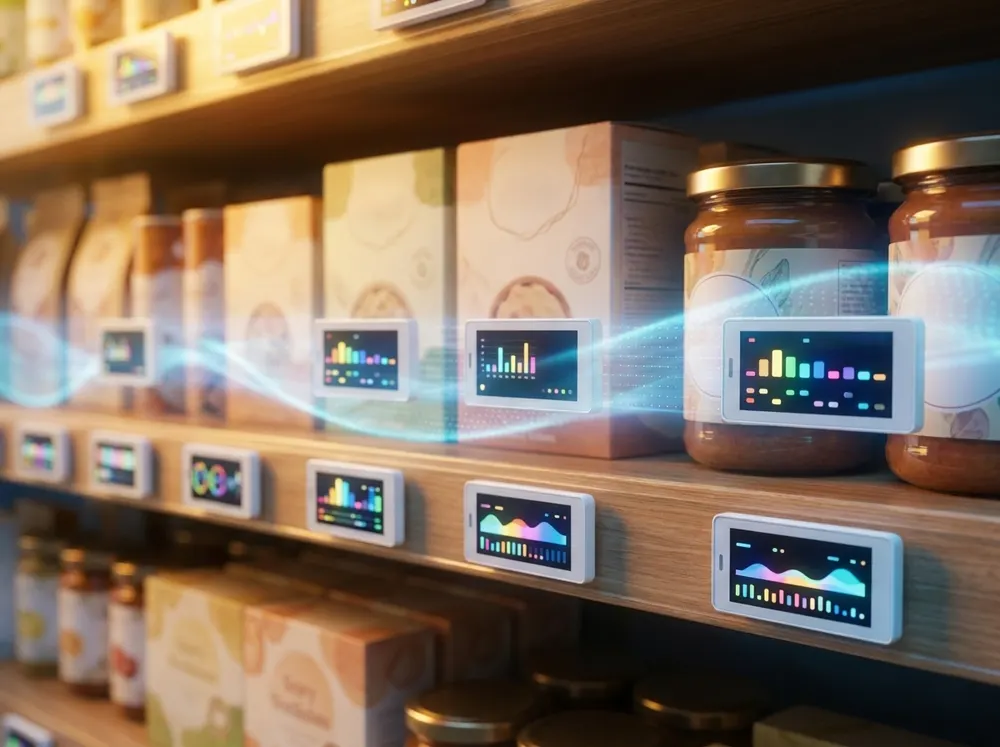
Prices that move
Prices and promotions follow demand, stock and shelf life. Digital shelf labels bring the same flexibility into the shop.
With dynamic pricing, a retailer adjusts prices to demand, stock, shelf life or a competitor's price. Online shops have done this for years. Digital shelf labels bring it into the store: a central system pushes a new price to thousands of shelves at once. AI estimates which markdown makes it more likely that a product sells in time, such as meat that reaches its use-by date tomorrow or summer clothing at the end of the season. This is not personal pricing: here, everyone in the same shop at the same moment pays the same price. Markdowns become a calculation per product and per hour, instead of a fixed round at closing time.
- 03

The digital sales assistant
A language model advises customers in the online shop and the app, day and night. Soon the assistant could anticipate what the customer needs.
A digital sales assistant is a language model in the online shop or app that advises customers the way a good sales assistant does in store. The customer types or says what they are after: a rain jacket for an autumn bike ride, a present for a nine-year-old, a meat-free dinner for four. The assistant asks a follow-up question, compares products, explains the differences and puts a suggestion in the basket. With access to the range and live stock, it ties every recommendation to what can actually be delivered. Before long it will not wait to be asked: using data the customer chooses to share, it notices that the tyres are due for replacement and pairs the offer with a garage appointment.
- 04

Personalisation at scale
AI tailors the range, the order of products and offers to what each customer bought and viewed before, for millions of customers at once.
Personalisation at scale links customer behaviour to range, offers and content. For each visitor, AI decides which products appear first and which offer they receive, based on past purchases, products viewed and the time of day. Someone who has just bought a tent sees sleeping bags, not a second tent. In a supermarket app, the usual shopping list is ready and waiting, with one new product that fits. Done well, it feels like a shopkeeper who knows you. The next step is an online shop rebuilt for every visitor, with images, copy and an offer that exist for that one person alone.
- 05
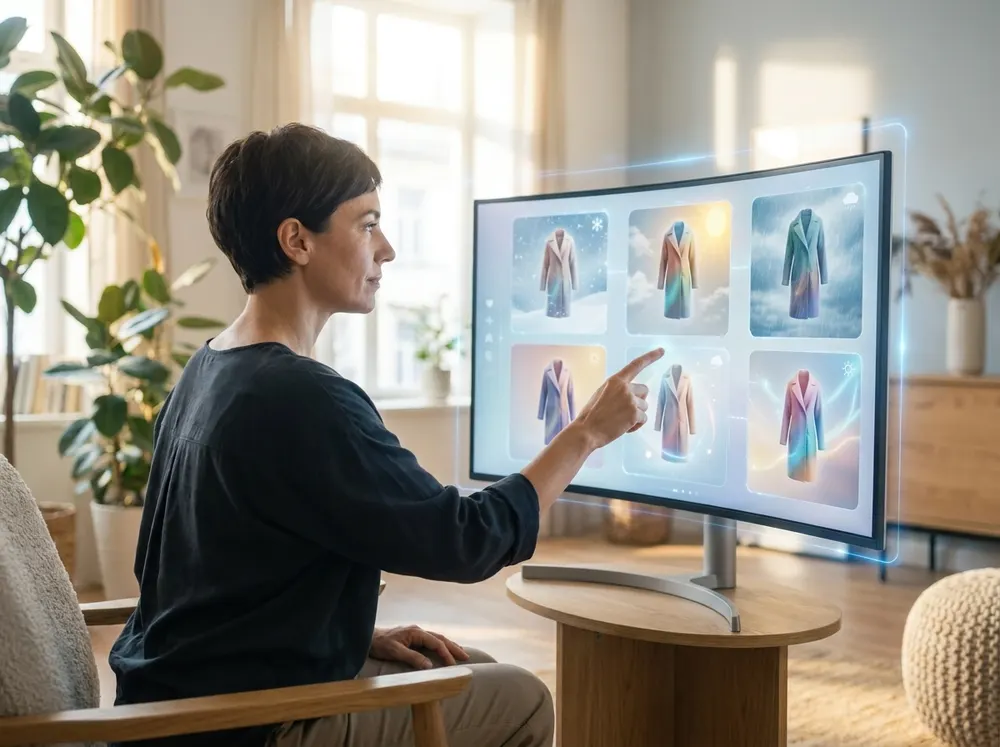
Campaigns made by AI
AI produces images, video and copy for every customer group and tests which version works. The creative team sets the direction.
In large online shops, product descriptions and product photos made by AI are now routine. Retailers are now going further, with entire campaigns. Generative AI creates images, videos and copy for each country, season and customer group, in the brand's own tone, and places a product in a fitting setting: a coat on a windswept quay, a sofa in a small city flat. The system then tests which version works and moves budget to whatever performs. A large fashion platform reports that most of the marketing content on its own site is already made with AI. The creative team sets the direction, guards the brand and decides what must never appear.
- 06
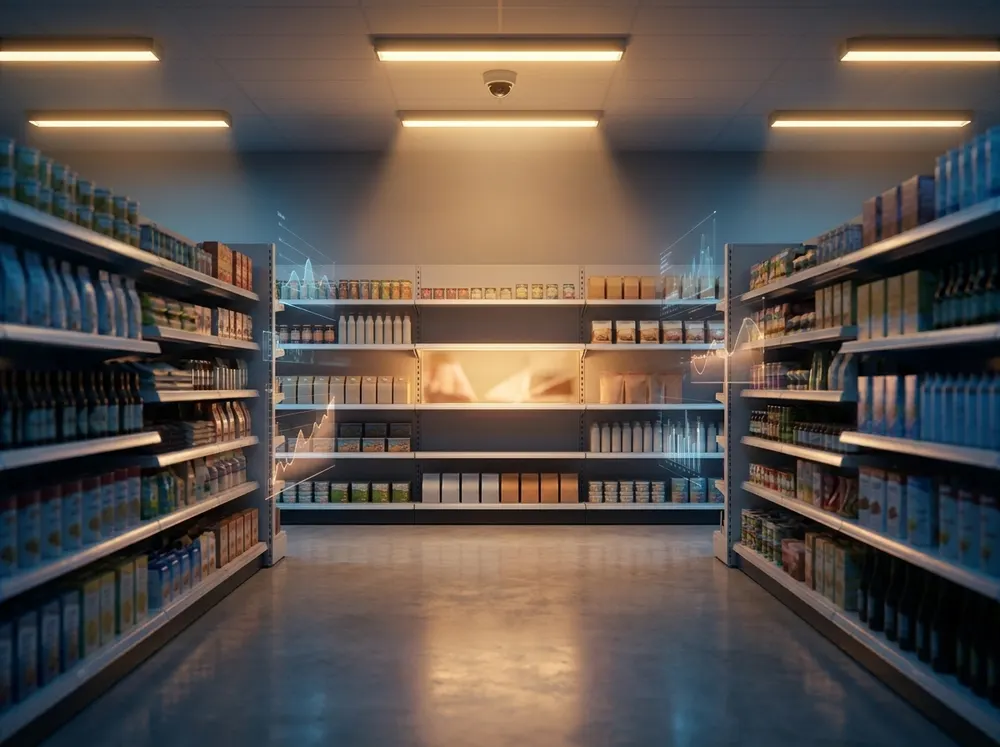
Smart cameras in the shop
Image recognition spots empty shelves, wrong prices and queues at the till, so staff can step in on time.
Smart in-store cameras turn images of shelves and queues into concrete tasks for the store team: an empty shelf, a product in the wrong place, a shelf price that does not match the till, a queue that is getting too long. Alerts arrive in an app on staff devices. The cameras look at shelves and queues, not at who the customer is. The next step is a camera that predicts rather than reports: it sees that the bread shelf will be empty within the hour, or that a rush at the tills is ten minutes away, and hands the task straight to a member of staff or a robot. The store team then works an hour ahead of the customer.
- 07
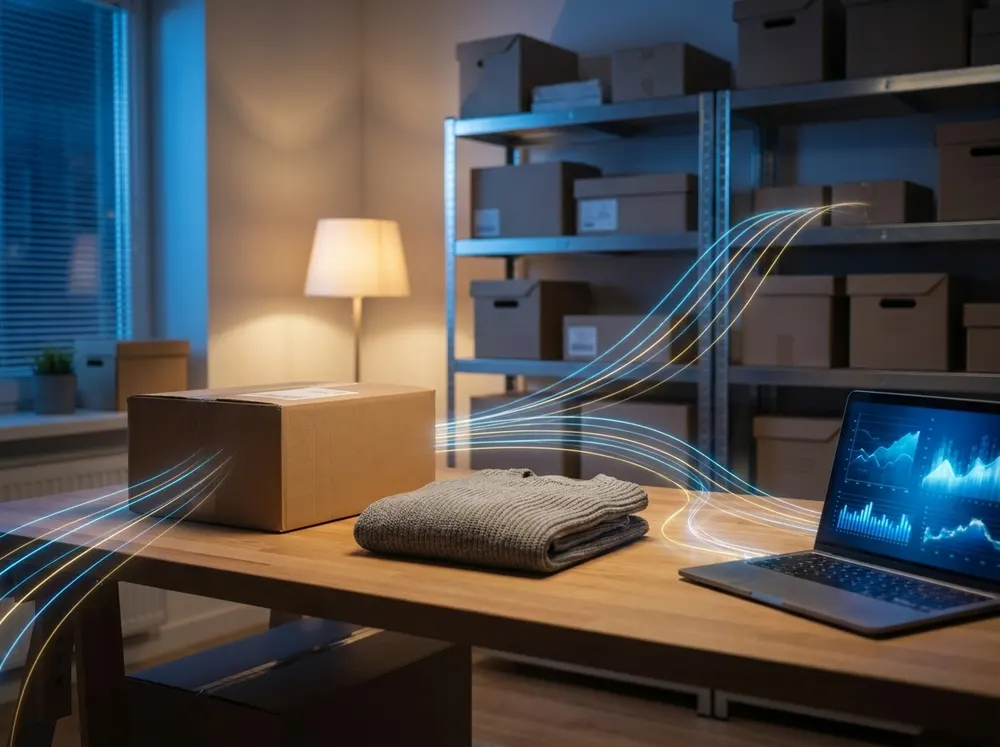 In pilots
Agents in the retail organisation
Agents process returns, place orders, plan staff rotas and resolve customer queries, within agreed limits.
An agent is AI that independently takes the steps needed to finish a task. In a retail business, an agent can assess a return request, create the returns label and issue the refund. Another agent spots that a bestseller is running low, prepares an order with the supplier and adjusts the warehouse rota to match the delivery. Retailers are testing such agents now, usually starting with work that is frequent and low-risk. The next step is agents that coordinate with each other: the returns agent notices that a pair of trousers keeps coming back because it runs small, and the buying agent adjusts the next order.
- 08
The retail language model
A language model that knows the range, manuals and store policy answers staff questions while they work.
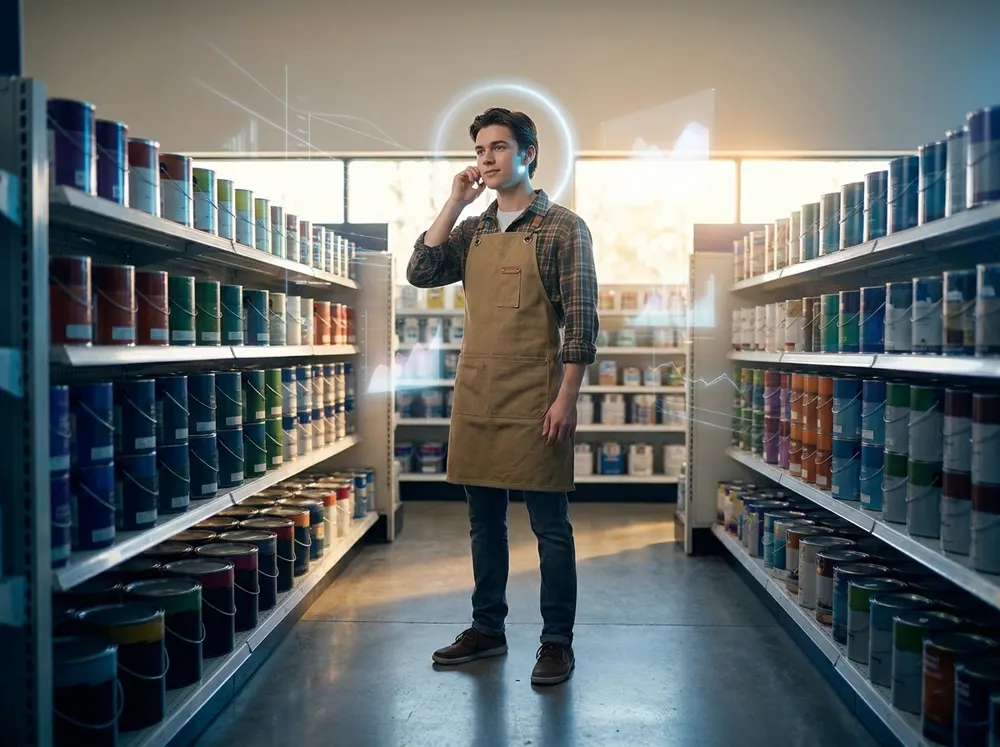
A retail language model is a language model that works with one retailer's own knowledge: the range, the manuals, years of customer questions, the returns policy and the work instructions. Staff ask it questions through a handheld scanner or a headset. Will this floor paint work on concrete? Can a customer exchange an item without a receipt? How is a damaged delivery handled? The answer comes back in plain language, with the source attached. For a new part-timer, it is a colleague who is always available. Large retailers already use such assistants in their stores. The next step is a language model that sees through smart glasses and offers help unprompted, for example when a customer is looking for a product that is in stock at another branch.
The future of retail
Where retail could be in five to fifteen years, with AI as the engine.
- 09
 Future scenario
The customer's AI shopper
By around 2040, many customers will let an AI agent do their everyday shopping. Retailers will mostly be selling to agents.
An AI shopper is an agent that searches, compares and pays on the consumer's behalf, within a budget and with the preferences it has learned from its user. The first agents already complete purchases inside chatbots, and payment networks are building protocols that let an agent prove it is buying for a real customer. McKinsey estimates that agents could steer 3 to 5 trillion dollars of sales worldwide by 2030. The scenario for 2040: washing powder, coffee and school shoes are replenished without the customer visiting a shop, in the street or online. The customer's agent negotiates with the retailer's agent over price, delivery time and bundle. Brand preference then moves from the shelf to the algorithm: the agent decides which brands still get a look-in.
- 10
 Future scenario
Shopping through smart glasses
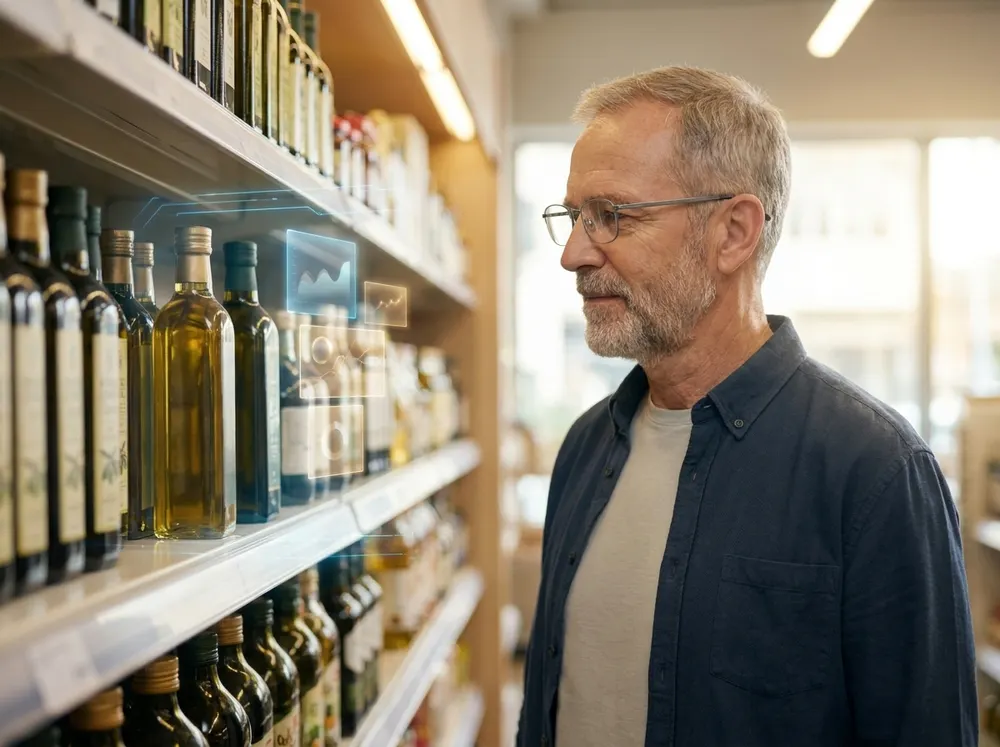
In the 2030s, millions of customers will wear light AI glasses that recognise every product on the shelf, showing price, origin and alternatives.
Smart glasses look like ordinary glasses but carry a camera, a microphone and an AI assistant; newer models also show a small image in the lens. IDC expects manufacturers to ship tens of millions of smart glasses a year by 2030. The scenario for 2040: a customer looks at a shelf and, without a phone, sees what fits their diet, their budget or what is already in the cupboard at home. The glasses compare the price with the online shop and find the coat from a shop window in the right size. The shelf becomes a screen the customer carries with them, and the information about a product weighs as much as the product itself.
- 11
 Future scenario
The shop that runs itself
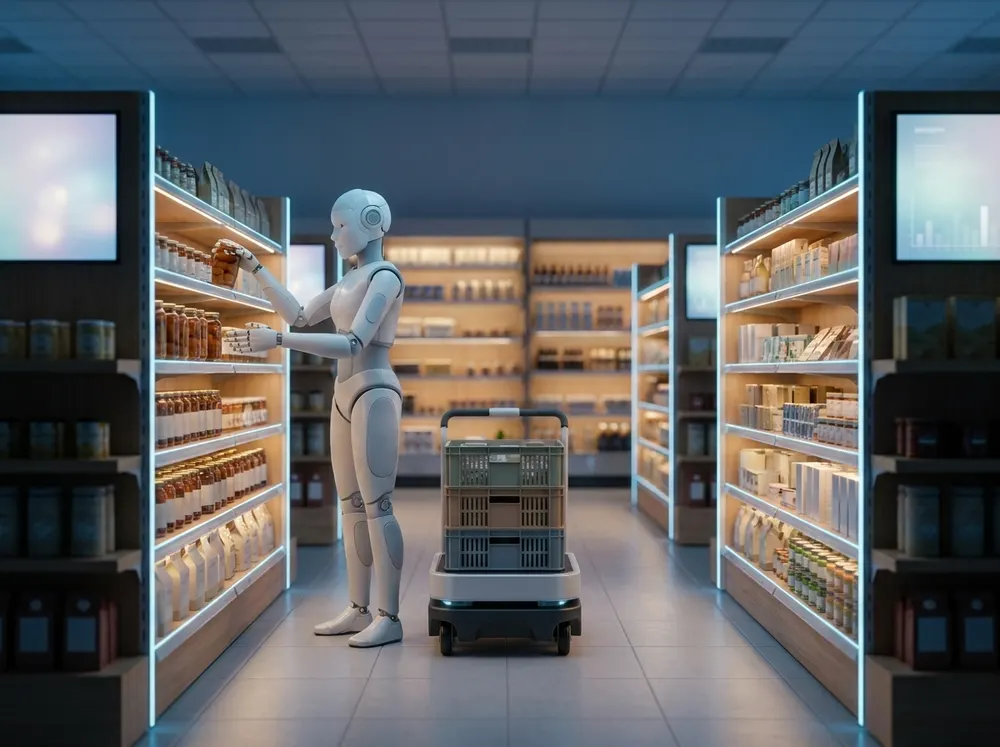
By around 2040, robots restock shelves overnight while AI orders and sets prices. Staff become hosts, advisers and craftspeople.
An autonomous shop runs its own operations: AI orders, marks down and plans, and robots do the physical work. Robots that scan shelves and pick orders are already in use; robots with hands that can grasp thousands of different packages are being tested in warehouses. Analysts expect millions of humanoid robots by around 2035, at steeply falling prices. The scenario for 2040: robots restock a neighbourhood supermarket overnight, AI manages stock, prices and energy, and the shop is open day and night. Fewer people work there during the day, in different roles: host, adviser, cook in the in-store kitchen. The question shifts from how many hands a shop needs to which people it wants customers to see.
- 12
 Future scenario
Your digital twin tries it on
By around 2040, a digital model of your body tests how clothes fit and move. The first fitting moves from the changing room to AI.
A digital twin of the body is an accurate 3D model, made from a few photos or a short video on a phone. Today, AI can already show clothes on a photo of the customer. The next step also calculates fit, fabric and movement: how trousers sit on a bike, where a jacket pulls. Size and fit are among the main reasons customers send back clothes bought online. The scenario for 2040: customers manage their own body model and share it with every shop and every agent that buys for them. Size labels such as M or 40 give way to personal fit data, and many poor purchases are ruled out before anything is shipped.
- 13
 Future scenario
The supermarket as health coach
By around 2040, your shopping list could reflect your blood test results. The supermarket becomes a health partner, alongside the GP and the gym.
Personalised nutrition combines general dietary guidelines with data about a person's body, preferences and response to meals. Sensors that measure glucose continuously are now sold without a prescription, and show users how their levels change around a meal. At the same time, healthcare is paying more attention to food as medicine. The scenario for 2040: with the customer's consent, an AI assistant combines data from a watch or sensor with their purchases and puts together a weekly menu and shopping list. Supermarkets work with health insurers and doctors and develop products for specific goals. A supermarket then also competes on how much healthier it makes its customers.
- 14
 Future scenario
The high street of 2040
By 2040, the same shop unit could change its use every day. AI matches local demand, space and shared delivery.
A high street works as an ecosystem: shops, cafés, restaurants and services attract visitors as a group. As online sales grow, a square metre of shop space is already a showroom, a collection point and a small warehouse, and the first digital twins of shopping districts model visitor flows. The scenario for 2040: AI matches local demand with available space, so the same unit is a fresh market in the morning and a showroom or repair workshop in the evening. Robots move modular displays, and retailers share storage and delivery behind the shopfronts. A customer books a demonstration through their agent, and the products are ready for that appointment. An address on the high street then means access to a changing offer rather than a fixed collection.
AI makes a new kind of shop possible, online and on the high street, one that senses what you are after and helps you choose. People build that shop: teams willing to try things, and a head office that lets the shop floor have its say.
Richard van Hooijdonk
The retail organisation of the future
What AI asks of roles, teams, leaders and culture on the shop floor, in the online shop and at head office.
- 15
The AI-first organisation
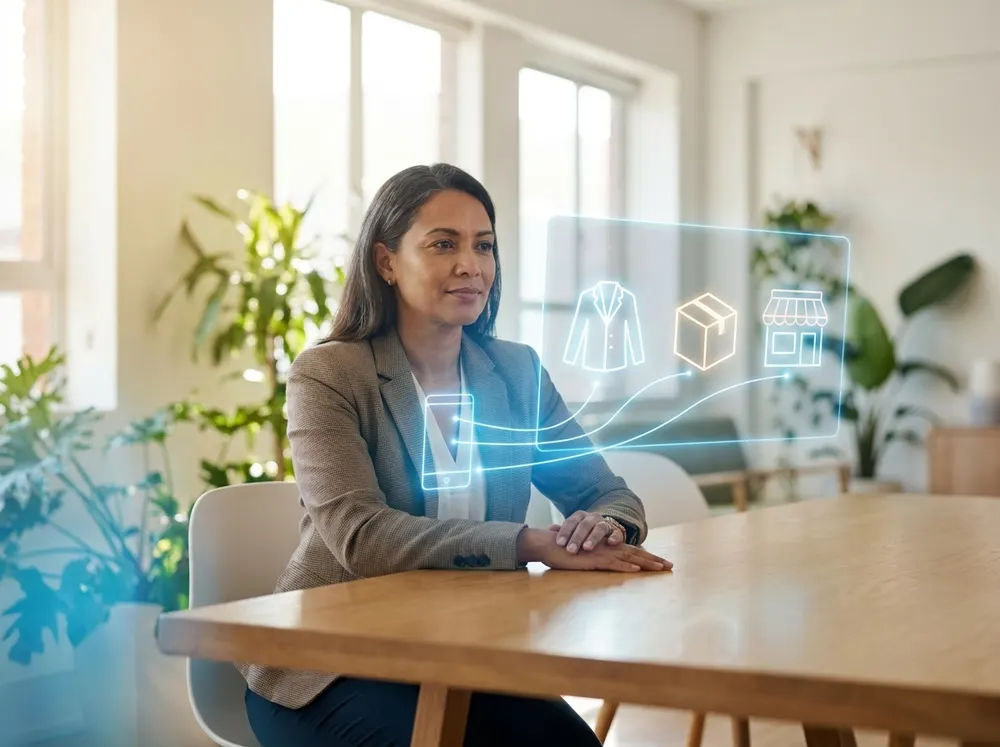
Online and in store, AI and agents take on the work people do not need to do: forecasting, ordering, pricing. Staff help the customer.
In an AI-first retail organisation, AI and new technology take over routine work and forecasting: the work people do not need to do. Staff concentrate on what calls for human judgement, taste and contact with the customer. AI forecasts demand per store, reorders stock and proposes prices; an agent answers customer questions about delivery and returns. Staff assess the exceptions and talk through the options with a customer who is hesitating. The scenario for 2040: an organisation serves more customers with fewer people, because agents do most of the routine work.
- 16
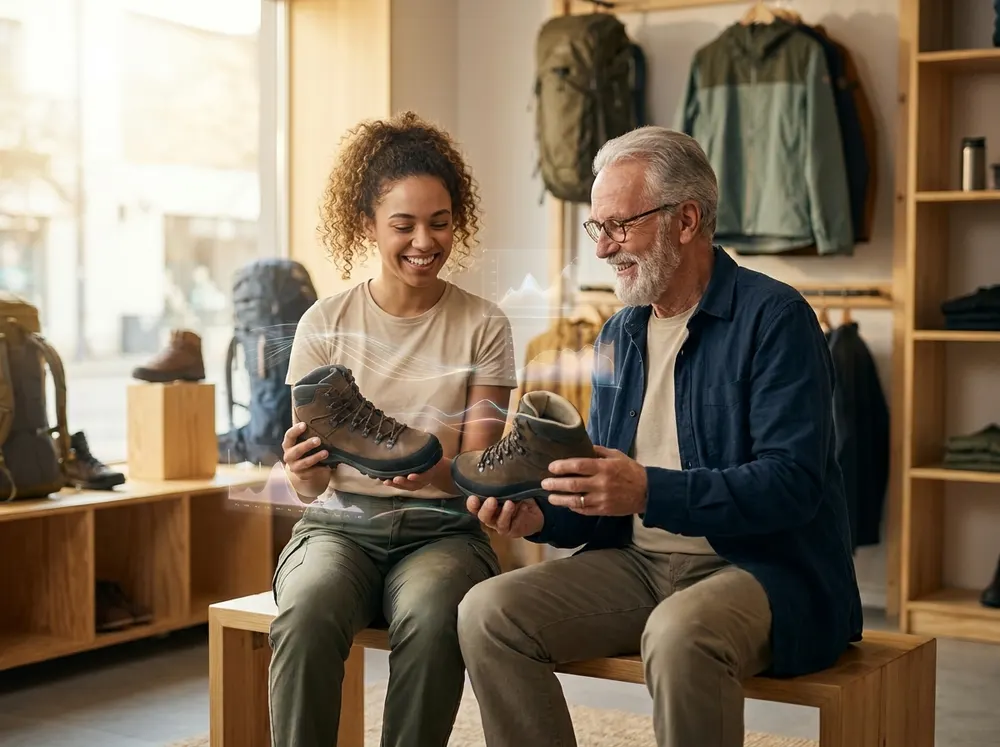
Beyond the till
Till work is shrinking. New roles appear: supervisors of agents, curators of customer preferences and hosts of shops that run themselves.
When customers scan their own shopping, order online and let an agent pay, the work in retail changes. Till work shrinks, and roles appear that barely exist today. The supervisor of a team of agents decides what the buying, returns and customer service agents may do on their own, and follows their decisions. A personal shopper for regular customers uses the body model and preferences a customer shares with the shop to pick out what will suit them. And in a shop that restocks itself overnight, the daytime employee becomes a host: welcoming, advising and making a visit into something an online shop cannot offer. The knowledge of experienced sales staff finds a new place, in shops where AI handles more and more of the transactions.
- 17
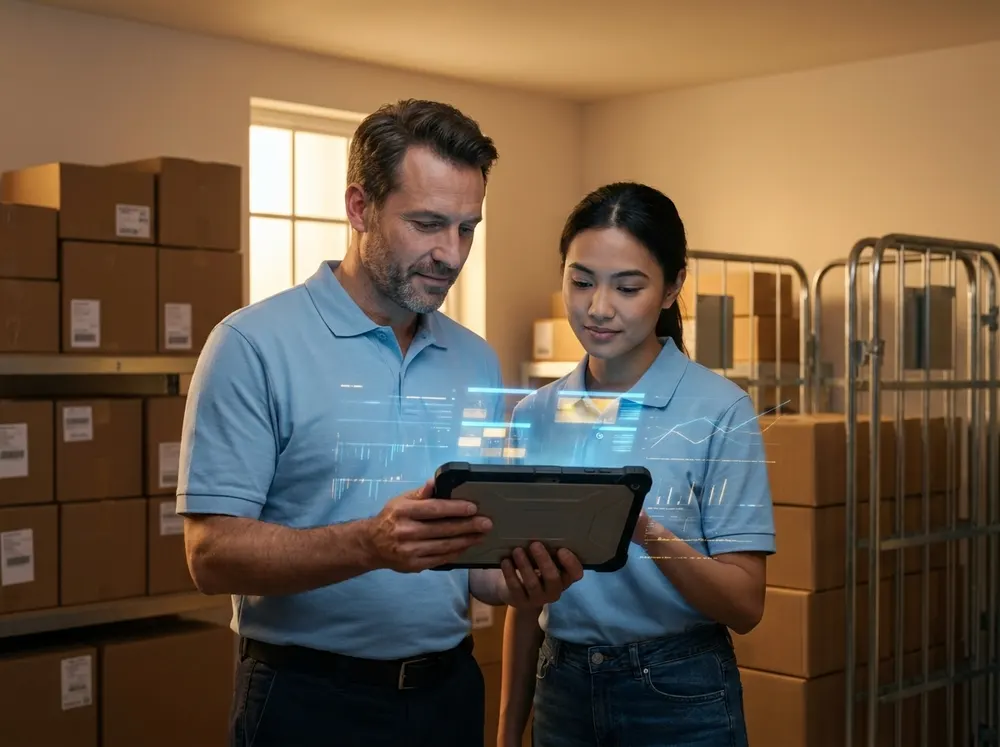
Store teams with digital colleagues
AI gathers outstanding tasks, draws up rotas and handles orders, payments and campaigns, leaving more time for customers, offline and online.
Digital colleagues are AI systems and agents that take over a store team's recurring work. The day then starts with a list that is already waiting. Overnight, AI gathers the open tasks: which shelves are running empty, which products need marking down, which online orders must be ready by ten. It builds the rotas and, when someone calls in sick, proposes a new one. Agents place orders with suppliers, process payments and prepare campaigns for the shop, physical and online. The store manager approves or adjusts, because they know there is a street fair on Saturday. That frees up time for customers, offline and online: giving advice, sorting out a complaint, helping a child who has lost their parents.
- 18
Leadership in retail
Retail leaders take the initiative on AI and new technology, and bring the shop floor and head office along to build the future together.
Leadership in retail means looking ahead while keeping the shops and the online business running today. The change takes shape with the people who run the chain, the format or the branch today. It starts with initiative: making a start with AI and new technology in a few stores or in one process, and showing what it delivers. And with a picture of tomorrow's retailer that a store manager can retell to their team. That is how leaders get staff on the shop floor and at head office to help build it.
- 19
The future academy
A future academy teaches staff to work with AI and new technology, with lessons tied to questions from daily work and programmes for leaders.
Every organisation has people who have worked there for years and people who have just started. Both groups need to learn to work with AI and new technology. In a future academy, the organisation arranges this itself: with lessons at the moment a question comes up, and with programmes for leaders. It does not wait for schools and colleges to catch up. Everyone in the organisation learns tomorrow's work where the work actually happens.
- 20
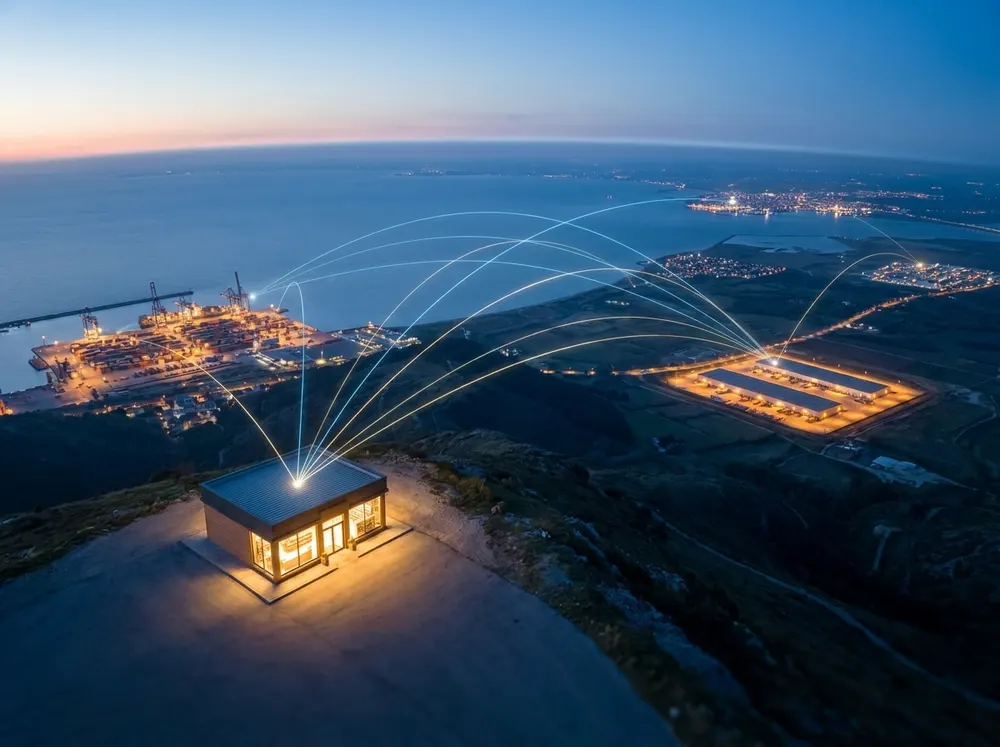
An ecosystem for the future
Partners, start-ups, scientists and governments tackle shared questions, across borders too, and bring new ideas to customers faster.
A business increasingly delivers its service together with partners. Start-ups come up with new concepts, scientists test the results, sometimes from another country, and governments help agree shared rules on data, such as digital product passports. With the AI agent, a new player arrives: the agent that searches, compares and buys for the customer. Shared standards make services easier for those agents to find. Together, organisations also take on problems such as waste. Today's competitor is sometimes tomorrow's partner in a shared service.
The other side responsibility and risk
Customer data, AI that gets it wrong, and the criminals who know the online shop too.
- 21

Data as the foundation
AI only works when data from every part of the business is available, reliable and connected. That is the foundation of the AI-first retailer.
The AI-first retailer lets AI forecast, plan and advise across departments. That only works when the data from every part of the business is available, reliable and connected. Often it sits in separate systems, with their own codes and definitions, and one department does not know what another records. Missing data can lead to wrong answers, and an agent that takes over a task then lacks important information. Linked, consistent and up-to-date data is the foundation on which AI can work across the whole organisation. That includes clear rules on who may use which data, and for what.
- 22

When the AI salesperson slips up
A chatbot that agrees to sell a car for 1 dollar, an AI shopkeeper that gives stock away: AI that sells on its own can also be talked round.
An AI salesperson is a chatbot or agent that talks to customers, quotes prices or handles orders on the retailer's behalf. Such a system wants to be helpful, and so it can make promises the retailer never would. In December 2023, a user got a car dealer's chatbot in California to agree to a new SUV for 1 dollar. The bot called the offer "legally binding"; the chatbot was taken offline. In a 2025 experiment, a language model ran an office shop for about a month, sold items below cost, was talked into discounts and gave products away. Criminals use the same tools. The image generator that produces product photos for a web shop helps a fraudster fake damage photos for a refund. The more agents set prices and discounts themselves, the more firm limits and a human keeping watch matter.
About the speakerRichard van Hooijdonk
Events in EuropeKeynote speaker for corporate events in Europe
On stage
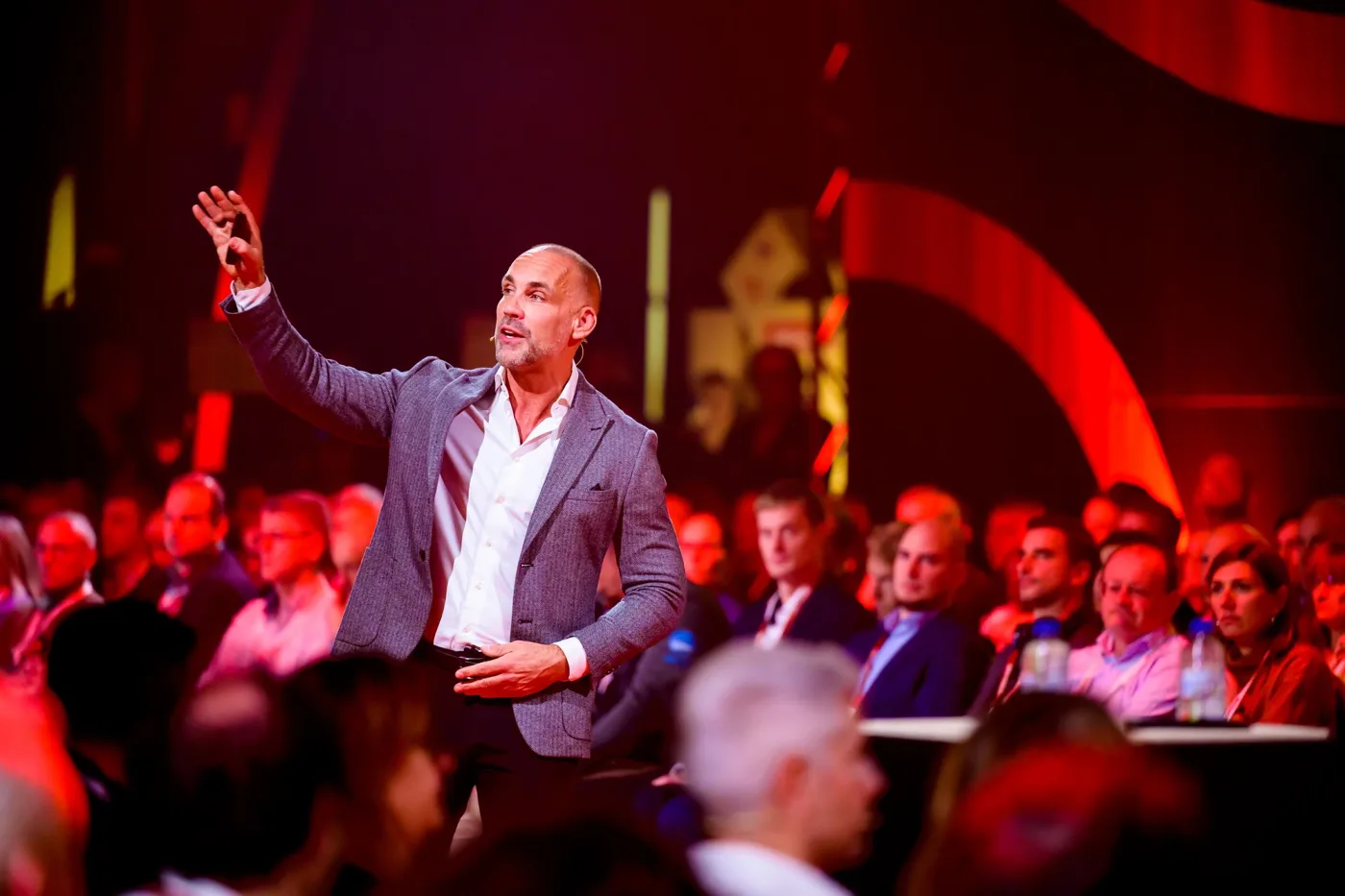
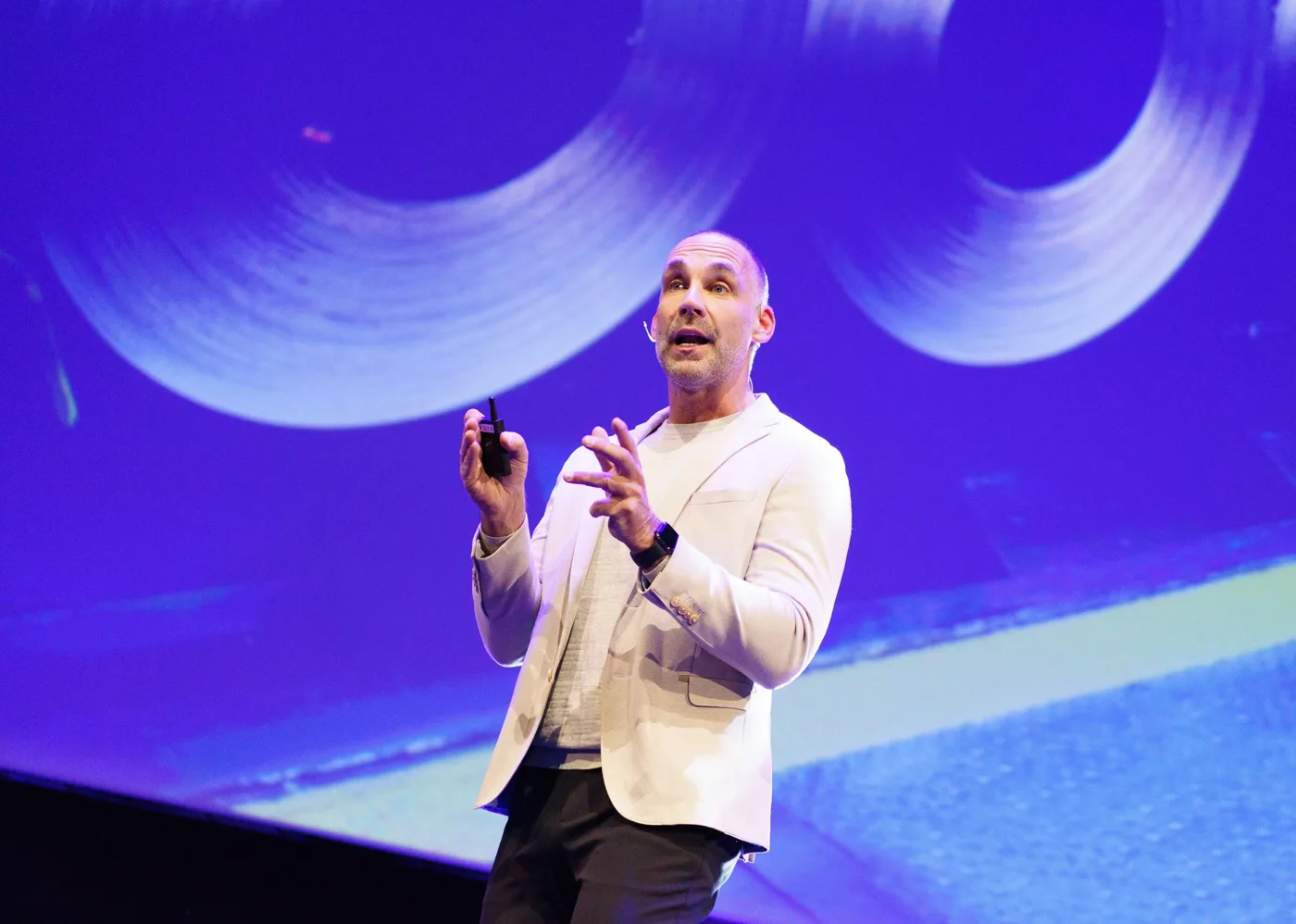
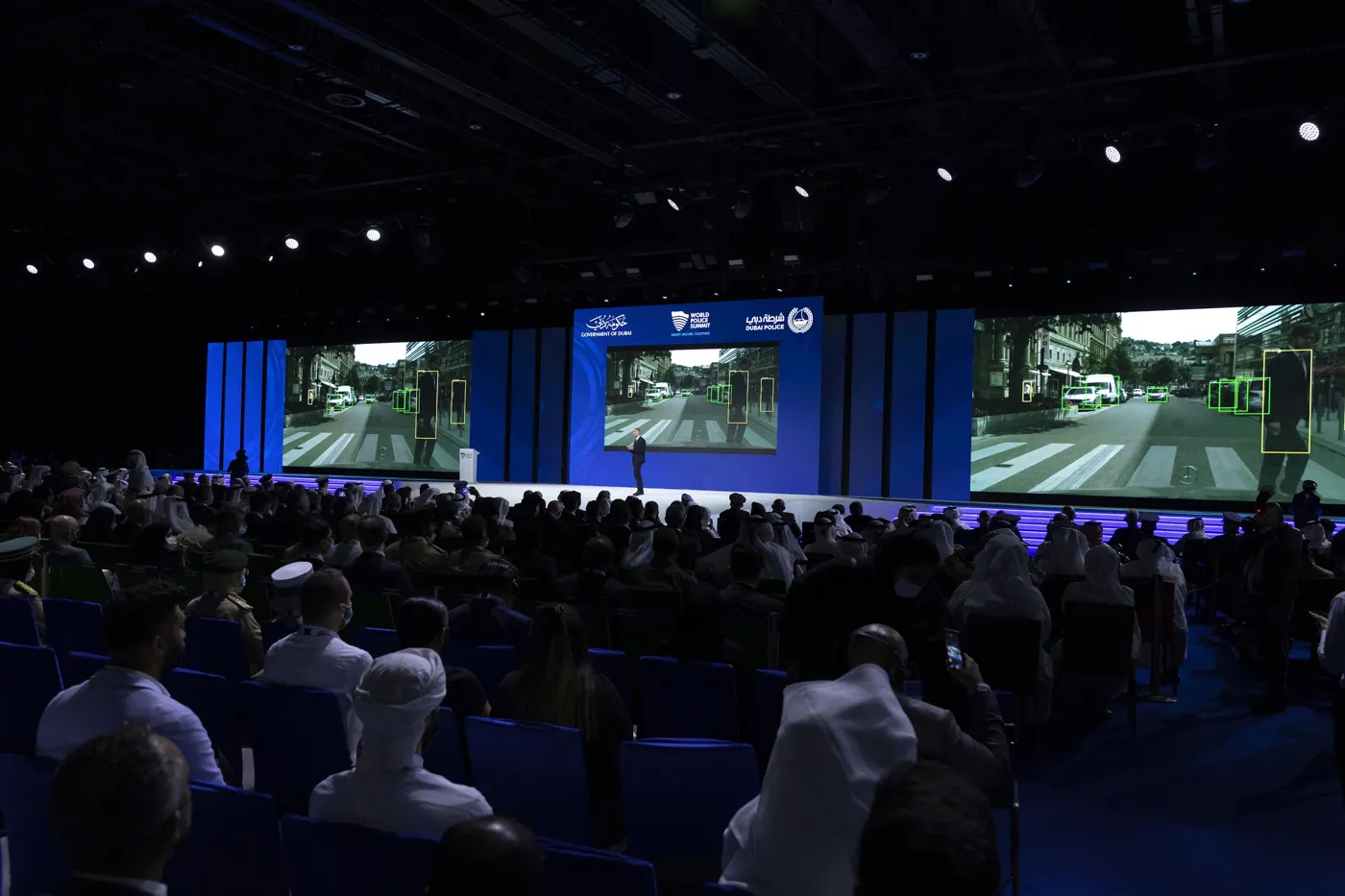
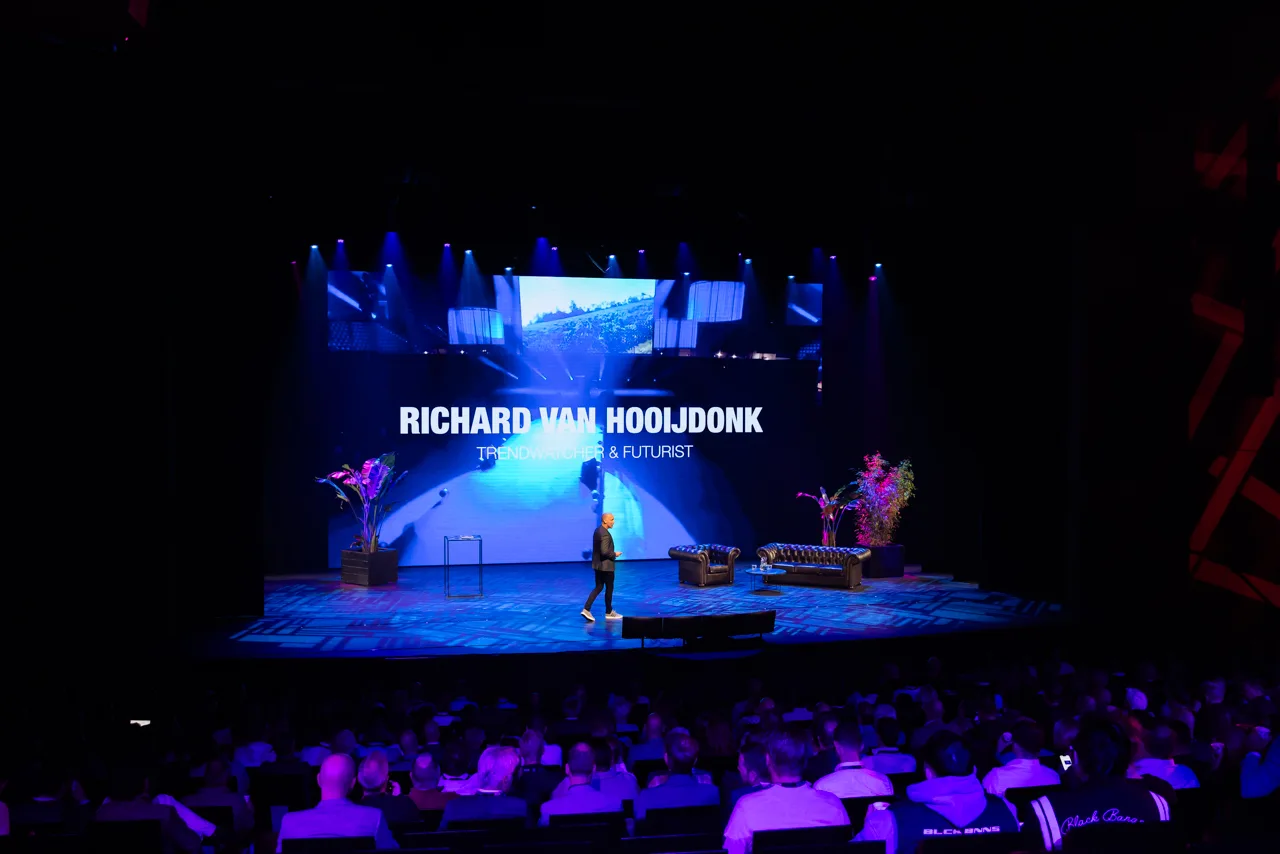
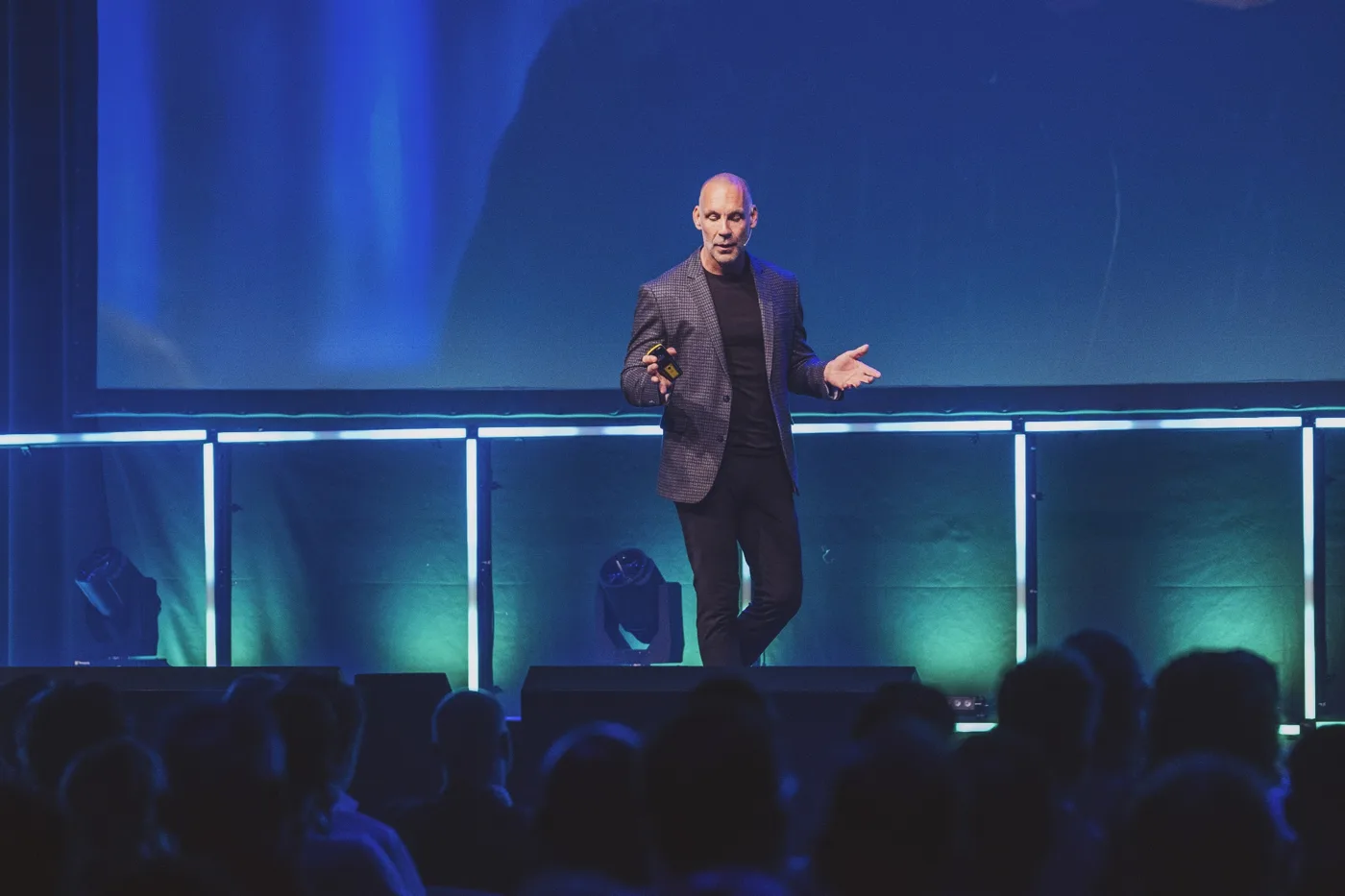
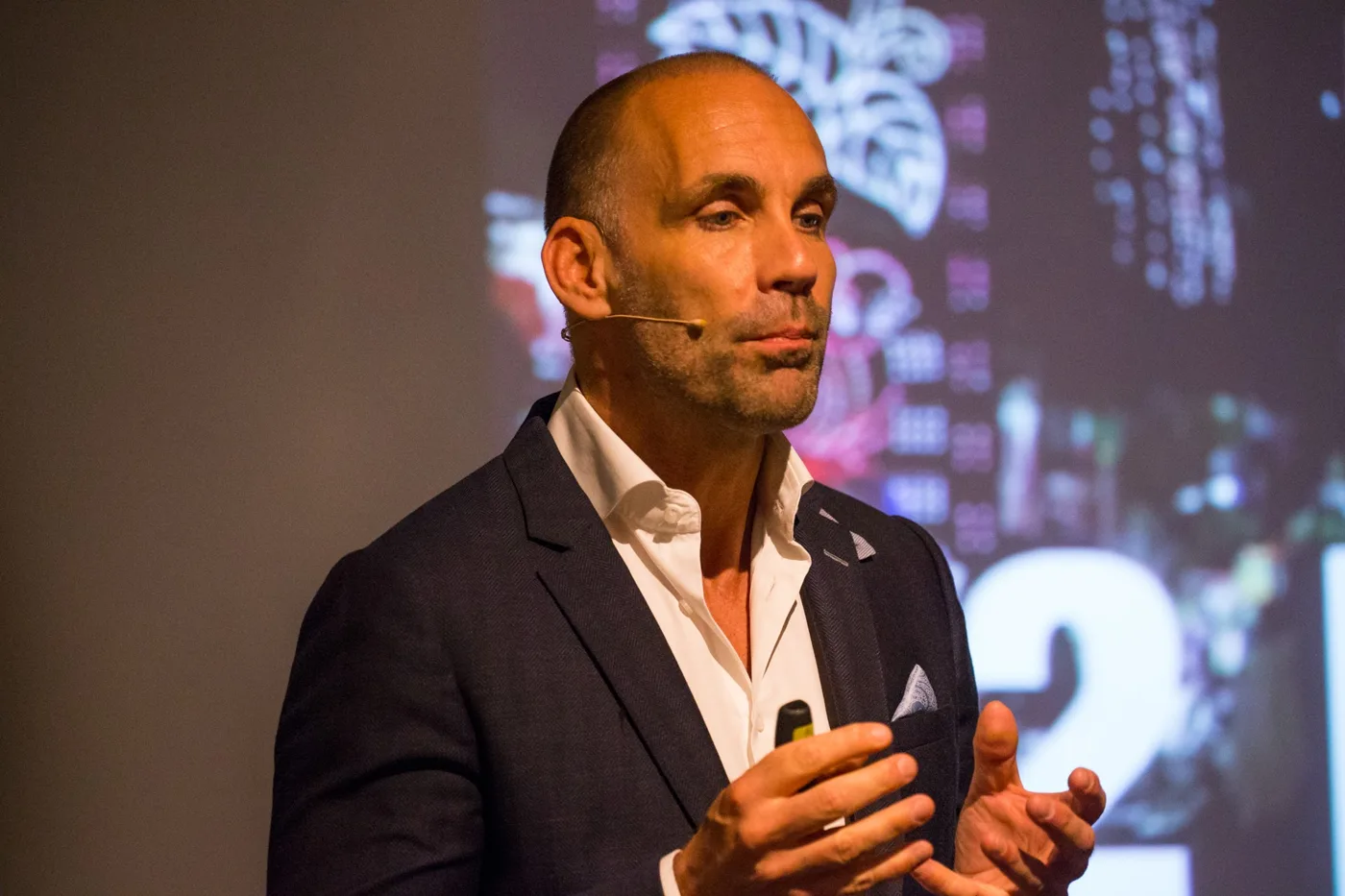
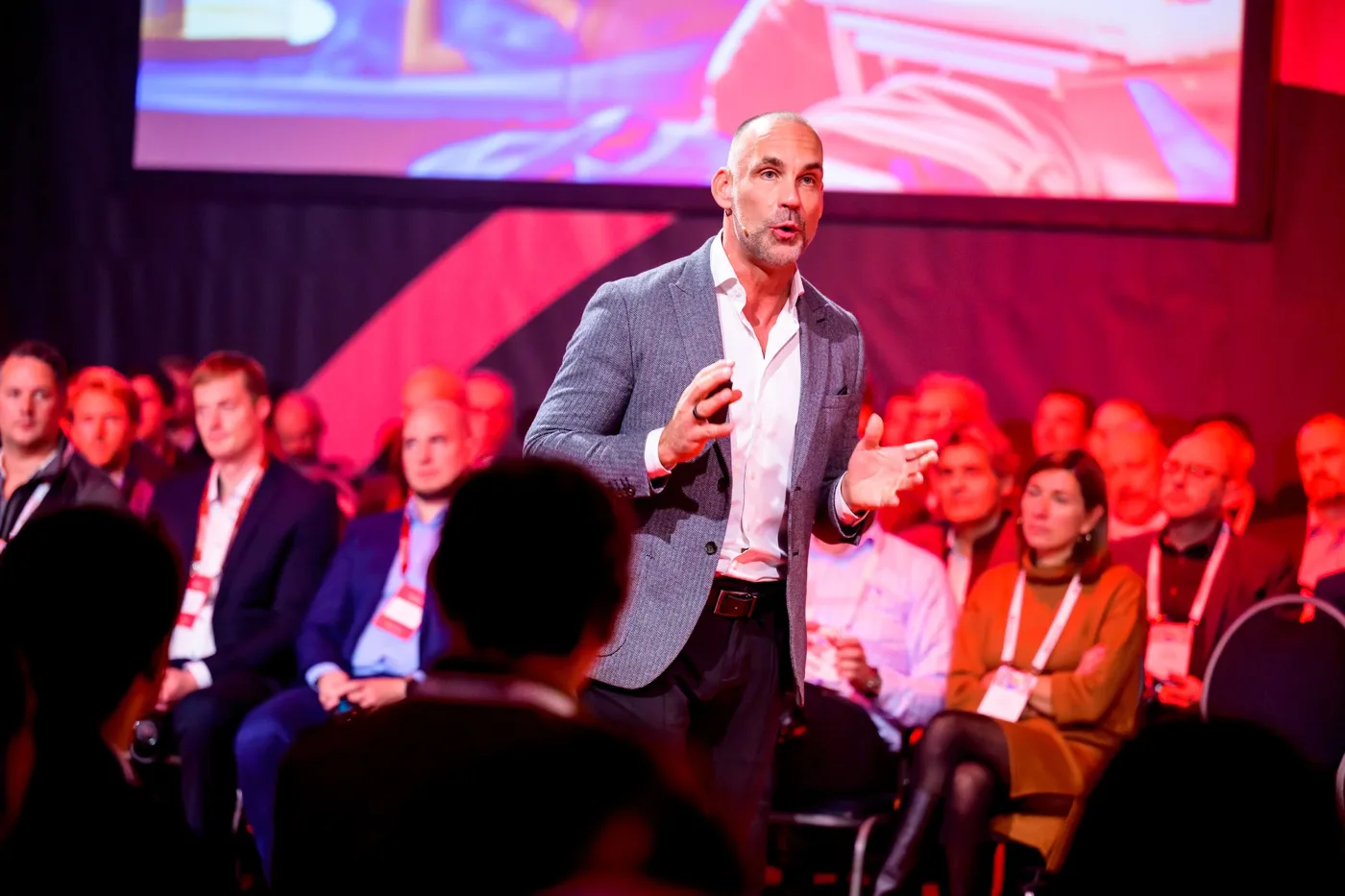
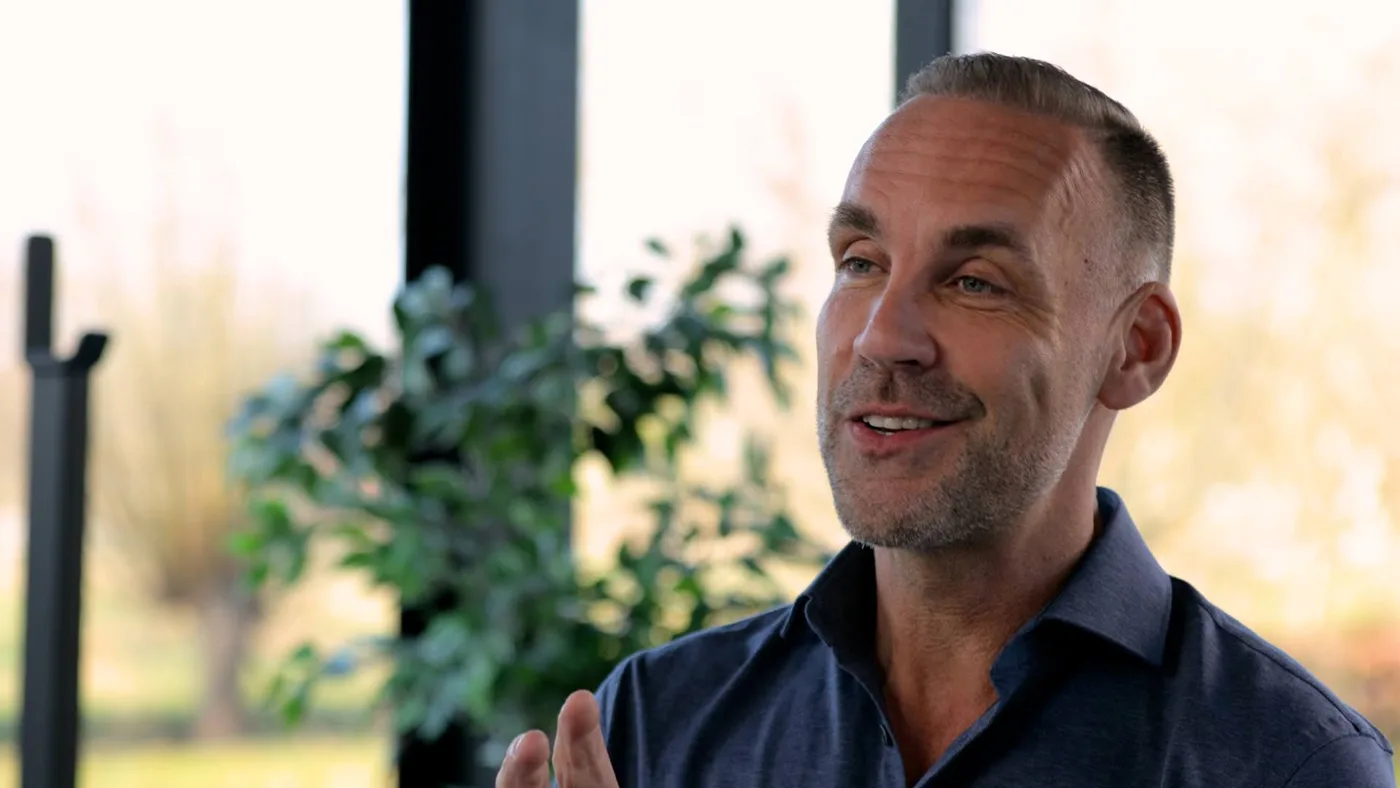
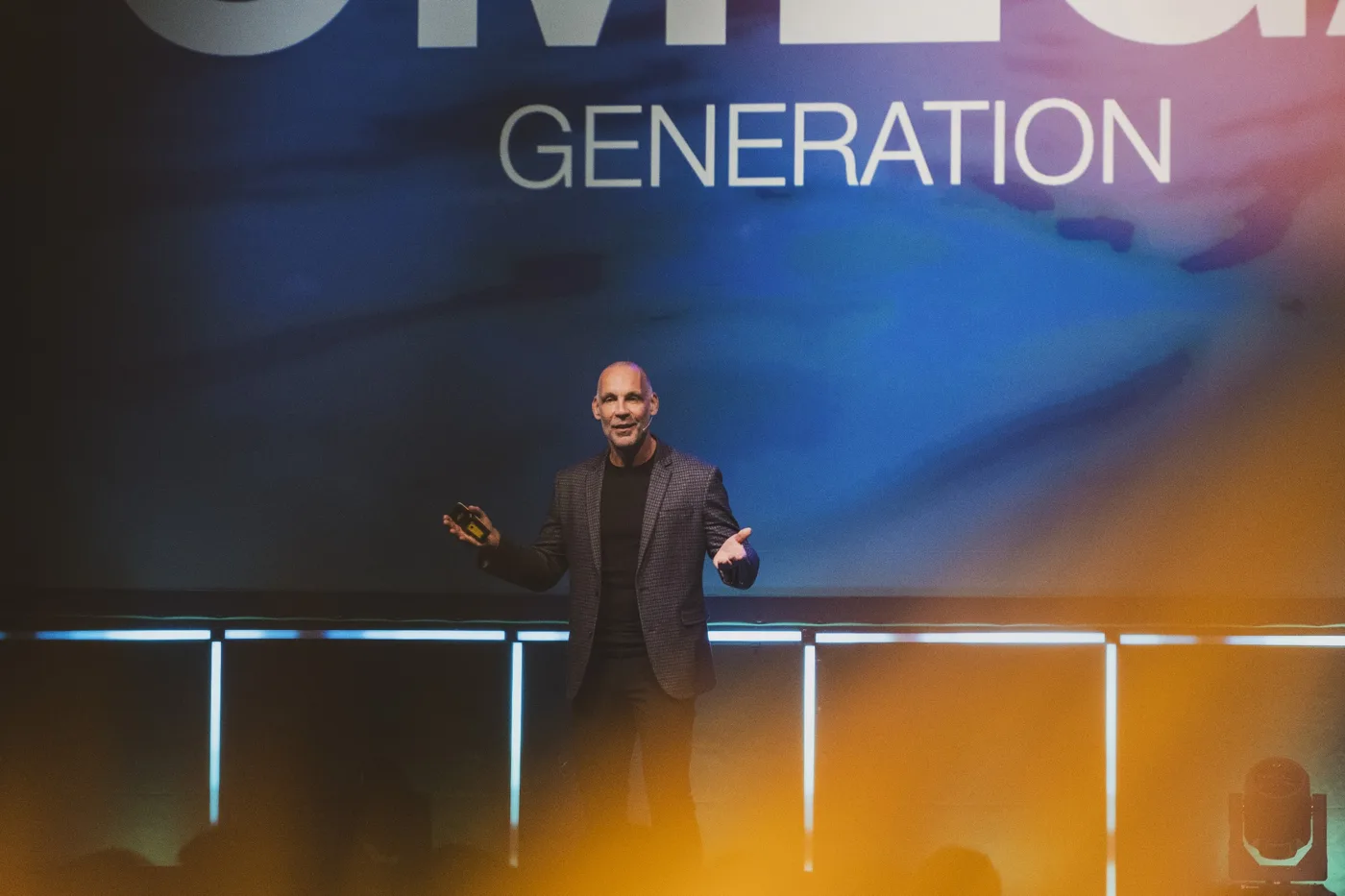
A packed conference hall, a televised panel discussion, a police summit in Dubai.


A selection of over 400 clients















What clients say

“Richard succeeded excellently in waking up our leaders and setting them on the path to the future: after the lecture, discussions took place across various parts of the organisation about the topics covered, and initiatives have been set in motion.”Read the full review →

“Great keynote that really opened our eyes. Sparkling and energetic, from beginning to end. Thanks Richard, for showing us this different view of the fitness market and its future.”Read the full review →

“Enthusiastic speaker, a good and versatile story. Everyone was ‘wowed’ by the lecture.”Read the full review →

“Richard delivered an excellent presentation for the key clients we invited to Innovation Runway 2026. Engaging, interesting content, and thought-provoking statements made his presentation perfectly suited for our top relations.”Read the full review →

“A dazzling journey through new technology. The enthusiasm and energy during his presentation, combined with the visuals, provided a successful kick-off to our event.”Read the full review →
How a booking works
Your request
Use the form, or get in touch by phone, email or WhatsApp. A few lines are enough to get started.
We get in touch
We'd like to hear what your event looks like, who'll be in the audience and which themes interest you.
A written proposal
Covering the topic, format (on location or online), length (30, 45, 60 minutes or longer) and fee, so you can talk it over with your colleagues.
Getting to know Richard
Next, we'll find a time for the two of you to talk and brainstorm the keynote, the topics and the format. There's no charge for this.
Frequently asked questions
Who is this keynote for?
Supermarkets, fashion chains, department stores, DIY chains, online shops, franchise organisations, brands that sell through retail, trade associations and retail conferences. The audience often mixes the board, buying, marketing, e-commerce, operations and store managers, and the keynote is made for exactly that mix. It also works for events for staff, customers and business partners.
What will the audience take away?
An up-to-date picture of what AI already does in buying, pricing and the shop, physical and online, and what is coming in the next five to fifteen years, from the AI agent that shops for the customer to the shop that runs itself. What that means for roles, teams, leadership and culture. And a clear view of the risks, so the conversation afterwards is about choices rather than hype.
Does the keynote also cover the retail organisation itself?
Yes, and that is often the main focus: what the store manager does when the system proposes the order, how store teams work with agents and robots, and what that asks of leaders who have to reinvent the store network. Roles, teams of people and AI, leadership, culture and training each have their own part of the keynote.
Does the keynote also cover the risks of AI in retail?
Yes, always. Return fraud with fabricated photos, fake online shops, hijacked customer accounts, an AI assistant that can be manipulated, a chatbot that promises a discount that does not exist, and the question of who is responsible when an assistant gets it wrong: that other side has its own place in every retail keynote.
What does the AI shopper mean for our physical or online shop?
That a growing share of your customers no longer search themselves, but send an agent that mostly reads product data, stock, price and delivery time. The keynote shows what is already happening and what shopping looks like when the customer's agent negotiates with the retailer's agent.
Is the keynote tailored to our organisation?
Yes. Beforehand there is an introductory call about the audience, the purpose of the event and what is happening in your organisation. A room full of supermarket managers gets different examples from a gathering of fashion brands or a leadership day at an online retailer.
How long is the keynote, and can it be in English or online?
30, 45 or 60 minutes, and longer if you wish, with time for questions from the audience, in Dutch or English, in person or online. For more than a keynote, there are masterclasses, boardroom sessions for executives, board members and managers, and workshops for all employees.
How much does a keynote on AI in retail cost?
Fees for international keynotes are on request. Ask for a proposal and you will hear from us within an hour on working days.
Interested in a keynote for your retail event?
Tell us in a few sentences about your event and who will be in the audience, and let us know the date.
Prefer to speak to us directly? Call 085 303 0792 · email talks@vanhooijdonk.com · send a WhatsApp message