 Richard van Hooijdonk

AI & the future of policing and security
AI can keep combing old case files for new leads and give a case that has gone cold for years a second chance. Drones and robots can assess the scene together before officers arrive. Detectives, call handlers and officers decide what happens next.
Choose your sector
Every keynote is tailored to a sector. Choose yours.
 Healthcare
 Government
 Defence
 Policing and securityYou are viewing
 Smart cities
 Construction
 Mobility
 Industry 4.0
 Energy and utilities
 Logistics
 Retail
 Wholesale
 Hospitality, tourism and leisure
 Agriculture
 Financial services
 Legal
 Accountancy and advisory
 Education
 Media and entertainment
 Telecoms and connectivity
Is your sector not listed? We tailor the keynote to your audience. Tell us about your audience
AI is changing police work, from the first call to the evidence in court.
Trend watcher and futurist Richard van Hooijdonk shows how police and security organisations use AI to prevent, detect and investigate crime, and to intervene quickly, keeping society safe and stable. AI is already used for many police tasks. It searches seized phones, follows cryptocurrency through hundreds of hops and helps a drone search for a missing hiker. In the control room, AI listens in on calls. Towards 2040 and beyond, new scenarios take shape: AI agents that keep re-examining case files, drones and robots that assess the scene together, fraud signals that come together while the scammer is still on the phone. On the other side, criminals use the same technology for deepfakes, extortion messages and fake identities. Beyond the technology, other questions count: who takes which decision, how evidence holds up in court, and how an organisation that is rightly cautious can still innovate. The keynote separates what already works from the scenarios for 2040 and later, and shows where the law draws a line. Which case in your archive gets a second chance once a system never stops searching?
AI in policing and security
What AI already does today in investigations, the control room and on the street.
- 01
AI in investigations
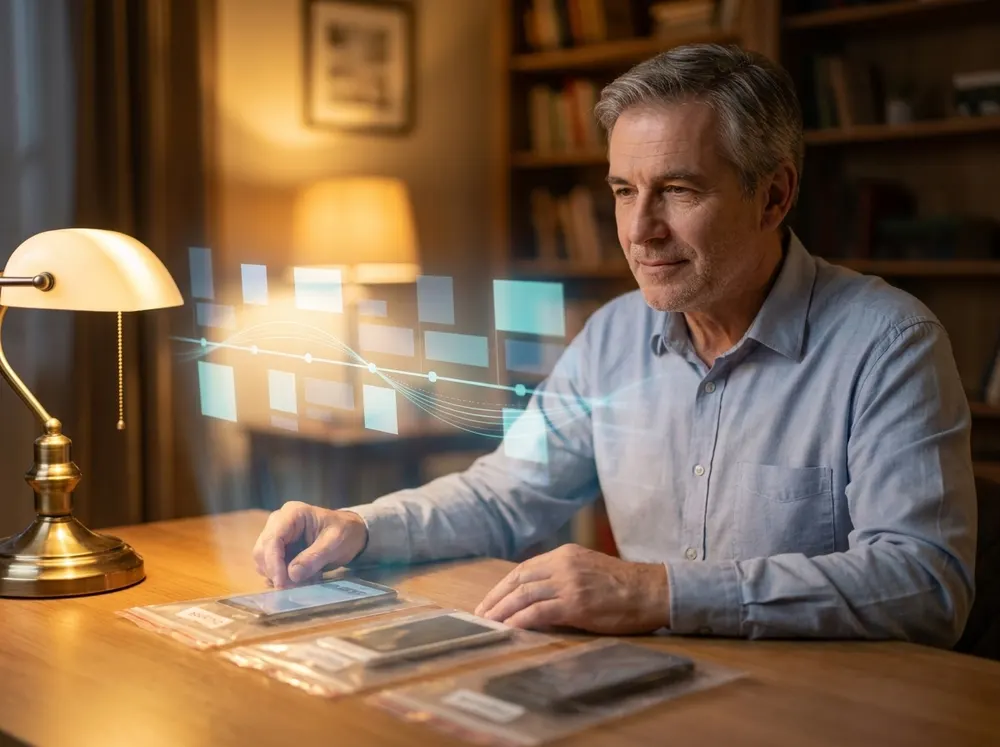
AI lays chats, numbers, images and locations side by side. Where the data is accessible, a first analysis can be ready before the interview.
A major investigation can run to terabytes: phones, chat messages, camera footage, cloud storage. What is new is that AI connects different kinds of investigative material. It links a name in a chat to a phone number, that number to camera footage at a petrol station, and that footage to a location on the night of the burglary. It recognises faces, vehicles and objects in hours of video, makes conversations searchable and ranks material by relevance. Where the data can be accessed quickly, a first analysis could soon be ready before the interview starts. The judgement stays human: which message is evidence, which detail clears a suspect, and what does the defence need to see?
- 02

Following the money
Money-laundering networks come into view as AI follows payments and crypto transactions. Next: seeing the network while the money still moves.
Organised crime runs on money, and money leaves a trail. AI sorts thousands of transactions, spots patterns such as repeated small deposits and rapid onward transfers, and maps networks of accounts that keep dealing with one another. Many cryptocurrencies record transactions in a public ledger, and analysis software reconstructs long chains of transfers within it. With instant payments, money moves faster and faster. Banks already flag suspicious patterns as they happen. The next step is for signals from several banks to reveal a laundering network together while the money is still moving, within the legal limits on data sharing. A mapped network is not yet evidence: the detective establishes who knew what was going on.
- 03
AI agents in the control room
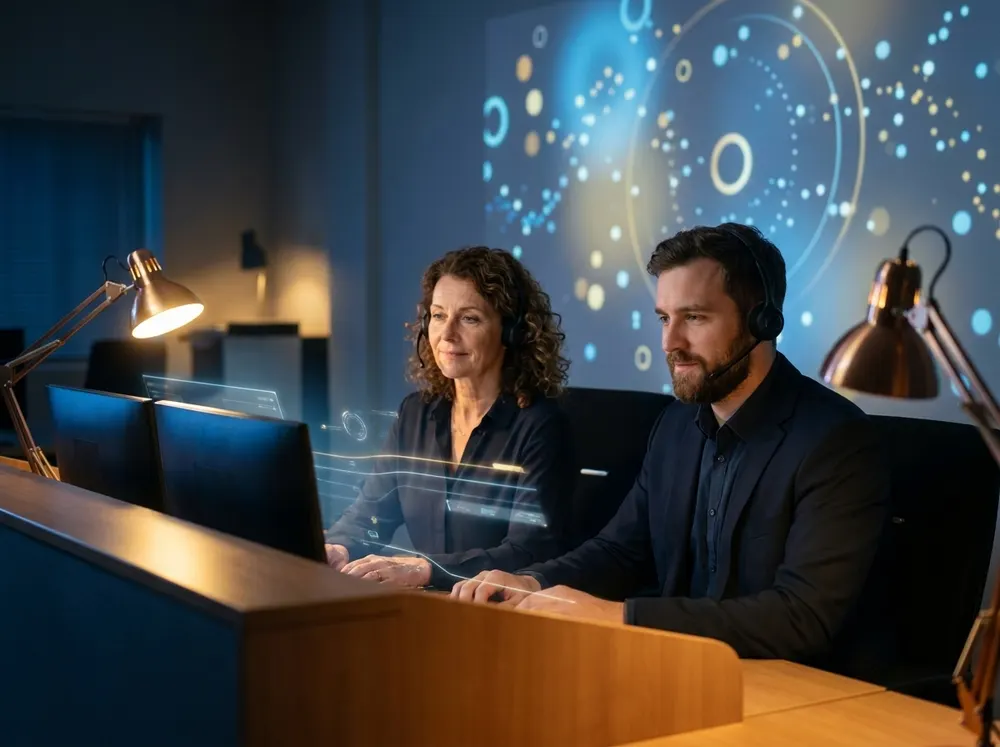
AI already handles non-emergency calls. In time, footage, sensors and earlier reports will come together while the call handler is still on the line.
An AI agent is a system that carries out a series of steps on its own to finish a task. In the control room, AI now transcribes, translates and summarises in the background. What is new is handling calls independently: some control rooms let AI deal with non-emergency calls. One control room saw the number of administrative calls reaching staff fall by about a third, and stay there. The next step is a full picture of the situation during the call. Available camera footage, sensor data and earlier reports at the same address then come together, so the call handler knows more while the caller is still talking. The call handler decides which help is sent.
- 04
 In pilots
Real or fake: spotting deepfakes
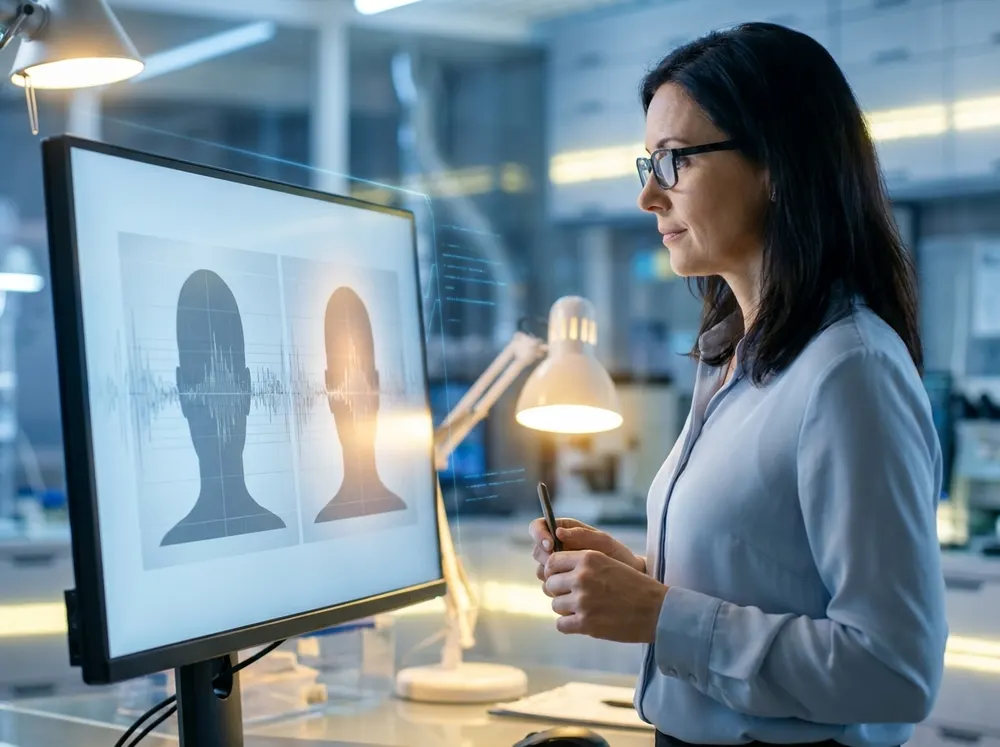
Forensic AI helps establish whether an image or voice has been manipulated, so detectives and judges can weigh evidence better.
Now that anyone can make a convincing deepfake with AI, a judge wants to know how a video or audio clip came about. Investigators combine detection software, which looks for traces of editing in a face or voice, with analysis of the file data. Alongside exposing fakes, a second pillar is growing: checking provenance. Some cameras and phones already add a digital seal of origin, with signed information about the recording and any edits. That helps assess where a file came from, but does not prove that what was filmed really happened that way. As more devices add such a seal, provenance analysis could play a far larger part in digital evidence in court by around 2040.
- 05

Drones and robots in danger zones
Drones search for missing people and map a crime scene. Robots go first when there are explosives or a dangerous location.
Some places are too dangerous or too large for people to explore first. Drones and robots go ahead instead. A drone with a thermal camera searches a forest at night for a missing hiker, and AI picks out a human shape in the footage. At a crime scene or after a crash, a drone produces a three-dimensional map in a short time. In some places a drone takes off first when a call comes in, giving the control room live images before a patrol car arrives; a first controlled trial showed shorter response times. For a suspicious package, a robot goes in to take a look by remote control. The officer decides how to act on what the machine sees.
- 06
 In pilots
Organised crime in plain sight
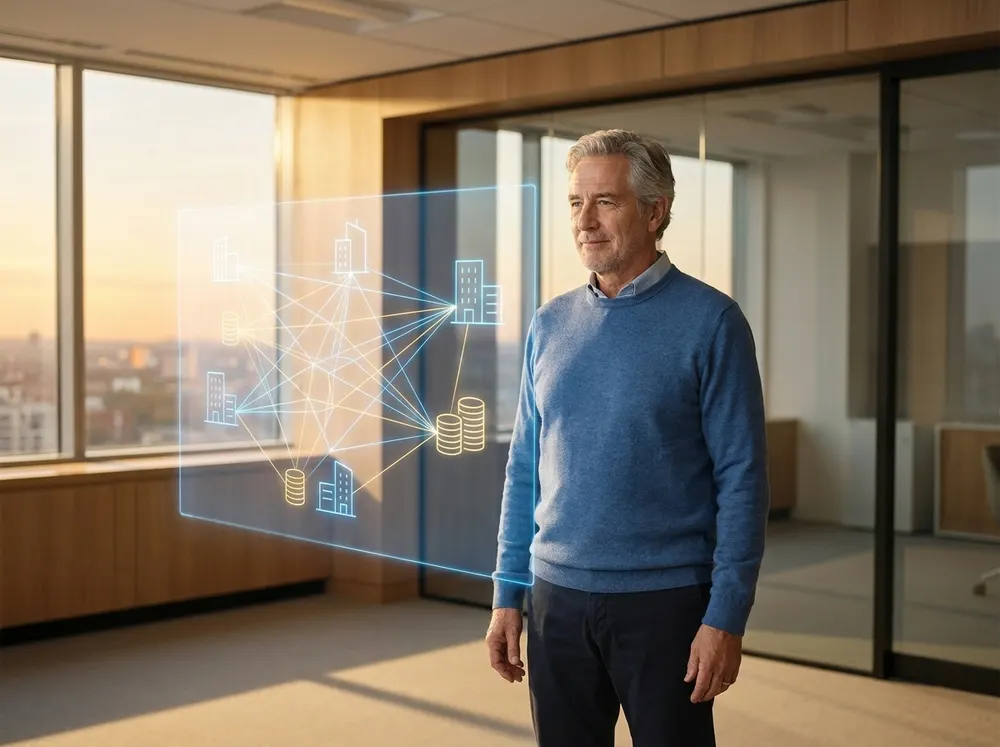
AI can compare lawfully shared data and point to links between the addresses, directors and money flows of hidden networks.
Some organised crime blends into ordinary society: drug money disappearing into property, a restaurant or a car dealership, or a business owner put under pressure. Such networks are rarely visible from inside one organisation. The local authority sees a licence, the tax authority an unusual return, the bank an odd flow of money. Only together do they form a picture. AI can combine those signals and show where they overlap: the same address, the same directors, the same money flows. Joint data processing is subject to specific legal conditions. A pattern is a lead, not a suspicion: an analyst assesses the sources and what the link means before anything else happens.
The future of policing and security
Where investigation and enforcement will stand in five to fifteen years, with AI as the engine.
- 07
 Future scenario
The detective agent
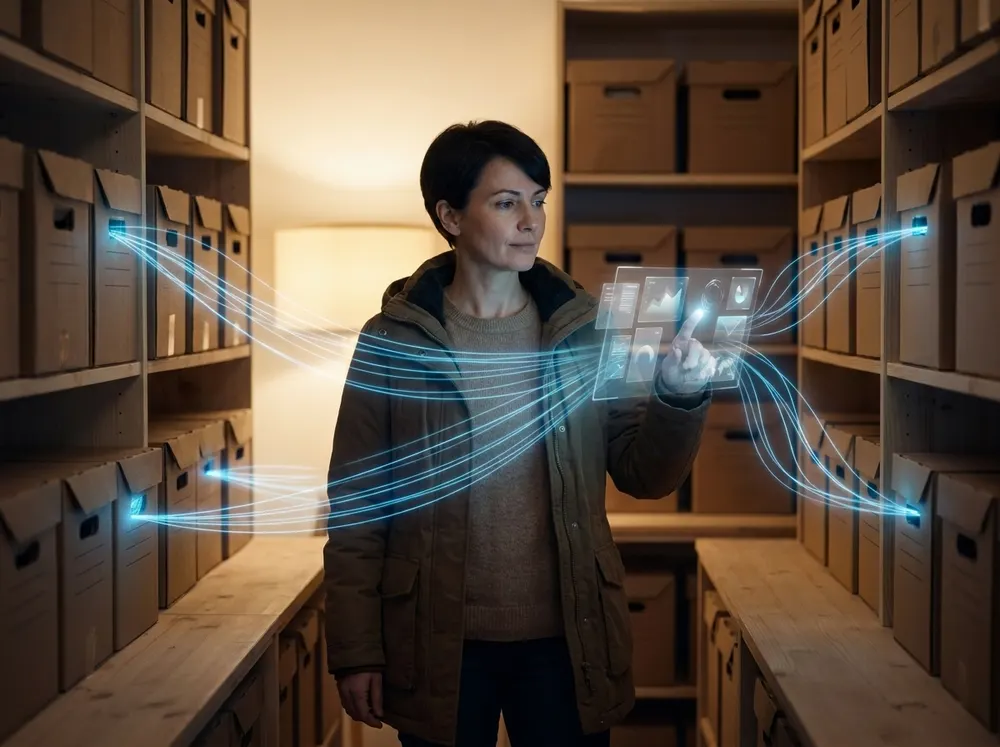
An AI agent keeps comparing case files with new leads. A case that has gone cold for years can get fresh attention.
An AI agent is AI that takes a series of steps on its own to reach a goal: searching, comparing, testing a hypothesis, searching again. Over the next ten years, such an agent could become a permanent member of the investigation team. It reads every new document as it arrives, sets it against the statements and flags where an alibi clashes with phone data or camera footage. In one evaluation, an AI system processed the material from 27 complex cases in about 30 hours, against an estimated 81 years for manual processing. The next step is an archive that never sleeps. Every new lead and every new technique is automatically checked against old case files. A case that went cold years ago gets a new chance.
- 08
 Future scenario
Drones and robots as a team
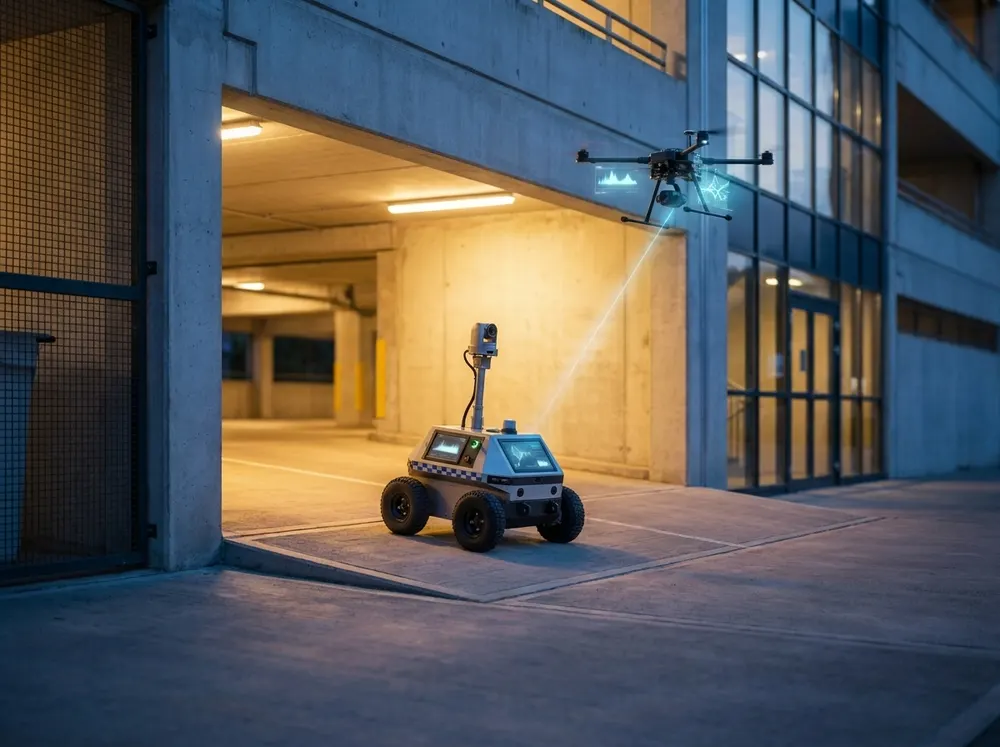
Drones and ground robots assess a scene together and merge what they see into one picture for the control room and officers on their way.
Drones that fly from a rooftop station to be first at the scene of a call are now being deployed and tested by the first police forces. The next step is machines working together. In a scenario for 2040, drones and ground robots share out the reconnaissance among themselves: one drone surveys the scene from above, a robot enters a smoke-filled building or a car park, a second drone follows a car driving away. AI merges their observations into one picture of the situation for the control room and for the officers on their way. In a report on unmanned systems, Europol explored how such robots and drones could change police work in the coming years. Officers then arrive at a situation that has already been mapped.
- 09
 Future scenario
Fraud networks, live
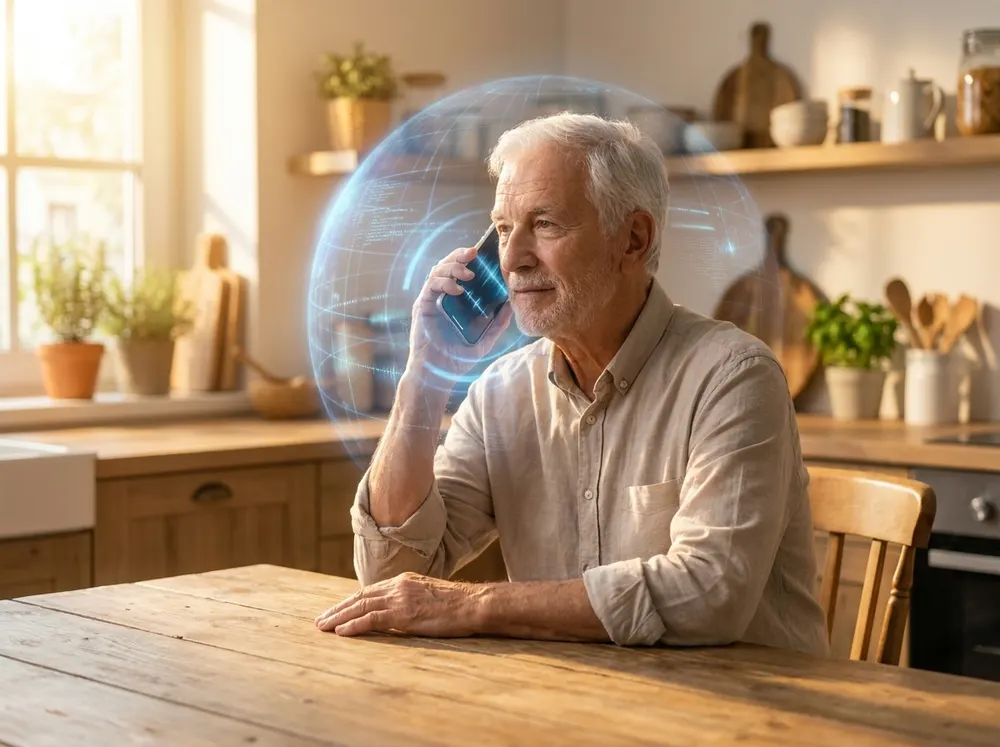
Around 2040, signals from banks, telecoms companies and the police could come together while scammers are still making calls.
A fraud pattern can be scattered across phone calls, payment attempts and police reports. AI can already warn of suspicious call patterns, and banks stop suspicious payments in real time. Using simulated payment data, researchers are testing how analysis across several financial institutions reveals patterns no single bank can see. In a scenario for 2040, lawfully shared signals from telecoms companies and the police are added: numbers, payment attempts, known fraud infrastructure. Separate calls in different regions then turn out to be the work of the same network. Investigators see how ongoing fraud cases connect while new victims are still being targeted.
- 10
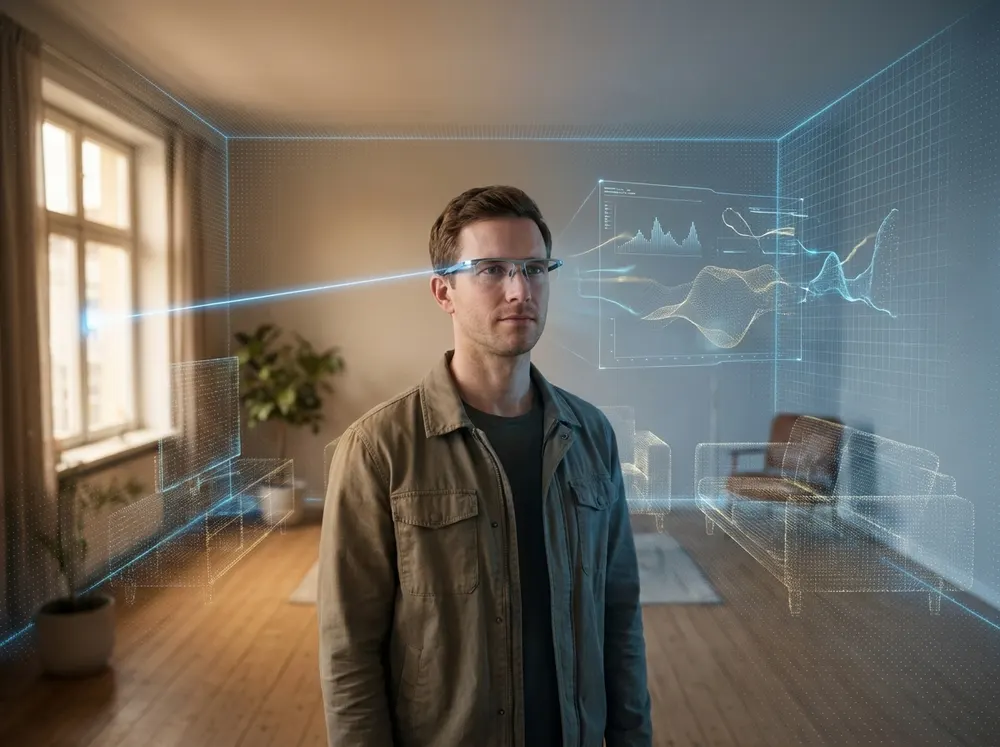 Future scenario
The crime scene as a digital twin
A 3D model of the crime scene in which AI tests many possible sequences of events. Later, judges walk through it wearing lightweight glasses.
A digital twin is a digital model of a place, built with 3D scanners, cameras and drones and linked to the evidence and statements. Forensic investigators already work with 3D reconstructions and virtual reality. In a scenario for 2040, AI uses such a model to test many possible sequences of events and shows which ones fit the measured data. Could the witness on that balcony have seen the offender in that evening's light? What path did the bullet take? The assumptions behind every answer stay visible. Months later, a detective can return to the scene as it was, and in court the judge, prosecutor and defence lawyer walk through the same model wearing lightweight glasses. Evidence becomes a space everyone can examine for themselves.
- 11
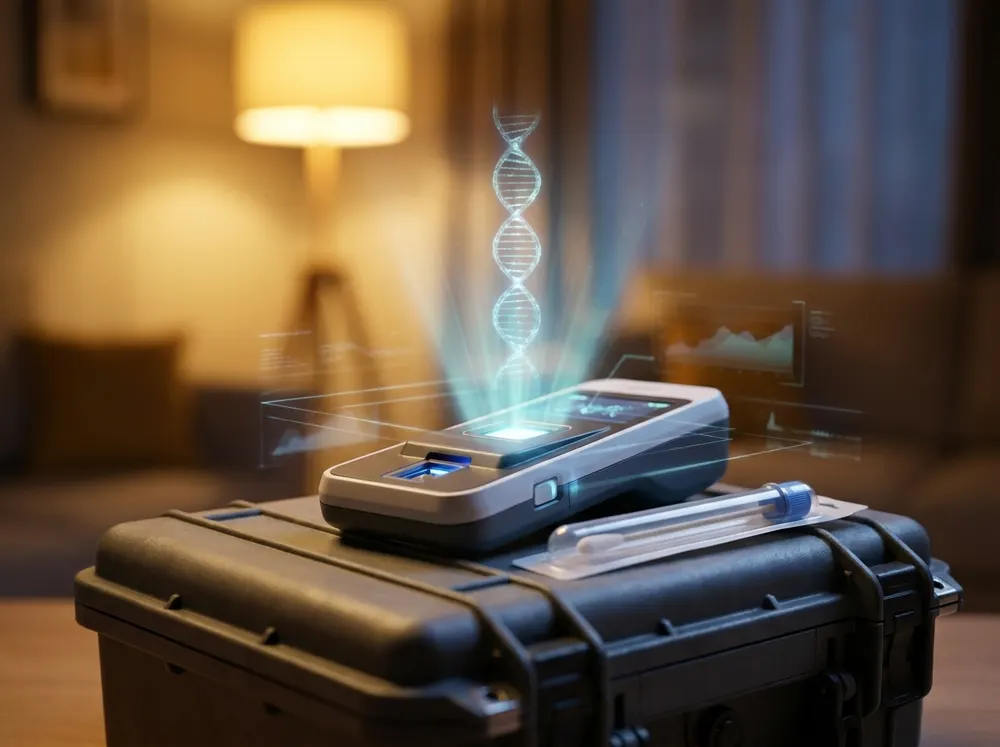 Future scenario
DNA at the scene
Around 2040, portable DNA analysis makes even small or degraded traces usable fast. An unknown trace then points somewhere much sooner.
Rapid DNA systems produce a profile in a few hours without a laboratory, from a cheek swab of an arrested suspect and from certain traces at a crime scene. In a scenario for 2040, such a system is portable and sensitive enough for small or degraded traces, so investigators know at the scene whether a trace belongs to a known person. Other techniques are advancing too. DNA phenotyping gives clues to traits such as eye and hair colour and biogeographical ancestry. Genealogical research searches family trees for relatives of an unknown offender and has already solved cases that were decades old. Which techniques are permitted varies widely from country to country. A trace that has sat in the freezer for years could then point in a direction much sooner.
- 12
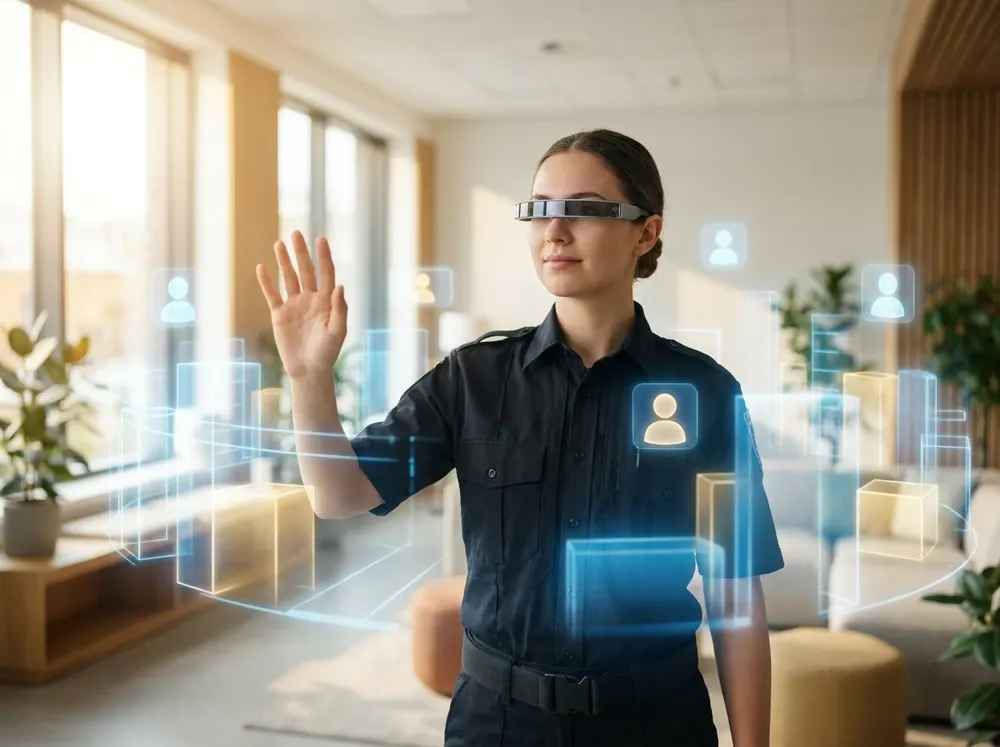 Future scenario
Policing virtual worlds
Where people gather, crime follows, in virtual worlds too. Investigators could soon trace evidence across several virtual environments.
Virtual worlds are online environments where people meet as avatars, on a screen or wearing a headset. Where people gather, crime follows: fraud, theft of digital possessions, intimidation, grooming. Interpol has already built its own virtual environment for training and written a report on these new forms of crime. In a scenario for 2040, the police are present there themselves, with officers as avatars and a place to report a crime. Investigators examine events that span several virtual worlds, and AI links interactions, payments and account data into a single timeline. A report about an avatar then yields leads to the person behind it. The neighbourhood officer gains a beat that appears on no map.
- 13
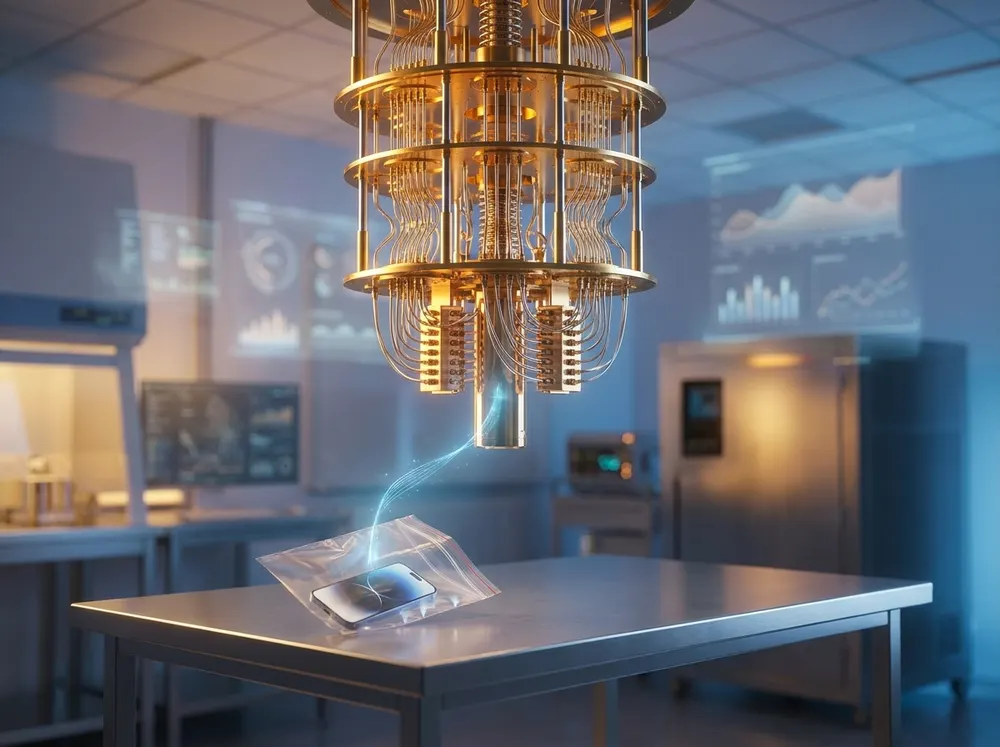 Future scenario
After the quantum leap
Quantum computers may one day break certain encryption. Communication that is unreadable now could then give old cases new leads.
A quantum computer calculates differently from an ordinary computer and can solve certain mathematical problems much faster. Widely used forms of encryption rely on such problems, especially those that protect messages and connections. A sufficiently large quantum computer could break them; many experts expect that sometime in the 2030s, although the date is uncertain. For investigators, that opens a new scenario. Intercepted or seized communication that is unreadable today could then become readable, depending on the protection used. Cases that stalled on encryption get a second chance. An archive full of unreadable material becomes a store of new leads.
AI shows the police connections that are still out of sight today, and can take public safety further than anyone can now foresee. What that opportunity delivers depends on the craft, judgement and culture within the police.
Richard van Hooijdonk
The police organisation of the future
What AI asks of roles, teams, leadership and culture in the police.
- 14
The AI-first organisation
In the police, AI takes over repetitive and predictive work, from rosters to case-file analysis. Officers and detectives focus on people.
AI-first means that AI and new technology do the work people do not need to do, including repetitive and predictive work. Officers and detectives put their effort where their authority, judgement and contact with people make the difference. AI carries out recurring tasks and compares large volumes of data. In one possible picture of 2040, rosters, forecasts and first analyses run continuously in the background. Ahead of a busy day, AI compares the options for deployment, leaders choose and officers do the work on the street. Whether that really frees up time depends on how the work around it is organised: AI simply bolted onto an old process often delivers less than expected.
- 15
New roles in investigation
In time, a detective divides the work among a team of AI agents, and specialisms that are still small today will grow.
Digital detectives and drone operators are already a normal part of the police. What is changing often has no job title yet. Guiding AI agents becomes a responsibility in its own right: a detective divides lines of inquiry across different systems, compares their results and works out why they contradict each other. Specialisms that are small today are growing as well. Synthetic media analysts establish whether a recording is genuine or made by AI. Virtual world investigators follow crime in environments where offenders operate as avatars. Lawyers assess whether the output of an AI system will stand up in court. Not every task becomes a new profession, but a career in investigation increasingly starts in the data.
- 16
The investigation team with AI
AI searches and organises the case file. The detective directs the investigation: sharpening the questions, talking to people and weighing statements.
In an investigation team that works with AI, it is mainly the human work that changes. AI helps search large volumes of messages, images and statements, builds timelines and points out contradictions between witnesses. The detective becomes more of a director than a searcher, sharpening the lines of inquiry, choosing which scenarios to pursue and questioning what the system produces, including anything that might clear a suspect. Talking to a witness, interviewing a suspect and weighing a statement remain human work, and grow in importance. That calls for different skills: reading critically what a system delivers, and knowing when a connection is too neat to be true. With more connections in view, an experienced detective can ask sharper follow-up questions and open new lines of inquiry.
- 17
Leading in the public eye
Police leaders take the initiative on AI and new technology, and inspire their people to build the police of the future together.
Police leaders face close public scrutiny, which is exactly why their example counts. A shared picture of the future gives direction: what will police work look like in ten years, and what does that mean for the officer starting today? Leaders take the initiative here. They start using AI and new technology themselves, show what it delivers and explain why. That is how they inspire officers and detectives to help build it. Their example makes the change tangible: people see where the leadership wants to go and how they can contribute themselves.
- 18
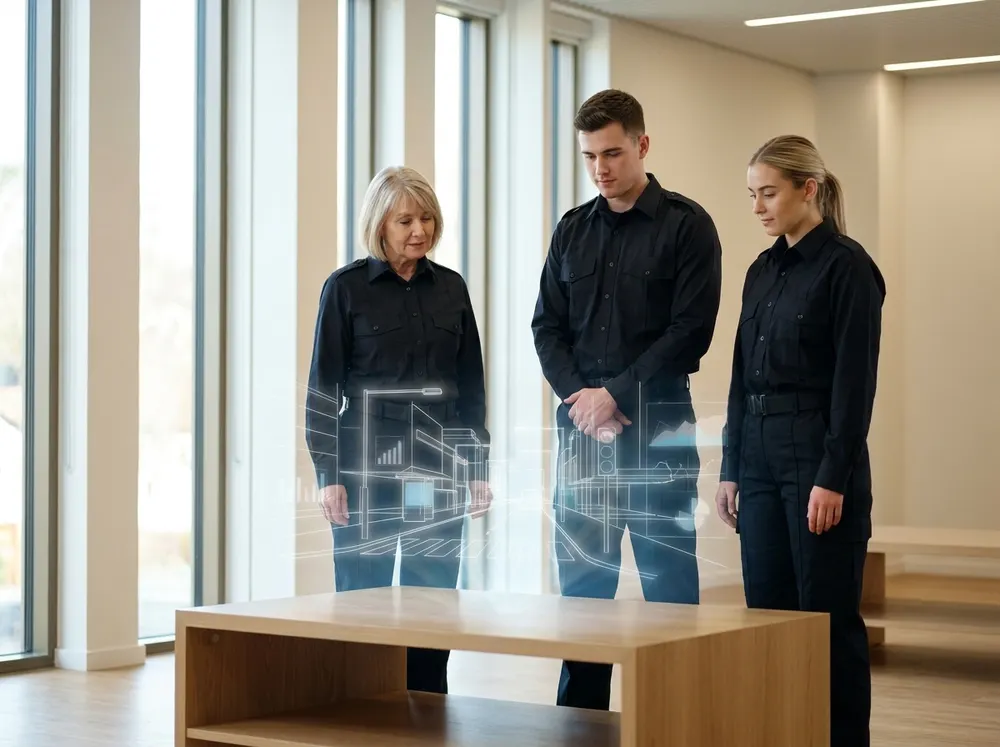
The future academy
Today's case is tomorrow's lesson. In a future academy, the police learn to work with AI and new technology, without waiting for the education system.
A future academy is where an organisation trains its own employees and leaders of the future. The police do not wait for education to catch up: the teaching material comes from their own work. A closed case, an operation that went differently than planned or an interview that stalled becomes a case study in which officers, detectives and new recruits practise with AI and new technology. They learn what the technology can do, where it falls short and how to use it in their own work. Leaders decide together what they leave to AI. That way, the organisation's knowledge grows with the technology.
- 19

Growing with an ecosystem
Start-ups, scientists, partners and police teams at home and abroad form one ecosystem. Together they see more and innovate faster.
An ecosystem means that police teams at home and abroad, start-ups, scientists and partners form a single whole, with shared analyses and jointly developed technology. Problems ignore the borders between organisations and countries, and so do solutions. Partners can test each other's applications and adapt them to their own data and ways of working. With federated learning, partners already train AI models together while the data stays with each organisation. As more forces and countries work together like this, an innovation reaches the street sooner.
The other side responsibility and risk
Data, reliability and crime: the flip side of AI in police work.
- 20
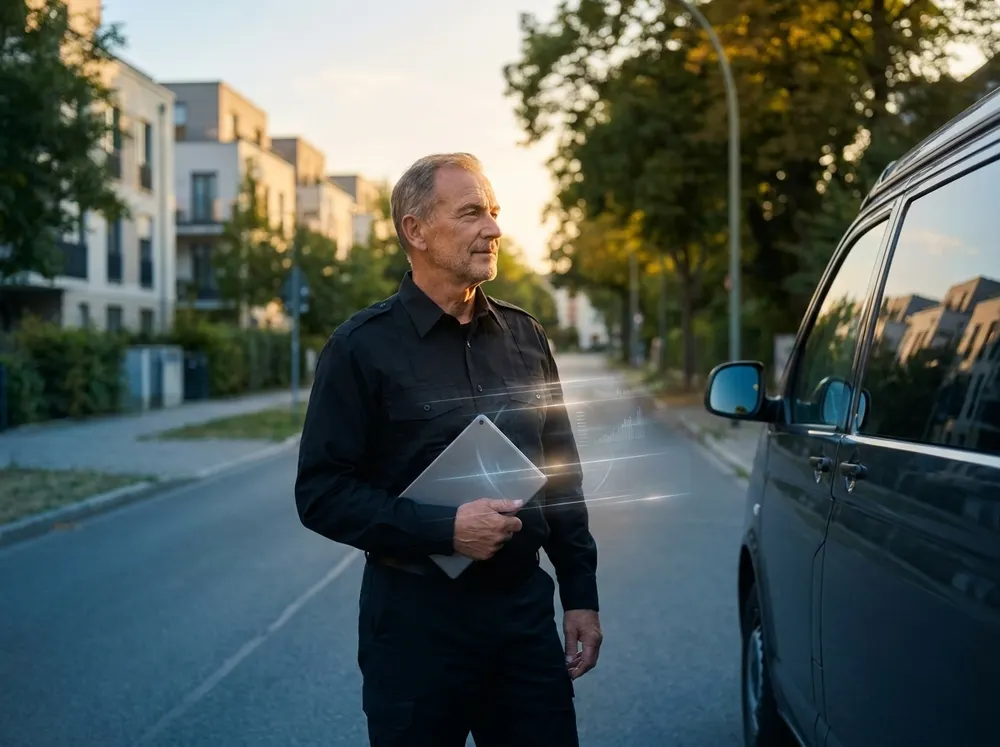
Data as the foundation
AI only works when data from every part of the organisation is available, reliable and connected. That is the foundation of an AI-first police force.
An AI-first police force uses AI to analyse, plan and predict across teams and units. That only works when the data is available, reliable and connected: calls, records, camera footage, rosters and case files. Often they sit in separate systems, with their own codes and spellings, and one team does not know what another records. If one team logs a call differently from another, AI may wrongly count it as two incidents, or miss a connection altogether. Linked, consistent and up-to-date data is therefore the foundation on which AI can work across the whole organisation. In the police, it is also strictly laid down who may use which data, and for what.
- 21
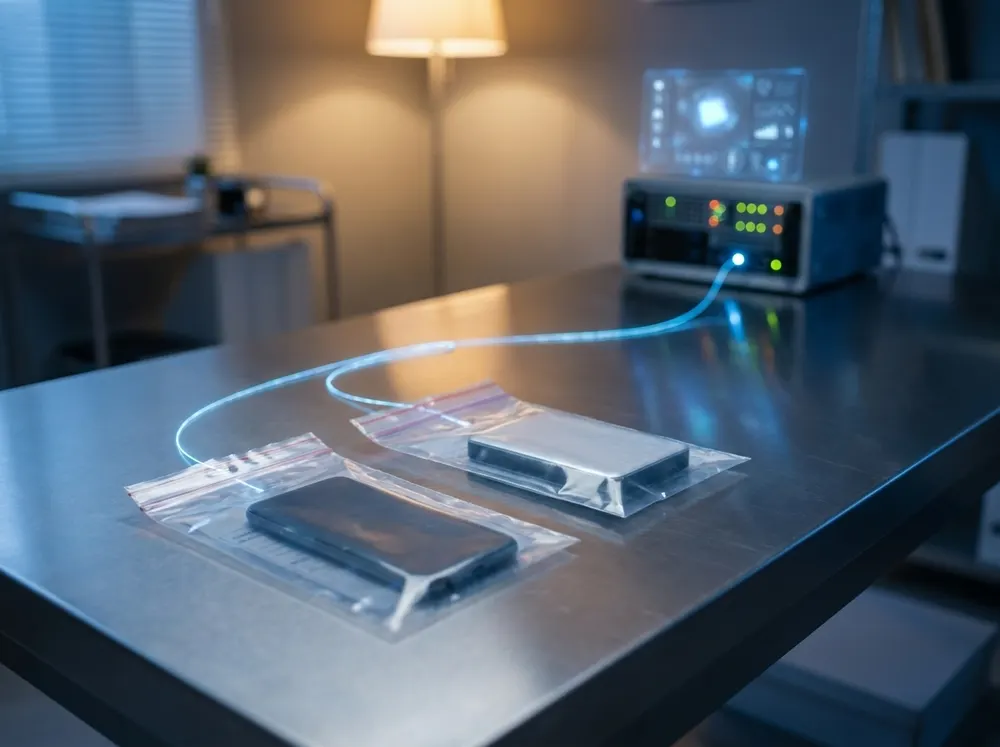
Evidence that stands up
No data, no AI, and in investigations that data is often evidence. A defence lawyer wants to know what a system did with a recording.
No data, no AI, and in investigations that data is often evidence. AI adds a link between the source material and the conclusion: a system matches a voice to a suspect, or a message to a location. In court, that raises a new question: which source passages support the match, and what exactly did the system do? If a defence lawyer cannot check that, the evidence may not stand up in court. Errors in names, addresses or transcripts can also produce false connections. As deepfakes improve, provenance data and recorded edits carry more weight alongside other tests of authenticity. The more AI contributes to a case, the more often the courtroom debates how a result came about.
- 22
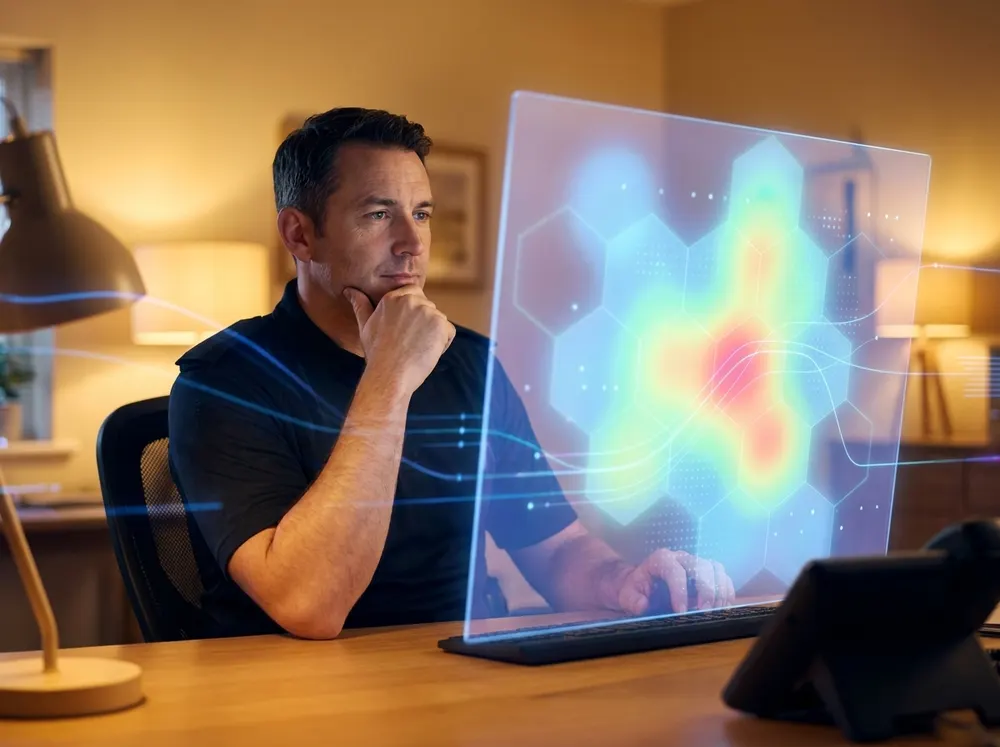
Limits to prediction
Predictive policing can repeat old biases. The EU AI Act draws lines, including on facial recognition.
A system that learns from old police data also learns the choices of the past. If one neighbourhood has always been policed more heavily, it has more records, and the model points to that neighbourhood again. A bias can reinforce itself this way. A high predicted risk may partly reflect where the police looked before. The EU AI Act prohibits systems that predict whether someone will commit a crime based on a profile alone. Real-time remote biometric identification by the police in publicly accessible spaces is in principle prohibited, with narrow exceptions such as searching for an abducted child, and then generally requires prior authorisation. The debate is less and less about what is technically possible, and more and more about what a society will accept.
- 23
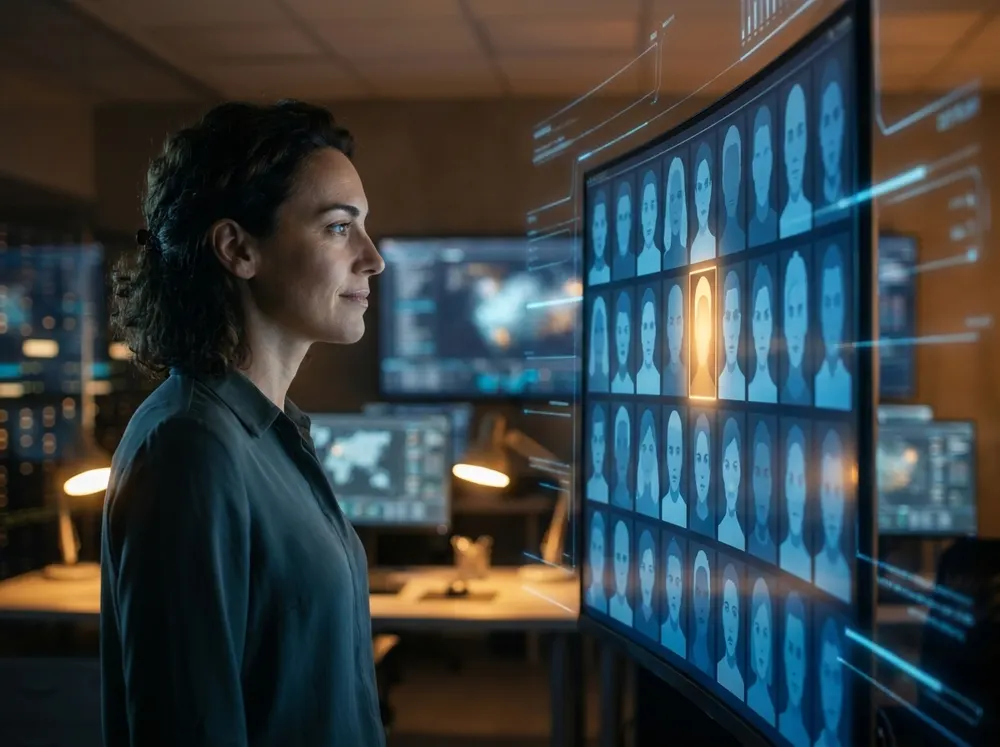
The criminal with AI
AI makes it easier for criminals to reach valuable data: through ransomware, hacking and cloned voices. Police systems are targets too.
Valuable information attracts criminals, and AI makes it easier for them to get at it. They use it to write convincing phishing messages, call with the cloned voice of a colleague or leader, and search faster for weaknesses in systems. Ransomware can lock systems and bring work to a halt. Police and justice organisations are targets themselves: their systems hold data on suspects, witnesses and ongoing investigations. Europol sees AI as an accelerator of organised crime. The same language technology that helps a detective find connections in thousands of chat messages helps a criminal tailor an attack. In the AI era, good security is part of police work itself.
About the speakerRichard van Hooijdonk
Events in EuropeKeynote speaker for corporate events in Europe
On stage
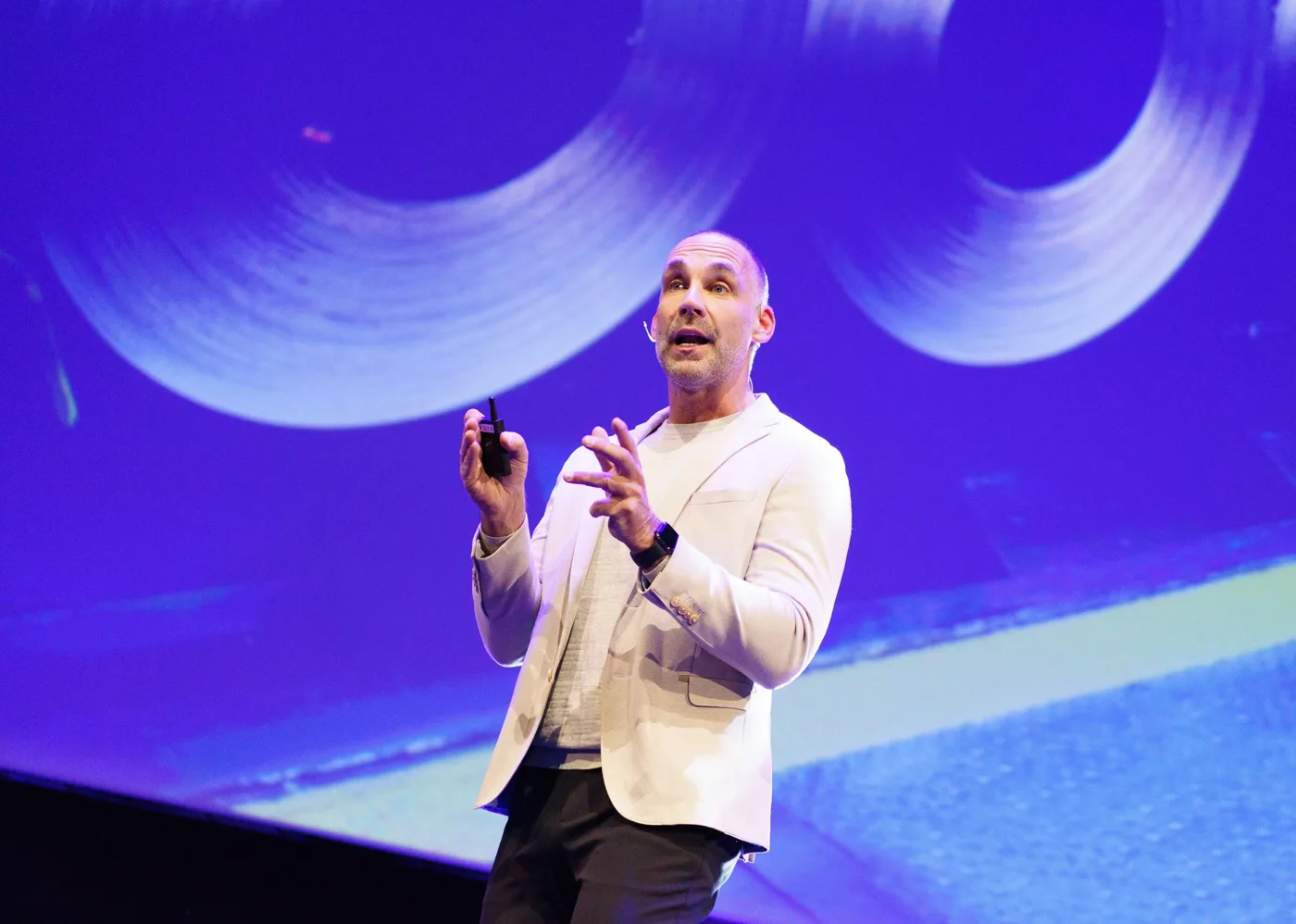
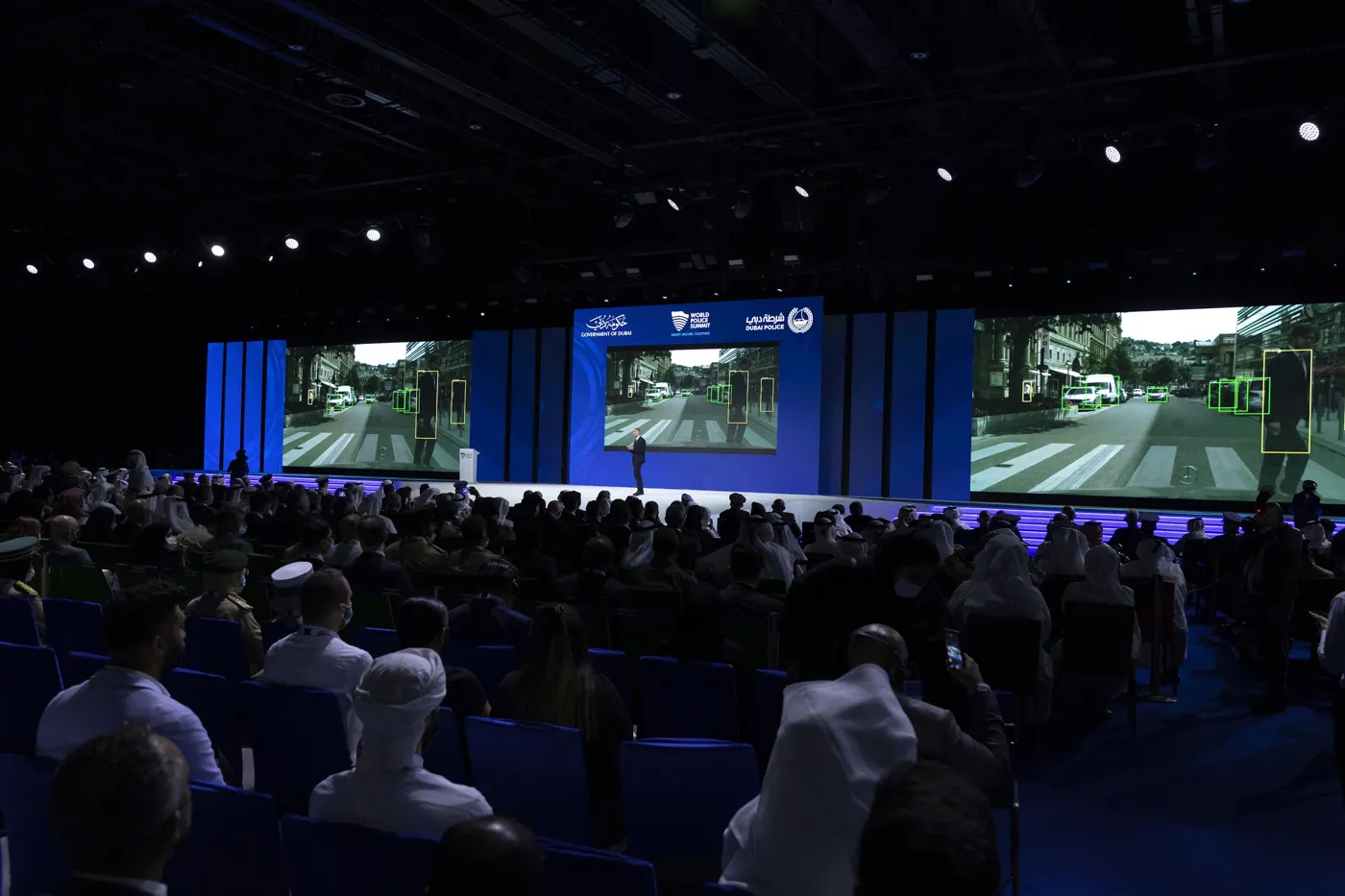
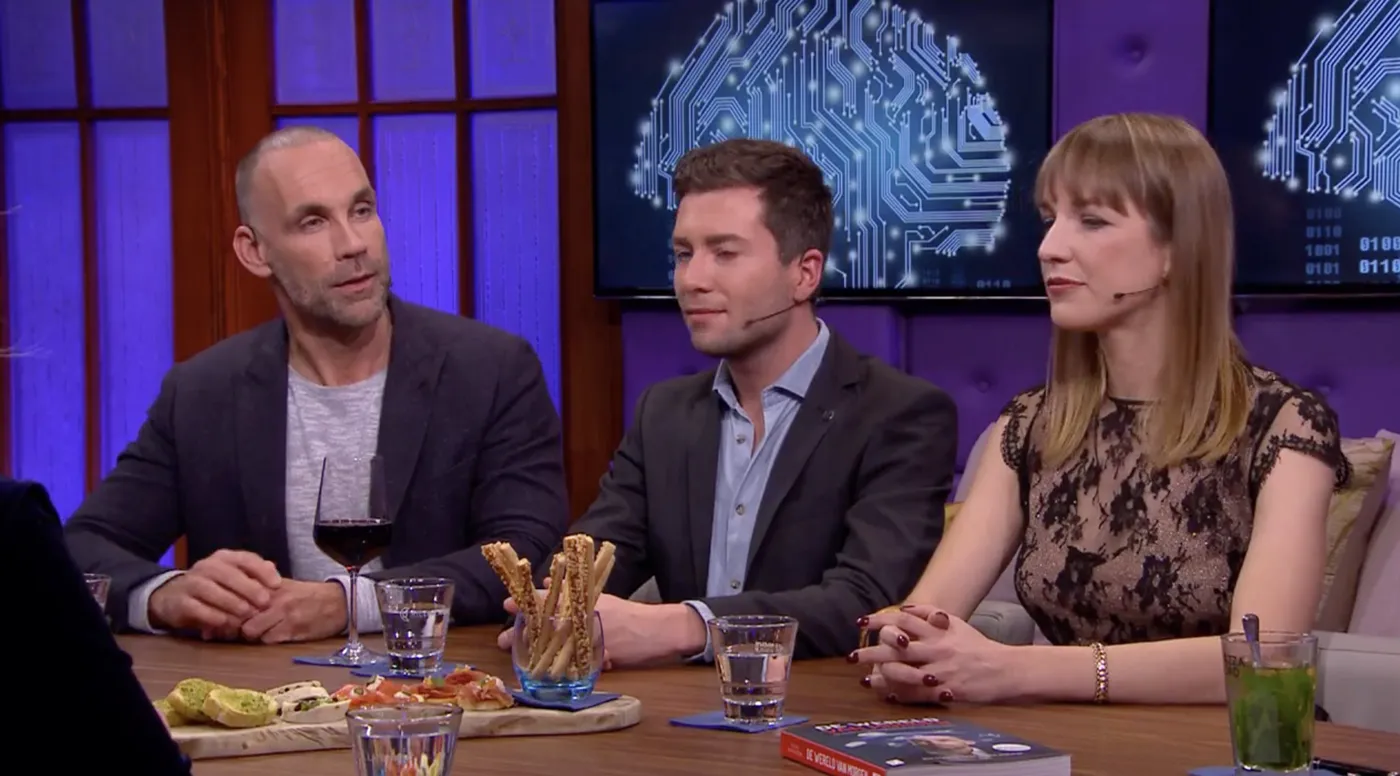
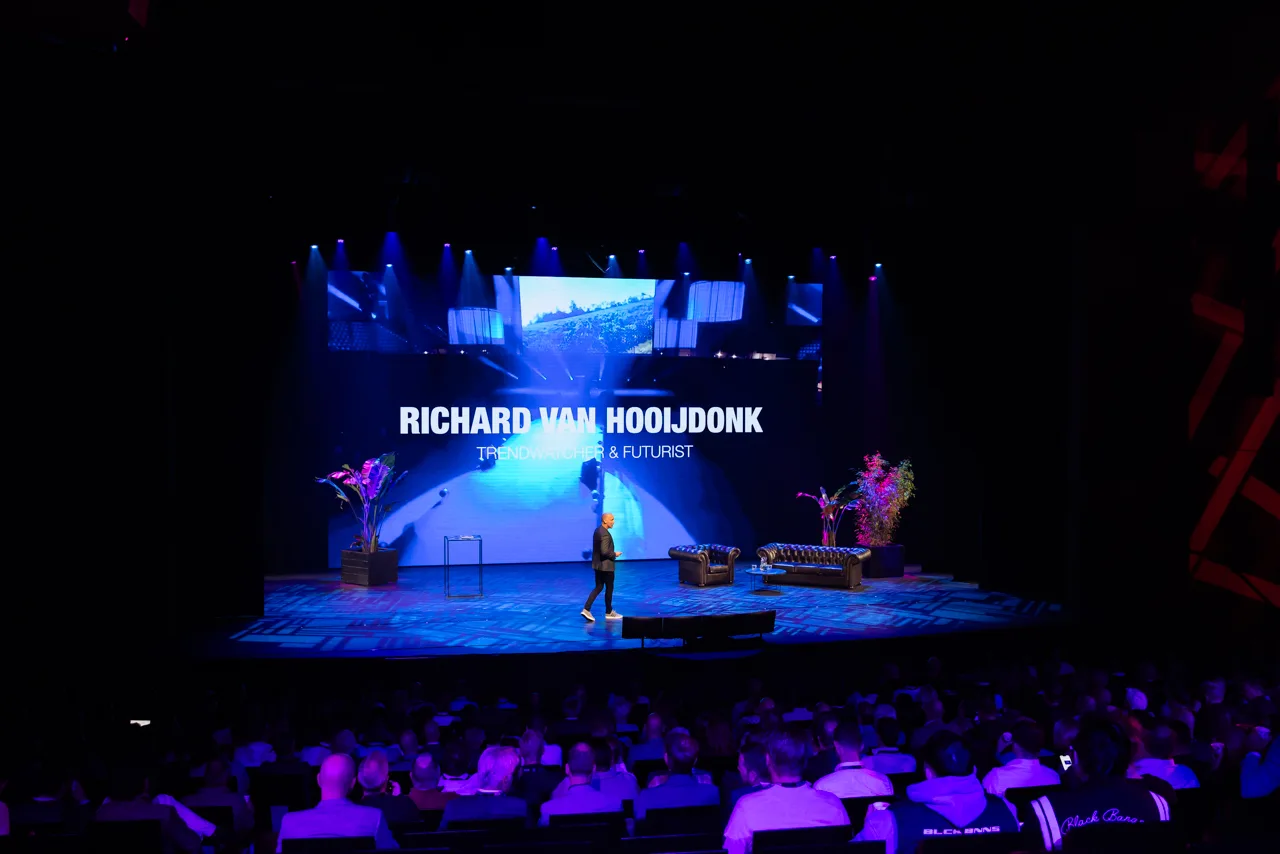
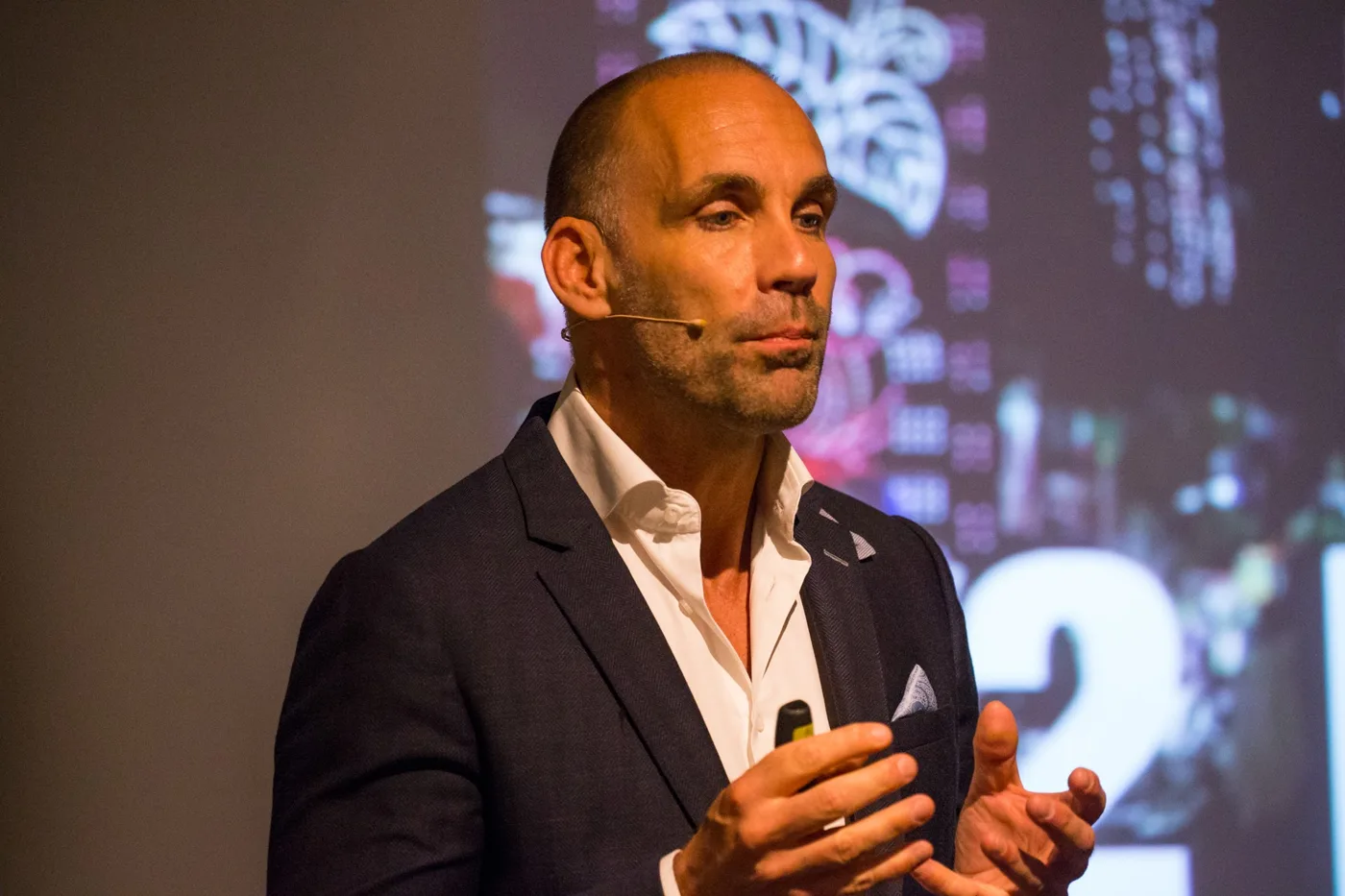
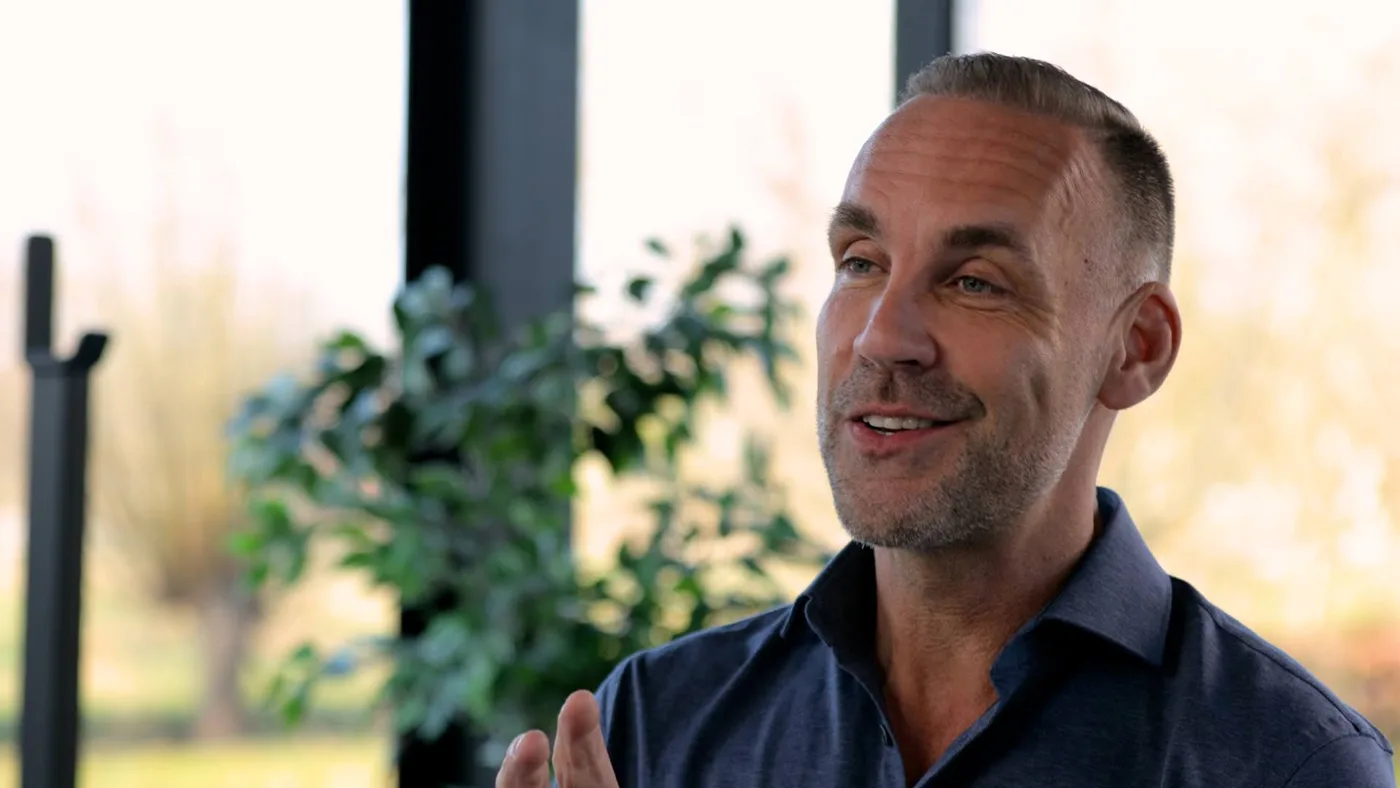
A packed conference hall, a televised panel discussion, a police summit in Dubai.





A selection of over 400 clients















What clients say

“Your contribution was particularly dynamic and inspiring! The participants experienced recognition, awareness and certainly, a wake-up call. In short, an excellent contribution through a highly professional performance.”Read the full review →
“The symposium ‘Airpower in the Information Age’ was a great success. Nothing but positive feedback from the participants. In no small part thanks to your commitment and dedication, we were able to achieve this result.”Read the full review →
“We thank you once again for your inspiring contribution as the kickoff of the module. We found your lecture very valuable. The inspiration and answers to the questions have given the participants much to think about. As a result of this Top Defence Leadership Programme, we expect several new initiatives to emerge. And that is thanks in part to your inspiring kickoff.”Read the full review →

“You gave us all honest, inspired and entertaining insights. Your performance was highly appreciated by the conference participants and EU members.”Read the full review →

“An impressive and noteworthy presentation for our employees and customers. The rate at which change is happening, which you eloquently brought across in your energetic speech, requires a disruptive approach. To be continued!”Read the full review →
How a booking works
Your request
Use the form, or get in touch by phone, email or WhatsApp. A few lines are enough to get started.
We get in touch
We'd like to hear what your event looks like, who'll be in the audience and which themes interest you.
A written proposal
Covering the topic, format (on location or online), length (30, 45, 60 minutes or longer) and fee, so you can talk it over with your colleagues.
Getting to know Richard
Next, we'll find a time for the two of you to talk and brainstorm the keynote, the topics and the format. There's no charge for this.
Frequently asked questions
Who is this keynote for?
Police forces, specialist investigation services, prosecution services, control rooms, regional emergency services, local authorities with a community safety brief, and conferences on investigation and security. The audience often mixes officers, detectives, analysts, leaders and policymakers, and the keynote is made for exactly that mix. It also works for events with staff, partner organisations and members of the public.
What will the audience take away?
An up-to-date picture of what AI and new technology already do in investigation and enforcement, and well-founded scenarios up to 2040. What that means for roles, teams, leadership and training. And a clear view of how criminals use the same technology, so that the conversation afterwards is about choices.
Does the keynote also cover the police organisation itself?
Yes, and that is often where the emphasis lies: what the detective does once AI searches the case file, which new specialists a force needs and what that requires of leaders. Roles, teams, leadership, culture and training get their own part of the keynote.
Does the keynote also cover criminals who use AI?
Yes, always. Deepfakes as false evidence, cloned voices in fraud, abuse material made with AI, sextortion and attacks on police and justice systems: that other side has its own place in every keynote, with the consequences for investigation and evidence.
How does the keynote deal with privacy and the EU AI Act?
The rules come up where they affect police work: what the EU AI Act prohibits in prediction and facial recognition, which applications count as high-risk and what that requires in oversight and explanation. Not a law lecture, but a clear picture of the limits and of the room that remains.
Is the keynote tailored to our organisation?
Yes. Beforehand there is an introductory call about your audience, the purpose of the event and what is happening in your organisation. A conference of detectives gets different examples from a leadership day for chief officers or a cybercrime conference.
How long is the keynote, and can it be in English or online?
30, 45 or 60 minutes, and longer if you wish, with time for questions from the audience, in English or Dutch, in person or online, including for international police conferences. Richard has spoken in more than 30 countries, in Europe, the United States, the Middle East and Asia. For more than a keynote, there are masterclasses, boardroom sessions for chief officers, directors and managers, and workshops for all employees.
How much does a keynote on AI in policing and security cost?
Fees for international keynotes are on request. Ask for a proposal and you will hear from us within an hour on working days.
A keynote for your policing or security event
Tell us a little about your event and who will be in the audience, and let us know the date.
Prefer to speak to us directly? Call 085 303 0792 · email talks@vanhooijdonk.com · send a WhatsApp message