 Richard van Hooijdonk
AI & the future of energy and utilities
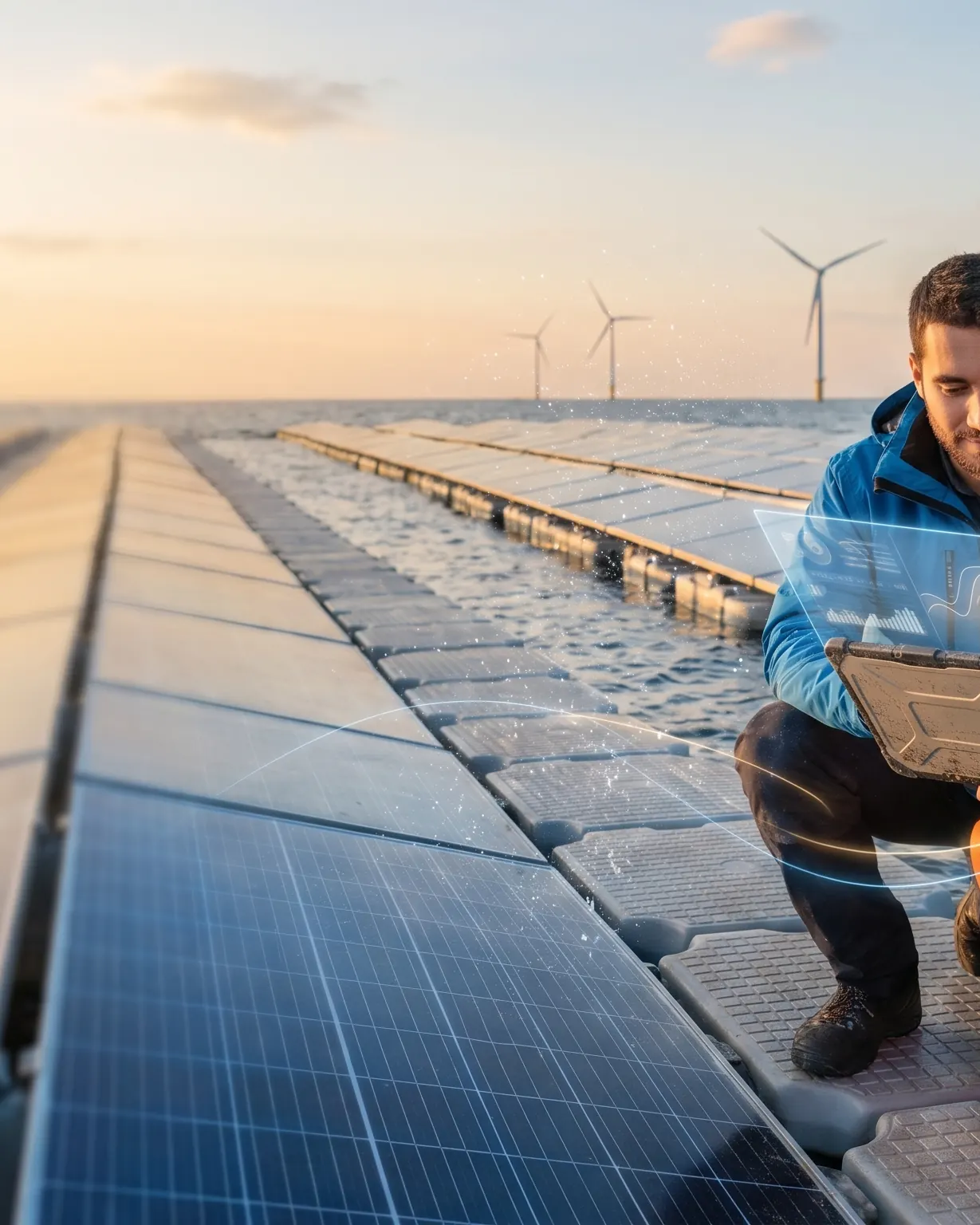
By 2040, AI could run the grid second by second and let the power demand of data centres flex with supply. What that delivers depends on the people who manage the grid and the pipes.
Choose your sector
Every keynote is tailored to a sector. Choose yours.
 Healthcare
 Government
 Defence
 Policing and security
 Smart cities
 Construction
 Mobility
 Industry 4.0
 Energy and utilitiesYou are viewing
 Logistics
 Retail
 Wholesale
 Hospitality, tourism and leisure
 Agriculture
 Financial services
 Legal
 Accountancy and advisory
 Education
 Media and entertainment
 Telecoms and connectivity
Is your sector not listed? We tailor the keynote to your audience. Tell us about your audience
Millions of rooftops, batteries and charging points together make up tomorrow's energy system. AI links them into a network that looks ahead, shares out power and corrects itself.
With grids full and capacity scarce, trend watcher and futurist Richard van Hooijdonk looks at how AI helps get more out of existing infrastructure, or build better infrastructure. Heat pumps and charging points all want power in the same evening hours, and a single new data campus can draw as much as a city. In more and more places, businesses are on a waiting list for a grid connection. AI helps use the existing grid more cleverly: it forecasts solar output quarter-hour by quarter-hour, calculates how much a line can really carry and lets thousands of batteries act as one power plant. Water companies use sensors and AI to tackle leaks and run treatment more efficiently. Much of the technology already exists. The real question is whether organisations built, rightly, around certainty can learn quickly enough to work with systems that help plan and steer. The keynote shows what is running now, what is in trials and which scenarios lie five to fifteen years ahead: a grid that runs itself, a nuclear plant next to the data centre, power from space and geothermal heat in far more places. Once AI helps plan and steer, who takes which decision changes too, from grid operator to household.
AI in energy and utilities
What AI already does on the grid, in the market and at the water company, and where it is heading.
- 01
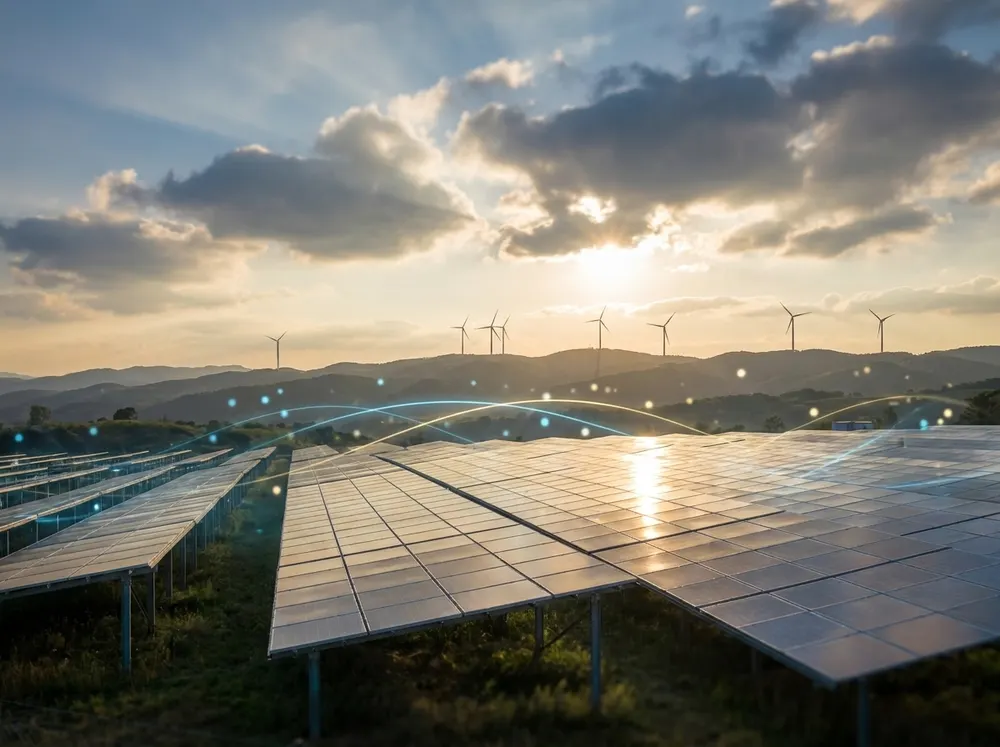
Forecasting sun and wind
AI forecasts solar and wind output for every quarter-hour. Next: forecasts per street and per minute, linked directly to the grid.
AI combines weather models, satellite images of clouds, readings from wind turbines and the past output of solar parks. From these it forecasts how much power will come in per quarter-hour and per area, from an hour to several days ahead. Grid operators see sooner where the grid will fill up, traders base their positions on them and park owners schedule maintenance for a windless day. The latest weather models are themselves built on AI: they compute a global forecast in minutes where conventional models need hours, so a forecast can be refreshed more often each day. The next step is forecasts per street and per minute that also show how certain they are, and that drive switching and trading directly.
- 02
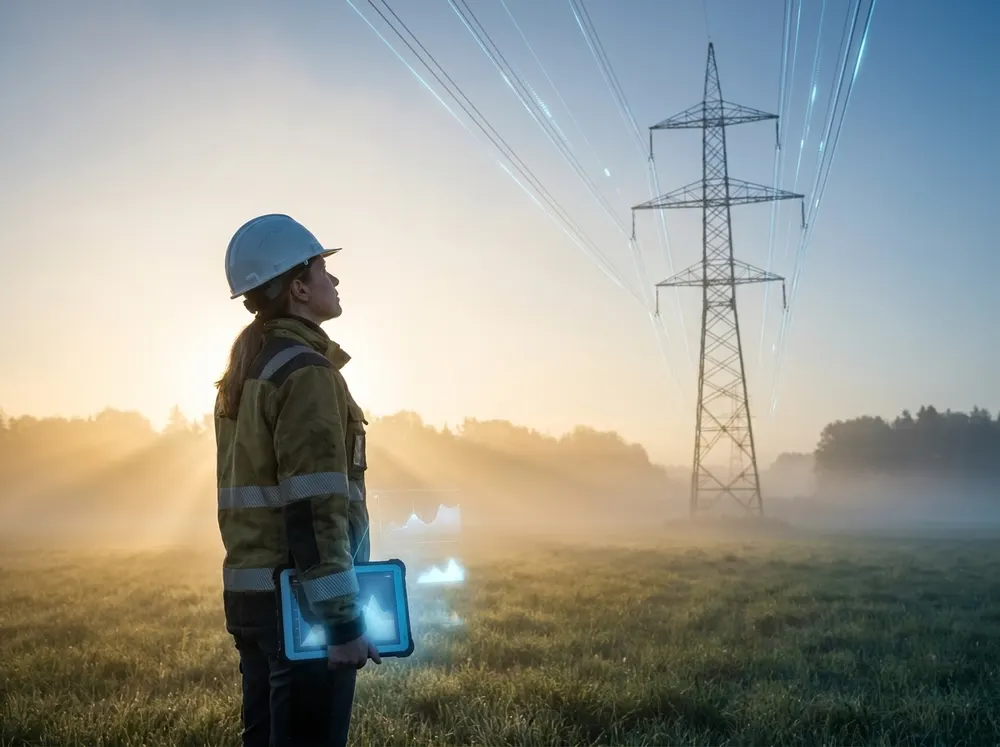
More power through the same grid
Lines and substations can often carry more than their rating says. AI finds that headroom in a full grid, without waiting for new cables.
Grid operators often apply a fixed load limit to overhead lines, based on cautious assumptions about the weather. In cooler weather or with more wind, the conductors can carry more current. Models use measurements of conductor temperature and sag, plus the hourly weather forecast, to work out how much power can safely flow through a line, and AI makes those forecasts more precise. That frees up room in a grid that is full on paper, while new connections take years to arrive. According to the International Energy Agency, such technology could release up to 175 gigawatts of extra transmission capacity worldwide. The next step moves from one line to the whole grid: AI also manages the load on underground cables, transformers and substations dynamically, and reallocates the headroom every quarter-hour.
- 03
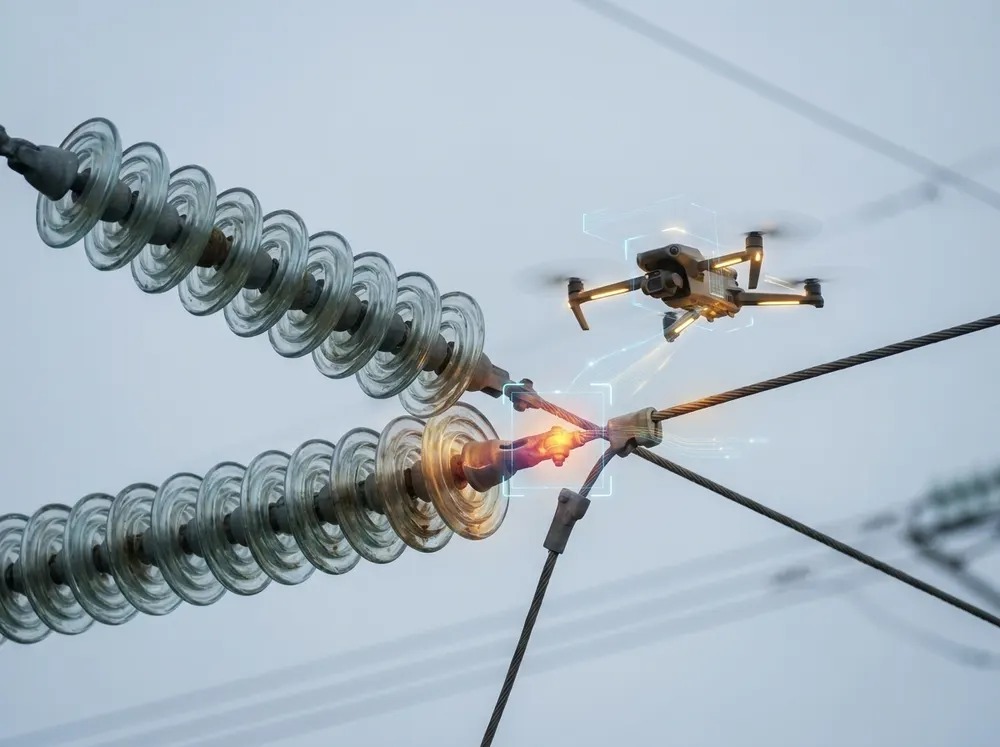
Predicting faults on the grid
Drones and sensors inspect lines, cables and transformers. AI spots where a fault is brewing.
Drones fly along high-voltage lines, taking photographs and thermal images. Image recognition picks out a cracked insulator, a joint running too hot or a tree growing too close to the conductor. Sensors in substations measure vibration, temperature and gases in transformer oil, and AI recognises the patterns that come before a failure. If something does go wrong, AI pinpoints the fault faster. According to the International Energy Agency, that can cut the length of power outages by 30 to 50 percent. The next step: drones that fly the grid on their own from a docking station, and robots that inspect substations day and night, so that field engineers head out with a clear target.
- 04
 In pilots
Agents for connections and customers
Agents help with connection queries and fault reports. Soon the customer's agent will deal directly with the grid operator's agent.
An agent is AI that completes a multi-step task by itself. Grid operators receive thousands of questions every day about a connection, a house move or an outage in the street, and an agent can follow such a request from start to finish. In pilots, agents now support customer service; development is moving towards linked data checks, assessment of grid capacity, scheduling of field engineers and updates to the customer. That leaves staff with time for the customer who depends on a medical device at home, or the business owner who has been waiting for months. The next step: the customer's agent and the grid operator's agent agree a connection, a flexible contract or a charging slot between them.
- 05
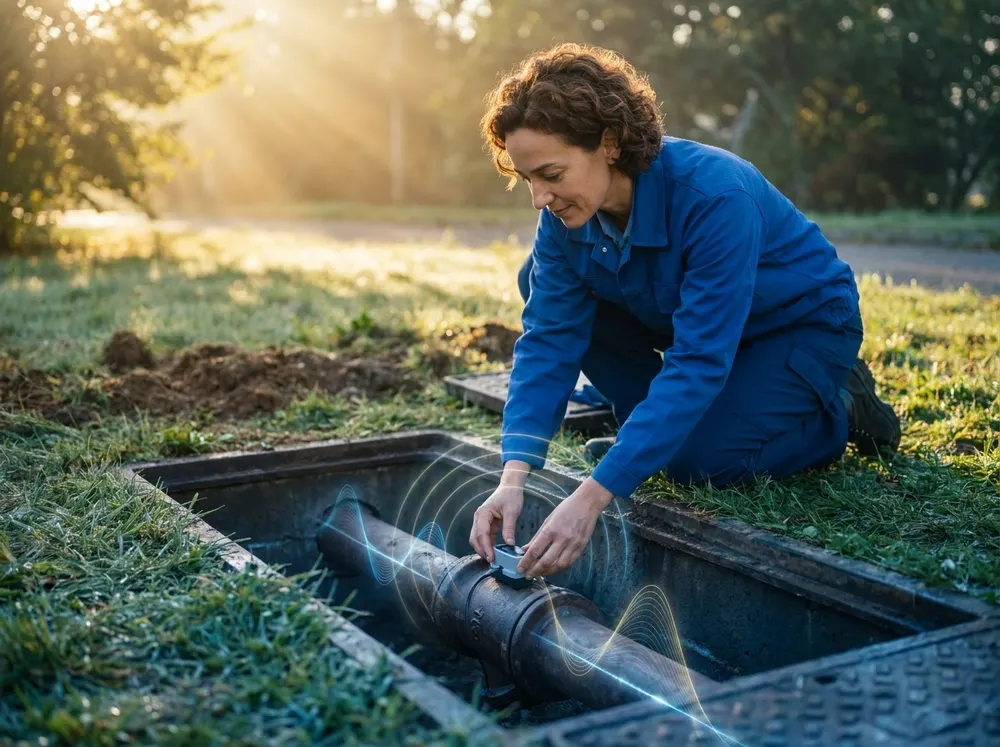
Managing water smartly
Sensors and AI help find leaks, run treatment processes and monitor water quality when water is reused.
Sensors measure pressure, flow and sound in the pipe network. AI recognises the pattern of a leak, often before any water surfaces, and shows which section of pipe it is in. At the wastewater treatment plant, AI adjusts aeration and chemical dosing to the actual level of pollution, which can lower the plant's energy use. When water is reused for industry and farming, AI combines the sensor readings and flags a change in quality before it reaches the process. The next step is a pipe network that plans its own maintenance, with robots that inspect and repair pipes from the inside.
- 06
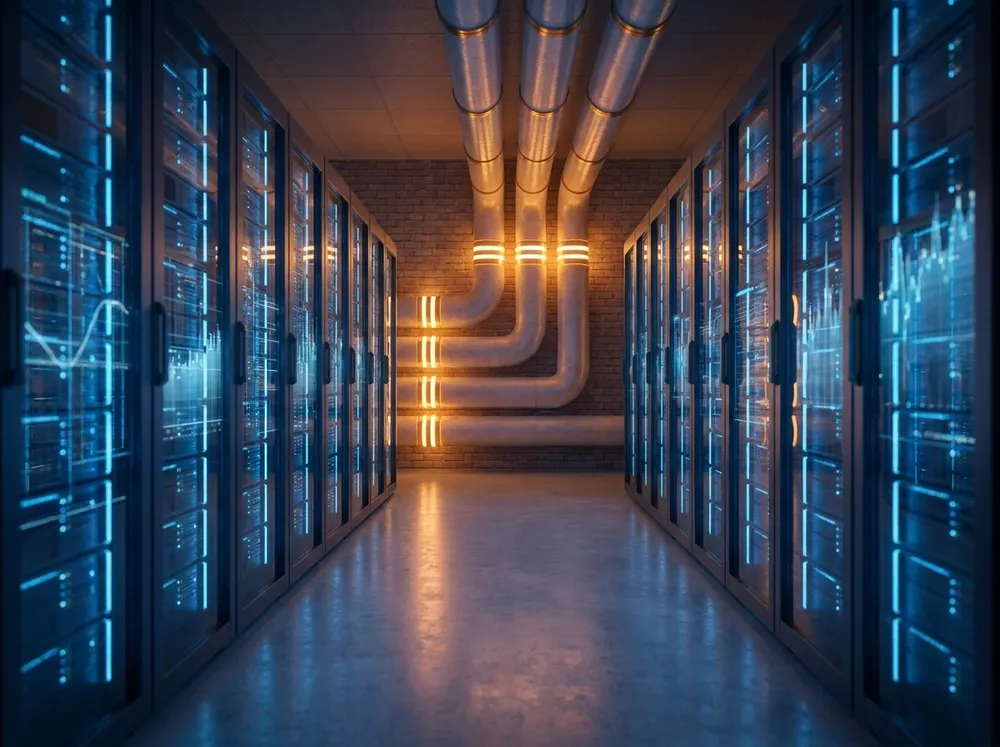
Data centres and power demand
Data centres need more and more power. AI helps shift that demand, and tech firms already buy power from small reactors yet to be built.
AI is driving fast growth in the power demand of data centres. According to the International Energy Agency, data centres used about 1.5 percent of the world's electricity in 2024, and that consumption is expected to more than double by 2030. Locally the effect is larger: a single campus can draw as much power as a city. AI can also be part of the answer. Computing that is not urgent, such as training a model, can move to hours with plenty of sun or wind. AI runs the cooling more efficiently, and waste heat can feed a heat network. Tech companies have also signed contracts for power from small modular reactors that have yet to be built. In time, such a plant could stand right next to the data campus.
- 07
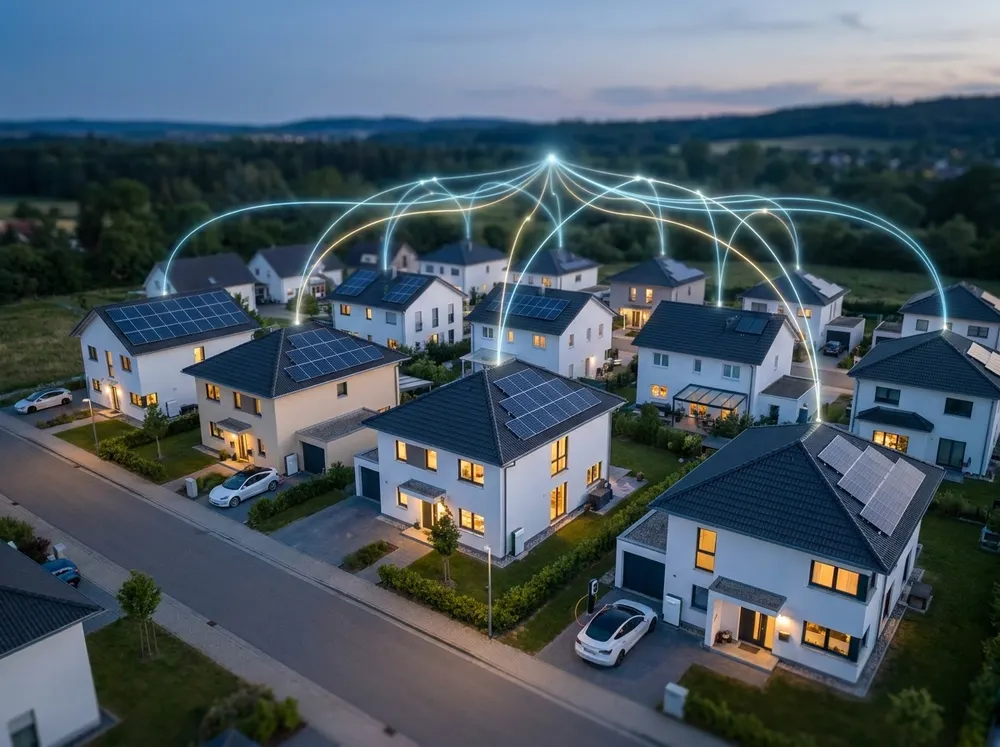
The virtual power plant
Thousands of panels, batteries, charging points and heat pumps, steered by AI as if they were one power plant.
AI links solar panels, home batteries, charging points, heat pumps and backup generators into a virtual power plant that keeps recalculating how much capacity it has available. Together they can supply power, delay consumption and help keep the grid in balance. AI predicts how much flexibility each installation offers and allocates the tasks within the terms agreed with the owners. Virtual power plants already sell services to the grid commercially in several places, and the number of connected households is growing. Owners stay in control: if you want your car fully charged by seven, you set that. Before long they will be large enough to replace some reserve power stations, and a grid operator will call on them neighbourhood by neighbourhood to relieve a congested grid.
- 08
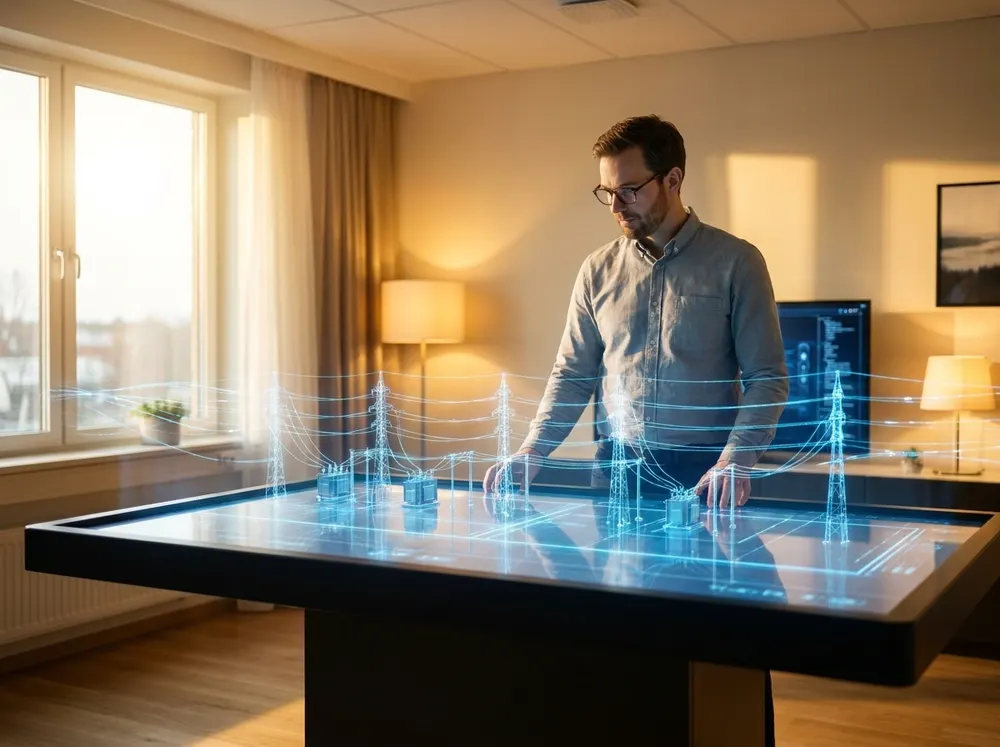
The grid's digital twin
In a digital twin, AI tests thousands of grid scenarios and fills in missing data, to plan expansion, handle faults and assess new connections.
Fed with live measurements, a digital twin shows how new connections, changing demand and lost links affect the load on cables and substations. A grid planner can see what a new factory or a neighbourhood full of heat pumps does to the grid, now and in ten years. AI makes the model faster and fills in missing data, such as consumption in streets without sensors. It can also run thousands of possible futures, with more or less solar power, electric vehicles and industry. That lets the grid operator see years ahead where the grid will be under strain. The next step is a digital twin of the entire energy system, with electricity, heat, gas and water in one model, in which grid operators and governments run scenarios together up to 2050.
The future of energy and utilities
Where energy and water could be in five to fifteen years, with AI as the engine.
- 09
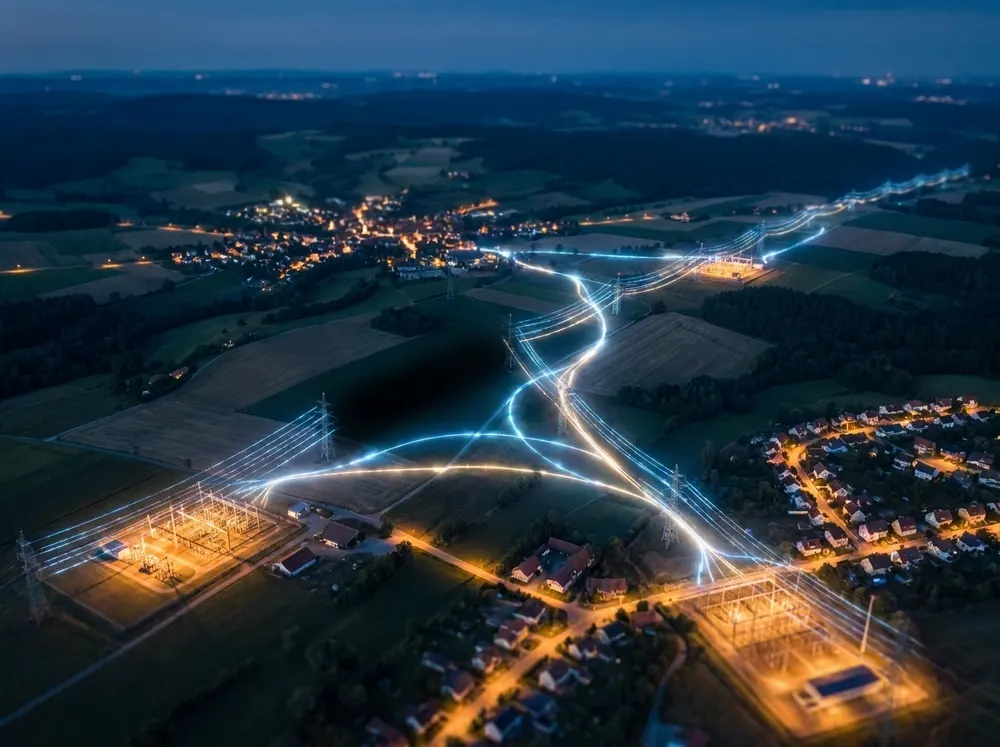 Future scenario
The grid that runs itself
Around 2040, AI could run the grid second by second: rerouting flows, sharing capacity and restoring supply. People set the goals.
Parts of a grid that runs itself already exist. Some medium-voltage networks automatically isolate a fault and restore supply within minutes through another route. In international competitions, AI agents have been running entire grids in simulation since 2019, and since 2025 grid operators and tech companies have been training AI models built specifically for the electricity sector. The scenario for 2040: AI reroutes flows, allocates capacity per quarter-hour and per street, and keeps supply going during a fault. The control room then changes from a place where people switch into a place where they set goals and limits and judge the exceptions. The grid becomes faster than any crew that ever operated it by hand.
- 10
 Future scenario
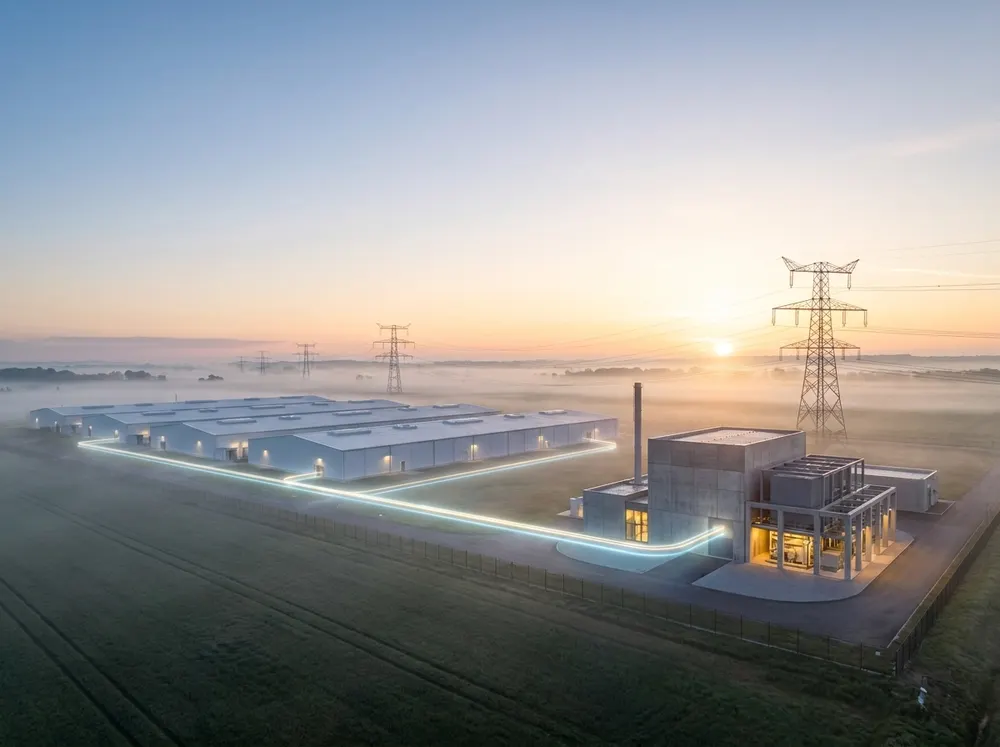
A reactor beside the data centre
Tech firms are buying power now from reactors yet to be built. Around 2040, a data campus could have its own nuclear plant.
Since 2024, large tech companies have been signing contracts for small modular reactors that are not due to deliver power until between 2030 and 2035. Such a reactor is largely built in a factory and can stand right next to a data campus or a plant. AI can speed up the route there: it searches thousands of pages of design and licensing files, runs design variants and will help operators assess sensor data. The scenario for 2040: computing power and nuclear energy on the same site, with a reactor that feeds its own customer and sends the surplus to the grid. Grid operators gain a new kind of neighbour, a heavy user that is also a power station. The question of who builds the grid then shifts partly to whoever builds the computing power.
- 11
 Future scenario
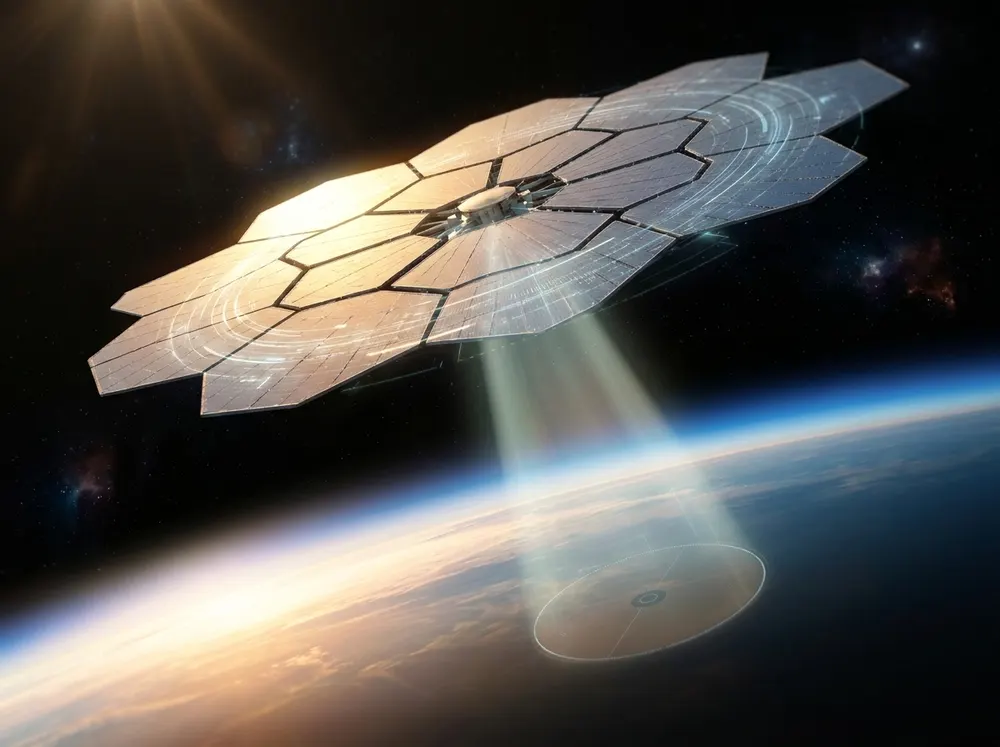
Solar power from space
Solar power stations in orbit that beam power to the ground, even at night. In 2023 a test satellite showed the principle works.
In space, the sun almost always shines. A space-based solar power station converts that light into microwaves and beams them to a receiving field on the ground, which turns them back into electricity. In 2023, a test satellite transmitted power wirelessly in space for the first time, and a receiver on Earth picked up a measurable signal. Space agencies are now studying whether such stations can become affordable, and launch costs are falling fast. The scenario for 2040: robots assemble the kilometre-scale structure in orbit, and AI aims the beam at receiving fields in different regions. The station keeps delivering after sunset, wherever the grid needs the power at that moment.
- 12
 Future scenario
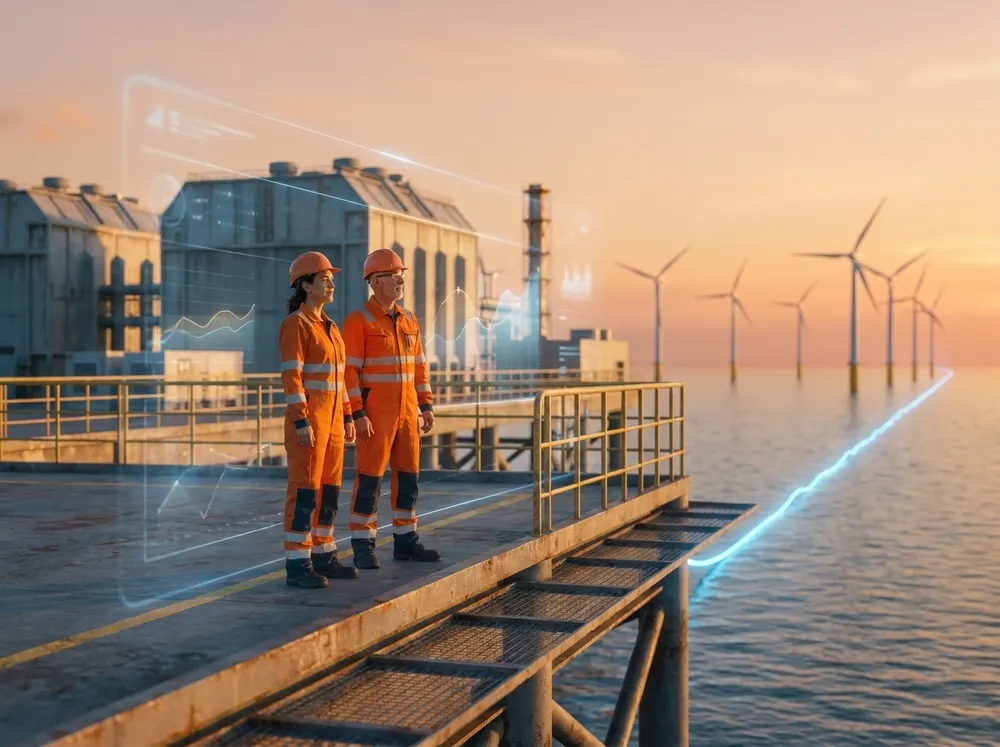
A supergrid between continents
Cables thousands of kilometres long and energy islands at sea. Around 2040, Europe's evening peak could run on afternoon sun from elsewhere.
Somewhere on Earth, the wind is always blowing or the sun is shining. A supergrid links those places with direct-current cables over thousands of kilometres. In 2023, the countries around the North Sea agreed to reach at least 300 gigawatts of offshore wind together by 2050, including in neighbouring sea areas, with energy islands as hubs between countries. Plans for cables between continents are already on the table. AI makes such a grid manageable: it forecasts across continents where surpluses and shortages will arise and picks the route every quarter-hour. The scenario for 2040: the evening peak runs partly on afternoon sun from elsewhere, and a windless week on one side of the sea is covered by a storm on the other.
- 13
 Future scenario
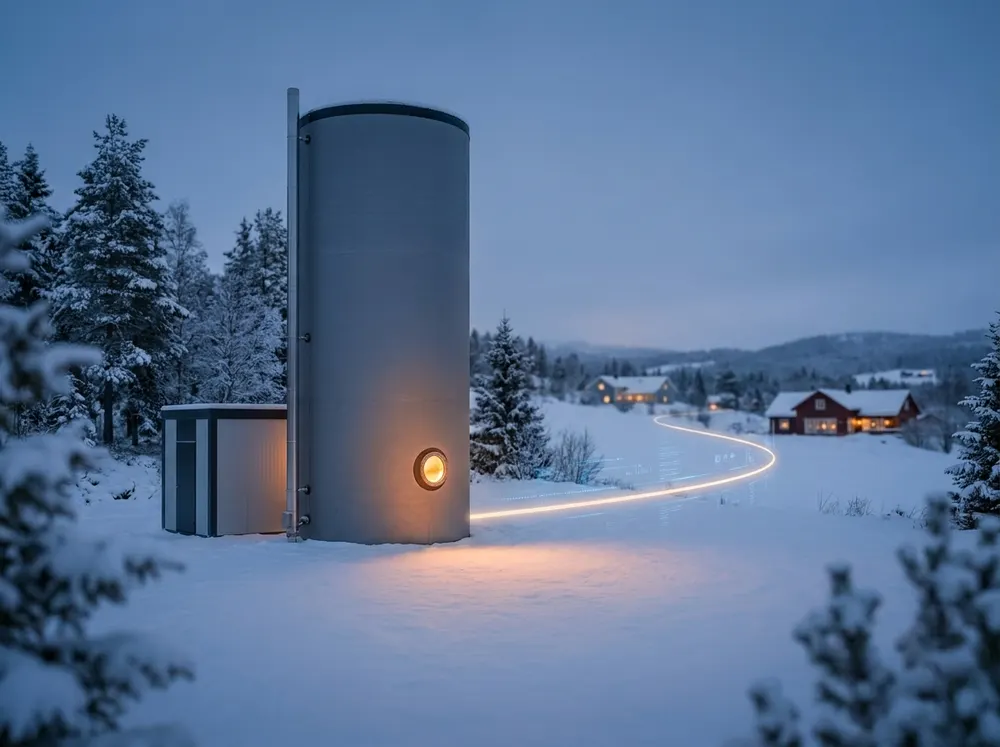
Summer sun for winter
Iron-air batteries that deliver for a hundred hours, hydrogen in salt caverns. Around 2040, AI helps store summer sun for January.
The real test is the windless winter week when millions of heat pumps run at the same time. New forms of storage are emerging for exactly that. Iron-air batteries are designed to deliver power for a hundred hours on end; the first installations are now connected to the grid. A silo full of sand stores heat at 500 degrees for a heat network, and hydrogen storage is being trialled in salt caverns deep underground. The scenario for 2040: hydrogen and large heat stores keep July's sun for January. AI then decides months ahead what is stored where, based on seasonal outlooks for weather, prices and demand. Security of supply depends less on reserve power stations and more on a well-stocked reserve.
- 14
 Future scenario
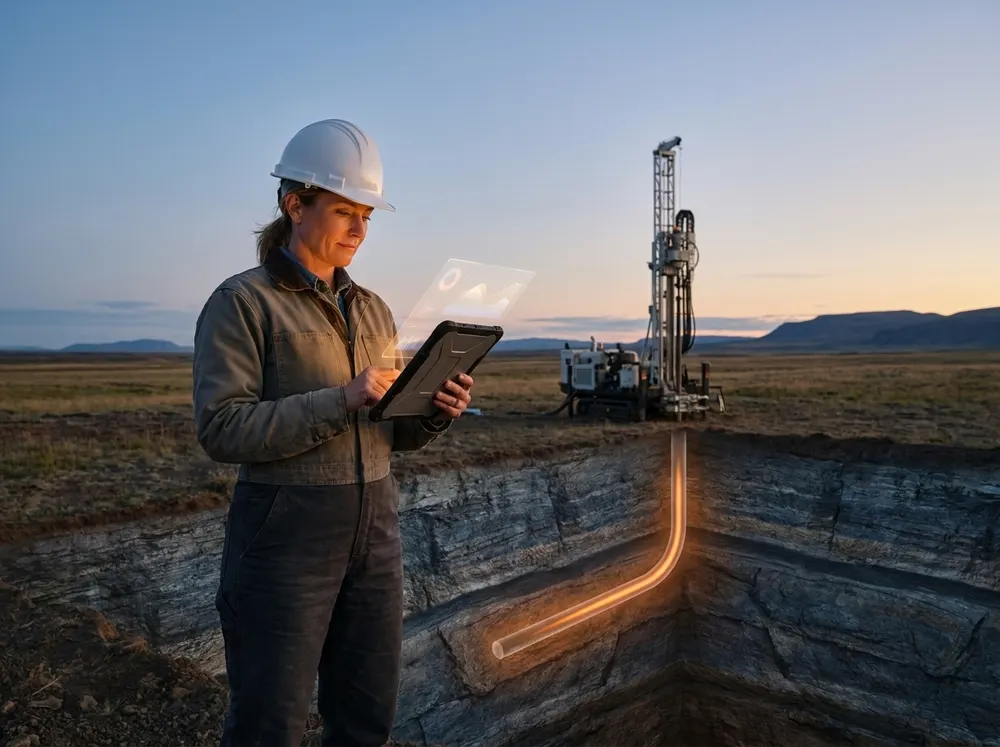
Heat from deep underground
New drilling brings geothermal heat within reach where drilling was too costly. Around 2040, it could supply power and heat in far more places.
Geothermal energy draws heat from deep underground, where temperatures a few kilometres down are often well over a hundred degrees. New drilling techniques make that heat reachable in places where drilling used to be too expensive. Horizontal drilling and making deep rock layers permeable, techniques from the oil and gas industry, help here. AI reads seismic surveys and drilling data and compares promising drilling sites. According to the International Energy Agency, the cost of electricity from these new geothermal techniques could fall by around 80 percent by 2035, if policy and technology keep pace. The scenario for 2040: geothermal heat as a steady source of power and heat in far more places, day and night, including for industrial areas that now run on fuel brought in from elsewhere.
- 15
 Future scenario
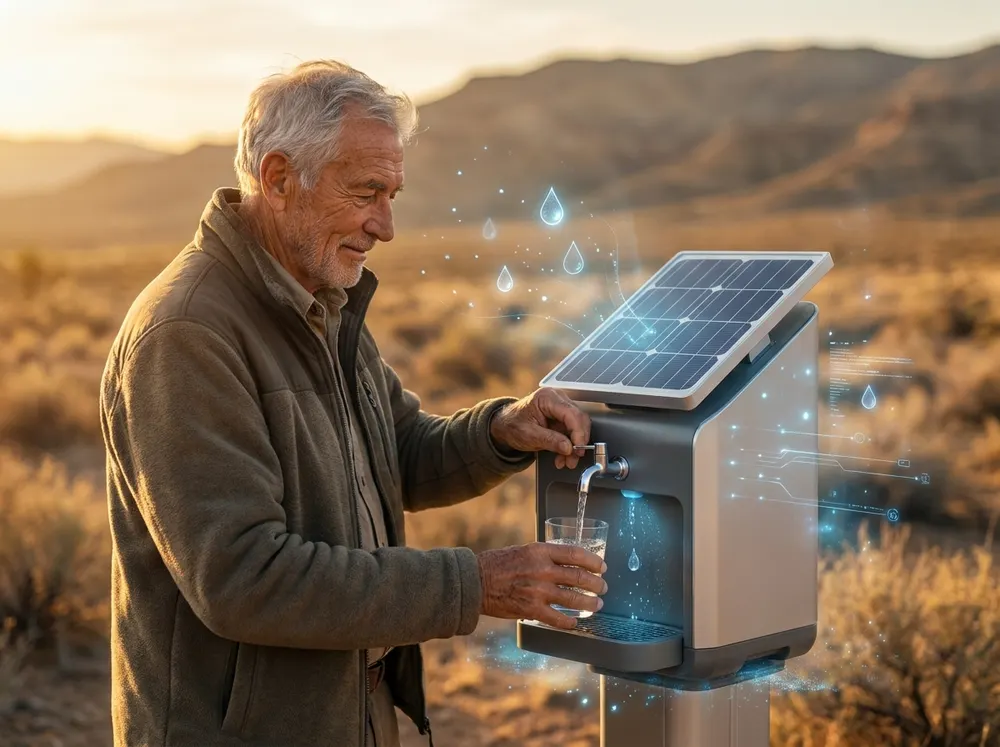
Water from air and sea
Around 2040, buildings could draw their own drinking water from dry air. AI links such sources with desalination and reuse into one supply.
Metal-organic frameworks are porous crystals that capture water vapour, even from dry desert air. Their development earned the 2025 Nobel Prize in Chemistry, and the first devices already pull water from the air using only the sun's heat. AI helps researchers select crystals that absorb a lot of water, and design membranes that desalinate seawater with less energy. The scenario for 2040: buildings in dry regions produce part of their own drinking water, desalination plants on the coast follow the supply of sun and wind, and AI links all these sources with water reuse into one supply. The water company then manages a network of thousands of small sources instead of a handful of large ones.
AI opens up possibilities for energy and water that are still hard to imagine. In a sector where care and caution carry real weight, people who dare to learn together are the ones who make that future happen.
Richard van Hooijdonk
The energy organisation of the future
What AI asks of roles, teams, leadership and culture at grid operators, energy companies and water companies.
- 16
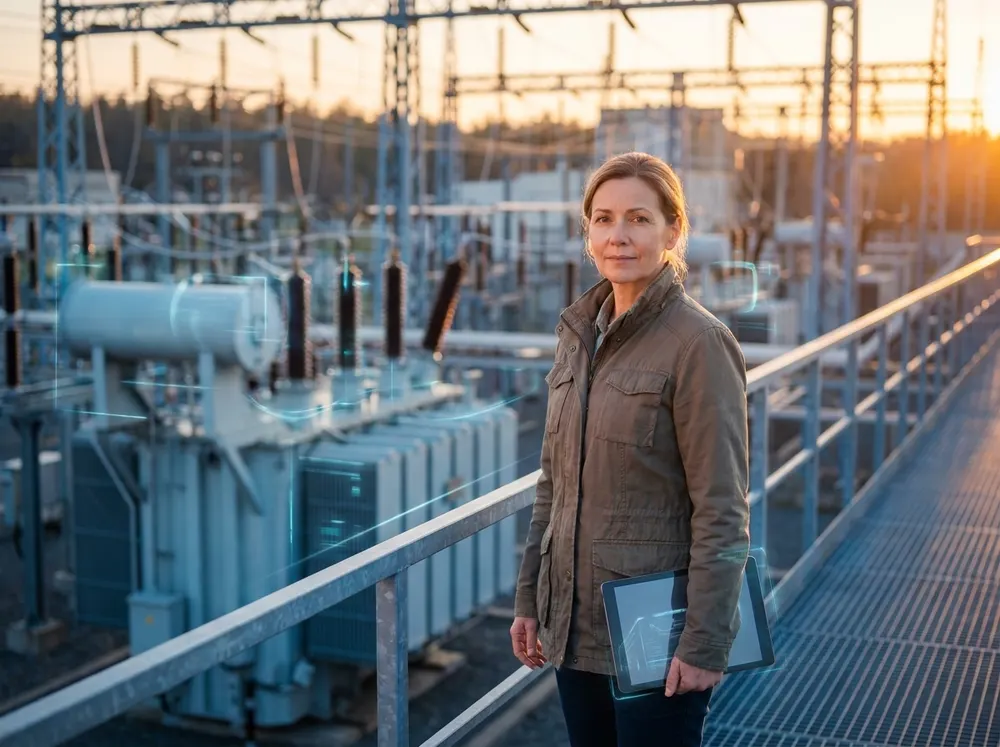
The AI-first organisation
AI takes over forecasting, planning and searching inspection images. Field engineers and grid planners focus on work where their judgement counts.
Grid operators and energy companies that work AI-first let AI do the repetitive and predictive work that people do not need to do. Forecasting, planning, sorting alerts, checking applications and searching inspection images: AI does all of it quickly and without tiring. A field engineer assessing a situation on site, a colleague deciding during an outage who gets help first, an adviser explaining to a customer why they have to wait: that is where human judgement carries weight. Around 2040, much of planning and inspection could run without human intervention. People then focus on exceptions and on balancing the claims of customers, safety and growth.
- 17
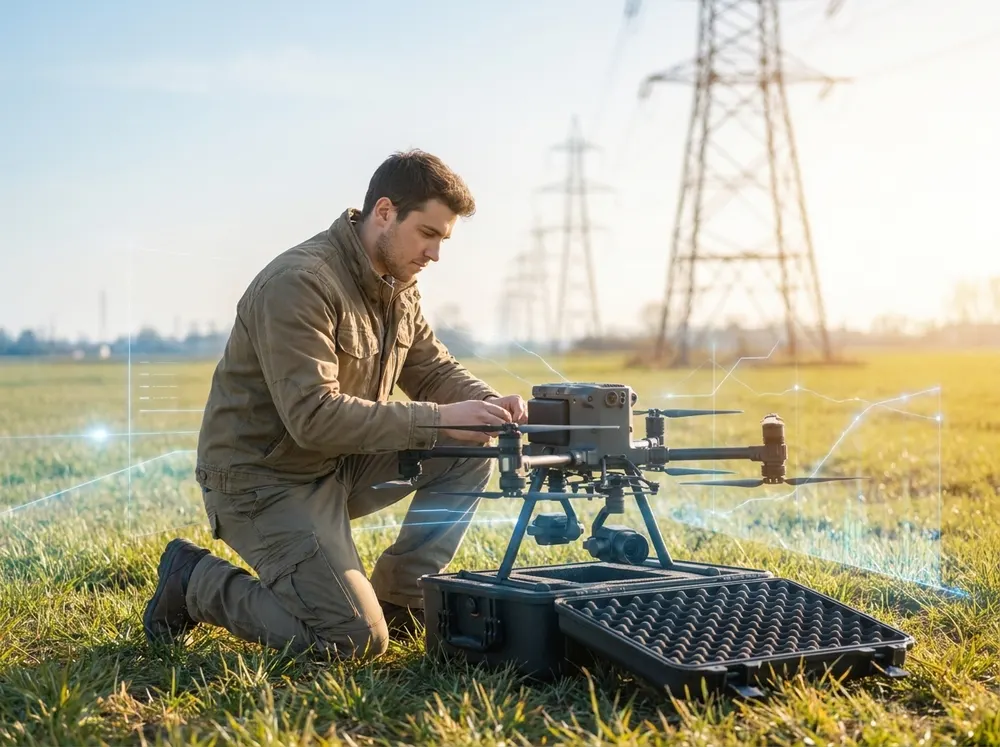
New roles in energy
Supervisors of a grid that runs itself, trainers of AI models, operators of inspection robots and drones.
When AI works on the grid, the jobs of many people change, and in five to ten years roles that barely exist today could carry real weight. The supervisor of a grid that runs itself sets the goals and limits within which AI switches, and steps in when the system meets something it does not know. A trainer teaches grid AI models to deal with rare situations, from an ice storm to a heatwave. An operator runs a fleet of inspection robots and drones that check substations and lines day and night. And a broker decides what customers' agents and the grid's agents may agree with each other. The work of the field engineer and that of the data analyst increasingly overlap.
- 18
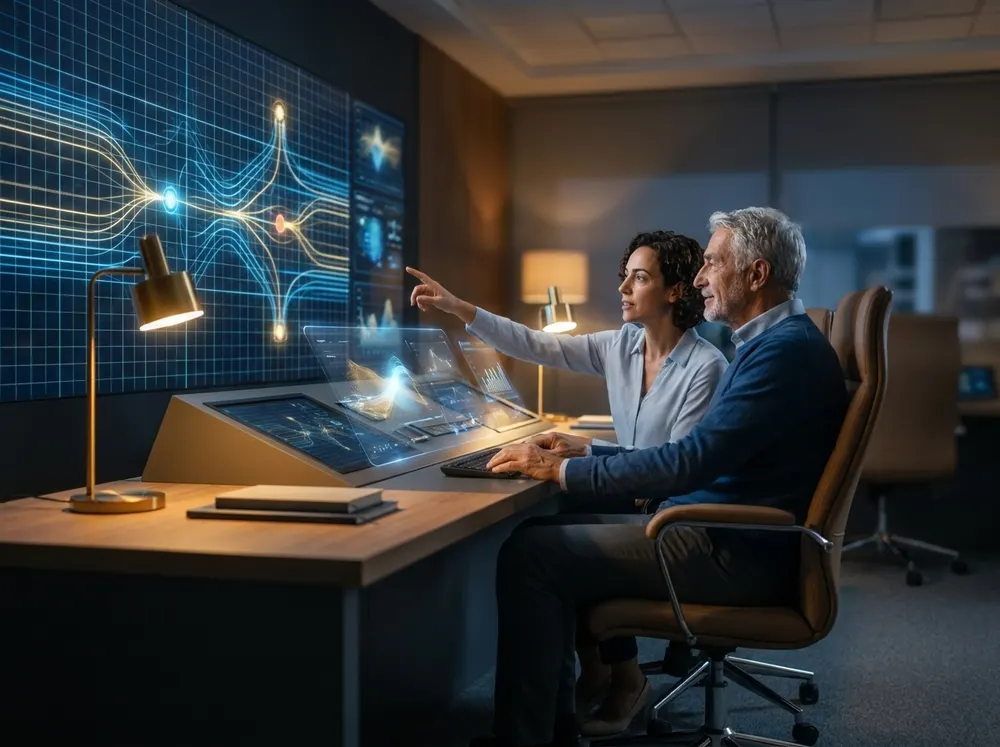
People and AI in the control room
AI filters thousands of alerts and proposes switching actions. The operator assesses the proposals and decides what is carried out.
During a storm or heatwave, thousands of alerts can arrive in a short time. AI groups alerts with the same cause, points to the likely location of the fault and proposes switching actions to get as many customers as possible back on supply quickly. The operator weighs what the system does not know, such as a care home running on backup power or an engineer still working in a substation, and decides. The next step is a control room in which AI carries out routine switching itself, while the operator keeps control of exceptions, goals and limits. One operator then oversees a much larger part of the grid.
- 19
Leading the energy transition
Leaders in energy and water give direction to change. By taking the initiative, they bring people together to build tomorrow's energy system.
Leadership in energy and water means going first in a change that affects everyone. Leaders take the initiative on AI and new technology and show where the company wants to go, with a picture of the future concrete enough for a grid planner and a field engineer. They bring their people in to help build it: the operator in the control room, the engineer in the substation and the partners in the region. They listen to their staff's ideas and use them to shape a direction people want to follow together. That is how leaders build tomorrow's energy system with their people, even when some things remain uncertain.
- 20
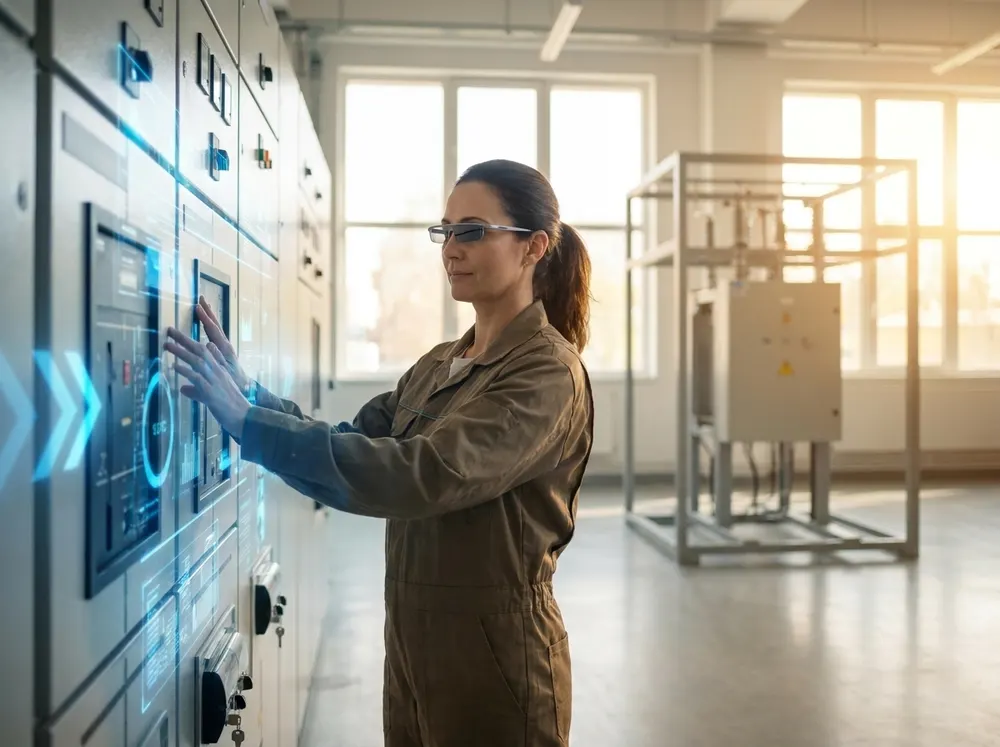
The future academy
Rather than wait for the education system, staff in a future academy practise with AI and new technology using faults from their own grid.
In its own future academy, an organisation teaches what it needs now, without waiting for schools and universities to offer that knowledge. Staff who have been around for years learn to work with AI, agents and new technology; new colleagues learn from their first week how work in the organisation is changing. Leaders learn to steer a team of people and AI. The course uses examples from the organisation's own work, and the programme adapts as that work changes.
- 21
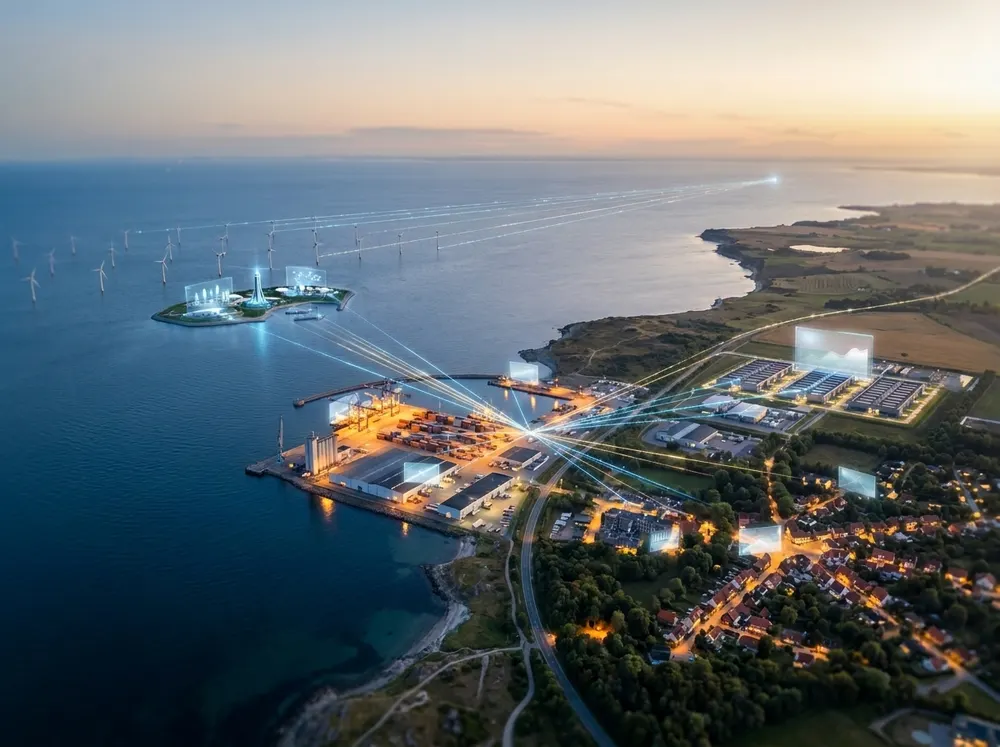
Into the future as an ecosystem
Plan together and you get further. With start-ups, scientists, partners and governments, across borders too, a new idea becomes reality sooner.
In an ecosystem, start-ups, scientists, partners and governments work together on problems too big for one organisation. One party's decisions affect another party's planning, and how well they plan together determines how quickly they move forward. In more and more places they meet to coordinate their plans and develop new solutions together. Across borders, too, governments and organisations plan large projects jointly and exchange models and experience. AI can test the joint plans before anyone invests.
The other side responsibility and risk
Data, reliability and crime: what is at stake when AI helps steer energy and water.
- 22
Data as the foundation
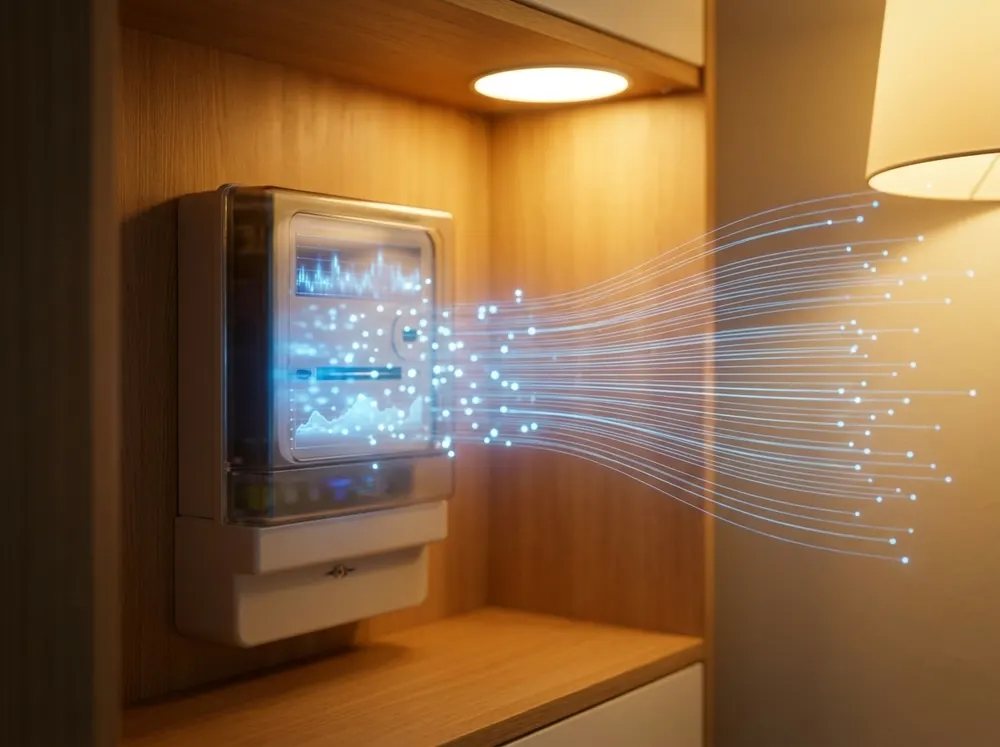
AI only works when data from every part of the organisation is available, reliable and connected: the foundation of the AI-first energy company.
The AI-first energy company has AI forecast, plan and advise across departments. That only works when data from every part of the organisation is available, reliable and connected. Often it sits in separate systems, with their own codes and definitions, and one department does not know what another records. Missing data can lead to wrong answers, and an agent taking over a task then lacks important information. Connected, consistent and up-to-date data is therefore the foundation on which AI can work across the whole organisation. That includes clear rules on who may use which data, and for what.
- 23
Grid reliability
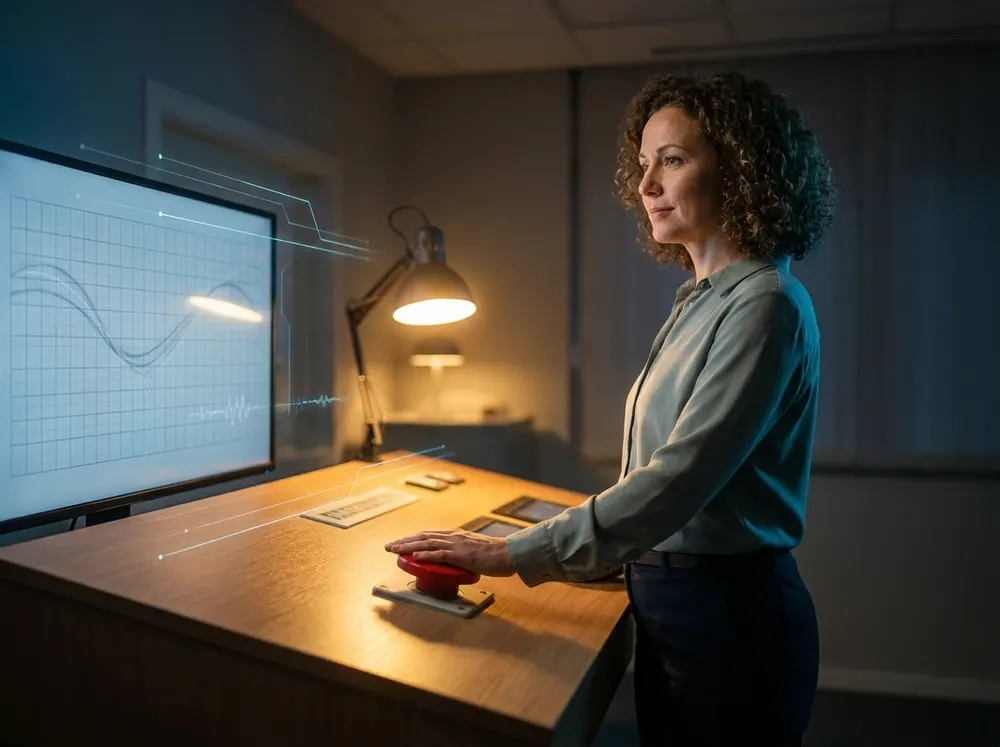
Run a large power grid with AI and you can affect millions of people. A model error can spread faster than an operator can step in.
An AI system that steers the grid works at a scale no operator can match: thousands of batteries, charging points and switches at once. A model trained on ordinary years can get it wrong in a storm, a heatwave or a situation it has never seen. If it then sends thousands of devices the wrong way at the same moment, a small deviation can grow into an outage. That is why such systems work within fixed safety limits and are tested in a digital twin of the grid. The European AI Act classes AI used as a safety component in the supply of electricity, gas, heating or water as high-risk. Properly tested, AI can make the grid more reliable, not less.
- 24
Energy crime
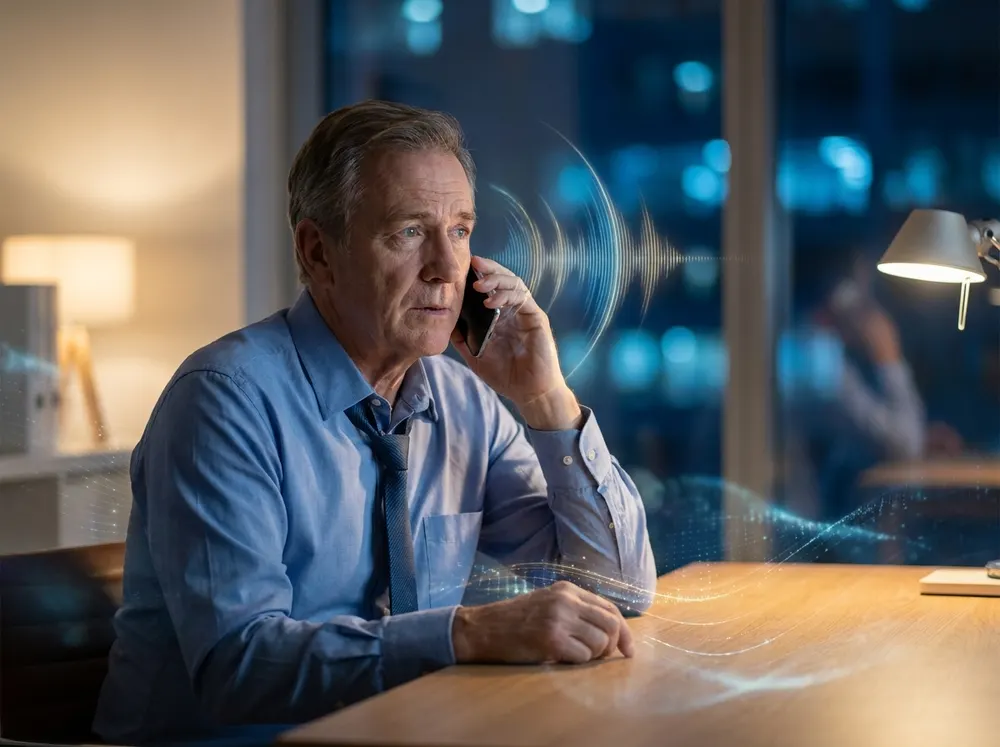
AI makes it easier for criminals to get into grids and water companies: through ransomware, system hacks and phishing with cloned voices.
Grids, power stations and water treatment plants are critical infrastructure: one successful attack can hit an entire region. With AI, hackers and extortionists reach those systems faster. According to the International Energy Agency, the number of cyberattacks per energy company tripled between 2020 and 2024, and AI is making attacks more sophisticated. Ransomware can shut down business systems, and AI helps fraudsters write personal messages. At one energy company, a director transferred 220,000 euros after a phone call in which, according to the insurer, his boss's voice had been imitated by AI. The same voice technology that gives a customer service line a natural voice helps a fraudster impersonate a director. With millions of devices on the grid going online, good security in the AI era becomes a condition for a reliable grid.
About the speakerRichard van Hooijdonk
Events in EuropeKeynote speaker for corporate events in Europe
On stage
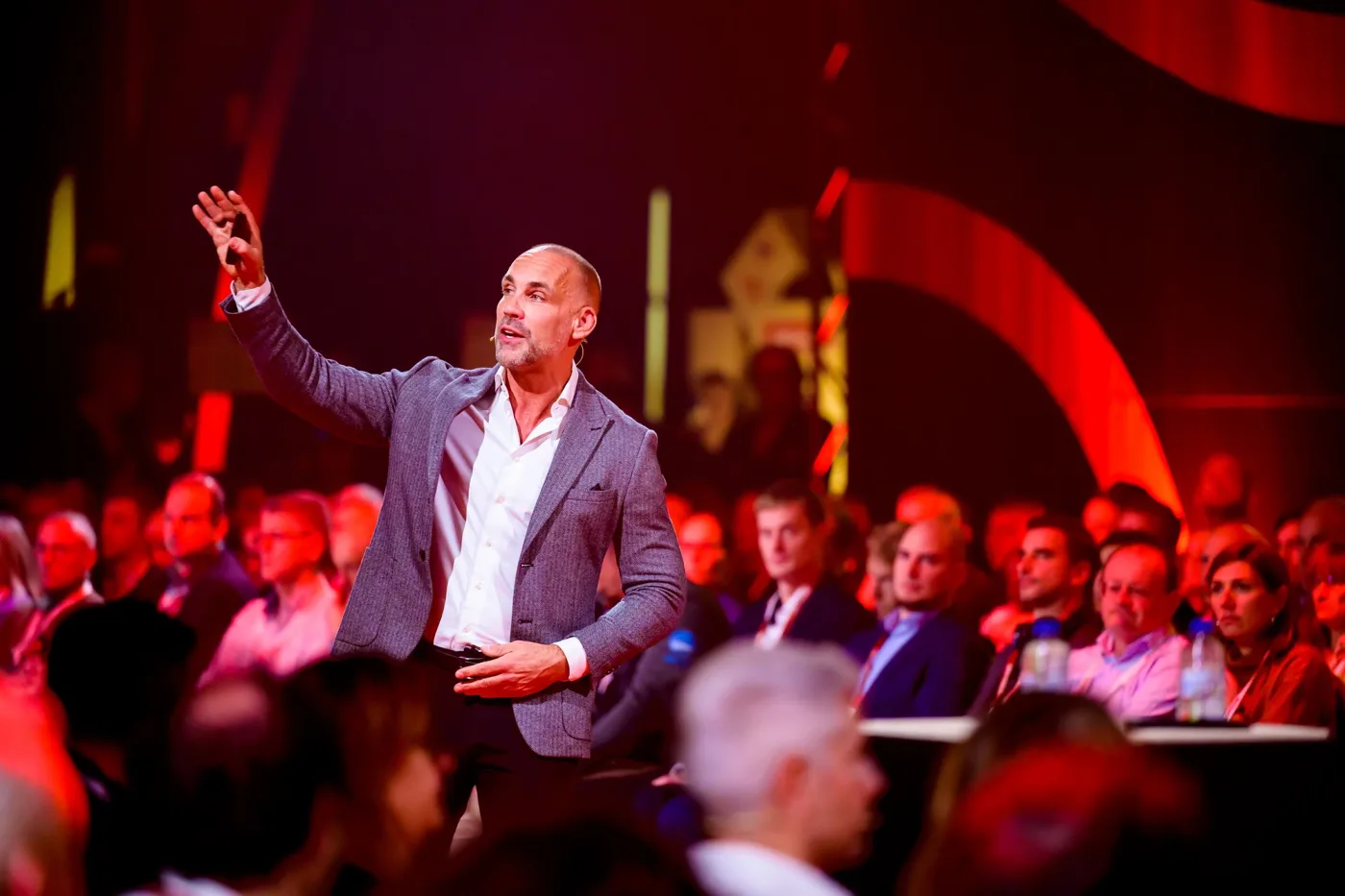
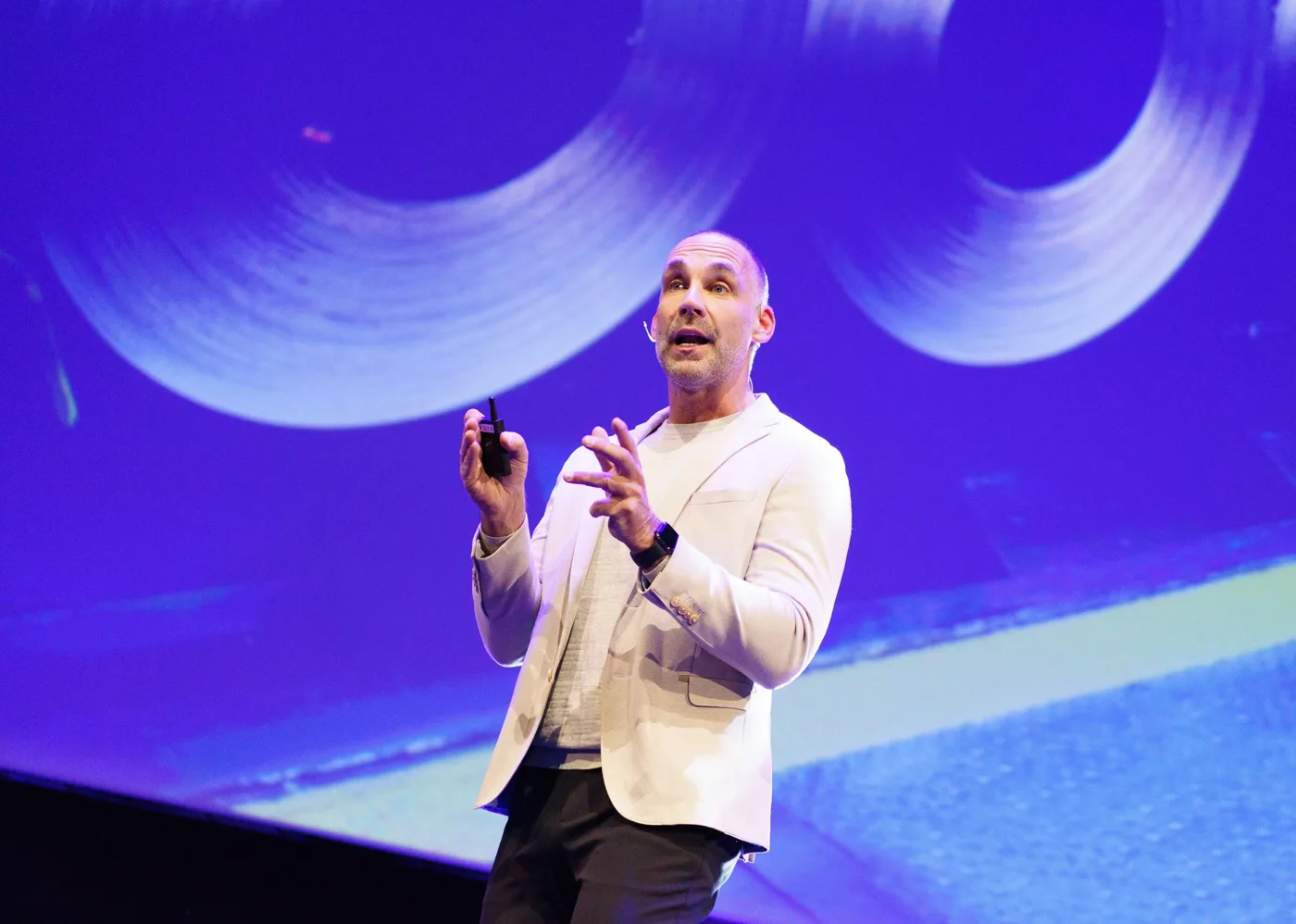
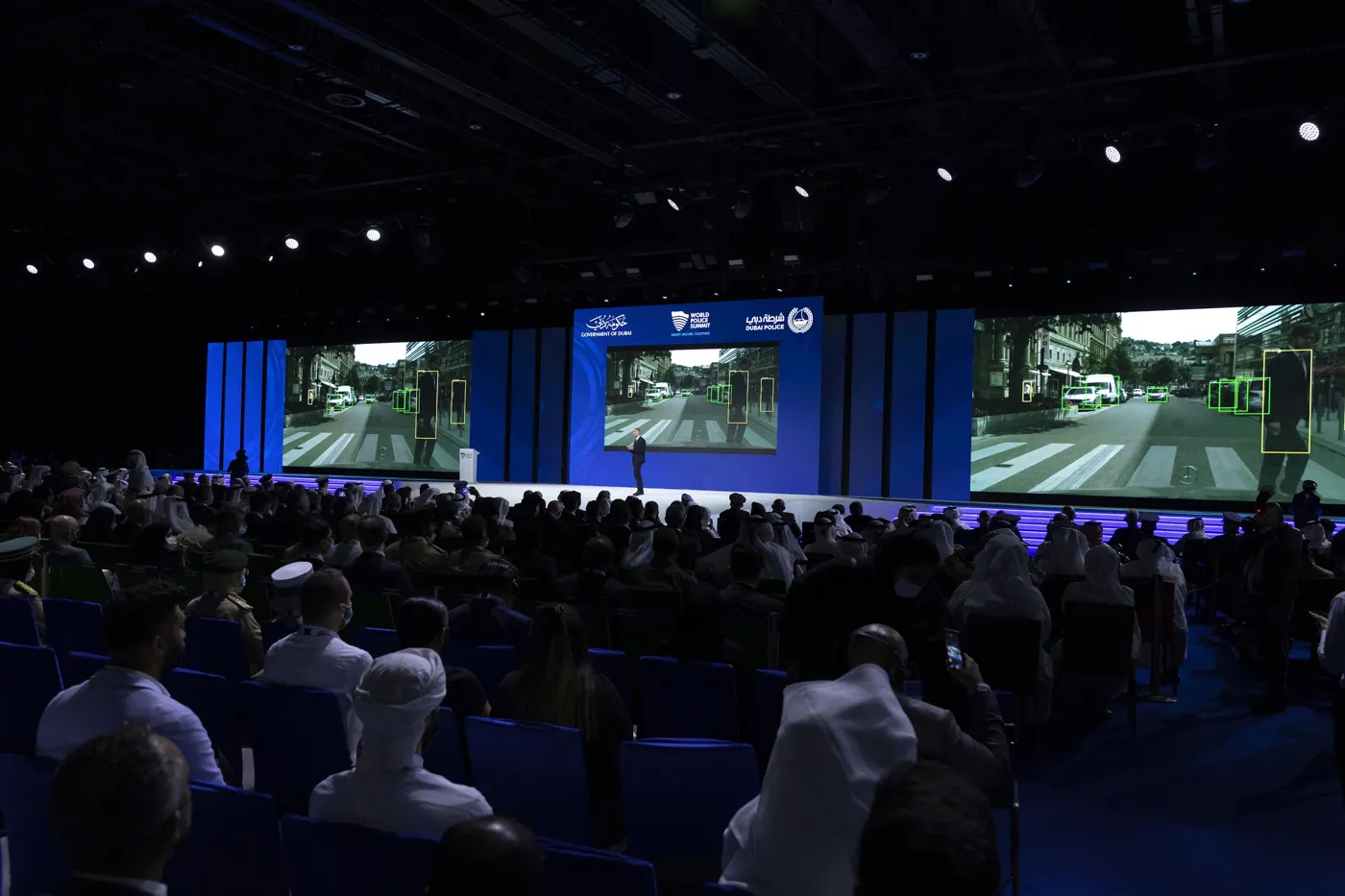
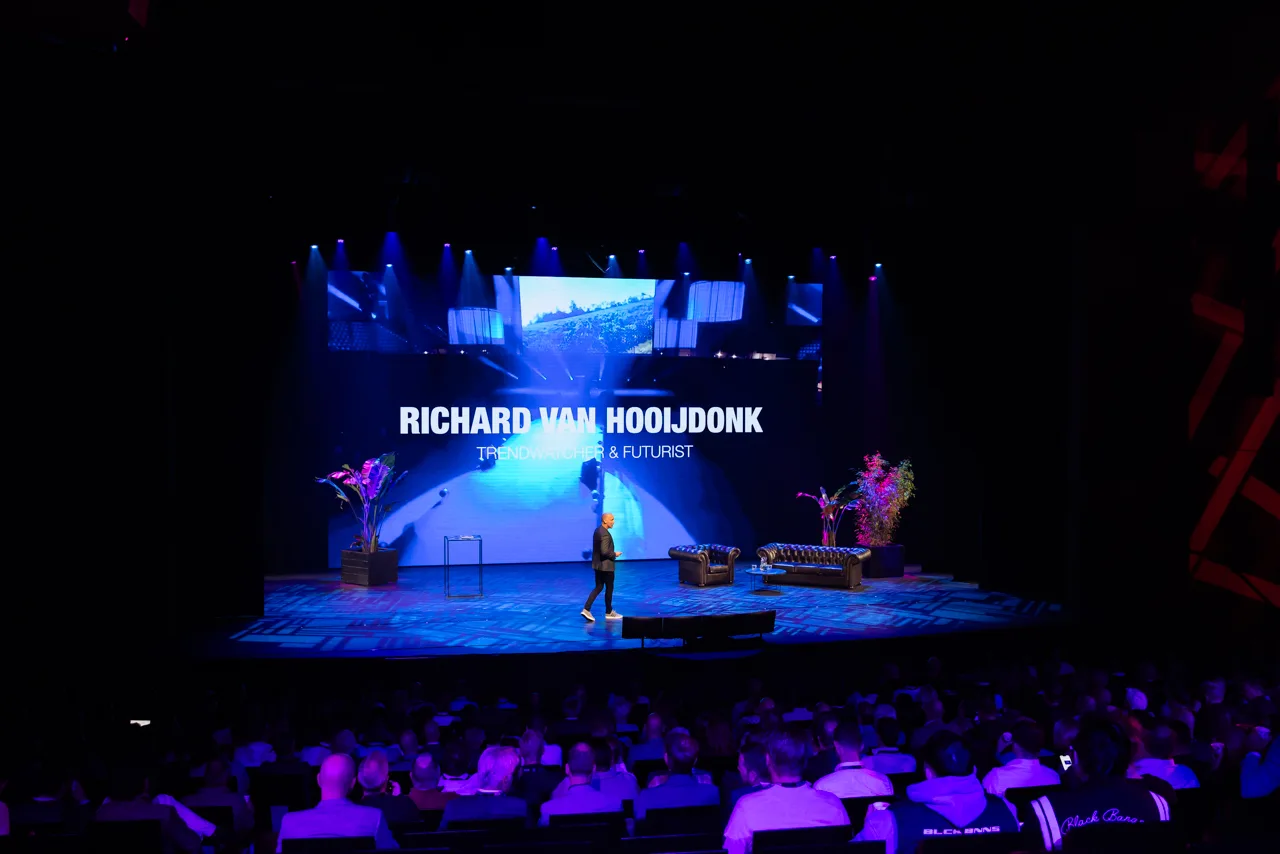
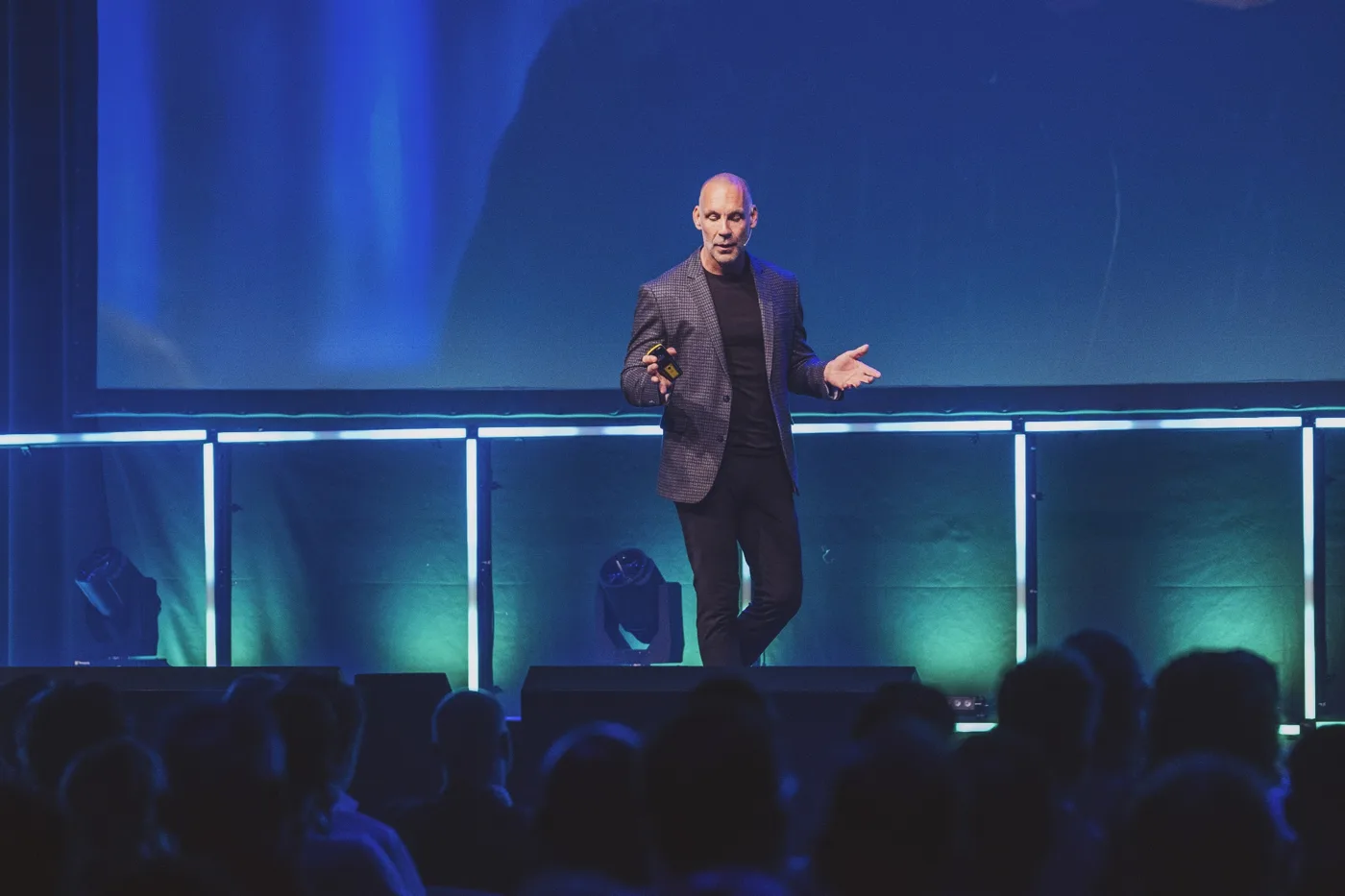
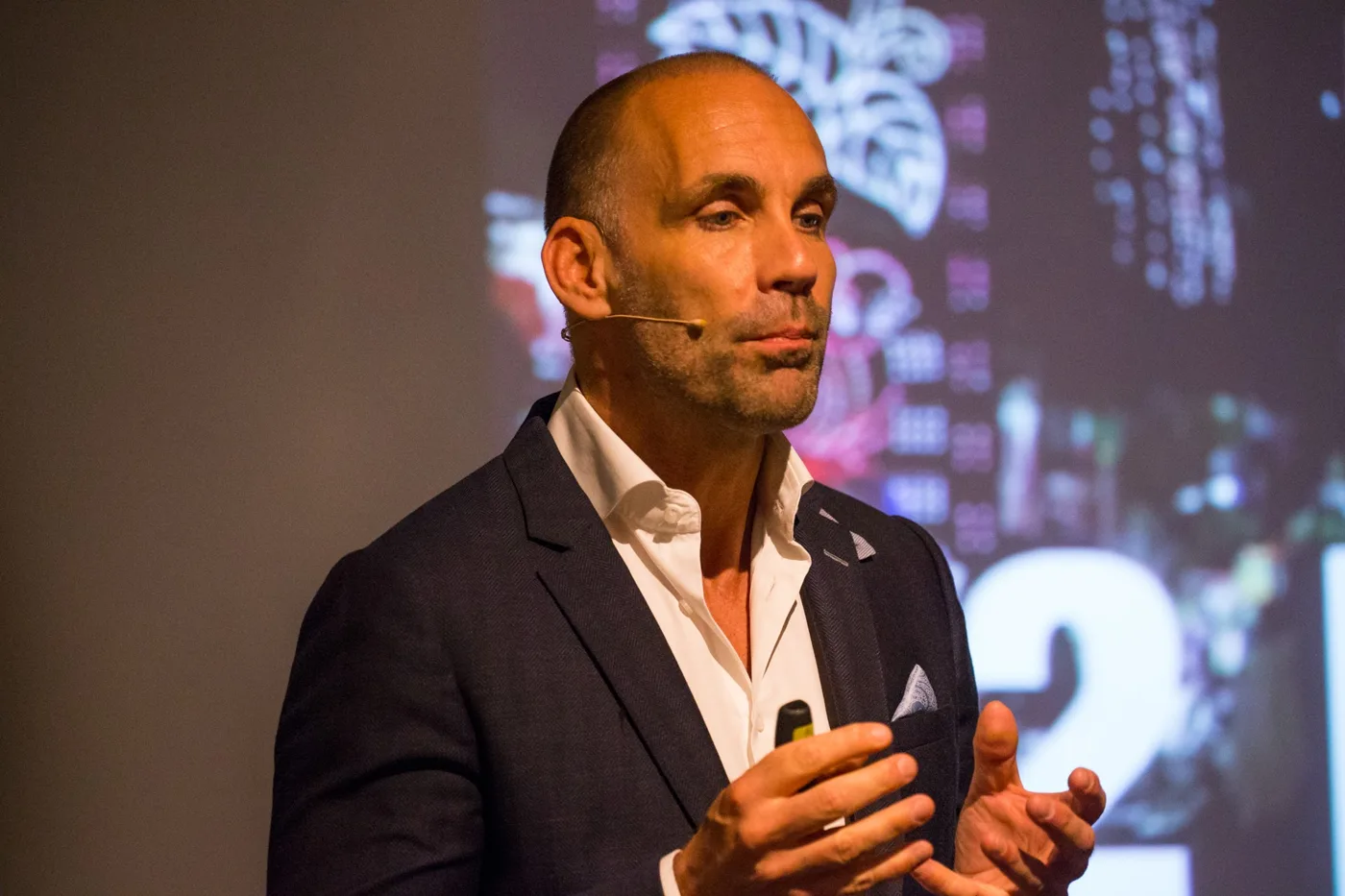
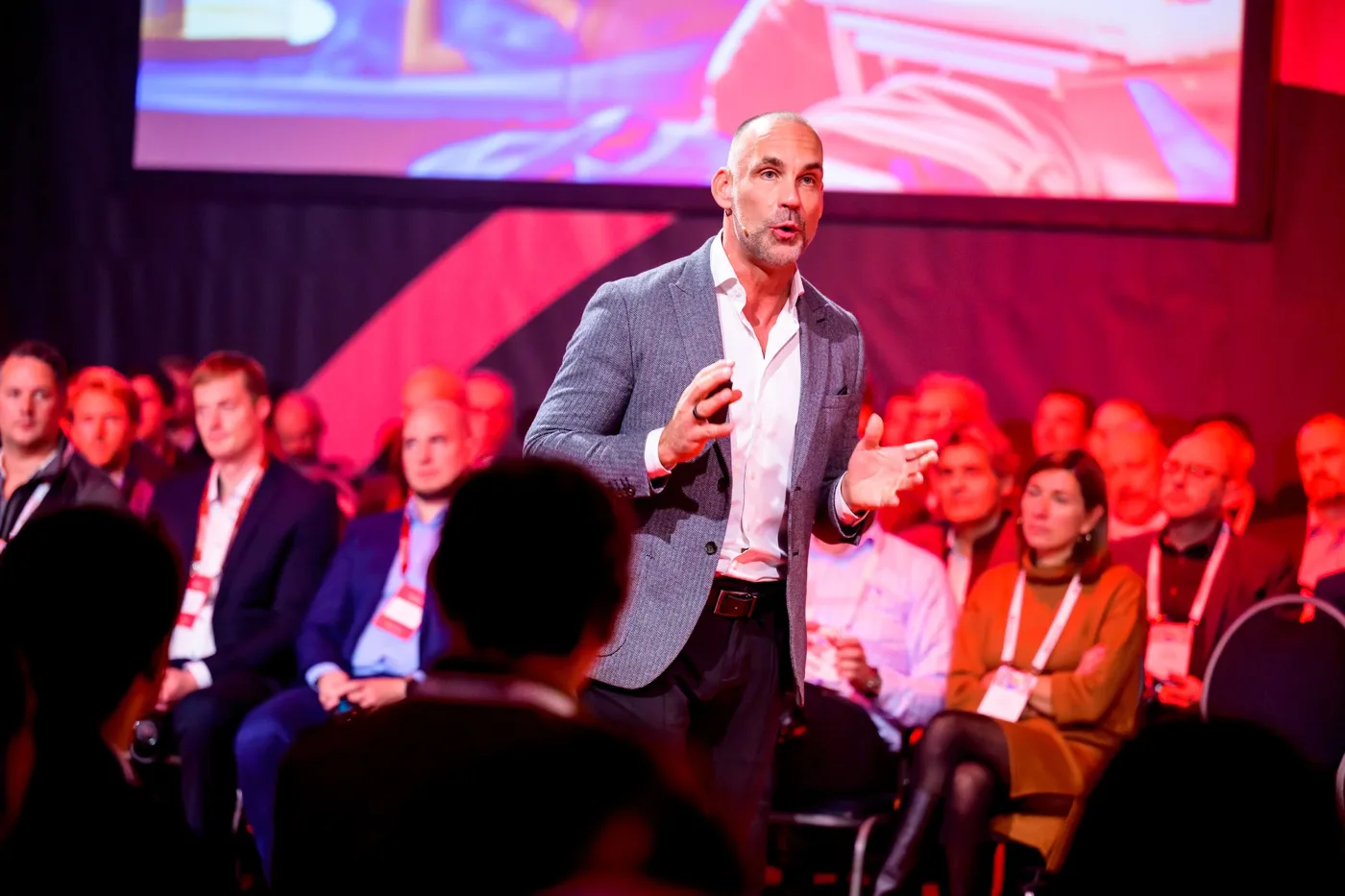
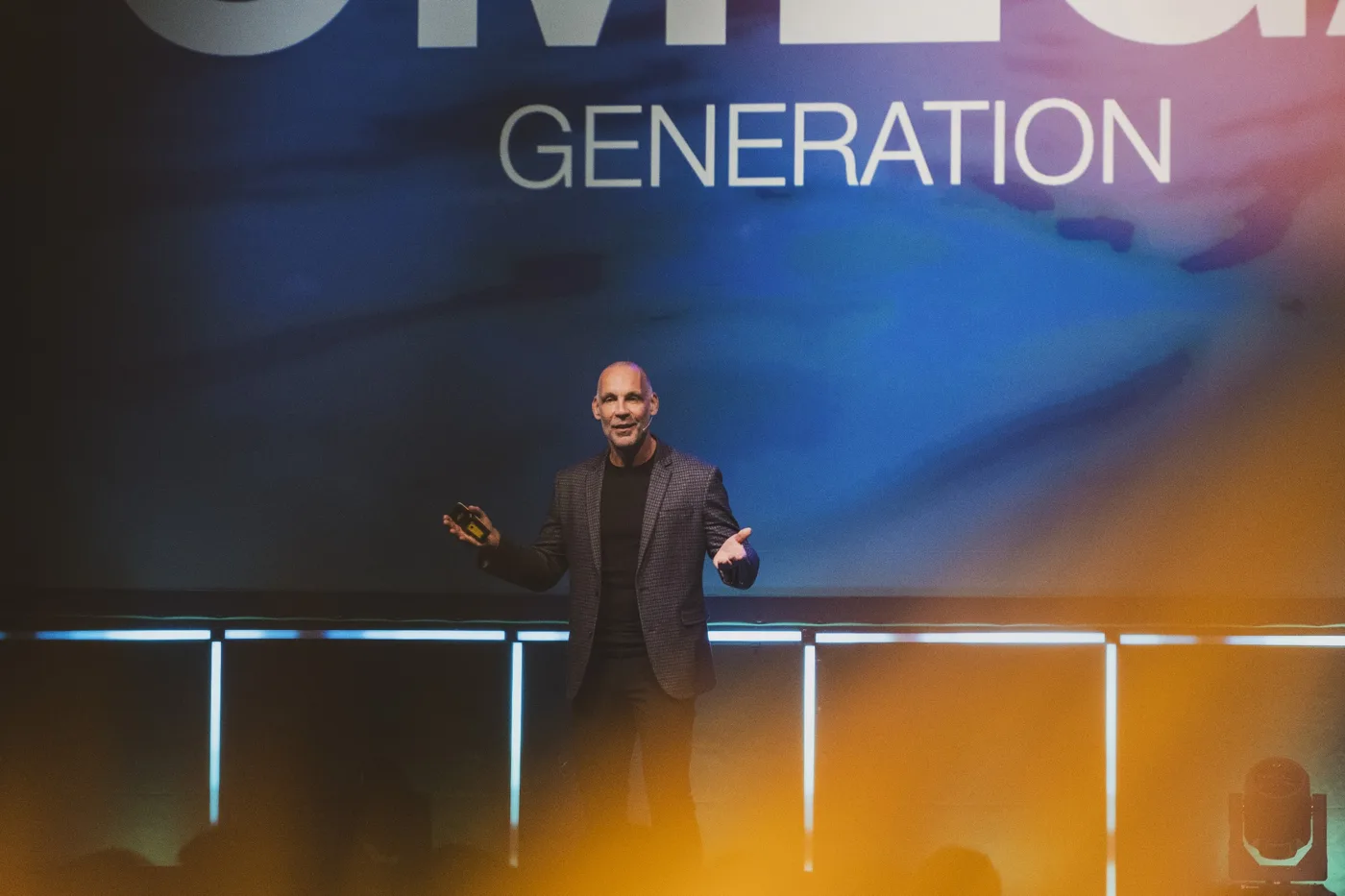
A packed conference hall, a televised panel discussion, a police summit in Dubai.


A selection of over 400 clients















What clients say

“You gave us all honest, inspired and entertaining insights. Your performance was highly appreciated by the conference participants and EU members.”Read the full review →

“An impressive and noteworthy presentation for our employees and customers. The rate at which change is happening, which you eloquently brought across in your energetic speech, requires a disruptive approach. To be continued!”Read the full review →

“A dazzling journey through new technology. The enthusiasm and energy during his presentation, combined with the visuals, provided a successful kick-off to our event.”Read the full review →

“Richard delivered an excellent presentation for the key clients we invited to Innovation Runway 2026. Engaging, interesting content, and thought-provoking statements made his presentation perfectly suited for our top relations.”Read the full review →
“The symposium ‘Airpower in the Information Age’ was a great success. Nothing but positive feedback from the participants. In no small part thanks to your commitment and dedication, we were able to achieve this result.”Read the full review →
How a booking works
Your request
Use the form, or get in touch by phone, email or WhatsApp. A few lines are enough to get started.
We get in touch
We'd like to hear what your event looks like, who'll be in the audience and which themes interest you.
A written proposal
Covering the topic, format (on location or online), length (30, 45, 60 minutes or longer) and fee, so you can talk it over with your colleagues.
Getting to know Richard
Next, we'll find a time for the two of you to talk and brainstorm the keynote, the topics and the format. There's no charge for this.
Frequently asked questions
Who is this keynote for?
Grid operators, energy suppliers, solar and wind generators, drinking water and wastewater companies, heat network operators, energy-intensive industry, governments and conferences on the energy transition. The audience often mixes executives, grid planners, engineers, traders and IT specialists; the keynote is made for that mix. It also works for events for staff, clients and business partners.
What will the audience take away?
An up-to-date picture of what AI and new technology already do on the grid, in the market and in water management, and scenarios for the next five to fifteen years: a grid that runs itself, nuclear plants beside data centres, solar power stations in space and water from the air. What that means for roles, teams, leadership and culture. And a clear view of reliability and security, so that the conversation afterwards is about choices, not hype or fear.
Does the keynote also cover our own organisation?
Yes, and that is often the main focus: how a company built around certainty learns to work with AI that supports its decisions, which new roles emerge and what that asks of leaders. Roles, teams of people and AI, leadership, culture and learning each get their own part of the keynote.
Does the keynote cover the risks?
Yes, always. Attacks on inverters and water treatment plants, phishing and voice fraud with AI, and the question of how to let AI help steer critical infrastructure safely: that other side has its own place in every keynote on energy and utilities.
Does drinking water feature too, or only electricity?
Both. Water companies face the same questions: sensors in the pipe network, AI in treatment, water reuse and the security of installations. The emphasis follows the audience: a conference of water companies gets different examples from a meeting of grid operators.
Is the keynote tailored to our company?
Yes. Beforehand there is an introductory call about the audience, the purpose of the event and what is happening in your company or region. A board deciding on investments gets different examples from an audience of grid planners or field engineers.
How long is the keynote, and can it be in English or online?
30, 45 or 60 minutes, and longer if you wish, with time for questions from the audience, in Dutch or English, in person or online. For more than a keynote, there are masterclasses, boardroom sessions for boards and other leaders, and workshops for all employees.
How much does a keynote on energy and utilities cost?
Fees for international keynotes are on request. Ask for a proposal and you will hear from us within an hour on working days.
Interested in a keynote on energy and utilities?
Tell us in a few sentences about your event and who will be in the audience, and let us know the date.
Prefer to speak to us directly? Call 085 303 0792 · email talks@vanhooijdonk.com · send a WhatsApp message