 Richard van Hooijdonk
AI & the future of media and entertainment
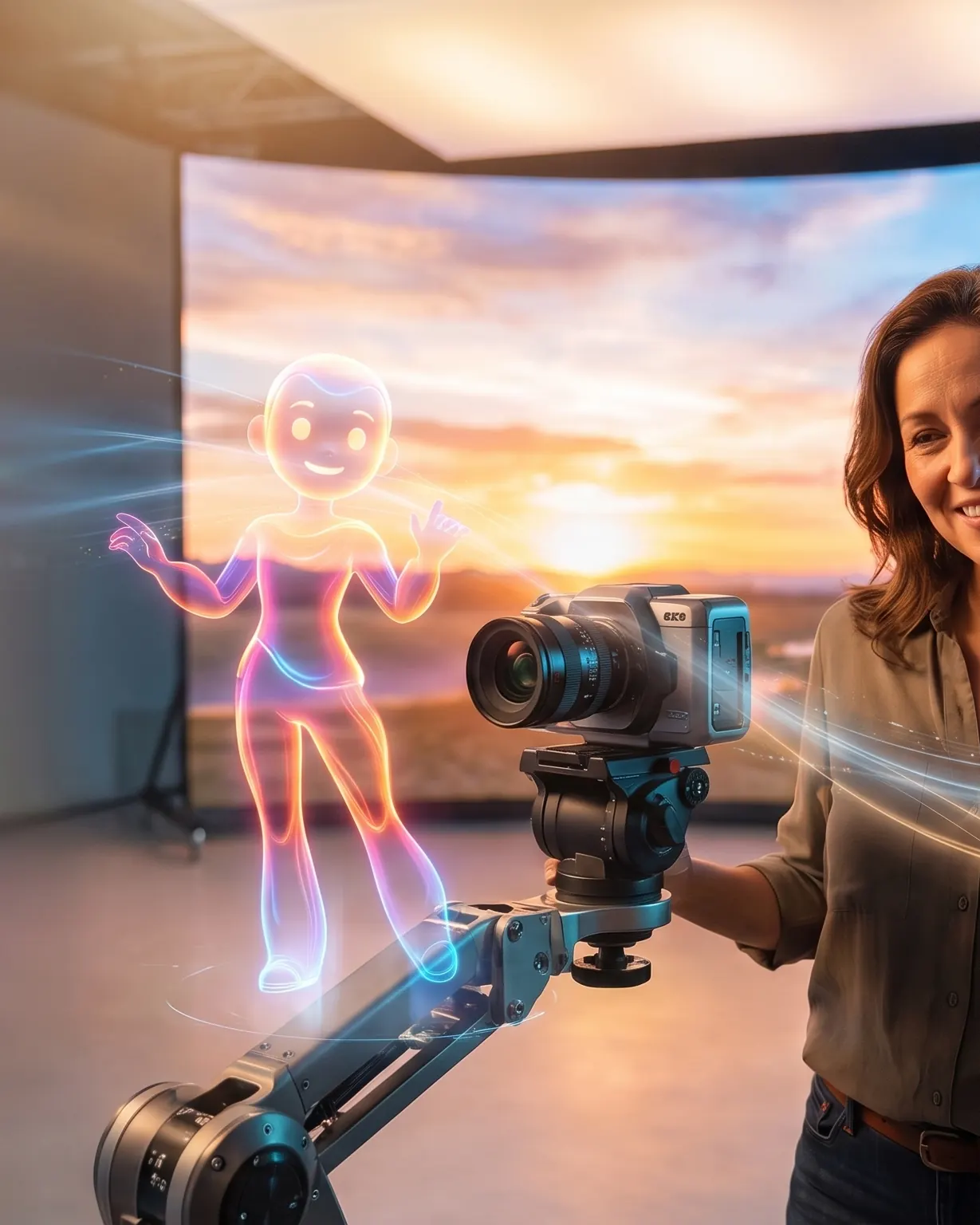
A series that takes shape as you watch it. An artist whose digital double plays a thousand stages at once. An AI agent that reads the news before its reader does. What sets a media organisation apart then is its story, its taste and the trust of its audience.
Choose your sector
Every keynote is tailored to a sector. Choose yours.
 Healthcare
 Government
 Defence
 Policing and security
 Smart cities
 Construction
 Mobility
 Industry 4.0
 Energy and utilities
 Logistics
 Retail
 Wholesale
 Hospitality, tourism and leisure
 Agriculture
 Financial services
 Legal
 Accountancy and advisory
 Education
 Media and entertainmentYou are viewing
 Telecoms and connectivity
Is your sector not listed? We tailor the keynote to your audience. Tell us about your audience
Stories that adapt to the viewer, games that take shape as you play. AI is changing who makes media, how we experience it and who wins our attention.
In this keynote, futurist and trend watcher Richard van Hooijdonk shows how AI is changing the way media and entertainment are made and distributed, and how brands can put that to work. He also gives a glimpse of the remarkable world of media and entertainment that lies ahead. The industry lives on attention. Production companies create storyboards and effects with generative AI; newsrooms have AI follow thousands of sources day and night. At the same time, power is shifting. AI assistants answer questions that used to send readers to a news site, and Deezer reports receiving tens of thousands of fully AI-generated tracks every day. Over the next ten to fifteen years it goes further: games and series that take shape as you play or watch, artists with a licensed digital double, and AI agents that read the news before a person does. The keynote shows what is in the studio today and what could arrive by 2040, including the criminal side: cloned voices of artists and deepfakes of well-known presenters. What will keep your audience loyal to you in ten years' time?
AI in media and entertainment
What AI already does in the studio, the newsroom, the archive and distribution.
- 01
 Applied
Generative production
Test scenes in an afternoon, dozens of trailer versions per production. Next: a complete scene generated from a script.
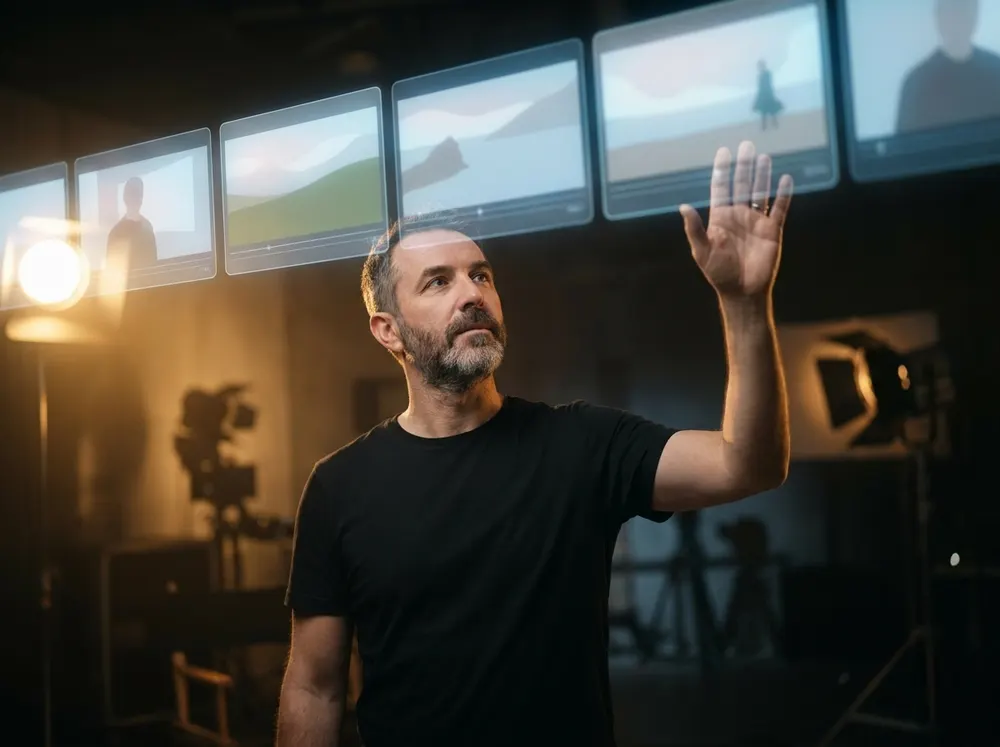
For a production company, generative AI mostly speeds up the stages before and after the shoot. A director can have a storyboard or a short test scene made in an afternoon to try out an idea, and the effects team produces variations of an explosion or a crowd without building each one by hand. Commercials and trailers come out in dozens of versions, one for each channel and audience. Video models are getting better at keeping characters and camera moves consistent across several shots. AI supplies the variations; the creator chooses the one that carries the story. The next step is a complete scene generated from a script, with actors who have licensed their likeness for it, and a director who picks the take.
- 02
 Applied
Archives that answer questions
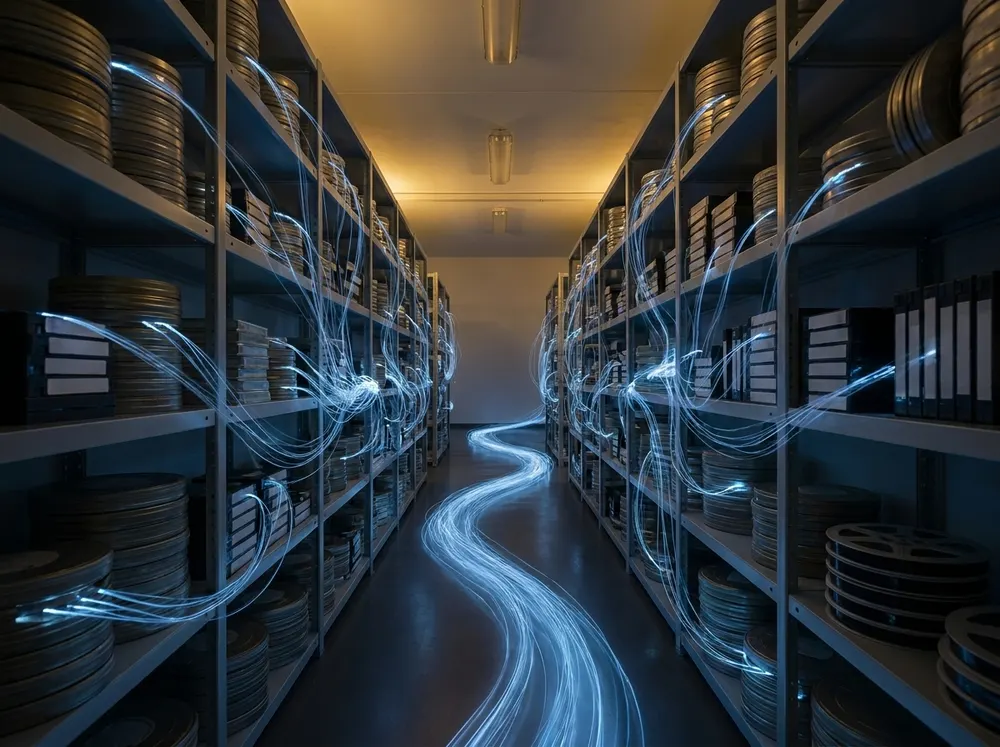
AI makes decades of footage, audio and text searchable. Next: an archive that suggests material to go with the day's news.
Broadcasters, newspapers and film archives hold decades of material, but the description attached to it is often brief or missing. AI combines spoken passages, what can be seen on screen and the old catalogue notes, so it also turns up clips filed under a different title. An editor asks a plain question and, within minutes, has footage of floods from fifty years of television. Material that sat on the shelf for decades becomes programming again. The next step is an archive that makes suggestions of its own: footage from fifty years earlier for every news story, and a first edit of everything ever broadcast on a subject when an anniversary comes round. The archive stops being a storeroom and becomes a colleague in the newsroom.
- 03
 Applied
AI in the newsroom
AI watches thousands of sources day and night, searches leaked datasets and helps verify footage. Journalists get time back to dig deeper.
In a newsroom, transcribing and summarising with AI is now routine. The interesting work is a step further on. AI follows thousands of sources around the clock, from court rulings to shipping data, and flags whatever looks out of line. Investigative journalists have a model search millions of leaked documents for names, sums and connections, work that once took months. Verification teams use AI to establish where and when a video was filmed. Broadcasters are trialling fully synthetic presenters, and translation and voice models make it possible to put out a bulletin in several languages. That leaves journalists more time for the work only people can do: phoning sources, being on the spot and asking the follow-up question.
- 04
 In pilots
AI agents in production
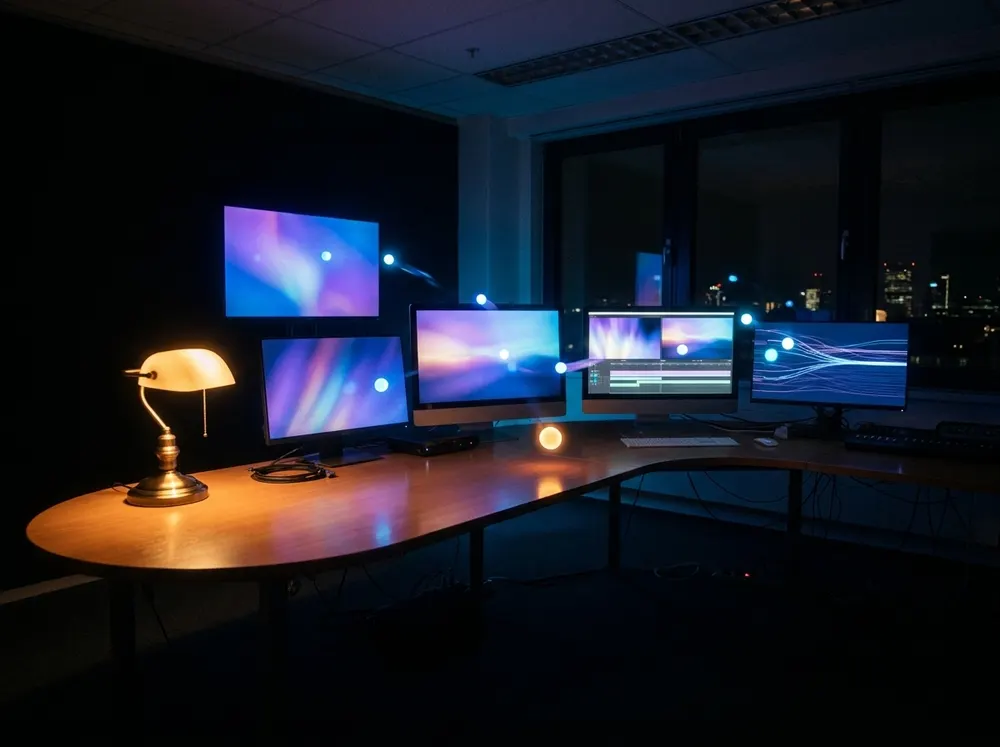
AI agents handle a chain of production tasks: processing footage, checking rights and getting episodes ready for release.
An AI agent works through a series of tasks on its own to reach a goal, operating other software along the way. A production is full of that kind of work: scheduling shoot days, checking which music and archive footage may be used, getting subtitles made and sending a programme in the right formats to dozens of platforms. Trials are testing which parts of those chains AI agents can take on. An agent might prepare an episode for a streaming service, for instance: it checks the technical specifications, writes the description and reports which rights are still missing. The next step is an agent that takes an episode from shoot day to platform and only calls in the producer when there is a choice to make.
The future of media and entertainment
Where media and entertainment could be in five to fifteen years, with AI as the engine.
- 05
 Future scenario
The series that adapts as you watch
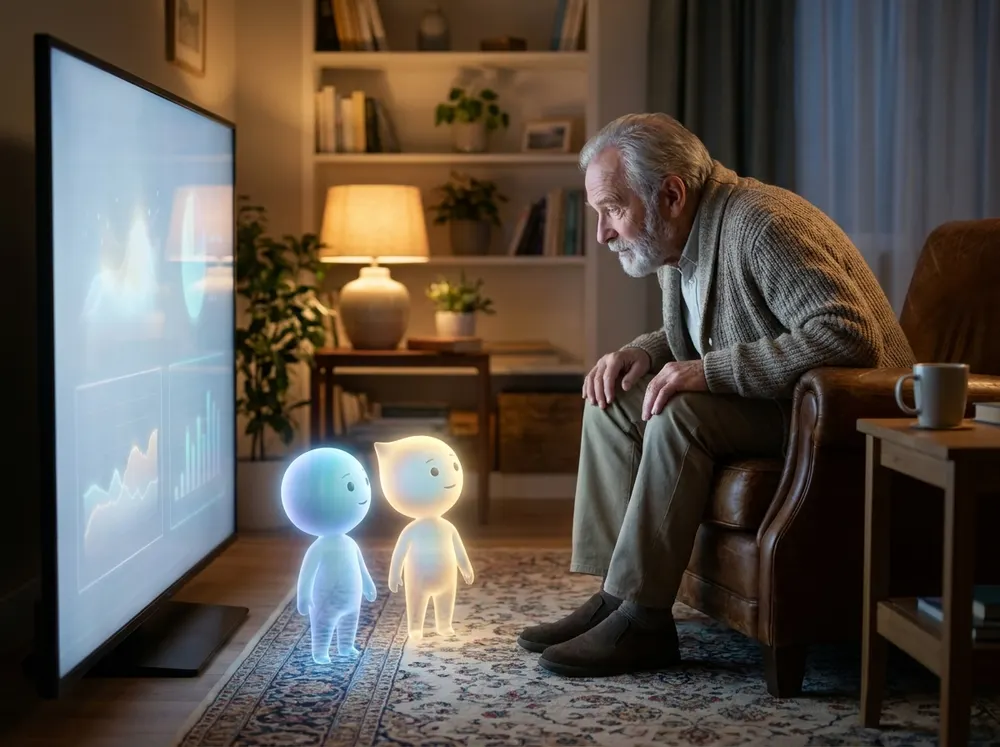
Around 2040, a series takes shape as you watch. Viewers follow another character or step into a scene, inside the writers' world.
World models are AI systems that generate a moving environment frame by frame as you look around it, rather than building it in advance. Early versions keep such a world coherent for a few minutes, and in games, characters driven by a language model already hold conversations without a fixed script. The scenario for 2040: a series generated while it is being watched. The viewer follows a different character, puts a question to a minor figure or picks a gentler turn of events, and the story stays within the world, tone and ending the writers have laid down. The writers' room then no longer designs episodes but a story world with rules. The same title becomes a different evening's viewing for every person watching.
- 06
 Future scenario
Worlds on demand
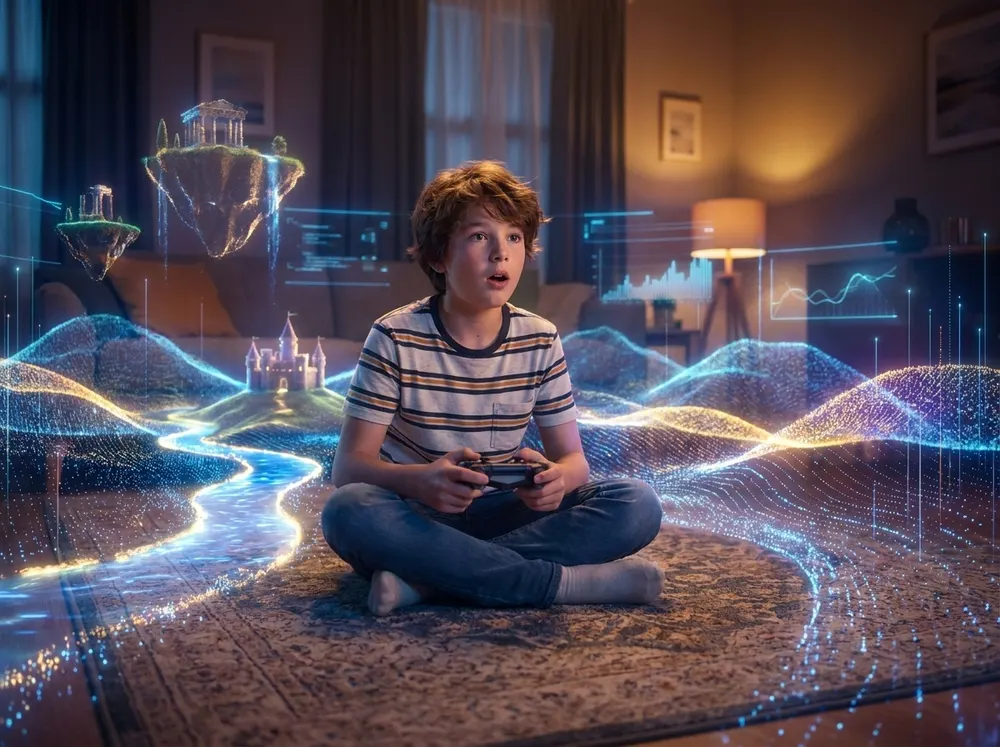
Around 2040, AI builds a game's world while you play. The studio designs the rules, the style and the feel, not every level.
Big games now take years to develop, with teams combining handcrafted worlds and procedurally generated environments. World models can already produce short playable environments from a single image or sentence, and developers use generative AI for sound, faces and dialogue. The scenario for 2040: a game whose world only comes into being where the player looks, with characters who remember what the player did earlier. Every player gets their own map, their own supporting cast and their own course of events. The studio shifts from building to directing: it sets the physics of the world, the style, the difficulty and the story that has to hold together. A small team could then make a world that now takes hundreds of people.
- 07
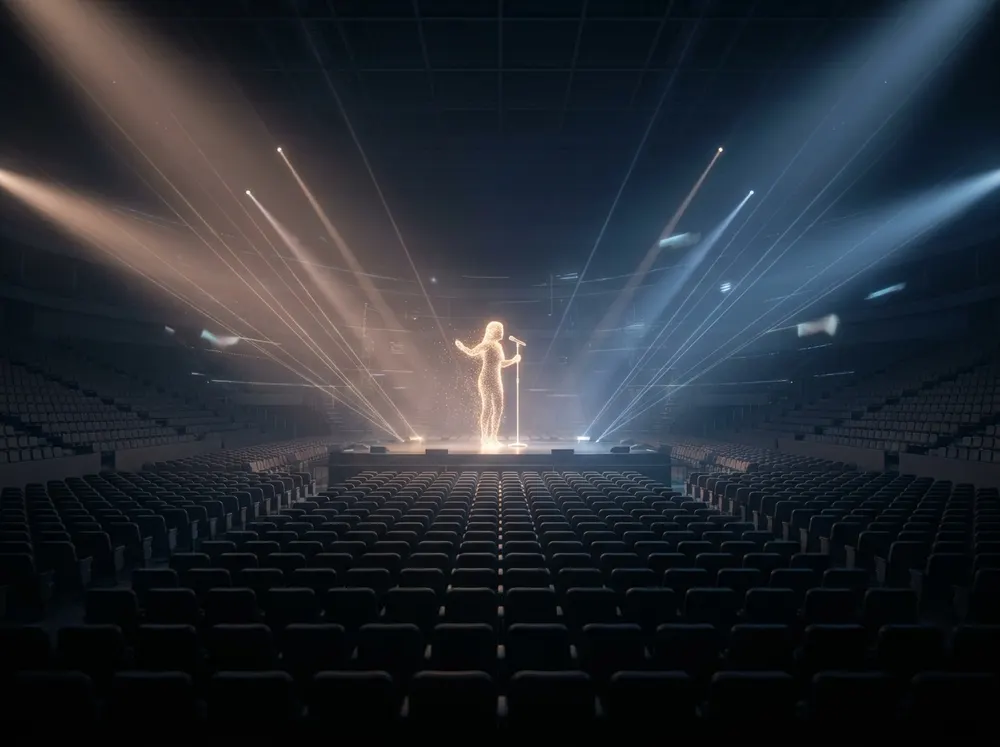 Future scenario
An artist's digital double
Around 2040, an artist's licensed digital double could perform in a thousand places at once, long after the artist has stopped performing.
A digital double is an AI model of an artist's or actor's voice, face and way of moving, made with consent and under licence. Labels now sign licensing deals with AI companies for voices, actors have set out in their collective agreements when a digital replica may perform, and a concert series with digital avatars of a pop group has run for years in a venue of its own. The scenario for 2040: a singer's double sings in ten languages, appears in a game, sends a fan a personal birthday song and performs at a venue on the other side of the world. The artist chooses the roles, the brands and the limits. Heirs will manage a voice the way they now manage a music catalogue.
- 08
 Future scenario
When the reader is an AI agent
In time, a personal AI agent reads the news for its user. News media supply verified facts and are paid per use.
A personal AI agent searches, weighs and sorts information on its own for a single user. A growing share of traffic to news sites already comes from AI systems, roughly one in ten internet users surveyed uses a chatbot for news every week, and publishers are trialling payment per request and standards that set the terms for AI use. The scenario for 2040: much of the news reaches people through agents that put together a morning briefing for each reader. The news organisation supplies what an agent cannot make itself: verified facts, its own scoops, witnesses and context, in a form machines can read and pay for. Revenue comes in per use. A news organisation that is rarely wrong can charge more for every story.
- 09
 Future scenario
Music that grows with you
Around 2040, an artist releases an album that keeps producing new songs for years. Every listener hears a version of their own.
Adaptive music already responds to activity, time of day and heart rate, and artists supply material for these listening experiences. Generative models now produce complete songs with vocals, and major labels have signed licences with the makers of such models. The scenario for 2040: an artist releases an album that goes on producing new songs for years. Melodies and lyrics grow with the listener, with recurring themes that develop over time, whether on a morning run or at a party. The artist sets the musical identity and decides which stories this living repertoire can tell. Fans compare their versions the way they now compare live recordings. The business model moves towards ongoing access to a licensed style, and a fixed recording becomes a special release.
- 10
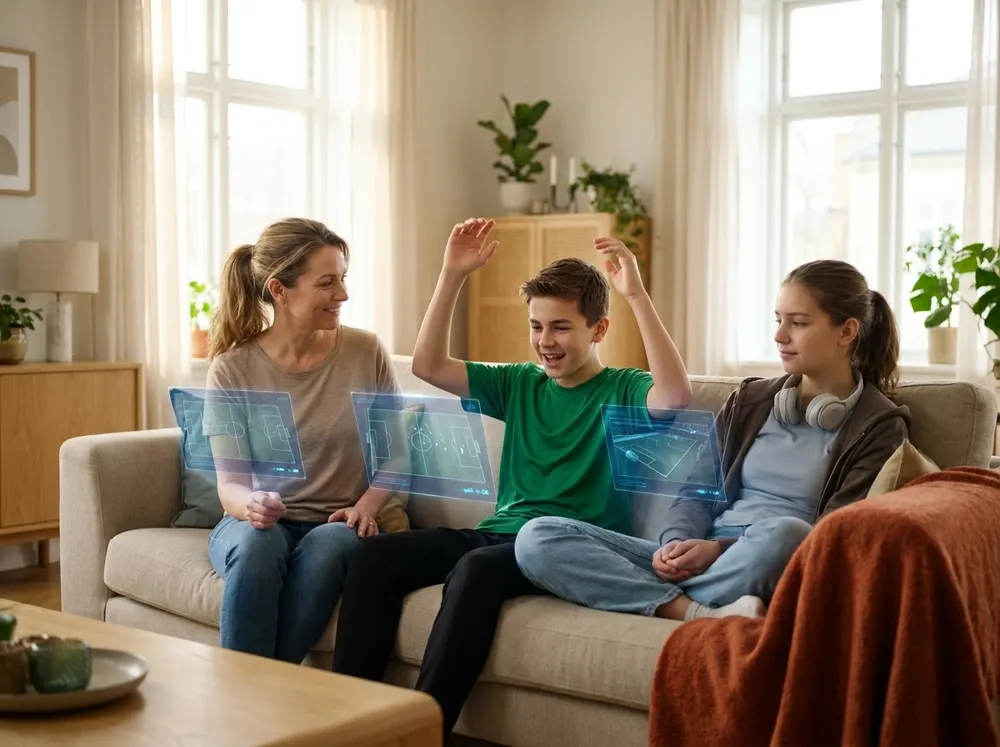 Future scenario
A broadcast for every viewer
Around 2040, every sports fan gets a live broadcast of their own, with virtual camera angles, personal analysis and commentary in their language.
At major tournaments, AI already produces commentary for highlights, and automated cameras bring amateur matches to a live audience. The scenario for 2040: AI rebuilds a match as a three-dimensional model, and from that model each viewer gets a broadcast of their own. One fan follows the game from a virtual camera position next to their favourite player, with analysis that ties in with earlier matches they watched. Another sees the same decisive move from three positions in a row, with commentary in the voice of a former international who agreed to it. Directors design the storytelling formats these broadcasts grow from. Broadcast rights gain an extra dimension: a match that can be watched in countless ways.
- 11
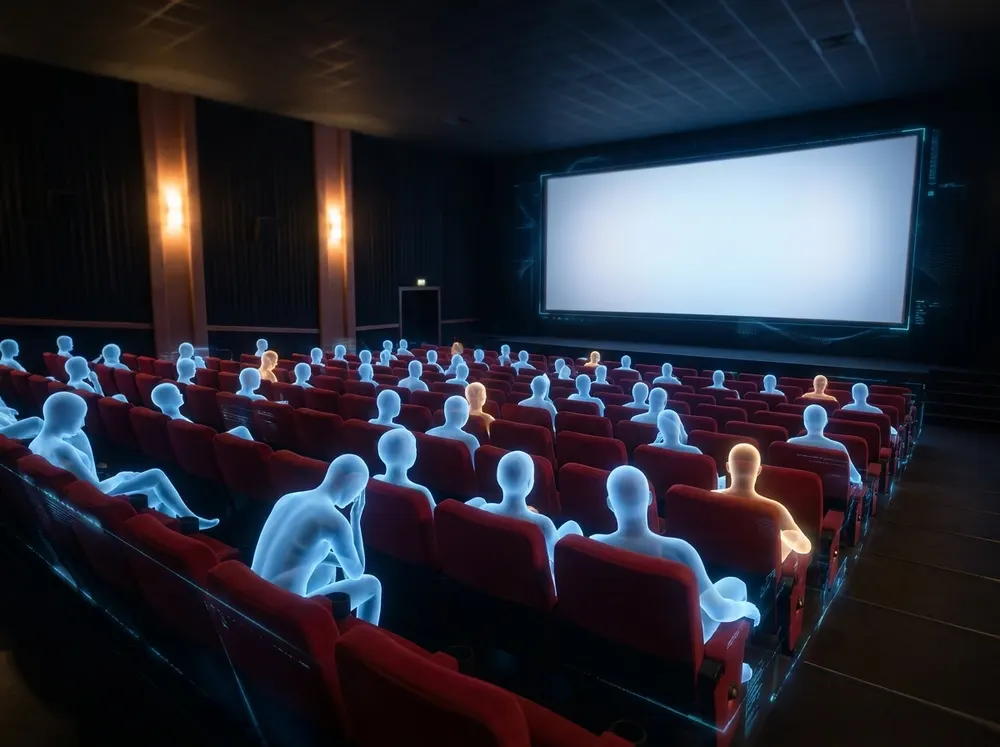 Future scenario
The synthetic test audience
Around 2032, a studio tests a script on a million simulated viewers before a single scene is shot. The real audience decides after that.
A synthetic audience is a group of AI models that behave like viewers, readers or listeners of a given age, taste and background. Market researchers are already trialling these simulated respondents; studies show that on some questions they come close to real answers and on others they are far off. The scenario for 2032: a studio or broadcaster puts a script, a trailer or a format to a million simulated viewers in twenty countries, sees where attention drops and which joke falls flat in which culture, and rewrites before a single scene is shot. Test screenings become a final check. And a production that succeeds against every prediction could then open up a new genre.
AI gives creators the means to do what once took a whole studio: a series in twenty languages, a world that grows with its audience. What comes of it depends on people: their story, their taste and the culture they work in.
Richard van Hooijdonk
The media organisation of the future
What AI asks of roles, teams, leaders, culture and training at broadcasters, publishers, producers and labels.
- 12
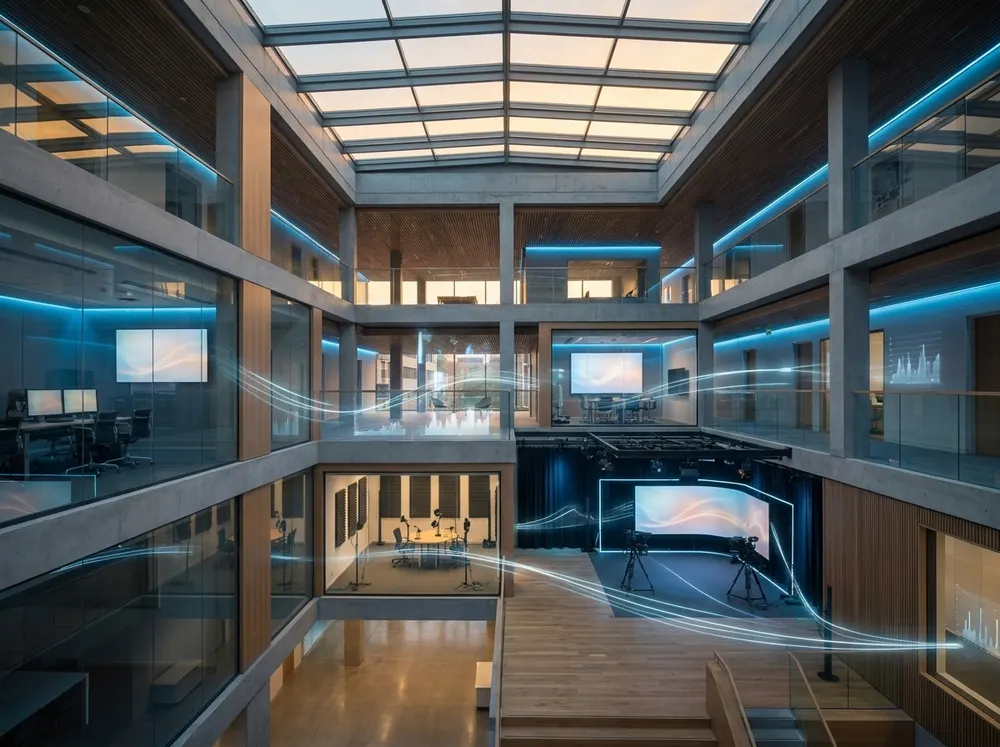
The AI-first organisation
AI does the repetitive and predictive work, from transcribing to archiving. Editors and creators focus on the story and their audience.
- 13
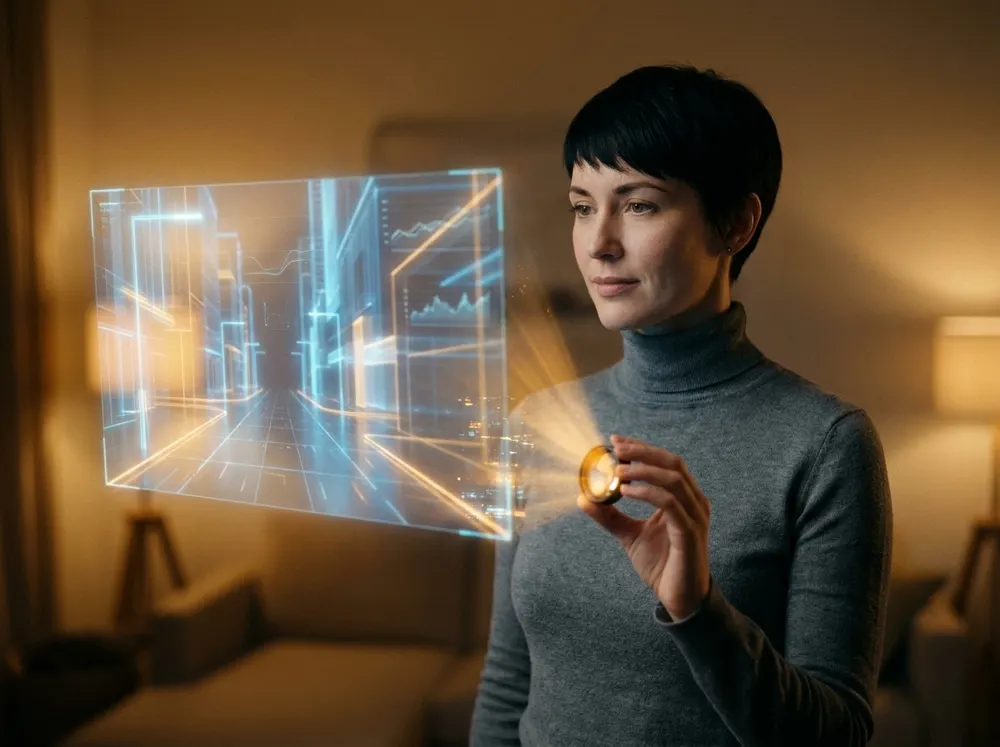
New roles in media
Alongside AI editors and verification specialists come designers of story worlds and managers of an artist's digital double.
When AI helps make programmes and articles, new kinds of work appear. AI editors tune the systems of a newsroom or studio and judge what they produce, verification specialists check whether an image or audio clip is genuine, and rights managers keep track of which voices, faces and archive items have been used in a model. Those roles already exist. Others will follow that barely have a name yet. Story world designers write the rules within which a series adapts to each viewer: what may change and what always stays the same. Managers of an artist's digital double decide where that version performs, with whom and for what fee. Many of these roles will be filled by experienced creators who retrain.
- 14
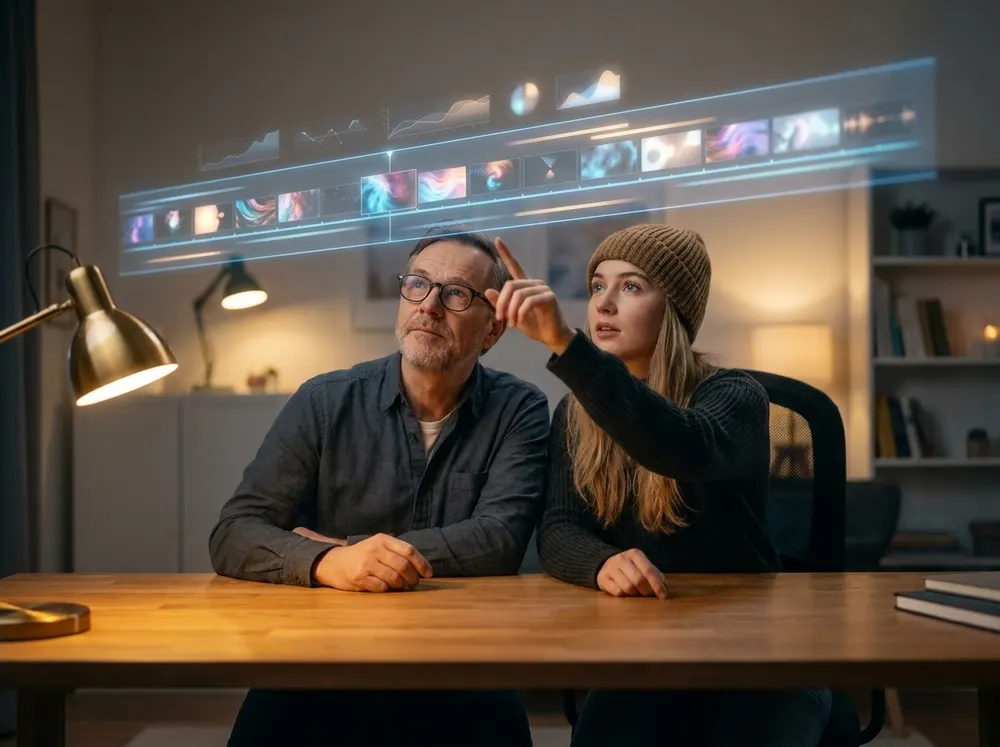
Creators and AI in one team
AI prepares rough cuts and scene variations; the creator chooses. A small team can then make what once took a large crew.
On a documentary, AI can select interview clips by theme and assemble them into rough cuts, so different storylines can be seen side by side. The director and editor choose the line that carries the story. In an animation studio, animators work with models that work out movement, backgrounds and lighting variations. AI takes the repetitive work and the number crunching: variations, versions, searching and sorting. People judge what a story does to an audience, weigh performance and rhythm, and choose what will move the viewer. The scenario for 2040: an animation studio of ten people works with AI agents that develop scenes and keep thousands of production elements consistent. A change to the ending then carries through to the opening scene.
- 15
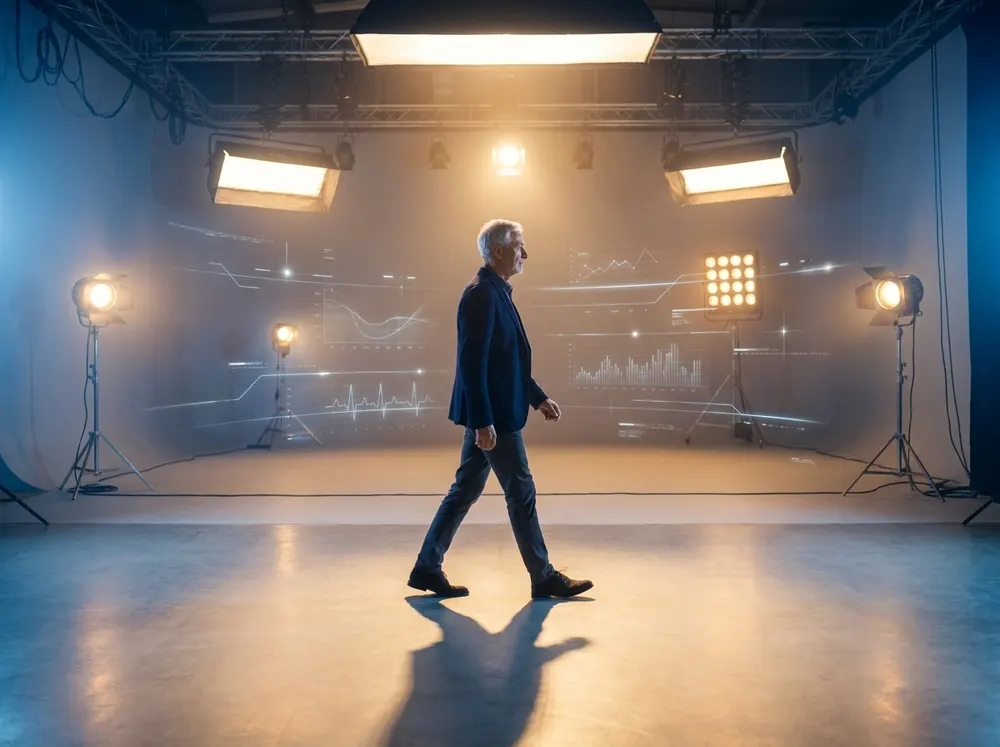
Leadership in media
Leaders in media take the initiative on AI and new technology, and bring creative teams and newsrooms with them to build the future of their brand.
In media, almost every part of the work is changing at once, and leaders take the first step. They take the initiative on AI and new technology, decide what will make their organisation indispensable to its audience in five years' time, and make that picture concrete for newsrooms, creative teams and freelancers. They work with the new tools themselves and give their people room to experiment. Which story the organisation wants to tell, and to whom, remains a human choice. That is how leaders get their people building the future together.
- 16
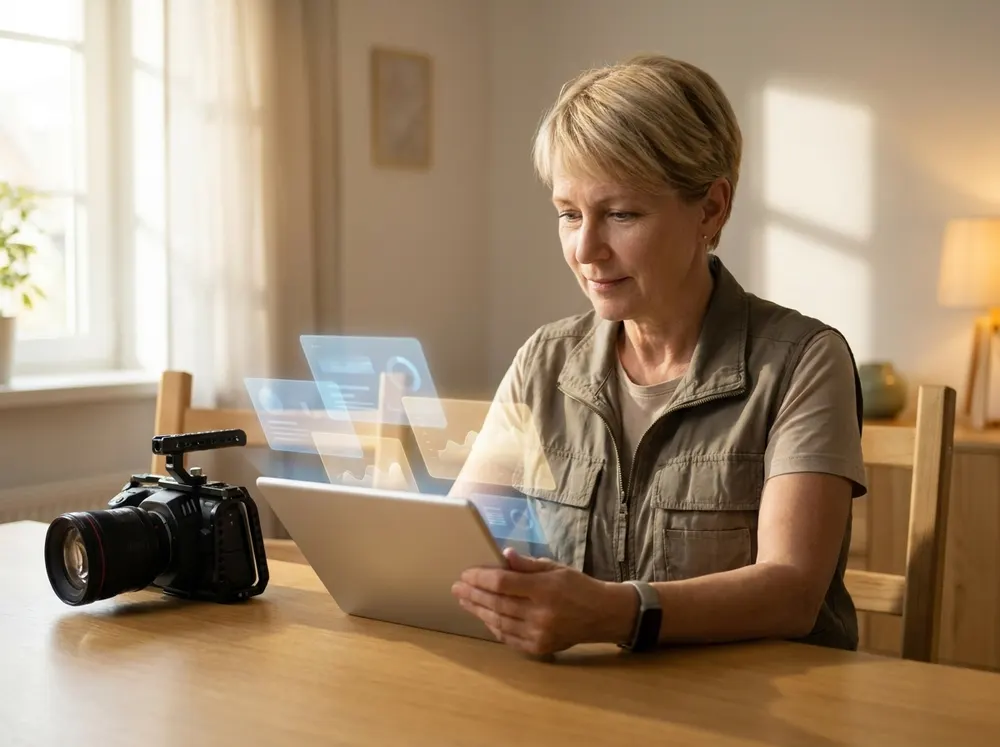
The future academy
In a future academy, experienced staff and newcomers learn to work with AI and new technology. Leaders practise leading people and AI together.
- 17

Growing with an ecosystem
Across borders, partners, start-ups, researchers and governments test applications together. What one learns, another can use.
The other side responsibility and risk
Data, authenticity and crime: the flip side of media made with AI.
- 18
Data as the foundation
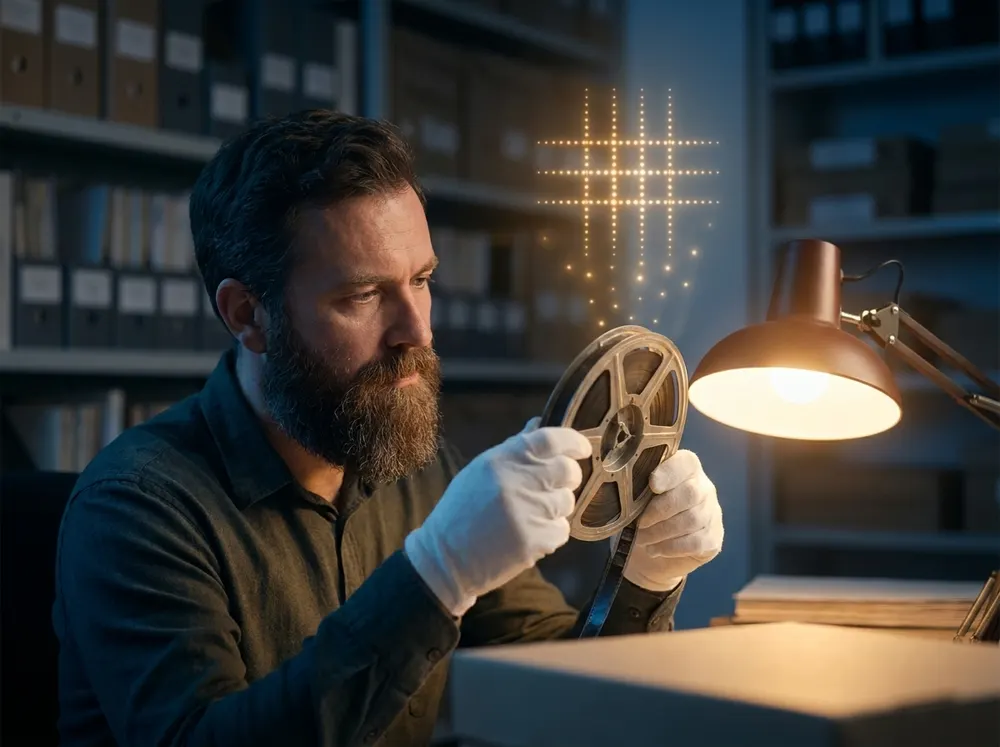
AI only works when data from every part of the organisation is available, reliable and connected. It is the foundation of the AI-first media company.
- 19
Authenticity and provenance
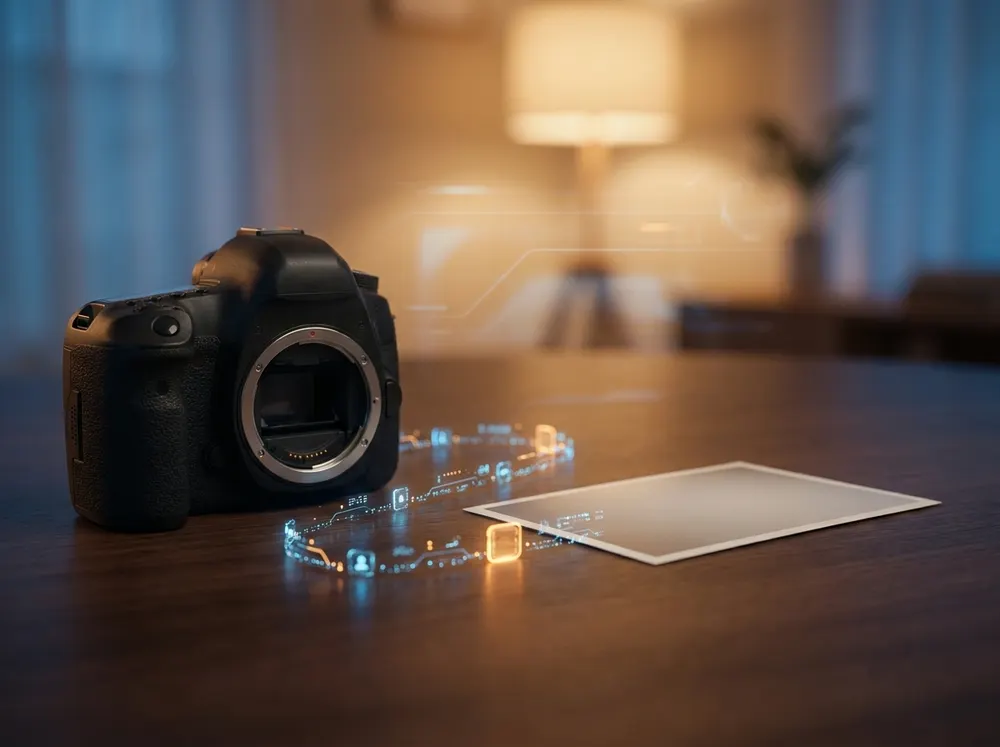
Provenance labels show where footage comes from, but not that its content is true. By around 2030, real footage may have to prove it is real.
When images, video and audio can be made with AI, audiences want to know where material comes from. Provenance labels carry digitally signed information about a file's origin and editing. They help a newsroom trace a file's history, but they do not prove that what it shows is true. Camera makers, software companies and broadcasters are working together on such a standard, and the EU AI Act requires providers to mark AI-generated content technically, with exceptions. A label can be missing or incomplete, and accounts that shared AI images of a war together drew a billion views. The same voice and video models that let a newsroom put out a bulletin in several languages help a fraudster fake a well-known presenter's face and voice for a scam. By around 2030, real footage may be the exception that has to be proven, rather than fake footage that has to be exposed.
About the speakerRichard van Hooijdonk
Events in EuropeKeynote speaker for corporate events in Europe
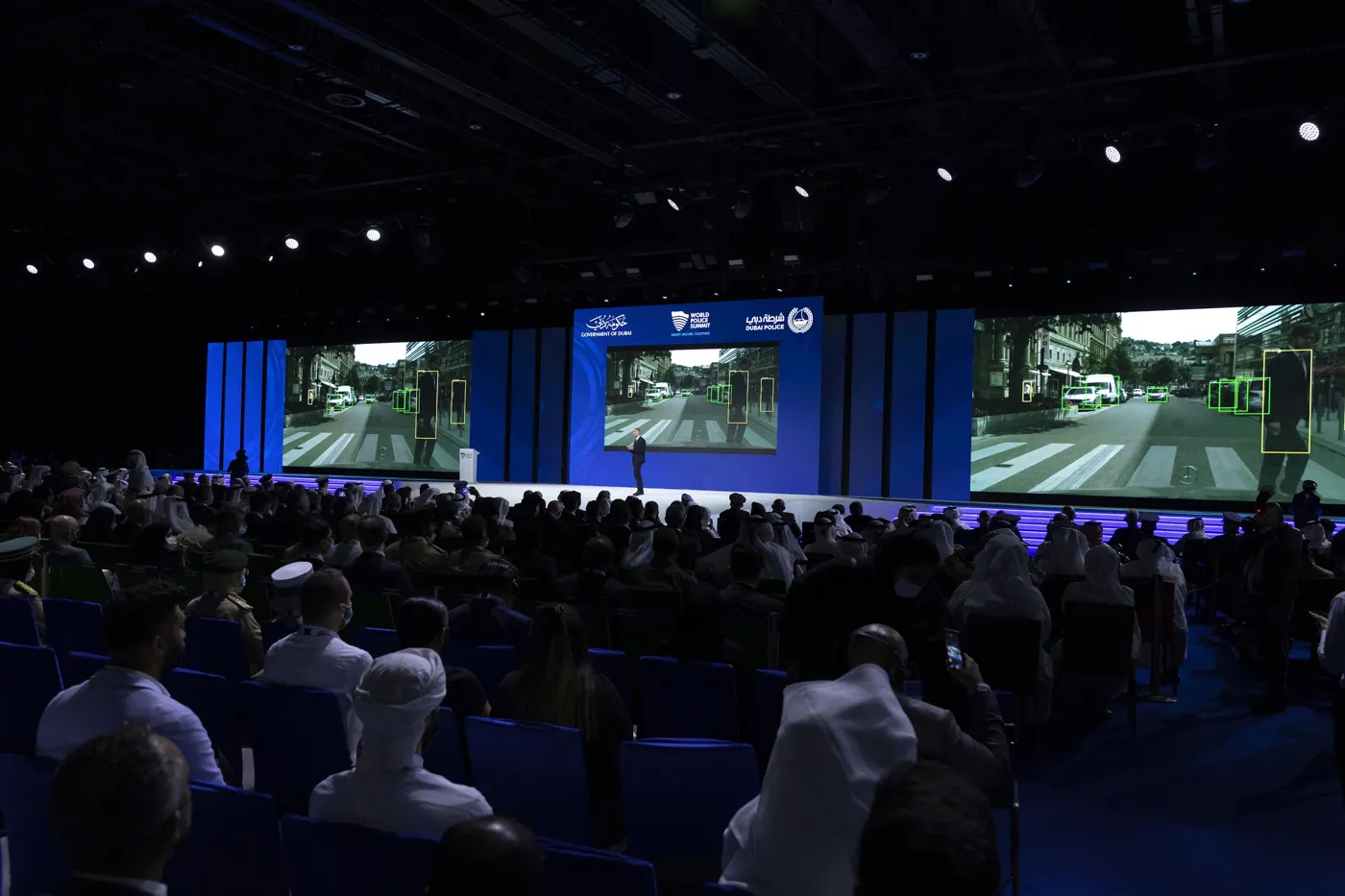
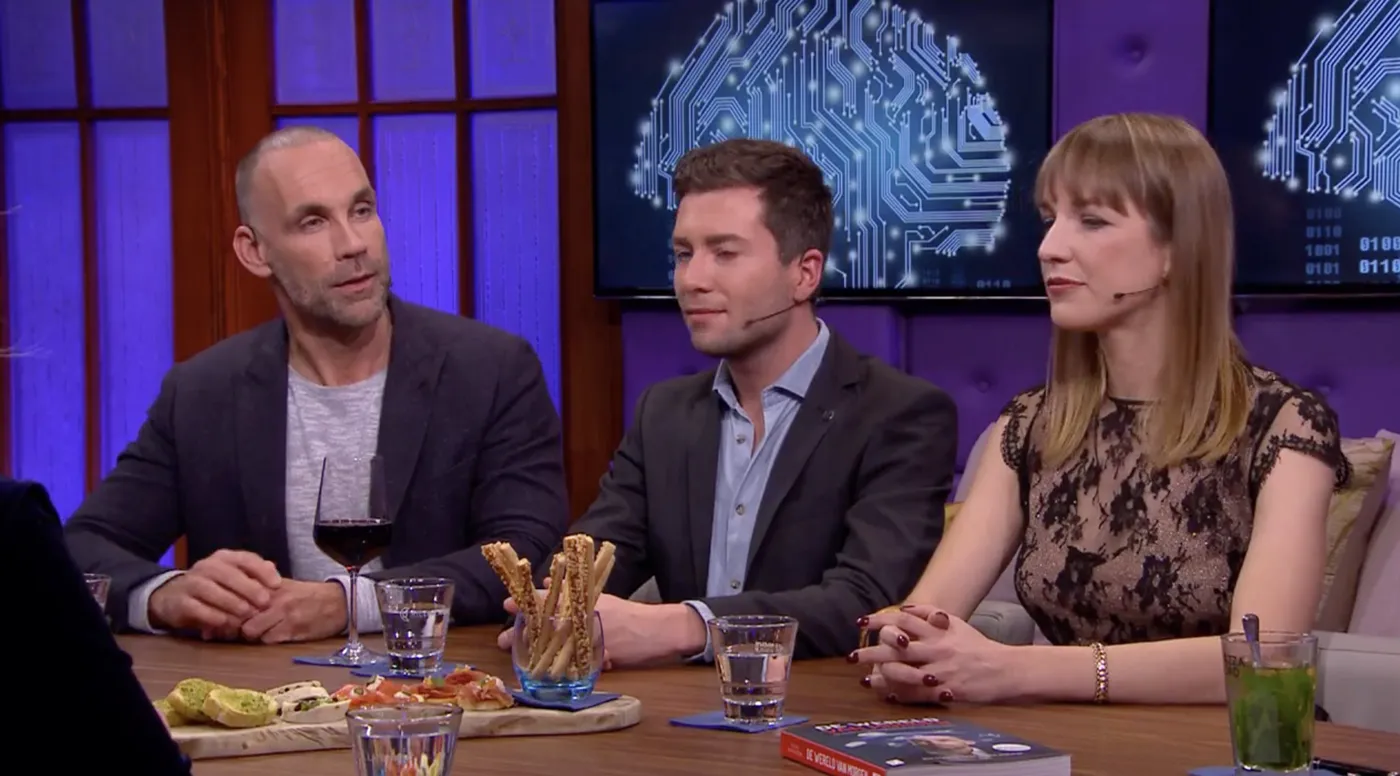
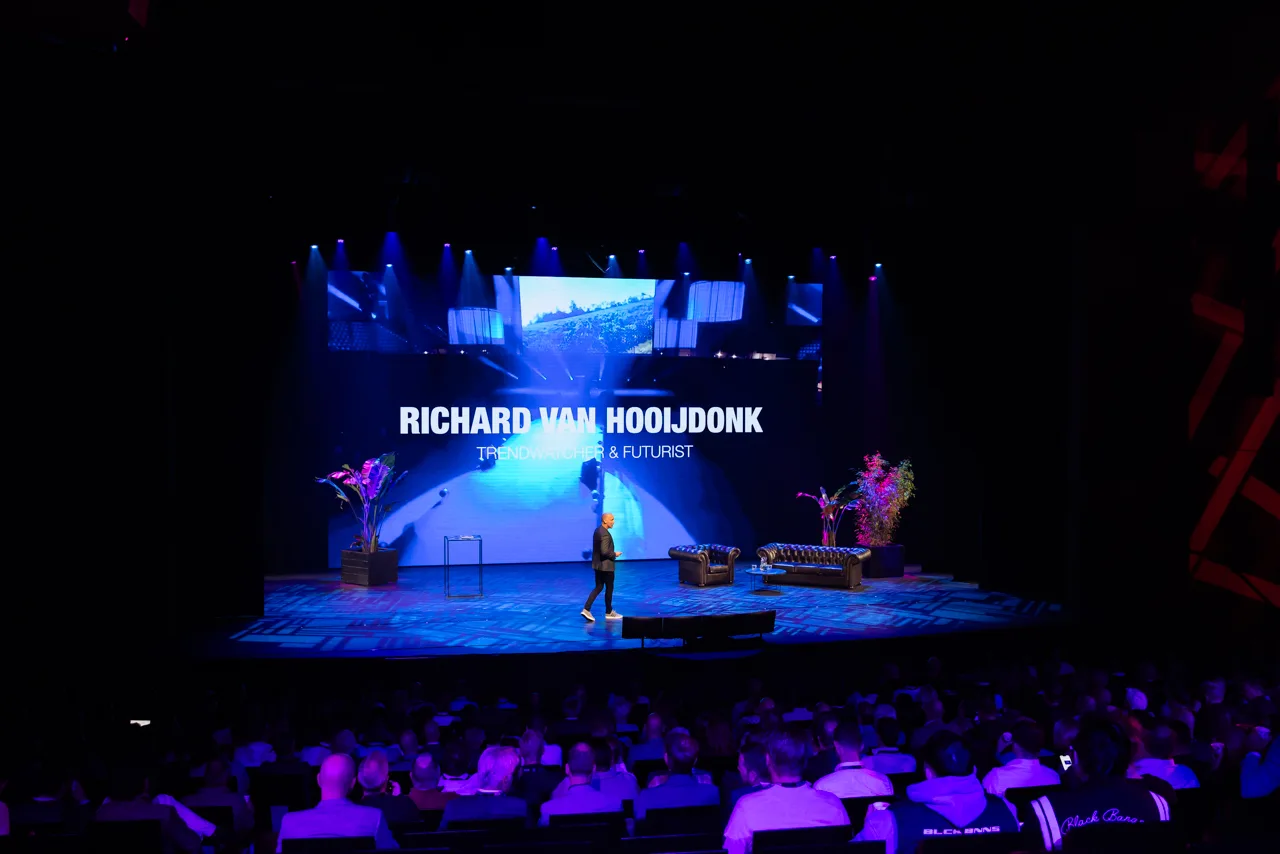
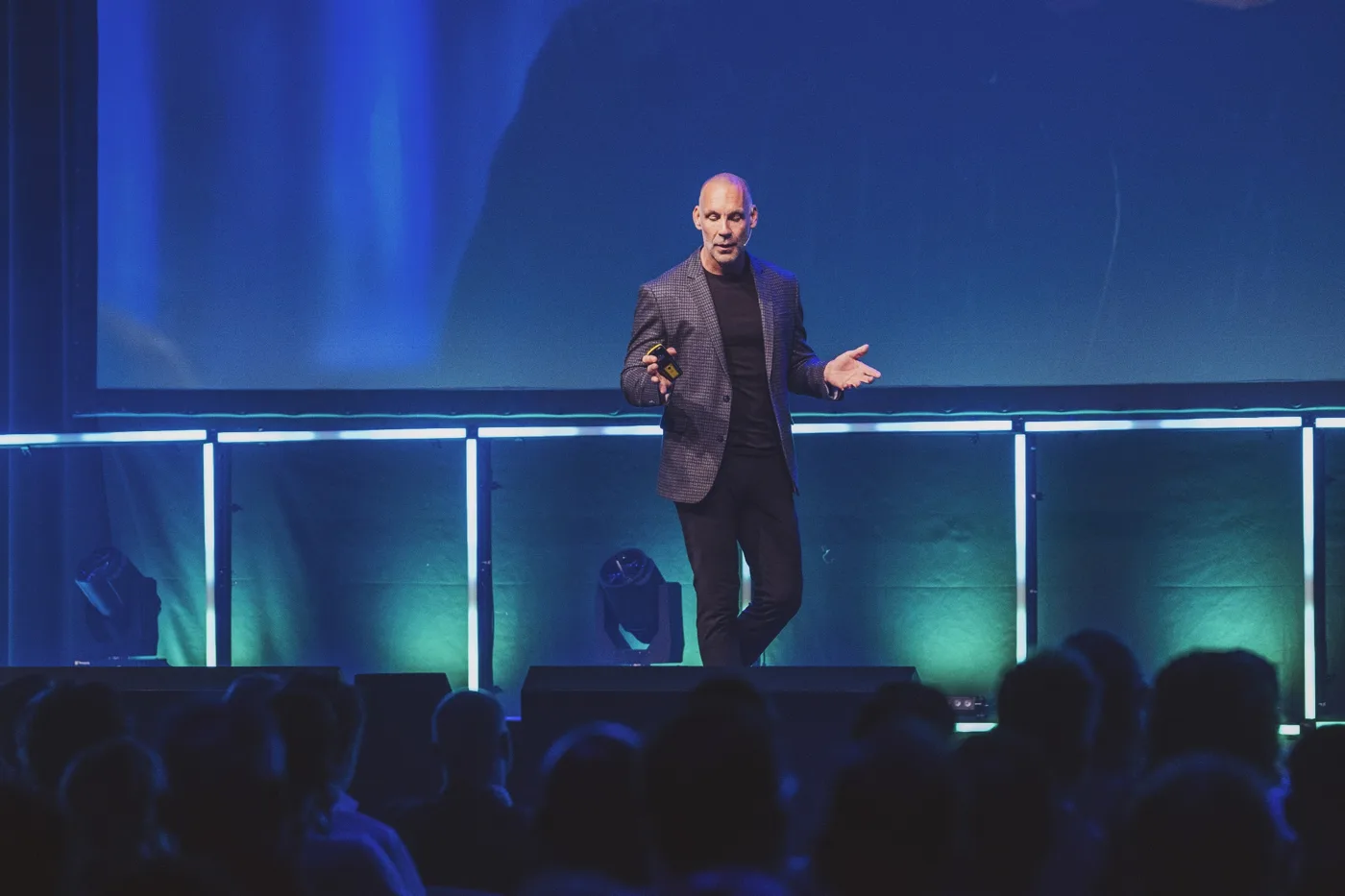
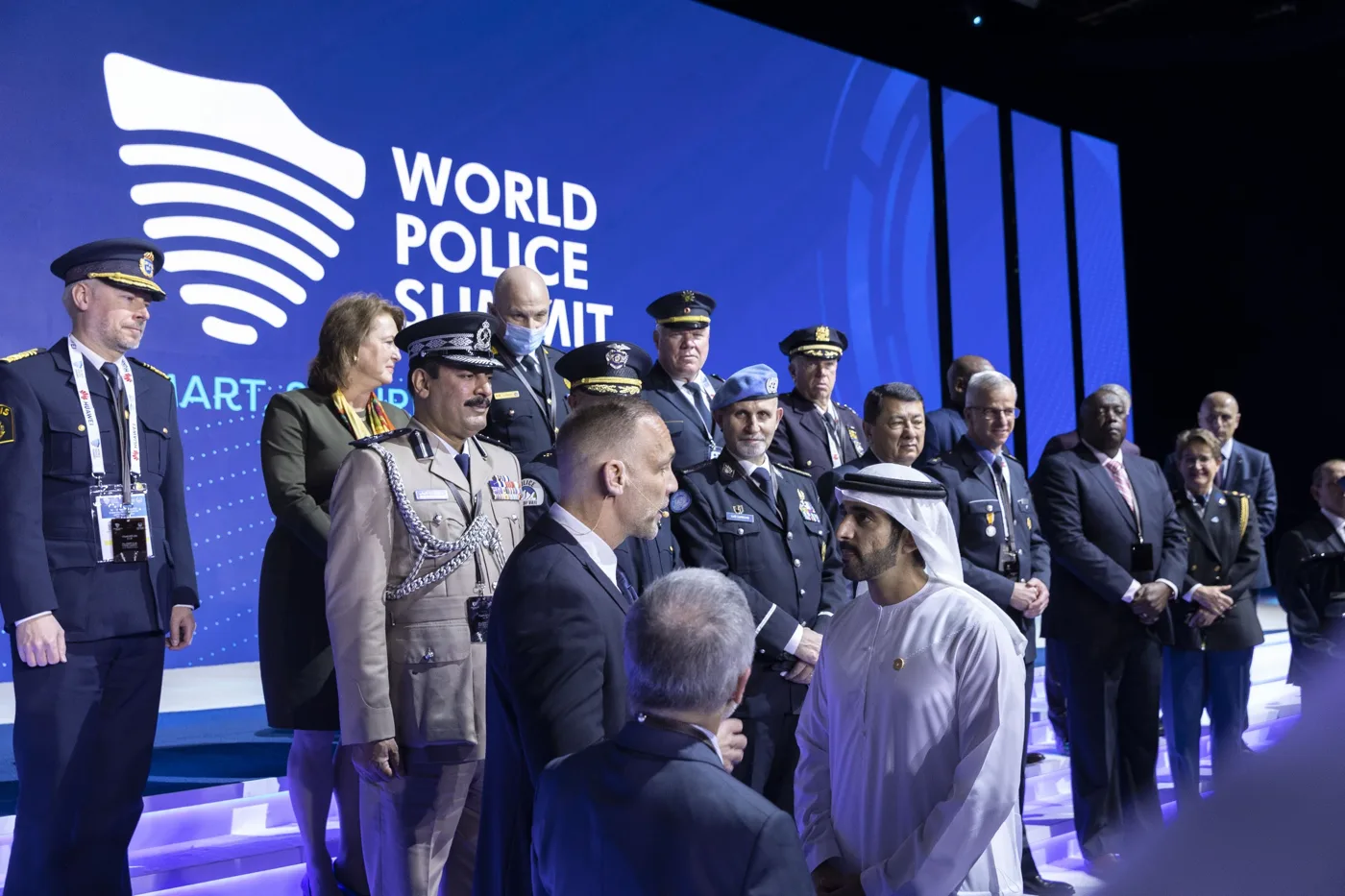
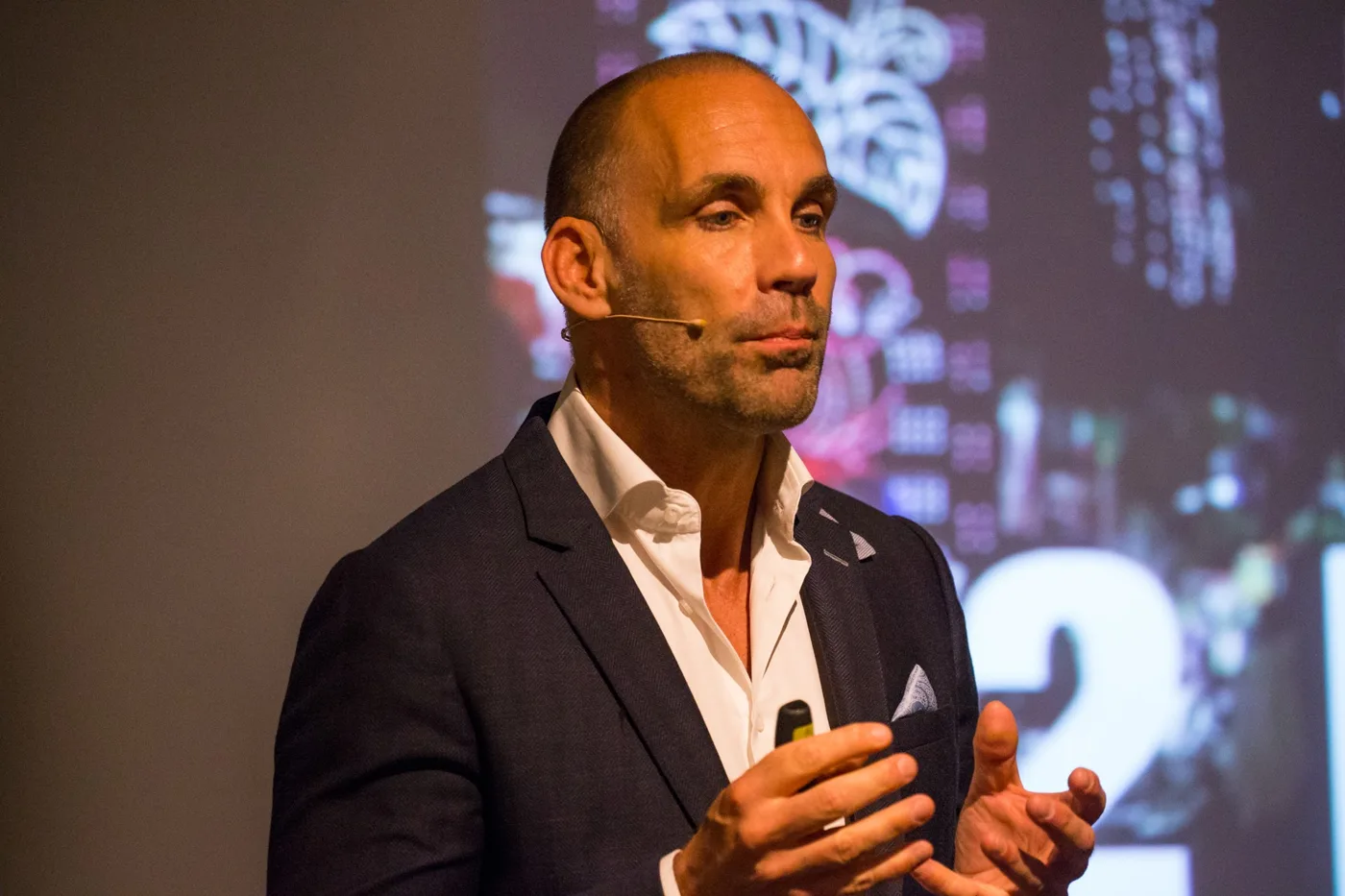
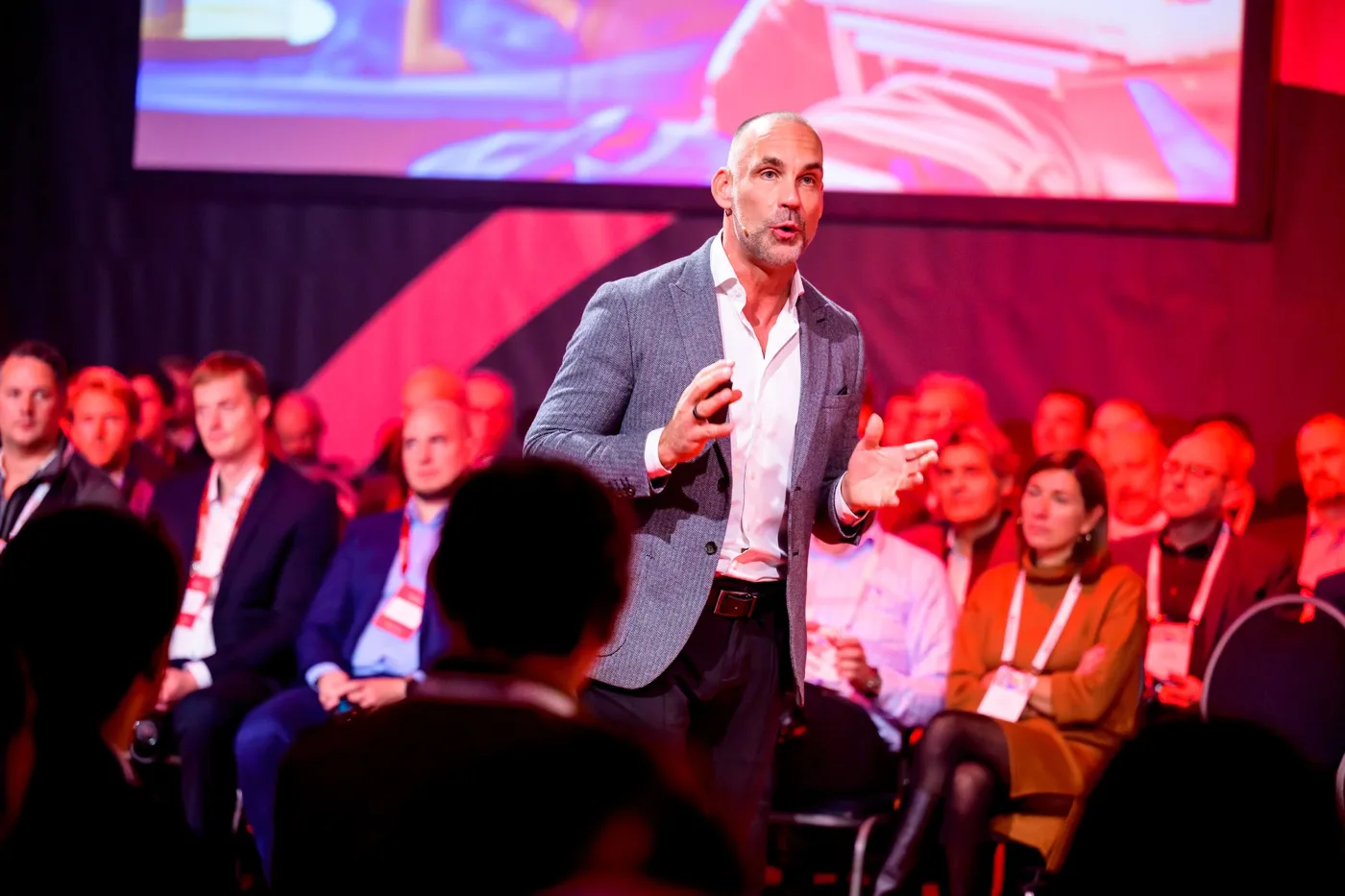
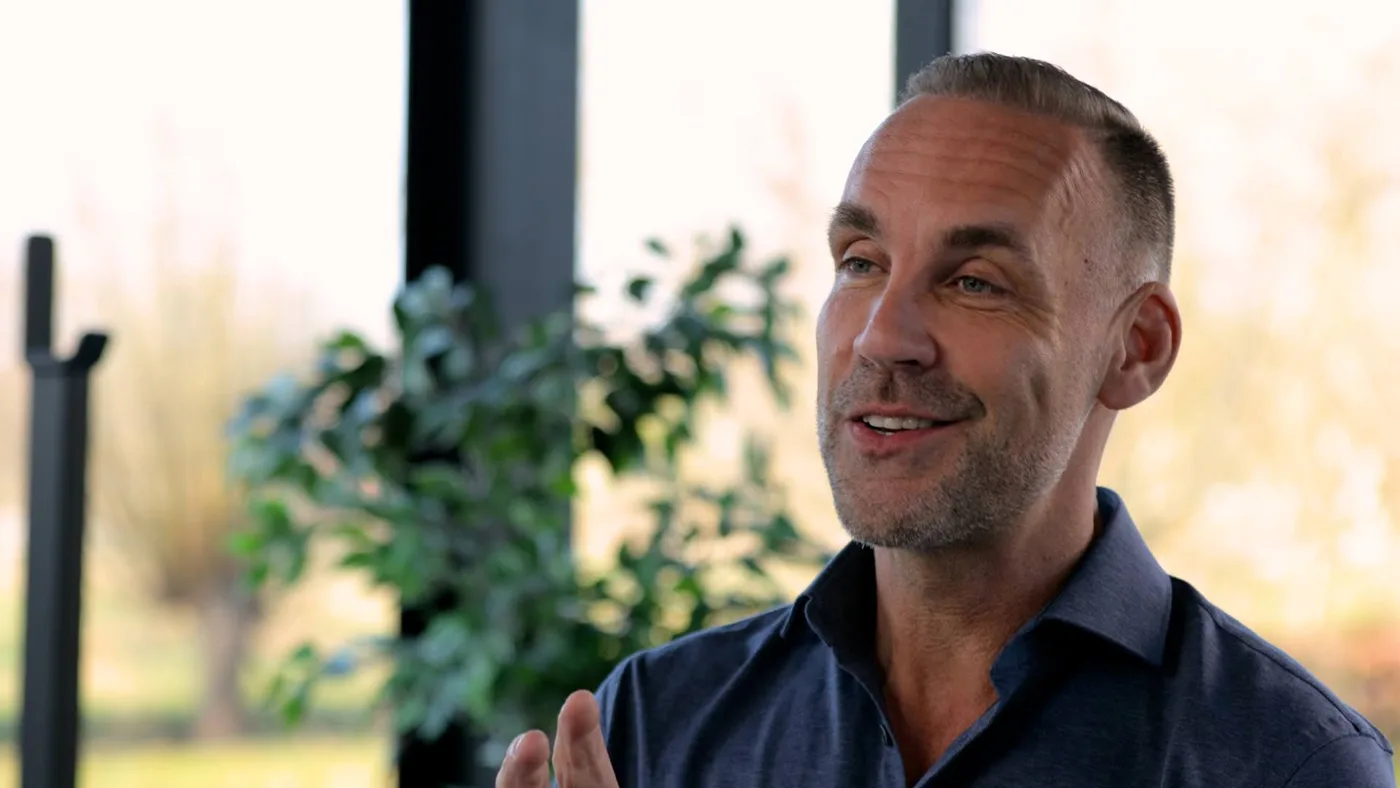
On stage
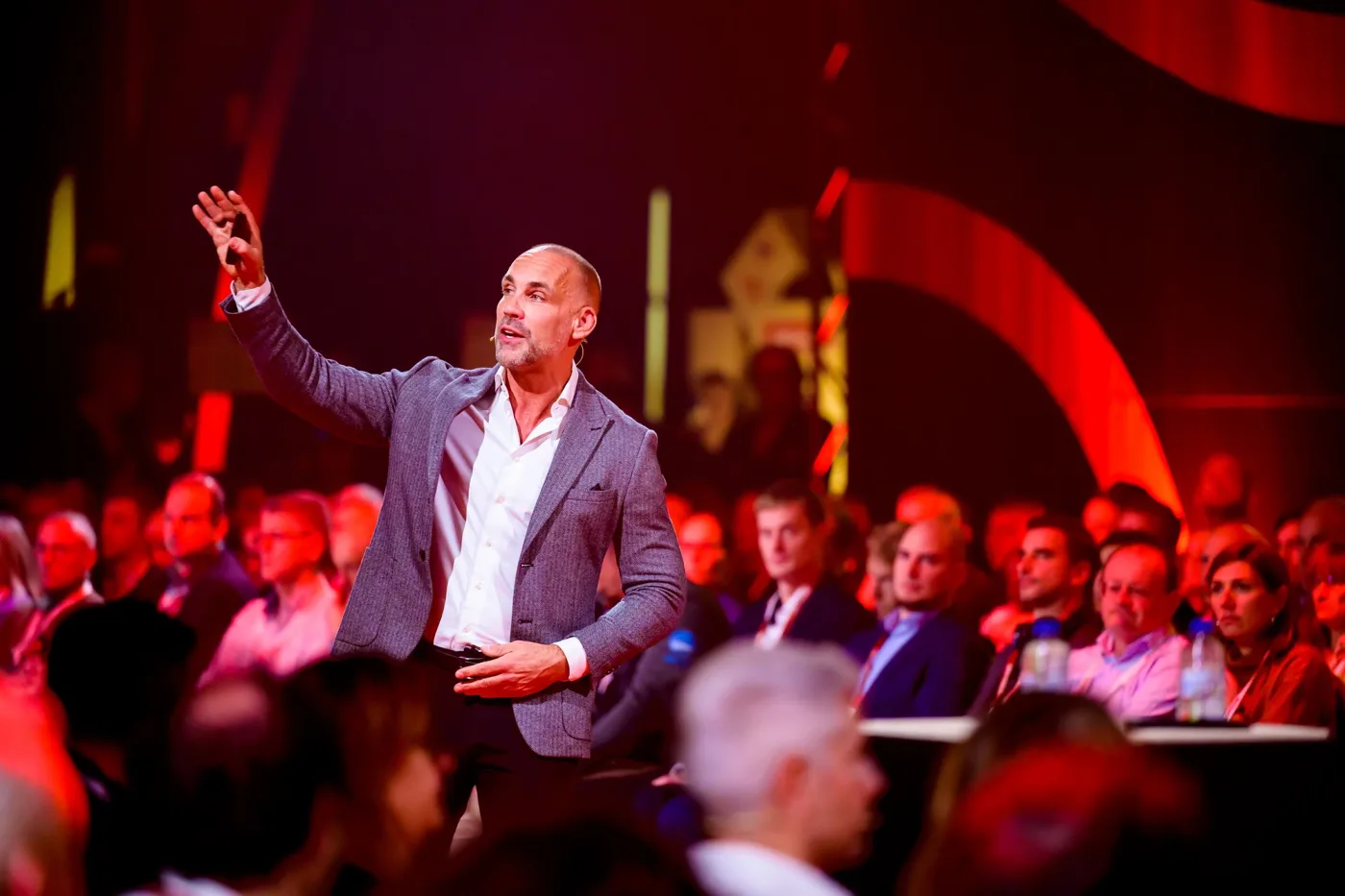
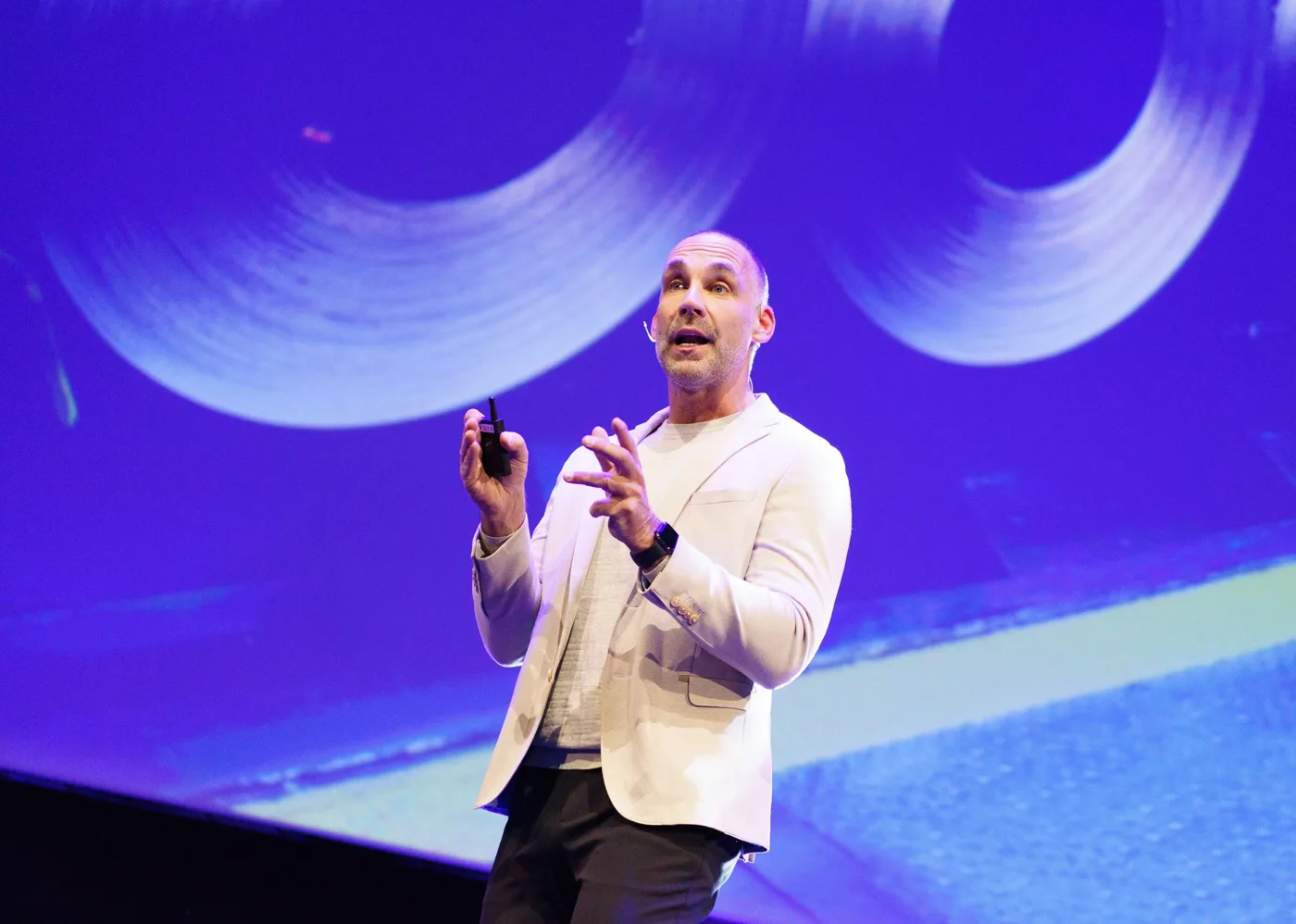
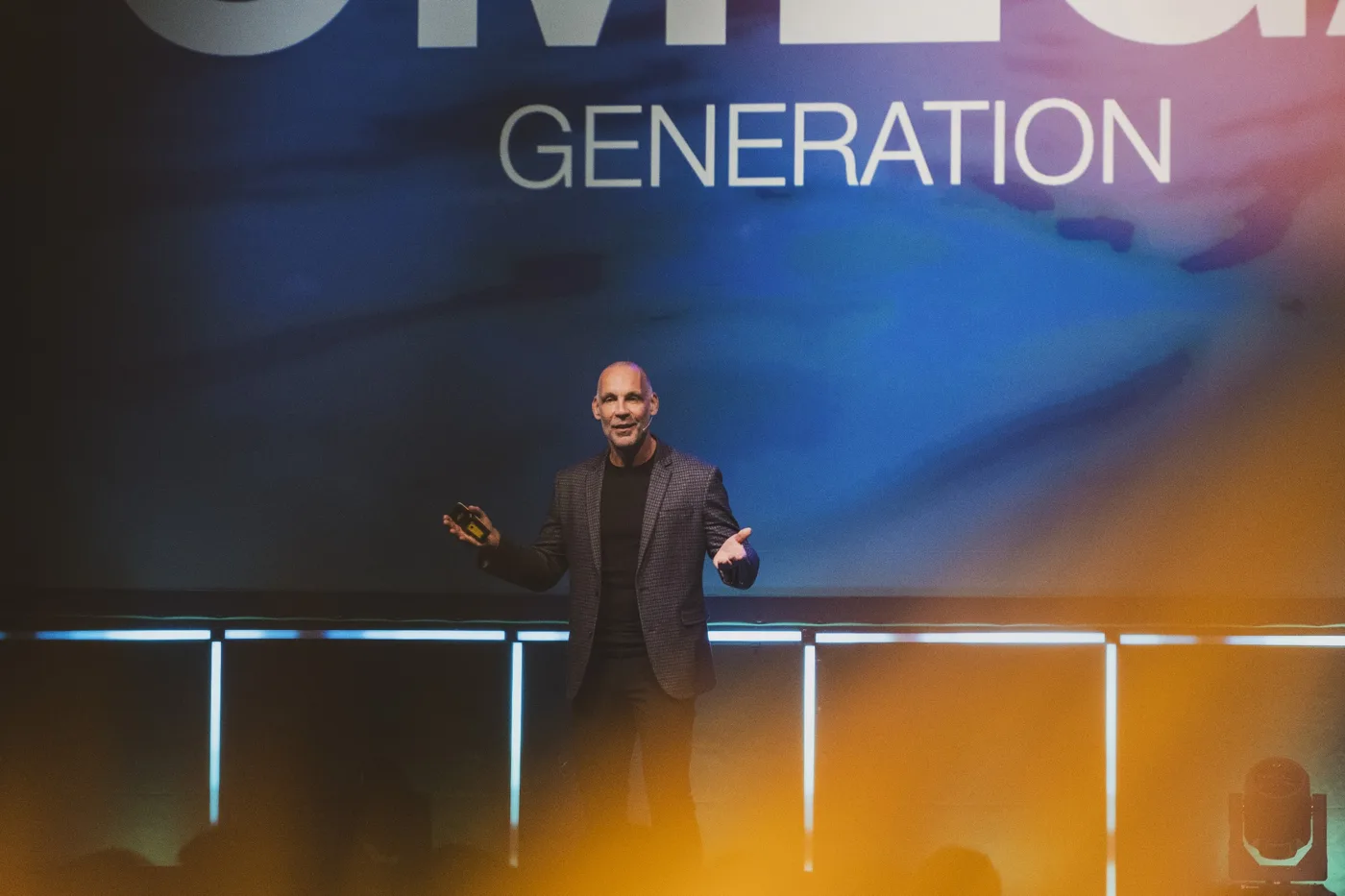
A packed conference hall, a televised panel discussion, a police summit in Dubai.
A selection of over 400 clients















What clients say

“Great keynote that really opened our eyes. Sparkling and energetic, from beginning to end. Thanks Richard, for showing us this different view of the fitness market and its future.”Read the full review →

“Richard delivered an excellent presentation for the key clients we invited to Innovation Runway 2026. Engaging, interesting content, and thought-provoking statements made his presentation perfectly suited for our top relations.”Read the full review →

“Enthusiastic speaker, a good and versatile story. Everyone was ‘wowed’ by the lecture.”Read the full review →

“An impressive and noteworthy presentation for our employees and customers. The rate at which change is happening, which you eloquently brought across in your energetic speech, requires a disruptive approach. To be continued!”Read the full review →

“A dazzling journey through new technology. The enthusiasm and energy during his presentation, combined with the visuals, provided a successful kick-off to our event.”Read the full review →
How a booking works
Your request
Use the form, or get in touch by phone, email or WhatsApp. A few lines are enough to get started.
We get in touch
We'd like to hear what your event looks like, who'll be in the audience and which themes interest you.
A written proposal
Covering the topic, format (on location or online), length (30, 45, 60 minutes or longer) and fee, so you can talk it over with your colleagues.
Getting to know Richard
Next, we'll find a time for the two of you to talk and brainstorm the keynote, the topics and the format. There's no charge for this.
Frequently asked questions
Who is this keynote for?
Broadcasters and news media, publishers of newspapers, magazines and books, production companies and film studios, music labels and collecting societies, game studios, live entertainment organisers and trade associations. The audience often mixes editors-in-chief, producers, creators and executives; the keynote is built for that mix. It also works for events for staff, advertisers, partners and clients.
What will the audience take away?
An up-to-date picture of what AI already does in production, the newsroom, the archive and distribution, and scenarios for the next five to fifteen years: series and games that take shape as you watch or play, digital doubles of artists and AI agents that read the news. What that means for roles, teams, leaders and the business model. And a clear view of the risks, so the conversation afterwards is about choices rather than fears or promises.
Does the keynote also cover the organisation itself?
Yes, and that is often the main focus: how creators and AI work together, which new roles a newsroom or studio takes on, how freelancers grow along with it and how to keep creators on board who are worried about their craft.
Will AI take over the work of creators?
AI takes over much of the manual work: transcribing, subtitling, producing variations, searching the archive. AI can also come up with ideas and creative proposals; creators and editors decide which are usable and judge the end result. At the same time, the work of voice actors, translators and editors is changing radically. The keynote shows where the work is shifting and where the creator's craft carries more weight than before.
Does the keynote cover criminals using AI?
Yes, always. Fraudsters make deepfakes of well-known presenters, clone artists' voices and upload fake tracks to music services. Disinformation appears in the house style of real broadcasters. AI also makes it easier for criminals to reach confidential information through phishing and hacking, and ransomware can bring a newsroom or production to a halt. That other side has its own place in every keynote, with the latest examples and how quickly criminals' methods are changing.
Is the keynote tailored to our organisation?
Yes. An introductory call beforehand covers your audience, the purpose of the event and what is happening in your organisation. A news media conference gets different examples from a day for music labels or a gathering of film and television producers.
How long is the keynote, and can it be in English or online?
30, 45 or 60 minutes, and longer if you wish, with time for questions from the audience, in Dutch or English, in person or online, including at international conferences. For more than a keynote, there are masterclasses, boardroom sessions for executives and editors-in-chief, and workshops for all employees.
How much does a keynote on AI in media and entertainment cost?
Fees for international keynotes are on request. Ask for a proposal and you will hear from us within an hour on working days.
A keynote for your media and entertainment event
Tell us a little about your event and who will be in the audience, and let us know the date.
Prefer to speak to us directly? Call 085 303 0792 · email talks@vanhooijdonk.com · send a WhatsApp message