 Richard van Hooijdonk
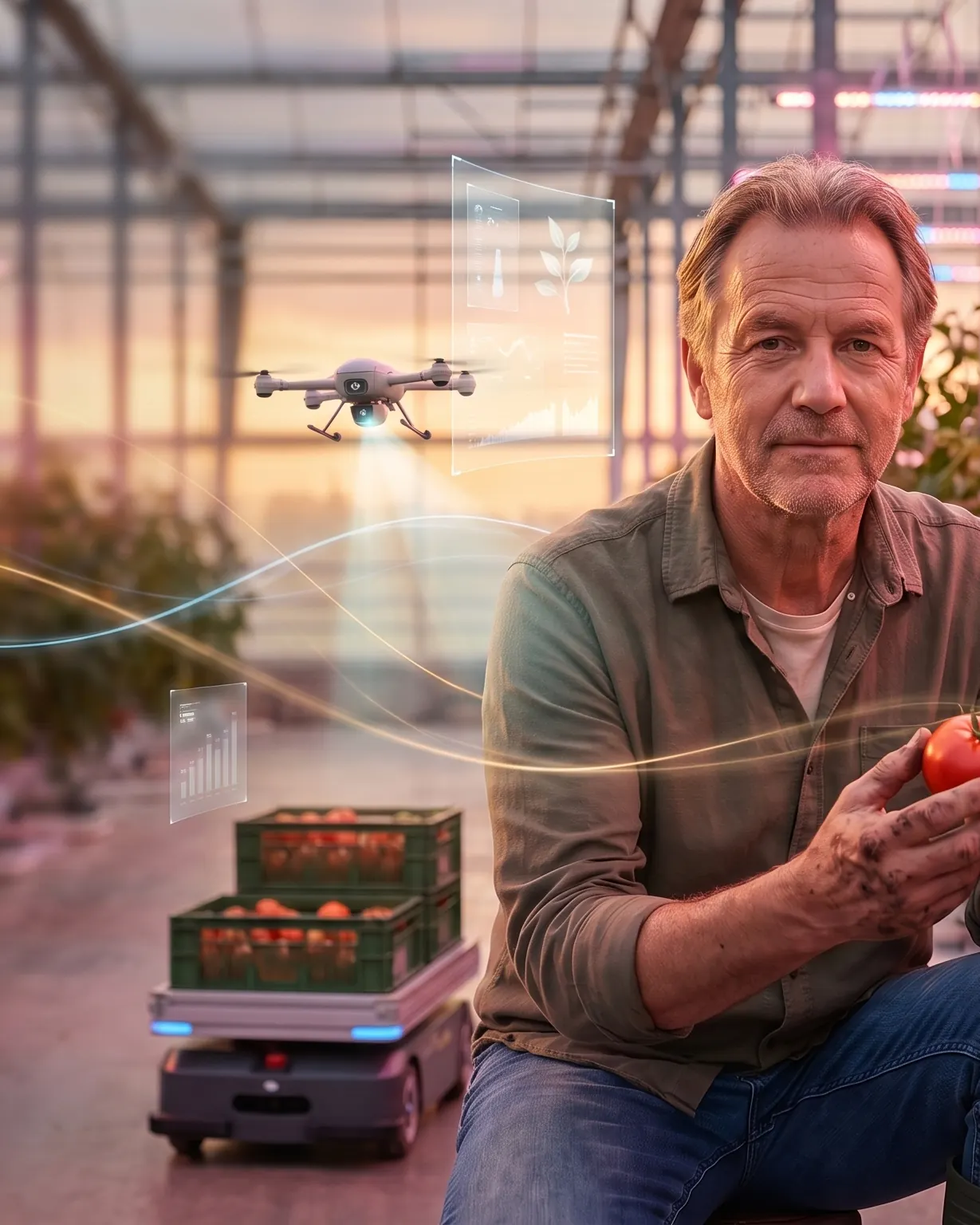
AI & the future of agriculture
In the smart greenhouse and on the intelligent livestock farm, sensors, robots and AI work together for better harvests, better-quality food and higher standards of animal welfare. How far agriculture takes this is up to the people in the farmyard, in the greenhouse and in the cooperative.
Choose your sector
Every keynote is tailored to a sector. Choose yours.
 Healthcare
 Government
 Defence
 Policing and security
 Smart cities
 Construction
 Mobility
 Industry 4.0
 Energy and utilities
 Logistics
 Retail
 Wholesale
 Hospitality, tourism and leisure
 AgricultureYou are viewing
 Financial services
 Legal
 Accountancy and advisory
 Education
 Media and entertainment
 Telecoms and connectivity
Is your sector not listed? We tailor the keynote to your audience. Tell us about your audience
Precision in the greenhouse, care for every animal. AI and robotics give farmers and growers new ways to improve yield, soil health and animal welfare at the same time.
Sensors, robots and AI can add to the skill of farmers and growers; futurist and trend watcher Richard van Hooijdonk shows what that looks like in the farmyard. This keynote covers what is possible now and what becomes possible around 2040. Agriculture has fewer hands, stricter rules on nitrogen, water and crop protection, and erratic weather in a changing climate. Sensors already measure each plant and each animal, cameras tell weeds from crops, and milking and harvesting robots take on heavy work. Over the next ten to fifteen years it goes further: swarms of light robots in the field, a digital twin of every animal, large-scale regional refining of grass into protein, and farmers paid for carbon storage and nature management they can prove. The biggest question is often whether family farms that run on generations of experience can learn to work with systems that monitor alongside them and share in decisions, while the farmer's skill and judgement stay at the centre. The keynote shows what is in the farmyard today and what is on its way to 2040. The farm of the future needs technology that adds to that skill and fits the people who use it.
AI in agriculture
What AI already does today in the field, in the barn and in the greenhouse.
- 01
Precision farming
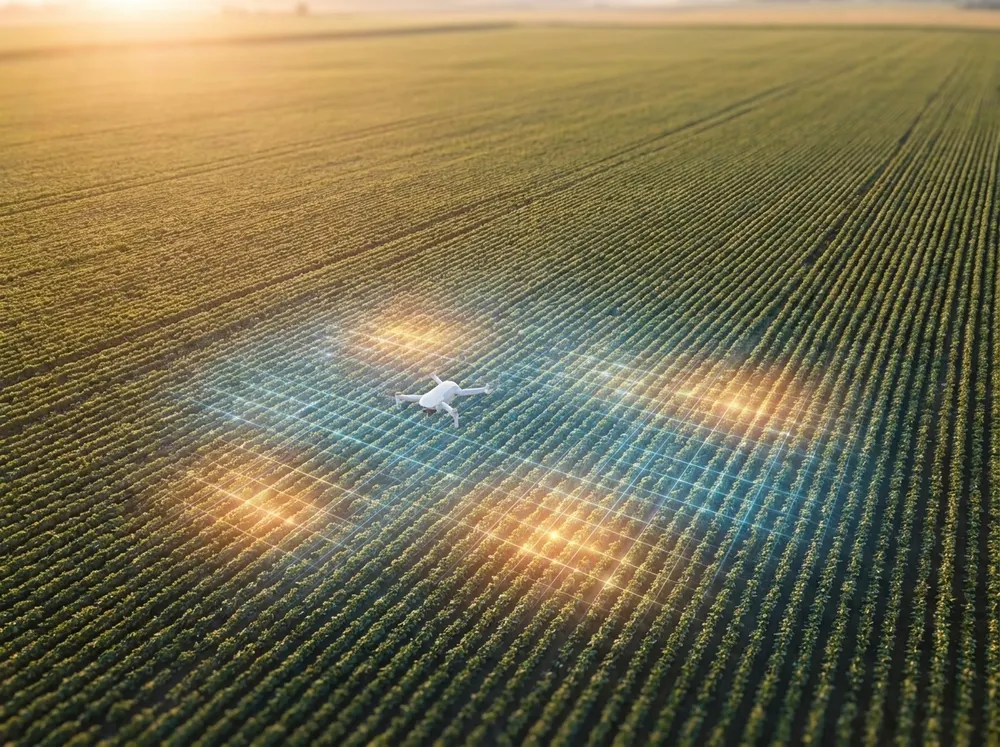
Sensors, satellites and drones measure each field or even each plant. AI sees where water, fertiliser or crop protection is needed.
Precision farming links observation ever more directly to the work in the field. Satellite images, drones and soil sensors map differences in growth, moisture and disease pressure within a single field. AI spots in the images where a crop is lagging, where a fungus is starting or where weeds are growing. The fertiliser spreader or the sprayer receives a task map and doses section by section. Cameras on the sprayer boom go further, recognising weeds plant by plant and spraying only there. The next step is a field managed plant by plant: each plant with its own record of growth, disease and treatment, kept by cameras on every machine that crosses the land.
- 02
Smart livestock farming
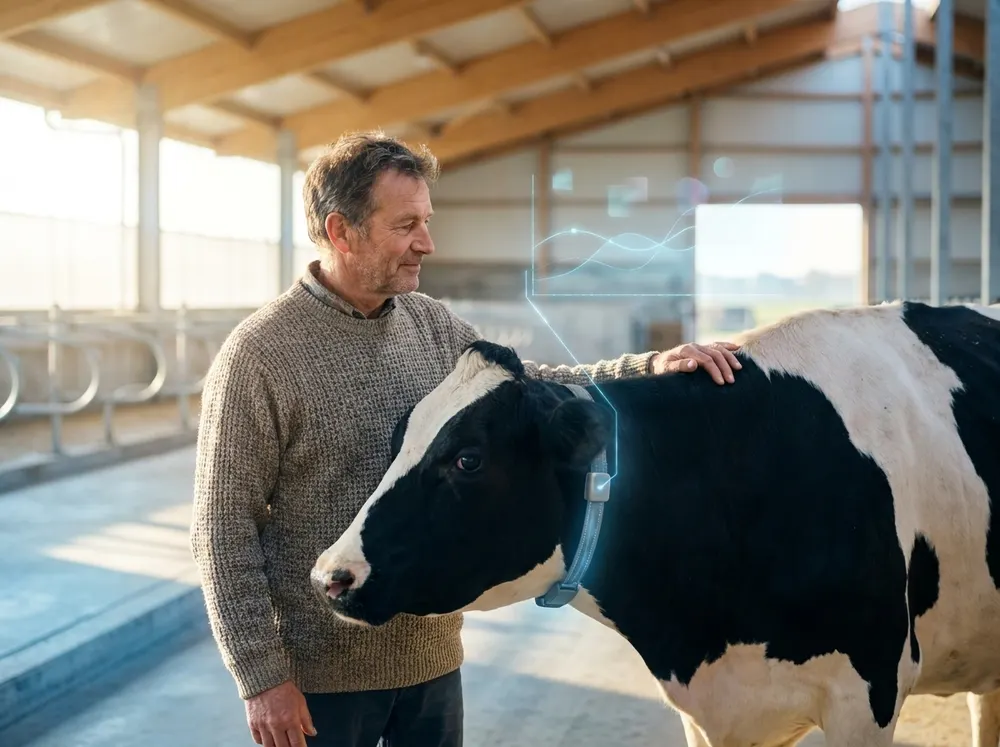
Cameras and sensors follow every animal. AI flags changes that may point to lameness, illness or a cow coming into heat.
In a smart barn, every animal wears a sensor, or cameras recognise the animals. They measure how much a cow eats, ruminates and walks, how a pig coughs and how hens spread out across the poultry house. AI compares those measurements with the animal's normal pattern. If its walking or eating changes, the farmer gets an alert, sometimes before noticing anything himself. That can point to lameness, mastitis or respiratory problems, but also to the right moment for insemination. Which conditions are picked up early differs from system to system. Changes that arise between two rounds of the barn become visible too.
- 03
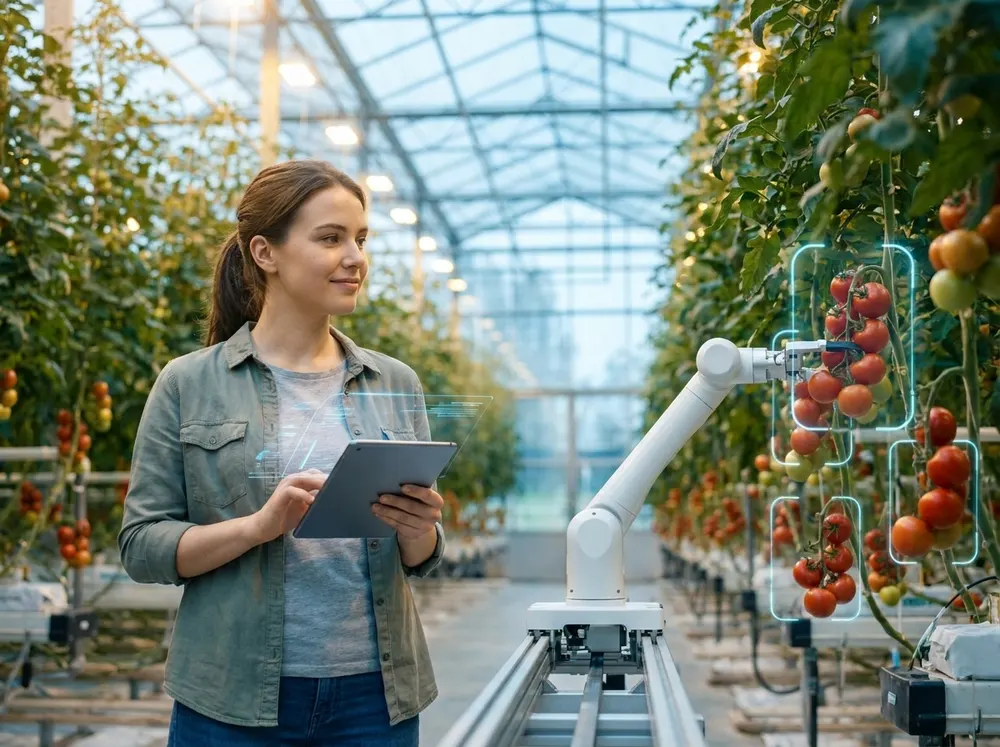
Robots on the farm
Milking robots are commonplace; weeding and harvesting robots are gaining ground. Image recognition tells them what is in front of them.
Farm robots combine image recognition with physical work, more and more often with delicate crops and fruit. In the field, weeding robots recognise weeds and remove them mechanically or with a laser beam, without spraying; laser weeders are already on sale. In greenhouses, robots pick tomatoes, and robots for sweet peppers and cucumbers are being trialled on working nurseries. Image recognition decides which fruit is ripe and where the stem is. Today, such a robot usually does one task in one crop. The next step is robots that can learn different picking tasks, with grippers suited to the crop: the same machine picks strawberries in June and apples in September.
- 04
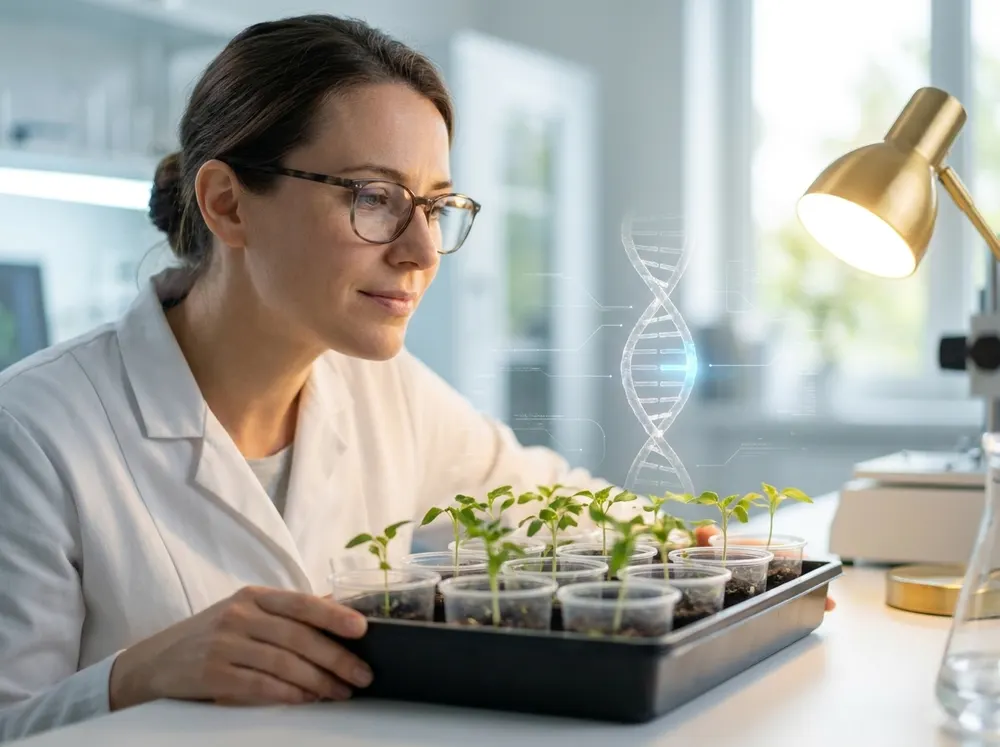
Crops and animals by design
Gene editing can make crops more resistant to drought and disease, and animals less vulnerable. AI helps find the genes that matter.
Gene editing makes targeted changes to genetic material possible; practical trials then show how well they work. The result is crops that cope better with drought or a fungus, and animals that do not fall ill from a particular virus. The FDA approved a gene edit that makes pigs resistant to the PRRS virus. AI helps breeders predict which genes determine a trait and what a change will do. Under the NGT regulation, certain gene-edited plants will be treated like conventionally bred plants after assessment; their seed will carry a label. The next step is a variety designed on a computer and growing in the field within a few years, instead of the ten to fifteen years that breeding often takes now.
- 05
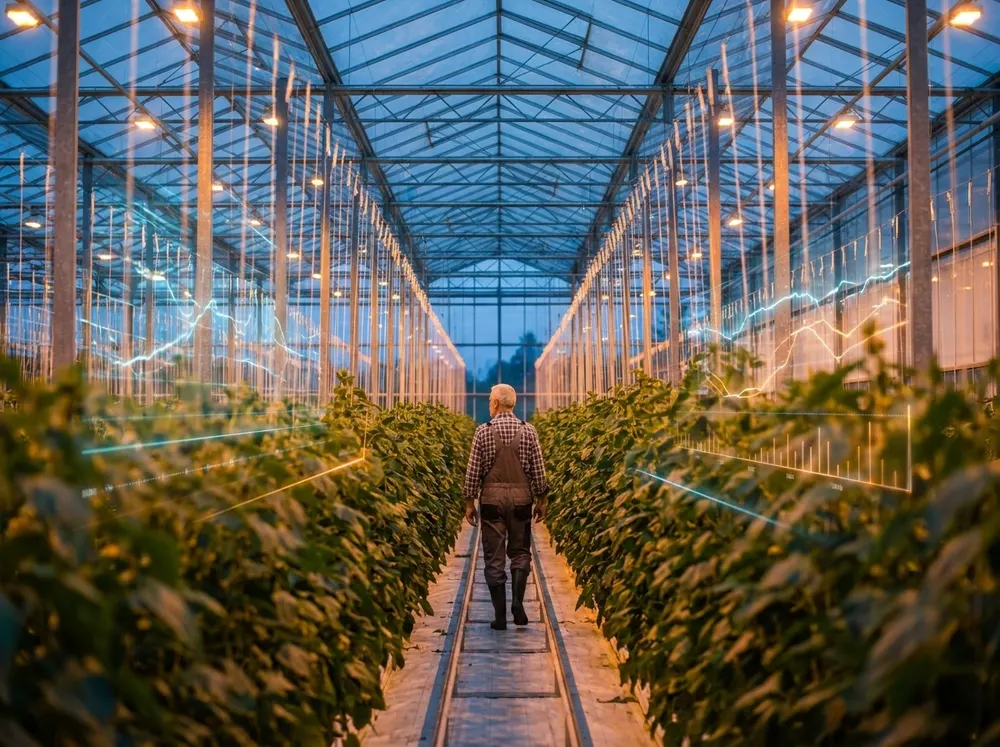
The greenhouse run by AI
AI tunes climate, light, water and nutrients in the greenhouse to what the plant needs, with the grower in charge.
For a long time, a grower set temperature, humidity, light, CO₂, water and nutrients by experience and with a climate computer. AI now combines measurements in the greenhouse, camera images of the plants, the weather forecast and the energy price, and works out which settings let the plant grow according to the cultivation strategy. A growing number of growers let such a system run the climate on its own, within limits they set. The grower sets the goals and keeps an eye on the crop. In international competitions, AI teams have already achieved higher greenhouse yields with less energy than experienced growers. The next step is a grower running ten greenhouses on three continents at once, with AI handling the day-to-day running of the crop.
- 06
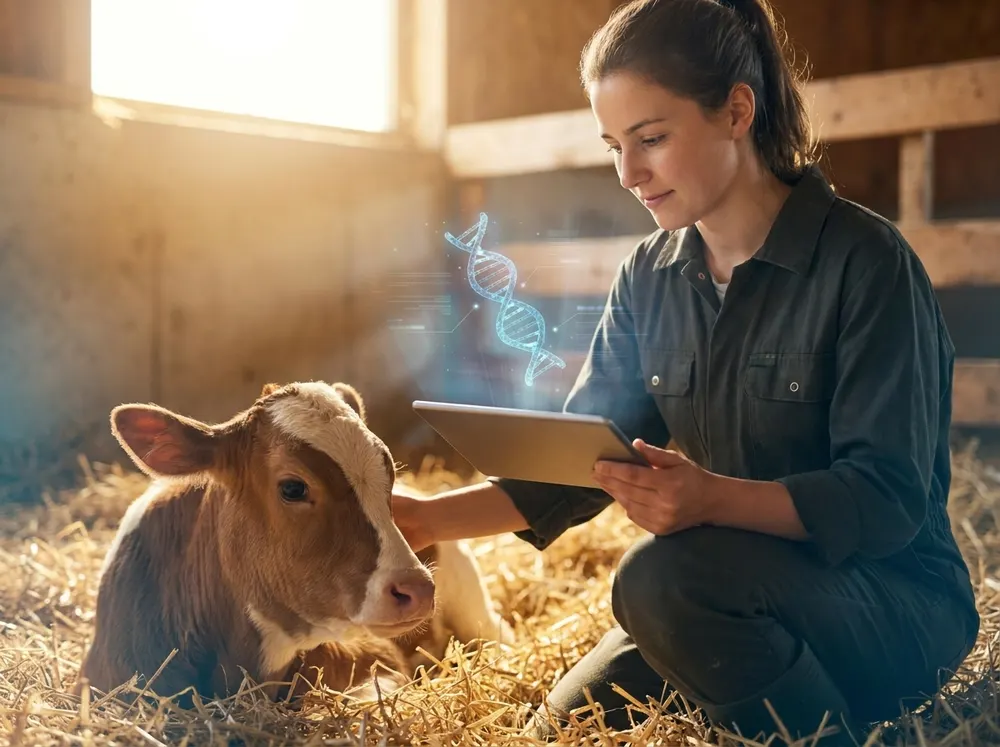
Breeding with data
DNA and measurements help estimate the inherited potential for health and efficiency. AI supports the breeder's choice.
Breeding with data increasingly connects DNA profiles with continuous measurements from the barn. AI looks for patterns in feed intake, movement and methane emissions, alongside the traits breeders already select for. That brings into view traits that used to be hard to measure at scale. Which traits carry most weight remains a choice for breeders and their organisations. The next step is more precise breeding for heat tolerance and the ability to recover, with data from thousands of barns at once. Selection will then give more and more weight to how well an animal keeps functioning as conditions change, now that heat stress counts for more with every warmer summer.
- 07
 In pilots
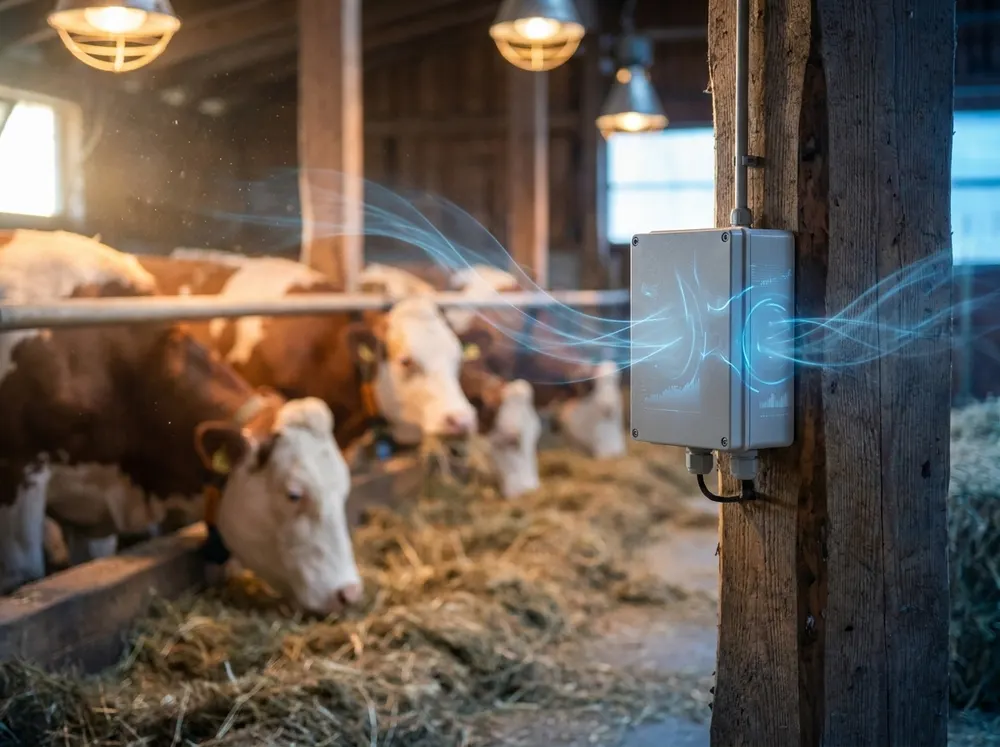
Measuring emissions in barn and field
Measurements and models show the emissions of each farm. AI shows which change to feed, manure or cropping makes a difference.
Emissions of ammonia, methane and nitrous oxide were long calculated with fixed averages per animal or per hectare, which show little of the differences between farms. Sensors in the barn now measure gas concentrations in the air continuously, and models combine those with the airflow to calculate the barn's emissions. AI links them to what happens on the farm: the feed, manure storage, ventilation, the timing of fertilising. Measuring farm by farm is now being trialled on experimental farms and in networks of working farms. A possible next step is permits and rewards based on a farm's own emissions, established with measurements and models rather than fixed averages.
- 08
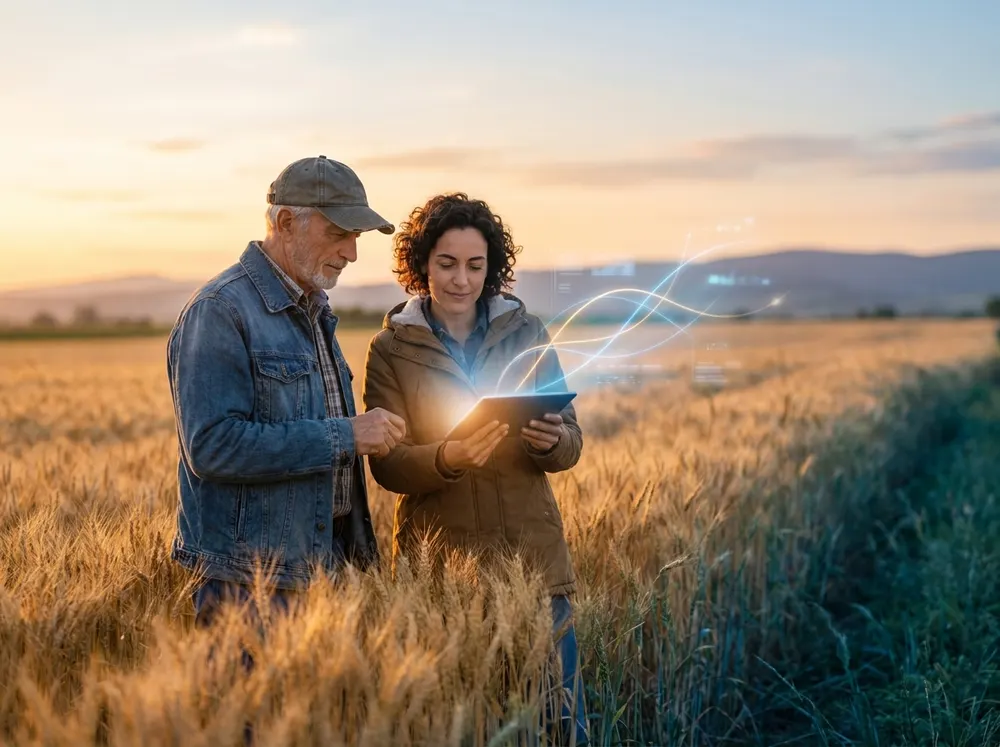
Forecasting harvest and market
AI predicts yield, quality and price, so growers, cooperatives and traders can plan earlier.
How much comes off the land and what it will fetch is something a grower traditionally learns late in the season. AI combines satellite images of crop growth, weather data, soil maps and yields from earlier years, and predicts for each field how much will be harvested and at what quality. In the greenhouse, cameras count the fruit on the plant and forecast the harvest week by week. Cooperatives and traders add market data to estimate the price, and a grower can sell part of the harvest in advance. The next step is an agent that sells the harvest while it is still growing, batch by batch, with its origin and measured quality attached, to a buyer's agent on the other side of the world.
- 09
 In pilots
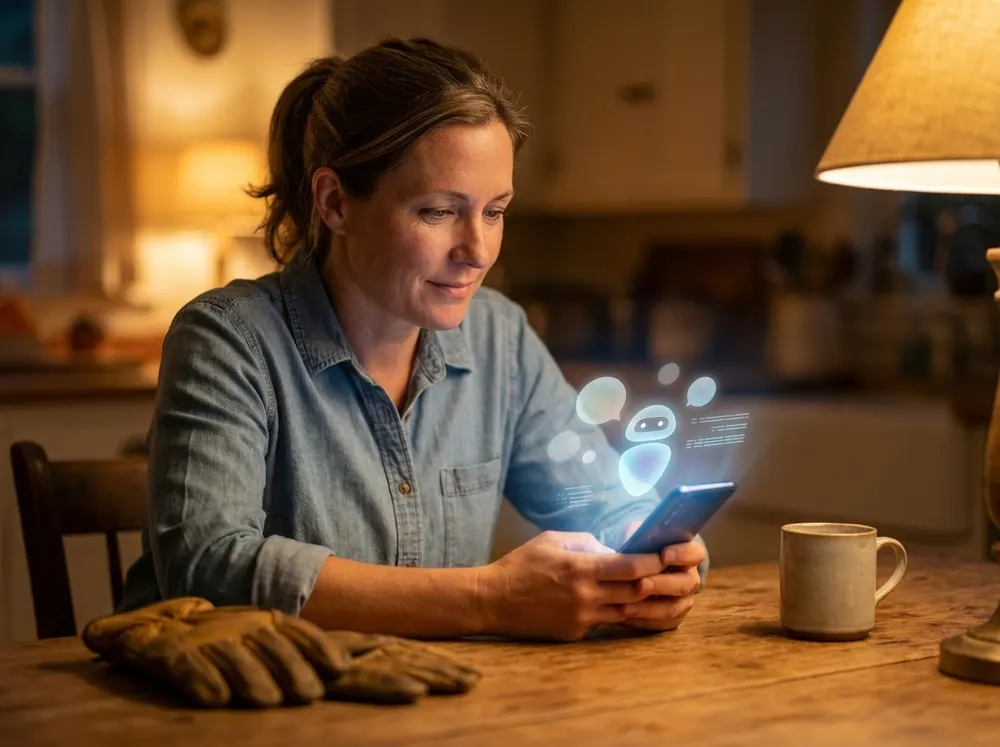
Agents and advice for farmers
In trials, agents already advise on crops and feed. Next, they will deal with buyers' and suppliers' agents. The farmer sets the limits.
An agent is AI that carries out a series of actions itself, rather than just answering a question. Governments and suppliers are now trialling AI assistants that advise farmers, often by phone and in their own language. The next step is an agent that also acts. It connects data from barn and machinery systems with planning and execution: if milk yield drops, it adjusts the feeding plan; if the feed price falls below the farmer's threshold, it places an order; if the harvest forecast shifts, it rebooks the batch with the processor and arranges transport. Along the way, it deals with the agents of buyers and suppliers. The farmer sets the goals and the limits.
The future of agriculture
Where agriculture could be in five to fifteen years, with AI as the engine.
- 10
 Future scenario
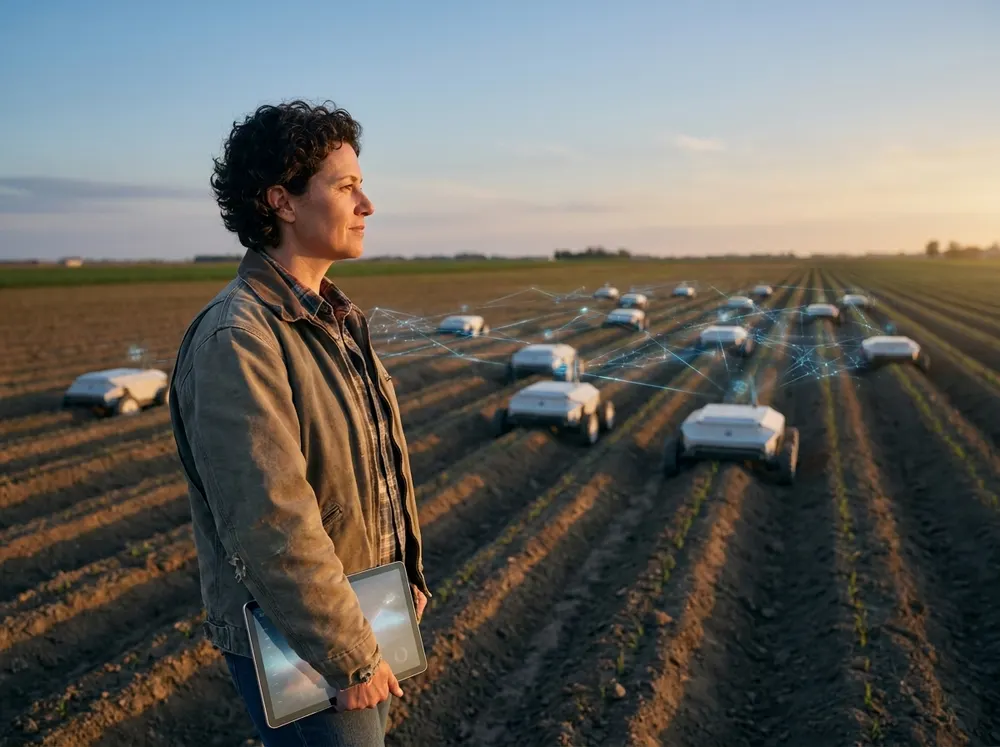
The robot swarm in the field
By 2040, swarms of light robots work the land day and night. The farmer runs a fleet instead of driving a tractor.
- 11
 Future scenario
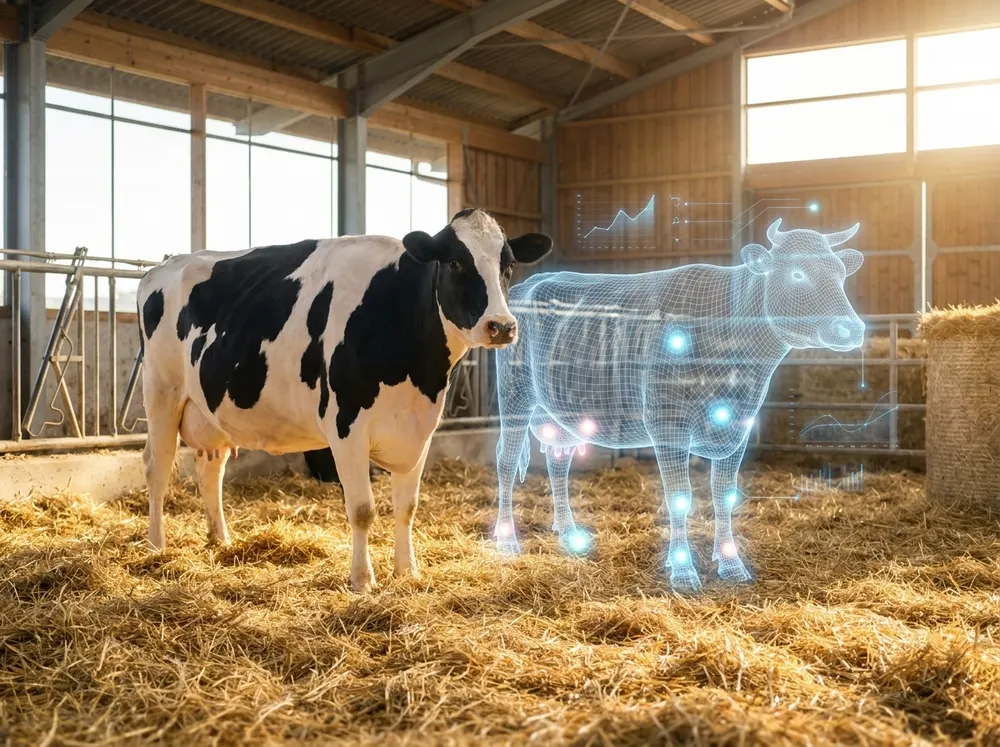
A digital twin for every cow
Around 2040, every animal has a digital twin that predicts illness sooner and works out what other feed or barn climate would do.
- 12
 Future scenario
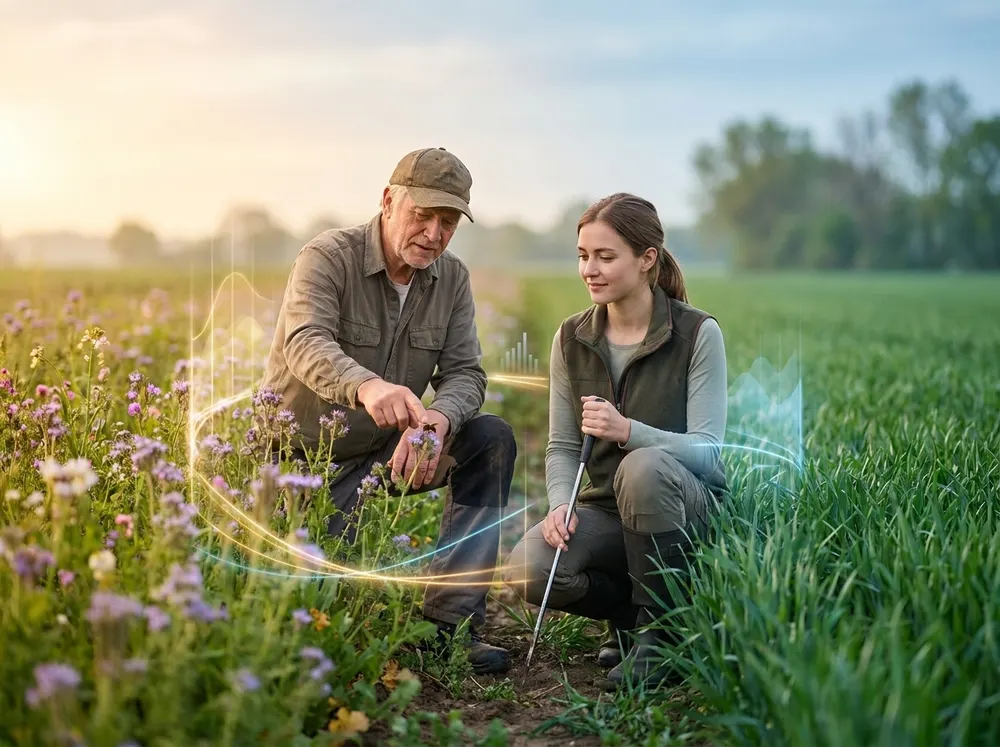
Paid for carbon and nature
Around 2040, AI links field data and satellite images to payments for carbon, water storage and nature. That could be a second income.
- 13
 Future scenario
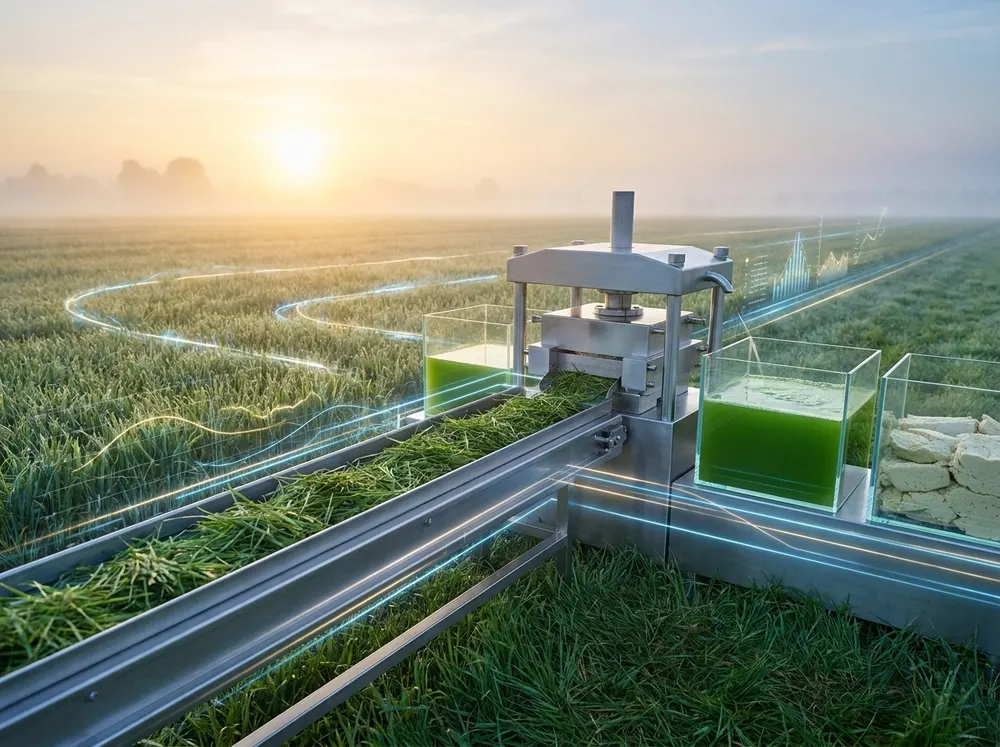
The farm as a refinery
Around 2040, protein from European grass could replace much of the soya in pig and poultry feed. AI runs the regional refining.
AI gives farmers and growers new ways to look ahead and to produce differently. The difference is made by people with skill and craftsmanship, in a culture where learning together and trying new things comes naturally.
Richard van Hooijdonk
The agricultural organisation of the future
What AI asks of roles, teams, leaders and culture on the farm, at cooperatives and at suppliers.
- 14
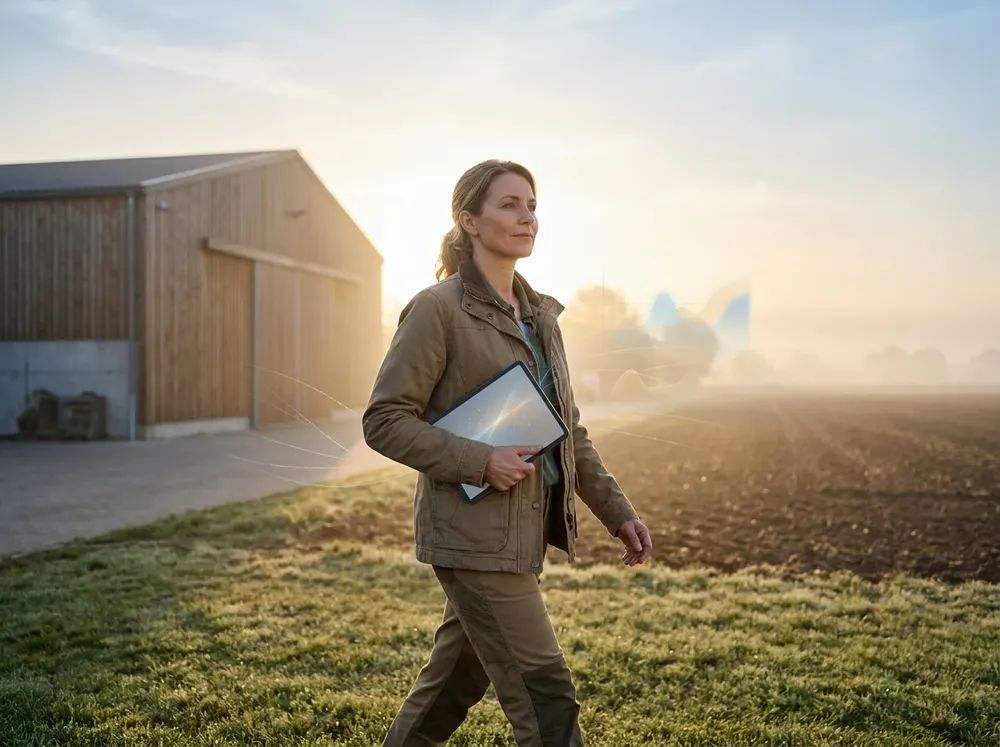
The AI-first organisation
In barn and greenhouse, AI and new technology take on repetitive and predictive work. Growers and stock farmers focus on animals, crops and choices.
- 15
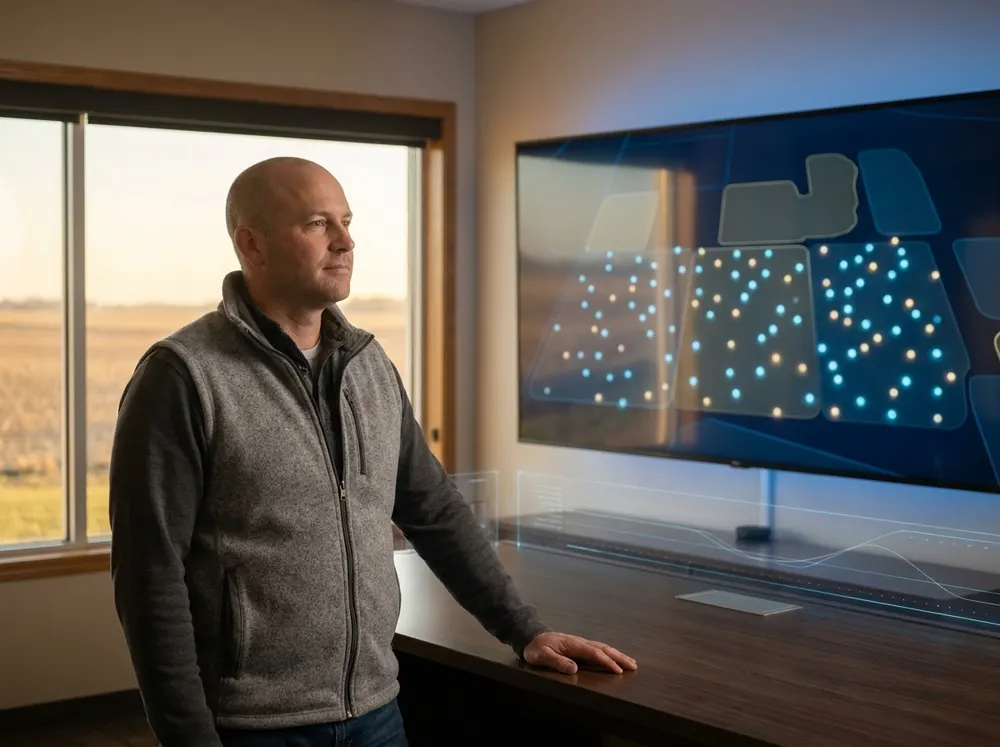
New jobs in agriculture
Fleet managers for robot swarms, remote growers and people who teach a model to see with the eye of an experienced farmer.
As AI and robots take over more work, jobs appear on and around the farm that barely exist today. The fleet manager of a robot swarm plans dozens of small machines across the fields of several farms, and steps in when a robot gets stuck. The remote grower runs several greenhouses from one place, sometimes on other continents. A carbon and nature assessor maps what a farm stores and restores, so that it can be paid for it. And there will be trainers who teach an AI model the judgement of an experienced farmer: what a cow looks like when she is slightly off colour, or when a field is really fit to drive on. The line between farmer, mechanic and analyst is blurring.
- 16
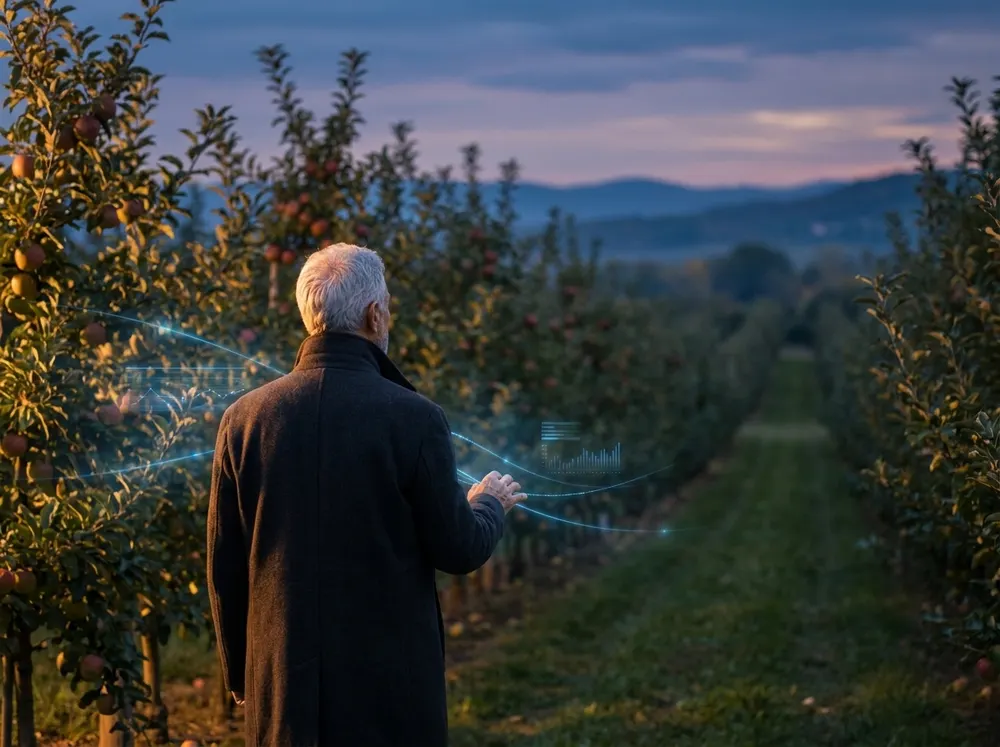
Leadership in agriculture
Leaders in agriculture make the first move on AI and new technology, and bring family, members and staff with them in practical trials.
Leadership in agriculture means looking ahead and taking the first step. Leaders take the initiative on AI and new technology, even when not everything is settled. They sketch a picture of the future that everyone on the farm understands, from the worker in the barn to the young successor, and make it tangible with a small trial on their own farm. That is how they get family, members and staff to help build the farming of tomorrow. AI can model several scenarios side by side. Leaders decide where the business is heading and how to involve the people who work there.
- 17
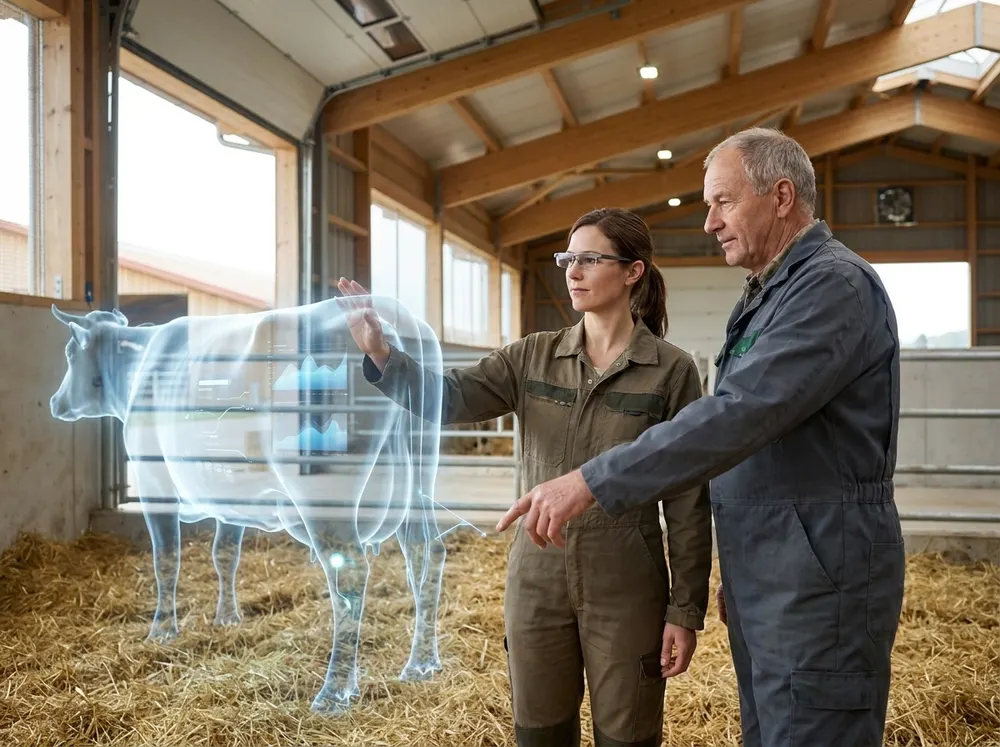
The future academy
Farm businesses are not waiting for the education system. In their own future academy, the work on the farm is the curriculum.
- 18
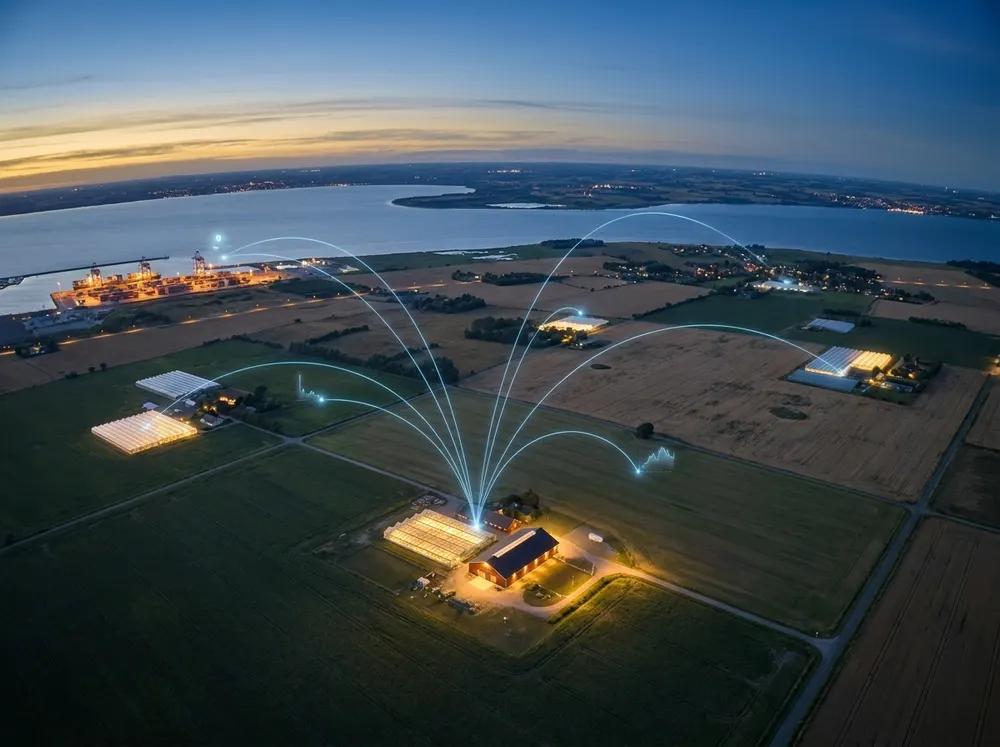
Growing within an ecosystem
Climate, scarcity and labour shortages call for collaboration. With start-ups, scientists, partners and governments, answers come sooner.
The other side responsibility and risk
Data, reliability and crime: the flip side of a farm that runs on data.
- 19
Data as the foundation
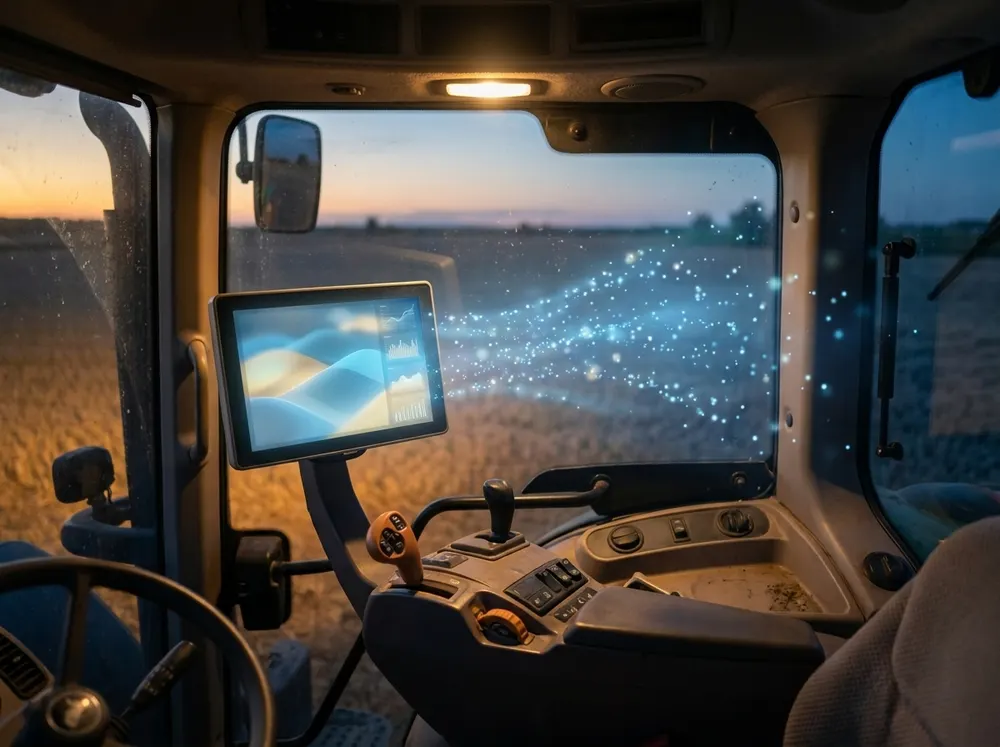
Complete data from barn, greenhouse, field and farm records can help AI work well. That is the foundation of the AI-first farm.
- 20
Reliable advice in the field
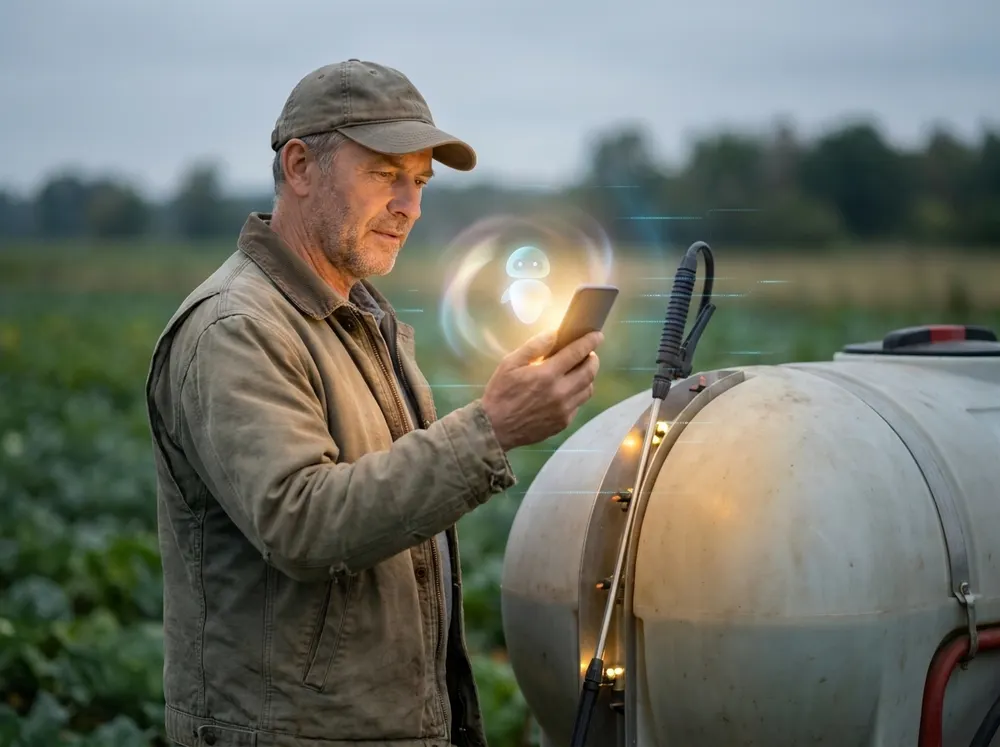
Wrong crop or feed advice hits the harvest and animal welfare. A language model can be wrong with all the confidence of an expert.
An AI system that advises on crop protection, fertilising or feed can make mistakes. A language model may recommend a product that is not permitted on that crop, or give the wrong dose, with all the confidence of an expert. Elsewhere in the world, a grower reported that around ten hectares of sesame died after he sprayed a mix of products recommended by AI. Developers therefore build in guardrails: limits and checks set in advance, such as an advice system that only names approved products, or a robot that stops when a person comes near. The more an agent does itself, from ordering to spraying, the bigger the consequences of a single mistake across thousands of farms at once.
- 21
Crime in the countryside
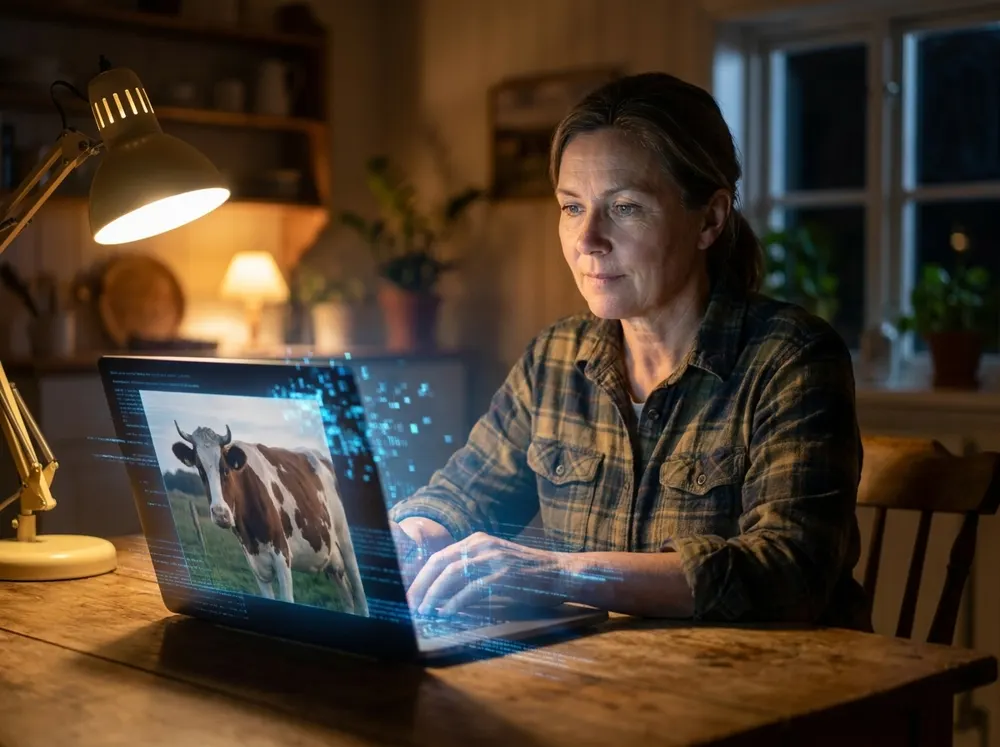
Hacking of critical infrastructure and systems, in barn and greenhouse alike, is a threat. In the AI era, good security counts for more.
A farm runs more and more on computers: the milking robot, the barn climate, the greenhouse climate computer, the feeding system and the GPS-guided tractor. That makes it a target. Criminals hack these systems, shut them down with ransomware and demand a ransom, or call with the cloned voice of someone the farmer knows to extract data or money. AI makes this easier: it writes convincing phishing messages and finds weak spots faster. An information centre for food and agriculture counted 62 per cent more ransomware incidents in the first seven months of 2026 than a year earlier. The same AI that helps a grower run a greenhouse helps an attacker bring that greenhouse to a standstill. In the AI era, good security is part of the trade.
About the speakerRichard van Hooijdonk
Events in EuropeKeynote speaker for corporate events in Europe
On stage
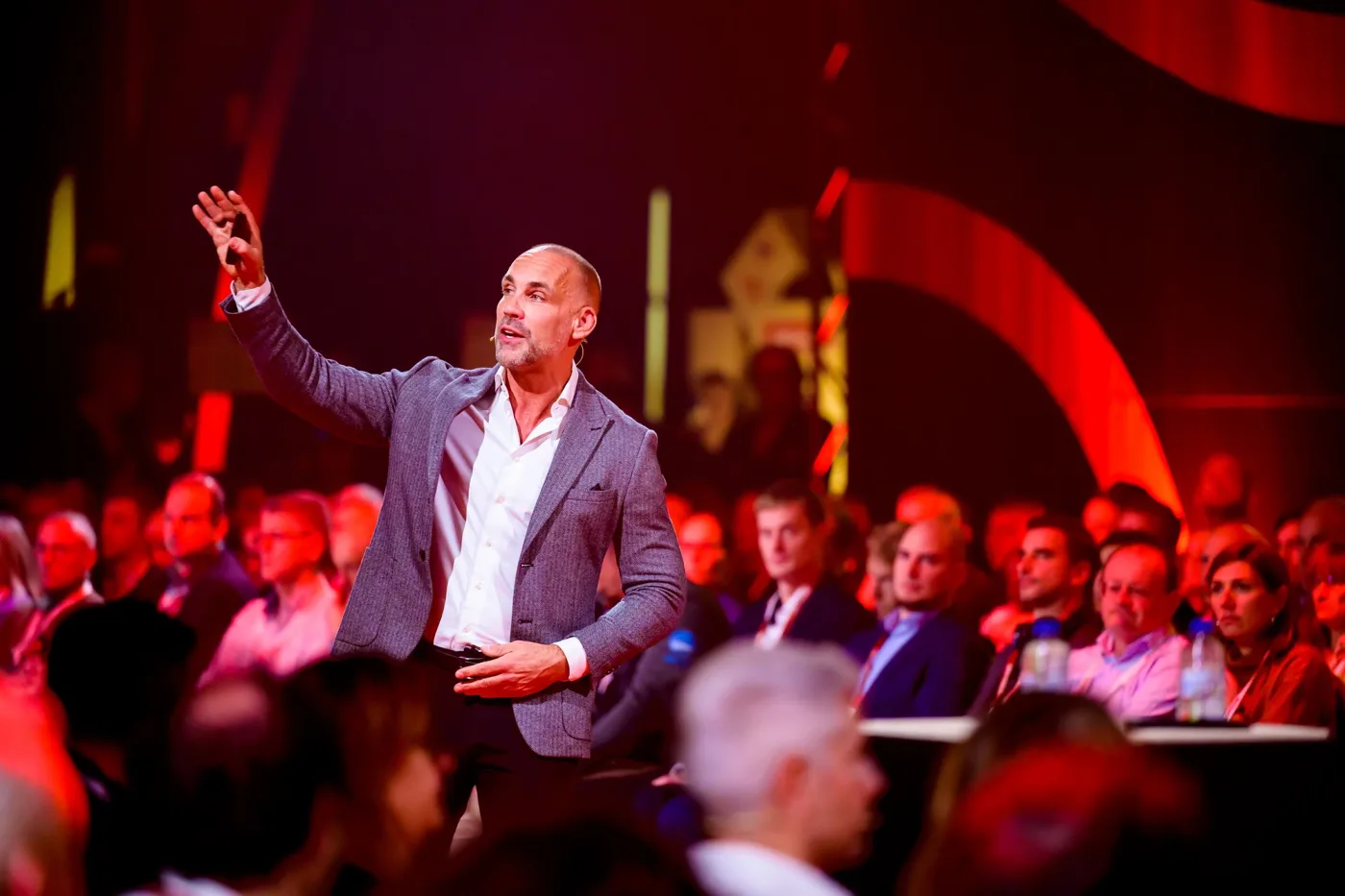
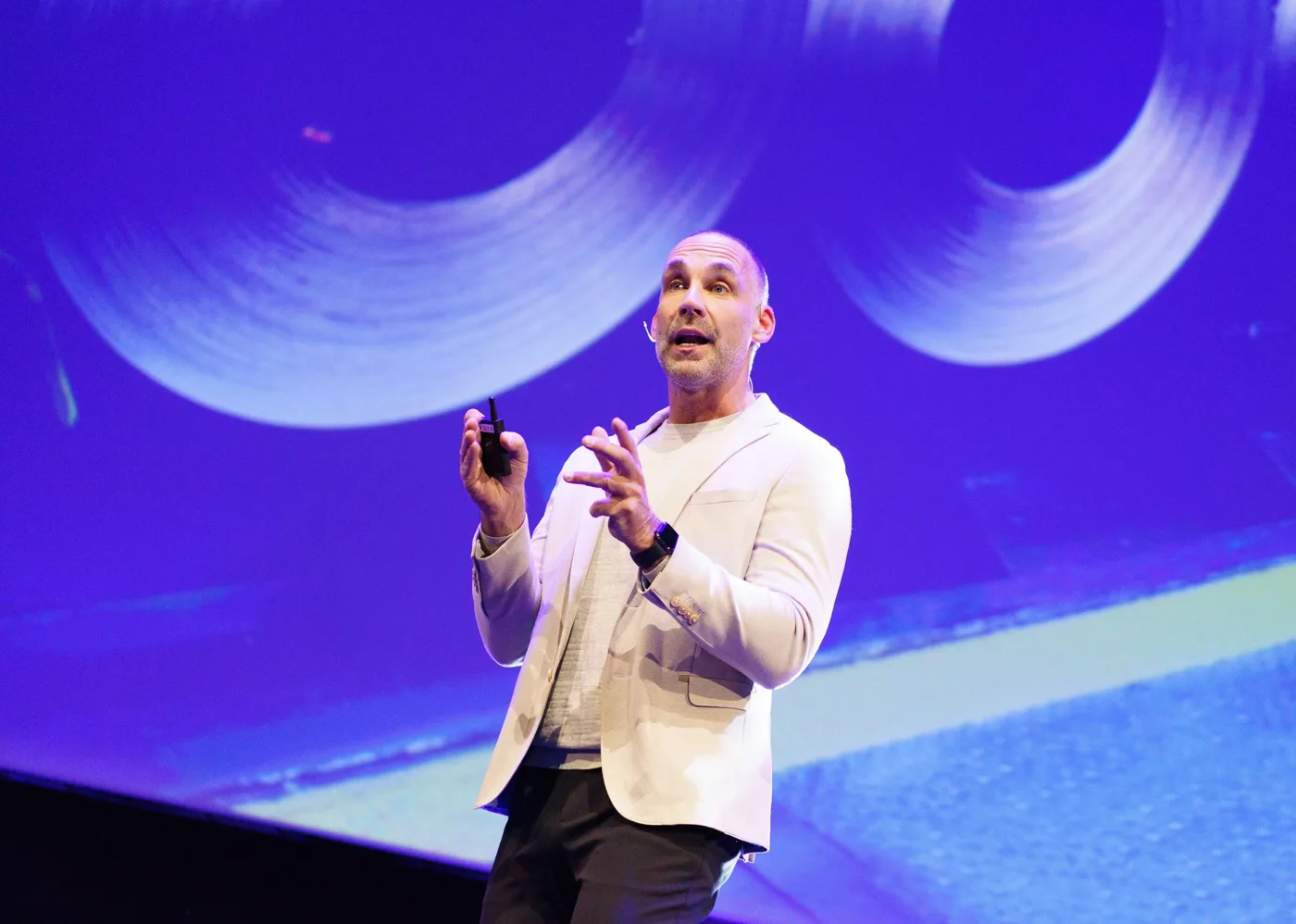
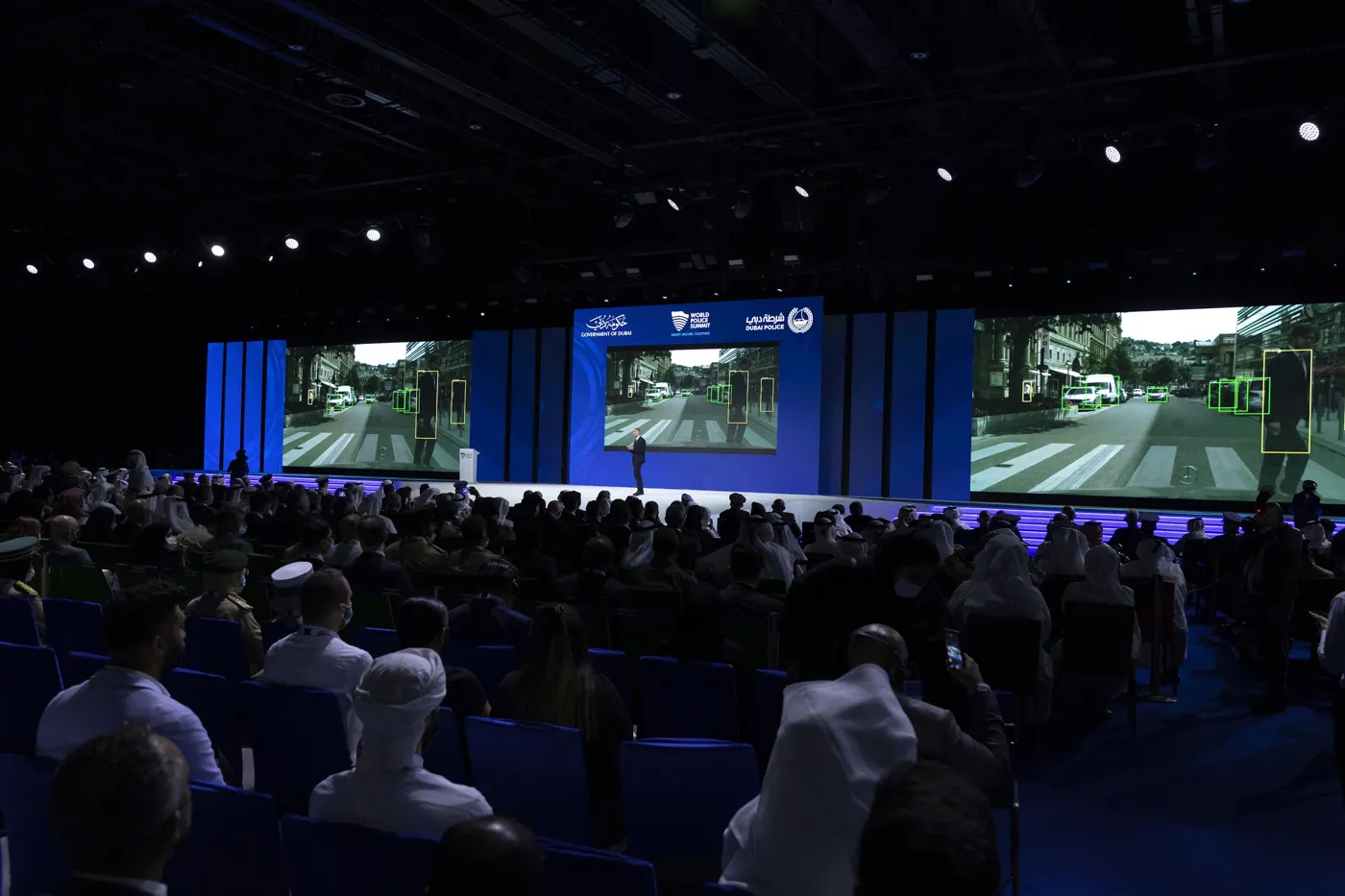
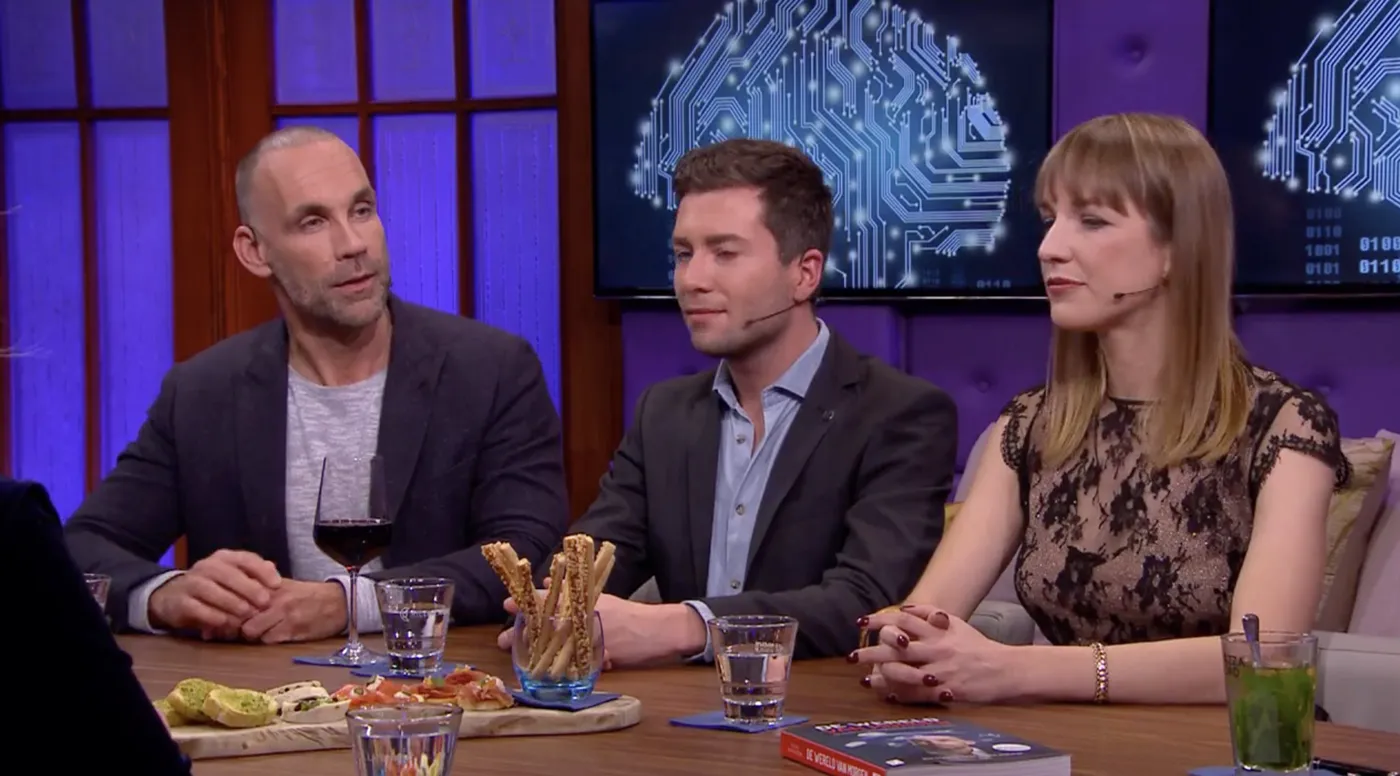
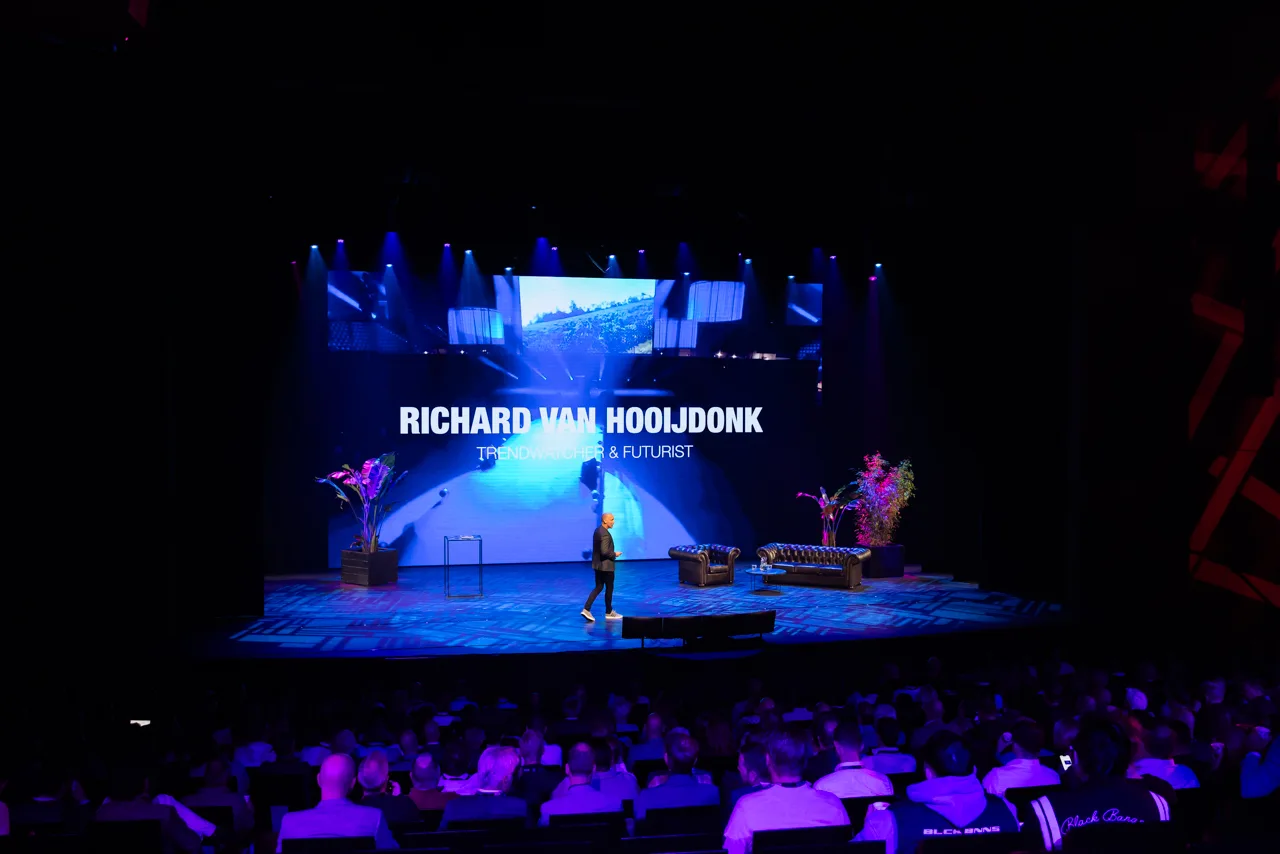
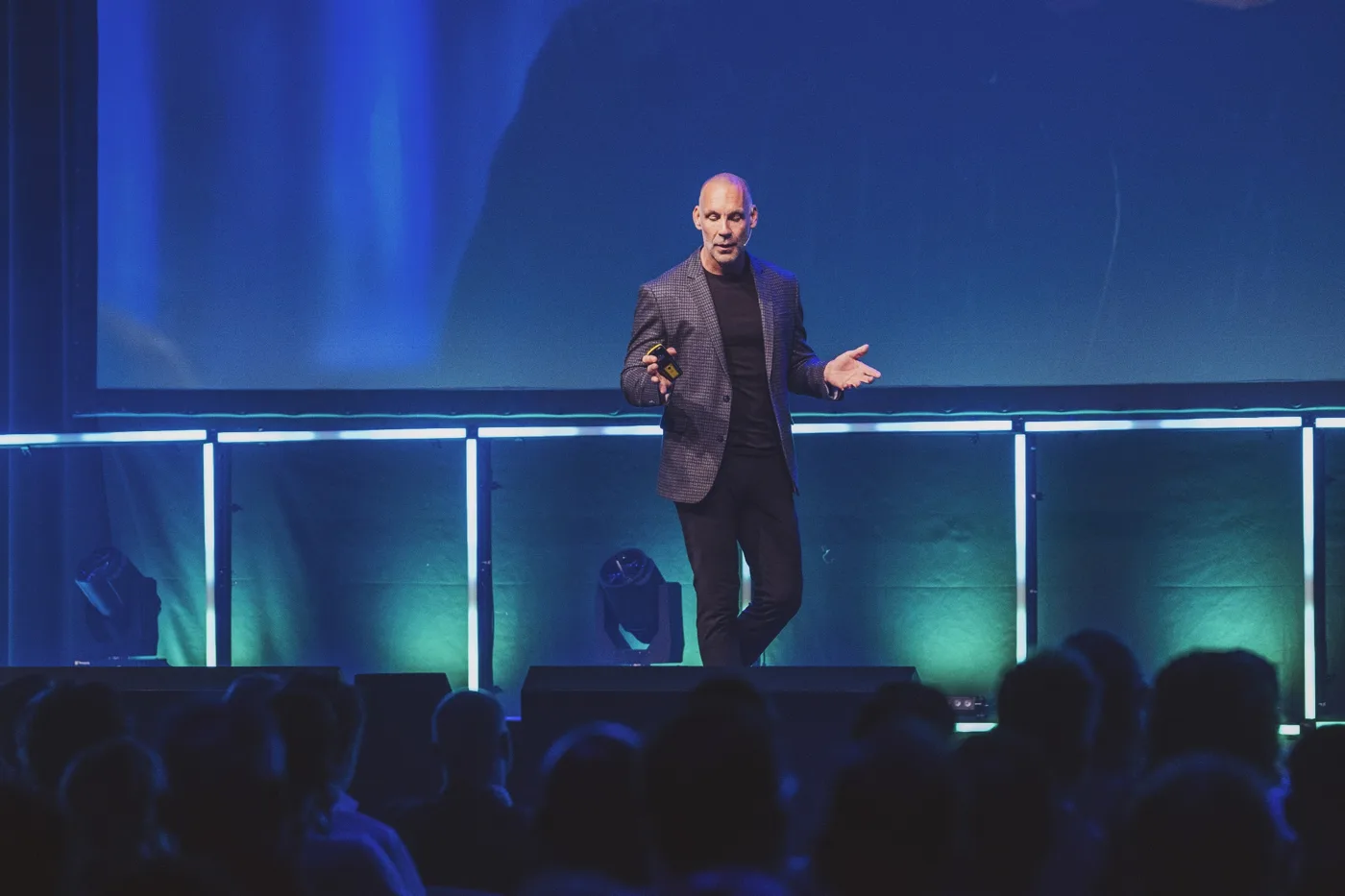
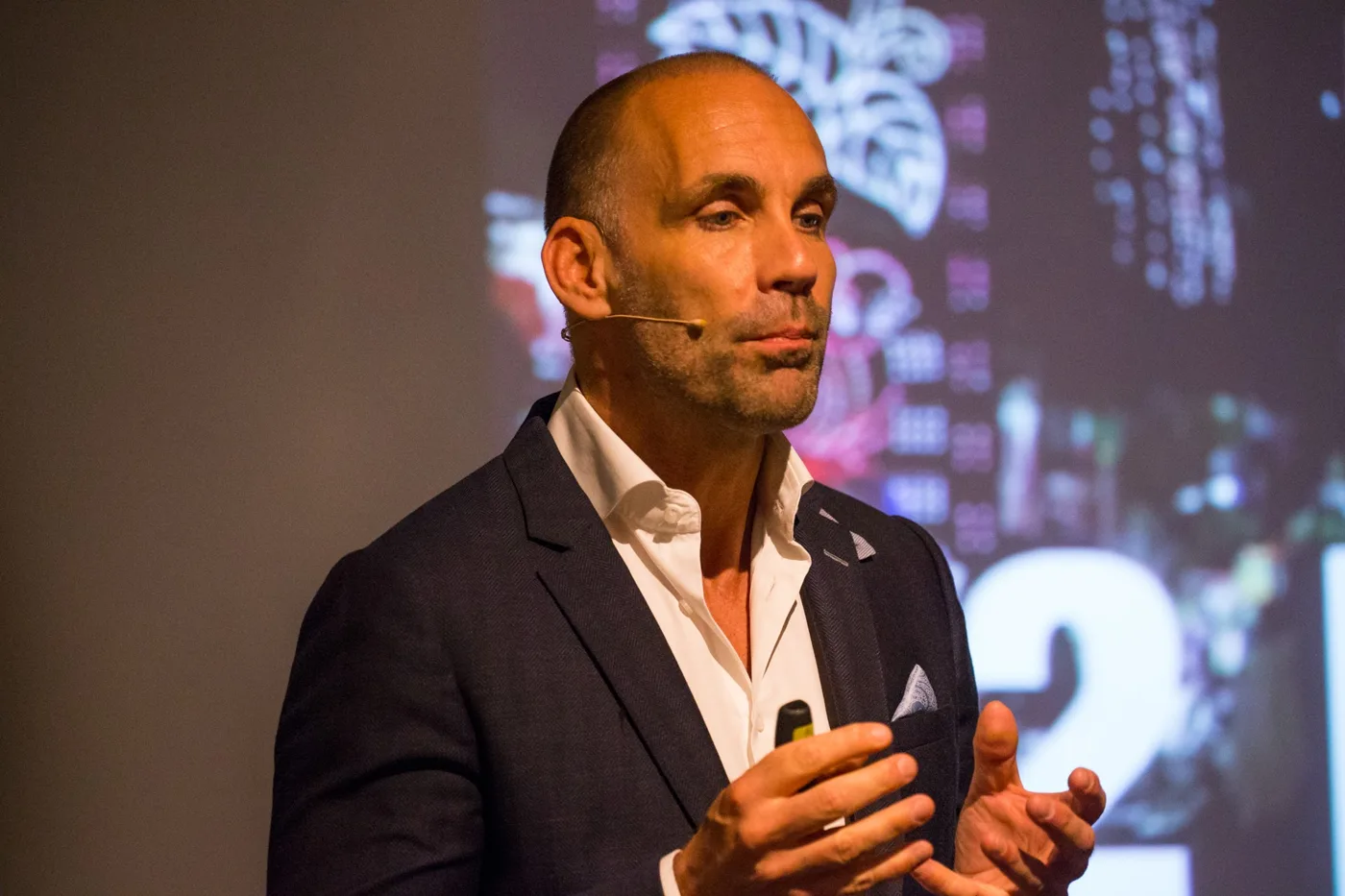
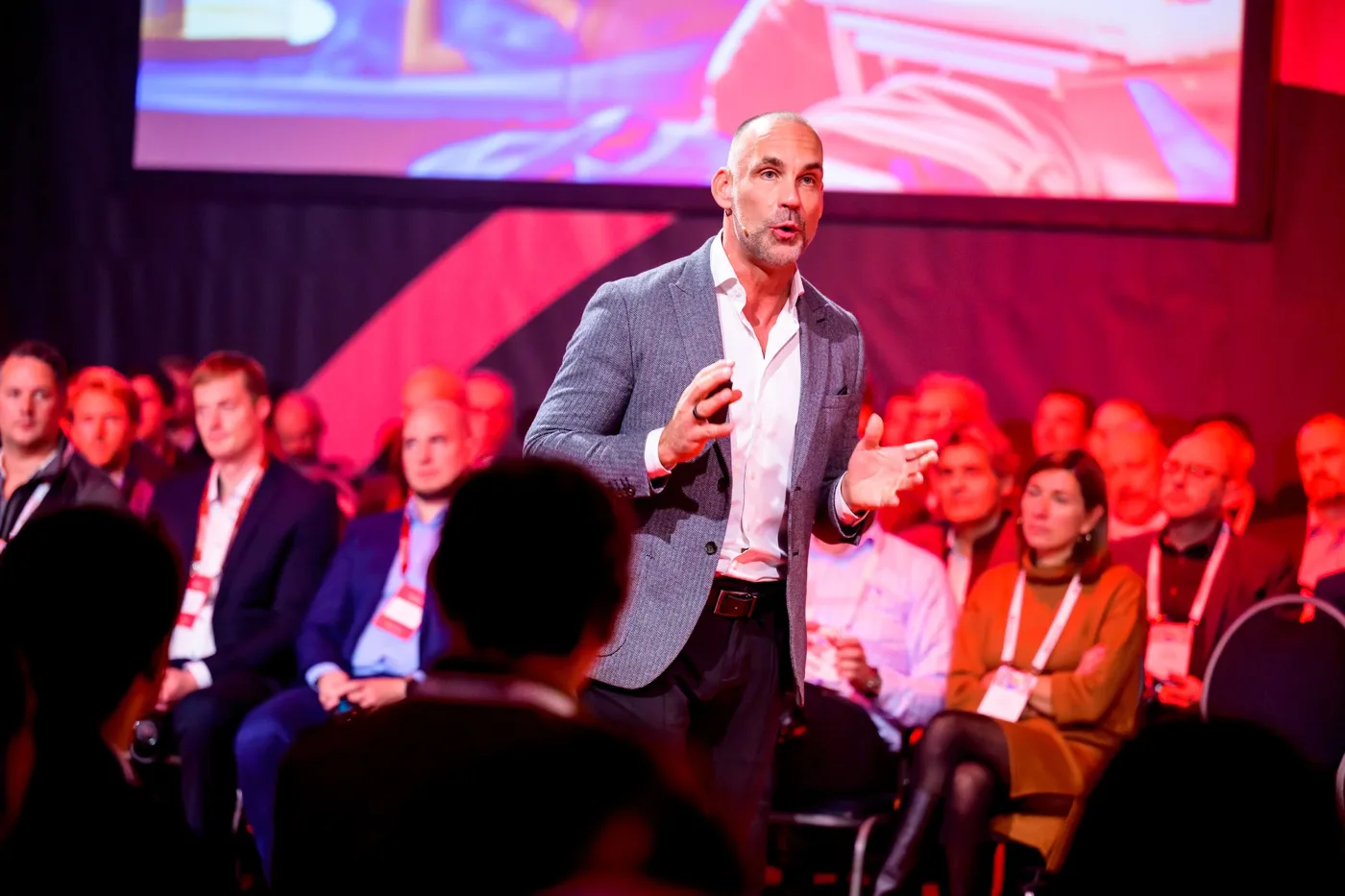
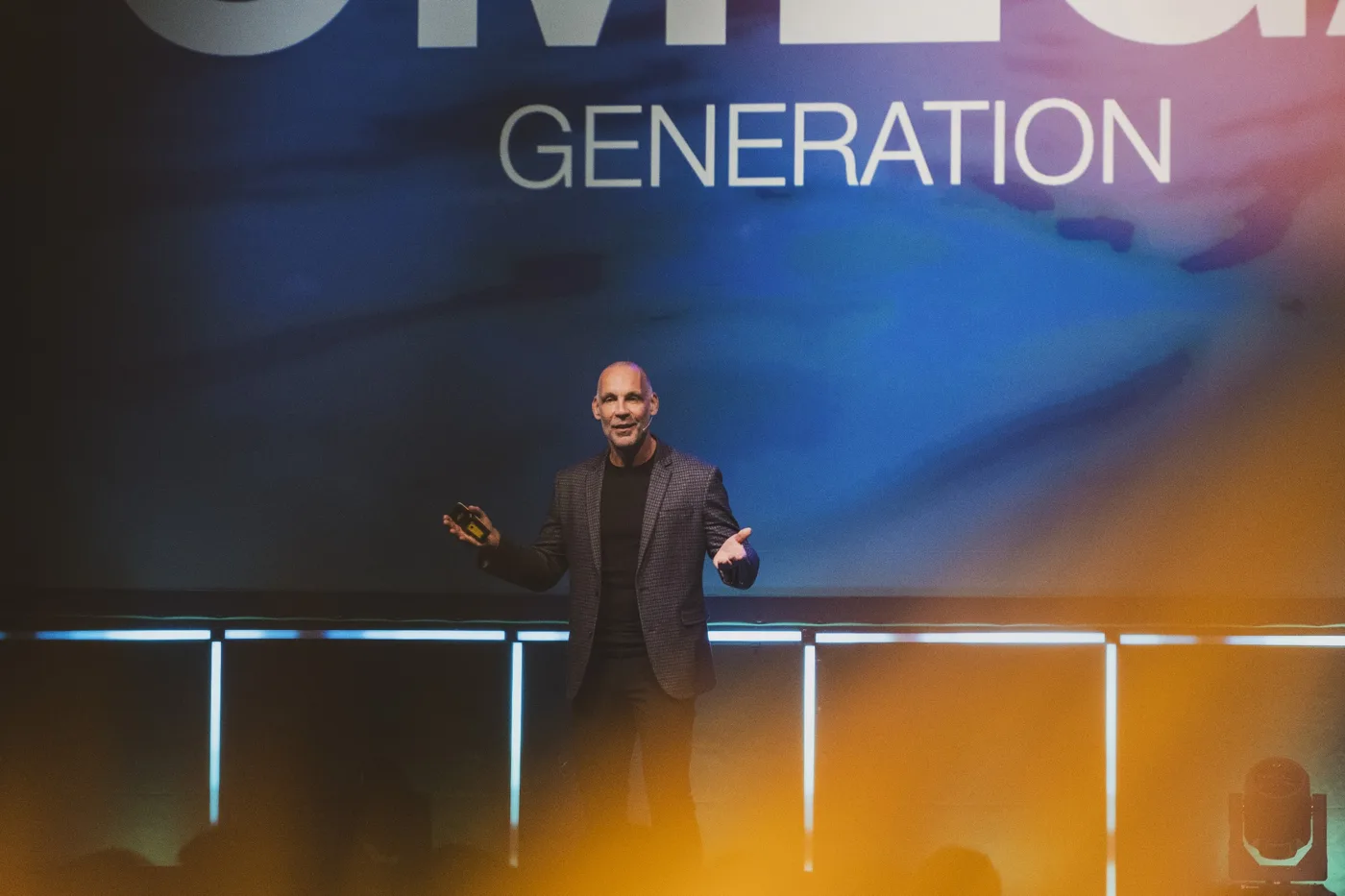
A packed conference hall, a televised panel discussion, a police summit in Dubai.

A selection of over 400 clients















What clients say

“Enthusiastic speaker, a good and versatile story. Everyone was ‘wowed’ by the lecture.”Read the full review →

“You gave us all honest, inspired and entertaining insights. Your performance was highly appreciated by the conference participants and EU members.”Read the full review →

“Great keynote that really opened our eyes. Sparkling and energetic, from beginning to end. Thanks Richard, for showing us this different view of the fitness market and its future.”Read the full review →

“A dazzling journey through new technology. The enthusiasm and energy during his presentation, combined with the visuals, provided a successful kick-off to our event.”Read the full review →

“An impressive and noteworthy presentation for our employees and customers. The rate at which change is happening, which you eloquently brought across in your energetic speech, requires a disruptive approach. To be continued!”Read the full review →
How a booking works
Your request
Use the form, or get in touch by phone, email or WhatsApp. A few lines are enough to get started.
We get in touch
We'd like to hear what your event looks like, who'll be in the audience and which themes interest you.
A written proposal
Covering the topic, format (on location or online), length (30, 45, 60 minutes or longer) and fee, so you can talk it over with your colleagues.
Getting to know Richard
Next, we'll find a time for the two of you to talk and brainstorm the keynote, the topics and the format. There's no charge for this.
Frequently asked questions
Who is this keynote for?
Arable farmers, horticulturists and greenhouse growers, livestock farmers, agricultural contractors, cooperatives, suppliers of seed, feed, machinery and crop protection, banks and advisers in agriculture, governments and conferences on the future of farming. The audience often mixes entrepreneurs, board members, advisers and young farmers; the keynote is built for that mix. It also works for events for staff, members and business partners.
What will the audience take away?
An up-to-date picture of what AI and new technology already do in the field, the barn and the greenhouse, and scenarios for the next five to fifteen years: robot swarms, a digital twin for every cow, protein from regional grass and farmers paid for carbon and nature. What that means for roles, teams, leaders and culture. And a clear view of data, reliability and security, so the conversation afterwards is about choices, not hype or fear.
Does the keynote also cover our own organisation?
Yes, and that is often where the emphasis lies: how a family business or cooperative learns to work with AI that monitors alongside its people, which new jobs appear and what that requires of its leaders. Roles, teams of people and AI, leadership, culture and learning each get their own part of the keynote.
Does the keynote also cover the risks?
Yes, always. Ransomware, cloned voices, attacks on barn and greenhouse computers and the question of who holds a farm's data: that other side has its own place in every agriculture keynote, with examples from practice.
Is it about arable farming, horticulture or livestock?
All three, plus contracting, cooperatives and suppliers. The emphasis follows the audience: a meeting of greenhouse growers gets different examples from a conference of dairy farmers. Food processing and the food industry come up where they affect the farmer, not as the main subject.
Is the keynote tailored to our business?
Yes. Beforehand there is an introductory call about the audience, the purpose of the event and what is happening among your members or clients. A board deciding on investments gets different examples from a study group of young farmers.
How long is the keynote, and can it be in English or online?
30, 45 or 60 minutes, and longer if you wish, with time for questions from the audience, in Dutch or English, in person or online. For more than a keynote, there are masterclasses, boardroom sessions for directors and boards, and workshops for all employees.
What does a keynote on AI in agriculture cost?
Fees for international keynotes are on request. Ask for a proposal and you will hear from us within an hour on working days.
Interested in a keynote for your agriculture event?
Tell us in a few sentences about your event and who will be in the audience, and let us know the date.
Prefer to speak to us directly? Call 085 303 0792 · email talks@vanhooijdonk.com · send a WhatsApp message