 Richard van Hooijdonk
AI & the future of logistics
AI forecasts demand and already turns the plan into trips and bookings. Soon the supply chain could largely steer itself, with AI agents, robots and driverless lorries. How much stronger that makes it depends on the people who run it.
Choose your sector
Every keynote is tailored to a sector. Choose yours.
 Healthcare
 Government
 Defence
 Policing and security
 Smart cities
 Construction
 Mobility
 Industry 4.0
 Energy and utilities
 LogisticsYou are viewing
 Retail
 Wholesale
 Hospitality, tourism and leisure
 Agriculture
 Financial services
 Legal
 Accountancy and advisory
 Education
 Media and entertainment
 Telecoms and connectivity
Is your sector not listed? We tailor the keynote to your audience. Tell us about your audience
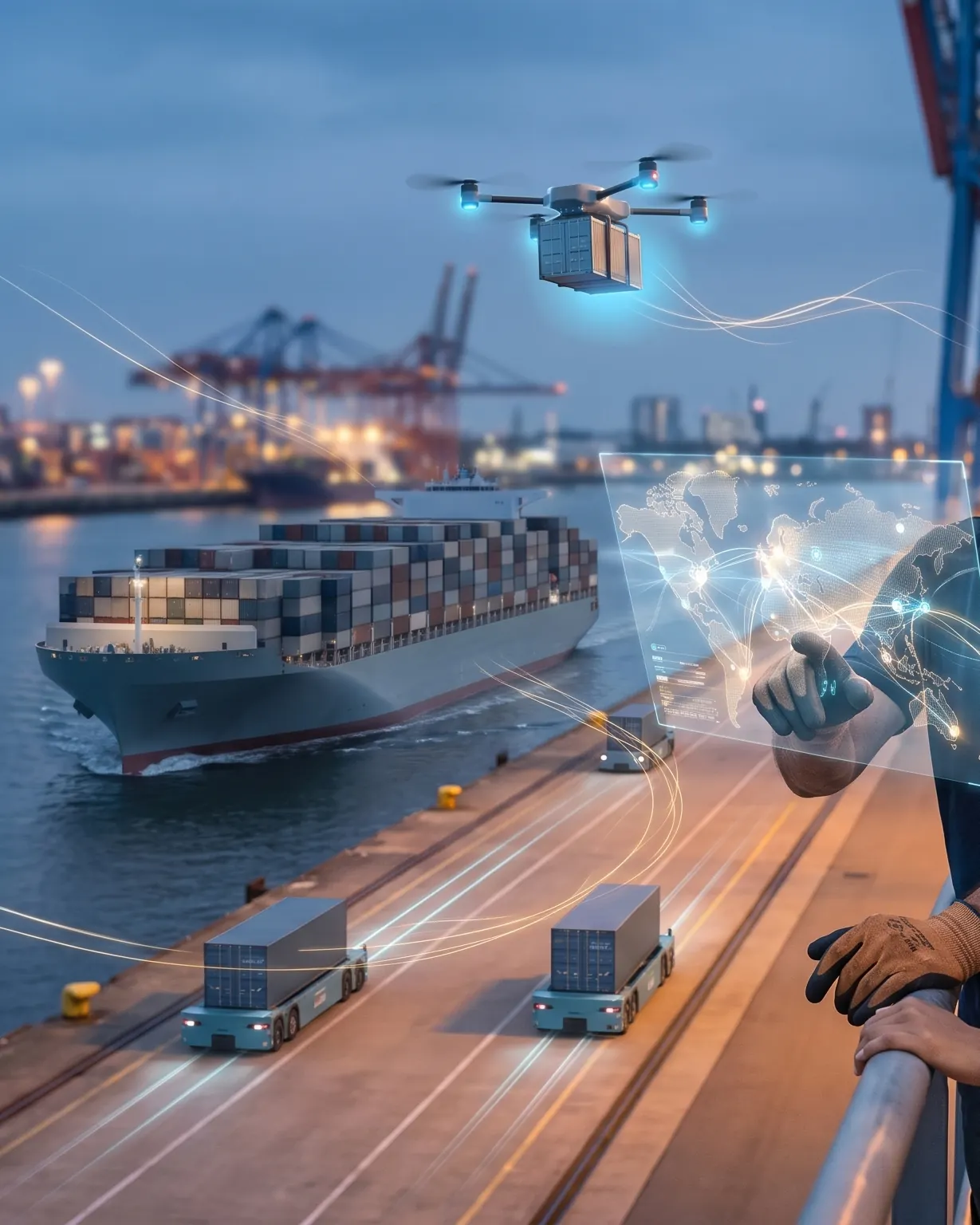
Ordered today, delivered tomorrow. AI, robots and autonomous transport are clearing the way for a supply chain that looks ahead, coordinates itself and corrects its own course.
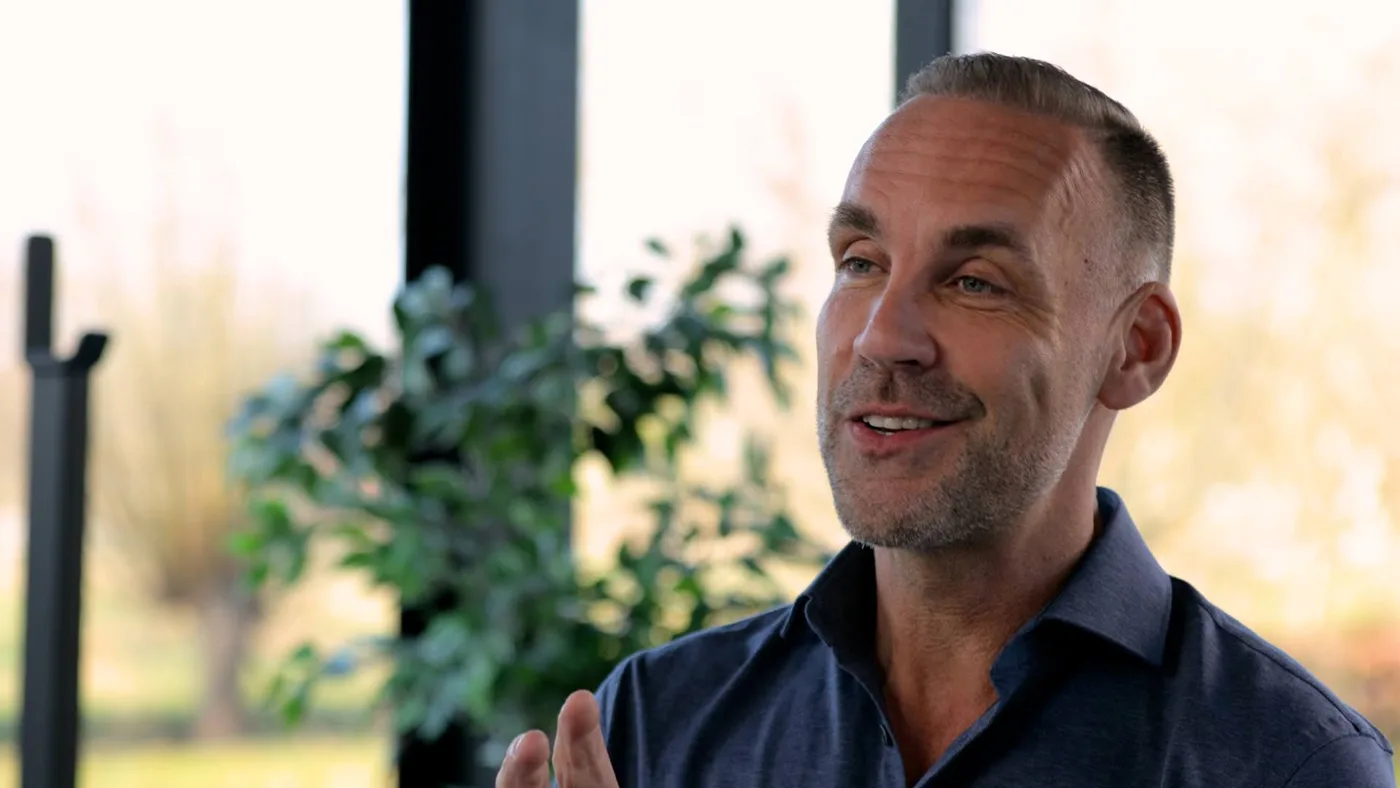
A supply chain that increasingly runs itself: futurist and trend watcher Richard van Hooijdonk shows how that works. This keynote looks at what it delivers today and what it asks of the people who work in it. Logistics already uses AI for a long list of tasks. It spots the peak in the distribution centre weeks in advance and sends robots to bring the shelving to the order picker. In ports it predicts when a ship will really arrive, while AI agents book transport and process the freight paperwork. Looking further ahead, a different kind of chain comes into view: networks of driverless lorries linking the hubs, robots that learn to pick almost any product, AI agents negotiating with other companies' agents, and goods moving through an open network like packets of data. Meanwhile criminals look for the weak link, and drivers and warehouse staff stay hard to find. All of this changes how people work together, who makes the plan and who directs the robots. Retaining experienced staff needs attention too. The keynote shows what pays off now and sketches scenarios for the next five to fifteen years. Soon, the least prepared link will set the pace for the whole chain.
AI in logistics
What AI already does today in planning, the warehouse, transport, the port and delivery.
- 01
The supply chain's twin
A digital model of your network shows what a closed route, a supplier dropping out or a new warehouse could mean.
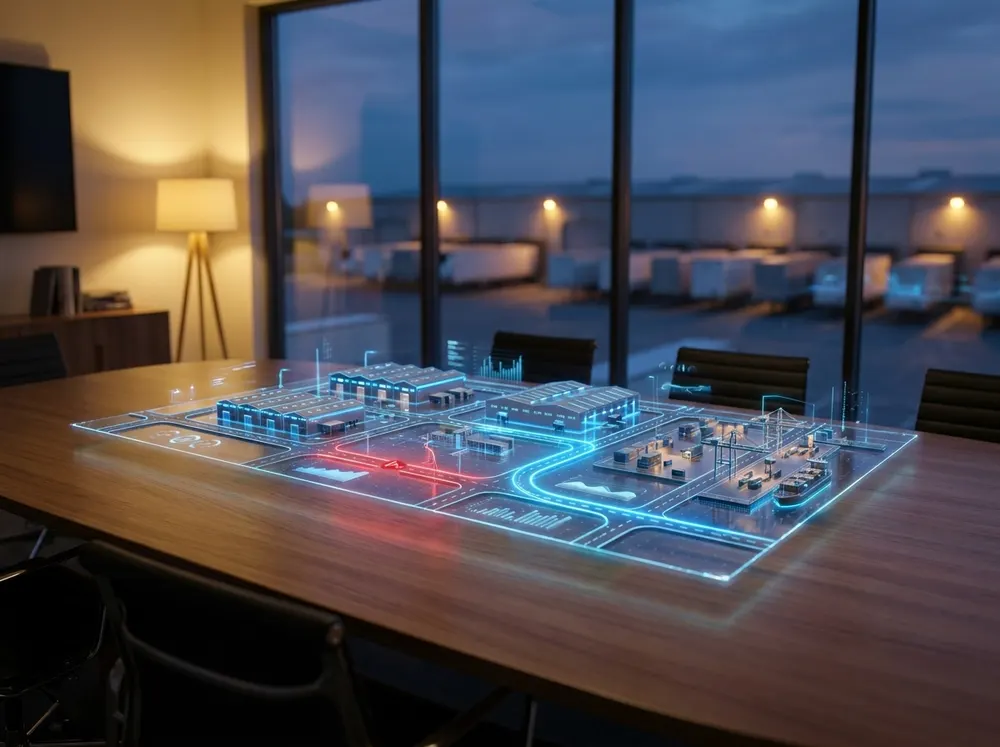
A digital twin is a computer model of a real system, kept up to date with live data. For a supply chain it holds the warehouses, factories, routes, stock and contracts, and how they affect one another. That lets you ask questions you would rather not test in real life. What happens if this port closes for two weeks, if a supplier drops out or if you close a distribution centre? Simulations work through the possible outcomes, and AI helps compare thousands of scenarios to find the measure that best limits the damage from the disruption. The next step is a twin that runs alongside the operation every day, testing for itself what could go wrong and proposing measures before the disruption arrives.
- 02
Supply chain planning and forecasting
AI forecasts volumes and bottlenecks. Next: AI agents that book lorries and people themselves as soon as a peak looks likely.
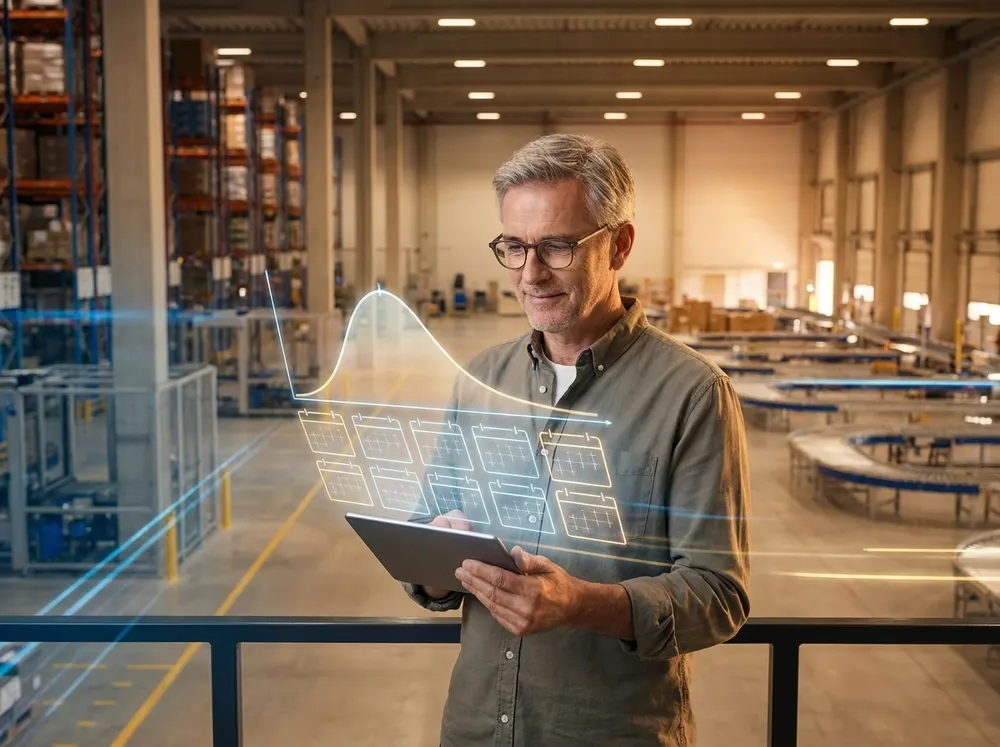
AI combines past sales with open orders, customer promotions, the weather, public holidays and congestion in the ports, and works out how these factors together drive expected demand per item and per week. A distribution centre can then see earlier when a peak is likely and book temporary staff and lorries in good time. A better forecast can help reduce idle stock and costly rush deliveries, and get orders to customers on time more often. The planner adds what the model does not yet know, such as the expected orders from a large new customer. The next step is acting on the forecast automatically: AI agents book lorries and temporary staff within set limits as soon as a peak looks likely.
- 03
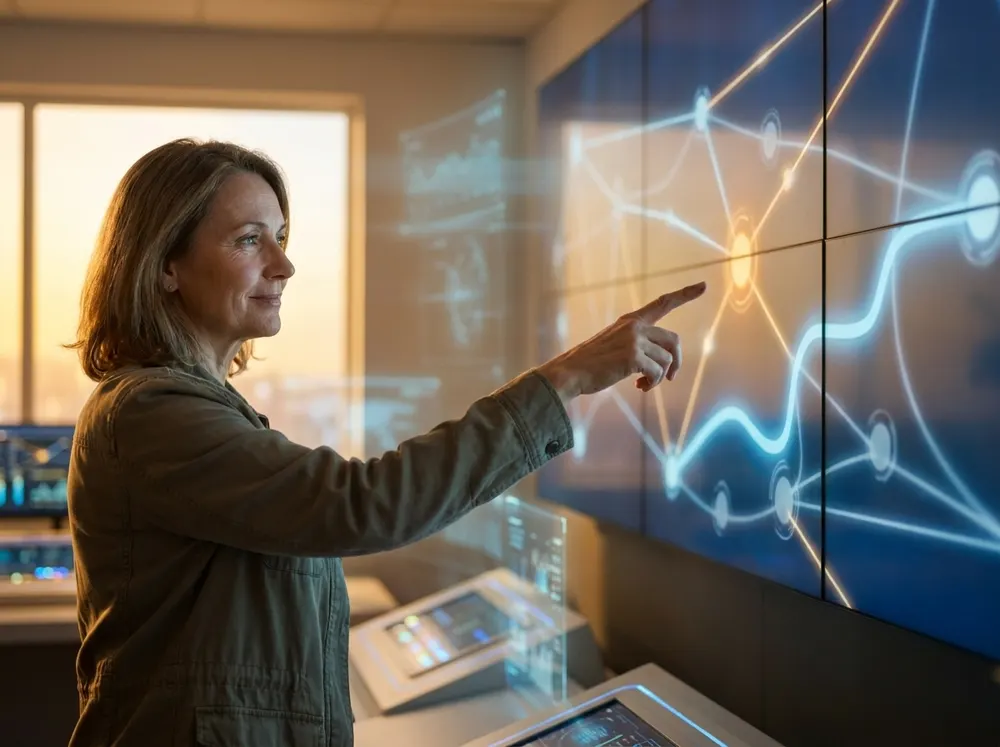
The control tower
One view of shipments, stock and suppliers, further down the chain too. AI spots looming delays and looks for alternatives.
A control tower brings together the available data on the supply chain: where shipments are, how much stock there is and which suppliers deliver what. Many companies know their direct suppliers well but know little about the suppliers behind them, and that is exactly where the surprises start. So AI also reads beyond the company's own systems: reports of a strike, a flood or a factory fire, ship positions, waiting times in ports. A blocked shipping route affects sailing schedules and distribution centre capacity for weeks; AI calculates that knock-on effect in advance. The next step is a control tower that switches route or supplier by itself when disruption hits, within agreed limits and under human supervision.
- 04
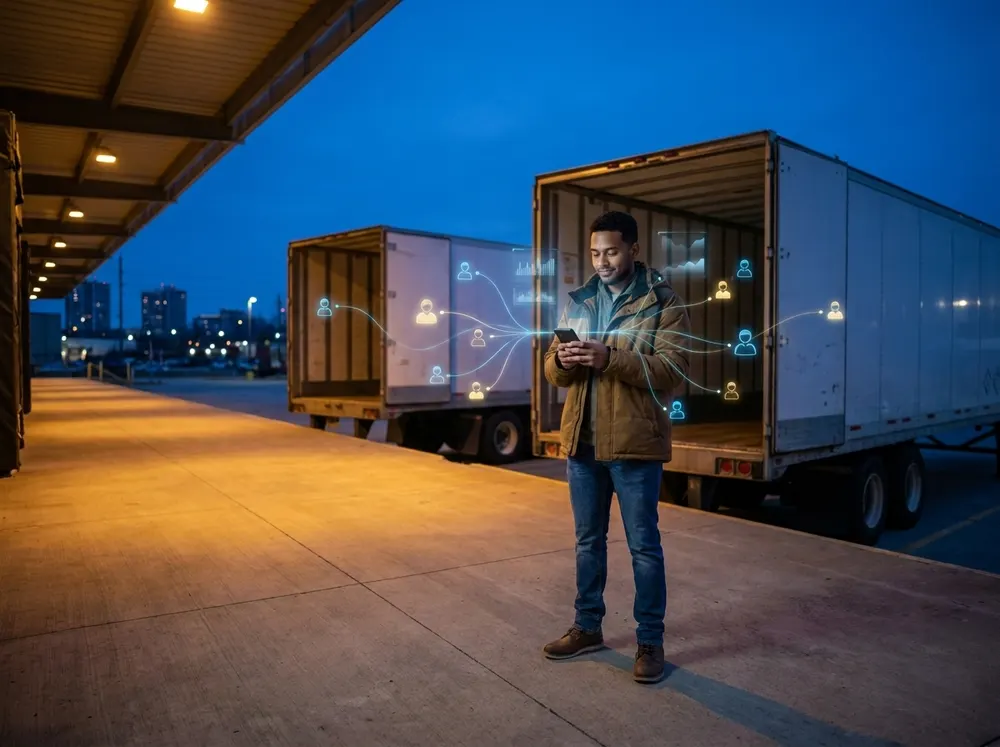
AI agents in logistics
AI agents book transport, process consignment notes and customs papers and tell customers where their shipment is. People handle the exceptions.
An AI agent is given a goal and takes the steps to reach it on its own, within set permissions. Logistics is full of that kind of work: pulling a transport order out of an email, choosing and booking a carrier, checking a consignment note, preparing the data for a customs declaration. Built-in checks decide which bookings the agent may make by itself. At carriers, digital assistants already answer the question of where a shipment is, day and night. Anything out of the ordinary, such as an unusual rate or a query from customs, goes to a person. The next step: AI agents that negotiate price and time slots with the agents of carriers and terminals.
- 05
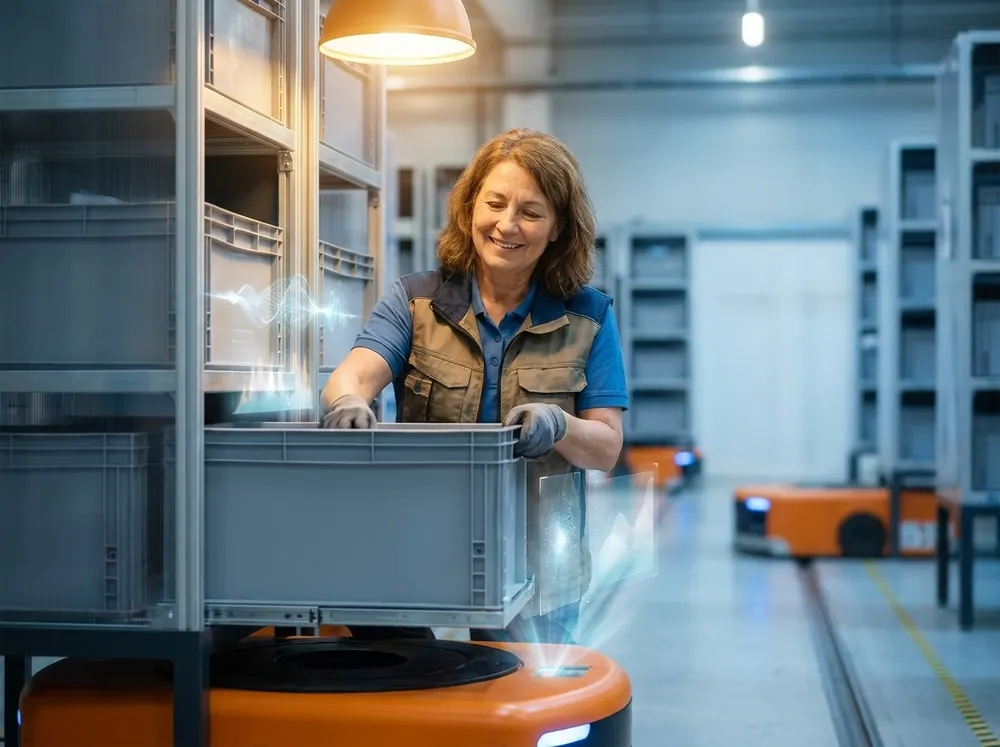
Robots in the warehouse
Robots bring the shelving to the order picker, and AI decides where each product is stored. Pickers walk far less.
In automated warehouses, mobile robots, storage systems with totes in tall racks, sorting machines and robot arms work side by side. How many orders such a warehouse handles depends on how well those systems work together, including when the mix of orders changes from hour to hour. AI shares the work across the fleet, has robots give way to each other and decides where each product goes: items often ordered together are stored together, and this week's fast movers sit at the front. A large online retailer now has a million robots at work in its warehouses, mobile robots and robot arms combined. The next generation of robots learns from a handful of examples how to pick up a new product, without anyone programming every movement in advance.
- 06
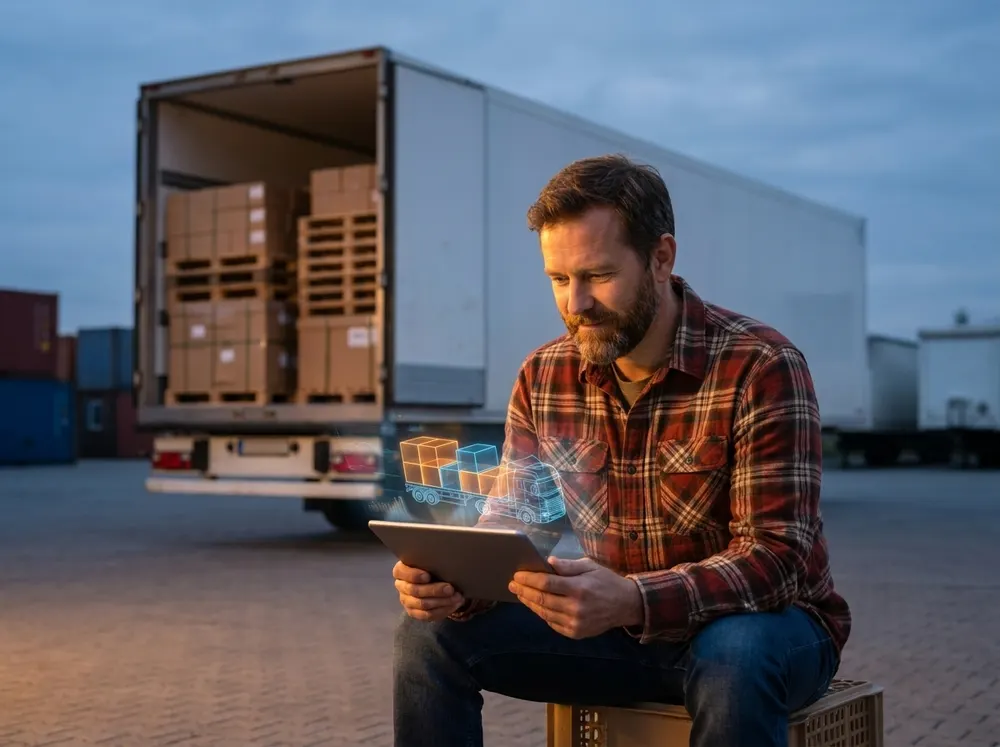
Freight platforms and empty runs
Shippers book capacity through platforms. AI matches loads to lorries and sets the price. Lorries run full more often and come back empty less often.
Freight platforms match loads with spare capacity in minutes, beyond fixed carrier relationships too. AI does the arithmetic: which load suits a lorry already heading that way, what price is realistic right now, which small consignments can be combined into one full trip. There is a lot to gain: according to Eurostat, lorries registered in the EU drive about a fifth of their kilometres empty. A suitable return load can make an extra trip unnecessary, saving fuel, emissions and money. Soon the agents of shippers and carriers will negotiate on these platforms themselves, within limits set by their owners, and the price for each trip will be settled in seconds.
- 07
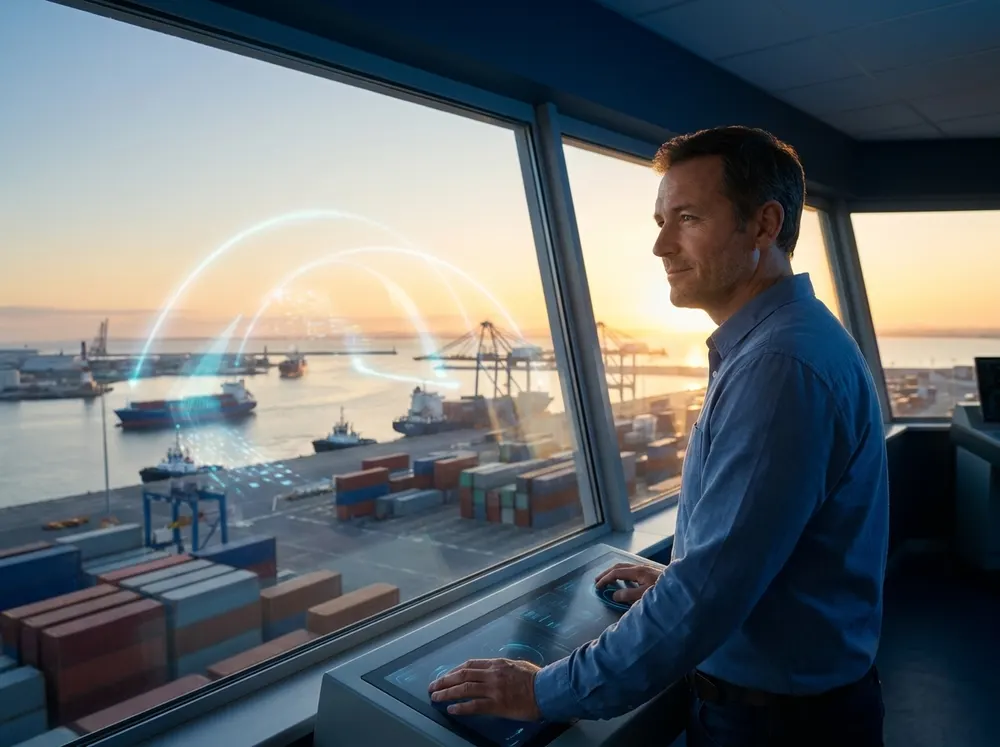
The smart port
AI predicts when a ship will really arrive and plans berths, cranes, tugs and lorries around it. Less waiting at sea and at the gate.
In a port, a change in arrival time ripples through the use of berths, sheds and towage, and into transport to the hinterland. For a long time every party planned with its own estimate, so a ship waited for a free berth or a lorry queued for hours at the gate. A smart port shares that data and lets AI predict when a ship will actually come in, based on position, weather, tide and congestion. The ship can then slow down on the way instead of steaming at full speed to an anchorage and waiting there. The IMO encourages this just-in-time arrival because it saves fuel and emissions. Terminals plan cranes and shifts around it, and hauliers get a time slot at the gate.
- 08
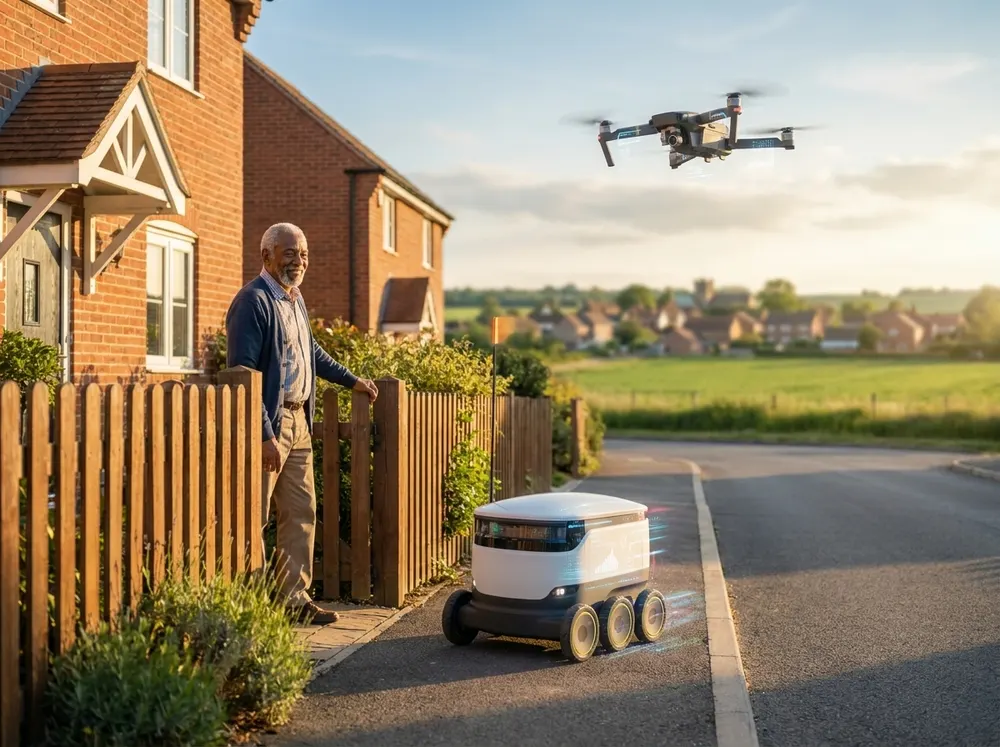
Autonomous delivery
Delivery robots travel along the pavement and drones fly urgent parcels to remote places. AI finds the way and picks the moment.
With delivery robots, one remote operator supervises several trips at once. AI lets the robot understand what is going on around it: a kerb, a child crossing, a cyclist passing. Delivery robots have already handed over millions of orders on campuses and in residential areas. Drones fly blood and medicines to clinics that are hours away by road. In busy streets, routes and drop-off points are agreed in advance, and the operator takes over when a robot gets stuck. The next step is delivery at a larger scale: a van as mother ship from which robots and drones cover the last few metres, and lockers and pick-up points that arrange the robot's arrival time with it themselves.
The future of logistics
Where the supply chain could be in five to fifteen years, with AI as the engine.
- 09
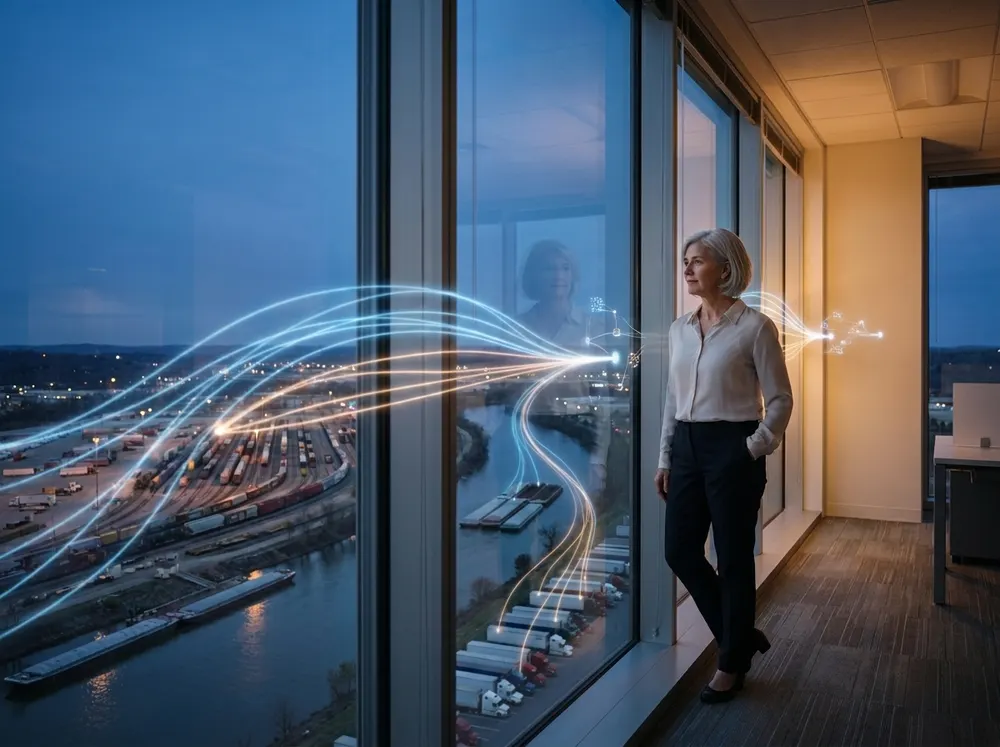 Future scenario
The chain that steers itself
AI agents of shippers, carriers and terminals will negotiate with each other. People set the goals; the chain plans and repairs itself.
A self-steering supply chain is one in which AI agents make and carry out decisions across company boundaries. A shipper asks for capacity, carriers bid and a terminal confirms a time slot, with their agents negotiating in seconds. Gartner expects that by 2030 half of the software linking supply chain management functions will contain agents that carry out decisions on their own. The scenario for 2040: when a storm approaches, a strike begins or a border closes, the chain rebooks transport and moves stock before the customer notices anything. People set the goals and limits and judge whatever falls outside the pattern. Planning then becomes the design of the rules within which the chain steers itself.
- 10
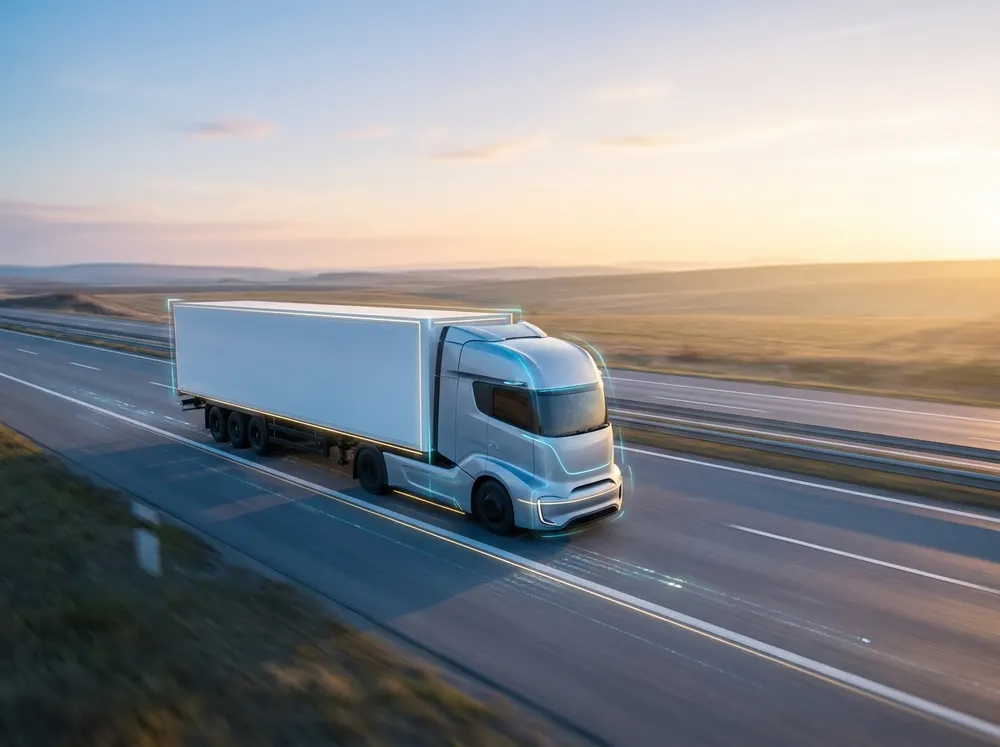 Future scenario
The motorway without drivers
By 2040 autonomous lorries could form one shared network. AI agents spread trips and charging stops across the fleet, day and night.
An autonomous lorry separates the motorway run from a driver's availability and rest periods, so it can keep going for almost the whole day and night. On a few motorway corridors, such lorries already run commercially without a driver; elsewhere analysts expect the first commercial routes around the early 2030s. The scenario for 2040: an international network in which AI agents allocate autonomous lorries and transfer capacity from several carriers, with a driver taking over the trailer at a transfer point for the final stretch. With hundreds of thousands of driver vacancies unfilled, the job shifts from driving to remote monitoring, loading and contact with the customer.
- 11
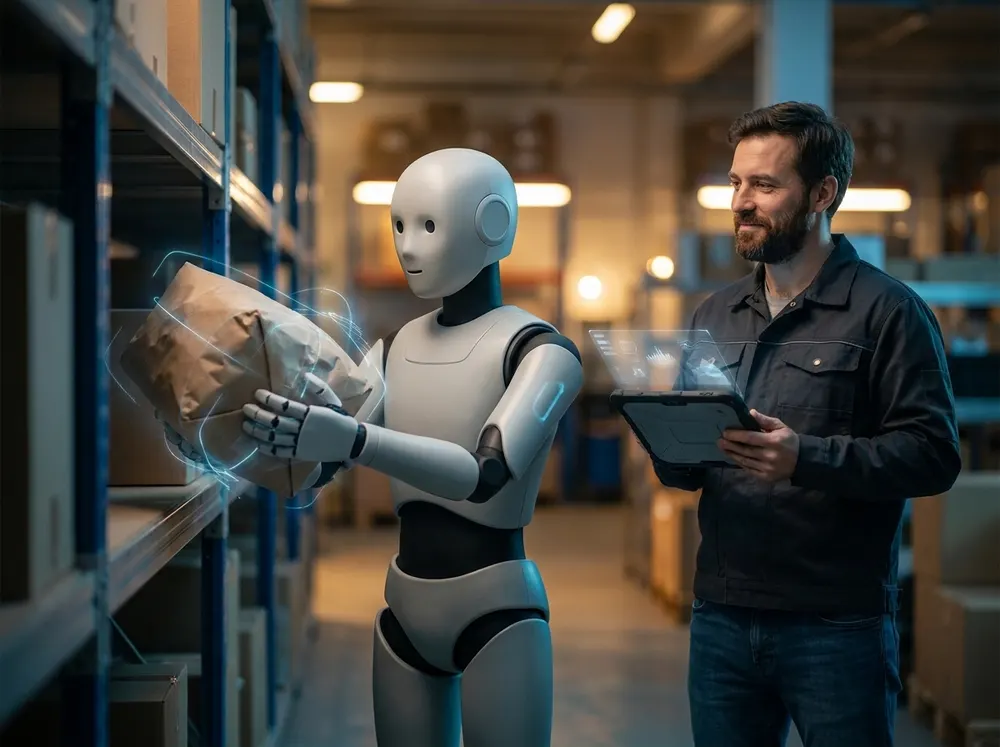 Future scenario
The robot that keeps learning
Robots that learn from examples could eventually pick almost any product. That brings the lights-out warehouse within reach.
Today's warehouse robots are specialists: they move shelving, pick totes or sort parcels, and a new product often means adjustments. The next generation learns more the way people do: by watching, trying and sharing experience. Foundation models for robots, comparable to the language models behind chatbots, let a robot arm or a humanoid robot recognise an unfamiliar object and choose the right grip itself. Humanoid robots are already being trialled in distribution centres; banks and consultancies project millions of units in the 2030s. The scenario for 2040: warehouses that run without lights or heating, with robots that can handle soft, loose and irregular products too. What one robot learns, the whole fleet knows by the next morning.
- 12
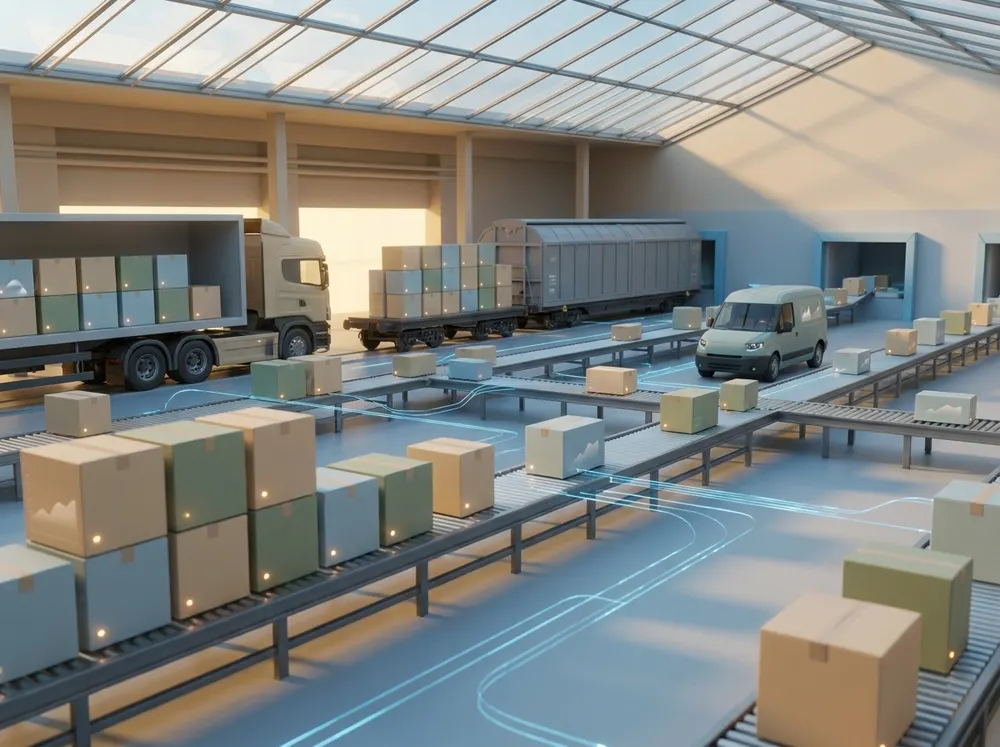 Future scenario
The physical internet
Goods will travel the way data does: in standard modules, through open hubs that everyone shares. AI picks the route for each module.
The physical internet is the idea that goods travel the world the way data moves across the internet. They sit in standard modules that fit together and pass through open hubs anyone can use, switching carriers without the contents being repacked. The route is adjusted along the way to capacity, delivery time and emissions. In a joint roadmap, the logistics sector has set 2040 as the target for such an open, shared network, and trials with shared hubs and bundled loads are already running. AI is the conductor, distributing millions of modules at once across the lorries, trains and ships of different owners. The result would be far-reaching: full lorries as standard, far fewer empty kilometres, and competitors sharing the same infrastructure.
- 13
 Future scenario
Ships without crews
Ships that sail themselves, first on short fixed routes and inland waterways. In time, the captain watches over a fleet from the shore.
An autonomous ship sails, manoeuvres and avoids other traffic using sensors and AI, with few or no crew on board. The first applications are where routes are short and predictable: ferries, coastal shipping and inland waterways. Trial vessels already sail part of their voyage on their own, and remote operation is being tested on inland waterways. The IMO has a first, still voluntary code for autonomous ships; a mandatory version is expected around the early 2030s. One national programme for autonomous shipping aims to have half of domestic coastal shipping running autonomously by 2040. The scenario for 2040: a shore control centre where one captain watches over several ships. On board, cabins and galley make way for cargo.
- 14
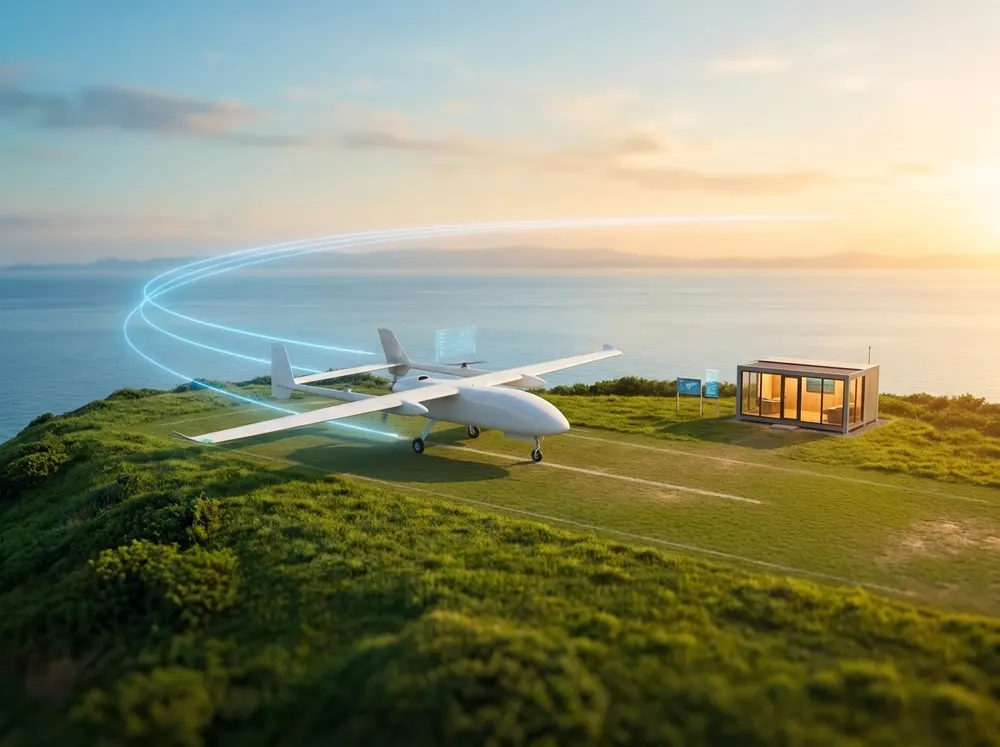 Future scenario
The sky as a freight route
Uncrewed cargo aircraft link hubs, islands and remote areas. AI flies; a pilot on the ground watches over a whole fleet.
Between the delivery drone and the cargo plane, a new class is growing: uncrewed aircraft that carry hundreds of kilos over hundreds of kilometres. They link distribution centres, islands and areas that are hours away by road. The first cargo drones for this middle section of the chain are flying in trials and on a few fixed routes. The scenario for 2040: a freight layer above the road, with fixed corridors and on-demand flights, in which AI adjusts the route to weather and air traffic and picks an alternative landing site itself if needed. Pilots on the ground each watch over a group of aircraft. An urgent spare part then no longer travels by van along a jammed motorway, but through the air in an hour.
- 15
 Future scenario
When the customer is an AI agent
Personal AI agents will do part of the buying. The supply chain responds to their predictions of what will be needed.
In agentic commerce, AI agents search, compare and order on behalf of consumers and businesses. An agent that knows the stock at home or in the workshop reorders by itself, within a budget and according to its owner's preferences. Gartner calls these machine customers a fast-growing new group of buyers. For logistics, that changes demand itself. An agent can plan repeat purchases more evenly, and can wait for a full load or a low-emission time slot. The scenario for 2040: products are already in a hub near the customer before the order comes in, because AI sees the agents' orders coming. For such repeat purchases, delivery shifts towards planned replenishment, with less extreme peaks in orders.
- 16
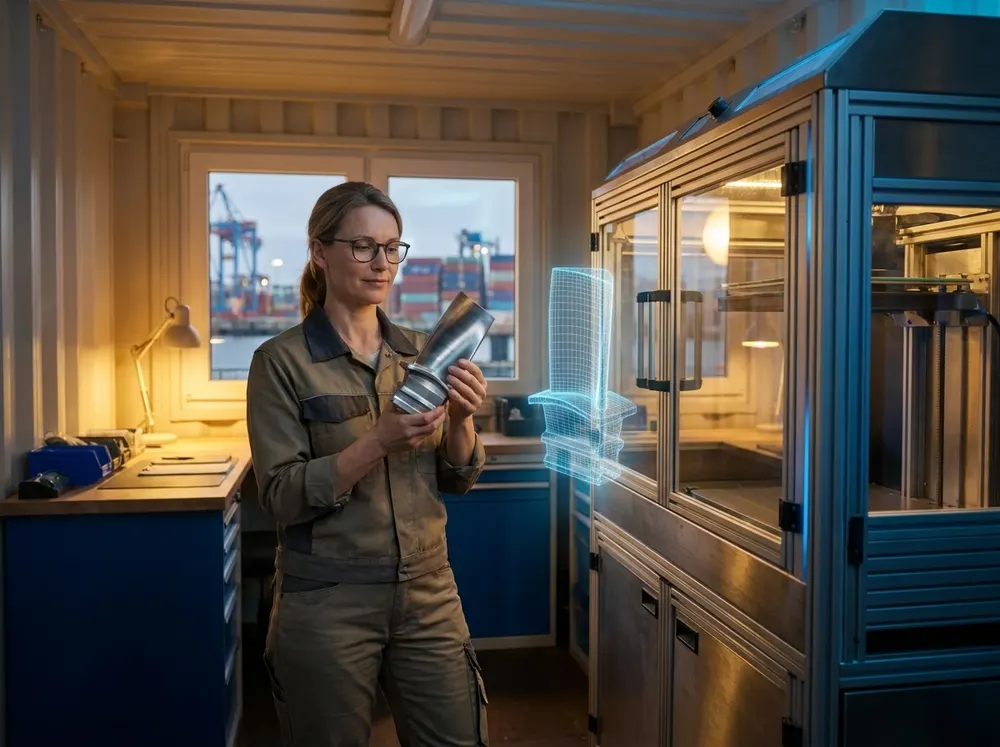 Future scenario
The digital inventory
By 2040 a machine could have its own replacement part printed before it fails. Inventory shifts towards production capacity.
A digital inventory stores designs of parts that are only printed when they are needed. Aviation and industry already do this, and networks for local production exist. AI helps select suitable parts and predict wear. The scenario for 2040 goes further: a machine reports approaching wear, and an AI agent books production capacity at a nearby printing site on its own. Production data and automated inspection decide whether the part can be released, and transport is timed to the planned maintenance. Expected maintenance demand then drives production and delivery. For some parts, stock moves from warehouse space to available production capacity.
- 17
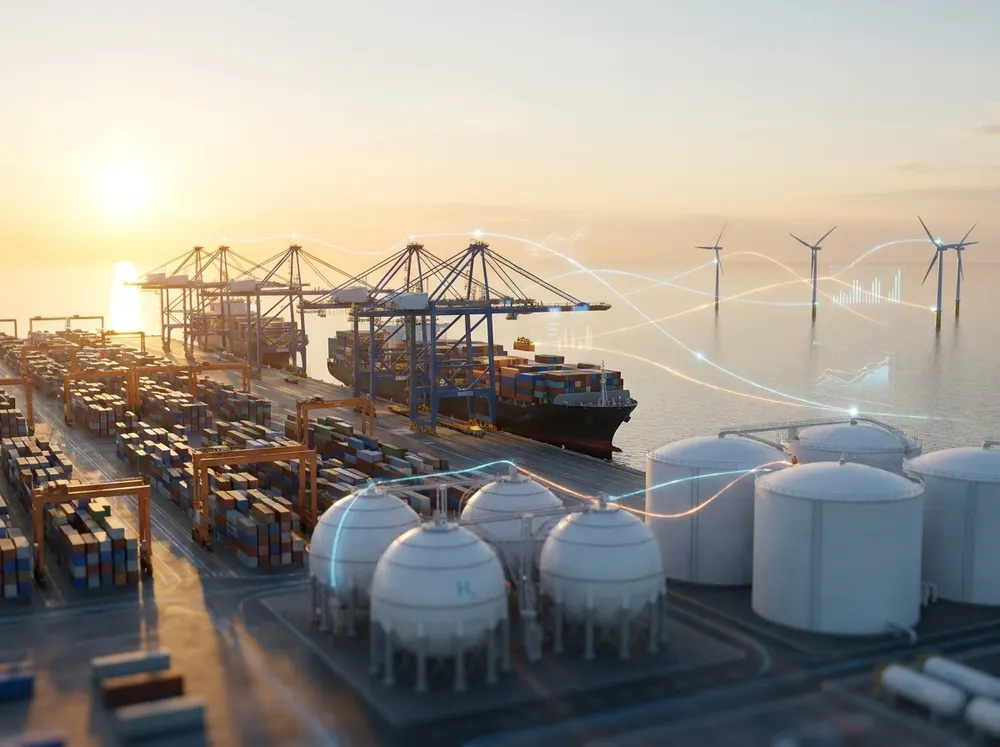 Future scenario
The port of 2040
By 2040 the AI agents of ships, terminals and energy firms will coordinate handling and energy. The port plans cargo and power together.
The port of 2040 manages goods and energy as one system. The building blocks are visible: import terminals for hydrogen and hydrogen carriers in preparation, electric cranes and vehicles, and the IMO target of net zero around 2050. The scenario: the AI agents of ships, terminals and energy companies coordinate arrival, handling, charging and bunkering among themselves. A ship gets a time slot when both a berth and green power or fuel are available; self-driving container vehicles charge when the cranes are idle and there is enough power. The port also links the supply of hydrogen, ammonia and methanol with demand from the hinterland. Its competitiveness then depends on how well it plans cargo and power together.
In logistics, a supply chain that looks ahead and corrects itself is coming within reach. People who are curious, share what they know and trust each other are the ones who turn that chance into reality.
Richard van Hooijdonk
The logistics organisation of the future
What changes for roles, teams, leadership and culture when AI joins the work.
- 18
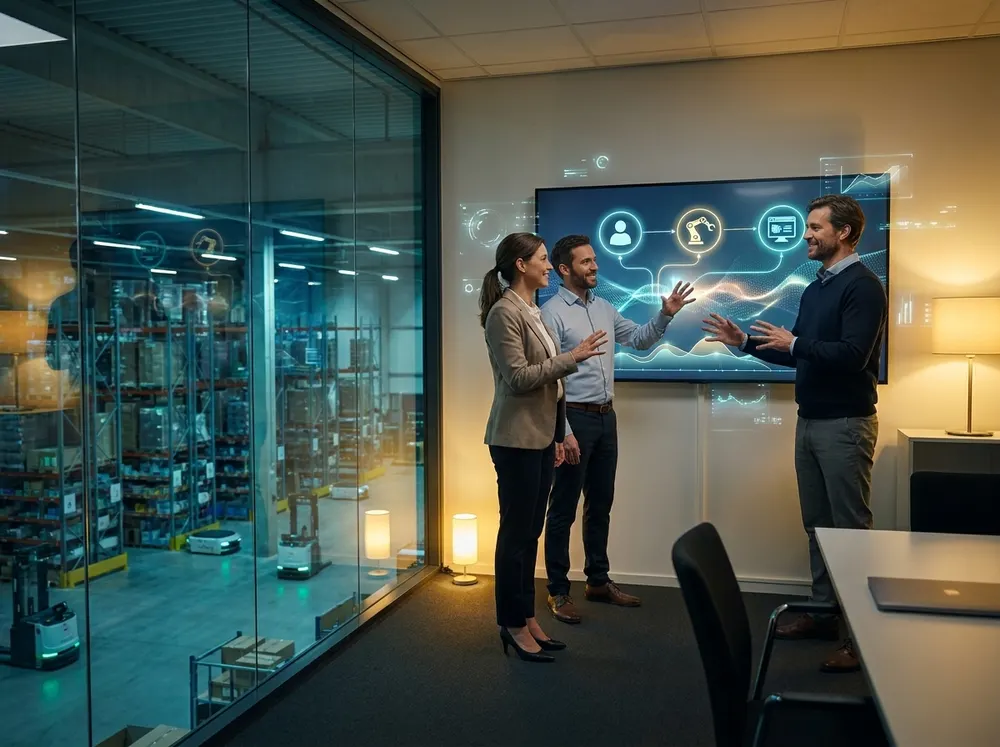
The AI-first organisation
In the warehouse and in planning, AI and robots do the repetitive and predictive work. Planners and warehouse staff focus on customers and exceptions.
In an AI-first organisation, AI, AI agents and robots take over the work people do not need to do, whether that is sorting parcels or forecasting volumes. People concentrate on the work where their experience, judgement and contact with customers make the difference. Take a customer order. An agent reads it, AI plans the execution and robots do the physical work. The employee picks up the order that does not fit the pattern, solves the customer's problem or has the difficult conversation about price. Around 2040, a routine order could pass through the entire process without human involvement, leaving people to focus mainly on customer contact, exceptions and improving the work.
- 19

The planner as orchestrator
Alongside planners, new roles appear: remote fleet supervisors, designers of the rules AI agents follow, and robot trainers.
Automation takes a lot of the number-crunching off the planner's desk, and that changes the job. Instead of planning every trip, the planner checks the system's choices, steps in when there is an exception and improves the rules behind its calculations: the planner orchestrates rather than plans. New roles appear that barely exist today. A fleet supervisor follows ten self-driving lorries on one screen and takes over when one gets stuck. A designer writes the rules within which AI agents may book and negotiate. A trainer teaches robots to recognise and pick up new products. Experienced planners and warehouse staff are the natural candidates for these roles: they know how the supply chain behaves in practice.
- 20
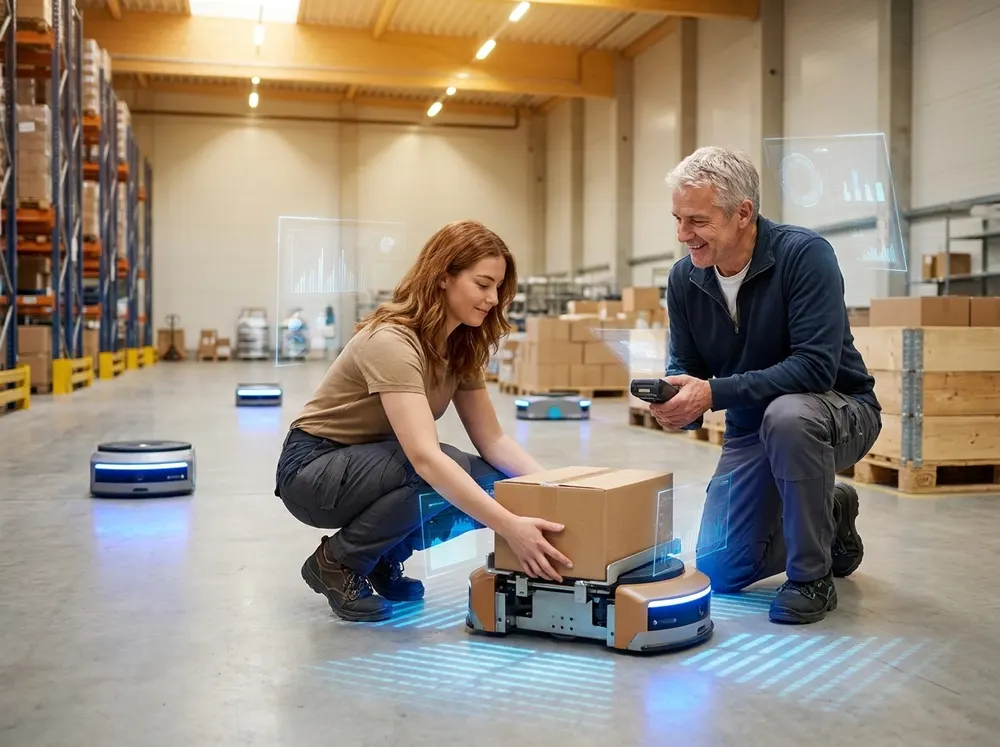
The team in the DC
Order pickers, robots and a planning system share the work. People handle the exceptions and know when to step in.
In a distribution centre, people and machines increasingly work as one team. The planning system allocates the orders, robots do the driving, lifting and sorting, and people handle the exceptions: assessing possible damage, checking an unusual order, getting a stuck robot moving again. A team like that has its own rules: who may stop a robot, who reports that the system keeps making the same mistake. The shift leader's role changes too: less watching the pace of work, more putting people on the tasks machines cannot do. In highly automated warehouses, the work could shift by 2040 towards training, guiding and repairing robotic processes. People then become the fleet's teachers and its back-up.
- 21
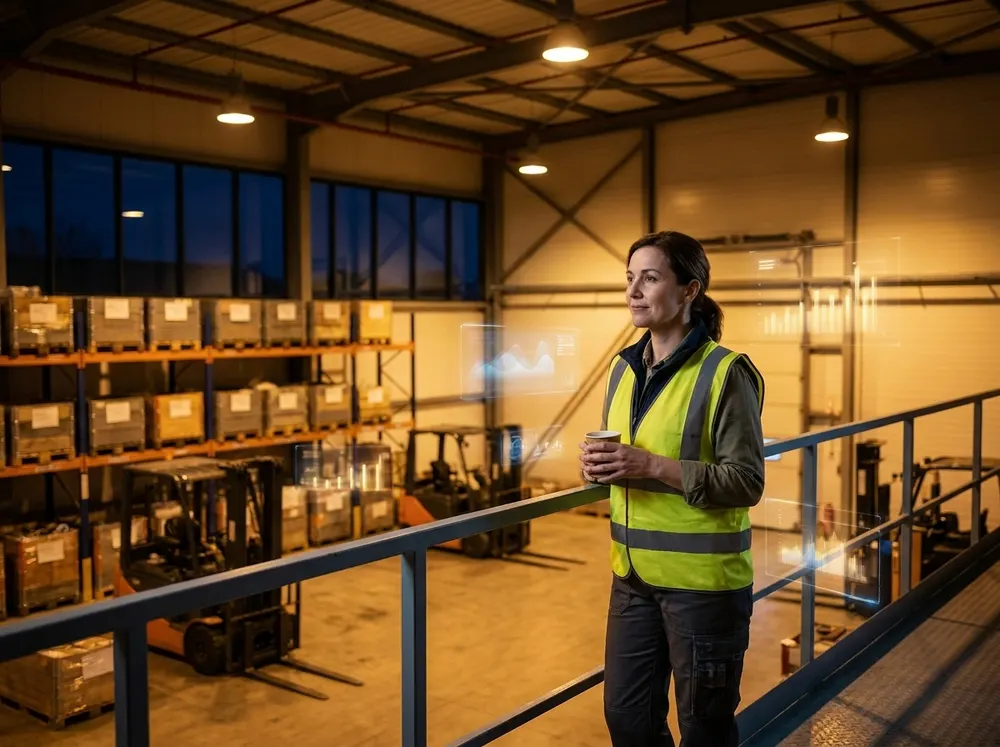
Leading a 24-hour supply chain
In logistics, leaders take the initiative on AI, robots and AI agents, and get their people building the supply chain of tomorrow with them.
A chain that never stops needs leaders who still look ahead. In logistics they take the initiative on AI, robots and AI agents, and sketch a picture of the future so concrete that a shift leader in the distribution centre knows what it means for the team. They make small, tangible changes, involve employees in the plans and choose a direction before everything is certain. That is how they build the supply chain of tomorrow together with their people, and adjusting course along the way is simply part of it.
- 22

Trusting the plan
An experienced planner who lets the system decide: that takes trust, an explanation of why, and room to step in.
Change in logistics is about technology, workload and skills, and often above all about trust in a new way of working. Picture a planner with twenty years' experience who knows the drivers and the customers. The system proposes a plan they would never have made. Do they follow it, or put everything back the way they have always done it? That trust grows when the system shows why it chooses something, when the planner may intervene and when it becomes clear afterwards which choice worked out better. The next question of trust is already waiting: will the planner let an AI agent book without seeing the proposal first?
- 23
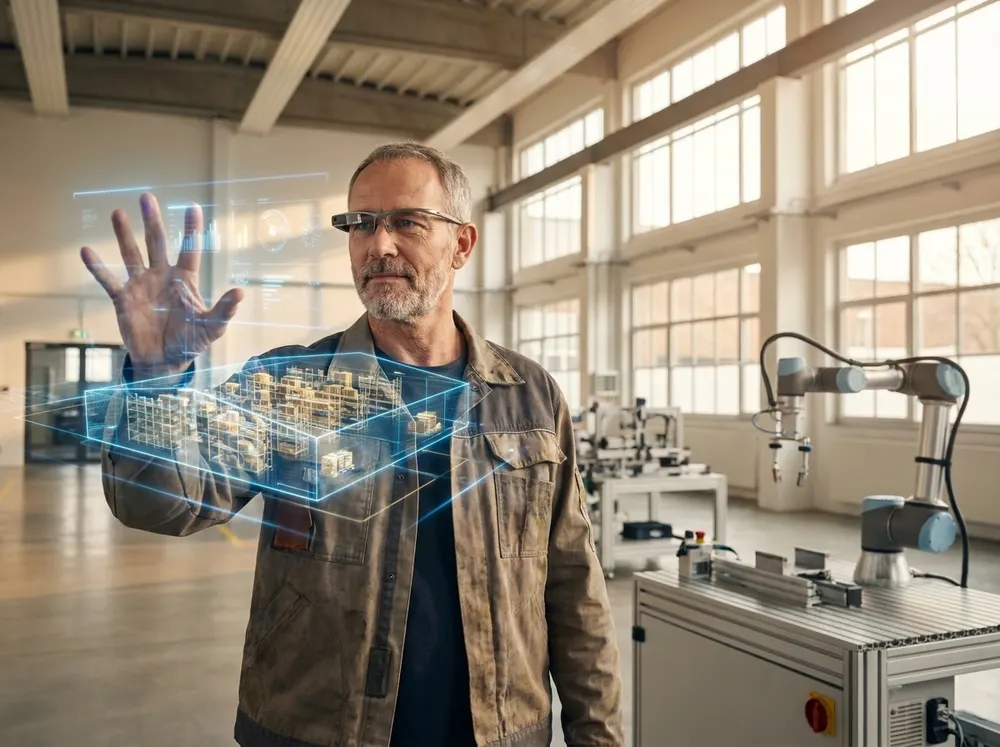
The future academy
Organisations are not waiting for education to catch up. Their future academy prepares staff and newcomers for AI and new technology.
Organisations no longer wait for new recruits to arrive from school with the knowledge they need. They build their own future academy and train their people themselves. Those already on the payroll learn how AI, robots, AI agents and other new technology are changing the work. Newcomers practise straight away with the organisation's own systems and ways of working. Assignments from the company's own processes are the course material, and colleagues learn from one another as well.
- 24
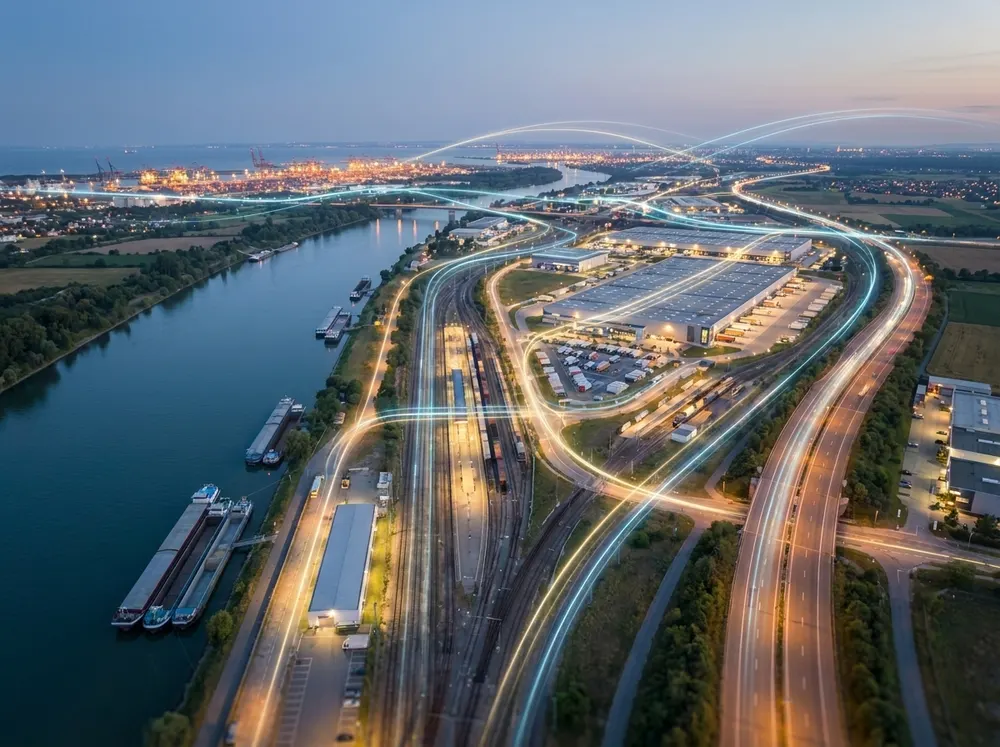
The future as an ecosystem
What one link learns makes the whole chain stronger. Start-ups, scientists, partners and governments worldwide innovate faster together.
New AI applications and shared data bring organisations together with start-ups, scientists, partners and governments from different parts of the world. Together they form an international ecosystem that takes on problems no single link can solve alone, such as congestion, emissions and the shortage of drivers. Elsewhere, parties have worked for years with shared data platforms, often with governments at the table, and with processes that run largely automatically. How well an organisation performs and how fast it renews itself depends more and more on the ecosystem in which it shares data, knowledge and investment.
The other side responsibility and risk
Data, reliability and the criminals who know the supply chain too.
- 25
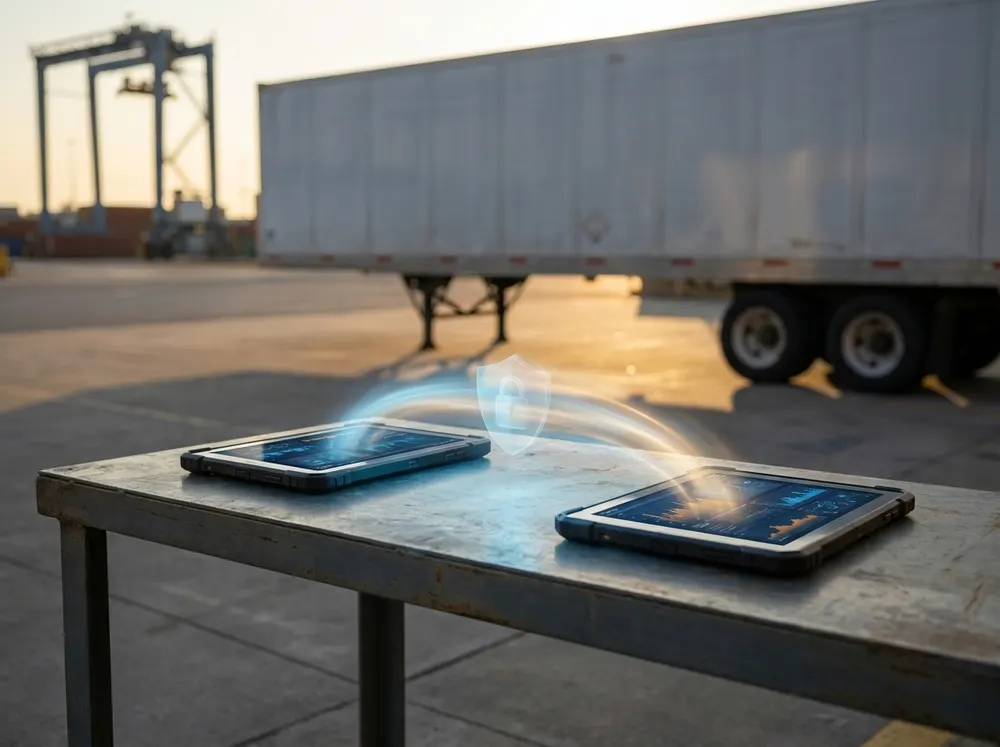
Data as the foundation
AI works when data from every part of the organisation is available, reliable and connected. That is the foundation of the AI-first logistics company.
The AI-first logistics company lets AI forecast, plan and advise across departments. That only works when the data from every department is available, reliable and connected. Often it sits in separate systems, with their own codes and definitions, and one department does not know what another records. Missing data can lead to wrong answers, and an AI agent taking over a task then lacks important information. Connected, consistent and up-to-date data is therefore the foundation on which AI can work across the whole organisation. That includes clear agreements on who may use which data, and for what.
- 26
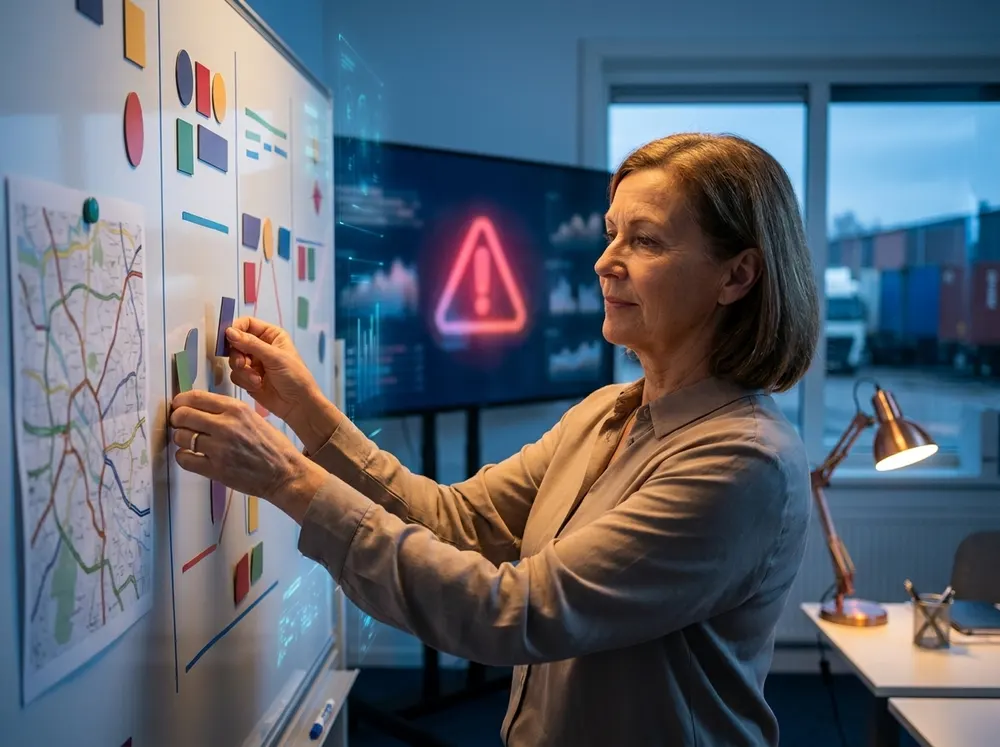
When the plan gets it wrong
An error in a central system hits many trips at once. The more AI books and plans by itself, the faster a mistake repeats.
A central planning system lets one error spread through many trips at once. A wrong rate rule can make large numbers of bookings too expensive in one go; outdated map data produces unsuitable routes. The more AI agents book and plan by themselves, the faster such an error repeats, sometimes before anyone notices. How dependent a global supply chain is on its systems became clear after a major malware attack, when a shipping line had to serve its customers with manual workarounds for days. Criminals target that dependence too. The same AI that checks bookings helps criminals produce fake orders that look genuine, and an AI agent that books transport by itself can be fooled by such an order.
- 27
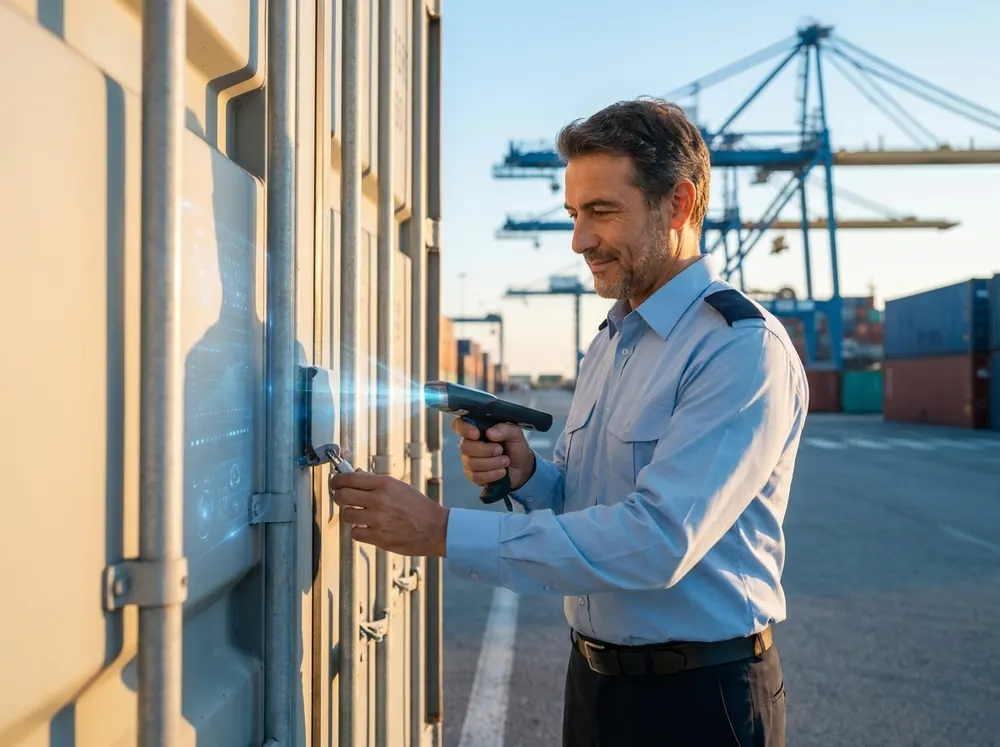
Cargo crime
Criminals use AI for fake freight orders, phishing with cloned voices and ransomware. That is how they get to cargo and systems.
Cargo data is valuable loot for criminal organisations: which load is where, who is collecting it and with which code. AI makes that data easier for them to reach. They send phishing emails and call with cloned voices, pose as existing hauliers on freight platforms and use ransomware to bring planning systems to a halt. In a major seaport, hackers repeatedly broke into the systems over several years so that containers with drugs could be collected before the real haulier arrived. The same AI that spots suspicious patterns in transport orders helps criminals create pick-up orders that look real. Good security thus becomes a condition for a supply chain that runs on AI.
About the speakerRichard van Hooijdonk
Events in EuropeKeynote speaker for corporate events in Europe
On stage
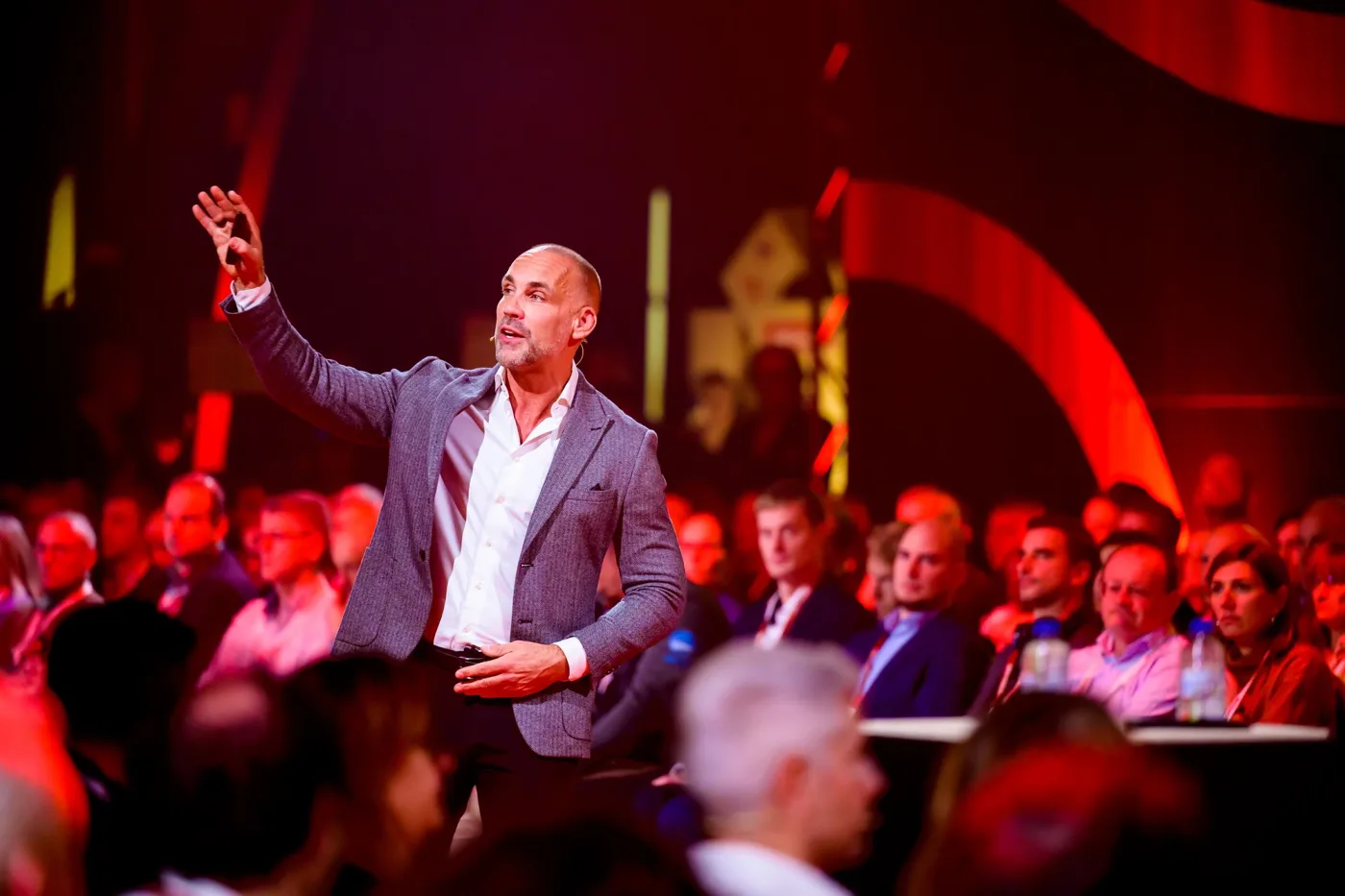
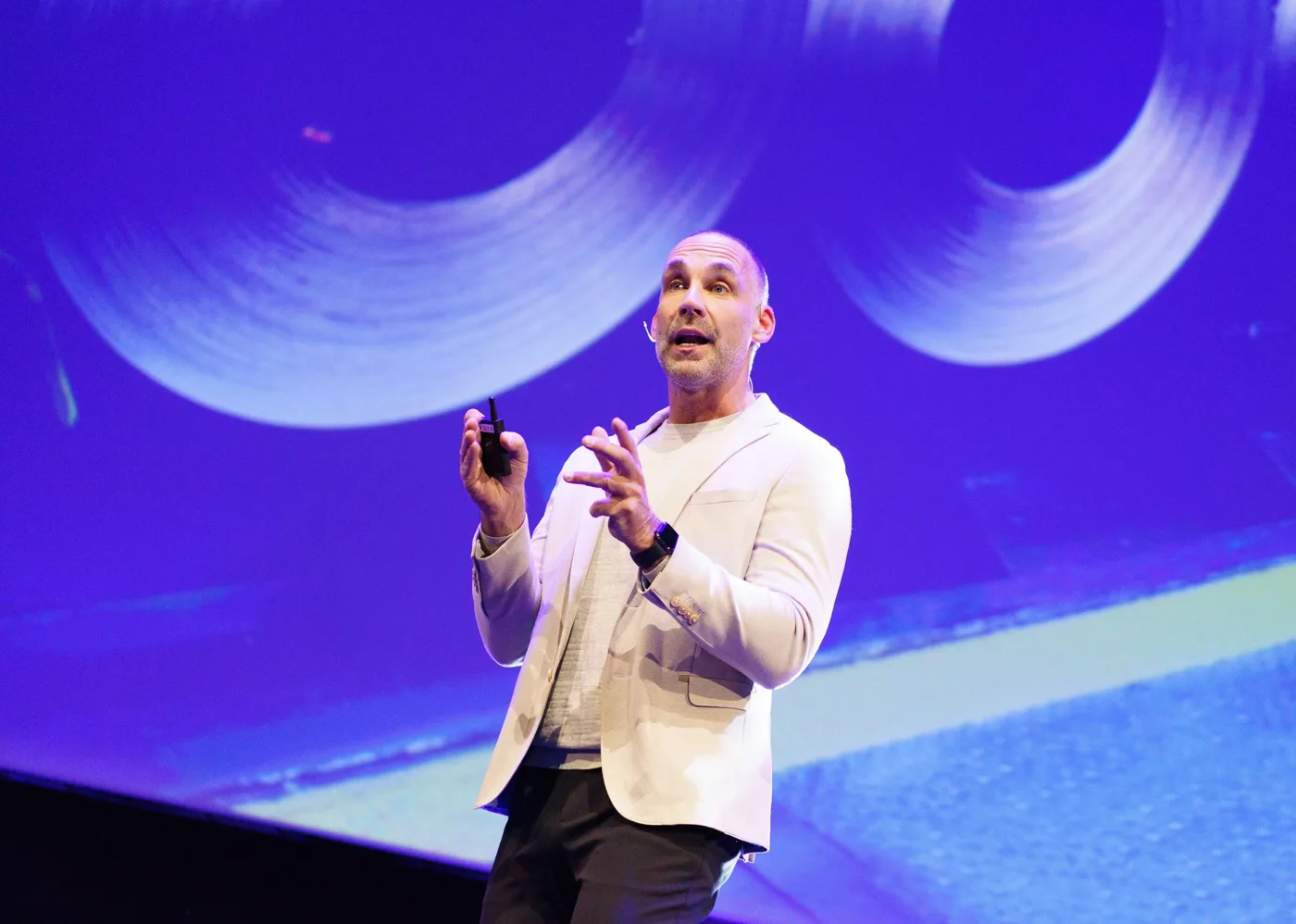
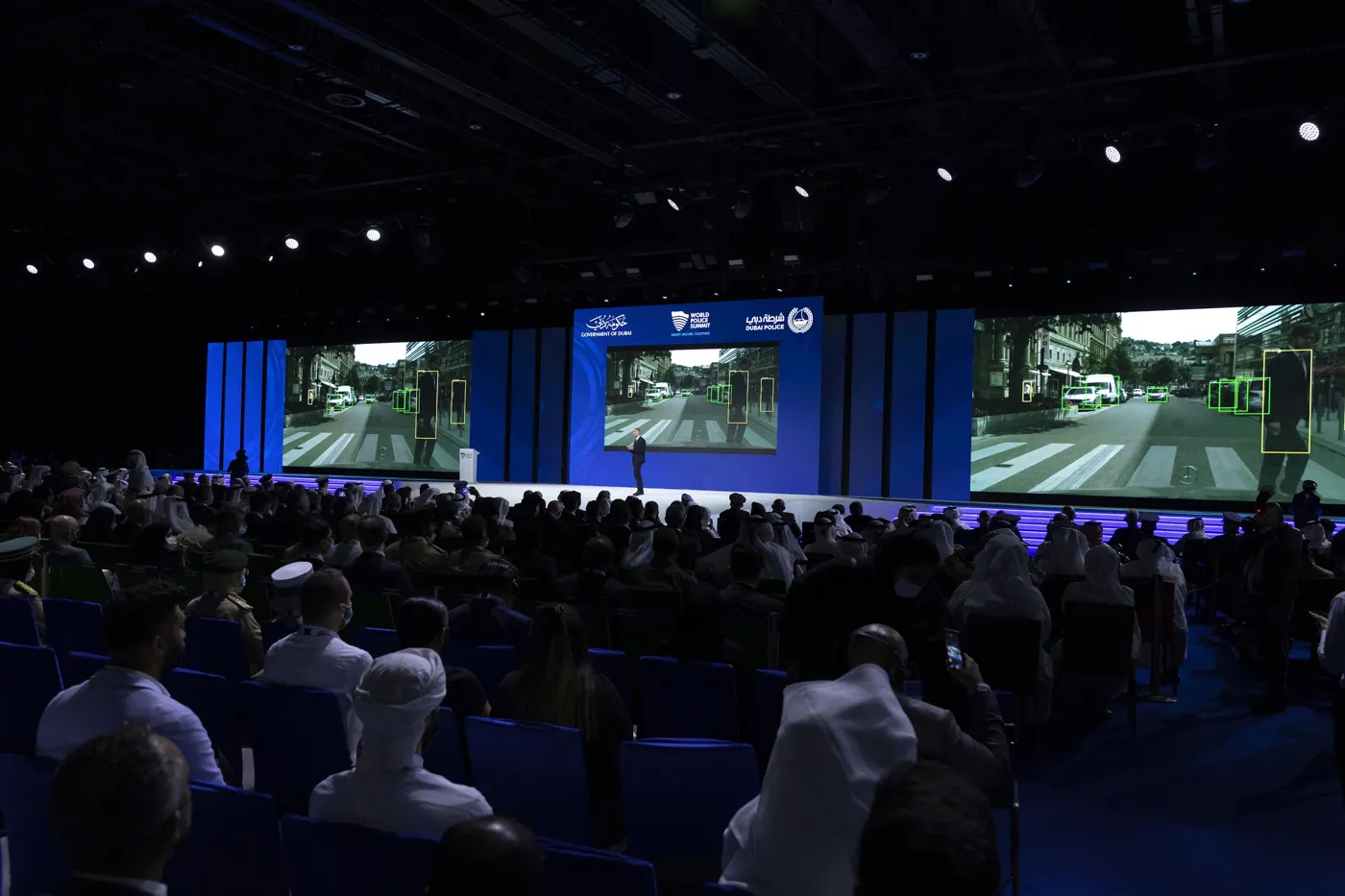
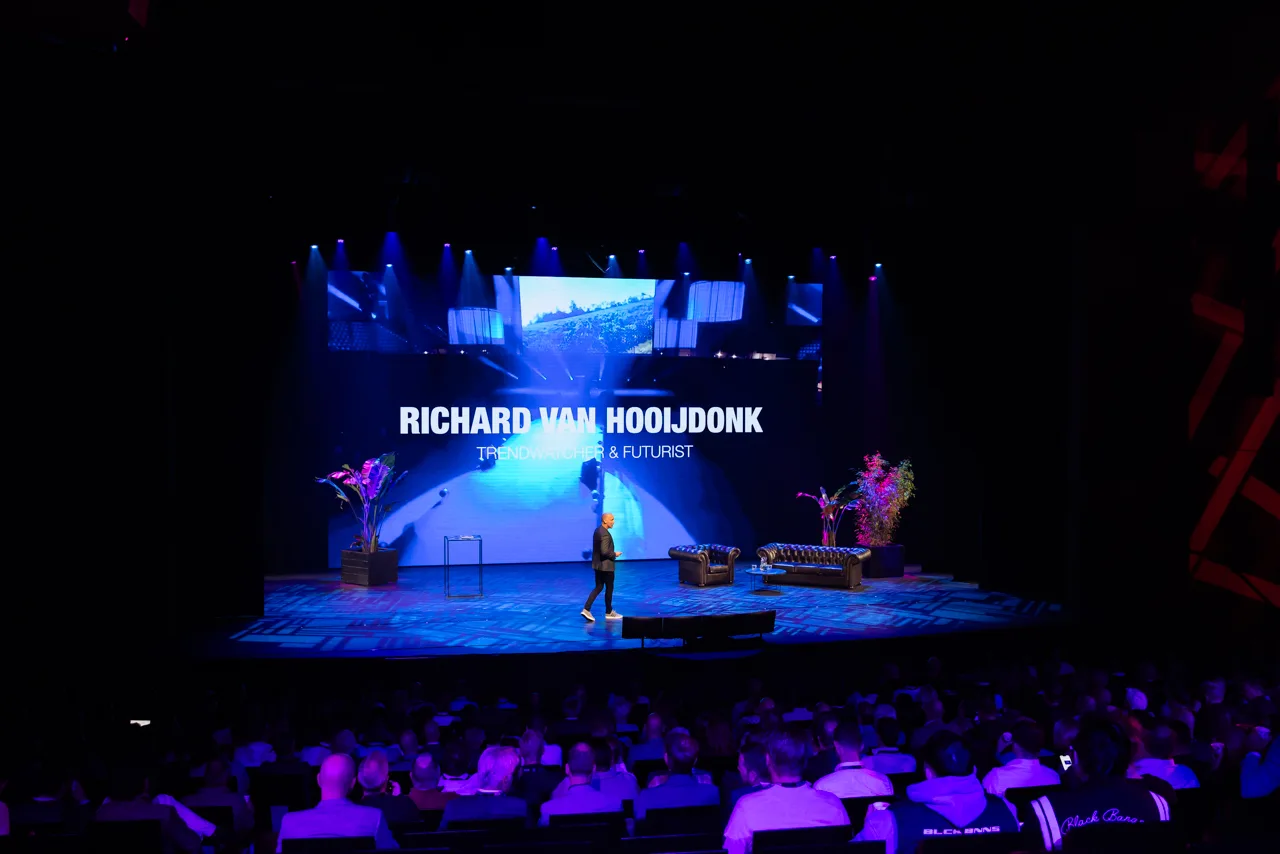
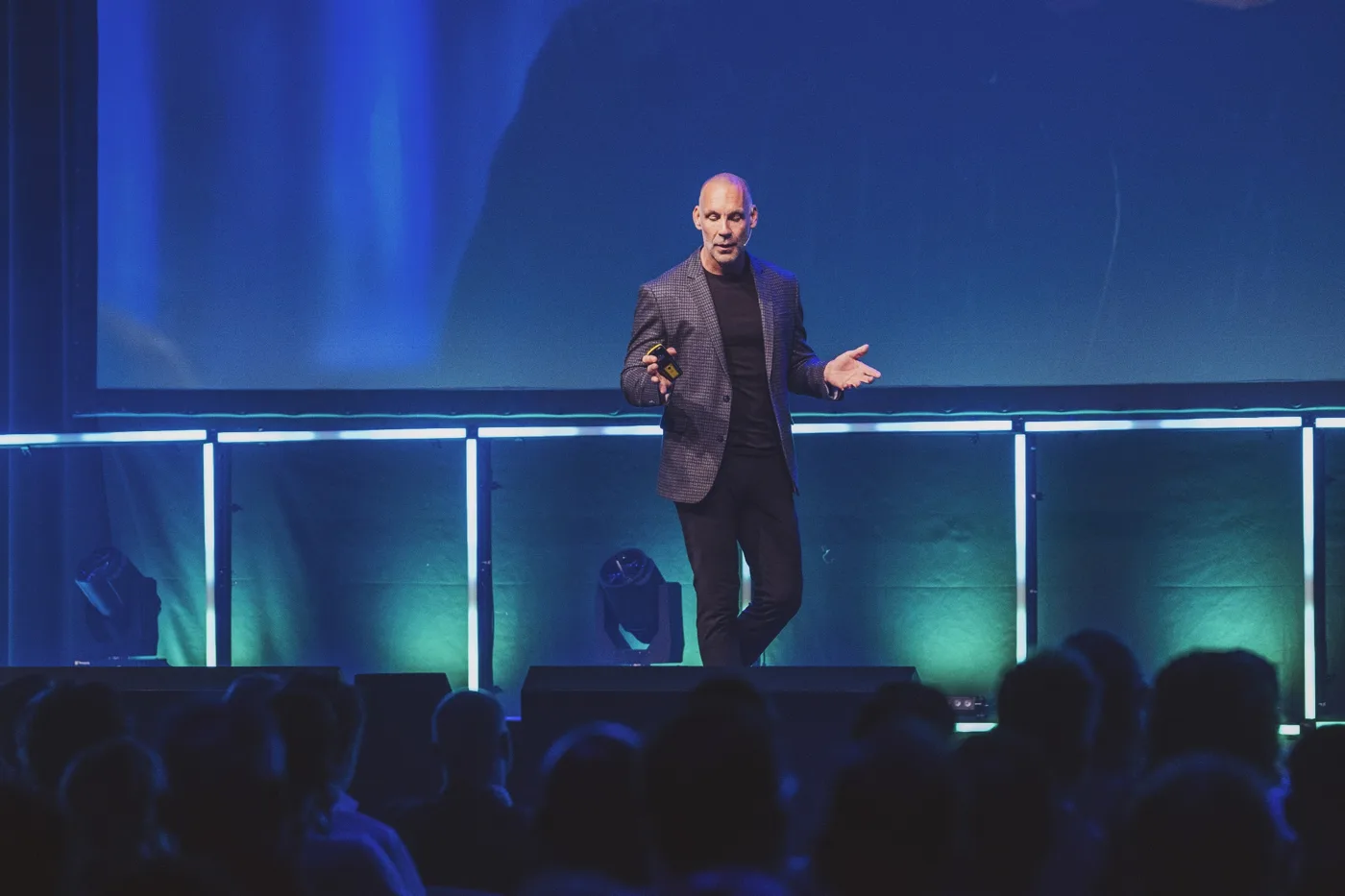
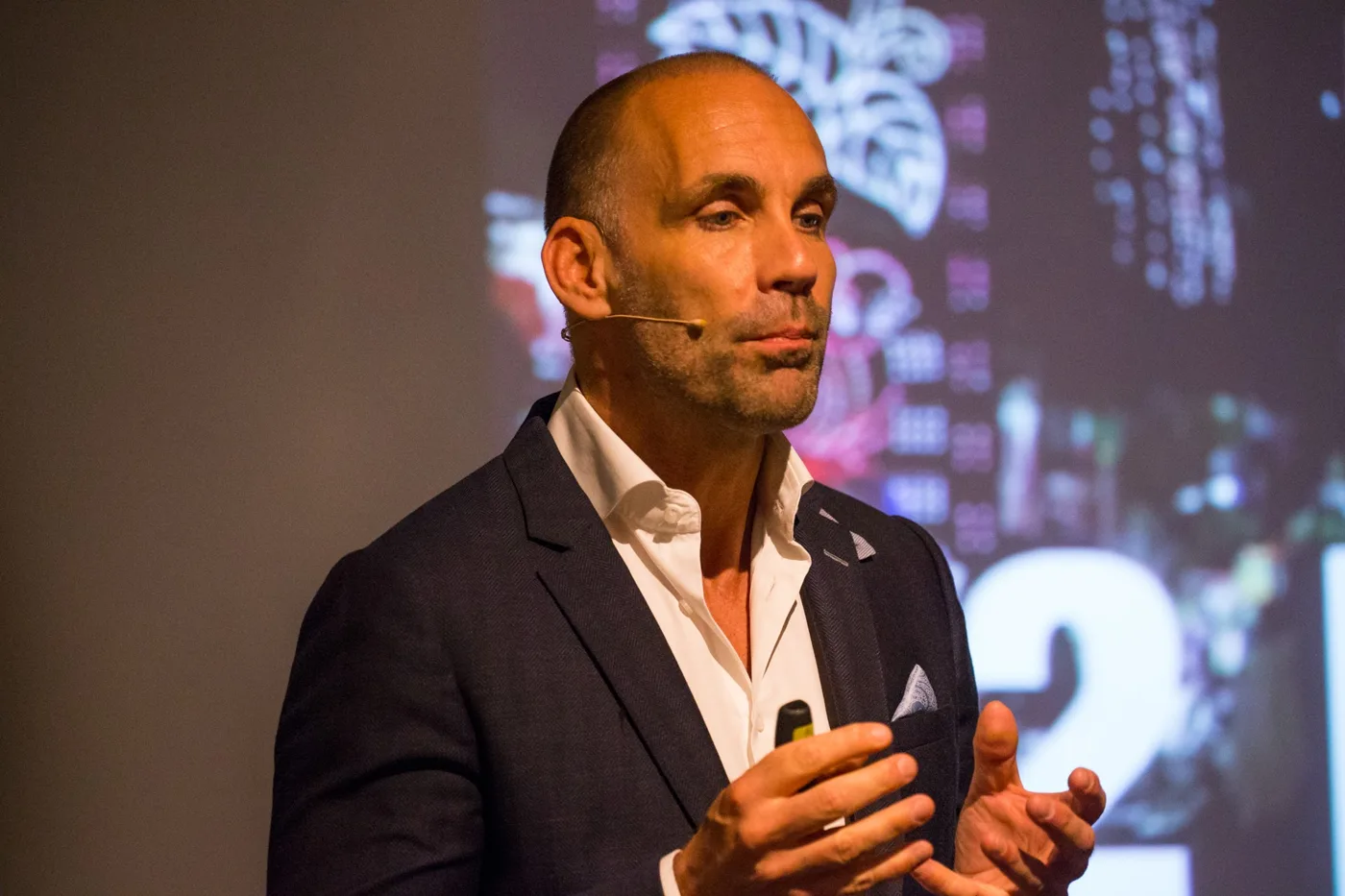
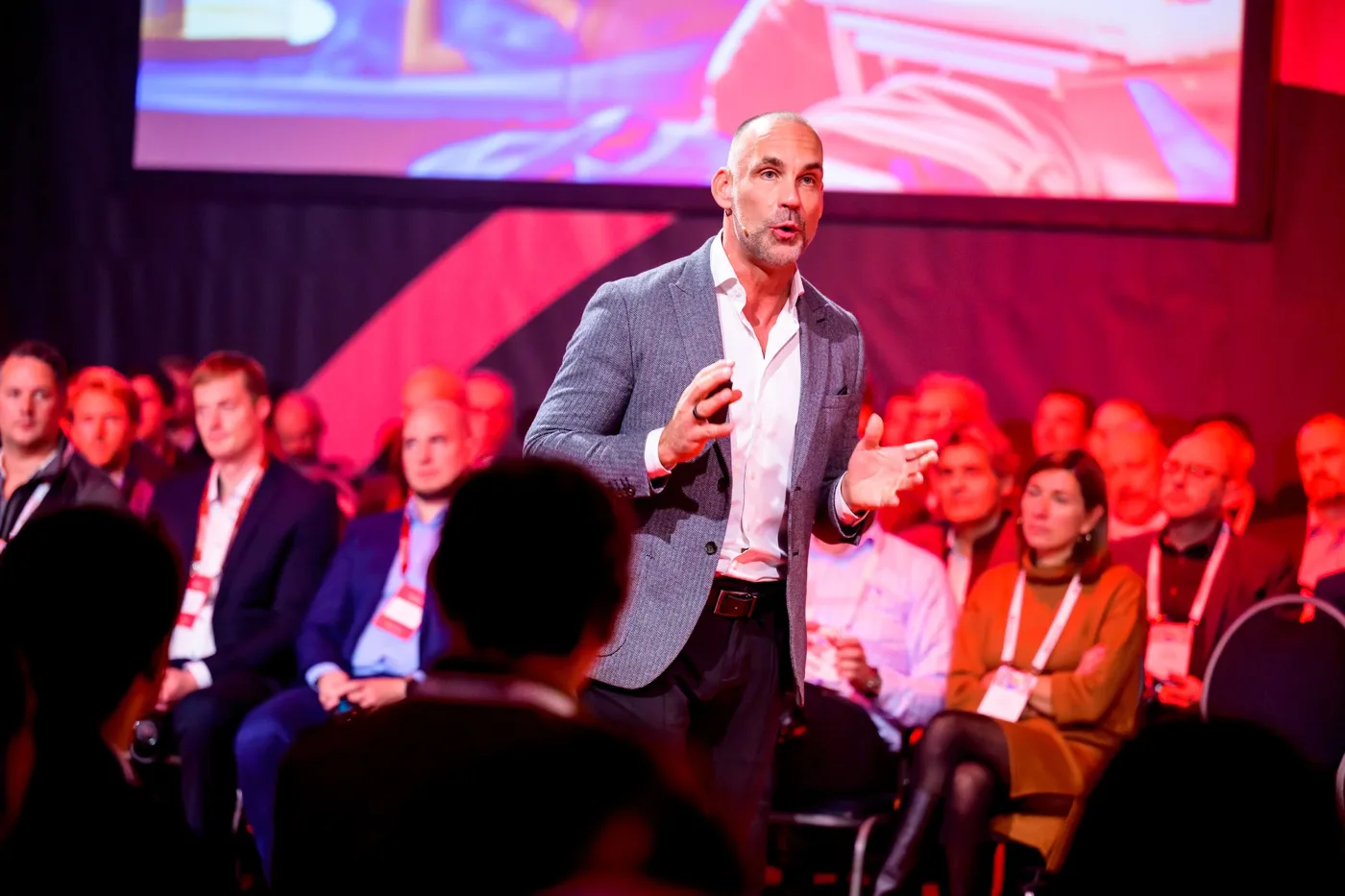
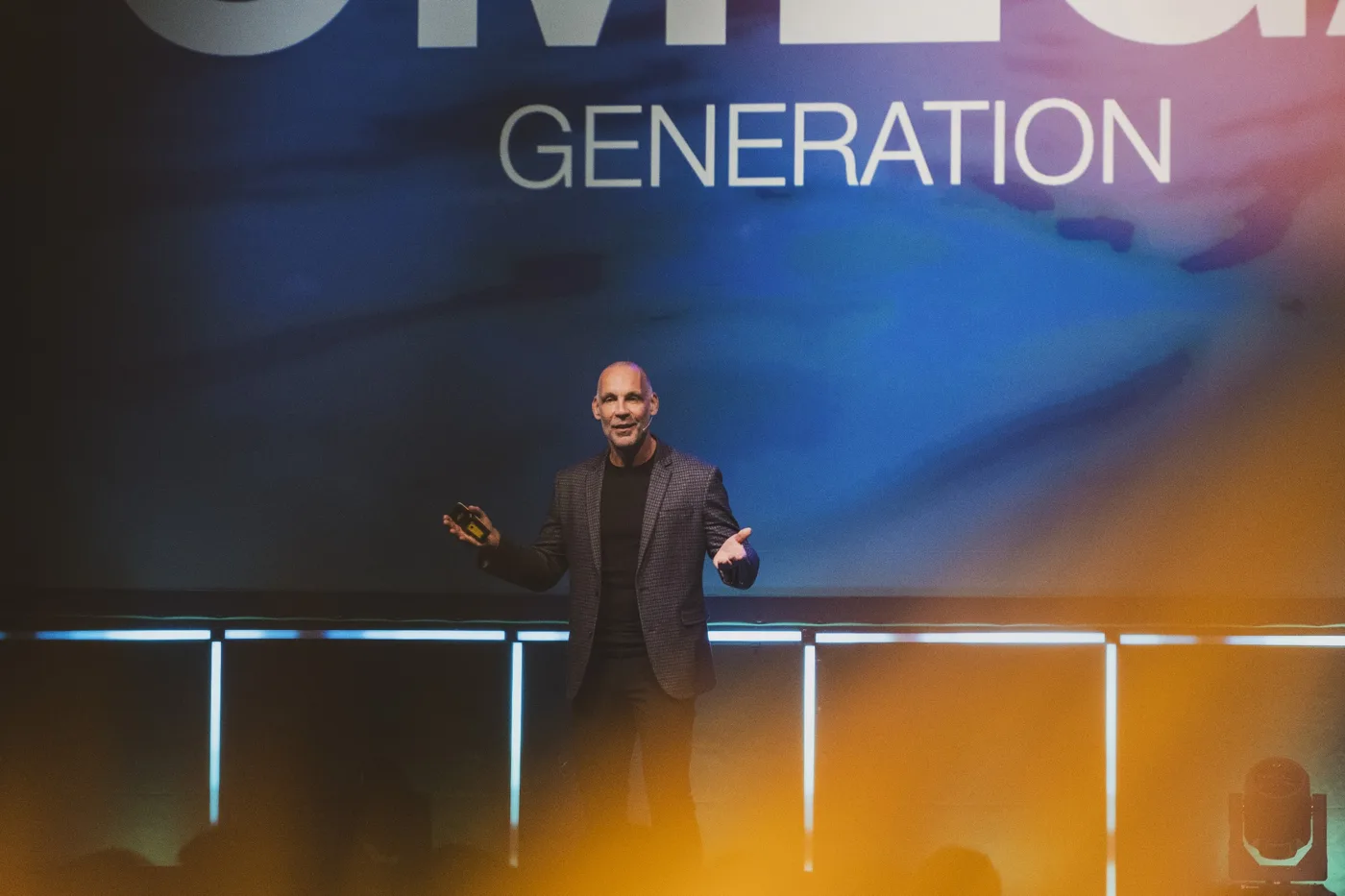
A packed conference hall, a televised panel discussion, a police summit in Dubai.


A selection of over 400 clients















What clients say
“With your presentation you awakened the customs organisation. At the end of the day it turned out that your presentation had made the biggest impression. You made sure the issues were put on Strategic Management’s radar.”Read the full review →

“Enthusiastic speaker, a good and versatile story. Everyone was ‘wowed’ by the lecture.”Read the full review →

“Richard delivered an excellent presentation for the key clients we invited to Innovation Runway 2026. Engaging, interesting content, and thought-provoking statements made his presentation perfectly suited for our top relations.”Read the full review →

“An impressive and noteworthy presentation for our employees and customers. The rate at which change is happening, which you eloquently brought across in your energetic speech, requires a disruptive approach. To be continued!”Read the full review →

“A dazzling journey through new technology. The enthusiasm and energy during his presentation, combined with the visuals, provided a successful kick-off to our event.”Read the full review →
How a booking works
Your request
Use the form, or get in touch by phone, email or WhatsApp. A few lines are enough to get started.
We get in touch
We'd like to hear what your event looks like, who'll be in the audience and which themes interest you.
A written proposal
Covering the topic, format (on location or online), length (30, 45, 60 minutes or longer) and fee, so you can talk it over with your colleagues.
Getting to know Richard
Next, we'll find a time for the two of you to talk and brainstorm the keynote, the topics and the format. There's no charge for this.
Frequently asked questions
Who is this keynote for?
For carriers, shippers, distribution centres, freight forwarders, port companies, shipping lines, online retailers with their own logistics, trade associations and logistics conferences. The audience often mixes the board, operations, planners, IT and HR; the keynote is made for exactly that mix. It also works for events for staff, customers and business partners.
What will the audience take away?
An up-to-date picture of what AI, robots and new technology already do in planning, the warehouse, transport and the port, and scenarios for the next five to fifteen years: the chain that steers itself, driverless lorries, ships without crews and the physical internet. What that means for roles, teams, leadership and culture. And a clear view of the risks, so the conversation afterwards is about choices rather than hype.
Does the keynote also cover the logistics company itself?
Yes, and that is often the main focus: what the planner does when the system plans the trips, how a team in the DC works with robots, and what that requires of leaders in a chain that runs day and night. Roles, teams of people and AI, leadership, culture and training get their own part of the keynote.
Does the keynote also cover the risks of AI in logistics?
Yes, always. Every logistics keynote covers fake hauliers who make loads disappear, criminal networks breaking into port systems, ransomware that brings a carrier or terminal to a halt, criminals posing as customers to divert payments, and who is liable when a system makes a planning error.
Is the keynote tailored to our organisation?
Yes. Beforehand there is an introductory call about the audience, the purpose of the event and what is going on in your organisation. An audience of port professionals hears different examples from a gathering of online retailers or a haulier's board.
How long is the keynote, and can it be in English or online?
30, 45 or 60 minutes, and longer if you wish, with time for questions from the audience, in Dutch or English, in person or online. Richard has spoken in more than 30 countries, in Europe, the United States, the Middle East and Asia. For more than a keynote, there are masterclasses, boardroom sessions for executives, board members and managers, and workshops for all employees.
What does a keynote on AI in logistics cost?
Fees for international keynotes are on request. Ask for a proposal and you will hear from us within an hour on working days.
Interested in a keynote for your logistics event?
Tell us in a few sentences about your event and who will be in the audience, and let us know the date.
Prefer to speak to us directly? Call 085 303 0792 · email talks@vanhooijdonk.com · send a WhatsApp message