 Richard van Hooijdonk
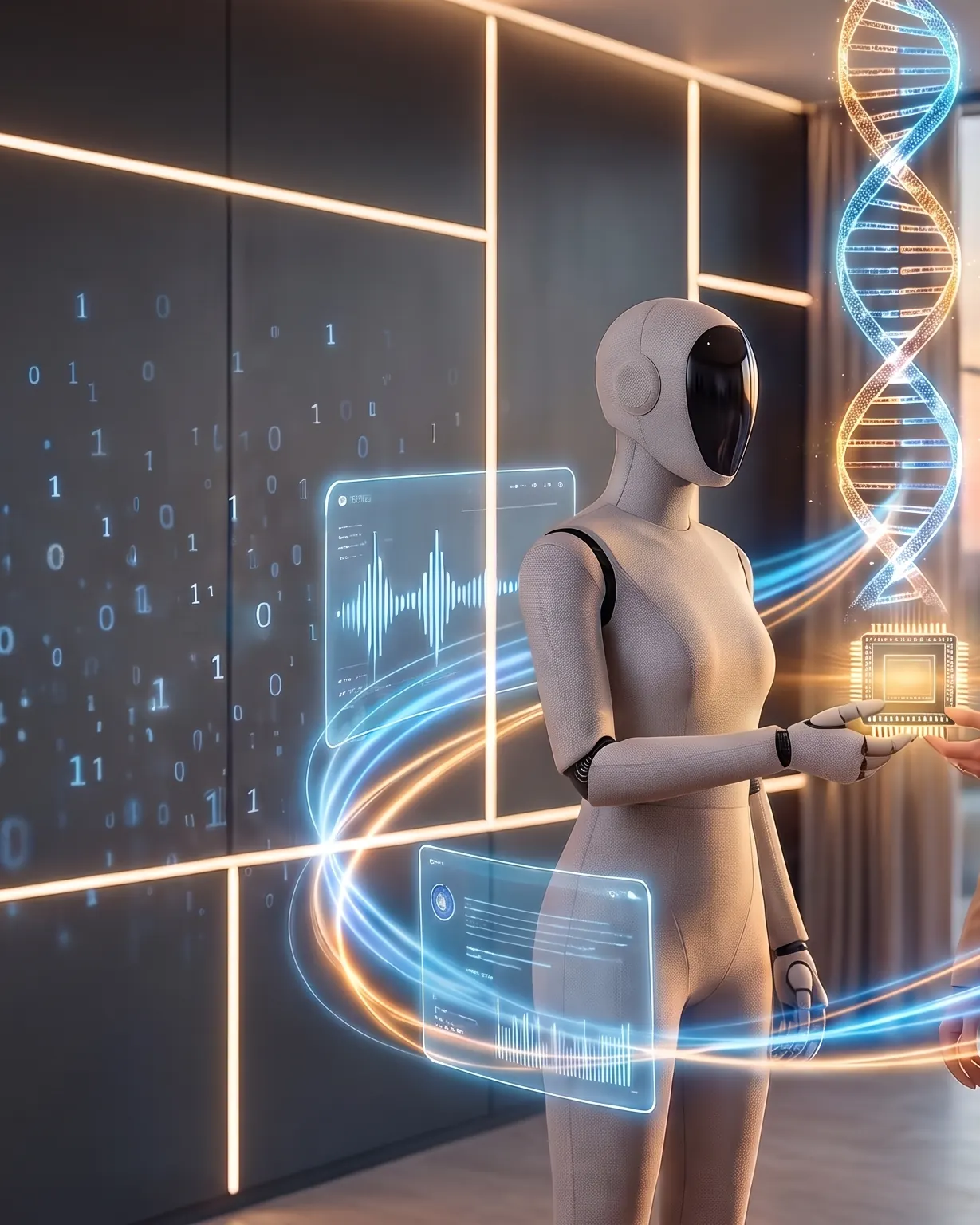
Trends 2040
AI, robots and many other forces reshaping your sector. A look ahead to 2040: what your organisation can expect and the choices you can make today.
Download the PDF of Trends 2040 (PDF, 3 A4 pages, 1.1 MB)Choose your keynote
Six keynotes, each of which can be tailored to your sector and audience.
 Trends 2040You are viewing
 The AI Revolution
 Agentic AI
 The Organisation of the Future
 Leadership and Management in the AI Era
 Cybercrime in the AI Era
Not sure which keynote fits? We are happy to advise. Tell us about your audience
The decisions you make today shape what your organisation looks like in 2040. The organisations still in the race then are the ones already looking ahead.
In Trends 2040, trend watcher and futurist Richard van Hooijdonk shows how fast the world is changing and how you prepare for it now. AI, humanoid robots, quantum computers, biotechnology and many other astonishing technologies will shape how we live, work and do business. AI is changing how organisations work, but it is not the only force heading their way. Robots are getting a brain and learning to work in spaces built for people. Sensors and cameras measure more and more of the world. Biotechnology edits DNA and can help people stay healthy for longer. The energy system is switching over. These forces reinforce one another, and AI is part of each of them. For each force, this keynote shows what is already happening, what remains uncertain and what it makes possible in 2040. Far ahead, yet grounded: what is still a future scenario is called one. Every organisation is hit first by a different force, and that is where preparation begins.
Forces shaping 2040
Seven forces that carry through to 2040: what is already visible, what remains uncertain and where it is heading.
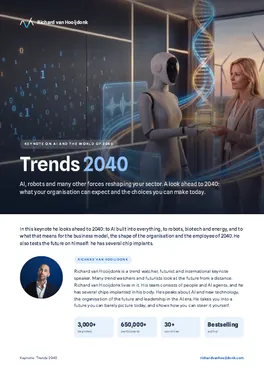 Download the keynote Trends 2040
- 01
 Future scenario
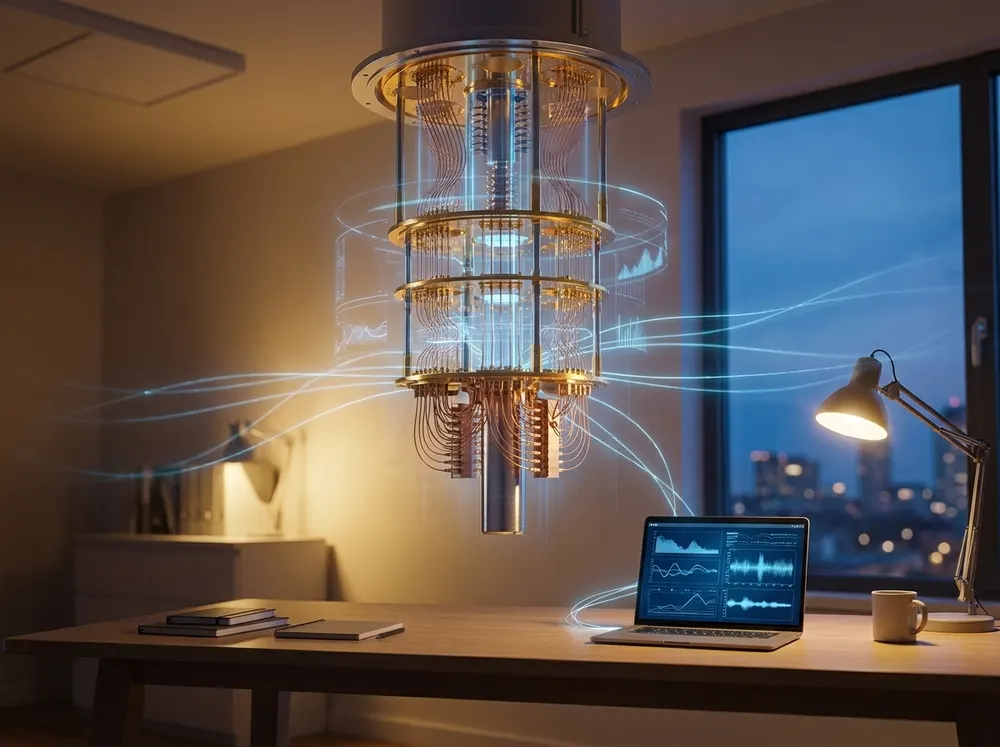
Intelligence everywhere
AI becomes a basic utility, like electricity: it sits in machines, software, buildings and the phone in your pocket.
In this scenario, AI becomes a basic utility, like electricity or the internet. You no longer use it as a separate application; it sits in the machine, the software, the building and the phone. The signal today: assistants already work inside cars and inside the programs employees open every day. Quantum computers calculate according to the laws of quantum mechanics and could become a major accelerator for certain problems, such as simulating molecules. When they will be reliable enough for everyday use is still uncertain. In that scenario, by 2040 almost everything people work with helps them think and make decisions, from the forklift to the office building.
- 02
 In pilots
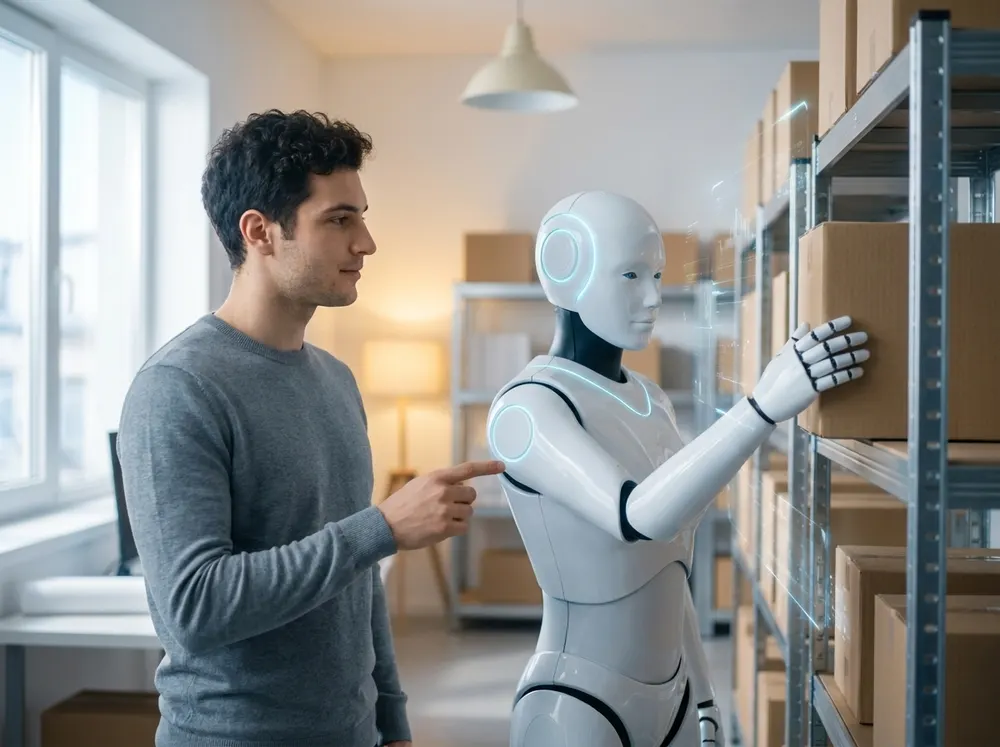
Machines with a brain
AI gives robots, vehicles and drones a brain: they understand everyday instructions, learn by watching and adapt.
For a long time a robot did exactly what it was programmed to do, movement by movement. AI changes that. Such a robot is given an instruction in plain language, such as "tidy this shelf", and works out the steps itself. It learns by copying people and by practising a task thousands of times in a simulation. Driverless cars already carry passengers in a number of cities. Humanoid robots are learning to work in spaces built for people, with stairs, doors and handles, and are being tested in factories and warehouses. In the 2040 scenario, machines share what they learn: a robot builds on what similar robots elsewhere have practised. How fast that goes depends on cost and reliability.
- 03
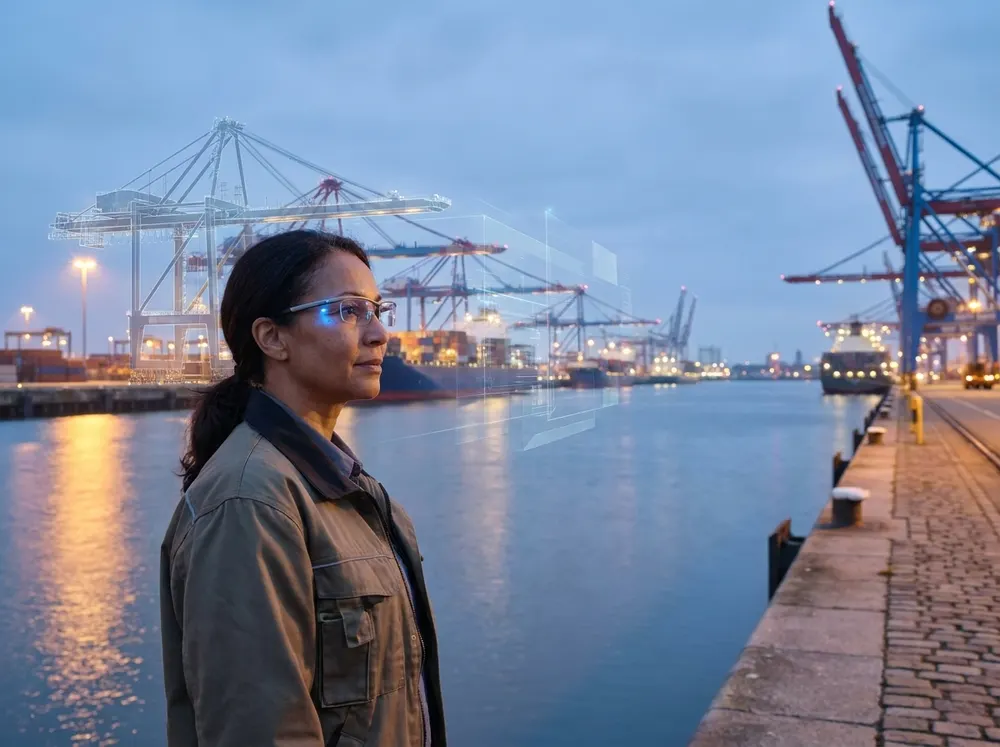
The measurable world
Sensors and cameras record what happens. AI uses that data to predict breakdowns and congestion.
Sensors and cameras are the feelers of the digital world. They measure temperature, vibration, movement and congestion, and keep getting smaller and more affordable. AI recognises patterns in those measurements and so sees in time that a pump is starting to falter or that a place is getting crowded. Grid operators and factories already work with this. In the 2040 scenario, sensors and cameras measure more and more of the world, and AI sees at a glance how a factory, a port or an entire supply chain is doing. Data becomes a raw material: who owns it and is willing to share it helps decide how far such a chain can go.
- 04

Biotech and the human by design
Editing DNA to treat an inherited disease is already happening. AI speeds up the research; in the 2040 scenario, people stay healthy for longer.
Biotechnology uses living cells and their DNA to make or repair something. With the gene-editing technique CRISPR, researchers change a small stretch of DNA in a targeted way. Regulators such as the FDA have approved the first CRISPR treatment, for an inherited blood disorder. In some forms of blood cancer, doctors modify the patient's own immune cells so that they attack the cancer. AI speeds up this research: it predicts the shape of proteins, the building blocks of the body, and works out which substances could act on them. Researchers then test the best candidates in the laboratory. In the 2040 scenario, such applications help more people stay healthy for longer. How fast that happens depends on research, price and what society finds ethically acceptable.
- 05
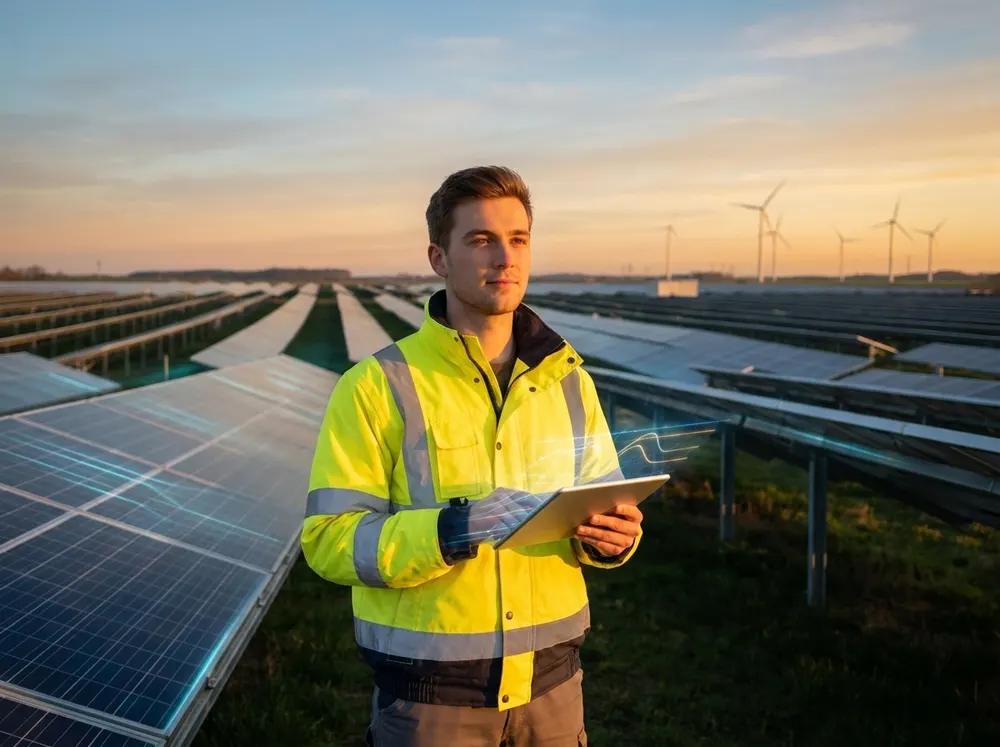
Energy, climate and raw materials
Smart grids, predictive AI, solar, wind and geothermal energy. Small nuclear reactors could supply electricity to data centres.
The energy system of 2040 draws on many sources. Solar and wind depend on weather; batteries balance fluctuations. New drilling techniques make geothermal energy accessible in more places. Smart grids manage these flows: they take measurements throughout the network, switch automatically and shift consumption to times when supply is plentiful. AI forecasts solar and wind output and tomorrow's demand. Demand is rising, with the International Energy Agency expecting sharp growth in data centres' electricity use. Technology companies are already signing contracts for small modular nuclear reactors intended to power data centres from the 2030s. Batteries, grids and turbines need metals such as lithium and copper. AI is helping search for materials that could replace them.
- 06
Power and sovereignty
Ownership of chips, data and models brings power. Countries want less dependence on others, while power blocs set different AI rules.
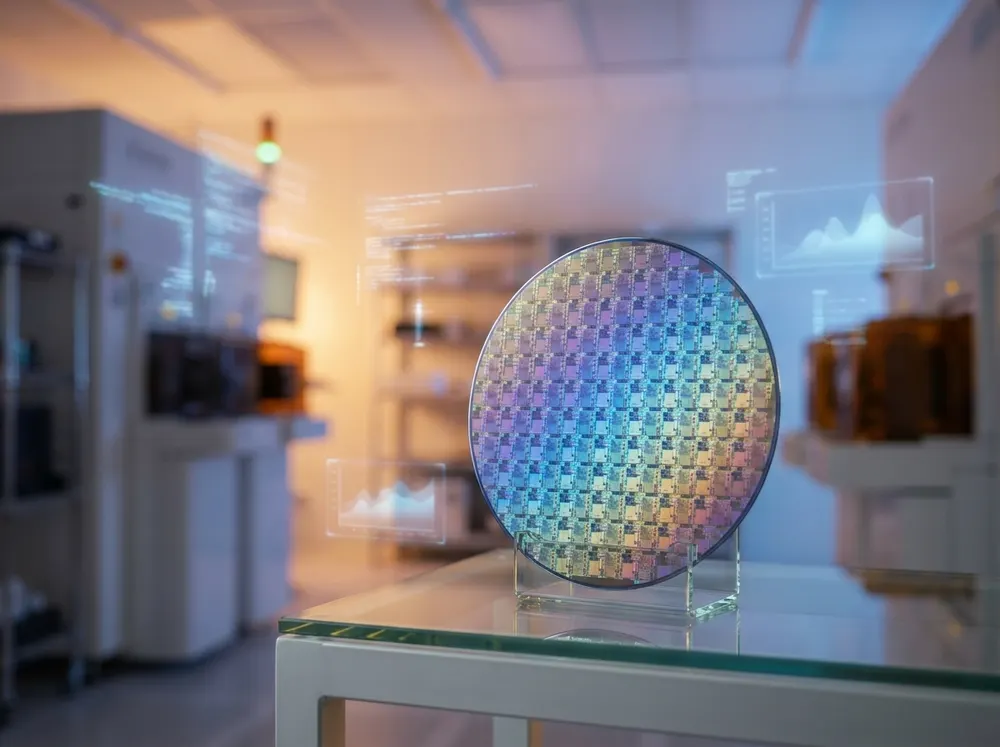
Technology has become geopolitical. The most advanced chips come from a few manufacturers; the largest AI models come from a handful of providers. Governments restrict chip exports and want their own data centres, models and access to raw materials. This ambition is known as digital sovereignty. The European Commission invests in AI factories, and the EU AI Act sets rules for AI development and use. Other power blocs make different choices. In the 2040 scenario, several technology blocs coexist, each with its own chips, models and rules. Organisations operating across borders move between these different worlds.
- 07
Fewer workers, more older people
In many countries the number of people in work is falling and the customer is getting older. AI and robots help get the work done with fewer people.
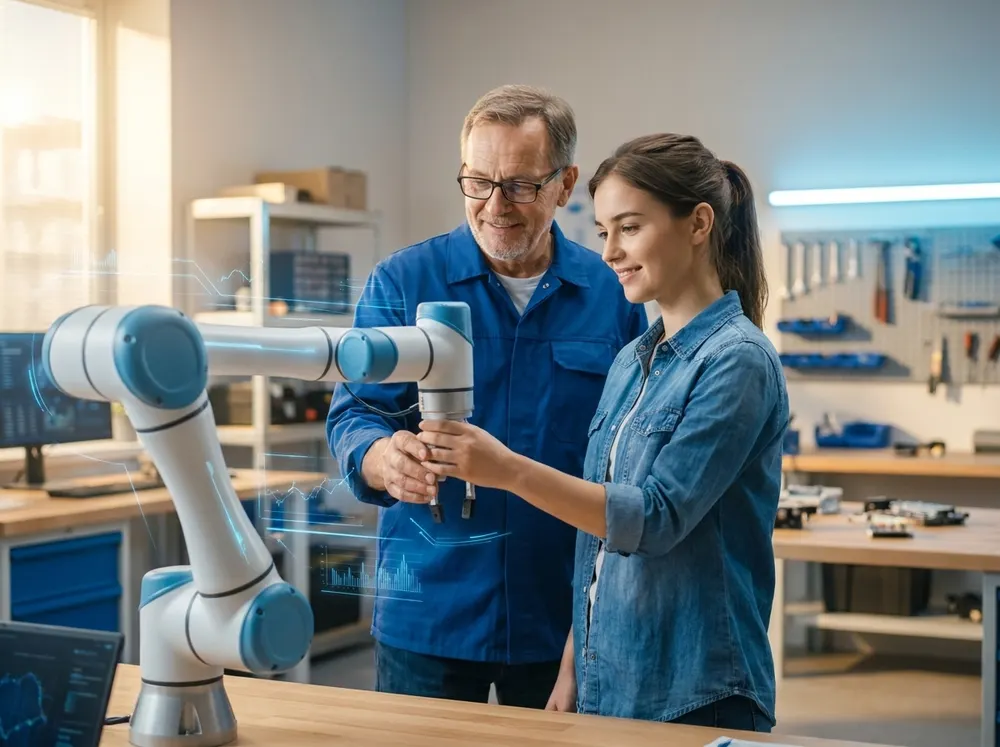
In many countries the number of older people is growing and the number of people in work is falling. The United Nations and the OECD foresee further ageing; how many people will be working also depends on participation and policy. Healthcare, engineering, education, logistics and government compete for the same workers. Automation becomes less about saving money and more about getting the work done. AI handles administration, robots lift and drive, and people stay in the workforce longer and increasingly work part-time. Customers change too: older populations need different products and services. In this 2040 scenario, an organisation's capacity depends more on how people, AI and robots work together than on how many applicants it attracts.
- 08
 Future scenario
What 2040 makes possible
The forces of 2040 reinforce one another. Together they make possible what still seems far off: care at home, clean power, lighter work.
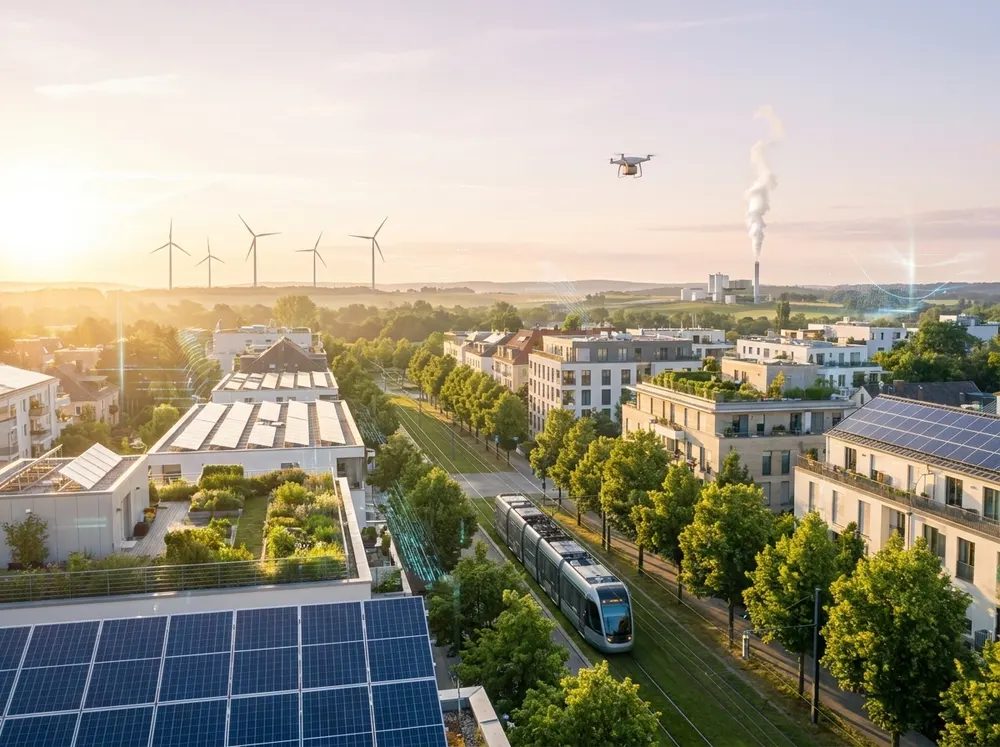
Many big changes happen where forces meet. AI that calculates on a computer which substance could work as a medicine or material, and robotic laboratories that test day and night, could in this scenario greatly speed up the search for new medicines and materials. In the 2040 scenario, sensors, AI and care robots make it possible for many more older people to live safely at home. A smart grid that keeps itself in balance lets solar, wind, geothermal and nuclear power work together. And machines with a brain take over the heavy and repetitive work, giving people more time for what people do well: judging, caring, designing. Nobody knows which combination will break through first.
Laboratories are already building 2040: AI that keeps surprising us, robots that learn by watching, treatments tailored to a person's DNA, heat from deep underground. Go and take a look, and above all you see how much is becoming possible.
Richard van Hooijdonk
The organisation of 2040
Long-term strategy: planning for several futures, a new business model and the employee of 2040.
- 09
 Future scenario
The AI-first organisation
By 2040, AI, robots and agents do the repetitive and predictive work in many organisations. People judge, choose and work with others.
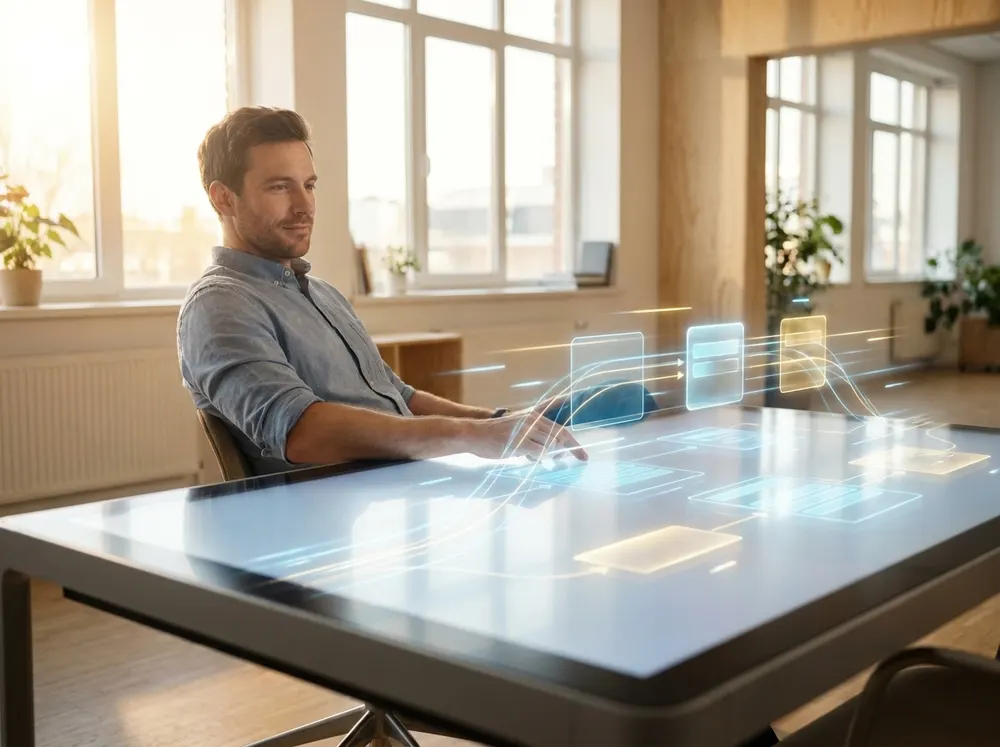
By 2040, AI-first will be ordinary for many organisations. AI, robots and agents will do the repetitive and predictive work: ordering, planning, checking and forecasting. Where staff are scarce, that helps get the work done. People focus on what they do better: judging, choosing and working with customers, patients and colleagues. A distribution centre runs largely on robots, with a small crew handling unusual situations; in a GP practice, AI prepares test-result messages and the schedule, and the doctor has time for conversation again. A vision of the organisation in 2040 leads to a question for each process: which steps in ordering, planning and checking can AI handle, and where do people remain indispensable? What sets organisations apart is what they do with the time this frees up.
- 10
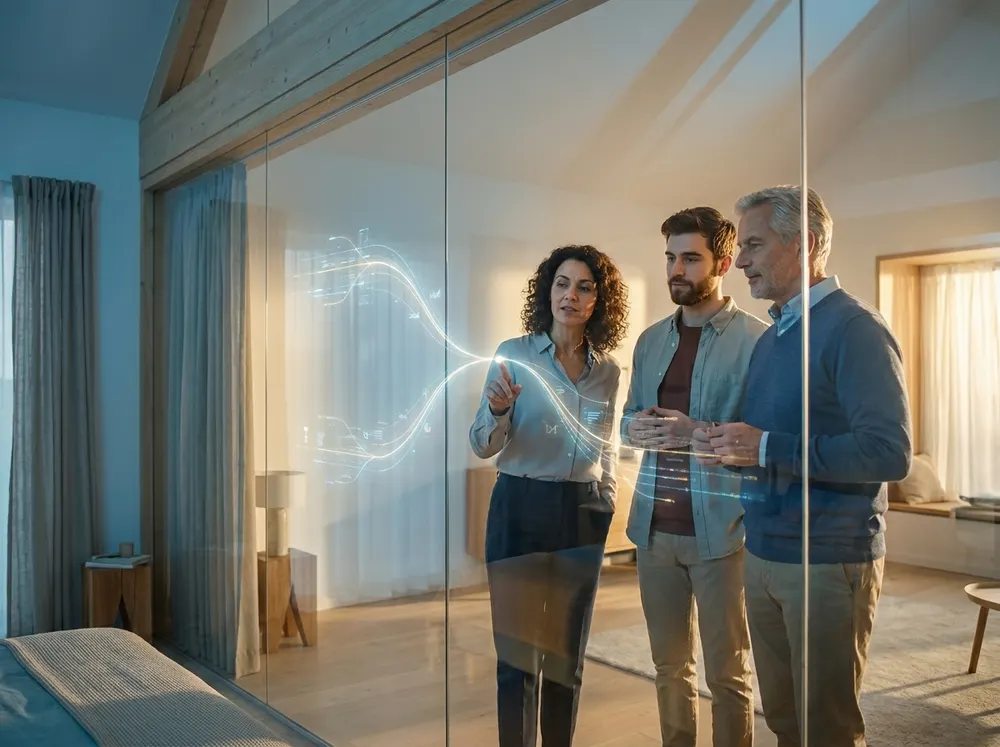
Planning with scenarios
Nobody knows what 2040 will look like. Scenarios help you plan for several futures rather than rely on a single prediction.
A scenario is a coherent account of how the future might unfold. It describes a possible outcome rather than a prediction. A common method starts with two or three major uncertainties, such as how quickly AI costs fall or how strict regulation becomes. Different combinations produce distinct futures. Governments, armed forces and energy companies have worked this way for decades. Each scenario reveals the capabilities an organisation would need and decisions that hold up across different futures. AI helps track signals and calculate consequences. The main difficulty is culture: teams accustomed to a single plan must work with uncertainty and regularly revisit their assumptions.
- 11
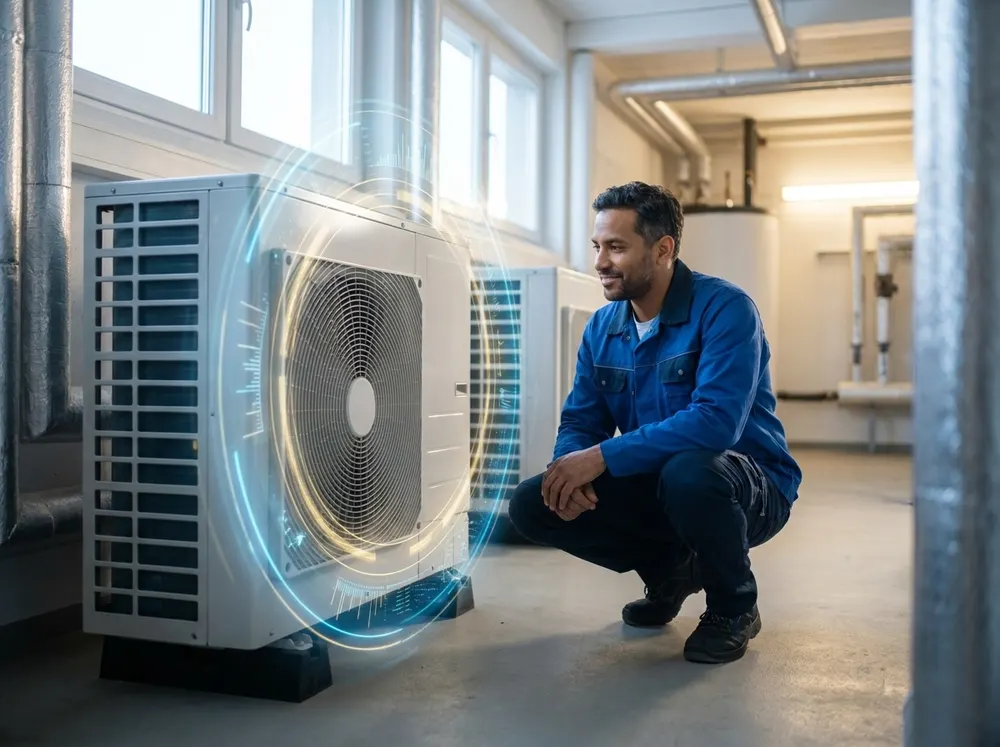 Future scenario
The business model of 2040
As AI, robots and platforms do the work, value shifts towards results, trust and customer relationships, beyond hours and products sold.
Many organisations earn revenue by selling hours, products or licences. When AI completes an analysis in minutes and robots produce at lower cost, prices for that work may fall. In this scenario, customers in 2040 increasingly pay for outcomes: a machine that keeps running, a building that uses little energy, a patient who can stay at home. Value lies in what is hard to copy: trust, proprietary data, expertise and customer relationships. Platforms matching supply with demand may capture more of the margin. In that scenario, the organisation of 2040 earns more often from what a customer achieves than from what it delivers.
- 12
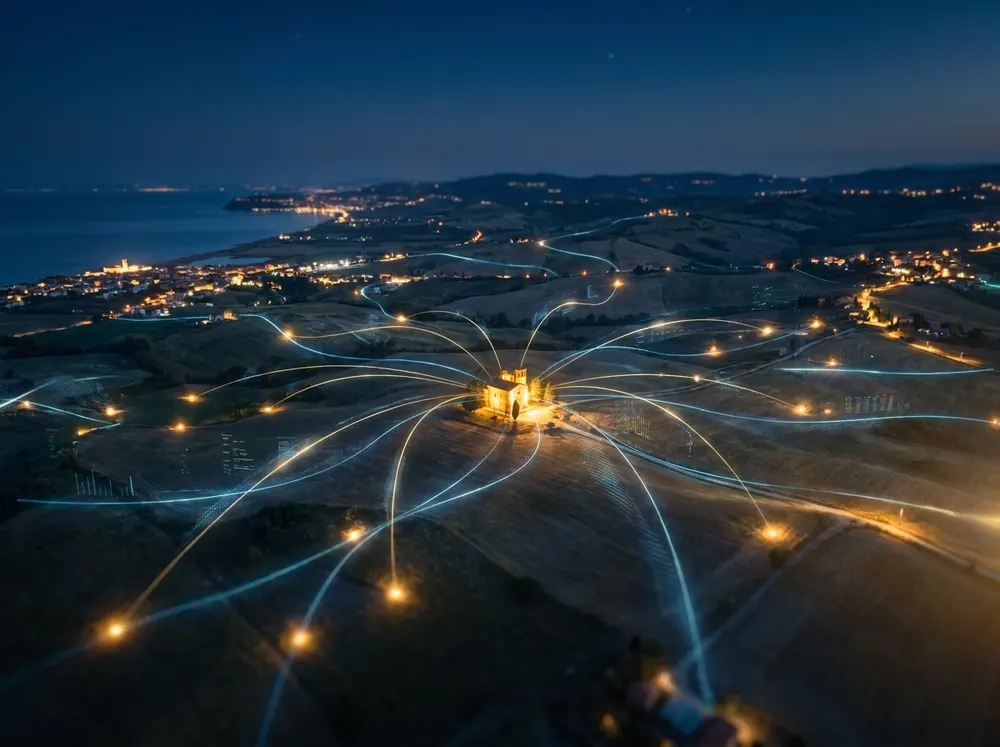 Future scenario
Organisational structures for 2040
Three structures could coexist: a small core within an ecosystem, a platform, and an AI-first organisation operating at scale.
Technology shapes how organisations can be structured. Three possibilities are emerging for 2040, as scenarios rather than blueprints. The first is a small core within a large ecosystem: a permanent group sets direction, working with partners, specialists and AI systems worldwide. The second is a platform, earning revenue by connecting supply and demand. The third is an organisation that uses AI at scale. AI is the starting point for every task, with people and AI agents working together in mixed teams. Many organisations will combine elements of all three. In this scenario, the boundaries between an organisation and its international ecosystem become increasingly blurred.
- 13
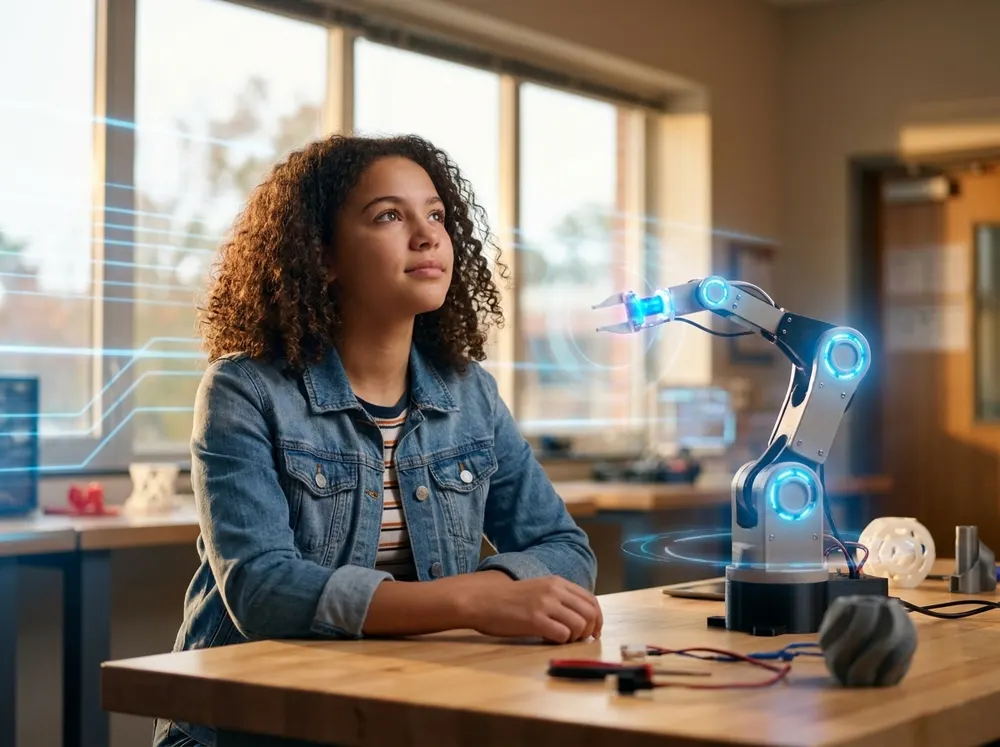 Future scenario
The employee of 2040
Several careers, lifelong learning and daily work alongside machines. Organisations take responsibility for what their people learn.
Careers themselves change in this scenario. People work longer, change professions more often and work daily with AI systems and robots. As knowledge becomes outdated more quickly, learning becomes a permanent part of the job rather than just training at the start. Directing and checking AI agents becomes a larger part of many roles. Judgement, expertise, human connection and creativity distinguish people's contribution. In 2040, today's secondary school pupils will work alongside colleagues who already have years of experience today. Both groups will need to keep learning. Because education does not always keep up with what organisations need, organisations prepare their own people for new roles and for working alongside AI and robots, for example in a future academy.
- 14
Leading for the long term
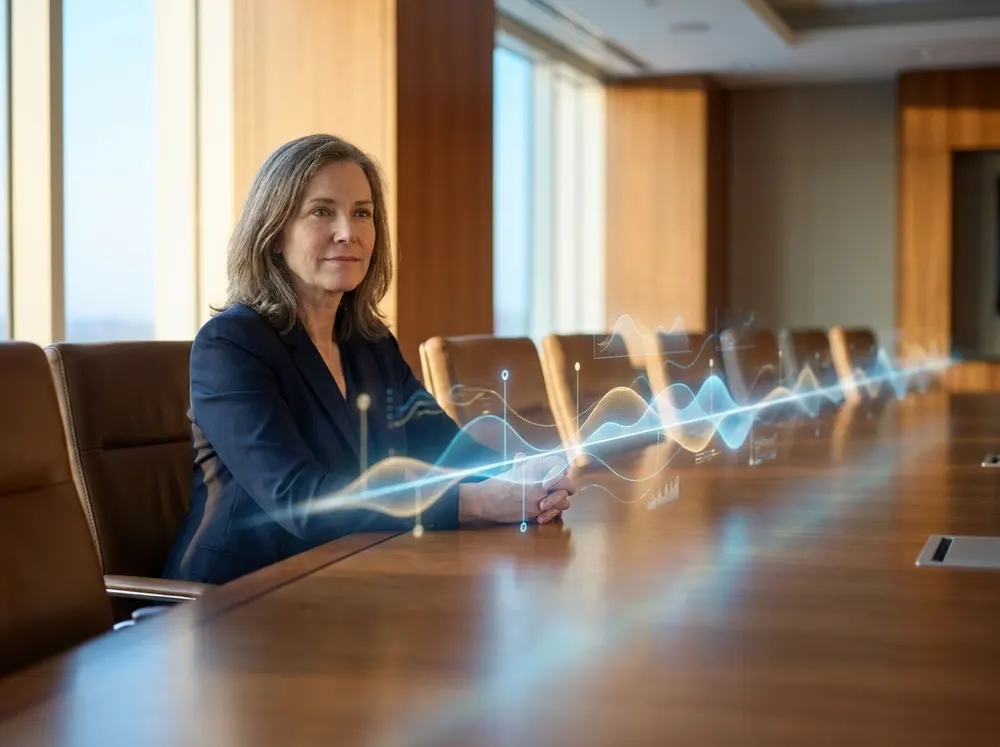
Looking beyond the quarter and choosing what counts in ten years. Leaders take that initiative and inspire their people to build 2040 together.
Leading for the long term means you deliver this year's results while building an organisation that will still matter in fifteen years. These aims often clash. Quarterly targets favour savings; the future calls for investment in people, data and experiments. The consequences often emerge only when a new technology takes hold: then earlier investments determine how quickly an organisation moves with it. AI helps examine that longer horizon by tracking external signals and calculating how decisions could play out across different scenarios. Leaders who take the initiative and share a vision for 2040 bring coherence to decisions whose effects take years to show, and inspire their people to build that future.
The other side of 2040
The flip side of the same technology: threats, ethical choices and the crime of tomorrow.
- 15
 Future scenario
The threats of 2040
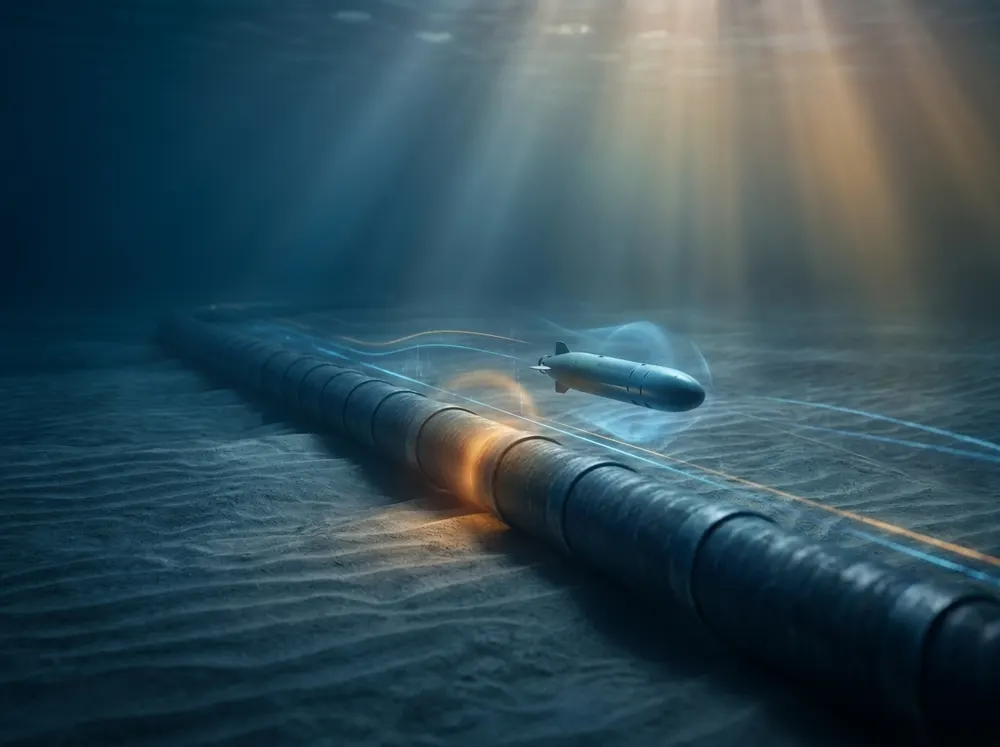
Biotech misuse, grid and satellite sabotage, conflicts that start digitally. Resilience becomes a leadership issue rather than an IT project.
A conflict between states does not always start with soldiers. In hybrid warfare, states combine digital attacks, sabotage and disinformation, often below the threshold of armed conflict. Undersea cables, satellites and power grids are vulnerable: knock them out and communications, payments or electricity go down. In this scenario, AI makes such operations faster and more targeted, from finding weak spots in the control systems of a power grid to spreading fake news. Biotech can become a weapon too: AI that helps researchers design new medicines can also assist those with malicious intentions, and government institutes are already testing whether new AI models could help people misuse biotechnology. By 2040, a conflict could therefore do great damage before a shot is fired.
- 16
Ethics and new technology
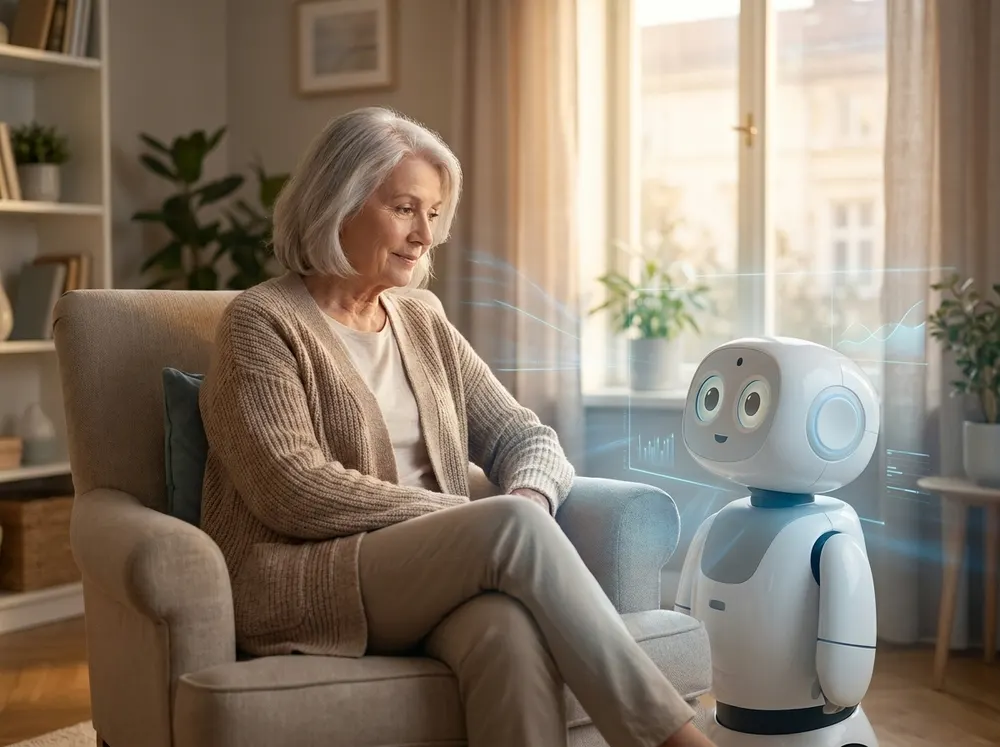
Gene editing, implants, machines taking part in decisions. What is possible may not be desirable. In 2040, the good life becomes a practical question.
In 1980 the British researcher David Collingridge described a dilemma that returns with every new technology: while you can still steer it easily, you do not know its consequences, and once the consequences are clear, steering has become hard. As 2040 approaches, that dilemma arises in more and more of the choices you face. Gene editing can prevent inherited diseases, but where does repair end and enhancement begin? Implants connect the body with technology; Richard has several himself. A care robot keeps a lonely older person company: is that care, or a substitute for it? And a longer healthy life could become a privilege for those who can pay for it. In 2040, the question of what a good life is becomes a design choice.
- 17
 Future scenario
Cybercrime in 2040
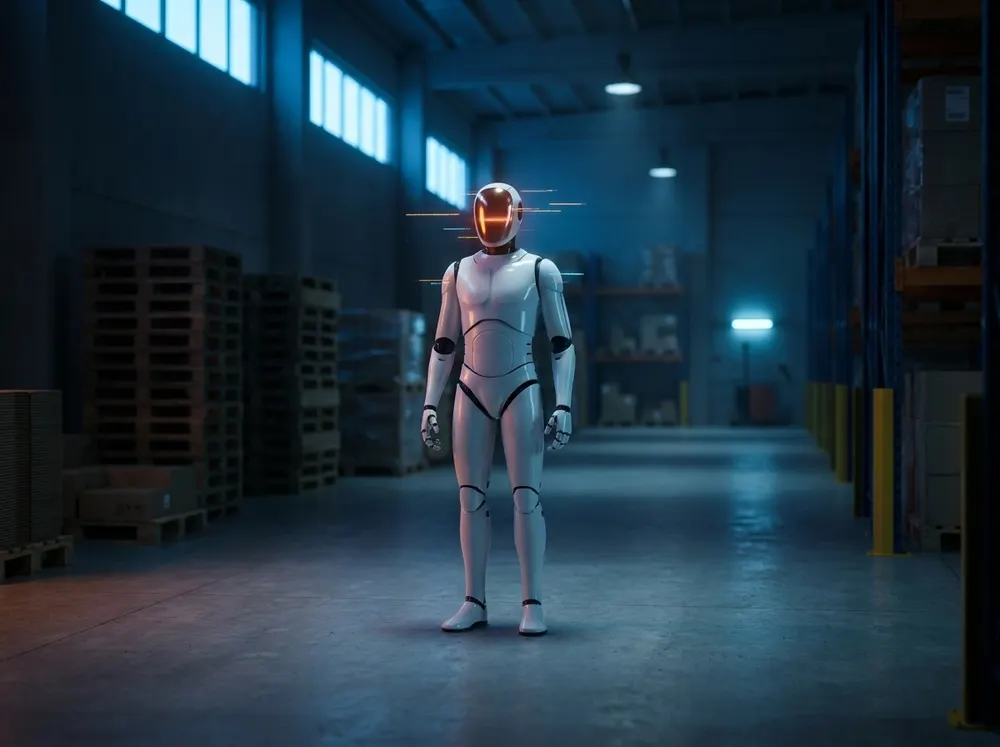
Ransomware, hacks on critical systems and fraud with cloned voices: in 2040, criminal AI agents do that work on their own.
AI already makes it easier for criminals to get at valuable information: through ransomware, hacking and fraud with cloned voices and faces. In this scenario, a criminal agent does not carry out a single attack but builds its own network: it rents servers, opens accounts, puts other agents to work and adapts as soon as it is detected. Fabricated people then get through video calls and banks' identity checks. A robot that learns with AI to work in a warehouse or a living room can also carry out an attacker's orders once the controls are taken over. Critical systems, cars and implants can become targets in the same way. Good security is still needed to protect information and limit the damage.
This keynote in your sectorAgriculture Construction Defence Energy and utilities Media and entertainment Mobility
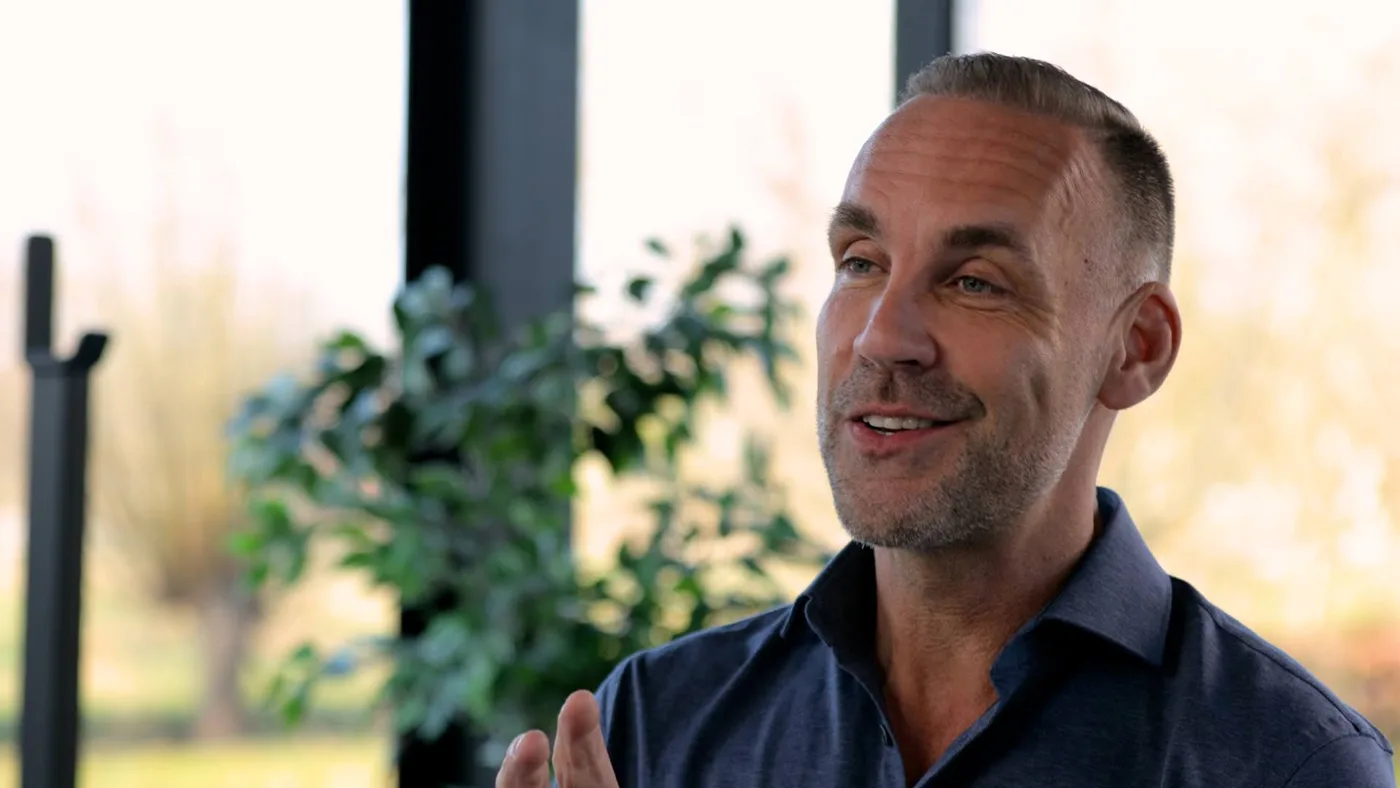
About the speakerRichard van Hooijdonk
Events in EuropeKeynote speaker for corporate events in Europe
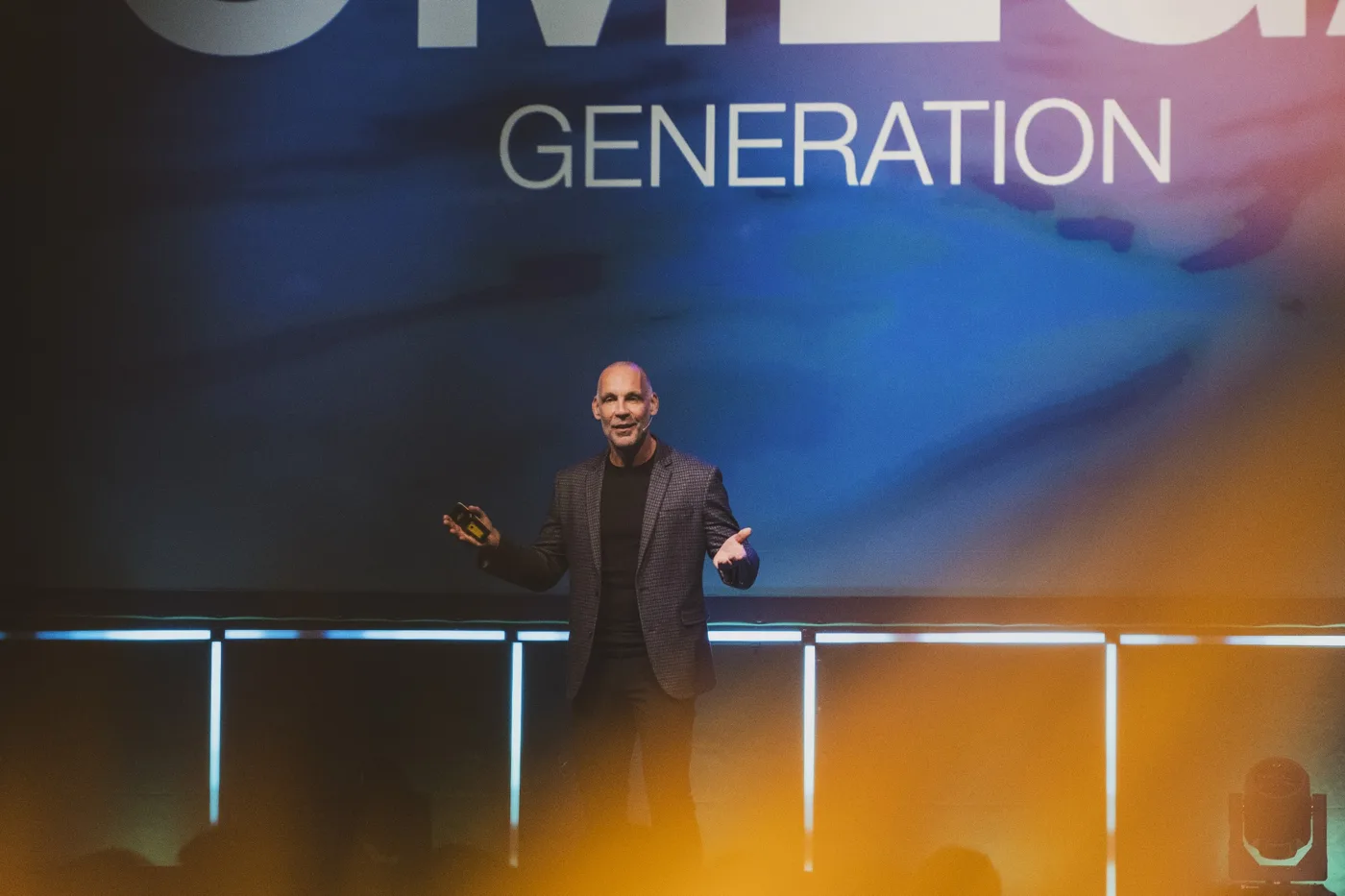
On stage
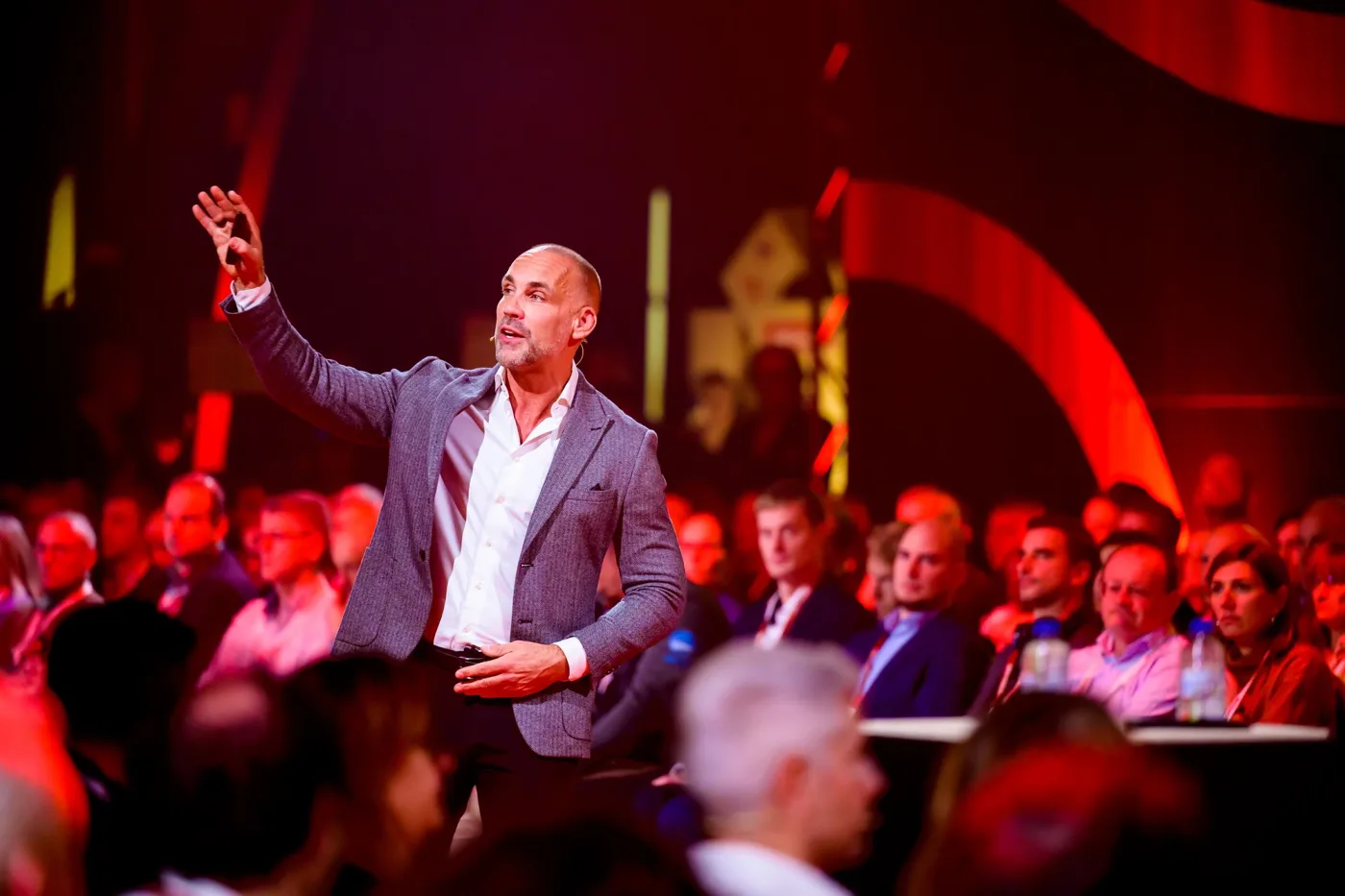
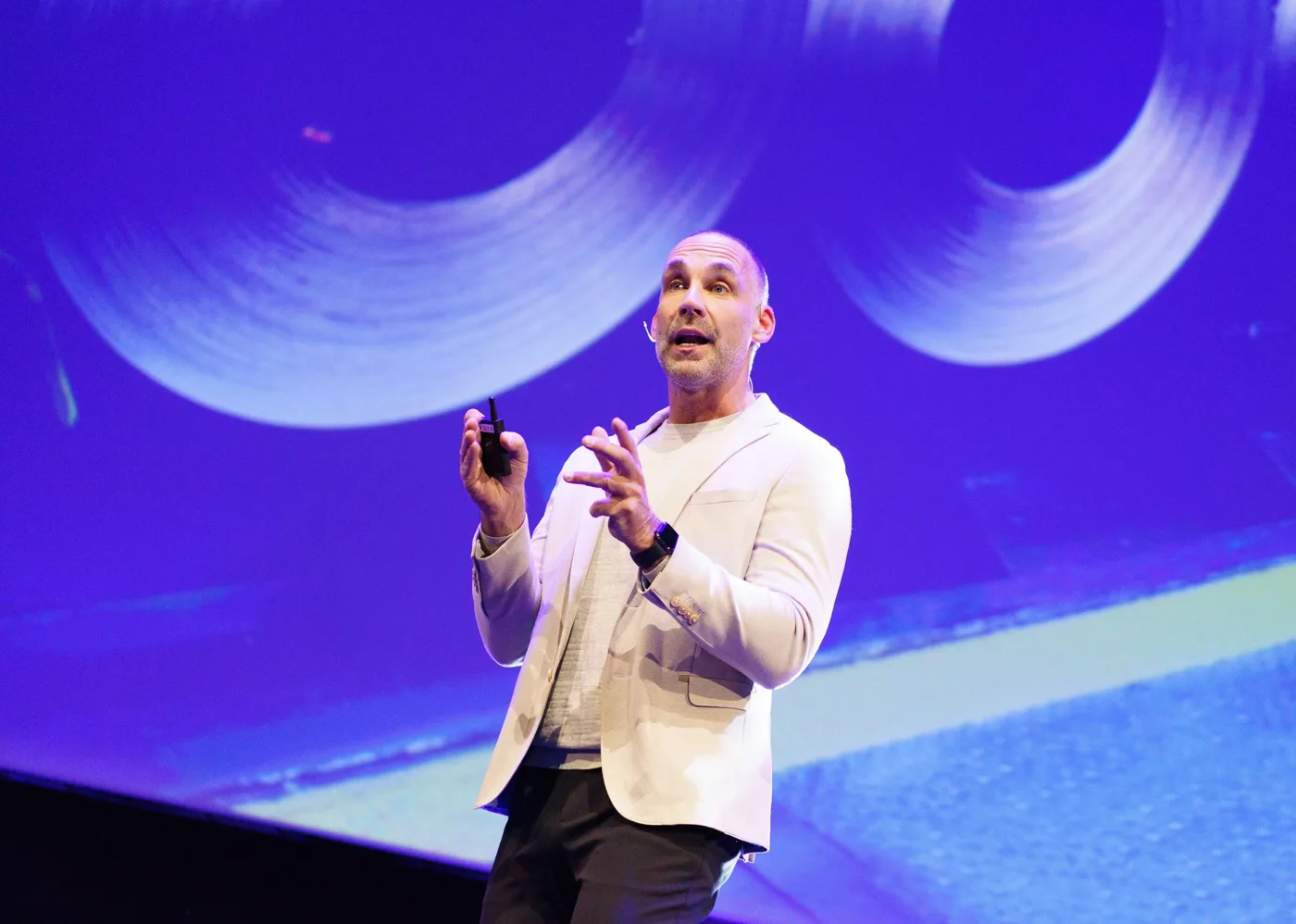
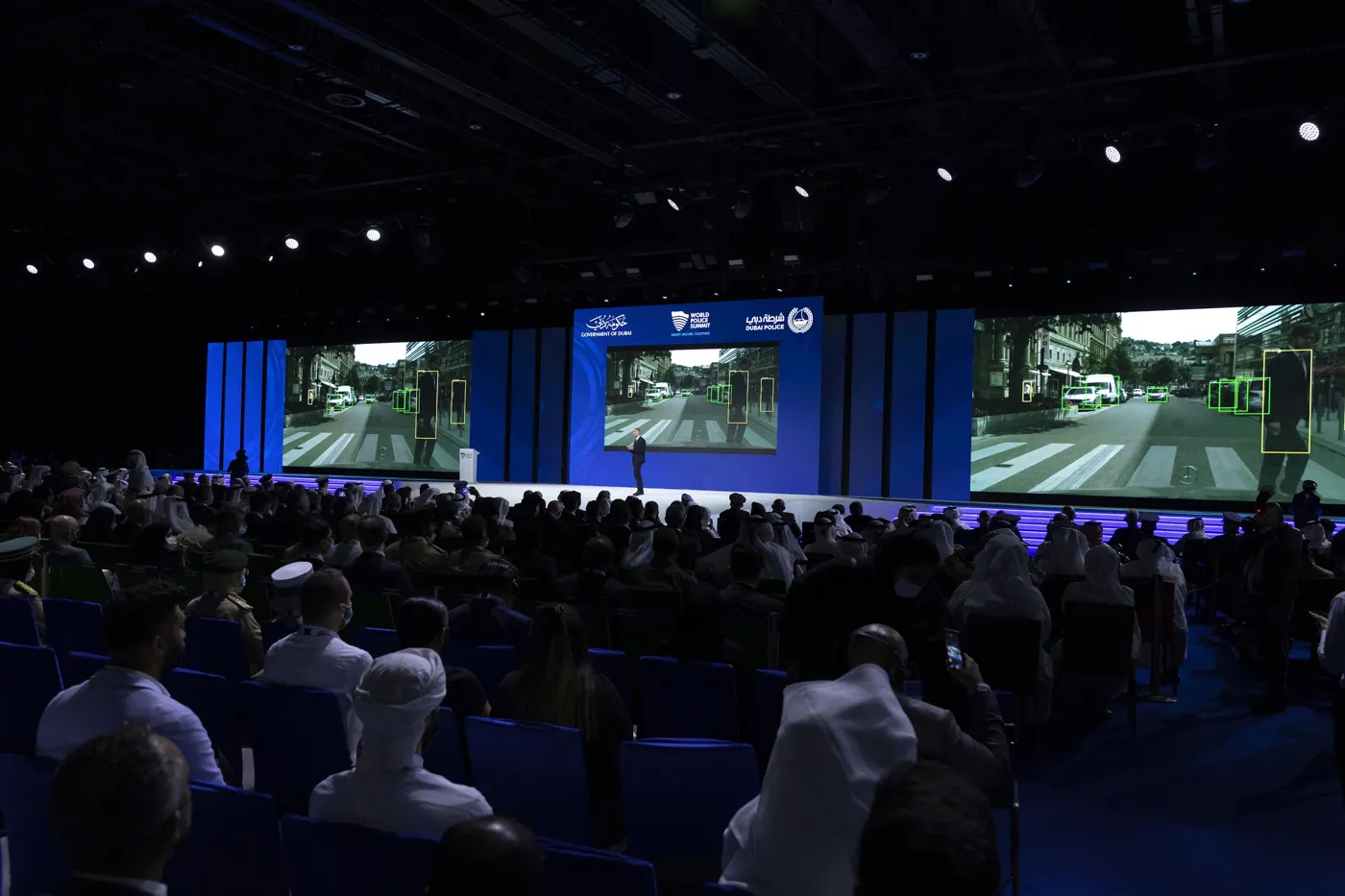
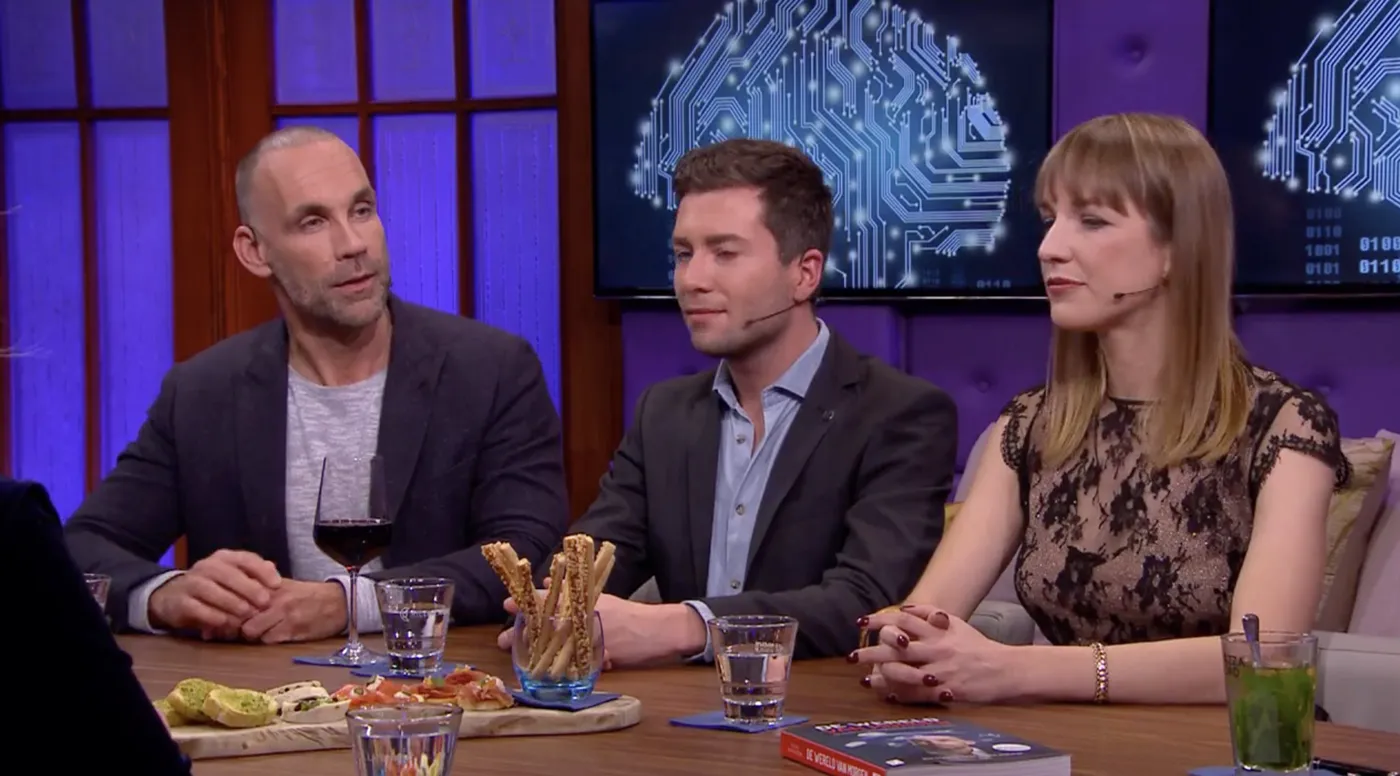
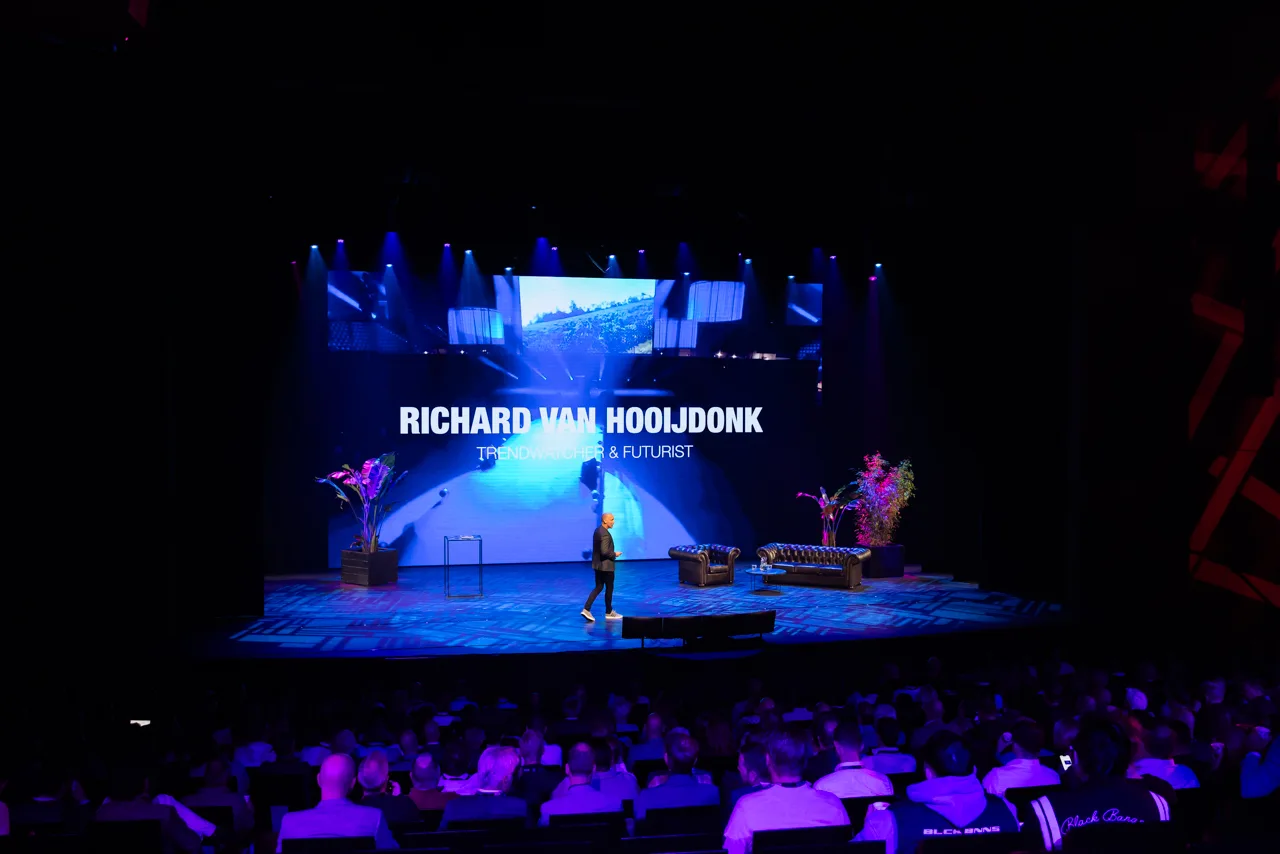
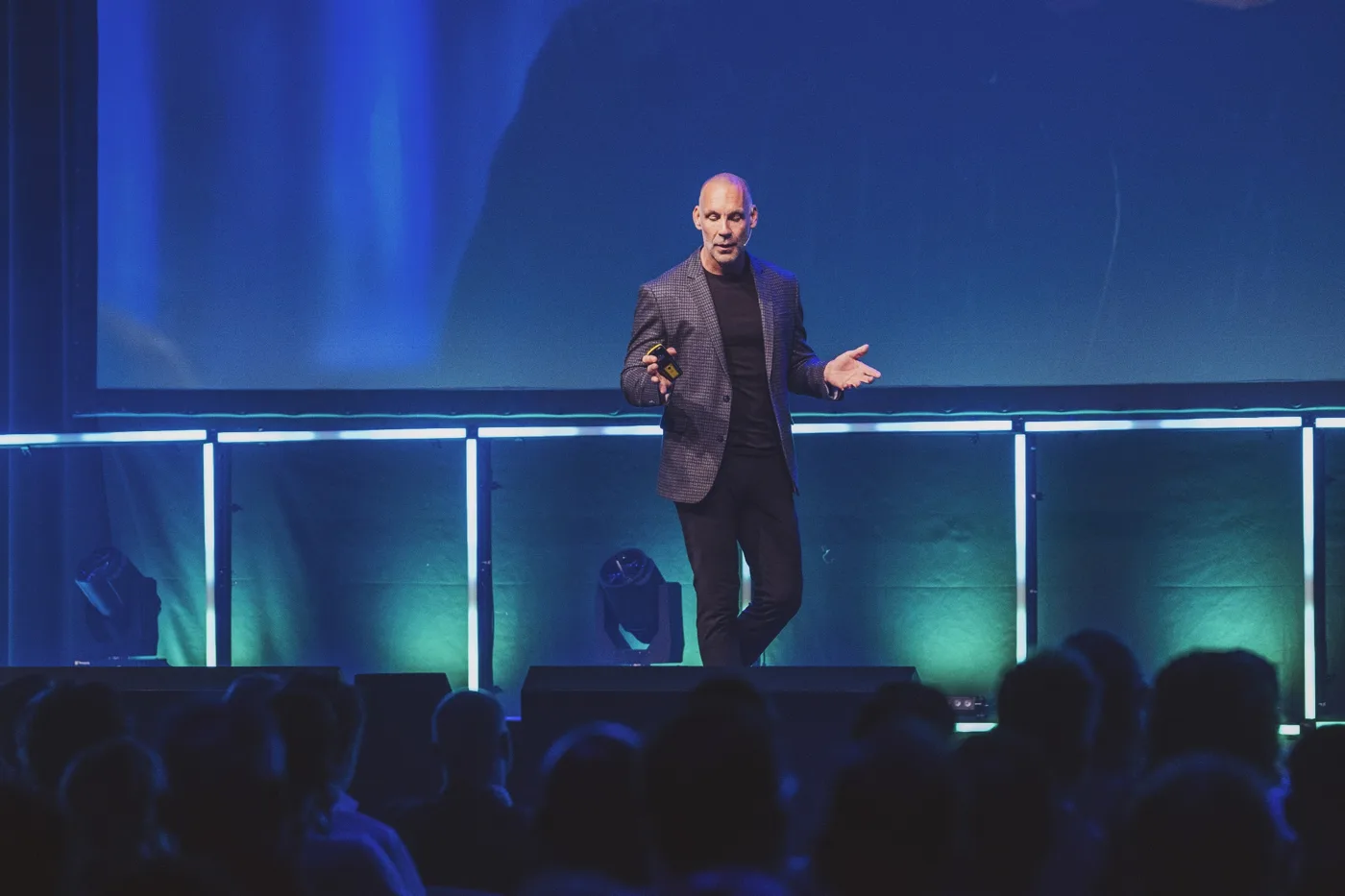
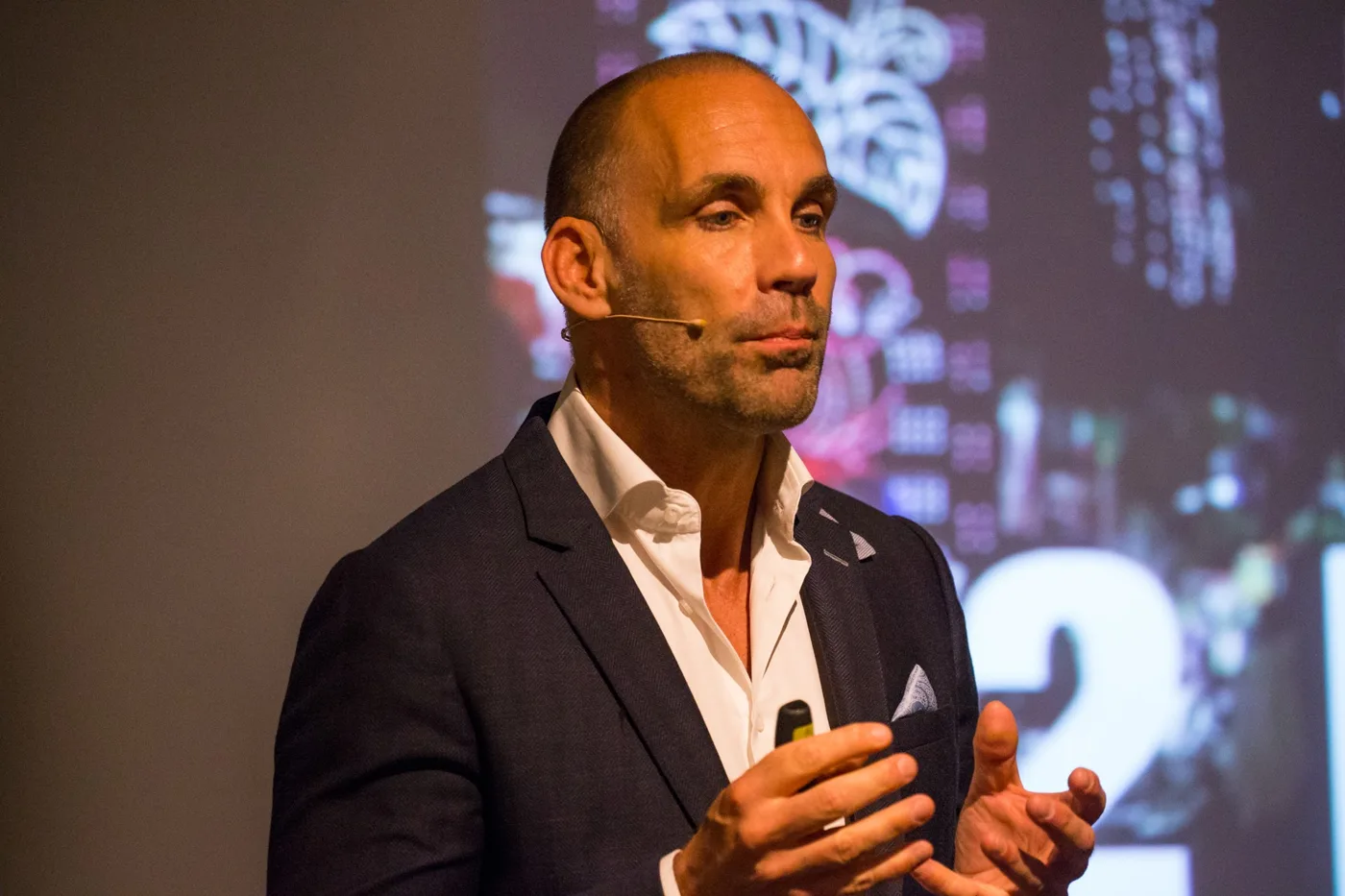
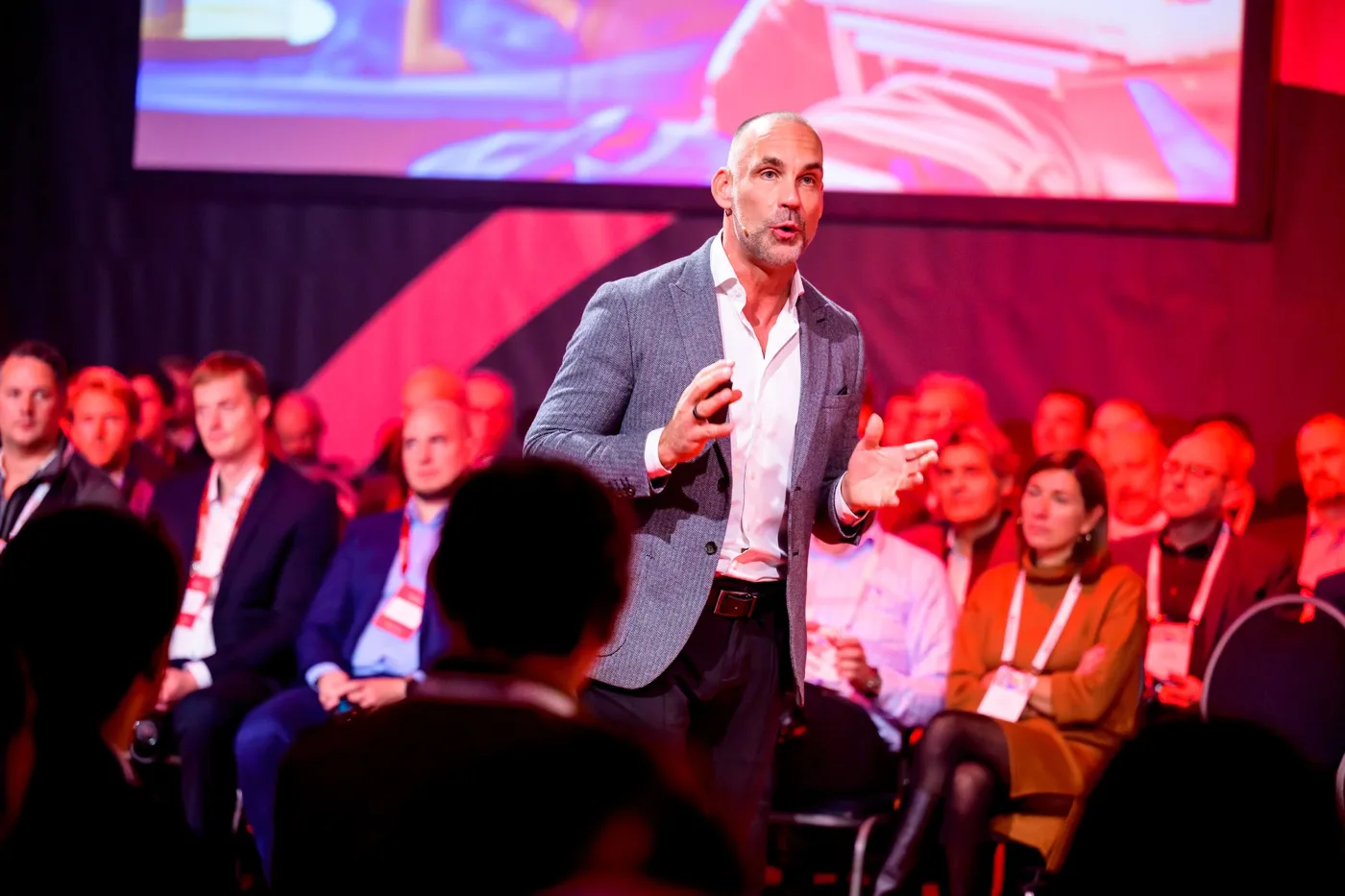
A packed conference hall, a televised panel discussion, a police summit in Dubai.
















What clients say

“Great keynote that really opened our eyes. Sparkling and energetic, from beginning to end. Thanks Richard, for showing us this different view of the fitness market and its future.”Read the full review →
“With your presentation you awakened the customs organisation. At the end of the day it turned out that your presentation had made the biggest impression. You made sure the issues were put on Strategic Management’s radar.”Read the full review →

“Enthusiastic speaker, a good and versatile story. Everyone was ‘wowed’ by the lecture.”Read the full review →

“You gave us all honest, inspired and entertaining insights. Your performance was highly appreciated by the conference participants and EU members.”Read the full review →

“Richard delivered an excellent presentation for the key clients we invited to Innovation Runway 2026. Engaging, interesting content, and thought-provoking statements made his presentation perfectly suited for our top relations.”Read the full review →
How a booking works
Your request
Use the form, or get in touch by phone, email or WhatsApp. A few lines are enough to get started.
We get in touch
We'd like to hear what your event looks like, who'll be in the audience and which themes interest you.
A written proposal
Covering the topic, format (on location or online), length (30, 45, 60 minutes or longer) and fee, so you can talk it over with your colleagues.
Getting to know Richard
Next, we'll find a time for the two of you to talk and brainstorm the keynote, the topics and the format. There's no charge for this.
Frequently asked questions
Who is this keynote for?
For organisations that want to look further than the next annual plan. It suits strategy days, anniversaries, conferences, client events and meetings of board members and managers. The talk works for twelve people in a boardroom or an audience of 3,000. It also works for events for staff, clients and business partners.
What will the audience take away?
Inspiration, amazement, new ideas and an appetite for what is coming. And a clear view of what is really heading our way up to 2040, and what that means for your organisation and for you as a person.
What can my organisation do straight after the keynote?
Build a picture of 2040 from a few scenarios rather than one forecast, and use it to shape a vision of the role AI will play in your organisation. With that vision, look at each process to see which work AI and robots can do, such as ordering and planning, and where people make the difference. The employee and the leader of 2040 come next, followed by the technology that suits them.
Will the keynote be tailored to our sector?
Yes. Beforehand there is an introductory call about your audience, your sector and the questions that are live. An audience from a telecoms provider gets different themes from a conference of healthcare executives or a bank's strategy day. Each sector also has its own sector page.
Is this a prediction?
You will hear plenty of predictions, lines of thought and ideas, but nobody can give real certainty about the future. You hear what the expectations are based on and how different scenarios could play out in your organisation.
Does the keynote cover risks?
Yes, always. The keynote also looks at the other side of 2040: autonomous cyberattacks, misuse of biotechnology and sabotage of cables and grids. At the ethical question of whether we want everything that is possible. And at the cybercrime of 2040, from criminal AI agents to attacks on robots and implants. For a closer look at the crime of today, choose the keynote Cybercrime in the AI Era.
How long is the keynote, and can it be in English or online?
30, 45 or 60 minutes, and longer if you wish. With time for questions from the audience, in Dutch or English, in person or online. If you want to go further than a keynote, there are masterclasses, boardroom sessions for executives, board members and managers, and workshops for all employees.
What does the Trends 2040 keynote cost?
Fees for international keynotes are on request. Send your date and a short description of your event and audience, and the proposal will set out what the keynote costs for your event.
Interested in a keynote?
Let's talk about your event. Leave your details and we'll be in touch shortly.
Prefer to speak to us directly? Call +31 85 303 0792 · email talks@vanhooijdonk.com · send a WhatsApp message