 Richard van Hooijdonk

AI & the future of legal
AI agents that negotiate contracts, an AI arbitrator that drafts the award, a billable hour losing ground. What the law gains from all this depends on the lawyers who work with it.
Choose your sector
Every keynote is tailored to a sector. Choose yours.
 Healthcare
 Government
 Defence
 Policing and security
 Smart cities
 Construction
 Mobility
 Industry 4.0
 Energy and utilities
 Logistics
 Retail
 Wholesale
 Hospitality, tourism and leisure
 Agriculture
 Financial services
 LegalYou are viewing
 Accountancy and advisory
 Education
 Media and entertainment
 Telecoms and connectivity
Is your sector not listed? We tailor the keynote to your audience. Tell us about your audience
How will tomorrow's lawyer learn the work that AI is taking over today?
AI already does a great deal of legal work in case files, contracts and data rooms. In this keynote, futurist and trend watcher Richard van Hooijdonk examines what that means for the role of lawyers, for the billable hour and for the way lawyers learn and practise their profession. AI is part of daily practice for lawyers, in-house counsel and notaries. Language models search legislation and case law, compare contracts with a firm's own standard and help review thousands of documents in the data room during an acquisition. Courts are moving case files and hearings online, notaries execute certain deeds remotely, such as incorporating a Dutch private company (bv), and simple disputes are resolved online. At the same time, there are questions that go to the heart of the profession: what you bill once the research hours disappear, how a junior lawyer learns the trade without the groundwork, and who answers for a text that AI wrote. The keynote shows what is already running, what is being tested and which scenarios lie five to fifteen years ahead: the AI arbitrator, AI agents that conclude contracts, a legal agent for everyone. Which work a firm entrusts to AI, and which stays with the lawyer, becomes a strategic choice.
AI in legal
What AI already does today for lawyers, in-house counsel, notaries and the courts.
- 01
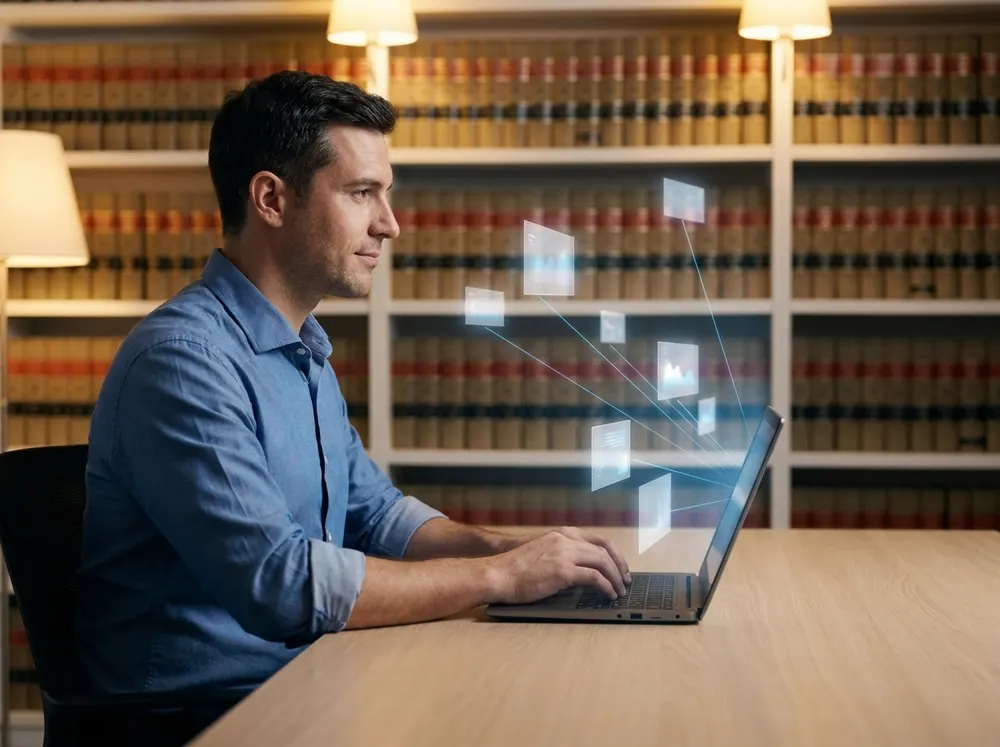
Legal research with AI
AI searches legislation and case law and cites its sources. In time, an assistant will flag on its own when a new ruling affects a case.
A legal AI assistant combines a language model with access to legislation, case law and legal literature, and sometimes with the firm's own case files and knowledge base. The lawyer asks a question in plain language and gets an answer with references to the articles and judgments it relies on. That produces a first overview faster, often including rulings that are hard to find with separate keywords. The next step is an assistant that monitors the case file and, unprompted, points out that a new judgment affects the client's position.
- 02

Reading and drafting contracts
With your own standard as the benchmark, AI compares contracts, monitors a whole portfolio and estimates which clauses the other side will accept.
AI places an agreement next to the organisation's own standard or agreed negotiation policy, and marks where the text departs from it or where something is missing, such as liability, notice periods or governing law. What follows is more interesting. AI monitors a portfolio of thousands of agreements continuously: deadlines about to expire, indexation, and contracts that need revising after a change in the law. In a negotiation, it uses earlier deals to predict which clauses the other party is likely to accept and where there is room to move. The lawyer still decides which risk the organisation is willing to carry. Further ahead, AI agents negotiate a contract themselves within a mandate, as in AI agents close the deal.
- 03

Due diligence with AI
In an acquisition, AI reads thousands of documents in the data room and maps out the risks and unusual terms.
AI searches the thousands of documents in a data room and gathers the same details from every contract, such as term, penalty clauses and what happens on a change of control, into a single overview. Deviations stand out sooner, and the team reviews every document instead of a sample. Firms now practise this on complete transactions, with dozens of lawyers testing in a single day how much of the preparatory work AI can handle. The lawyer judges what a finding means for the price and the warranties. The next step is due diligence that takes days rather than weeks, and that does not stop at closing but carries on after the acquisition as monitoring of contracts, permits and disputes.
- 04
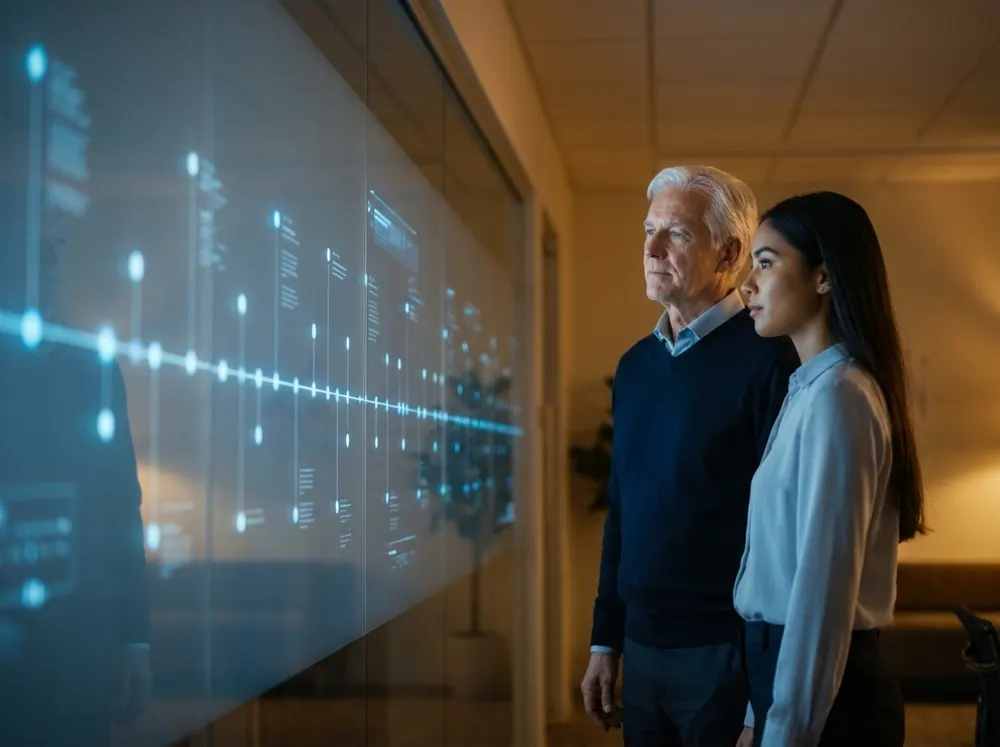
Evidence from digital files
In litigation, AI helps find the relevant emails and documents among millions of items, and places them on a timeline.
Large disputes and investigations soon involve millions of emails, chats and documents that have to be collected, searched and reviewed. AI learns from documents that lawyers mark as relevant or irrelevant, and uses that to select other documents for review. That can save a great deal of reading. Judges have allowed this form of document selection in specific cases, with attention to how reliable the process is. Newer systems also build timelines, so a team sees sooner who knew what, and when. The next step is evidence that carries signed provenance data from the moment it is created, so a court can check every recorded edit made since it was signed.
- 05

In-house counsel with AI
AI answers routine questions from across the organisation. In time, the legal team uses AI agents to keep watch over procurement, HR and sales.
AI moves the first answer to recurring legal questions to the place where they come up: the colleague preparing an agreement, processing data or checking terms and conditions. An AI assistant connected to the company's own policies and standard contracts answers the simple questions directly and passes the rest, with a summary, to the right lawyer. In-house counsel gain time for strategic advice, negotiations and the difficult judgement calls. Before long, the legal team will use AI agents to follow the processes in procurement, HR and sales, and see a risk taking shape before anyone asks about it.
- 06
 In pilots
Compliance that keeps pace
AI tracks new laws and regulations and continuously checks policies, contracts and processes against them.
AI can link a changed threshold or a new decision by a regulator to the contracts and processes it affects, even when departments use different terms for them. The system follows new rules across several countries and sectors and shows which departments will have to deal with them. A next step is continuous testing: the system lays policies and contracts beside the current rules and flags where something no longer fits. Further ahead, rules are published directly in a form machines can read, and systems process a change in the law on the day it appears.
- 07

Legal AI agents
AI agents handle work in several steps: assembling a case file, drafting a court document, preparing a deed for the lawyer who signs.
A legal AI agent is AI that completes an assignment in several steps and decides for itself which systems and sources to consult along the way. An AI agent can, for example, gather the documents in a case, draw up a chronology, look for relevant case law and write a draft court document. In a notary's practice, an AI agent can retrieve data from registers and prepare a deed for review. Firms use and test such AI agents in clearly defined processes, with fixed checkpoints. Where a lawyer once took every step personally, the lawyer now directs a sequence of steps that the AI agent prepares.
- 08

Legal explanations in plain words
A legal AI assistant explains in plain language what a letter or contract says, and which rules apply to dismissal, a tenancy or a payment demand.
Legal language is hard to follow for many people and small business owners: a notice of termination, a tenancy agreement, a payment demand with a deadline. A legal AI assistant is a language model set up to work with laws, regulations and legal sources. It explains in plain language what the document says and which rules apply to a dismissal, a tenancy dispute or an unpaid invoice. Users can ask follow-up questions about an unfamiliar term or a difficult passage. Legal service providers already offer such assistants as a first step, before a lawyer takes a look. The explanation helps someone understand a letter or contract, but it can contain mistakes and does not replace a lawyer's judgement.
- 09

Digital justice
Filing, case files and hearings move online. AI helps court staff and judges organise long files and make judgments easier to understand.
Filing documents, consulting case files and corresponding with the court increasingly happen digitally, and depending on the procedure, hearings can take place remotely. On that foundation, AI can support court staff and judges: organising documents, building a timeline and turning judgments into language people can follow. Some courts already do this. AI that supports judges on the substance, in establishing facts, interpreting the law and applying it to a specific case, counts as high risk under the European AI Act; purely administrative help does not automatically fall into that category. The next step is a court where AI transcribes and translates live during the hearing, and where a party can follow its case file in plain language at any moment.
- 10
 In pilots
The digital notary
Signing online with a digital identity; AI checks documents, registers and powers of attorney before the notary signs.
In the Netherlands, a private company (bv) can already be incorporated entirely remotely, over a secure video connection and with a digital identity, and notaries are pressing for changes in the law so that other deeds can be executed remotely too. The result is a practice in which signing at the table and signing remotely exist side by side. Behind the scenes, AI applications that help the notary prepare are being tested. They pull data from registers, compare it with the draft deed, check powers of attorney and point out possible contradictions. The notary then spends less time checking data and more time talking with the client.
- 11

AI law as a new discipline
The European AI Act, liability and supervision call for a practice of their own: lawyers who guide organisations through AI rules.
With AI, product safety, fundamental rights and professional liability come together in files where the behaviour of AI itself is assessed in legal terms. The European AI Act classifies AI systems by risk, with prohibited uses and strict requirements for AI in, for example, recruitment, lending or healthcare. Questions about privacy, copyright, product liability and contracts with suppliers come on top. Organisations want to know which systems they use, which risk category they fall into and what they have to document. A practice of its own is emerging, in which lawyers work alongside engineers and ethicists. For firms it is a growth market; for in-house counsel, a new part of the job. The rules will be worked out and extended over the coming years.
- 12

Who owns what AI makes?
Copyright in training data and in what AI creates, licences and provenance labels: an area of law that is taking shape now.
Generative AI raises two copyright questions. The first concerns the input: whether AI companies may use books, articles, music and images to train their models, and whether they should pay for them. Courts in several countries are now giving the first answers, and publishers and creators are signing licensing agreements with AI companies. The second concerns the output: whether a text or image created by AI is protected, and if so, who owns it. In many legal systems, copyright requires a human creation. Further ahead lies a global market for licences on training data, in which creators are paid per use and provenance data travels with every image and every text as standard.
The future of legal
Where law and the courts could stand in five to fifteen years, with AI as the engine.
- 13
 Future scenario
The end of the billable hour
As AI takes hours away, fixed fees become more attractive. Firms then reward their people more for results, shared knowledge and judgement.
At many firms, the hour is the measure of everything: the client pays by the hour, and whoever bills the most hours builds a career. AI puts that measure under pressure. With AI, a memo can take far less time, and knowledge a lawyer captures in a template or AI agent helps colleagues but does not automatically produce billable hours. Clio's Legal Trends Report 2024 estimated that up to around 74 per cent of billable tasks could be partly automated with AI. The scenario for 2040: routine work has a fixed price, ongoing advice becomes a subscription, and the hourly rate survives mainly for litigation that cannot be predicted. Firms then look at their people differently: at the outcome for the client, at knowledge that helps colleagues and at the quality of judgement.
- 14
 Future scenario
The law firm as a tech company
Some law firms already work largely with AI. Around 2040, firms will also sell their knowledge as an AI service.
Some law firms already deliver most of their services with AI. One of them helps business owners recover unpaid invoices for a low, fixed price. In a few places, non-lawyers may already co-own a legal practice, and investors are showing interest. The scenario for 2040: a firm's knowledge sits in AI agents that clients use themselves, day and night, through a subscription or per use. Product developers, data specialists and designers work alongside the lawyers, and part of the revenue grows independently of hours. Competition then also comes from tech companies and publishers with legal knowledge. What a firm knows becomes something it can sell without a lawyer at the table.
- 15
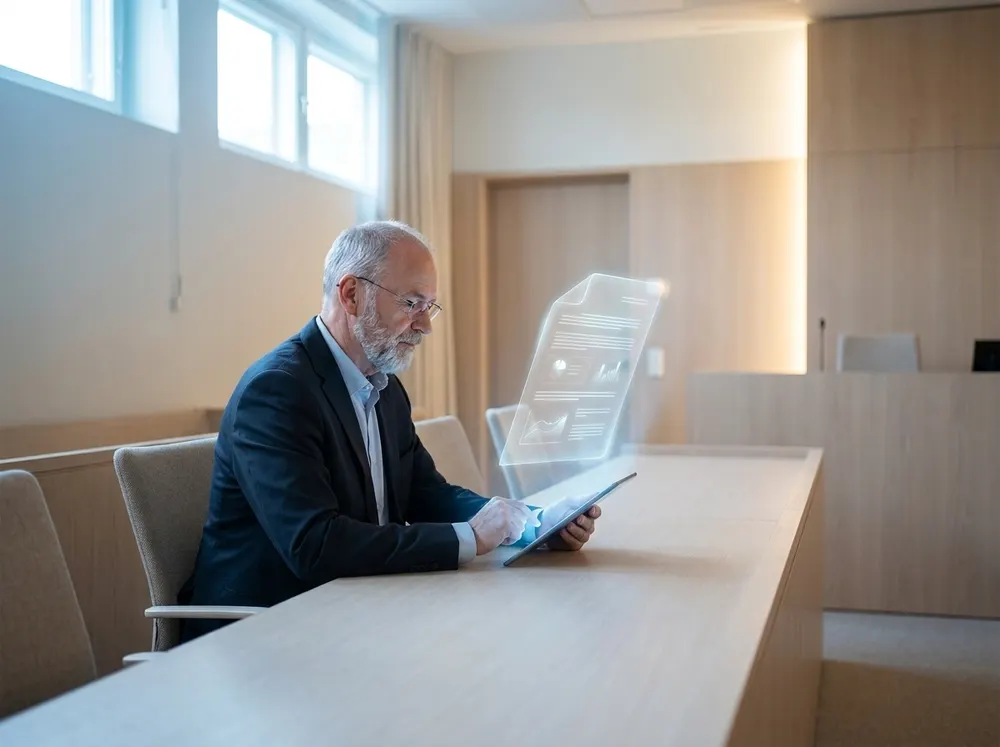 Future scenario
The AI arbitrator
Since late 2025, AI has drafted the award in construction disputes at the AAA arbitration institute. Around 2040, that may be normal for small cases.
In late 2025, a large arbitration institute introduced an AI arbitrator for construction disputes decided on the documents alone. The AI analyses the file and writes a draft award; a human arbitrator reviews it and issues the final decision. Online tribunals have handled small claims without a hearing for years. The scenario for 2040: disputes over a delivery, an invoice or a damages claim are settled in days instead of months, for a fraction of the cost. A claim of a few hundred euros then becomes worth bringing. Judges and arbitrators keep more time for the cases where human judgement makes the difference.
- 16
 Future scenario
AI agents close the deal
In future, the buyer's and seller's AI agents negotiate price and terms themselves, and conclude the contract within their mandate.
In a demonstration, two AI systems have already negotiated a non-disclosure agreement without human involvement, and payment networks are building ways for AI agents to pay. The scenario for 2040: one company's purchasing agent and another company's sales agent negotiate price, delivery time and terms, conclude an agreement within their mandate and link payment directly to delivery. The contract partly executes itself: a late delivery lowers the price automatically. AI agents can then tailor thousands of small agreements a day to each specific purchase. The lawyer's work shifts to the mandate: what the AI agent may commit to, and where its authority ends.
- 17
 Future scenario
A lawyer for everyone
Billions of people lack access to justice. In future, everyone could have a personal legal AI agent that keeps watch, warns and takes action.
In 2019, the World Justice Project estimated that 5.1 billion people worldwide lack meaningful access to justice: they face a dispute with no resolution, lack protection or have no legal identity. AI assistants already give a first explanation in plain language. The next step is a personal legal AI agent that knows its user's situation. The scenario for 2040: the AI agent checks a tenancy agreement or employment contract, sees a deadline approaching, drafts an objection and brings in a lawyer as soon as the case calls for one. For small business owners, it keeps track of contracts, invoices and new rules. The law comes within reach of people who never see a lawyer today, and lawyers get clients who bring their case in order.
- 18
 Future scenario
Knowing the outcome in advance
In 2016, AI already classified four in five outcomes at a human rights court correctly. Around 2040, parties will model their case beforehand.
In 2016, an AI model correctly classified the outcome of selected cases at the European Court of Human Rights 79 per cent of the time, based on the text of the published judgments. Litigation funders already use legal data analysis to decide which cases to finance. The scenario for 2040: before a case begins, the parties model their litigation strategies, with the chances, the costs, the duration and the likely response of the other side, and every new piece of evidence shifts the estimate. More disputes then end in a settlement, and the cases that still reach a judge more often turn on new questions of law. Tomorrow's precedent is set precisely in the cases the model could not predict.
- 19
 Future scenario
When the AI agent acts alone
Who answers for an AI agent that buys, signs or causes harm on its own is still an open question. Around 2040, the law may settle it.
AI agents order, pay and make agreements on behalf of people and organisations, while the law is built around people and legal entities that act. In 2017, the European Parliament floated a special legal status for advanced autonomous robots. It never came; the Product Liability Directive of 2024 explicitly counts software as a product. The scenario for 2040: AI agents that act get a verifiable identity, a register showing whom they act for and what they are authorised to do, and compulsory insurance, much like a car on the road. A counterparty can then see at once who it is dealing with. Agency, consent and liability take on new meaning, and lawyers help shape an area of law that will take shape over the coming decades.
- 20
 Future scenario
The right to your own thoughts
Brain data is gaining protection of its own. In future, the law may limit what technology is allowed to infer about your thoughts.
Neurotechnology measures brain activity, including outside the hospital: with sensors in headbands and earbuds, from which AI tries to infer concentration and mood. In 2021, one country became the first to protect brain activity in its constitution. In 2024, laws followed that explicitly protect neural data, and in 2025 a global UNESCO recommendation on neurotechnology. The scenario for 2040: the rights to privacy and freedom of thought gain specific protection against inferring and influencing mental states. Employers and tech companies can then be held to account for what they infer about attention, emotions or intentions. An area of law is emerging that is, quite literally, about what goes on inside people.
- 21
 Future scenario
Property in real time
Around 2040, a whole property chain could complete at once: deeds, payments and registrations together, with the notary in charge.
In a property chain, the payment for the next home often depends on the proceeds of the previous one, so transfers wait on each other. Digital identity, trials of land registers on a blockchain and digital title deeds make a different way of completing possible. Member states of the European Union must offer their citizens a digital identity wallet, and in trials, digital tokens already represent shares in buildings. The scenario for 2040: as soon as all legal and financial conditions are met, a whole chain of property transactions completes in one go. AI agents coordinate mortgages, payments and transfers. The notary assesses the exceptions and confirms what the parties actually intend. Transferring property then moves at the speed of payments.
AI gives lawyers more time for careful judgement, for the conversation and for the argument in court. In a profession where mistakes carry heavy consequences, a culture of curiosity helps lawyers make good use of that time.
Richard van Hooijdonk
The legal organisation of the future
What AI asks of roles, teams, leadership and culture in a firm or legal department.
- 22

The AI-first organisation
AI does the searching, analysis, drafts and outcome forecasts. Lawyers concentrate on advice, strategy and negotiation.
Research, first analyses, drafts, comparison with earlier work and predicting an outcome: in an AI-first firm, that work increasingly sits with AI, so lawyers no longer have to do it themselves. Professionals spend more time talking with clients, weighing risks, setting strategy and negotiating. The organisation sets itself apart through the quality of its judgement. In ten years, AI agents may do much of the operational work, and the number of entry-level positions may fall. The question is then no longer where AI helps, but where a person makes the difference.
- 23

Legal engineers and knowledge lawyers
Those roles already exist. They will be joined by lawyers who write mandates for AI agents and predict how cases will end.
A legal engineer translates legal knowledge into systems: templates, decision trees and workflows through which AI and lawyers work together. A knowledge lawyer looks after the knowledge base that the AI draws on. Those roles already exist. In five to ten years, others will carry more weight. The lawyer who writes and monitors mandates for AI agents, setting out what an AI agent may promise, sign or pay on the client's behalf. The product manager of a legal subscription, who sells knowledge as a service. The specialist in neurolaw and AI law. And the lawyer who uses models to predict the outcome of cases for litigation funders. The entry-level work of junior lawyers changes with it: fewer days reading documents, earlier involvement in the substance.
- 24

Lawyer and AI on every case
AI searches, reads and drafts; the lawyer checks, weighs, negotiates and is responsible for the final product.
On more and more cases, lawyers and AI work together, each with a part of their own. AI gathers the facts, searches case law, compares contracts and delivers the draft of a memo or court document. The lawyer asks the right questions, checks what AI produces, makes the call and speaks with the client and the other side. AI takes the repetitive and the deeply analytical work: reading thousands of pages, finding patterns in case law, working through variants. The lawyer does what people are good at: judging, choosing, persuading and working with people.
- 25

Leadership in legal
Leaders in the legal world take the initiative with AI and new technology, and motivate their people to build tomorrow's firm together.
- 26
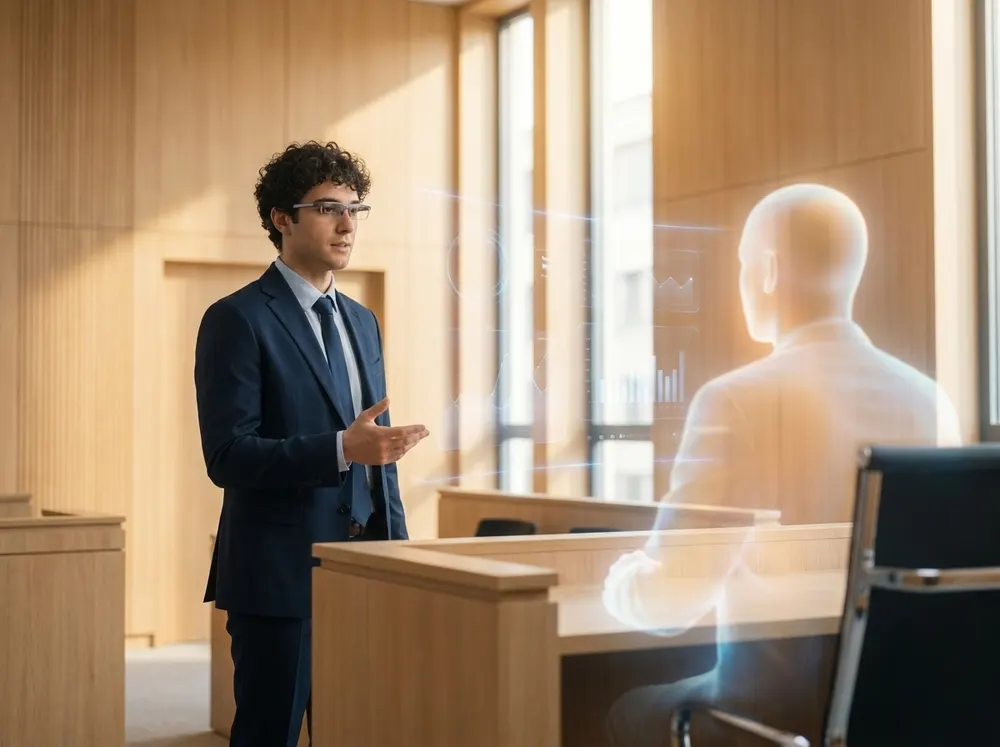
The future academy
Firms train their own people in a future academy. Closed cases become teaching material for working with AI and new technology.
With a future academy, an organisation trains its own people for the work that is coming, without waiting for universities and training providers to adapt their programmes. People who already work there learn how AI and new technology change their work and how to assess AI output critically. New colleagues learn the profession as it will be practised, not as it used to be. Leaders learn to steer an organisation in the middle of change. The organisation adjusts the lessons as soon as tasks and applications change.
- 27

Growing with an ecosystem
Tech companies, start-ups, researchers, clients and governments develop AI applications together across borders, and speed up innovation.
An organisation rarely makes AI useful on its own. It develops new applications together with tech companies and start-ups, examines with researchers how reliable they are, and discusses with peers what good work with AI looks like. Governments publish legislation and judgments as open data and take part in trials. That ecosystem is international: partners in different countries work with the same systems and share their experience. What is tested on one continent can be tried elsewhere through partners, so innovation reaches practice sooner.
- 28

Legal knowledge as a product
Firms package knowledge in tools that clients use themselves. To build them, lawyers work with designers and developers.
Part of the advice a firm gives again and again can be captured: a check of whether a contract meets the client's house rules, an overview of rules per country, a decision tree for a common question. Firms package that knowledge in tools clients use themselves, often on subscription. Such a product does not come out of a practice group alone. Lawyers work on it with designers, developers and product managers, and the client's in-house counsel helps test it. A product is never finished: it is updated when the law changes, and it has its own budget and its own owner. Alongside casework, product development becomes a distinct skill within the firm.
The other side responsibility and risk
Professional secrecy, reliable sources and criminals who use AI: what is at stake when AI works in the law.
- 29

Data as the foundation
AI only works when data from every part of the organisation is available, reliable and connected. That is the foundation of the AI-first firm.
The AI-first law firm lets AI search, analyse and predict across practice groups. That only works when the data is available, reliable and connected: case files, earlier opinions, model contracts, judgments and the arrangements for each matter. Often they sit in separate systems and folders, with their own names and versions, and one department does not know what another has already researched. Missing or outdated documents can lead to wrong answers, and an AI agent that takes over a task then lacks important information. Connected, consistent and current data is therefore the foundation on which AI can work across the whole firm. That includes agreeing who may use which data, and for what.
- 30
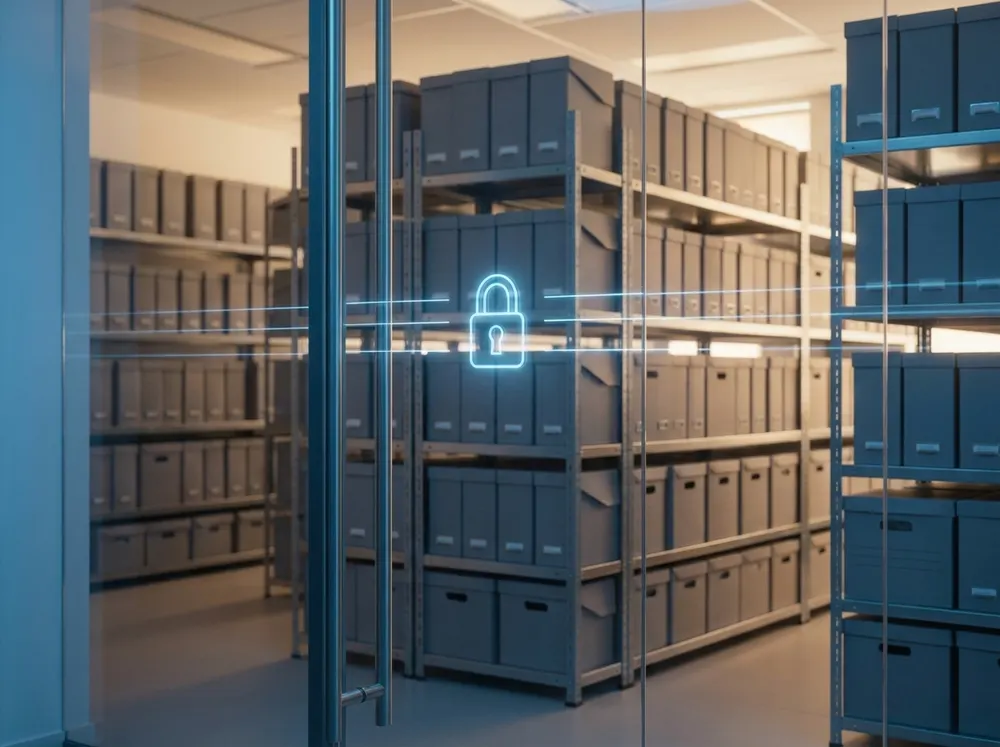
Confidentiality comes first
Knowledge sits in case files and emails; the duty of confidentiality decides which data AI may see and where it is kept.
For a firm, the most valuable knowledge sits in case files, emails, memos and earlier advice, and that is exactly what falls under professional secrecy and the duty of confidentiality to clients. Every AI application therefore also becomes a question of professional ethics: which data the system sees, where it is stored, and whether a supplier may use it to train its model. Clients increasingly ask how their firm handles AI and confidential documents. One leaked file can cost a client's trust for good. Further ahead, quantum computers may break some of today's encryption, so that files intercepted in encrypted form today could become readable later.
- 31

Sources that do not exist
Language models can invent judgments and sources. Judges respond with fines and referrals, and whoever signs answers for every source.
A language model predicts which words logically come next, and can therefore invent a judgment, statutory provision or quotation that sounds convincing but does not exist. Court documents citing such invented case law have been filed in courts in several countries, and they have turned up in decisions by judges and arbitrators too. Judges have responded with fines, costs orders and referrals to the regulator. An arbitral award that rested on invented sources was set aside. Responsibility does not shift to the AI: whoever signs a document answers for every source in it. Professional bodies and regulators have issued guidance, and the number of reported cases is still growing.
- 32

Criminals and the gatekeeper
Case files and purchase money attract criminals. With AI, they hack systems, send phishing mails and use a cloned voice to pose as a client.
A firm holds confidential case files, client data and money that passes through it for transactions. With AI, criminals can pose more convincingly as a client to try to get at all of that. They write flawless phishing emails in a client's style, break into case management systems and deploy ransomware. With deepfakes and forged identity documents, they try to get past client due diligence checks in order to launder criminal money through property or companies. The same voice technology that helps a firm speak to clients in their own language helps a fraudster pose as that client on the phone and divert the purchase money to another account. In the AI era, good security is part of client confidentiality.
About the speakerRichard van Hooijdonk
Events in EuropeKeynote speaker for corporate events in Europe
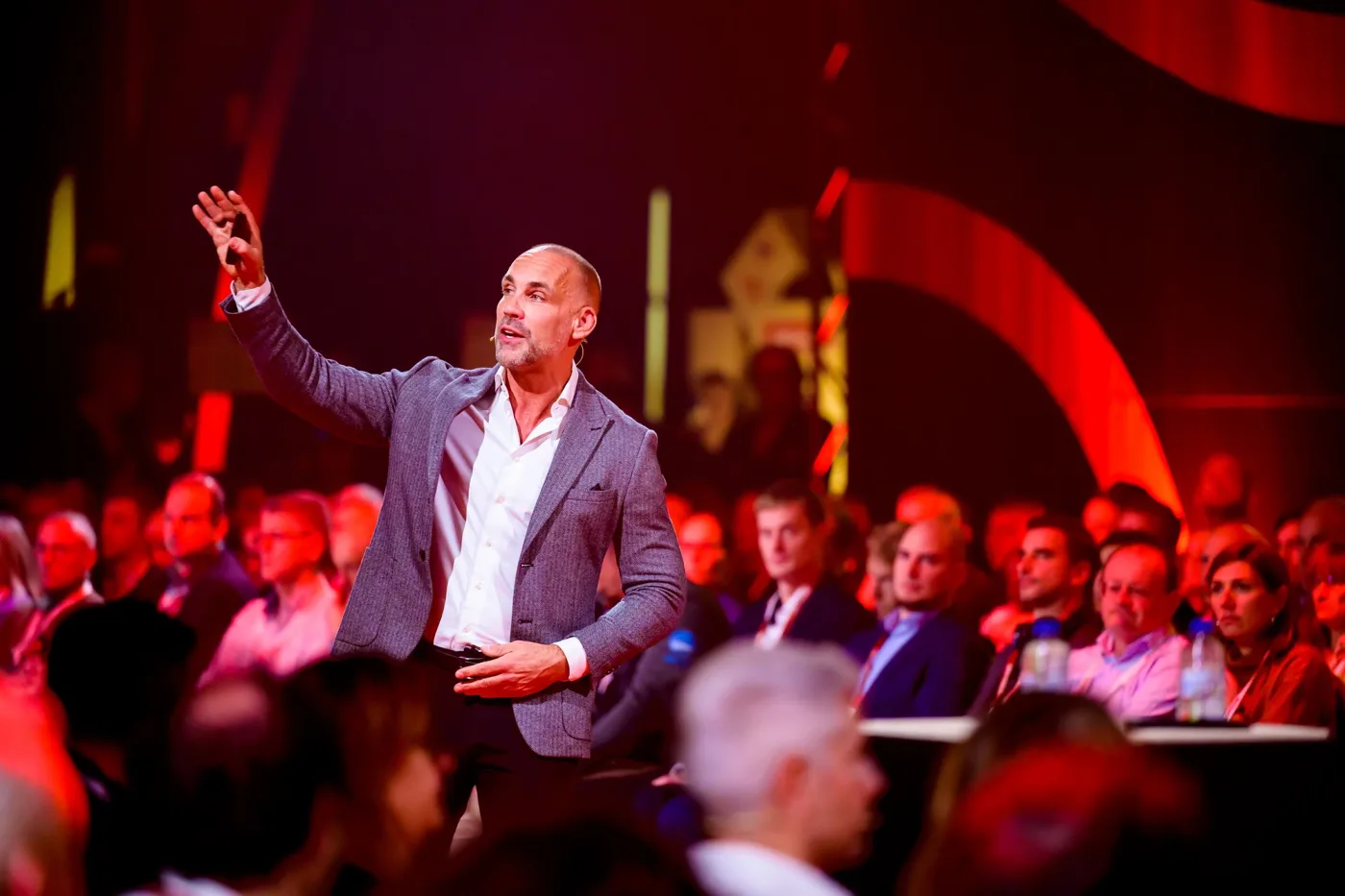
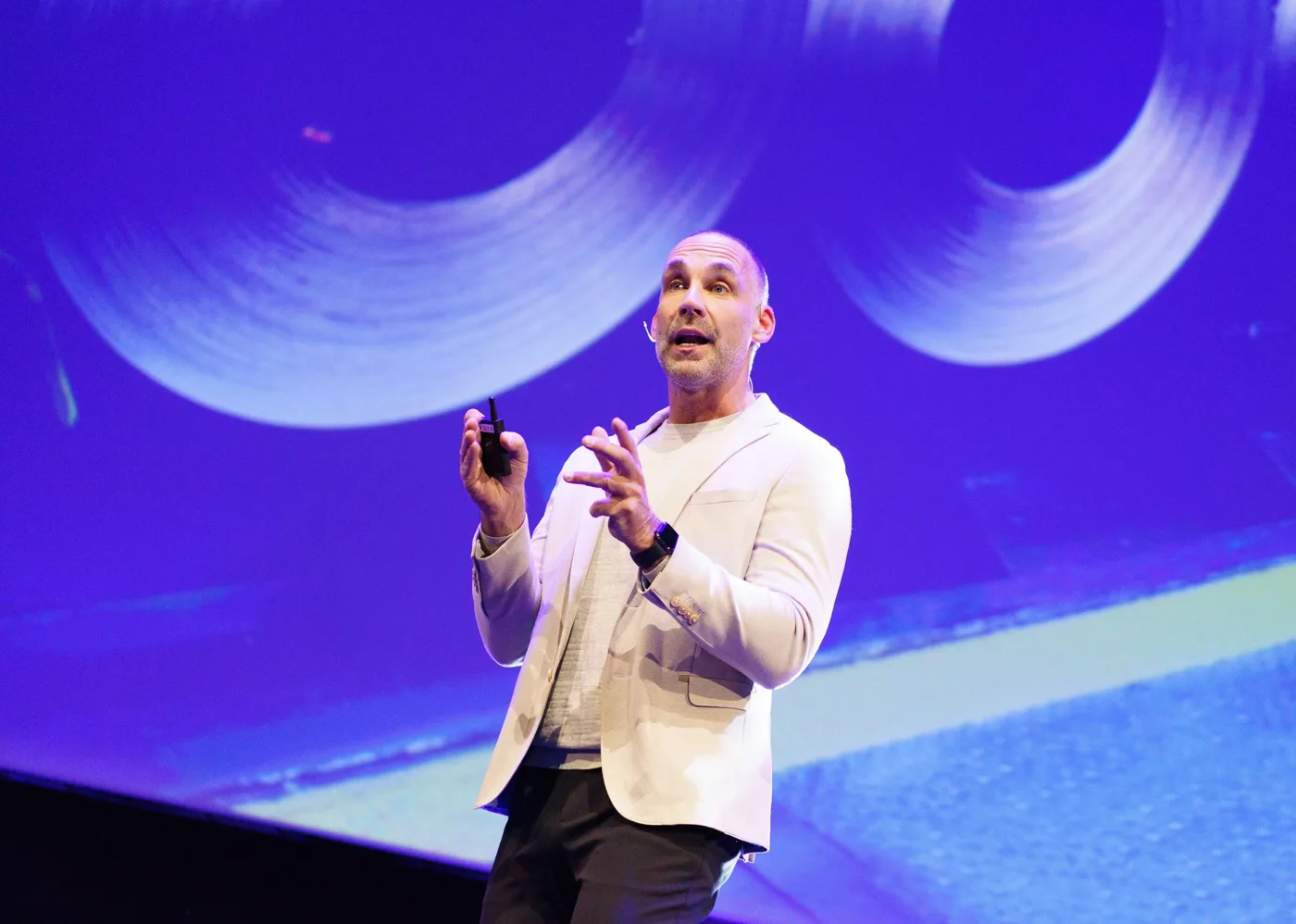
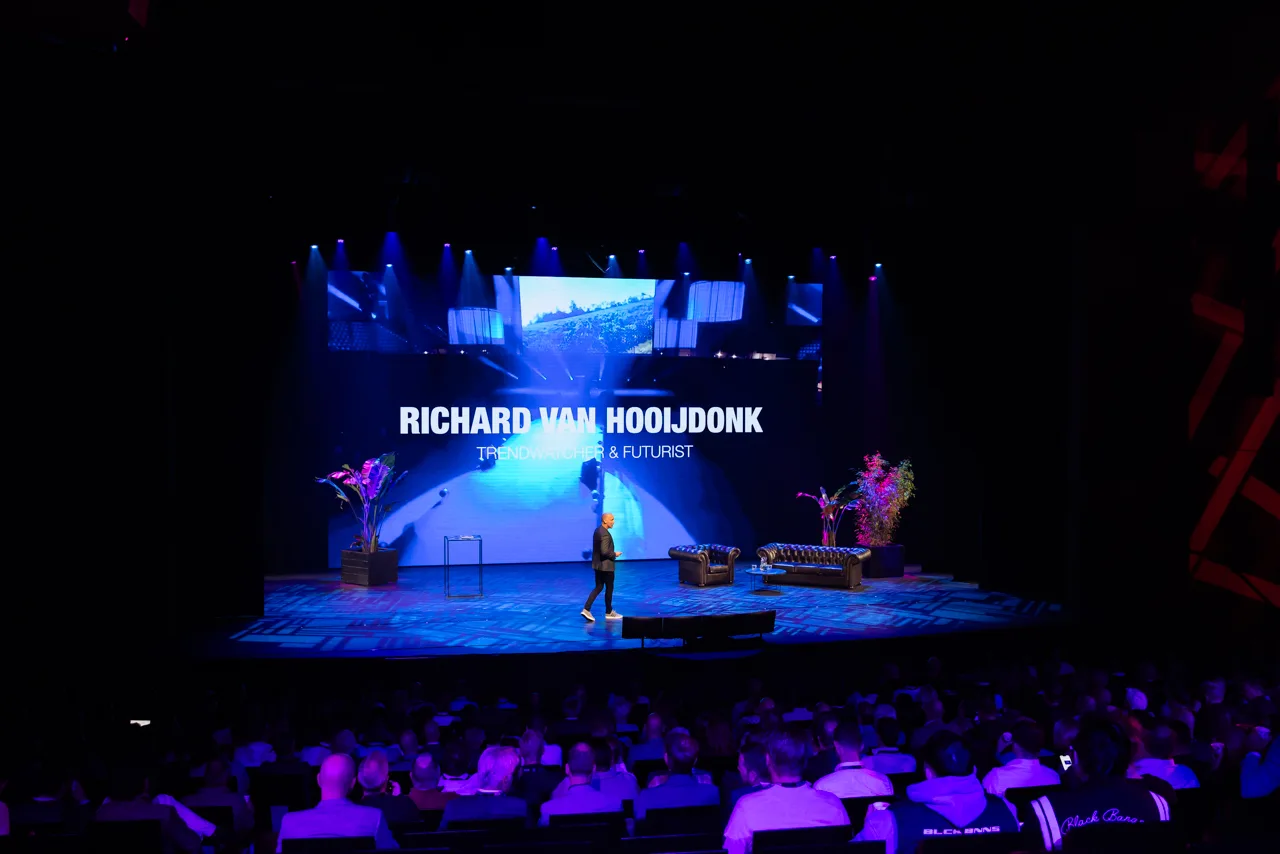
On stage
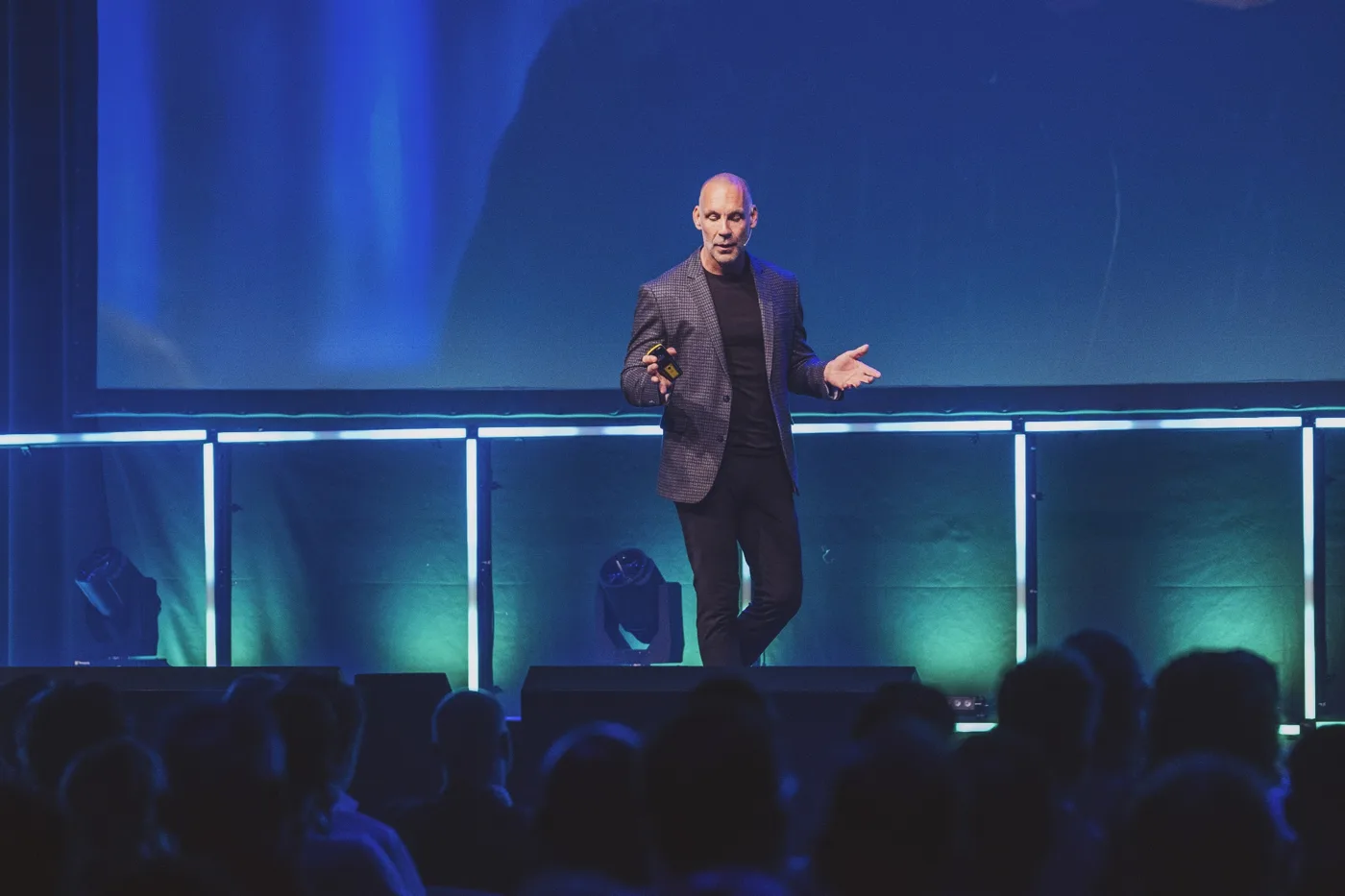
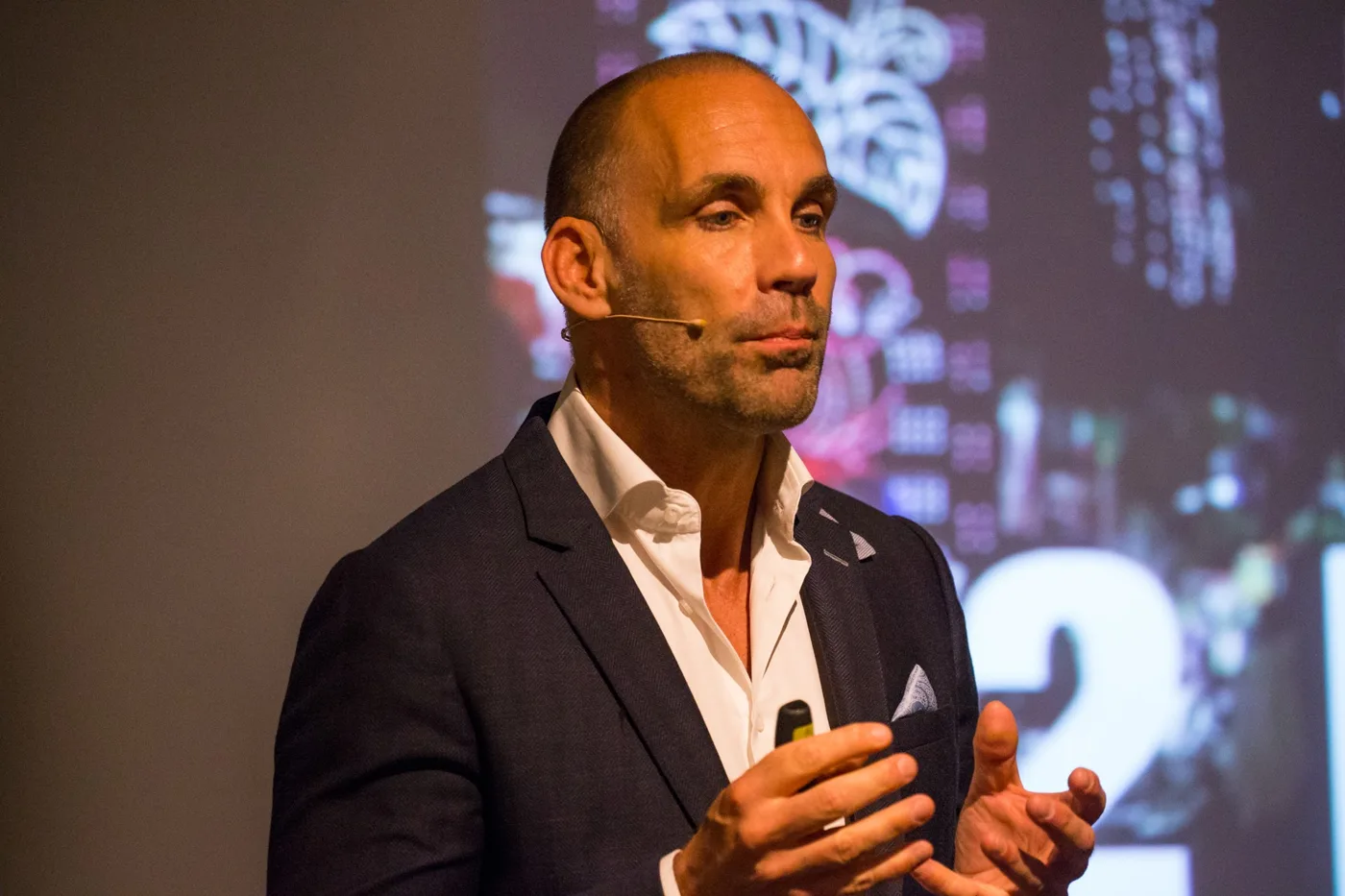
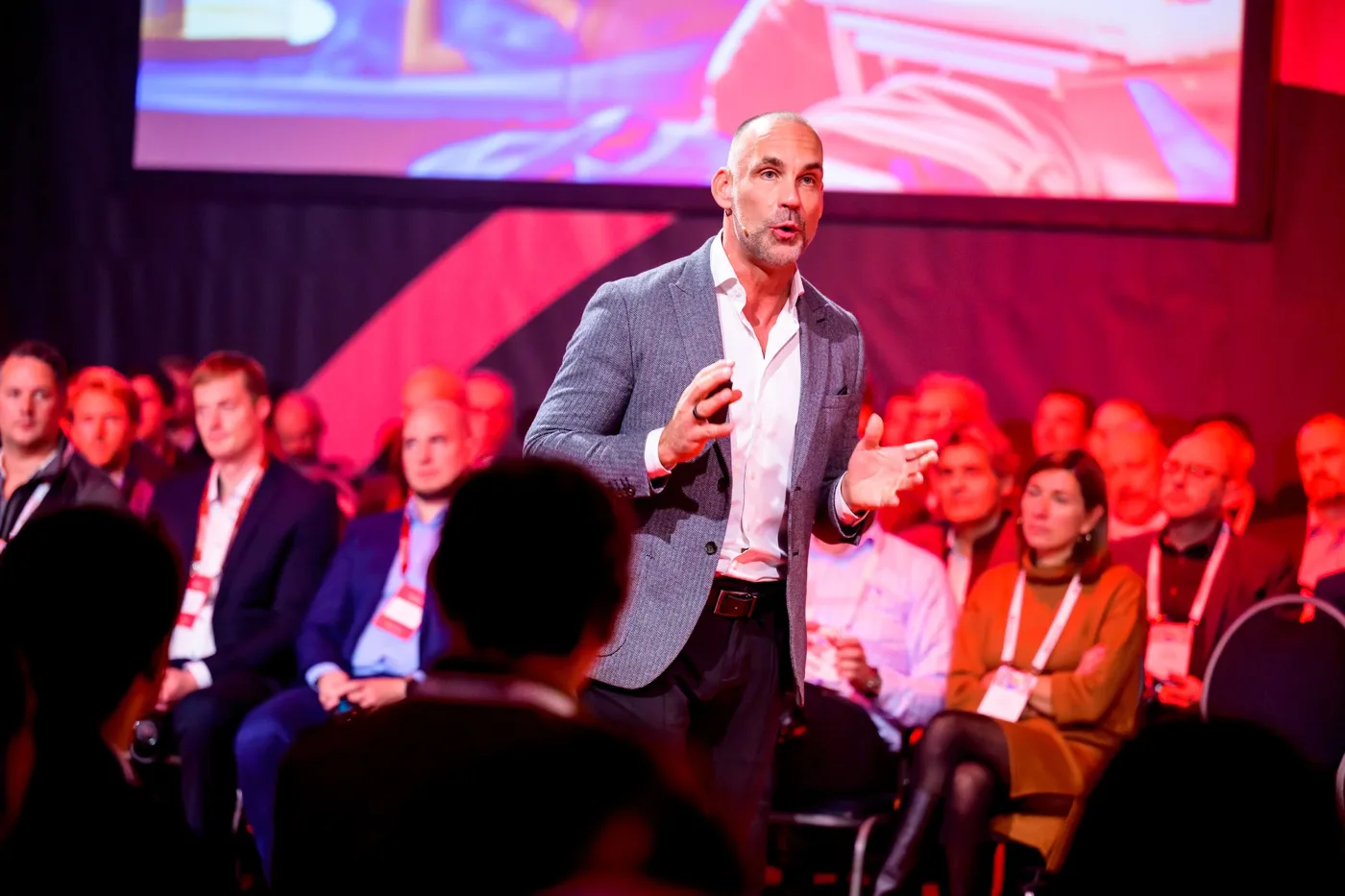
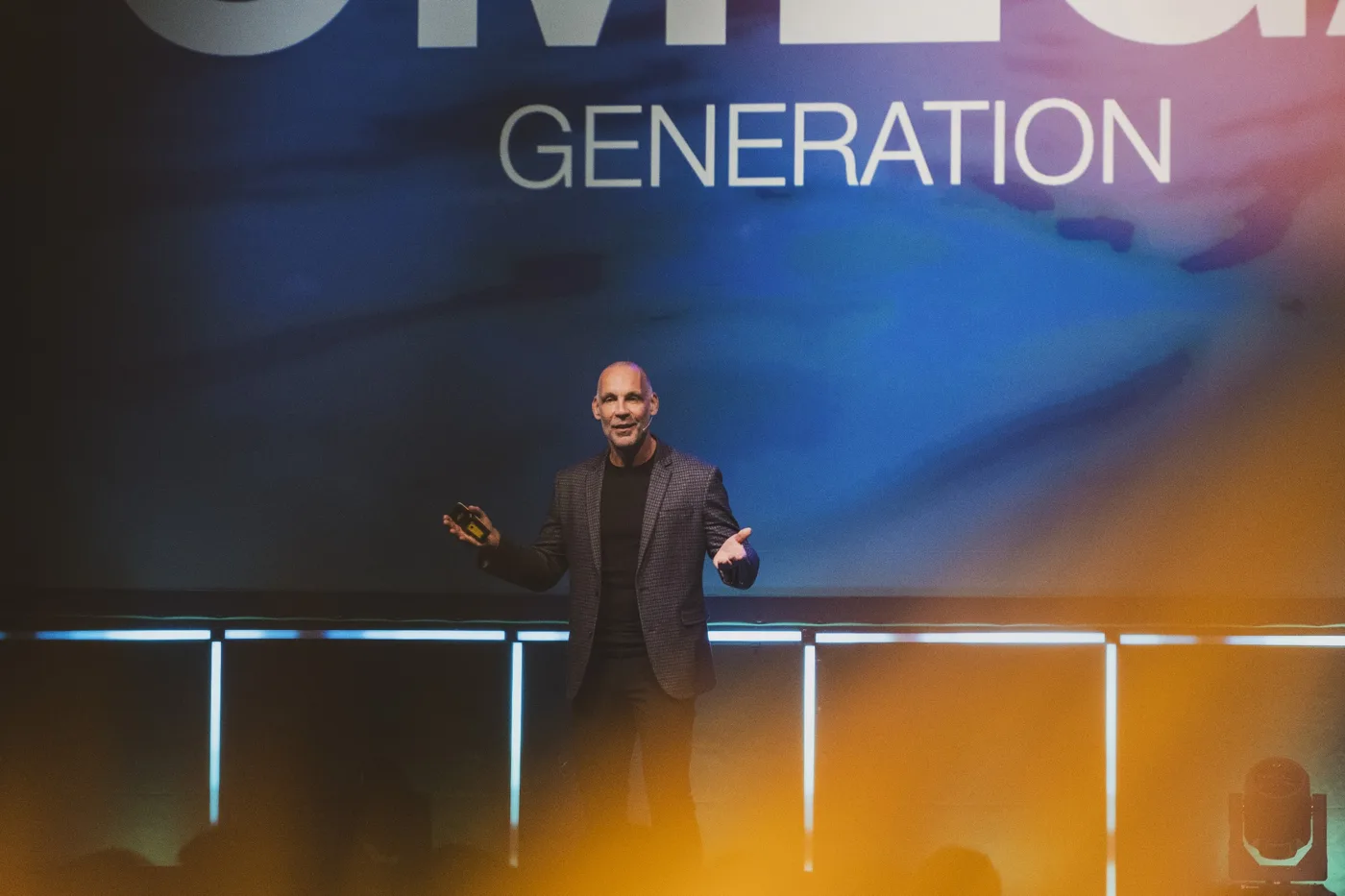
A packed conference hall, a televised panel discussion, a police summit in Dubai.



A selection of over 400 clients















What clients say

“A dazzling journey through new technology. The enthusiasm and energy during his presentation, combined with the visuals, provided a successful kick-off to our event.”Read the full review →

“You gave us all honest, inspired and entertaining insights. Your performance was highly appreciated by the conference participants and EU members.”Read the full review →
“With your presentation you awakened the customs organisation. At the end of the day it turned out that your presentation had made the biggest impression. You made sure the issues were put on Strategic Management’s radar.”Read the full review →

“An impressive and noteworthy presentation for our employees and customers. The rate at which change is happening, which you eloquently brought across in your energetic speech, requires a disruptive approach. To be continued!”Read the full review →
“We thank you once again for your inspiring contribution as the kickoff of the module. We found your lecture very valuable. The inspiration and answers to the questions have given the participants much to think about. As a result of this Top Defence Leadership Programme, we expect several new initiatives to emerge. And that is thanks in part to your inspiring kickoff.”Read the full review →
How a booking works
Your request
Use the form, or get in touch by phone, email or WhatsApp. A few lines are enough to get started.
We get in touch
We'd like to hear what your event looks like, who'll be in the audience and which themes interest you.
A written proposal
Covering the topic, format (on location or online), length (30, 45, 60 minutes or longer) and fee, so you can talk it over with your colleagues.
Getting to know Richard
Next, we'll find a time for the two of you to talk and brainstorm the keynote, the topics and the format. There's no charge for this.
Frequently asked questions
Who is this keynote for?
For law firms, notaries, legal departments in companies and government, courts, legal aid providers and legal tech companies, and for professional bodies, training institutes and legal conferences. The audience often mixes partners, management, lawyers and support staff; the keynote is made for that mix. It also works for events for staff, clients and business partners.
What will the audience take away?
An up-to-date picture of what AI already does in legal research, contracts, due diligence and case files, and scenarios for the next five to fifteen years: the AI arbitrator, AI agents that conclude contracts, a legal agent for everyone and legal rules for AI agents that act. What that means for roles, teams, leadership, training and the business model. And an honest look at the risks, from invented sources to deepfakes in identity checks.
Does the keynote also cover the organisation itself?
Yes, and that is often the main focus: what happens to the billable hour, how junior lawyers learn the trade when AI does the research, which new roles emerge and how partners choose a direction together. Roles, people and AI, leadership, culture and learning each get their own part of the keynote.
Does the keynote cover the risks of AI?
Yes, always. Invented case law in court documents, deepfakes and cloned voices in identity checks, stolen case files and the question of who is liable for wrong advice: that other side has its own place in every keynote for this sector.
Does the keynote suit notaries and the judiciary?
Yes. It covers the digital notary, signing online, completing entire property chains at once and the notary's role as gatekeeper, as well as digital justice, the AI arbitrator and the limits the European AI Act sets on AI in the courts. The examples are matched to the audience.
Is the keynote tailored to our organisation?
Yes. An introductory call beforehand covers your audience, the purpose of the event and what is going on in your organisation. A law firm's partner day gets different examples from a conference of in-house counsel or a training day for notaries.
How long is the keynote, and can it be in English or online?
30, 45 or 60 minutes, and longer if you wish, with time for questions from the audience, in Dutch or English, in person or online. For more than a keynote, there are masterclasses, boardroom sessions for partners, management and other leaders, and workshops for all employees.
How much does a keynote on AI in the legal sector cost?
Fees for international keynotes are on request. Ask for a proposal and you will hear from us within an hour on working days.
Interested in a keynote for your legal event?
Tell us a little about your event and who will be in the audience, and let us know the date.
Prefer to speak to us directly? Call 085 303 0792 · email talks@vanhooijdonk.com · send a WhatsApp message