 Richard van Hooijdonk
AI & the future of construction
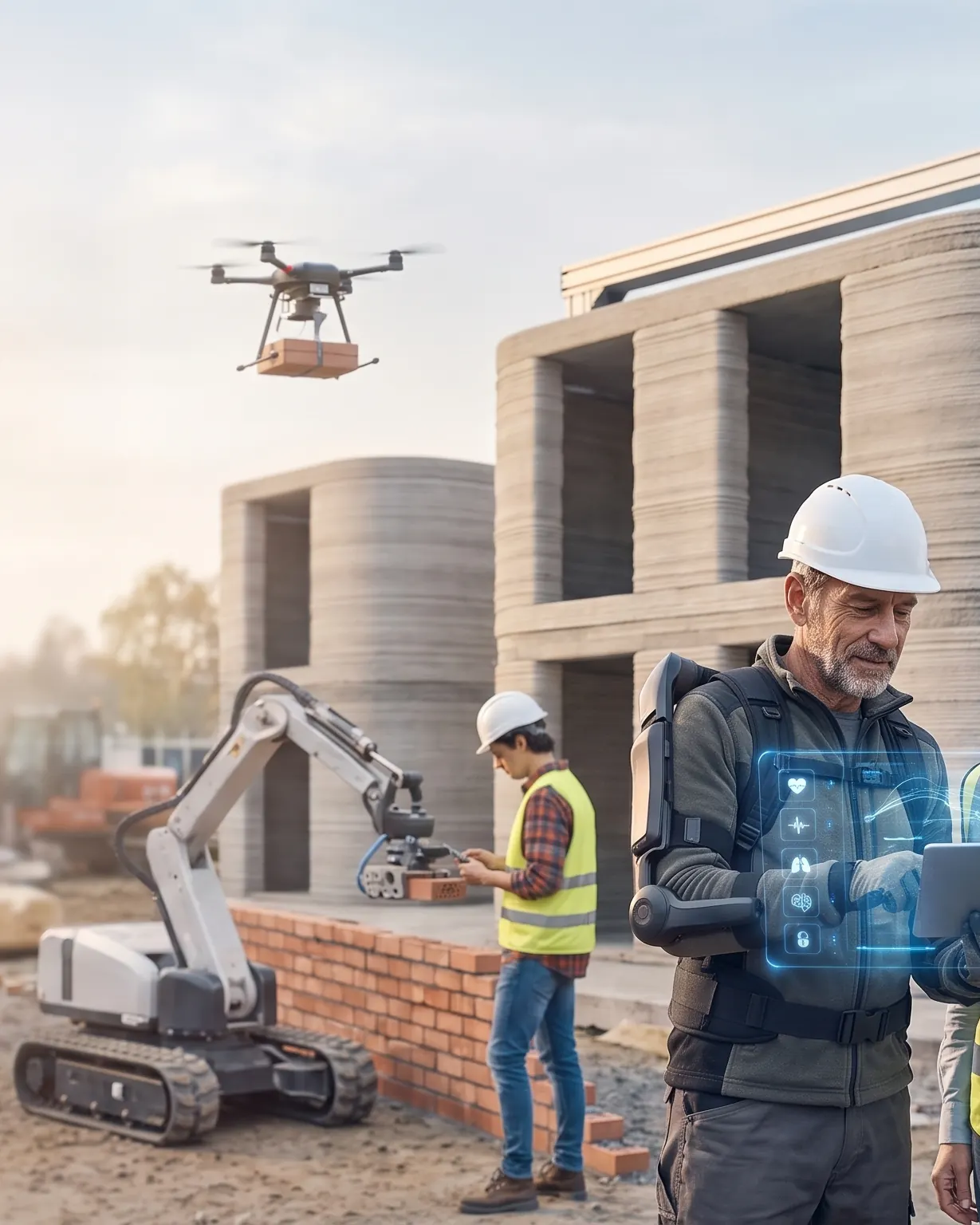
Ten years from now, robots could keep building after the crew has gone home, homes could come off a production line and AI could invent materials that do not exist yet. What gets built is still decided by people.
Choose your sector
Every keynote is tailored to a sector. Choose yours.
 Healthcare
 Government
 Defence
 Policing and security
 Smart cities
 ConstructionYou are viewing
 Mobility
 Industry 4.0
 Energy and utilities
 Logistics
 Retail
 Wholesale
 Hospitality, tourism and leisure
 Agriculture
 Financial services
 Legal
 Accountancy and advisory
 Education
 Media and entertainment
 Telecoms and connectivity
Is your sector not listed? We tailor the keynote to your audience. Tell us about your audience
More homes to build, ageing infrastructure and fewer skilled workers. How can AI and robotics help construction get more done with fewer people?
Trend watcher and futurist Richard van Hooijdonk looks at the technology already in use on building sites and at what is still coming. This keynote shows how AI and robotics are changing design, planning and building, and which possibilities will open up in the years ahead. AI has long been used well beyond the drawing office. It runs thousands of design options, reworks the programme after a week of rain, lays site camera footage over the building model and warns when someone walks too close to a slewing crane. Meanwhile, robots lay blocks and printers build walls layer by layer. Further ahead are sites that keep working after the crew has gone home, homes you order online and materials invented by AI. There is plenty of room to grow: according to McKinsey, construction productivity worldwide rose by about 10 per cent between 2000 and 2022, against 50 per cent for the economy as a whole. The hardest change is often not technical. It is about who does which work, how client, main contractor and subcontractors work together, and which investments a board is willing to make. In the keynote you see what works now, what is being trialled and which scenarios lie five to fifteen years out. AI and robots can bring relief first where things get stuck: on site, in the office or between the companies in the chain.
AI in construction
What AI already does at the drawing board, in preconstruction and on site.
- 01

Generative design
AI produces thousands of design options and tests them for daylight, cost and CO₂. In time, it will model housing, water, heat and energy in one go.
In generative design, AI is given the constraints: the plot, the number of homes, the budget, the height limit, the requirements for daylight and noise. It then generates thousands of design options and tests each one against those constraints. For a housing estate, such a model can show which layout yields the most homes without leaving the gardens in shade. Structural engineers and building services engineers use it too, for lighter load-bearing structures and shorter pipe runs. The architect and the client then judge how the street feels. The next step joins up analyses that still stand apart today: AI that works out how housing, water, heat and energy affect each other across a whole neighbourhood, in a single run.
- 02
AI that plans the project
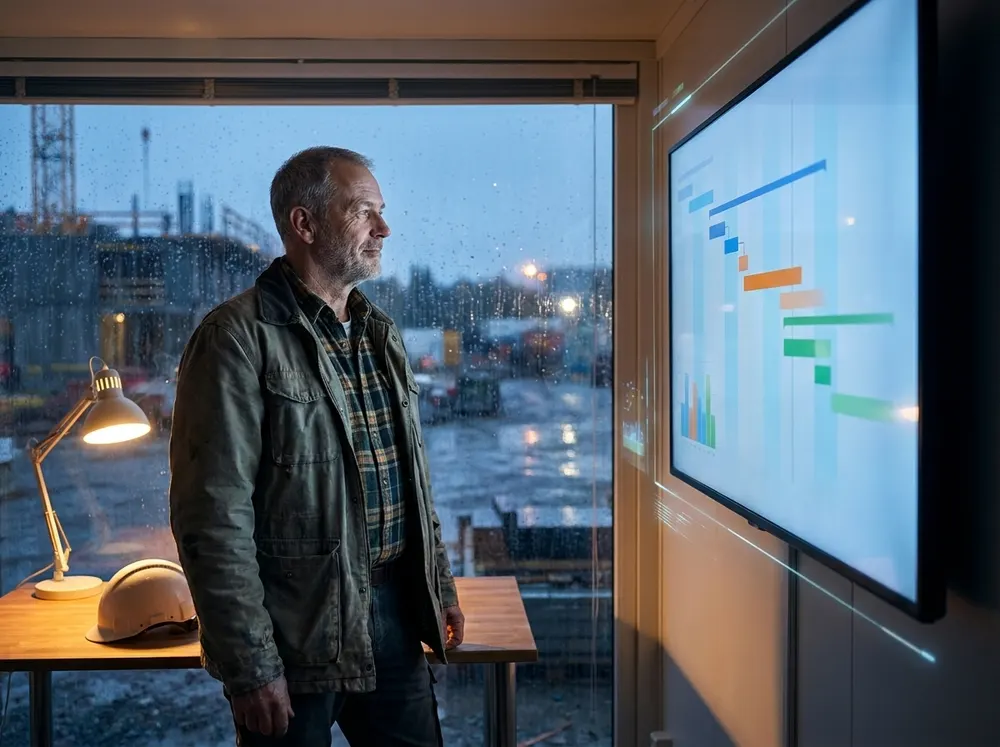
Planners let AI build the programme and rework it after rain, delays or a late delivery, showing the effect on the completion date.
Planning software with AI learns from earlier projects how long tasks really take and which delays keep coming back. It runs scenarios and shows what a week of rain, a crew off sick or a late delivery of window frames does to the handover date, and which tasks could then be sequenced differently. The site manager sees on Monday which subcontractor needs to come later, rather than finding out on Friday. Actual durations from finished projects can sharpen the forecast for the next one. The next step is a programme that updates itself every day from camera footage and deliveries.
- 03
 In pilots
AI agents in estimating and buying
AI agents read specifications and drawings, draw up estimates and request quotes. Soon they will agree lead times and prices with suppliers' agents.
An AI agent is AI that takes the steps needed to complete a task on its own. In estimating, that means reading the specification and drawings, taking off the quantities, finding prices and drafting a first cost estimate. In procurement, an agent requests quotes from suppliers, compares them on price and lead time and prepares an order. Contractors and software makers are trialling that combination now. The next step is a conversation between agents: the contractor's agent agrees price, lead time and alternatives with the supplier's agent. The estimator can then have ten versions of a tender priced at once, leaving time to judge whether the price reflects the risks.
- 04
Quality checks with cameras
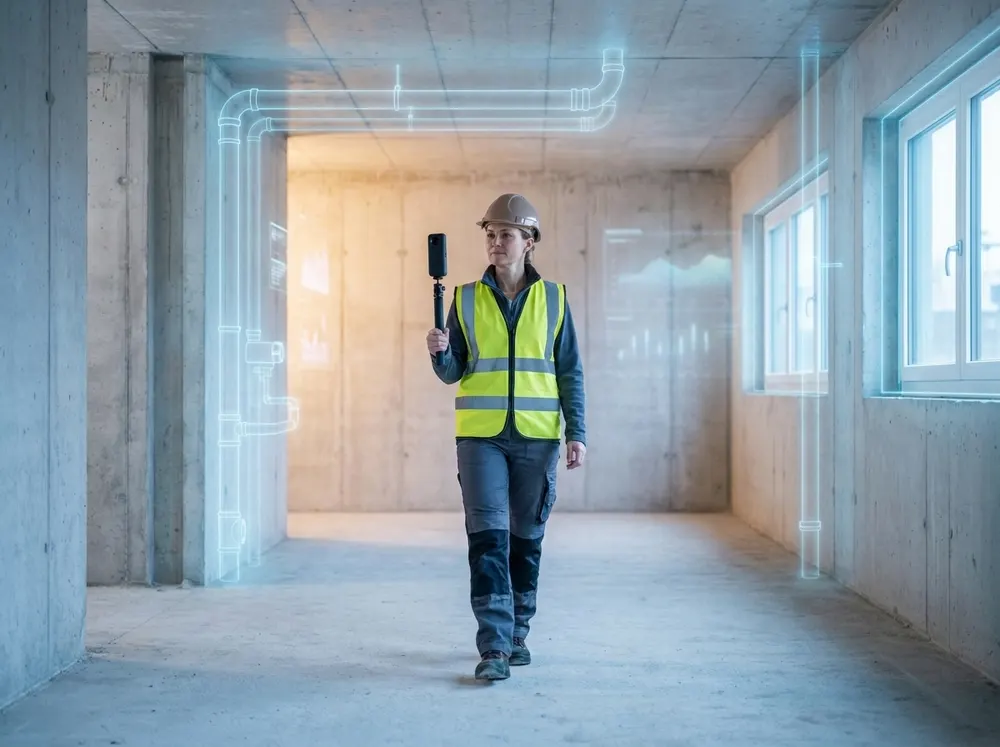
Cameras, drones and 360-degree images compare the build with the model and spot deviations before they are boarded over.
In camera-based quality control, AI compares images of the work with the digital building model. The site manager can spot deviations before parts disappear behind a wall: a pipe in the wrong place, a forgotten opening, a window frame that does not quite fit. A site manager walks through the building with a 360-degree camera, a drone flies over the works or a scanning robot does its rounds. AI lays the images over the model and marks what differs or is still missing. Progress becomes visible too: is this floor behind schedule? The next step links that progress measurement directly to the programme, orders and payment. What the camera sees then triggers the next delivery and the next instalment.
- 05
Safer building sites
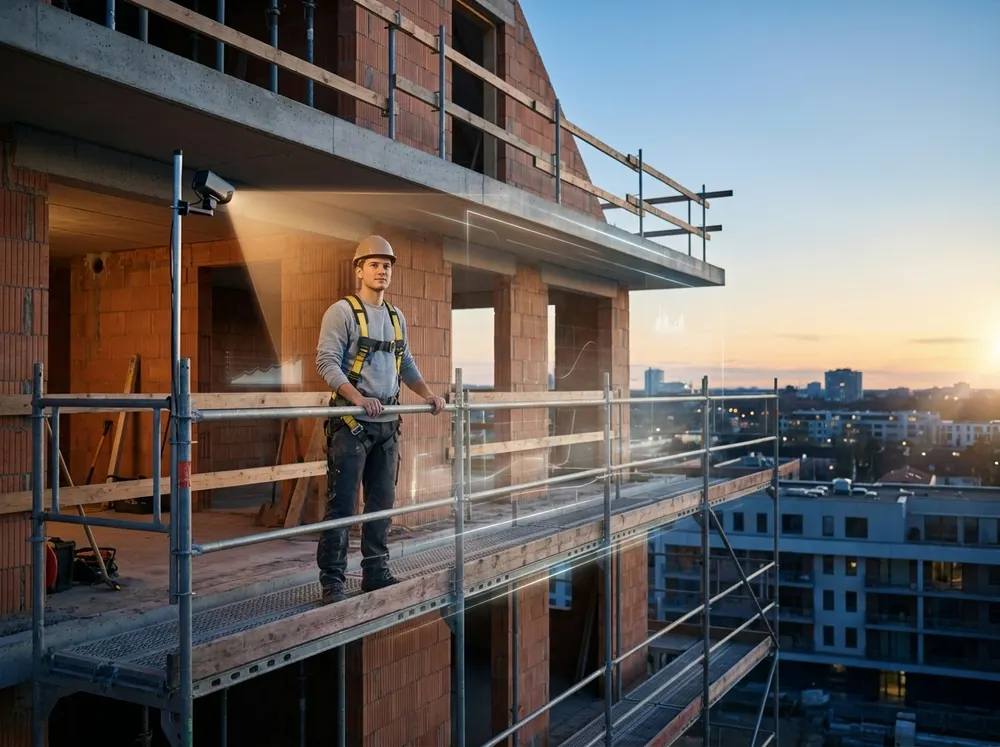
AI spots unsafe situations in camera images, such as missing fall protection or someone inside a crane's slewing radius.
AI cameras on building sites are trained to recognise specific unsafe situations. They see whether someone is standing on scaffolding without a helmet or fall protection, or whether a pedestrian walks into a crane's slewing radius, and alert the operator or the safety officer straight away. Some machines have their own detection systems that brake when someone is standing behind them. It matters: according to Eurostat, almost a quarter of recorded fatal accidents at work in the European Union happened in construction. Research is moving from recognising risk to predicting it: AI that uses the weather, the programme, crew workloads and reported near misses to work out where and when the risk is highest, before anything happens.
- 06
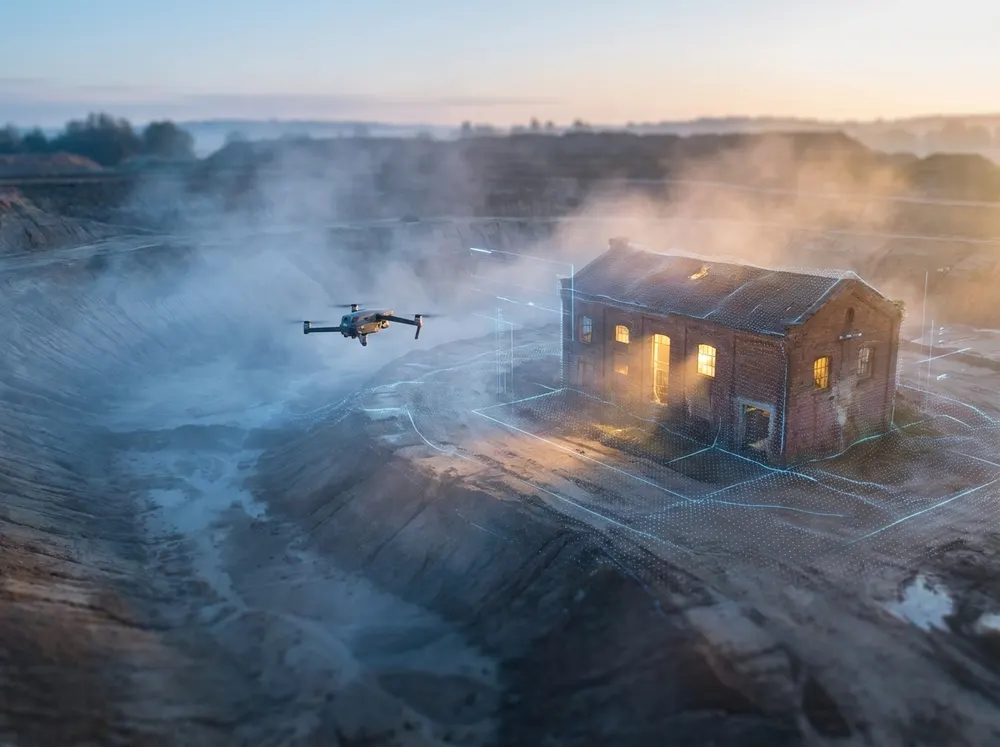
Surveying with drones and scans
Drones and laser scanners capture a site or existing building in 3D. AI helps recognise its parts and turn them into a building model.
Laser scans and drone surveys capture a site or building in a short time as a point cloud. AI helps turn that point cloud into a usable building model. It recognises walls, beams, pipes and window frames and gives each a position and a size; a modeller checks the result and fills the gaps. This is particularly useful in existing buildings, where drawings are often missing or out of date. A renovation then starts from what is really there, rather than from a drawing that is forty years old. The next step turns surveying into continuous measurement. Robots and drones scan the site every day, and AI automatically turns the point cloud into a model that the modeller only has to check.
- 07
 In pilots
Checking building rules with AI
AI helps search building regulations and checks drawings and applications for completeness and compliance before they are submitted.
AI makes the hundreds of rules on fire safety, structure, daylight, insulation and accessibility searchable. A language model finds the rules that apply to a plan, explains them in plain words and checks whether every document for the application is complete. Checking software also compares the dimensions in the digital building model with set requirements: is an escape route too long, does a staircase have the right dimensions? For every deviation, the system names the rule that is not met. For the designer and the applicant, that means less back and forth after submission. Design firms and public authorities are testing such checks now. Deviations show up while the design is still being drawn, before they cost another round of assessment.
- 08
 In pilots
Carbon per project
Project by project, AI helps calculate the emissions of materials, transport and plant, and compares design options.
A different floor system changes the emissions of the material, the transport and the crane work all at once. According to the United Nations Environment Programme, buildings, including their use, and construction together account for around 37 per cent of global CO₂ emissions from energy and industrial processes. AI compares those effects in minutes. It takes the quantities from the building model, adds data on materials, transport and plant, and shows what a different concrete mix, a timber floor or an electric crane would save. The next step is a calculation that runs alongside the build, updated with the actual fuel and power use of the plant and the materials that were really delivered.
- 09
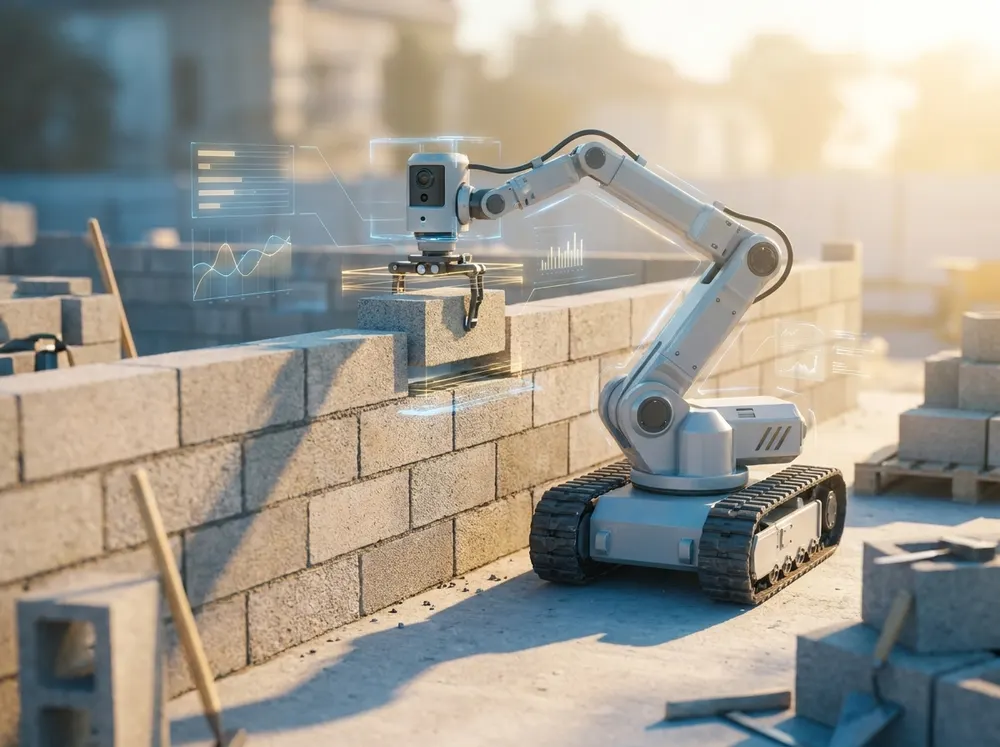
Construction robots
Robots lay bricks, drill and weld, and on some projects excavators dig on their own. AI teaches them to cope with a messy site.
Construction robots carry out clearly defined tasks, such as drilling, bricklaying, tying rebar or marking out lines on the floor. The digital building model tells them what needs doing; cameras and sensors help them work out where they are and what is happening around them. Robots that drill holes in ceilings for building services already work on sites. Excavators use AI to dig a trench to the model, while one operator supervises several machines remotely. More autonomy on a site that changes every day is still being trialled: the ground is uneven, materials are never in the same place and the weather keeps changing. These robots mainly take over heavy, repetitive and unhealthy work. The craft around it, and the judgement of when something has to be done differently, stays with people.
- 10
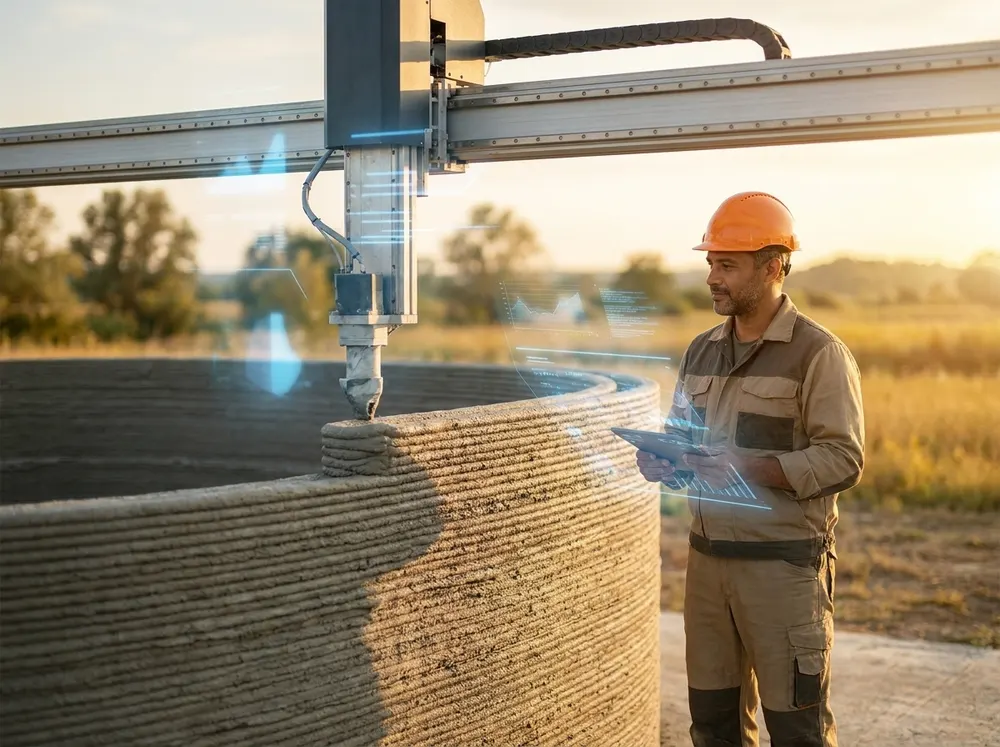
Homes from the 3D printer
Printers build walls and structural parts layer by layer. In trials, AI monitors the shape and adjusts the printing process.
In 3D construction printing, a print head lays down a special concrete mix layer by layer, exactly as the digital design specifies. That produces walls without formwork, and shapes that would otherwise cost too much: curved façades, hollow walls with room for insulation, a bridge with exactly as much material as it needs. Homes, blocks of flats and footbridges with printed walls or structures already stand in several places. AI calculates where material is needed and where it can be left out. Printing with soil from the site itself has already been demonstrated. The next step is printers that use AI to judge which local soil is usable and adjust the mix to it, a step on the way to building on the Moon.
- 11
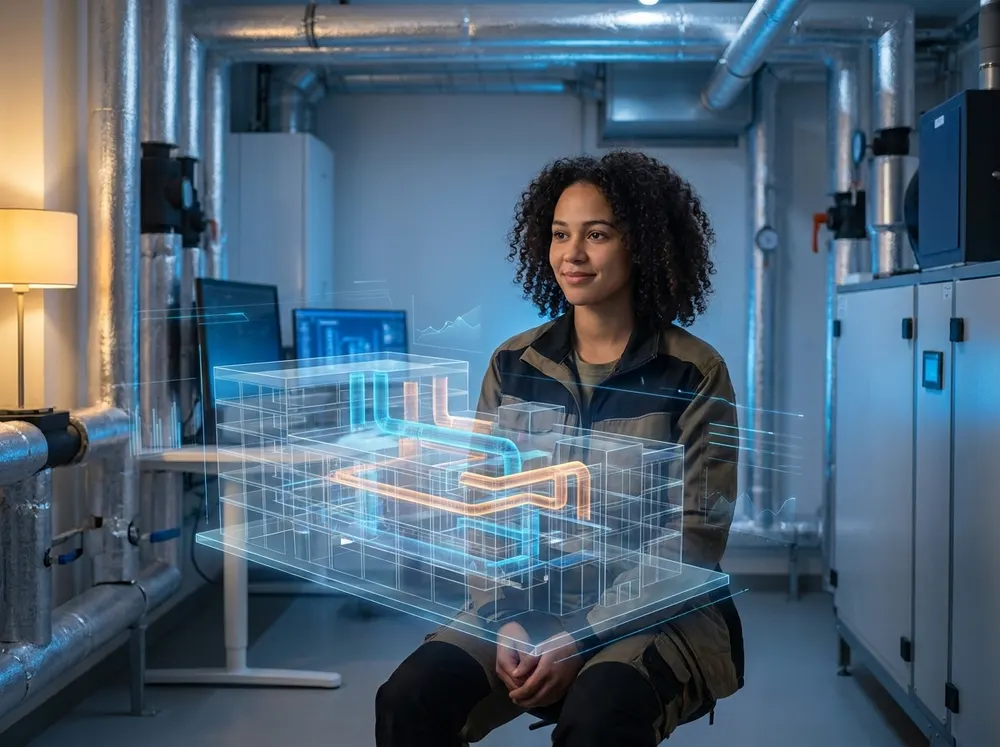
The digital twin of a building
The building model plus sensor data becomes a digital twin. AI fine-tunes the building services and flags maintenance before anything breaks down.
A digital twin is a virtual model of a building that changes along with the real one. Its basis is the building model with every wall, pipe and installation. Sensors add live readings, such as temperature, occupancy, energy use and the vibration of pumps. AI shows where energy leaks away and which equipment is wearing out, so an engineer visits before an air handling unit fails. For a construction company, this opens up a different business model: staying involved after handover, and being paid for how the building performs. The next step is a digital twin that does more than fine-tune: it orders a part itself and sends out a robot or an engineer.
The future of construction
Where construction could be in five to fifteen years, with AI as the engine.
- 12
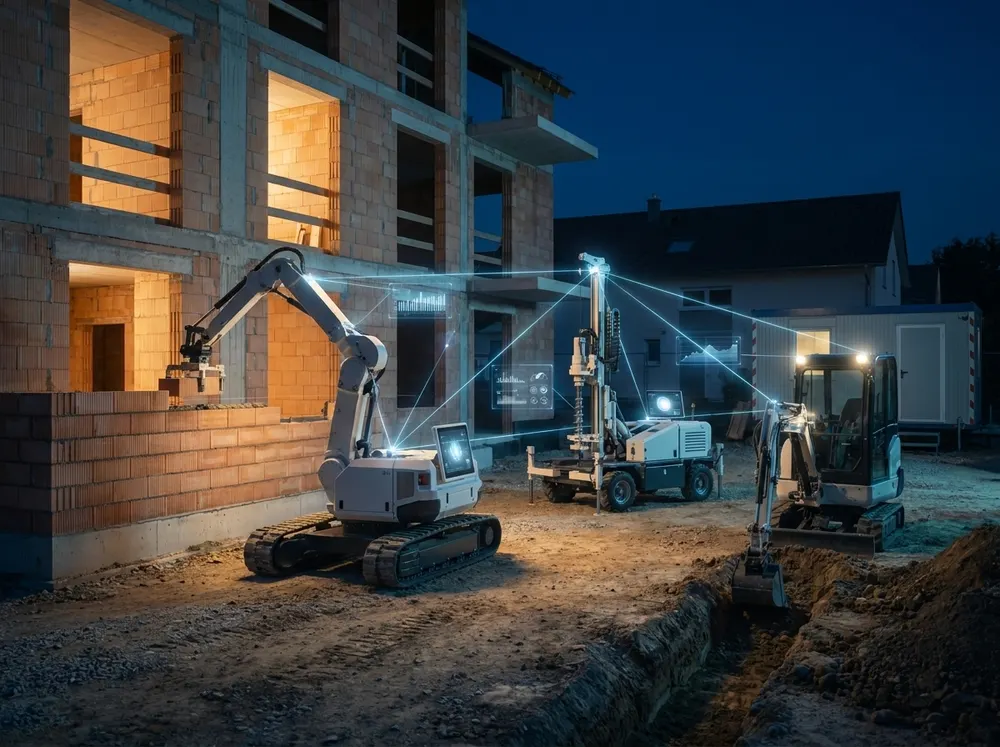 Future scenario
The autonomous building site
Around 2040, robots and machines could keep building as one fleet after the crew goes home. AI divides the work from the building model.
On an autonomous building site, machines and robots no longer work separately but as one fleet. On a dam project, bulldozers, dumpers and rollers already work together on their own, day and night, directed from a single work plan. One government wants to build with 30 per cent fewer people by 2040 and is counting on automation to get there. The next step is residential and non-residential building. AI reads the building model, divides the work among bricklaying, drilling and welding robots, plans the deliveries and adjusts when a machine breaks down. Building carries on after the crew has gone home. The site manager becomes the director of a fleet, and the tradesperson does the work that calls for skill and judgement.
- 13
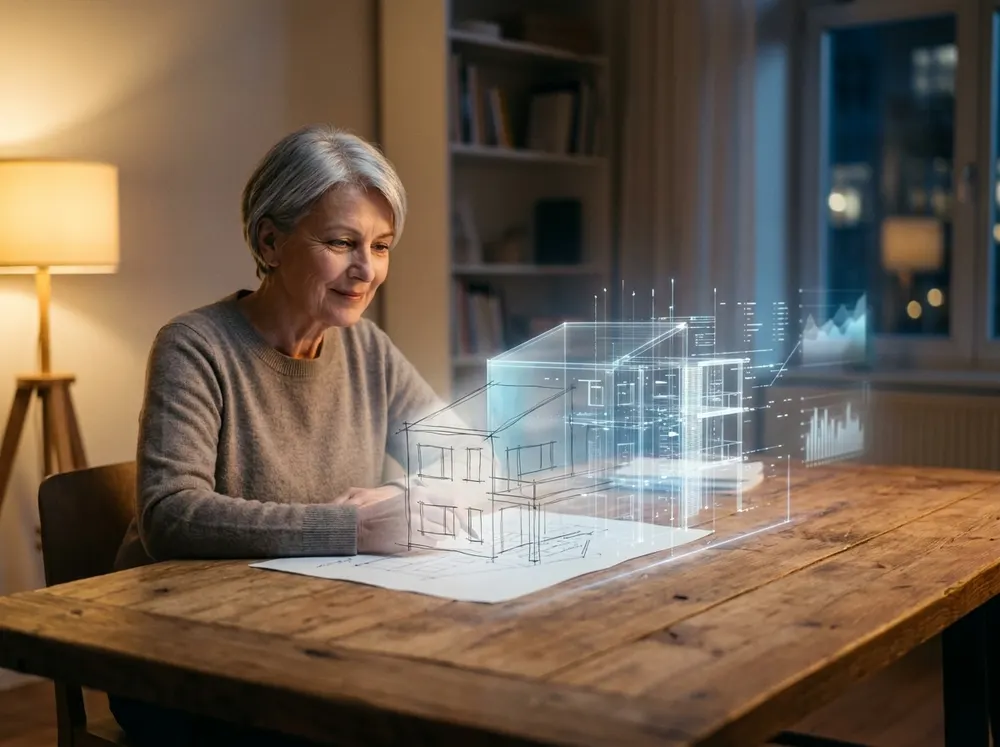 Future scenario
Sketch to permit in days
Design, rule check, estimate and production order in one continuous flow. Around 2040, a permit could take days rather than months.
A lot of time is lost between sketch and permit: after every change, calculations, drawings and assessments have to be lined up again. Public authorities already check digital building models against the rules automatically, and one city wants AI to issue permits for detached villas. The next step links everything together. In that scenario, AI develops a sketch in one continuous flow into a design that meets the rules, with a cost estimate, a programme and the orders for factory and robots. A change in the design carries straight through to the order list. The architect and the client then spend their time on the question of which building they actually want.
- 14
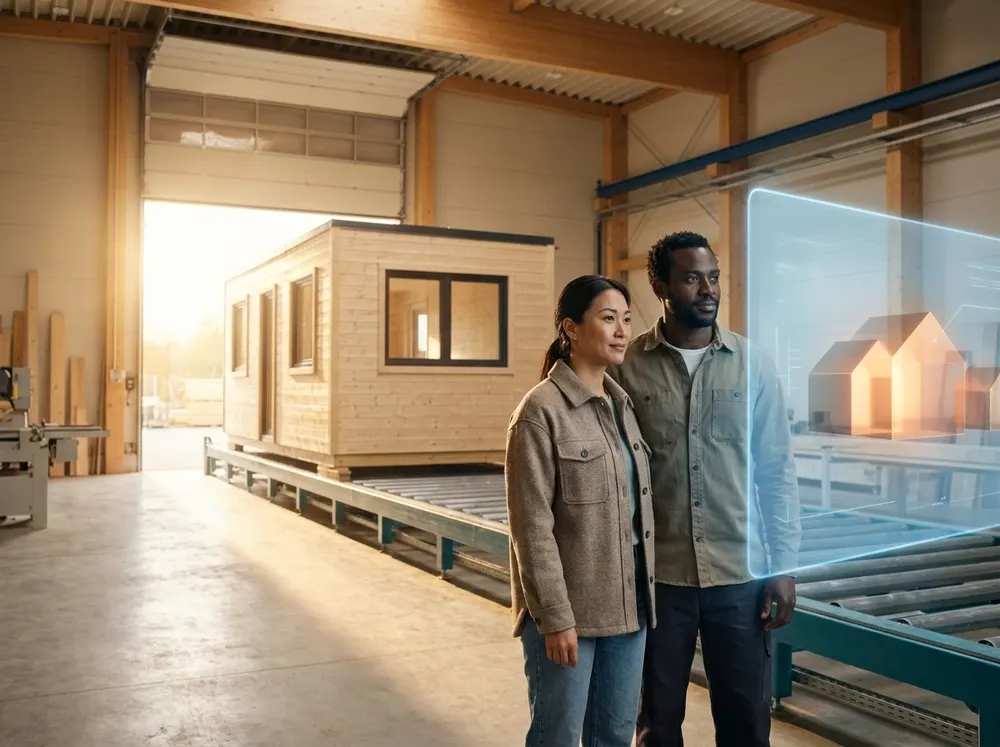 Future scenario
Ordering a home online
Around 2040, you could order a made-to-measure home online. AI adapts the design, and a factory builds the parts for fast assembly.
Home configurators already link buyers' choices to building systems, prices and production data, and a growing share of new homes comes out of a factory. Towards 2040, that could go further. You choose a home online, change the layout, façade and building services, and see straight away what it costs and when it could be ready. AI can run the calculations for the design and allocate production across factories, often close to the building site. Walls, floors and bathrooms come off the line ready to install, which can shorten the time on site considerably. Depending on the building system, the same factory could later supply an extension. Buying a house would then feel more like ordering a product.
- 15
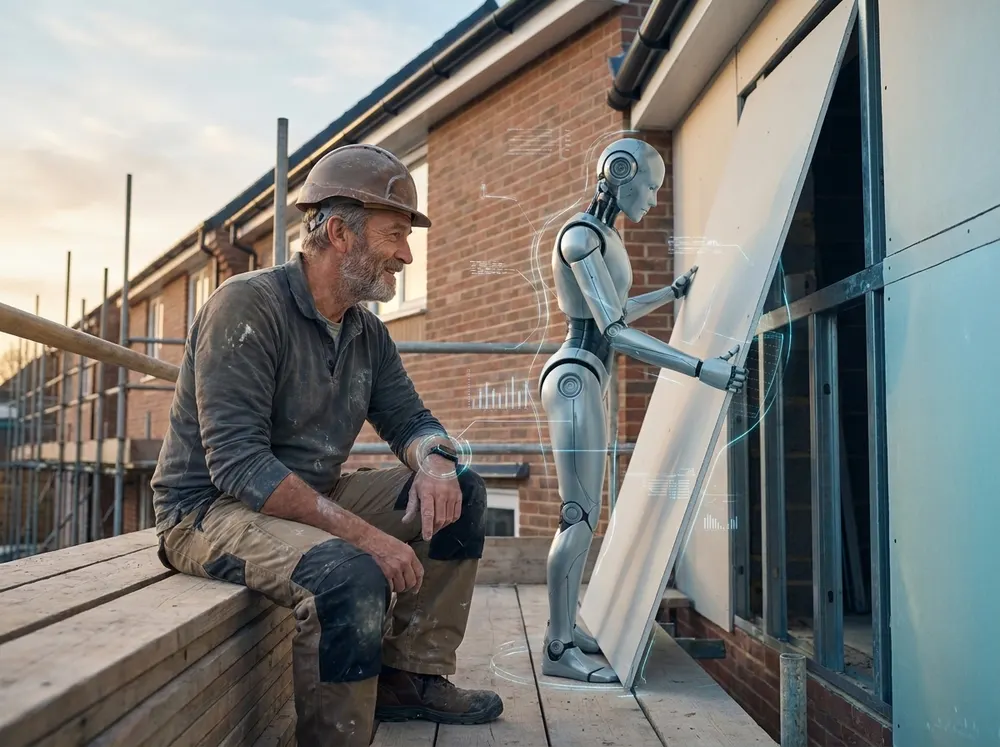 Future scenario
The humanoid on site
Robots with arms and legs are already on trial in factories. Around 2040, they could lift, fit and finish on the scaffolding.
A humanoid robot is built like a person: two legs, two arms and hands that grip. That lets it work in places made for people, with stairs, scaffolding and doorways. As early as 2018, a research institute had a humanoid pick up a sheet of plasterboard and screw it into place on its own. Humanoids are now on trial in car factories and distribution centres, and the AI models that control them are learning new tasks ever faster. Analysts expect their numbers to grow sharply over the coming decade. In ten to fifteen years, such a robot could lift boards, set window frames and finish joints on site, at night as well. The builder gets a colleague whose back never gives out.
- 16
 Future scenario
Materials invented by AI
AI searches millions of compositions for binders without conventional cement and concrete that locks in CO₂. Builders rethink their raw materials.
By some estimates, cement accounts for around eight per cent of global CO₂ emissions. Developing a new building material always took years: mixing, testing, waiting. AI speeds that up. In 2023, an AI model predicted more than two million new crystal structures, hundreds of thousands of them possibly stable. Researchers now use AI to search the literature and materials data for residues and minerals that can partly replace cement. Linked to robotic laboratories that mix and test on their own, the road from idea to trial material could shrink from years to weeks. The scenario for 2040: binders that emit hardly any CO₂, concrete that stores carbon and insulation made from waste streams, all designed on a computer before anyone mixes a single bag. Builders could then choose their raw materials afresh.
- 17
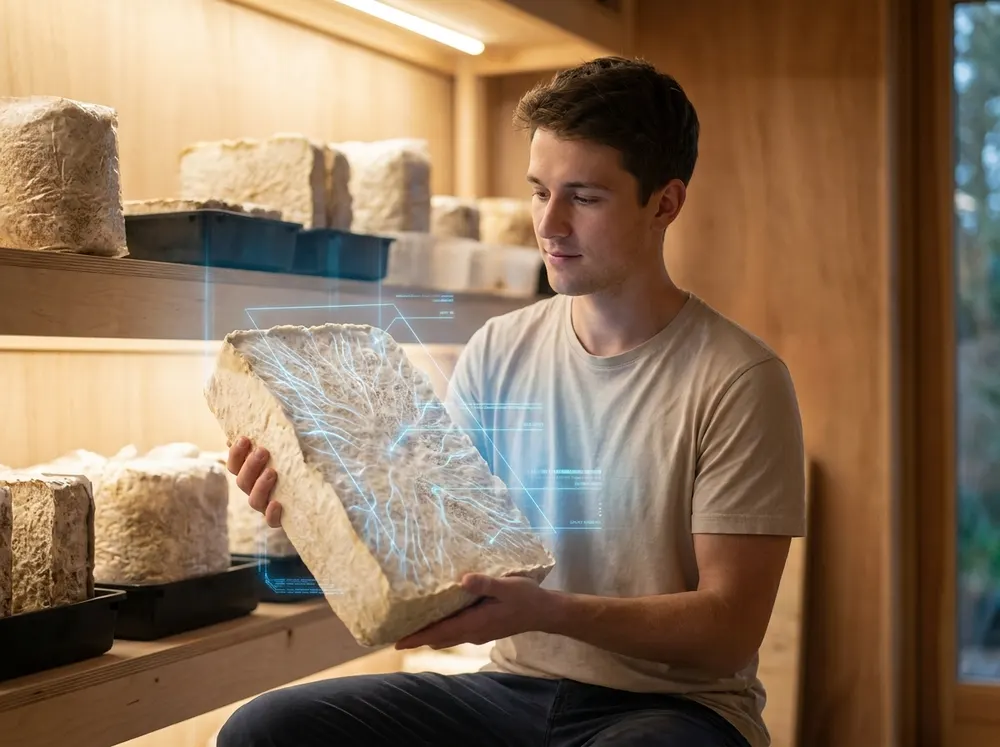 Future scenario
Living building materials
Concrete that seals its own cracks, panels shaped by fungal threads. Towards 2040, a façade could partly maintain itself.
Living building materials contain organisms that can stay active after the material is in place. Concrete with dormant bacteria that seal small cracks is already on sale. Mycelium panels are shaped in a mould by fungal threads and then dried to stop the growth. In laboratories, researchers go further: in 2020, they made a building block containing bacteria that could itself reproduce under the right conditions. AI helps find combinations of organisms, nutrients and shapes that together make a strong material. Towards 2040, a façade could partly maintain itself, with cracks that seal themselves. Insulation might be grown on site instead of being delivered. Part of the maintenance then moves from the crew to the material itself.
- 18
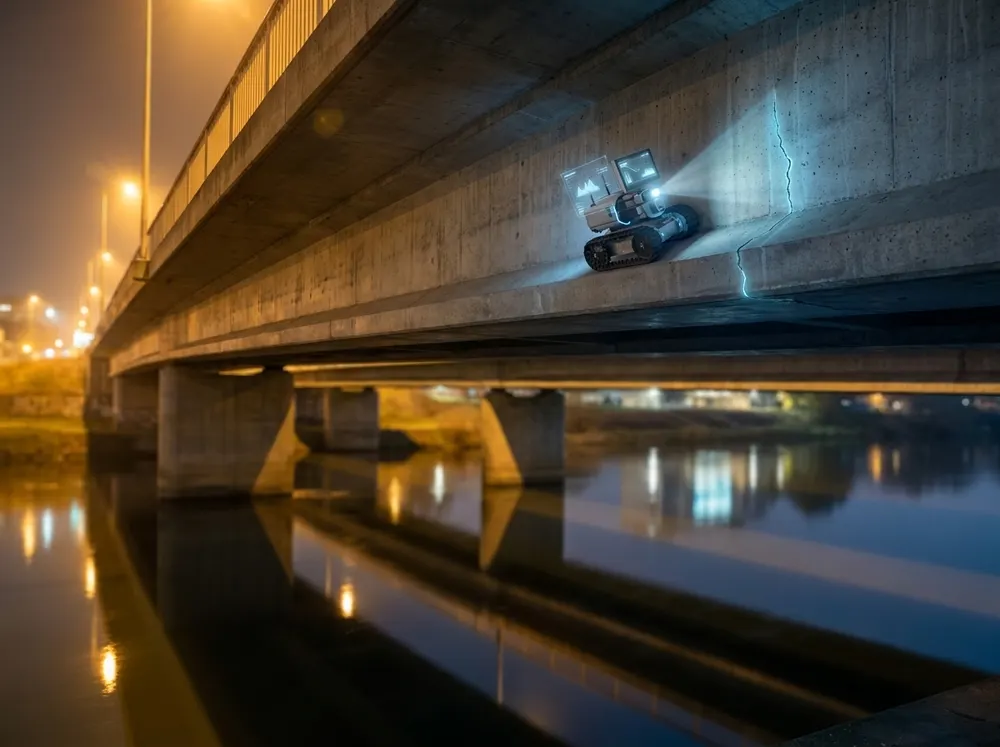 Future scenario
Self-repairing infrastructure
Asphalt that melts its cracks shut, concrete that measures its own stress, robots in the bridge. Around 2040, roads could partly repair themselves.
Many bridges, tunnels and locks in Europe were built in the 1960s and 1970s, and a large share will need strengthening or replacing in the coming decades. Sensors already report how a structure behaves. The next step is repair. In asphalt with steel fibres, fine cracks melt shut when a machine heats the road surface by induction; test roads are to show how much longer the surface lasts this way. Researchers are working on concrete that measures its own stress and cracking. Around 2040, AI could monitor an entire network, predict where damage will occur and send a robot to inject a crack in a bridge girder or replace an expansion joint, at night. Closures for maintenance would then become less frequent.
- 19
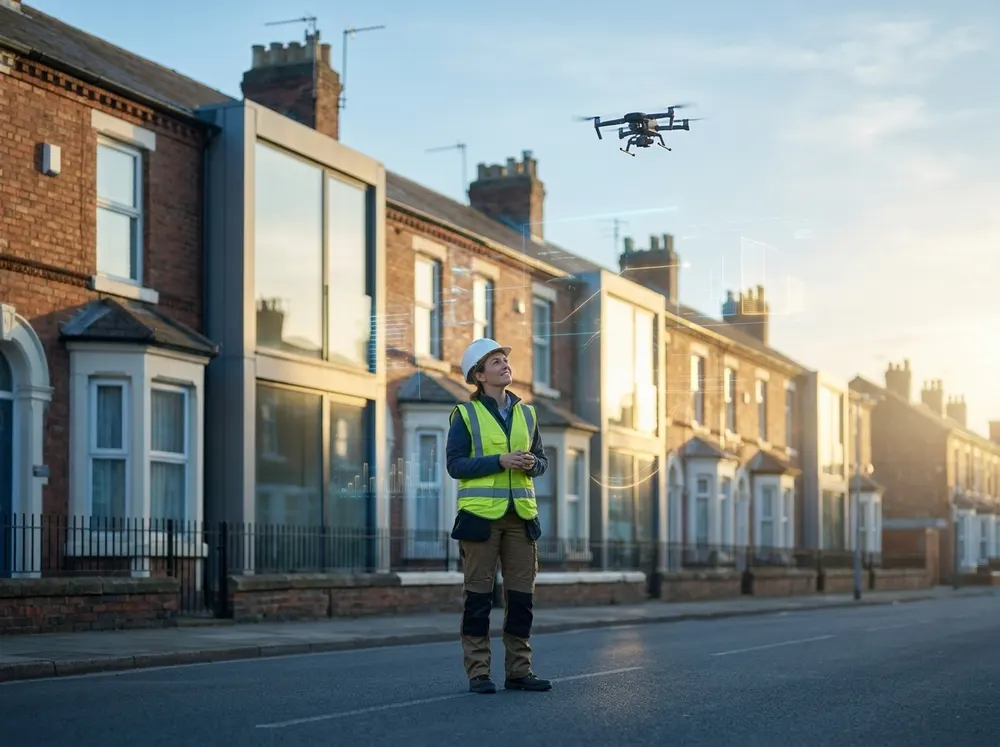 Future scenario
Renovating a street in a week
A drone scans the neighbourhood, AI designs each home, robots make the façades. Around 2040, a whole street could get a new shell in a week.
According to the European Commission, the great majority of today's buildings in the European Union are expected to still be standing in 2050. Renovating house by house is too slow. In pilots, prefabricated façades and roofs are already made to measure and fitted to suitable homes within a few days, while residents stay at home. The next step turns renovation into a continuous factory process. A drone scans an entire neighbourhood, AI designs the façade, roof and building services for each home and directs production, and robots help assemble the elements. In ten years, a street could get a new shell in a week. How many streets can be renewed at once will then depend more and more on what the factories can produce.
- 20
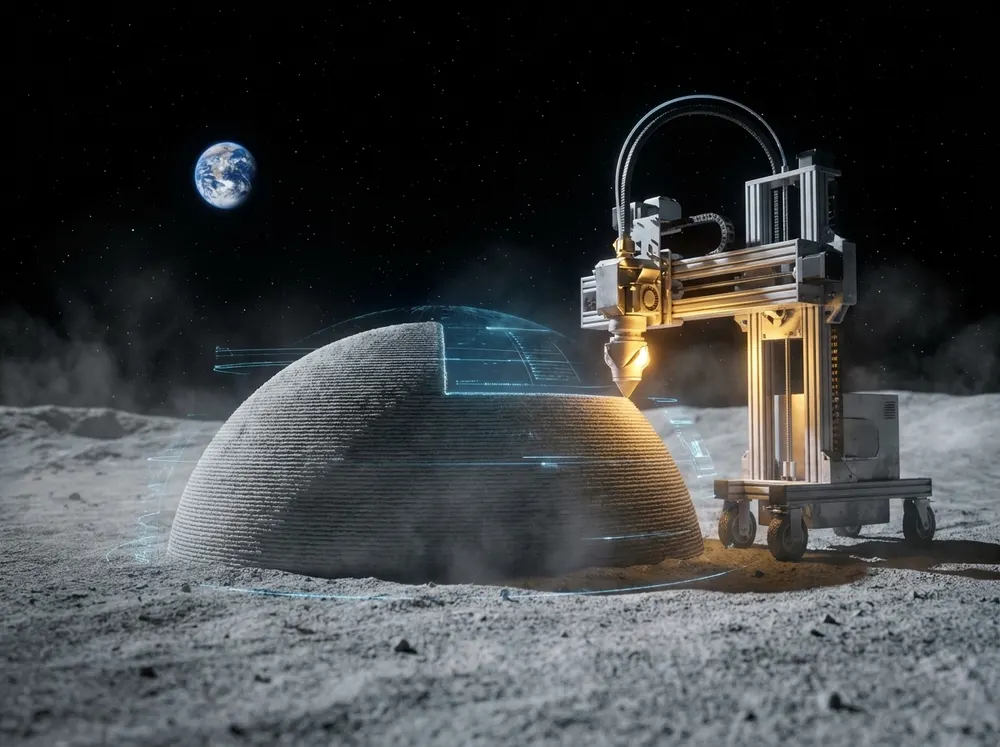 Future scenario
Building on the Moon
Space agencies want to build with lunar dust in the 2030s, using robots and AI. What works there could change how we build on Earth.
Shipping material to the Moon costs a fortune. That is why space agencies want to build with what is already there: lunar dust, melted or bound into a material that can be printed. One space agency commissioned a lunar printing system in 2022, and another wants to test printing with lunar dust on a Moon mission around 2029. In the 2030s, landing pads, roads and protective walls could be built this way, by robots that work largely on their own, with AI monitoring and correcting the print. The same technology can be used on Earth: building with local soil, robots in remote places, a building process with no person next to the machine. What works on the Moon without skilled workers could help fill the labour gap on Earth.
Construction could look very different over the coming generations: factories, robots and digital models open up possibilities we can barely picture today. How much of that becomes reality depends on the people who dare to learn together.
Richard van Hooijdonk
The construction company of the future
What AI asks of roles, teams, leaders and culture in construction.
- 21
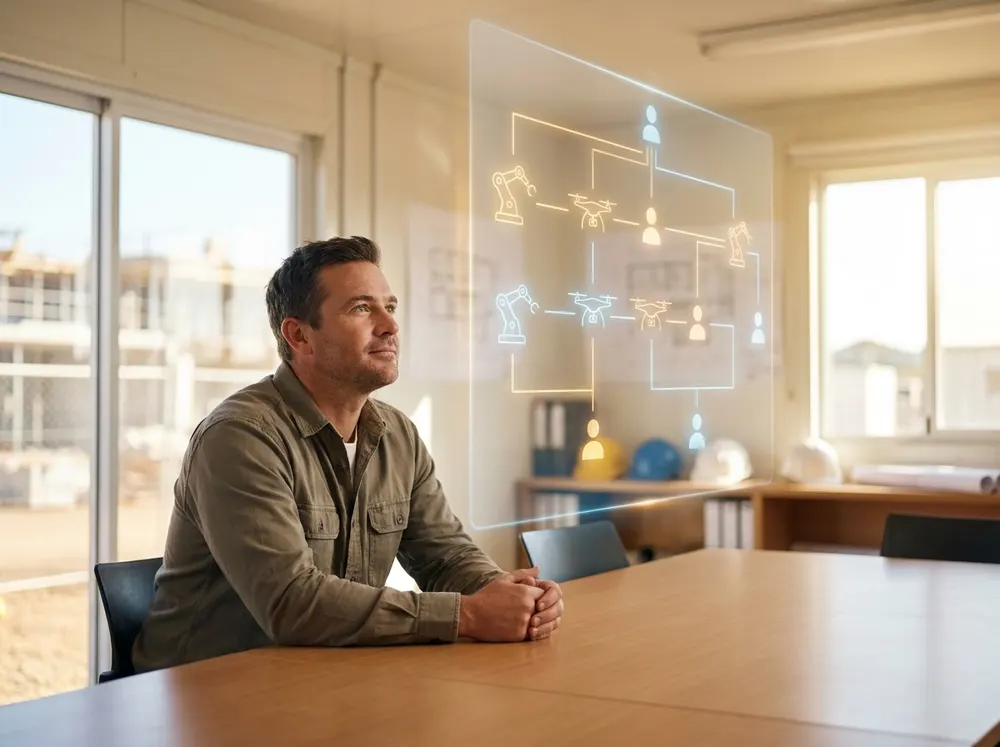
The AI-first organisation
Robots, AI agents and AI do repetitive work and make forecasts. Skilled people assess the situation and solve problems on site.
An AI-first construction company lets AI, agents and machines do the repetitive and predictive work that people do not need to do. AI supplies design options, an agent draws up the estimate, AI adjusts the programme and cameras supply images for quality checks. People sort out whatever does not go to plan and do the work that calls for precision, experience and the power to persuade. Around 2040, a company could deliver more work with far fewer people, because robots and agents carry out much of the build. Such a company coordinates the work more than it carries it out, with skilled people who steer machines and solve the hard problems.
- 22
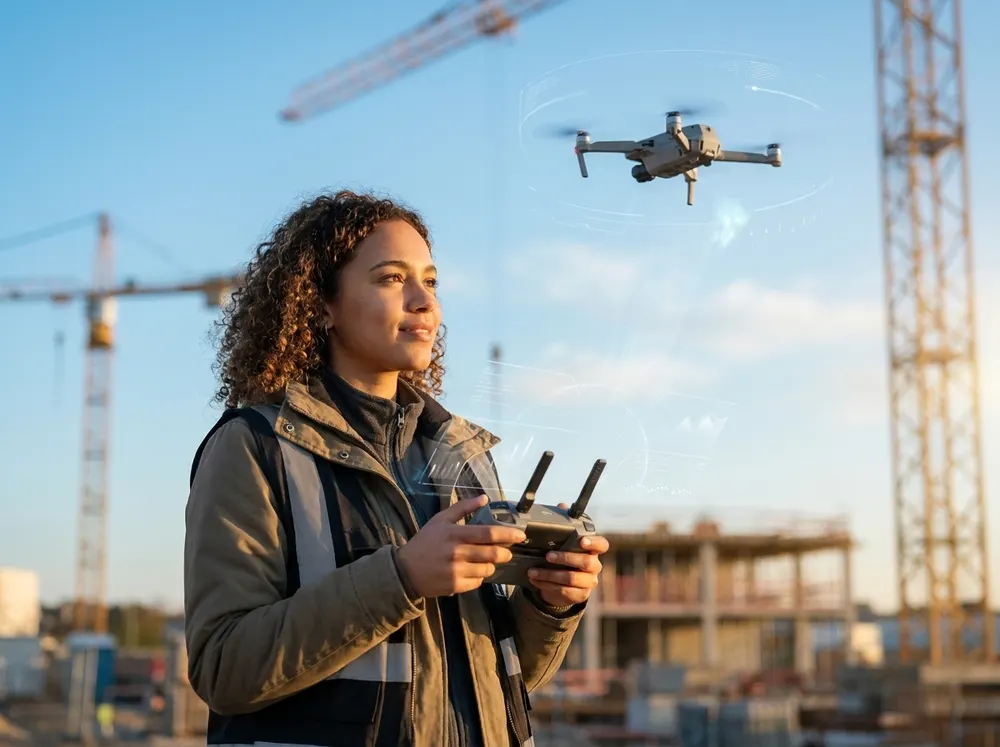
New roles in construction
Fleet directors, robot trainers and materials designers working with AI: roles still rare in construction that could grow in the years ahead.
Drone operators and BIM coordinators are already common in construction. The roles that could grow over the next ten years are still rare today. The fleet director oversees an autonomous building site where excavators, drilling robots and drones work at the same time, and steps in when they get in each other's way. The trainer of construction robots teaches a robot a new task, drawing on the knowledge of a tradesperson who knows how a tricky junction feels. The materials designer works with AI on mixes and structures that are lighter, stronger or circular. And the site manager becomes the director of people and machines. Skilled workers gain a career in which site work, preparation and technology alternate.
- 23
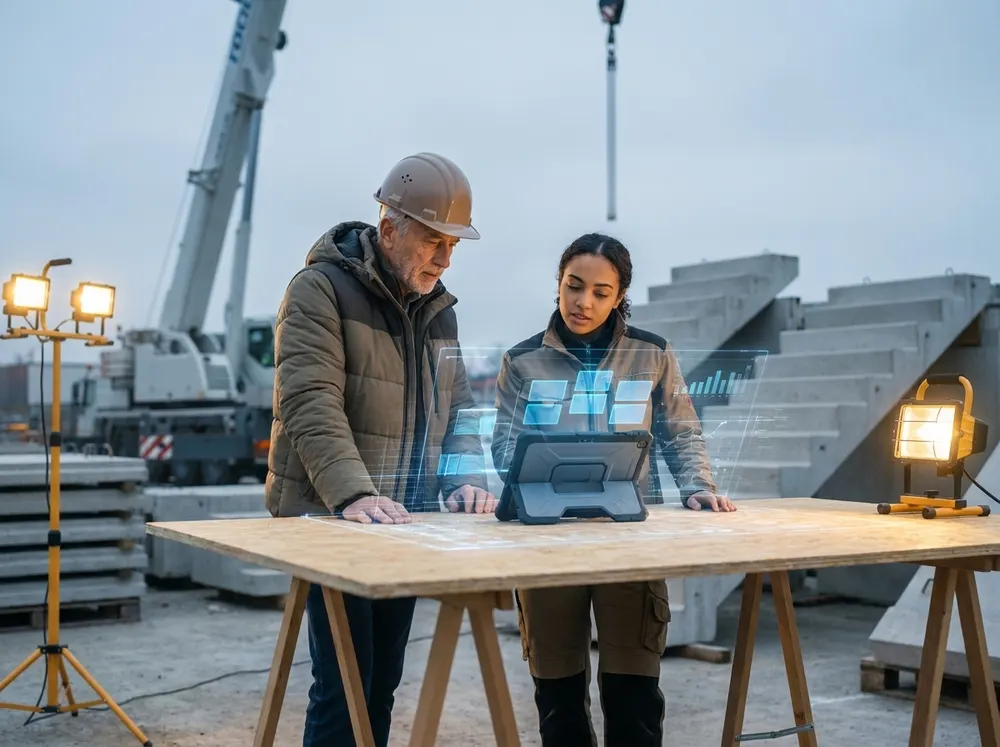
People and AI on site
The AI agent prepares the programme and orders, the planner checks, the site manager solves what no programme foresaw.
On building projects, people and AI agents increasingly prepare the work together. The agent reads the programme, sees that the precast stairs are needed next week, checks the lead time and gets a call-off ready. The preconstruction planner approves it or adjusts it, knowing the crane will be elsewhere that day. The site manager solves what no system foresaw: a wrongly delivered window frame, a neighbour who complains, a foundation that turns out differently. People do what people are good at: weighing things up, improvising and talking to other people. The agent takes on the repetitive work and the calculations, and often spots a bottleneck in the programme weeks ahead.
- 24
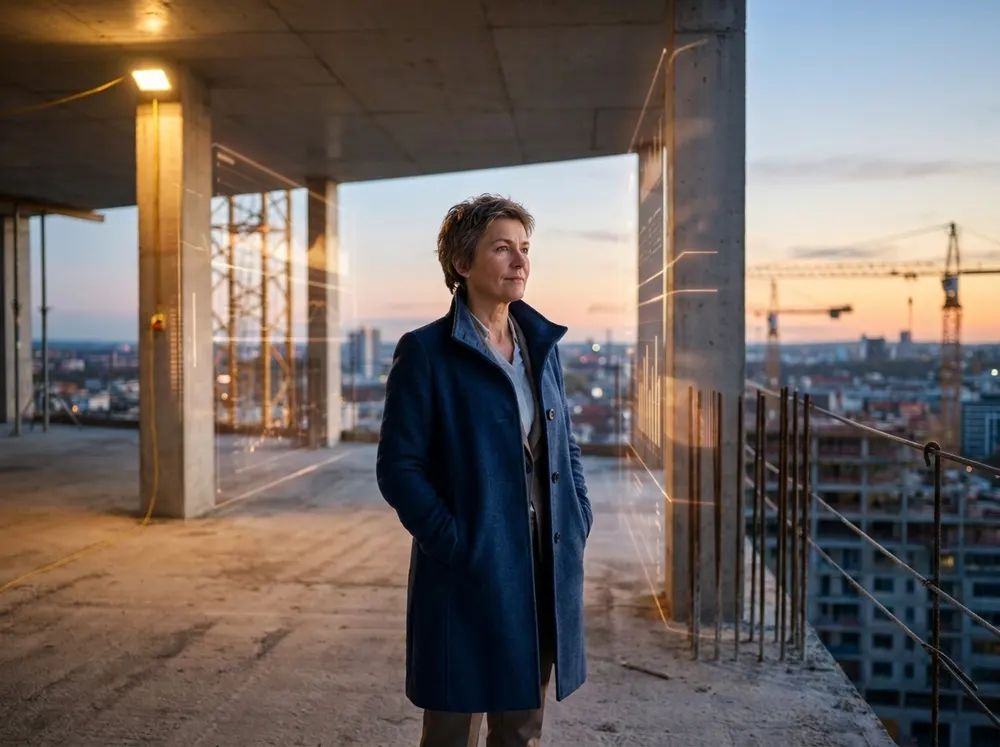
Leadership in construction
Construction leaders take the initiative on AI and new technology, and get their people shaping tomorrow's construction together.
Leadership in construction means leading the way while the work carries on. Leaders take the initiative on AI, robots and new ways of building, and show where the company wants to go. They bring everyone along: on site, in the office and among the partners in the chain. Leaders who motivate their people make the change a shared project rather than an order from above. They give employees room for their own ideas and make clear how everyone can contribute to the future. That is how leaders build tomorrow's construction together with their people, even before it is clear which technology will win.
- 25

Culture and behaviour on site
On a building site, experience counts. Change succeeds when the tradesperson finds that a new tool helps rather than checks up on them.
In construction, change is often not a technical problem. It is about whether tradespeople, site managers and leaders are willing to try something new and keep working differently. A camera looking over your shoulder can feel like surveillance; a programme produced by a system can feel like a verdict on the site manager who has spent thirty years planning projects. That distrust is understandable in a trade where a mistake has direct consequences for safety and money. Change gets going when the tradesperson finds that a tool takes work off their hands, such as hunting for the right drawing. One tool that really helps changes how people judge the next: scepticism gives way to curiosity about what else works.
- 26
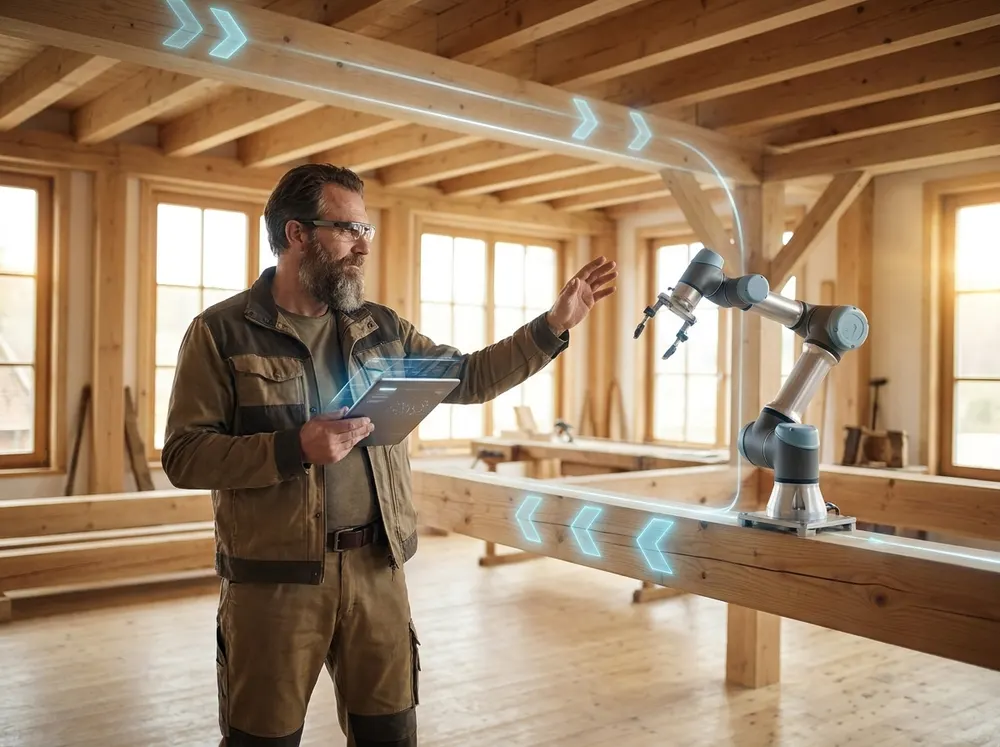
The future academy
Construction companies train their own people. In a future academy, they learn to work with AI and new technology on their own projects.
In a future academy, an organisation prepares its own people for the future: the employees who work there now and the colleagues still to join. It does not wait for the education system, because by the time a new curriculum is ready, the technology has moved on. Employees learn to work with AI, agents and other new technology, using their own work as material. Leaders learn to choose what people do and what machines do. That way, the organisation keeps pace with the change.
- 27
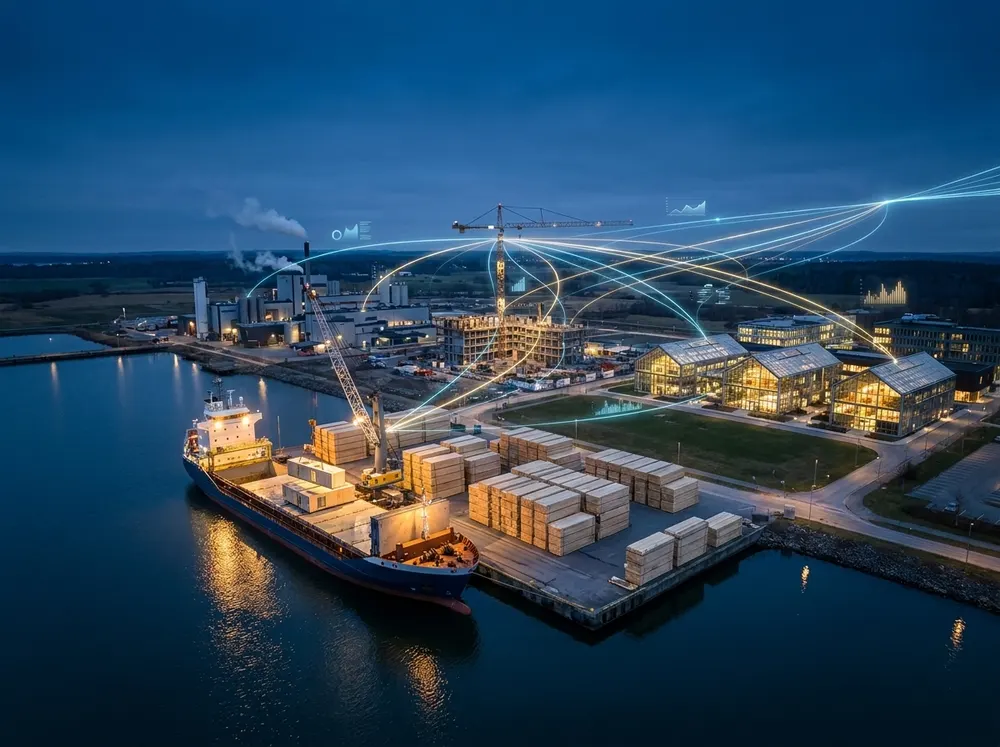
An ecosystem for the future
Big challenges call for collaboration. Start-ups, scientists, partners and governments tackle them together, across borders too.
In an international ecosystem, start-ups, scientists, partners and governments tackle big challenges together, such as the housing shortage, sustainability and the shortage of skilled workers. They develop applications together and share knowledge and data. In that shared data, AI sees sooner where a change made by one party affects another. Governments open up test sites and their own data. Those who help build such an ecosystem share the investment, learn from experience far beyond their own market and put an innovation to use sooner.
The other side responsibility and risk
Data, liability and the criminals who know the construction chain too.
- 28

Data as the foundation
AI can only work across departments when their data is available, reliable and connected. That is the foundation of the AI-first construction company.
The AI-first construction company lets AI forecast, plan and advise across departments. That only works when data from every part of the organisation is available, reliable and connected. Often it sits in separate systems, with their own codes and definitions, and one department does not know what another records. Missing data can lead to wrong answers, and an agent that takes over a task then lacks vital information. Connected, consistent and up-to-date data is therefore the foundation on which AI can work across the whole organisation. That includes clear agreements on who may use which data, and for what.
- 29

Who signs off the calculation?
Responsibility for a calculation does not pass to AI. Who is liable for a mistake depends on legislation, contracts and the cause.
When AI calculates a structure or checks a plan against the rules, the question remains who vouches for it. Even when AI is used, the structural engineer stays responsible for the calculation they deliver. A language model can explain a standard convincingly and still get it wrong; a design model can pick an option that cannot be built in practice. Legislation, contracts and the cause of a mistake together decide who is liable: the designer, the software maker or the party that deployed the system. The reverse is also true: AI can recheck a human calculation and find an error sooner. Once design, checking and production become one continuous flow, human judgement moves to fewer but weightier decision points.
- 30

Crime in construction
Ransomware that halts projects, hacked building systems, phishing with cloned voices: AI makes life easier for criminals in construction.
Construction attracts criminals: a lot of money changes hands, payments run through long chains of subcontractors and buildings increasingly run on management systems that can be reached remotely. AI helps them get in more easily: a phishing email looks just like one from a familiar supplier, a cloned voice of a director asks for an urgent payment, and AI helps find weak spots in software. Ransomware can bring a construction company to a halt for weeks. The same AI that helps an estimator draw up a quote helps a fraudster draw up a convincing fake invoice. More connected machines and building systems also offer more points of attack, and in the AI era good security belongs in every project.
About the speakerRichard van Hooijdonk
Events in EuropeKeynote speaker for corporate events in Europe
On stage
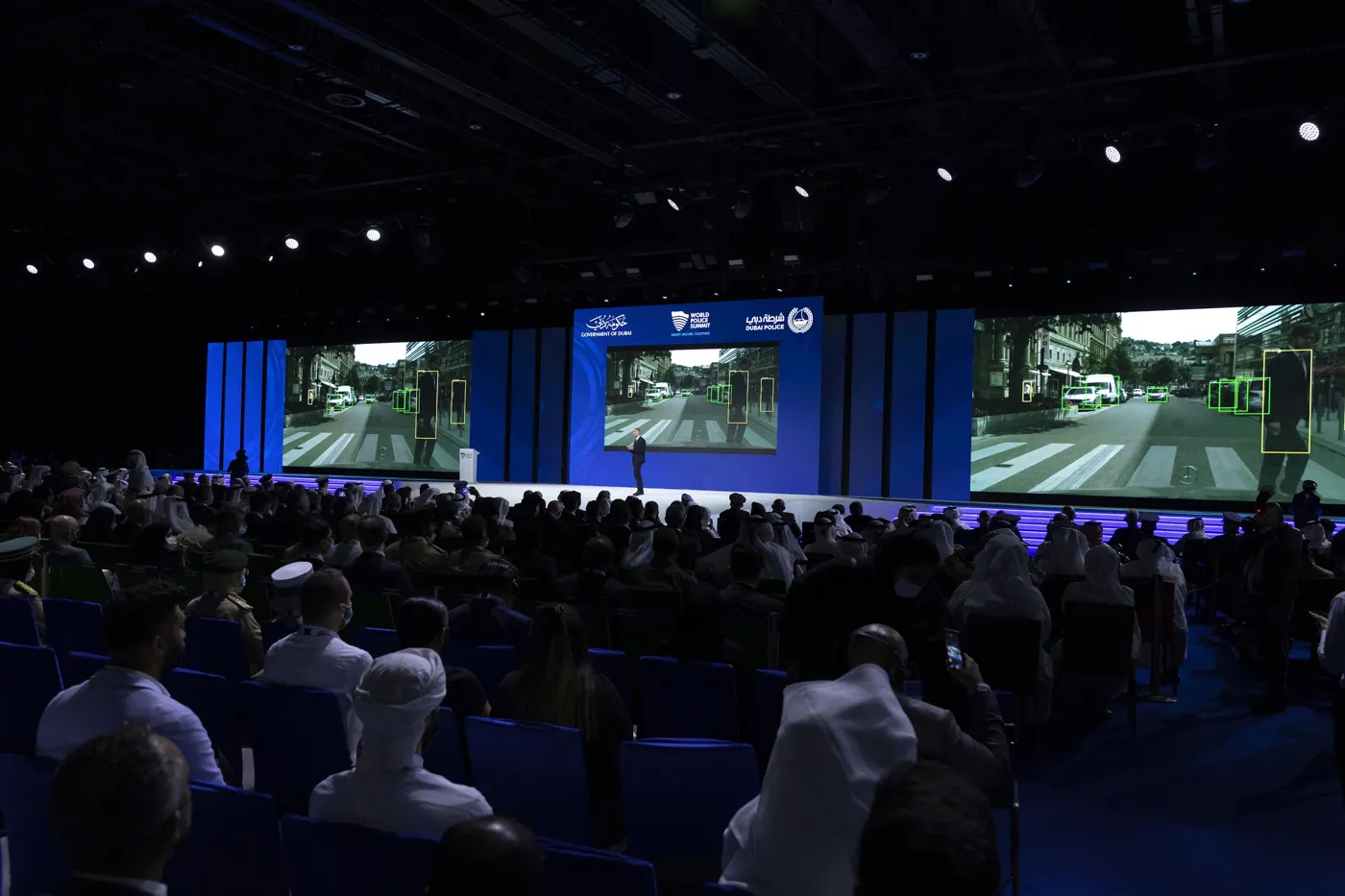
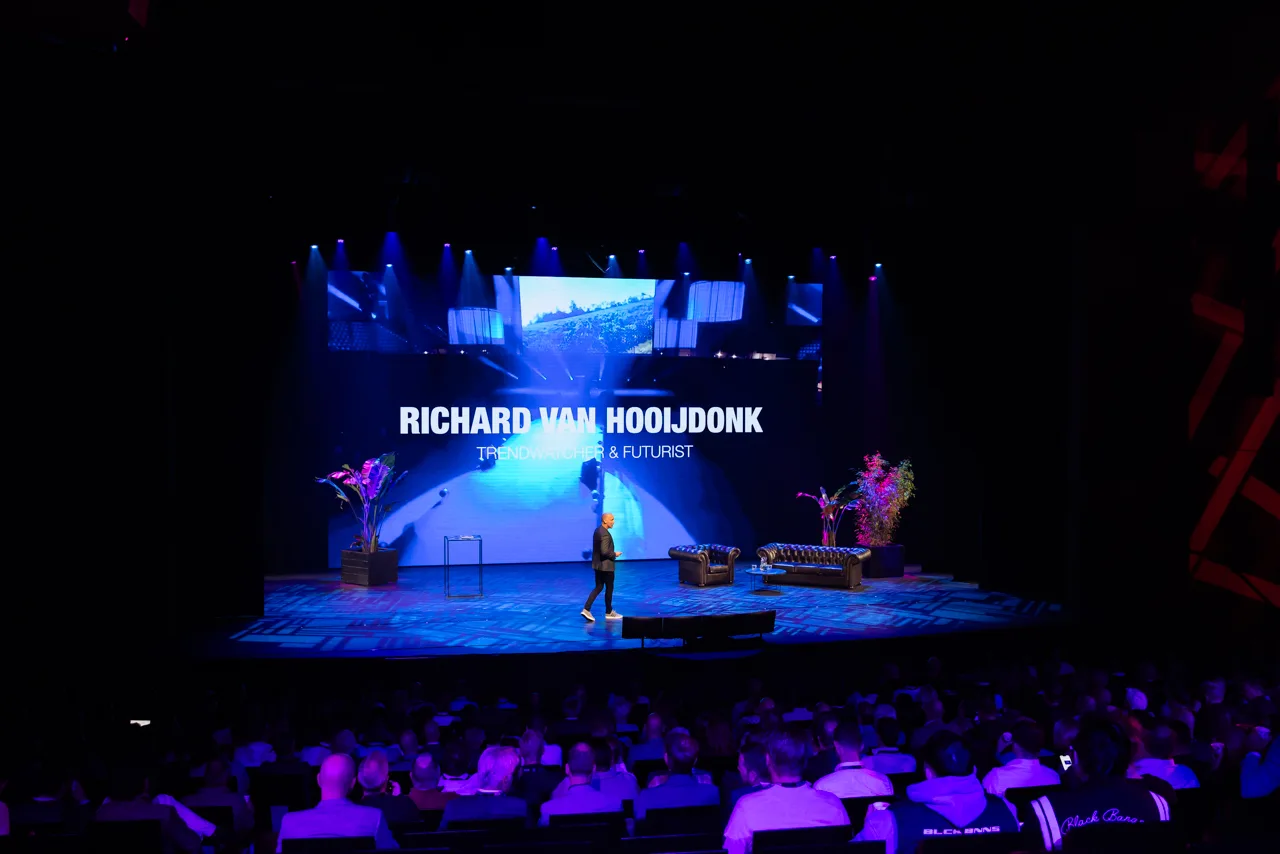
A packed conference hall, a televised panel discussion, a police summit in Dubai.






A selection of over 400 clients















What clients say

“An impressive and noteworthy presentation for our employees and customers. The rate at which change is happening, which you eloquently brought across in your energetic speech, requires a disruptive approach. To be continued!”Read the full review →

“A dazzling journey through new technology. The enthusiasm and energy during his presentation, combined with the visuals, provided a successful kick-off to our event.”Read the full review →

“Enthusiastic speaker, a good and versatile story. Everyone was ‘wowed’ by the lecture.”Read the full review →

“We thank you once again for your inspiring contribution as the kickoff of the module. We found your lecture very valuable. The inspiration and answers to the questions have given the participants much to think about. As a result of this Top Defence Leadership Programme, we expect several new initiatives to emerge. And that is thanks in part to your inspiring kickoff.”Read the full review →

“Richard delivered an excellent presentation for the key clients we invited to Innovation Runway 2026. Engaging, interesting content, and thought-provoking statements made his presentation perfectly suited for our top relations.”Read the full review →
How a booking works
Your request
Use the form, or get in touch by phone, email or WhatsApp. A few lines are enough to get started.
We get in touch
We'd like to hear what your event looks like, who'll be in the audience and which themes interest you.
A written proposal
Covering the topic, format (on location or online), length (30, 45, 60 minutes or longer) and fee, so you can talk it over with your colleagues.
Getting to know Richard
Next, we'll find a time for the two of you to talk and brainstorm the keynote, the topics and the format. There's no charge for this.
Frequently asked questions
Who is this keynote for?
Contractors, building services firms, engineering and architecture practices, suppliers, infrastructure managers, clients in residential and non-residential building, trade associations and construction conferences. The audience often mixes board members, project managers, preconstruction planners, site managers and IT; the keynote is made for exactly that mix. It also works for events for staff, clients and business partners.
What will the audience take away?
An up-to-date picture of what AI, robots and new materials already do in design, preconstruction and on site, and scenarios for the next five to fifteen years: the autonomous building site, the home as a product and infrastructure that repairs itself. What that means for roles, teams, leadership and culture. And a clear view of the risks, so that the conversation afterwards is about choices rather than hype.
Does the keynote also cover the construction company itself?
Yes, and that is often the main focus: what the estimator does when an AI agent takes off the quantities, how site managers work with robots and cameras, and what it demands of a board that has to invest while projects keep running. Roles, teams of people and AI, leadership, culture and training get their own part of the keynote.
Does the keynote also cover the risks of AI in construction?
Yes, always. Fake invoices and diverted payments, criminal subcontractors, theft of plant, ransomware that brings a construction company to a halt, hacked building management systems and the question of who is liable when an AI calculation is wrong: that other side has its own place in every construction keynote.
Is this also relevant for a smaller construction company?
Yes. Many AI applications in construction can be bought as a service, without an IT department of your own: drone surveys, a first estimate from an AI agent, a programme that updates itself. The keynote shows what the change means for a medium-sized or small company, and what opportunities an ecosystem of partners in the chain offers.
Is the keynote tailored to our organisation?
Yes. Beforehand there is an introductory call about your audience, the purpose of the event and what is happening in your organisation. A room full of building services engineers gets different examples from a meeting of infrastructure managers or a housebuilder's board day.
How long is the keynote, and can it be in English or online?
30, 45 or 60 minutes, and longer if you wish, with time for questions from the audience, in Dutch or English, in person or online. For more than a keynote, there are masterclasses, boardroom sessions for executives, board members and managers, and workshops for all employees.
How much does a keynote on AI in construction cost?
Fees for international keynotes are on request. Ask for a proposal and you will hear from us within an hour on working days.
Interested in a keynote for your construction event?
Tell us in a few sentences about your event and who will be in the audience, and let us know the date.
Prefer to speak to us directly? Call 085 303 0792 · email talks@vanhooijdonk.com · send a WhatsApp message